How to Get Rid of Spider Mites
Get rid of spider mites on houseplants and garden crops with a lifecycle-based treatment plan—identification, isolation, reapplication timing, and prevention that actually sticks.
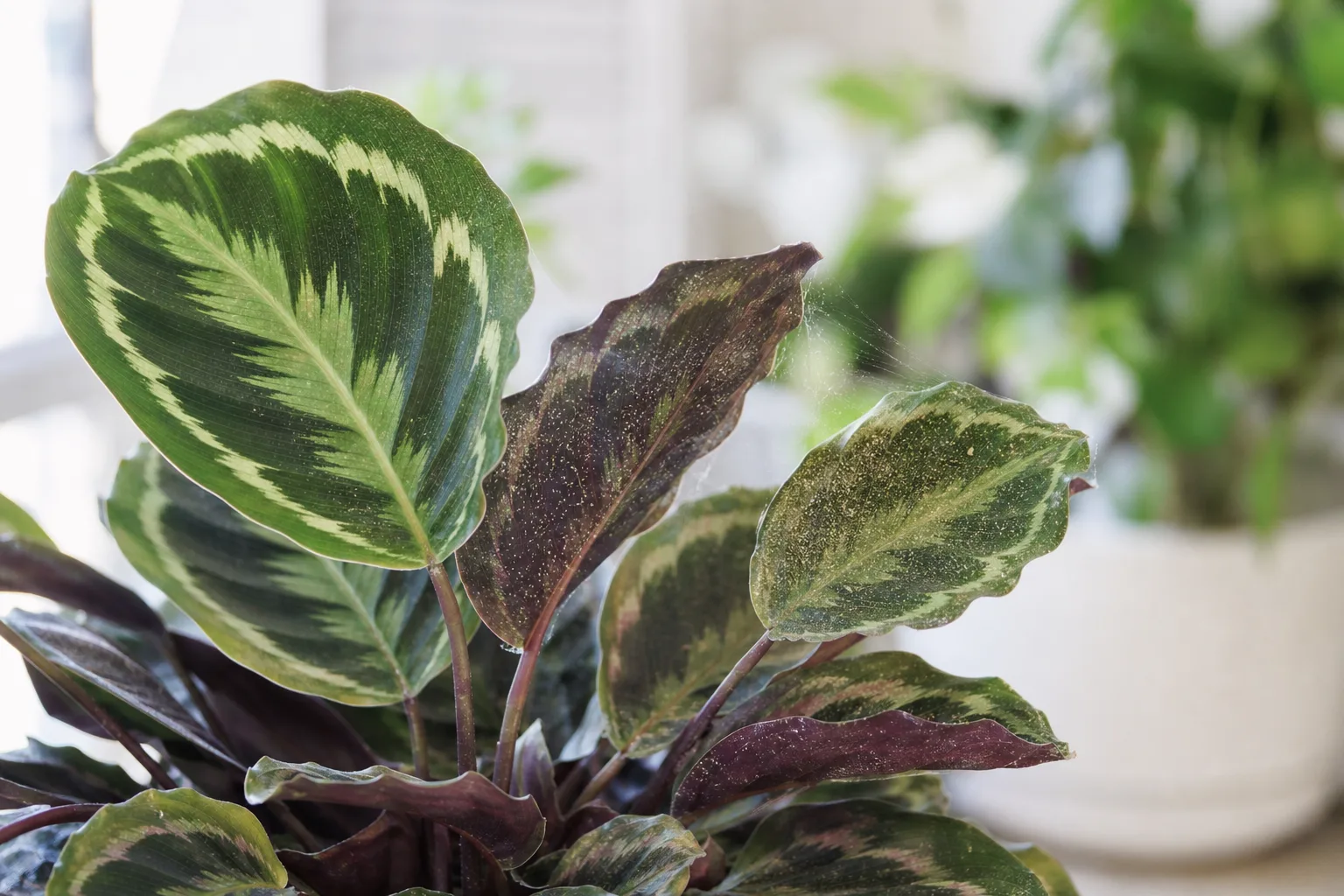
Spider mites are not insects — they are tiny sap-sucking arachnids that multiply fastest in hot, dry air. Most gardeners notice the damage (stippled leaves, bronzing, fine silk) long before they see the mites themselves. The fix is not one magic spray. It is a short sequence: confirm the pest, isolate if needed, knock down the population, then repeat contact treatments on a hatch schedule until inspections stay clean.
For a houseplant-focused workflow with quarantine detail, see our spider mites on houseplants guide. This page covers indoor and outdoor control, including vegetables, ornamentals, and the cool-season spruce spider mite that behaves differently from summer garden mites.
Quick Answer: Start With Identification, Then Match Treatment to Severity
If you suspect spider mites, do this today:
- Inspect leaf undersides with a hand lens or phone macro — look for moving dots, eggs, and webbing.
- Run the white-paper tap test (details below) to confirm before you spray anything.
- Isolate houseplants or flag garden rows so you do not spread mites while treating.
- Start with physical removal — a hard water rinse or shower blast targeting undersides.
- Follow with contact killers — insecticidal soap or horticultural oil on a 5–7 day cycle in warm weather (stretch to 7–10 days when cool).
- Keep treating until you get two clean inspections in a row with no new stippling or live mites.
Skip broad-spectrum insecticides early. UC IPM warns that pyrethroids and some organophosphates often kill mite predators while barely touching mites, which can trigger worse outbreaks (UC IPM).
What Spider Mites Are (and Why They Explode in Dry Weather)
Spider mites belong to the arachnid class — relatives of spiders and ticks — with eight legs as adults and bodies smaller than a pinhead. Colonies cluster on leaf undersides, pierce plant cells, and suck out chlorophyll. That feeding leaves stippling (tiny pale dots), later bronzing or yellowing, and in heavy infestations, fine silk webbing that protects eggs and dispersing adults.
They love heat plus low humidity. Outdoors, populations often surge from late spring through summer when days are hot and plants are dusty or drought-stressed. Indoors, the same pattern shows up when heating or air conditioning dries the air — which is why outbreaks spike on tender tropical foliage in winter.
A single generation can complete in less than a week under ideal warmth and food, according to UC IPM — meaning a “small problem” on Monday can coat a plant in silk by the following week if you wait.
Common Spider Mite Species You Might Meet
Field identification rarely needs a microscope species name because management is similar, but timing differs:
- Two-spotted spider mite (Tetranychus urticae) — the usual culprit on houseplants, tomatoes, beans, cucurbits, roses, and many ornamentals. Adults are pale green or yellow with two dark spots; they may turn reddish when stressed.
- Spruce spider mite (Oligonychus ununguis) — attacks spruce, fir, juniper, and other conifers during cool spring and fall, not peak summer. Yellowing needles and early drop on evergreens point here.
- Other webspinning mites in the Tetranychus group — management matches two-spotted mites; don’t delay treatment waiting for a perfect ID.
How to Spot Spider Mite Damage Before the Plant Looks Ruined
Damage almost always appears before you see mites clearly. Early signs include:
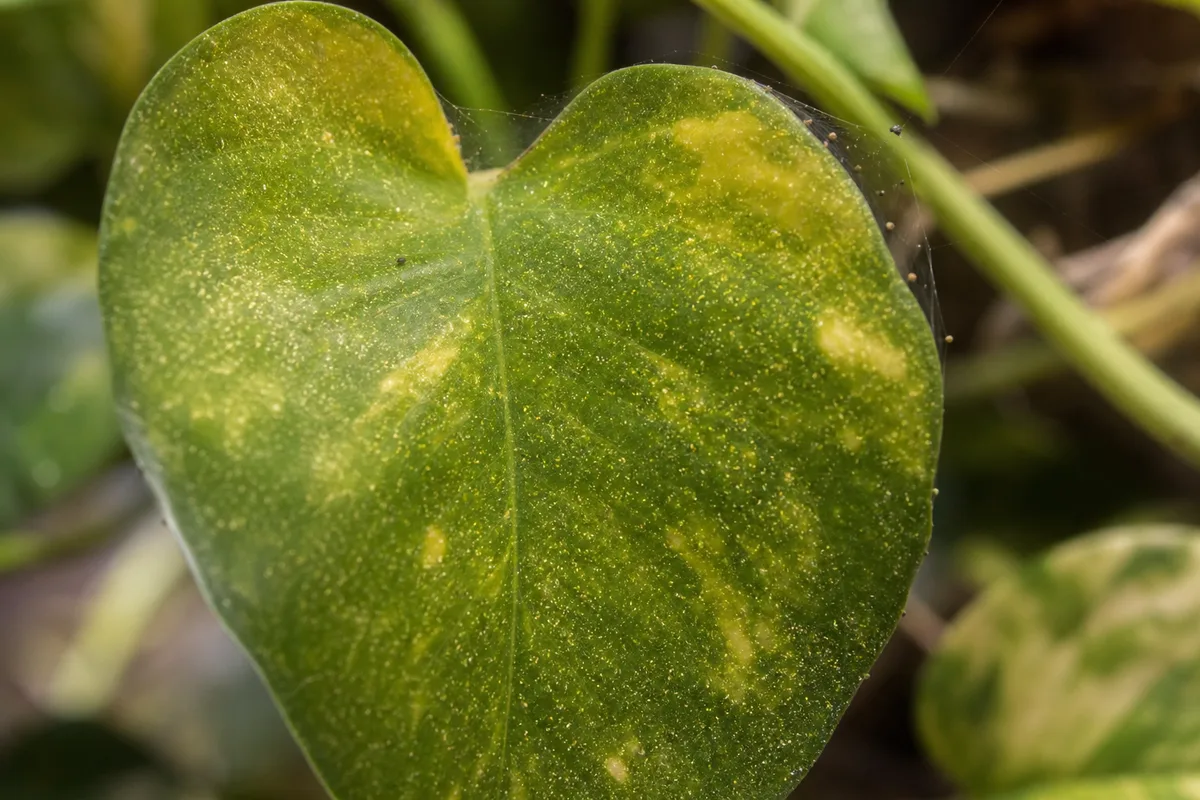
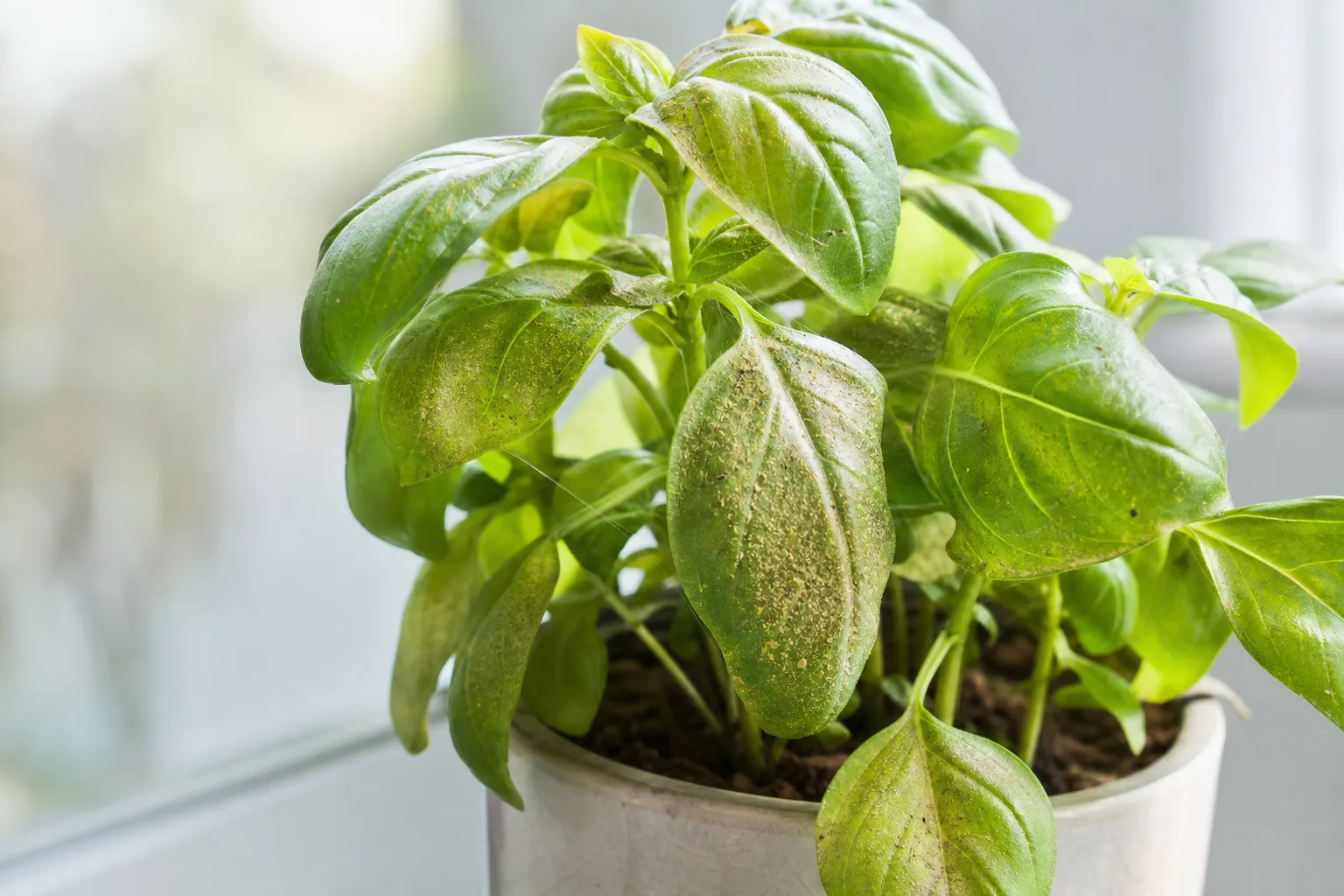
- Speckled or stippled leaves — thousands of pale pinpricks where chlorophyll was removed.
- Bronze or dull gray cast on leaves that still feel attached.
- Fine webbing along leaf edges, between stems, or bridging leaves — a hallmark that separates mites from thrips or aphids.
- Leaf curl, crisp edges, and premature drop as feeding intensifies.
On conifers, look for yellow or brown needle banding and thin crowns rather than classic leaf stippling.
Because mites are microscopic, many gardeners mistake early stippling for dust, sun stress, or underwatering. If humidity is low and the plant has thin leaves (calathea, alocasia, begonia, tomatoes), suspect mites first.
The White-Paper Tap Test
Hold a white sheet of paper under a suspect leaf and tap the leaf sharply. If tiny specks scatter across the paper and move on their own, you have mites (or possibly other small arthropods — combine with webbing and stippling pattern). Static dust does not crawl.
Shake several leaves from different parts of the plant. Mites often start on one branch and spread outward. Document severity: a few dots per leaf is early; solid stippling with silk is advanced.
Plants Most Likely to Get Spider Mites
No plant is truly immune, but some invite trouble more often:
Indoors and greenhouse: calathea, alocasia, croton, begonia, fittonia, English ivy, palms, and any thin-leaved tropical sitting near a heating vent or south window.
Vegetable garden: tomatoes, beans, cucumbers, squash, melons, strawberries, and peppers — especially when dusty or water-stressed.
Landscape: roses, azaleas, arborvitae, fruit trees, and bedding annuals in hot, dry borders.
Usually lower risk: thick-leaved succulents and many tough houseplants (snake plant, ZZ plant, jade) — though they are not immune under extreme stress.
Spider mites also hitchhike on new purchases and plants moved indoors for winter. Quarantine anything new for two weeks and inspect undersides twice weekly.
Your Treatment Ladder: From Water Blast to Last-Resort Sprays
Think in escalation, not a buffet of equal options. Start with methods that preserve predators and avoid resistance. Move up only if the previous step failed after honest coverage and correct timing.
Step 1 — Blast Mites Off With Water
Best for: light infestations, preventive knockdown, outdoor plants, and houseplants you can move to a sink or shower.
A forceful spray of plain water dislodges adults, nymphs, and some eggs. Aim at leaf undersides and stem joints where colonies hide. Outdoors, use a hose nozzle on a gentle but firm setting; repeat every 2–3 days during active outbreaks. Indoors, shower the plant briefly, let it drain, and keep it out of direct sun until dry.
Water alone will not end a heavy infestation, but it is the right first move — it buys time, removes dust mites love, and improves contact for soap or oil applied next.
Step 2 — Insecticidal Soap and Horticultural Oils
Best for: most houseplants and garden crops once mites are confirmed.
Insecticidal soaps and refined horticultural oils kill by contact — they must coat the mites, which means slow, thorough spraying on undersides. UC IPM recommends these selective materials over broad insecticides when treatment is needed (UC IPM).
Application rules that prevent failure:
- Spray in early morning or evening; avoid midday heat.
- Do not treat water-stressed plants or when temperatures exceed 90°F (32°C) — soap and oil can burn foliage.
- Patch-test one leaf for 24–48 hours on sensitive plants (ferns, open African violets, some herbs).
- Repeat every 5–7 days in warm conditions for at least three to four cycles — eggs often survive the first pass.
Our insecticidal soap guide covers mixing, plant sensitivity, and why dish detergent is not a safe substitute.
Step 3 — Neem Oil and Botanical Miticides
Best for: persistent webbing, mixed pest pressure, or when soap alone did not achieve full underside coverage after two cycles.
Neem oil smothers mites and, in products containing azadirachtin, can disrupt feeding and reproduction. It is a useful follow-up to soap, not always the first knockdown tool on heavily webbed plants — thick silk blocks contact.
Mix and apply per label. Keep runoff away from ponds and streams; NPIC notes neem ingredients are toxic to fish and aquatic invertebrates (NPIC). For deeper mixing and reapplication timing, see using neem oil as an organic insecticide and our neem vs insecticidal soap comparison.
Step 4 — Rubbing Alcohol on Houseplants (When It Fits)
Best for: spot treatment on sturdy houseplants with visible clusters on a few leaves.
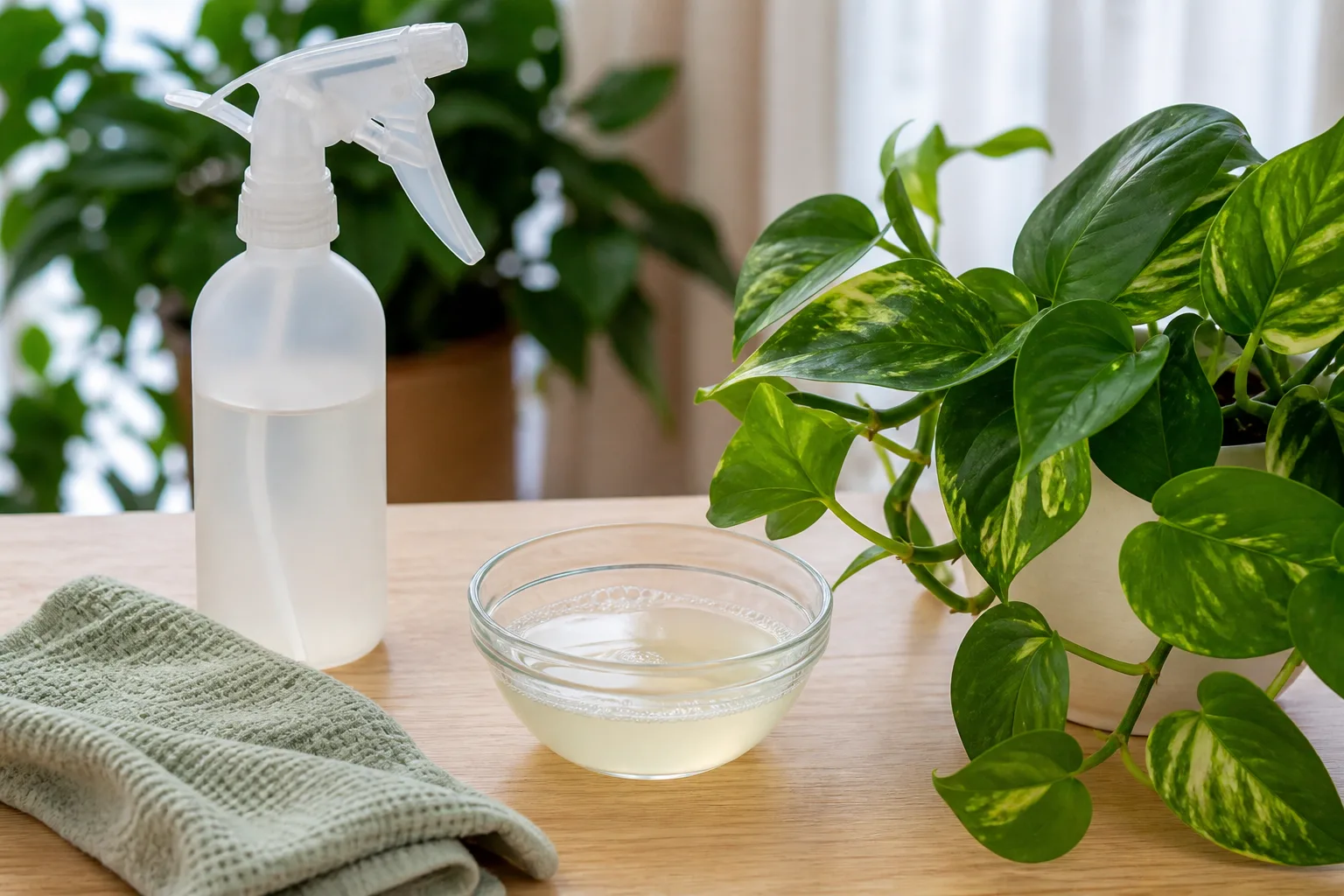
A dilute solution of one part 70% isopropyl alcohol to four parts water in a spray bottle can dehydrate mites on contact. Test one leaf first — alcohol burns tender or hairy foliage. Wipe broad leaves with a cloth soaked in the solution, again after a patch test.
Alcohol is a tactical tool, not a whole-collection strategy. It does not replace scheduled soap or oil cycles on large plants, and it will not reach eggs tucked in webbing along stems.
Step 5 — Release or Encourage Predatory Mites and Beneficial Insects
Best for: greenhouses, enclosed porches, outdoor gardens with low pesticide history, and recurring mite pressure where you want long-term balance.
Natural enemies — predatory mites (Phytoseiulus persimilis, western predatory mite), lacewing larvae, minute pirate bugs, lady beetles including the spider mite destroyer, and predatory thrips — often keep outdoor mites in check if broad sprays have not wiped them out (UC IPM).
You can purchase predatory mites for release; UC IPM suggests roughly one predator per 10 spider mites as a rough balance target. Release in hot spots, avoid pesticides for several weeks afterward, and accept that predators need some prey — wiping every mite instantly can starve your biocontrol.
In open gardens, pause spraying when predator numbers are visible and damage is stabilizing. Sometimes populations crash on their own after rain or cooler weather.
When Chemical Miticides Make Sense — and When They Backfire
Synthetic miticides — malathion, bifenthrin, cyfluthrin, and similar — can knock down severe outbreaks on high-value crops or ornamentals, but they come with trade-offs:
- Resistance builds quickly; rotating active ingredients is label-dependent and easy to get wrong.
- Non-target kills remove predators and pollinators.
- Mite flares are common after pyrethroid or carbaryl sprays that miss mites but wipe beneficial insects (UC IPM).
Reserve synthetics for confirmed heavy infestations on plants worth saving where soap, oil, and water failed across multiple cycles — and always read the label for bee hazard, food-crop intervals, and temperature limits. On vegetables and fruits, prefer soap, oil, and water through most of the season; chemistry is a last resort, not a default.
Large conifers with spruce spider mite damage may need a licensed arborist when DIY selective sprays cannot reach the canopy — especially when needle loss threatens a mature specimen.
Indoor vs Outdoor Control: Different Rooms, Same Lifecycle Logic
Indoors, containment matters as much as chemistry. Move affected plants away from neighbors, boost humidity around the collection (humidifier, pebble tray, grouping), and accept that raising humidity slows mites but does not cure an active colony alone — you still need rinsing and contact sprays on schedule. Our integrated pest management indoors guide walks through isolate → physical removal → least-toxic treatment → prevention as a repeatable schedule.
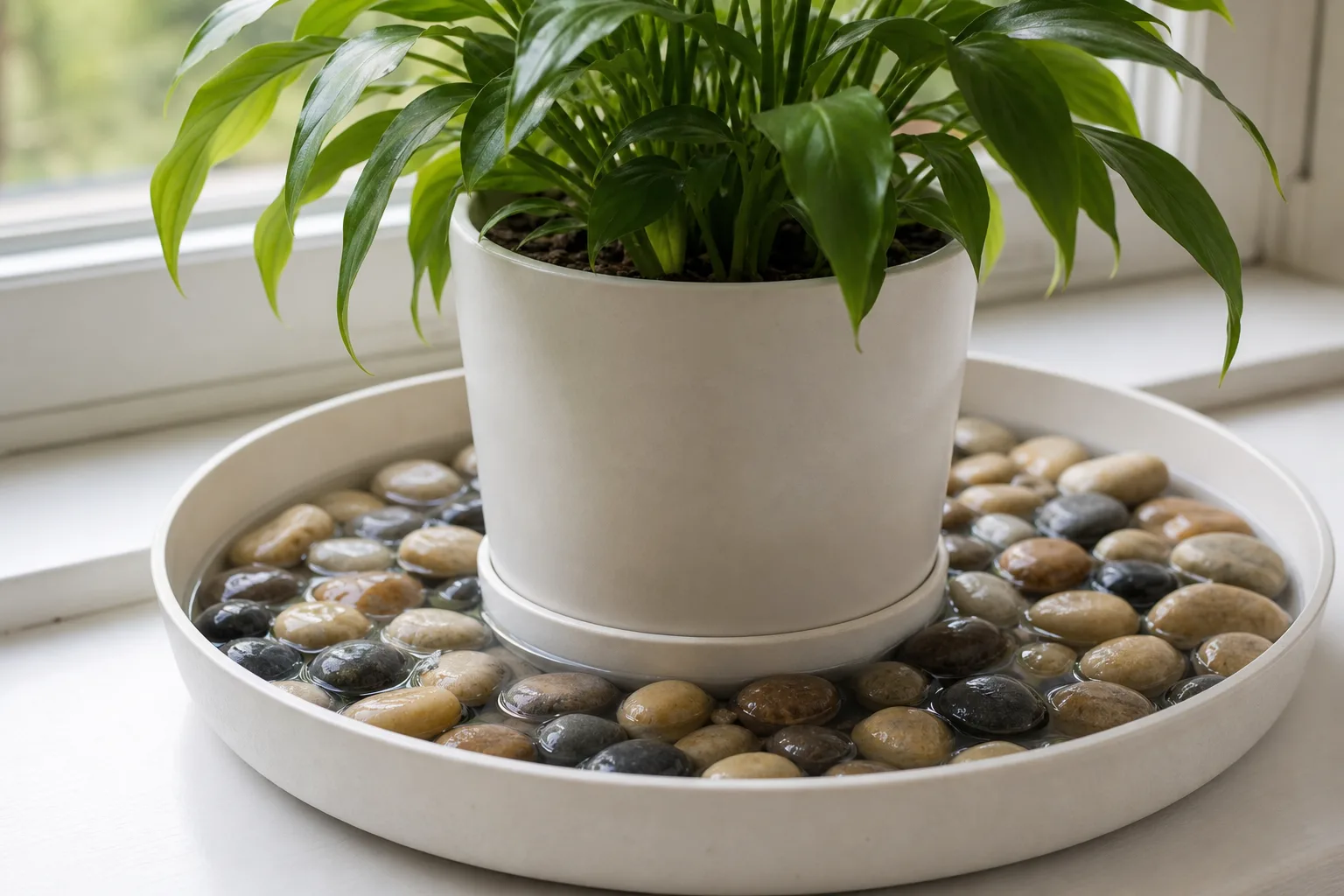
Check the entire collection weekly during treatment — mites walk across shelves and hitchhike on tools. Clean saucers, cache pots, and adjacent surfaces.
Outdoors, prioritize irrigation and dust control. Water-stressed tomatoes and beans attract mites; mulching paths and hosing dusty foliage during heat waves reduces pressure. Row covers on young transplants can exclude mites briefly, but remove them before heat builds.
After harvest on annuals, remove debris so mites do not overwinter on weeds and volunteer seedlings.
Spruce Spider Mites on Evergreens: A Cool-Season Exception
If arborvitae, spruce, or fir needles yellow in spring or fall — not midsummer — suspect spruce spider mite. This species is active in cooler weather, opposite many garden mites.
Treatment still relies on horticultural oil or selective miticides timed to label instructions for conifers, but summer mite advice may be mistimed here. Heavy needle drop on a large tree is a job for a professional with proper spray equipment; footing and canopy reach make DIY control unsafe on mature evergreens.
How to Prevent Spider Mites From Coming Back
Prevention is mostly environment plus inspection, not a monthly prophylactic spray:
- Inspect undersides on high-risk plants twice weekly in hot, dry weather and weekly indoors in winter.
- Quarantine new plants 14–21 days before placing them with the collection.
- Maintain humidity indoors above the desert-dry range heating creates — pair with our houseplant humidity guide and DIY pebble tray methods where appropriate.
- Avoid dusty leaves — wipe or rinse outdoor plants and keep indoor foliage clean.
- Water consistently so plants are not drought-stressed bait.
- Use selective pest control — when you treat aphids or beetles, choose products that spare predatory mites when possible.
- Scout after any broad insecticide — plan extra mite checks for two weeks following pyrethroid sprays.
Spider mites are everywhere in small numbers. The goal is early knockdown, not sterile zero-pest gardens.
When to Cut Losses and Discard a Plant
Recovery is realistic when only some leaves show stippling, the stem is firm, and new growth looks clean after two treatment cycles. Prune off the worst leaves with clean shears, bag them for trash (not compost), and continue the hatch schedule on what remains.
Discard the plant when:
- Most foliage is webbed, bronzed, or skeletonized.
- New growth keeps emerging already stippled after three to four honest treatment cycles.
- The plant is inexpensive to replace and risks infecting rare neighbors.
- Root rot or secondary disease arrived because the plant was too weakened to recover.
Bag heavily infested plants before carrying them past healthy ones. One sacrifice beats losing a shelf of calatheas.
Conclusion
Getting rid of spider mites means matching the method to the infestation stage and outlasting their egg hatch — not finding a single permanent spray. Confirm with the tap test, start with water and selective soap or oil, protect predators outdoors, and escalate to neem or labeled chemistry only when lighter tools failed on schedule. Watch evergreens on a cool-season calendar, and inspect weekly so the next outbreak stays a small rinse job instead of a collection-wide crisis.
For indoor-specific quarantine and humidity detail, continue with spider mites on houseplants. For collection-wide routines, see how to tackle indoor plant pests at home.



