How to Use Neem Oil Spray as an Organic Insecticide
Learn how to mix and apply neem oil spray as an organic insecticide for outdoor gardens—timing, recipe, tree uses, bee safety, and when to choose alternatives instead.
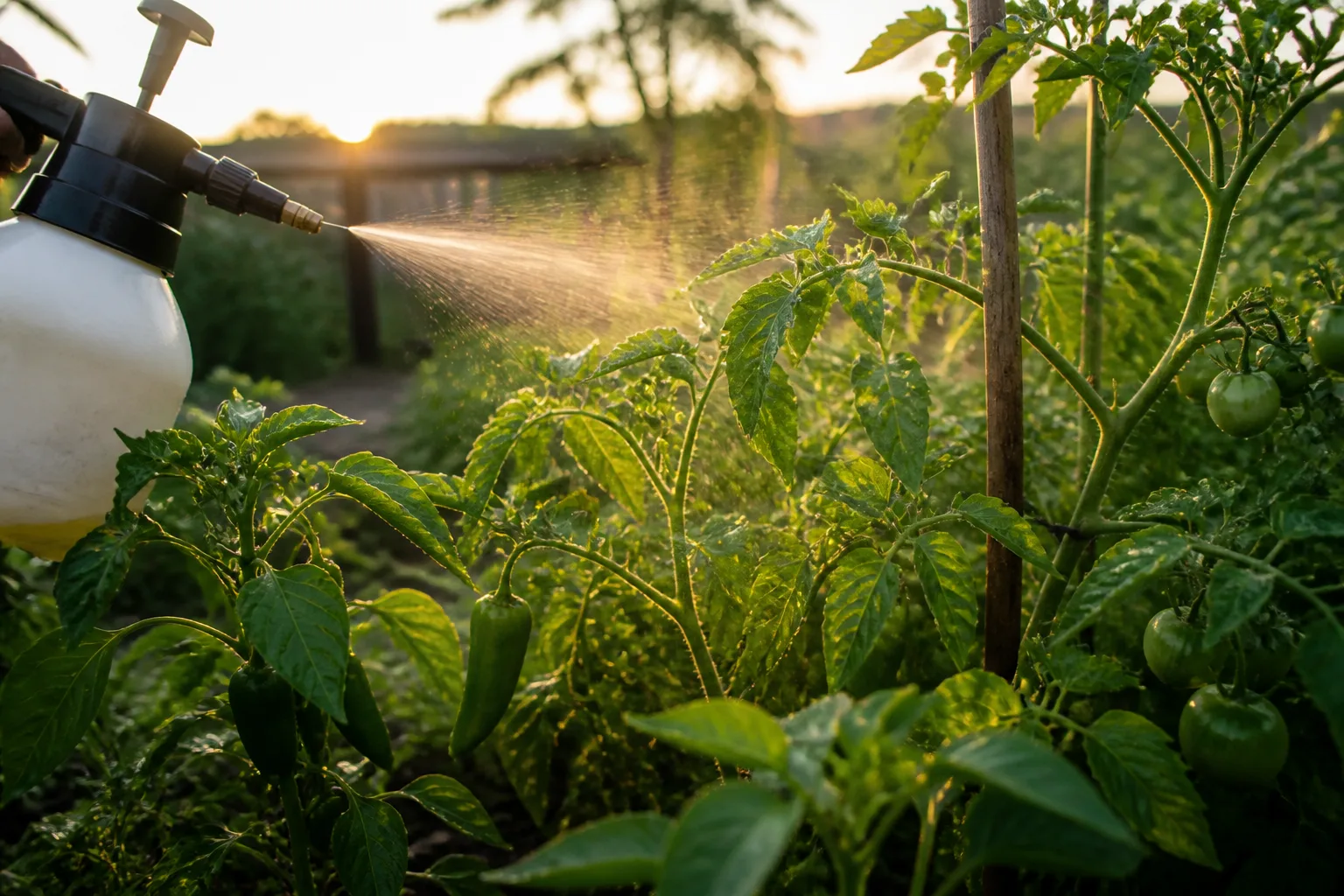
Neem oil spray is one of the most useful organic tools in an outdoor garden—when you match the product type to the pest, emulsify it correctly, and spray at the right hour. Pressed from seeds of the neem tree (Azadirachta indica), this biopesticide has been used for pest and disease control for more than a century. It is not a magic shield you spray every week “just in case.” Used well, it disrupts chewing and sucking insects, smothers soft-bodied pests on contact, and can suppress fungal diseases such as powdery mildew on susceptible trees and ornamentals.
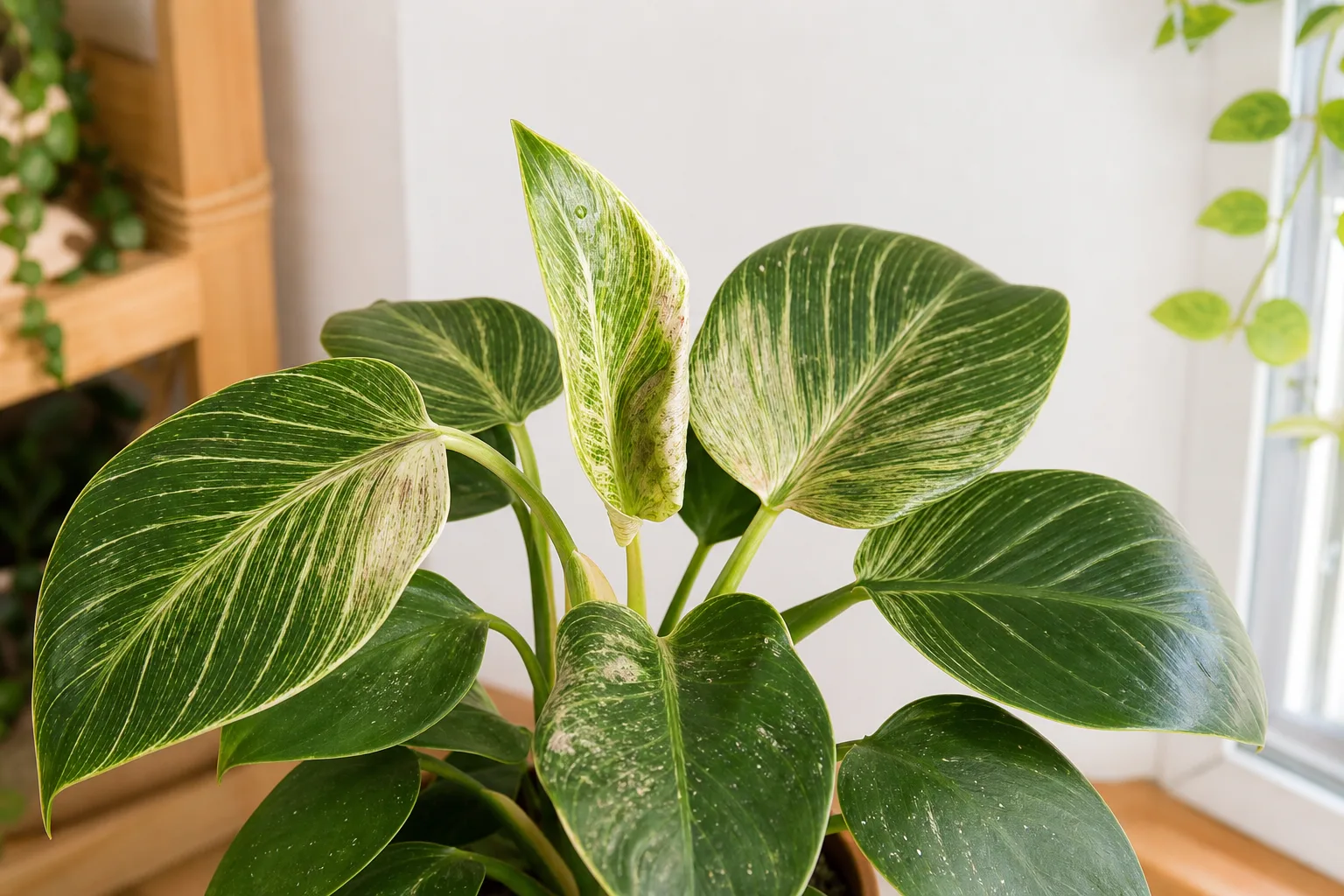
This guide focuses on outdoor beds, borders, vegetables, and landscape plants. If you are treating houseplants on a windowsill, read our dedicated guide on neem oil for indoor plants instead—indoor airflow, light intensity, and phytotoxicity risks follow different rules.
What Neem Oil Is and Why Outdoor Gardeners Reach for It
Neem oil is a naturally occurring pesticide extracted from neem tree seeds. Commercial products and homemade sprays use it because it offers multiple modes of action in one bottle: growth disruption through azadirachtin, contact suffocation through oil films, and— in clarified formulations—fungicidal activity against several common leaf diseases. According to the National Pesticide Information Center (NPIC), neem-based products are used on food crops, ornamentals, turf, and indoor/outdoor plants, and they break down quickly in soil, water, and on leaf surfaces through microbial action and sunlight.
Gardeners choose neem because it sits in the lower-toxicity end of the pesticide spectrum when label directions are followed. NPIC notes it is practically non-toxic to birds and mammals, and it does not persist long in the environment. That profile makes it attractive for organic and IPM-minded growers who want control without reaching immediately for broad-spectrum synthetics. The trade-off is speed and selectivity: neem rarely gives the instant knockdown of a conventional contact insecticide, and it can still harm beneficial insects if you overuse it or spray blindly.
Cold-Pressed Raw Neem vs Clarified Hydrophobic Products
Not every bottle labeled “neem oil” behaves the same way. Cold-pressed or raw neem oil retains more azadirachtin and related compounds—the ingredients that disrupt insect feeding, molting, mating, and egg-laying when pests ingest treated plant tissue. Homemade garden sprays typically start here: pure cold-pressed oil, water, and a mild emulsifier.
Clarified hydrophobic extract of neem oil is processed to remove much of the azadirachtin. EPA registration documents describe this fraction as working primarily through contact activity—coating and suffocating insects, mites, and fungal spores on plant surfaces (EPA fact sheet). Many ready-to-use garden sprays and fungicide-labeled products contain clarified hydrophobic neem rather than high-azadirachtin raw oil.
Before you mix or buy, read the active ingredient panel, not the front label artwork. If you need antifeedant and growth-disruption effects on chewing insects, prioritize products or raw oil with meaningful azadirachtin content. If you are targeting powdery mildew, rust, or soft-bodied pests you can fully coat, clarified hydrophobic sprays may be enough. Epic Gardening’s neem overview notes that gardeners often keep both styles in the shed because they solve different problems at different speeds (Epic Gardening).
How Neem Oil Kills Insects and Suppresses Common Fungal Diseases
Neem’s reputation as an “organic insecticide” undersells what it actually does. At full strength it is better understood as a multi-mode biopesticide: part antifeedant, part growth regulator, part suffocating oil, and—depending on formulation—part fungicide.
What Azadirachtin Does Inside Pest Bodies
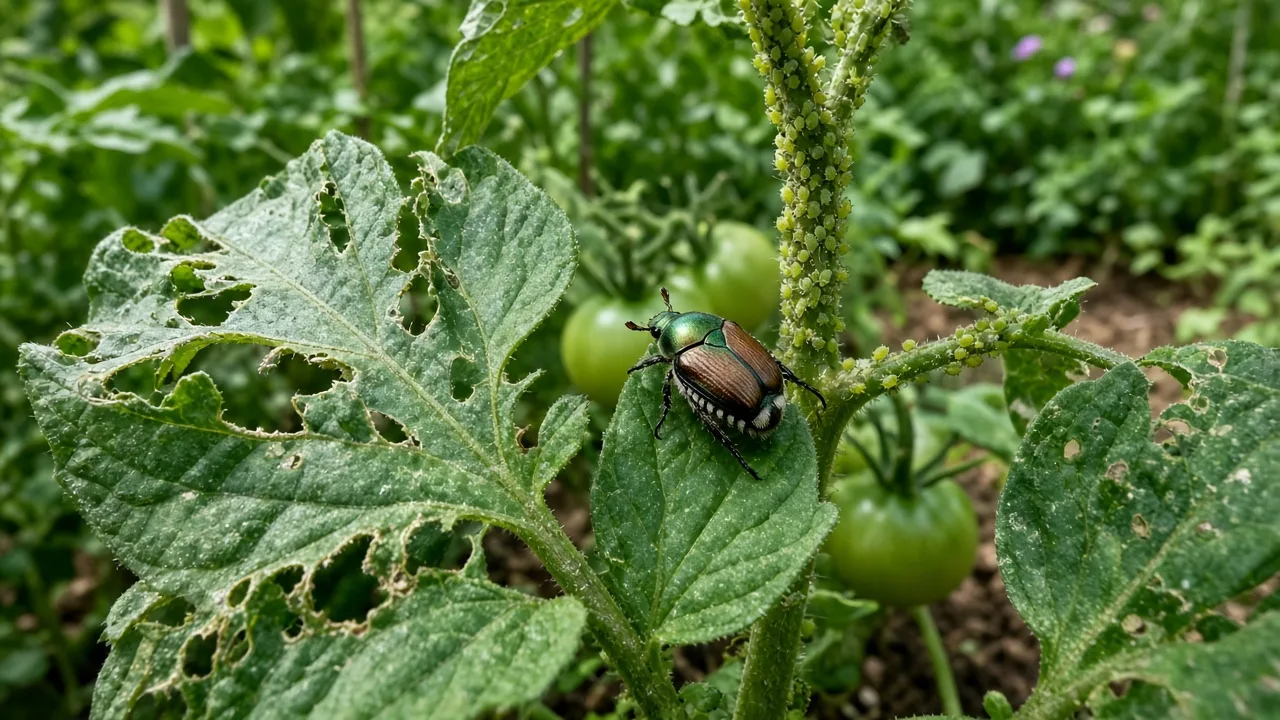
Azadirachtin is the best-studied active compound in neem. The EPA describes it as interfering with insect hormone systems, which disrupts normal feeding, molting, mating, and egg-laying (EPA fact sheet). Aphids, whiteflies, caterpillars, beetles, and many other garden pests stop feeding or fail to develop normally after ingesting treated tissue. That is a crucial detail: for azadirachtin-driven control, the insect must eat the plant, not merely walk across a dry leaf.
NPIC emphasizes that neem is practically non-toxic to bees when used according to label directions (NPIC). Bees are not typical chewers of foliage; azadirachtin primarily affects insects that feed on plant tissue. Still, any pesticide spray can contact foraging bees if you apply it on open blossoms in active flight hours—timing matters, and we cover that below.
On contact, neem oil also smothers soft-bodied insects and eggs—aphids, spider mites, scale crawlers, and whitefly nymphs—when the spray fully coats them. That dual pathway explains why some gardeners see partial knockdown within a day (oil contact) while population decline takes one to two weeks (growth disruption and broken life cycles).
For fungal problems, clarified hydrophobic neem is labeled against powdery mildew, black spot, rust, leaf spot, scab, anthracnose, and botrytis on many ornamentals. The oil film interferes with spore germination and attachment rather than “curing” advanced infections overnight. On severely infected dogwood or cucurbit leaves, combine neem with sanitation—remove the worst leaves, improve airflow, and spray preventively on neighboring tissue. Our powdery mildew guide walks through broader cultural controls that make any fungicide work better.
When to Use Neem Oil in the Garden—and When to Skip It
University of New Hampshire Extension offers blunt, useful guidance: use neem only when you have a definite pest problem (UNH Extension). Preventive weekly spraying “just because” wastes product, selects for frustration, and increases the odds you will hit beneficial insects that keep your garden in balance. Walk your beds first. Confirm aphids on new rose growth, spider mite stippling on juniper, or powdery mildew on dogwood before you mix a gallon.
Skip neem when rain is forecast within 24 hours—the spray will wash off before it does meaningful work. Skip midday applications in direct sun, especially on heat-stressed plants; oil plus intense light is a common phytotoxicity recipe. Avoid spraying brand-new seedlings or plants already drought-stressed, recently transplanted, or in full flower if you can target pests on vegetative tissue instead.
Neem fits an integrated pest management (IPM) slot: after you have tried water sprays for aphids, hand-picking for beetles, or pruning out heavily infested tips. It is a treatment tool, not a substitute for healthy soil, appropriate spacing, and cultivar choice. When pressure is low, sometimes a strong jet of water and patience outperform another bottle in the sprayer.
Mixing a Homemade Neem Oil Spray That Actually Emulsifies
Homemade neem fails most often at the mixing step. Oil and water resist each other; without a true emulsifier, you get floating grease and uneven coverage that burns some leaves while leaving pests untouched.
The reliable garden-scale recipe used by extension educators and experienced growers:
1 to 2 teaspoons mild dish soap + 1 gallon water + 1 to 2 tablespoons cold-pressed neem oil
Sequence matters. Add the soap to water first and agitate until the solution is evenly mixed. Then pour in the cold-pressed neem oil slowly while stirring or shaking. You should see a milky, uniform emulsion—not yellow oil beads on the surface. Use the mix the same day; neem emulsions can thicken or separate if they sit overnight.
Do not exceed 2 tablespoons of neem oil per gallon unless a commercial label specifically directs higher rates. More oil is not more control; it is more leaf burn when sun hits wet foliage. Epic Gardening recommends staying at the low end on tender ornamentals and stepping up only when pests persist after two properly timed applications (Epic Gardening).
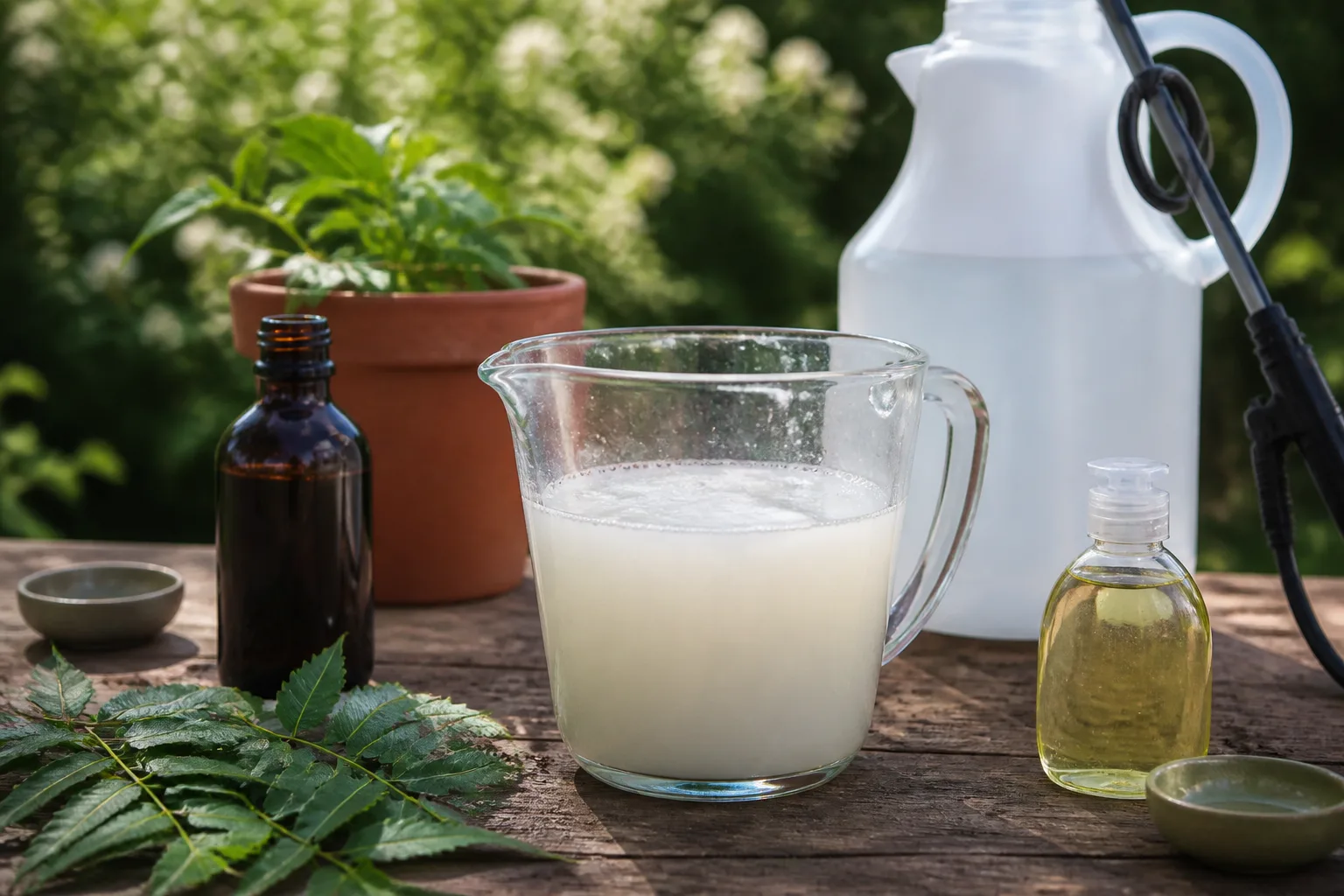
If you prefer not to improvise with dish soap, commercial neem concentrates include emulsifiers and label rates for specific crops. For food gardens, always check the pre-harvest interval (PHI) on the label—how many days you must wait before eating treated produce.
Equipment and Materials You Need
A 1-gallon pump sprayer or handheld pressure sprayer gives better coverage than a small trigger bottle for shrubs and vegetables. Trigger bottles work for a single potted tree on a patio, but they fatigue your hand before you finish the undersides of a squash patch. Wear nitrile gloves and eye protection; neem is low toxicity but irritating to skin and eyes (NPIC).
Label a dedicated measuring spoon and cup for the garden shed so you are not guessing ratios mid-season. Rinse the sprayer thoroughly after each use—soap and oil residue gums up seals and skews your next mix.
Step-by-Step: Spraying Shrubs, Vegetables, and Ornamentals
Once your emulsion is uniform, treat neem like any serious pesticide: coverage is the product. Partial spraying wastes effort and breeds disappointment.
Start at the top of the plant and work downward so drips do not miss lower leaves. Spray both upper and lower leaf surfaces, stems, petioles, and—when the label allows—soil surface around the base if you are also managing soil-dwelling stages. Continue until foliage is evenly wet but not running off in streams. Aphids and whiteflies hide on undersides; spider mites cluster along midribs; scale crawlers settle on young twigs.
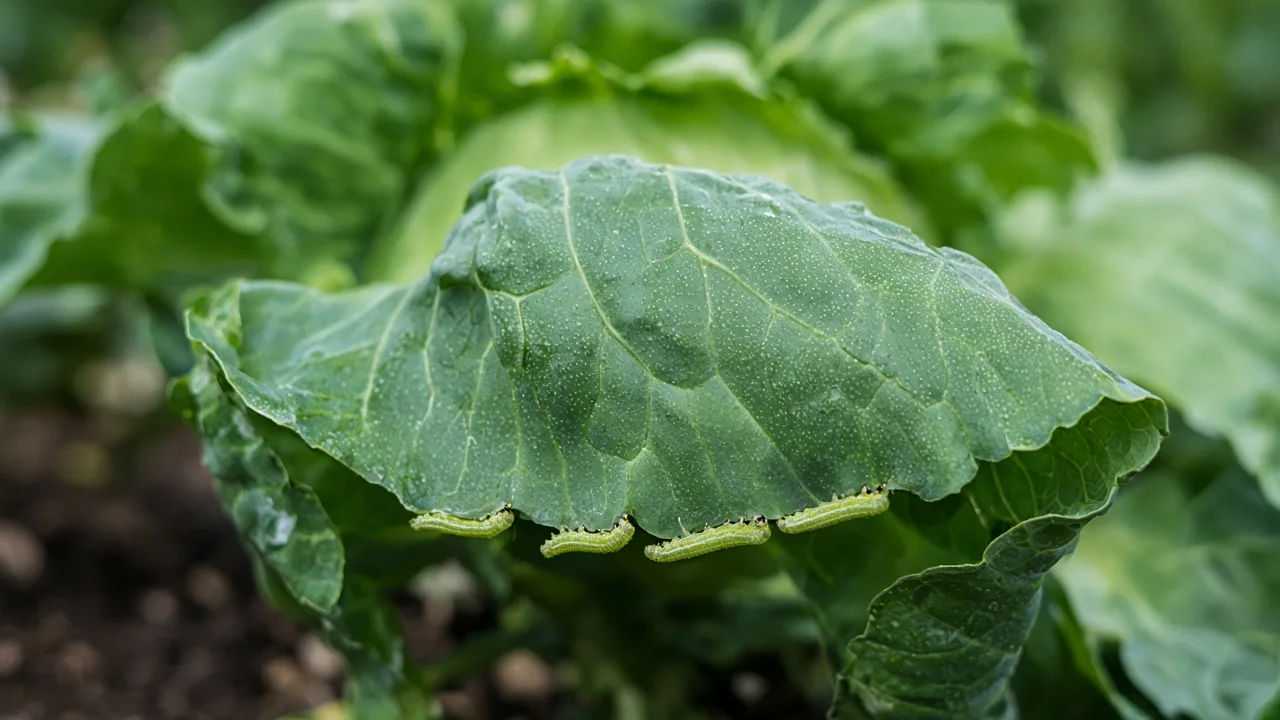
For vegetables, hit pest hotspots first—curly aphid colonies on brassicas, mite stippling on beans, squash bug nymphs on stems—rather than blanketing the entire plot on a calm day. For ornamental shrubs, extend spray into interior branches where spider mites overwinter. For annual flowers, work before bloom when possible so you are not coating open petals unnecessarily.
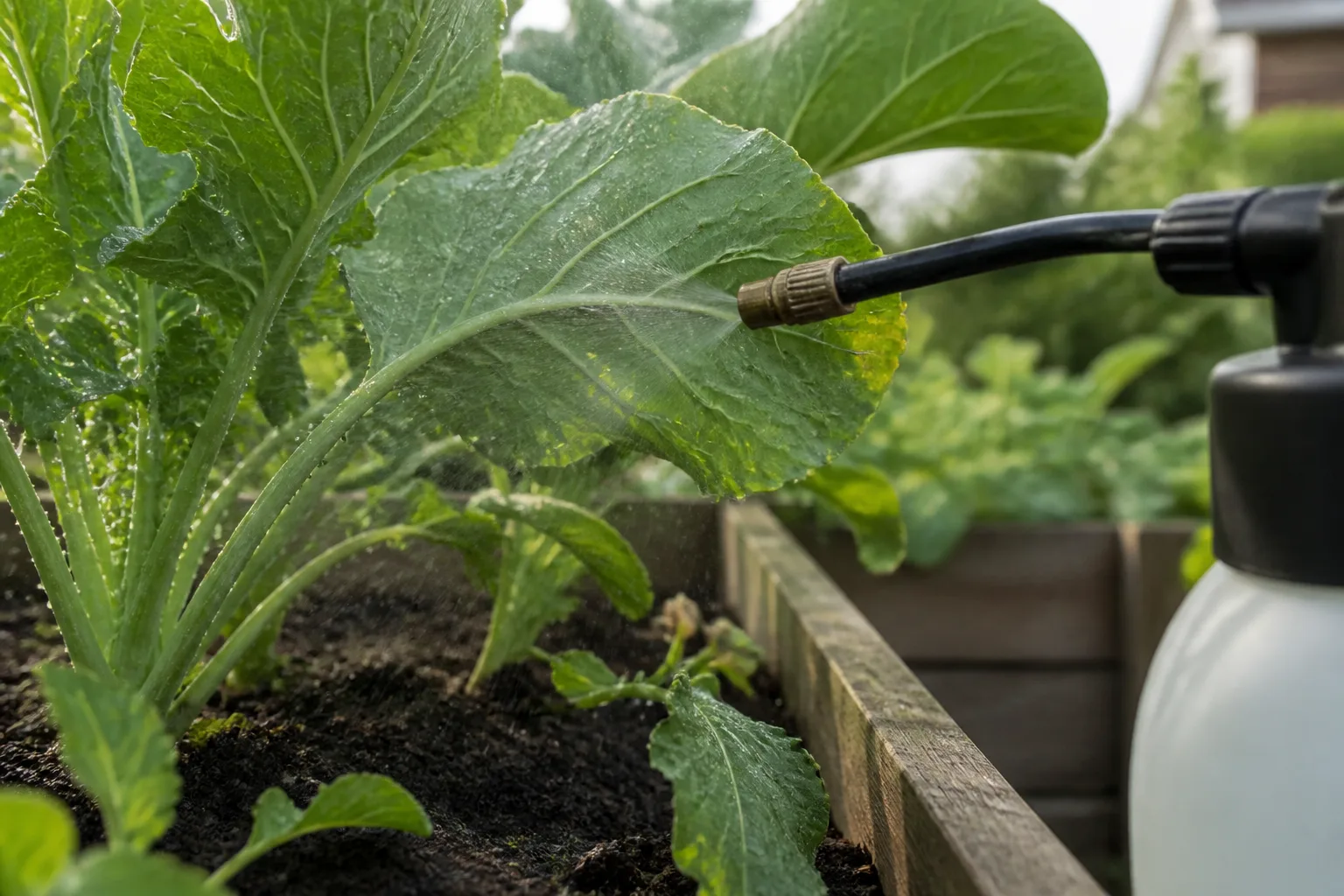
After spraying, keep children and pets out of the treated area until foliage is dry to the touch. Neem odor is strong but fades within a day outdoors. Re-enter according to your product label if you used a commercial concentrate with a specific restricted-entry interval.
Timing, Weather, and Reapplication Intervals That Actually Work
The best windows for neem are early morning or evening, when beneficial insects are less active and direct sun is weaker. NPIC and multiple extension services align on this timing because it reduces foliar burn and gives the spray hours to dry before peak photosynthesis (NPIC).
Avoid spraying when temperatures exceed 90°F (32°C) on sensitive crops, when plants are wilted, or when a 24-hour rain window is forecast. Light dew is fine; a downpour six hours later is not.
Reapply every 7 to 14 days while pests remain active. Azadirachtin-driven control often needs at least two to three cycles to break a breeding population because it disrupts development rather than killing every adult on contact. Oil contact kills some individuals immediately, but eggs and protected scale under shells may survive the first pass.
Track what you saw before each spray—mite counts, aphid colonies, mildew spread—and stop when monitoring shows control. UNH Extension’s “definite problem only” rule applies here too: if beneficials have caught up and damage has halted, put the sprayer away.
Safety for Bees, Beneficial Insects, Pets, and Waterways
Neem’s safety profile is good relative to many synthetics, but “organic” is not “harmless.” NPIC classifies neem as practically non-toxic to birds and mammals when used as directed, and notes low risk to bees compared with many conventional insecticides (NPIC). That said, direct spray on bees, lady beetles, lacewings, and parasitic wasps can still kill or repel them—especially when oil coats their bodies.
Protect pollinators by spraying early or late, avoiding open blossoms when possible, and targeting pest patches instead of broadcasting across entire flowering meadows. If you must treat a blooming food crop, use row covers temporarily or accept that you may need to hand-remove pests on flowers instead.
NPIC notes neem is slightly toxic to fish and other aquatic organisms (NPIC). Never spray toward ponds, streams, or storm drains; rinse equipment away from waterways. Pets generally tolerate dried residues on landscape plants, but keep dogs and cats off wet foliage and store concentrates where curious noses cannot reach them.
University of New Hampshire Extension warns that overuse harms beneficial insects and can leave you with a pest rebound when predators are gone (UNH Extension). That is not an argument against neem—it is an argument for precise, limited use.
Using Neem Oil on Landscape Trees and Large Shrubs
Trees are where neem earns its keep in many home landscapes, especially when fungal disease or adelgid pressure meets organic preferences.
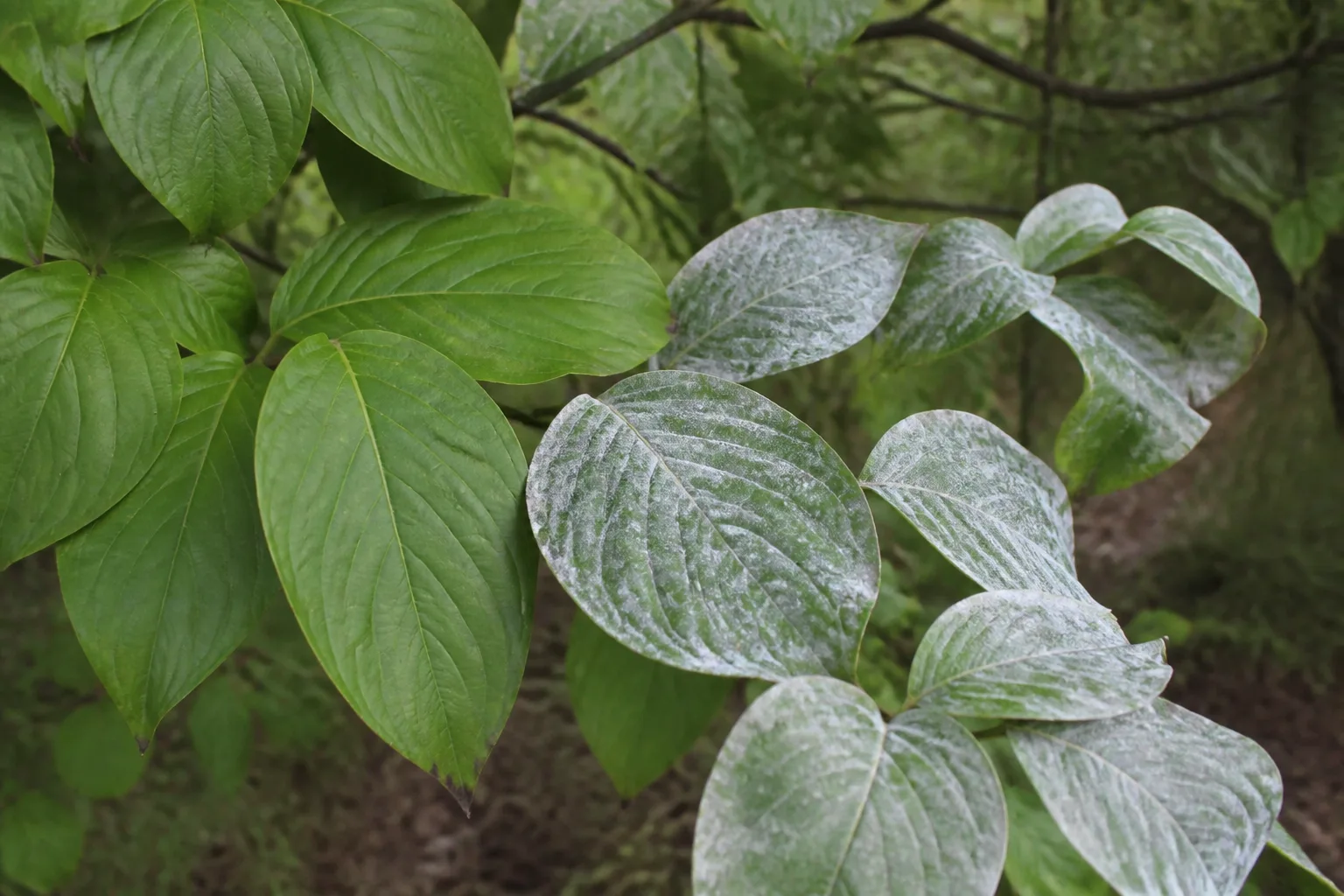
Flowering dogwood (Cornus florida) is notoriously susceptible to powdery mildew in humid regions. Clarified hydrophobic neem sprays—applied on a calm morning to leaves still healthy enough to photosynthesize—can suppress new spore establishment when combined with thinning crowded interior branches for airflow. They will not reverse a tree already white with advanced mildew on every leaf; start early in the season when you first see spotting.
Colorado blue spruce (Picea pungens) and other spruces sometimes carry Cooley spruce gall adelgids and spruce aphids. Neem oil applied to new spring growth can reduce adelgid and aphid numbers when coverage reaches the needle bases where nymphs feed. Plan on multiple spring applications timed with crawler activity in your region rather than one heroic drench.
Blue Star juniper (Juniperus squamata ‘Blue Star’) and other junipers often host spider mites that thrive in hot, dusty summers. Neem’s miticidal oil action helps when you spray undersides of scale-like foliage until runoff—mites hide where hose blasts miss. Pair sprays with a mid-season strong water rinse on non-bloom days to knock dust that mites prefer.
Large-canopy trees may require a professional arborist sprayer for full coverage; homeowner pump sprayers reach only what your ladder safely allows. Partial coverage on a 20-foot spruce is still better than nothing if you focus on the lower third where adelgids often concentrate first.
Soil Drench Option for Root-Feeding and Soil-Dwelling Pests
Foliar sprays miss pests that never climb above ground. A soil drench—watering diluted neem into the root zone—can deliver azadirachtin systemically in some plants, interfering with root-feeding larvae and soil-dwelling stages of certain insects.
Use a lower concentration than foliar mixes unless your label specifies drench rates; many commercial concentrates include separate directions for soil application. Apply to moist but not saturated soil so the solution distributes through the root profile rather than running off the bed edge. One drench is rarely enough; repeat on the same 7- to 14-day schedule while larvae are active, typically early in the season for root weevils or fungus gnat larvae in outdoor containers.
Systemic action is slow and plant-dependent. Do not expect overnight miracles on mature trees with extensive root systems. Soil drenches also move toward waterways if misapplied, so keep the same fish-safety discipline you use for foliar sprays.
For houseplant fungus gnat drenches, see the indoor guide—container leachate indoors creates different risks than an outdoor raised bed.
Plants Sensitive to Neem Oil (Always Spot-Test First)
Neem is widely labeled, but phytotoxicity is real on certain species—especially when oil concentration is high, sun is strong, or plants are heat-stressed. Always spray one leaf or small branch, wait 24 to 48 hours, and inspect for spotting, curling, or bleaching before treating the whole plant.
Exercise extra caution on hibiscus, fuchsia, impatiens, carnations, and some maples, junipers, redbuds, and spruces. Sensitivity varies by cultivar and weather; your spot test beats any internet list.
New tender growth after a nitrogen flush burns more easily than hardened leaves. Seedlings and transplants should usually be excluded until established. If a spot test fails, switch tools—insecticidal soap for soft-bodied pests on contact-sensitive flowers, or plain water blasting for early aphid colonies on sturdy brassicas.
Common Mistakes That Burn Leaves or Waste Your Mix
The fastest way to hate neem is to use it like perfume. Midday spraying on hot leaves is the top burn culprit: oil magnifies solar intensity the same way cooking oil on skin intensifies a sunburn. Fix your clock, not your recipe.
Skipping the emulsifier step leaves oil floating on top; you spray pure neem on some leaves and soapy water on others. Stale mix that separated overnight delivers the same uneven damage. Over-concentrating because “more is stronger” scorches foliage without killing scale under armor.
Spraying before rain washes azadirachtin and oil off before ingestion or contact can work. One-and-done expectations ignore life cycles—eggs hatch, crawlers move, mildew spores blow in on wind. Plan two to three timed applications before you judge failure.
Treating the wrong pest wastes product. Neem struggles with mature hard scale, borers inside wood, and root maggots you never see. Match the tool to biology or you will conclude neem “does not work” when the problem was never reachable by a leaf spray.
Organic Alternatives When Neem Oil Is Not the Right Tool
Neem is versatile, not universal. Build a small organic toolkit and rotate by pest type.
Insecticidal soap excels at immediate contact knockdown on exposed aphids, whitefly nymphs, and soft scales when you can wet them thoroughly. It leaves little oily residue and fits sensitive flowers better on some days. Our comparison guide on neem oil vs insecticidal soap breaks down when each wins outdoors and indoors—outdoor growers often use soap for fast knockdown and neem for follow-up disruption.
Diatomaceous earth (DE) kills crawling insects—cockroaches, ants, slugs in dry paths—through cuticle abrasion and dehydration, but it must stay dry to work. It complements neem in perimeter zones and dry crawl spaces rather than on wet foliage. See does diatomaceous earth kill roaches for application logic that also applies to garden-adjacent pest zones.
Hand-picking, water sprays, row covers, and trap crops outperform any bottle when populations are small. Horticultural oils (petroleum or plant-based) sometimes penetrate scale better than neem when temperatures allow. Bacillus thuringiensis (Bt) targets caterpillars without oil burn on brassicas and tomatoes.
If you face repeated failures after labeled use, soil health, cultivar resistance, or professional diagnosis may matter more than swapping organic brands.
Conclusion
Neem oil spray earns its place as an organic insecticide when you treat confirmed outdoor pest or mildew problems, emulsify cold-pressed oil correctly, and spray in calm morning or evening hours away from midday sun and imminent rain. Match raw azadirachtin-rich products to chewing pests that ingest foliage, and clarified hydrophobic sprays to contact-heavy jobs such as mites and powdery mildew on dogwood. Reapply every 7 to 14 days while monitoring, spot-test hibiscus, fuchsia, impatiens, and sensitive trees first, and protect bees by avoiding open blossoms and over-spraying.
Used with restraint, neem supports an IPM garden that keeps birds, mammals, and pollinators safer than many conventional options—while still respecting fish, beneficial insects, and the plants that react badly to oil in hot sun. When neem is wrong for the pest or the plant, reach for soap, DE, cultural fixes, or our indoor neem guide instead of forcing one bottle to do everything.