Does Diatomaceous Earth Kill Roaches? How to Use It
Does diatomaceous earth kill roaches? Yes—slowly. Learn where to dust, how long it takes, safety tips, and when boric acid or baits work better.
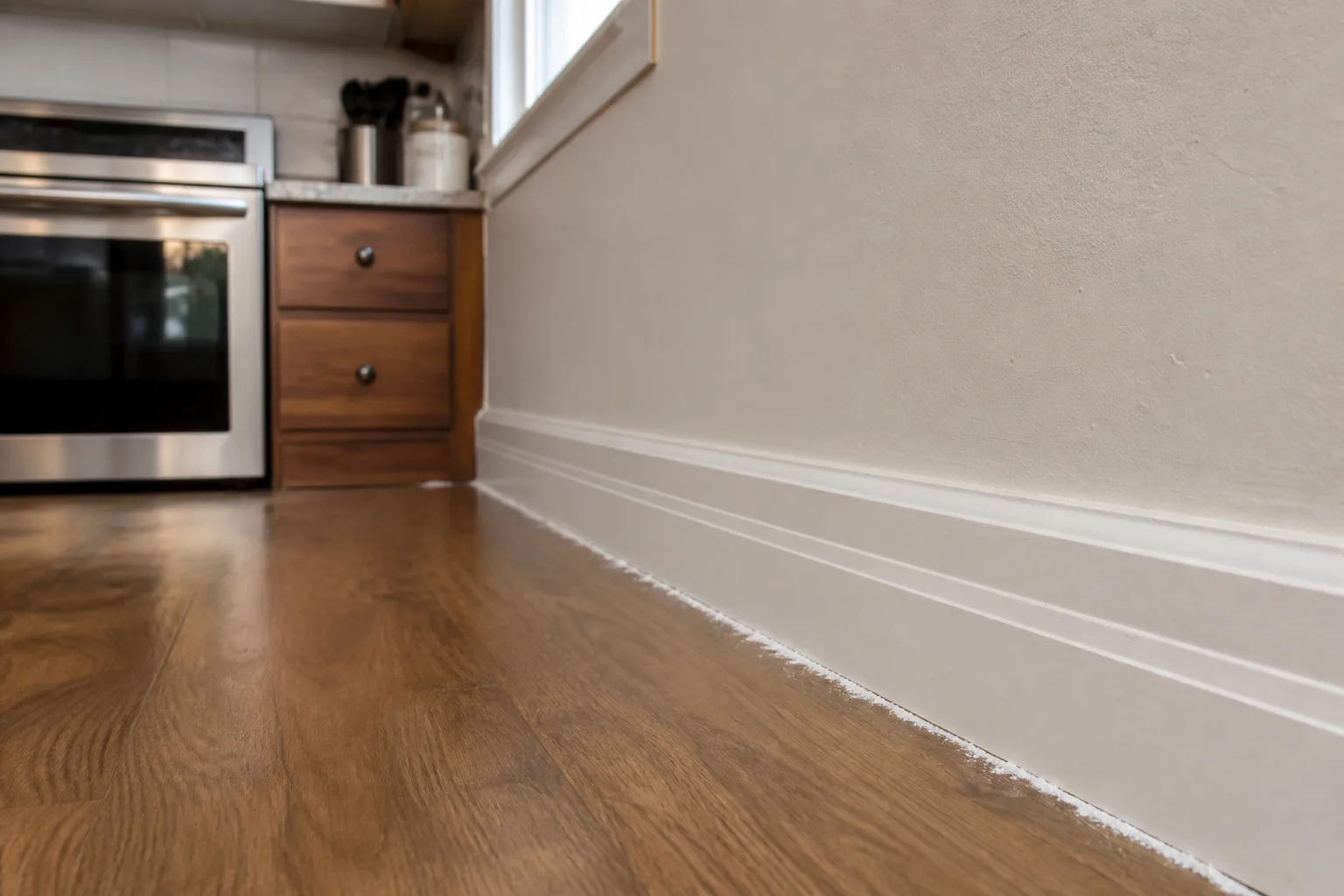
Yes—diatomaceous earth (DE) kills cockroaches, but it is a slow contact desiccant, not a fast knockout spray. Roaches that crawl through a dry, undisturbed layer absorb damage to the waxy cuticle on their exoskeleton, lose moisture, and eventually die. That mechanism is real and well documented. It is also easy to waste: a wet application, a thick pile in the open, or dust placed where roaches never walk will leave you convinced DE “does not work” when the problem was placement and conditions.
If you want a natural, low-toxicity tool for roaches, DE belongs in your kit—usually alongside sanitation, exclusion, and often gel baits or boric acid dust in hidden voids. Here is how it works, where to put it, how long to wait, and when a different tool will save you weeks of frustration.
The Short Answer: Yes, but Slowly—and Only When Applied Correctly
Diatomaceous earth is an inorganic desiccant dust. It does not poison roaches and does not need to be eaten. According to the National Pesticide Information Center (NPIC), DE kills insects by absorbing oils and fats from the cuticle of the exoskeleton; the sharp microscopic edges are abrasive and speed dehydration (NPIC). It stays effective as long as it remains dry and undisturbed.
University of California Integrated Pest Management (UC IPM) classifies desiccant dusts such as diatomaceous earth as repellent and effective when applied to voids and out-of-the-way places—meaning roaches may avoid heavy visible piles, which is one reason pros emphasize thin films in travel lanes rather than mounds on the kitchen floor (UC IPM).
Expect individual roaches that contact treated surfaces to die over roughly 24 to 72 hours, not instantly. Clearing a breeding population with DE alone commonly takes several weeks—often three to four weeks or longer if egg cases keep hatching and you have not removed food and water.
What Actually Happens When Roaches Walk Through DE
Picture the waxy coating on a roach’s exoskeleton as the insect’s rain jacket. DE scuffs that layer and pulls out protective lipids. The roach loses water faster than it can replace it, especially in the warm, dry harborages it prefers. Grooming spreads the dust to mouthparts and legs, which helps—but DE is still a walk-across product, not a bait roaches seek out.
That distinction matters for German cockroaches, the small tan species that breeds indoors year-round. They hide in extremely tight cracks—sometimes as narrow as 1/16 inch—and travel along wall edges. A dust line along those edges works; a dust donut in the center of the floor does not.
What Is Diatomaceous Earth?
DE is mined from sedimentary deposits of fossilized diatoms, microscopic aquatic organisms whose skeletons are rich in silica. Processed into a fine powder, it has been registered as a pesticide ingredient since the 1960s and appears in more than 150 EPA-registered products for indoor and outdoor use against cockroaches, ants, fleas, bed bugs, and other pests (NPIC).
Most pesticide-grade DE is amorphous silicon dioxide. “Food grade” DE is further purified for use in animal feed and some consumer products; the FDA lists it as Generally Recognized as Safe for those purposes. That does not mean you should breathe it freely—it is still a fine dust and an irritant—but it does mean you should avoid pool-filter grade or other high-crystalline-silica products not labeled for pest control.
Food-Grade vs Pest-Grade DE (and What to Avoid)
For roaches indoors, buy pest-control-labeled DE or food-grade DE marketed for insect control—not pool filter media. Pool-grade DE is heat-treated and can contain higher levels of crystalline silica, which poses greater long-term inhalation risk (NPIC).
Read the label every time. Registered products include directions for where you may apply, re-entry intervals, and whether the formulation includes synergists or anti-caking agents. A plain bag of food-grade DE from a feed store can work, but if you are treating inside kitchen cabinets, a labeled household insecticide dust is easier to defend and usually flows better through a duster.
Never mix DE with water for roach control indoors. Wet DE does not dehydrate insects. Some gardeners spray DE slurries on plants; once dry, the residue can work outdoors. Inside a humid kitchen, a wet application often cakes, clumps, and stops clinging to roach bodies—the opposite of what you want.
How DE Compares to Boric Acid, Baits, and Sprays
DE is one desiccant option. Boric acid powder is the other dust pros reach for most often against cockroaches—and for good reason. UC IPM notes boric acid is both a contact and oral insecticide: it clings electrostatically to roaches, is ingested during grooming, and is not repellent when applied as a thin film. It may take seven days or more for a noticeable population drop, but it generally outperforms DE on established indoor infestations (UC IPM).
Gel baits (fipronil, indoxacarb, abamectin, and others) let roaches feed and share poison in harborages you cannot reach. UC IPM recommends baits over sprays for long-term control when sanitation and exclusion are in place. Aerosol foggers and broad sprays often disperse roaches without killing enough of the population—exactly the wrong outcome when you are trying to map harborages.
| Tool | Speed on roaches | Kills eggs? | Best use |
|---|---|---|---|
| Diatomaceous earth | Slow (days per insect; weeks for population) | No | Dry voids, wall edges, supplemental barrier |
| Boric acid dust | Moderate (often ~7+ days for visible reduction) | No | Undisturbed voids, under appliances, cracks |
| Gel baits | Moderate; hits hidden colonies | No direct egg kill; breaks breeding cycle | Primary control for German roaches indoors |
| Sprays/foggers | Fast knockdown; poor residual | No | Generally discouraged as sole strategy |
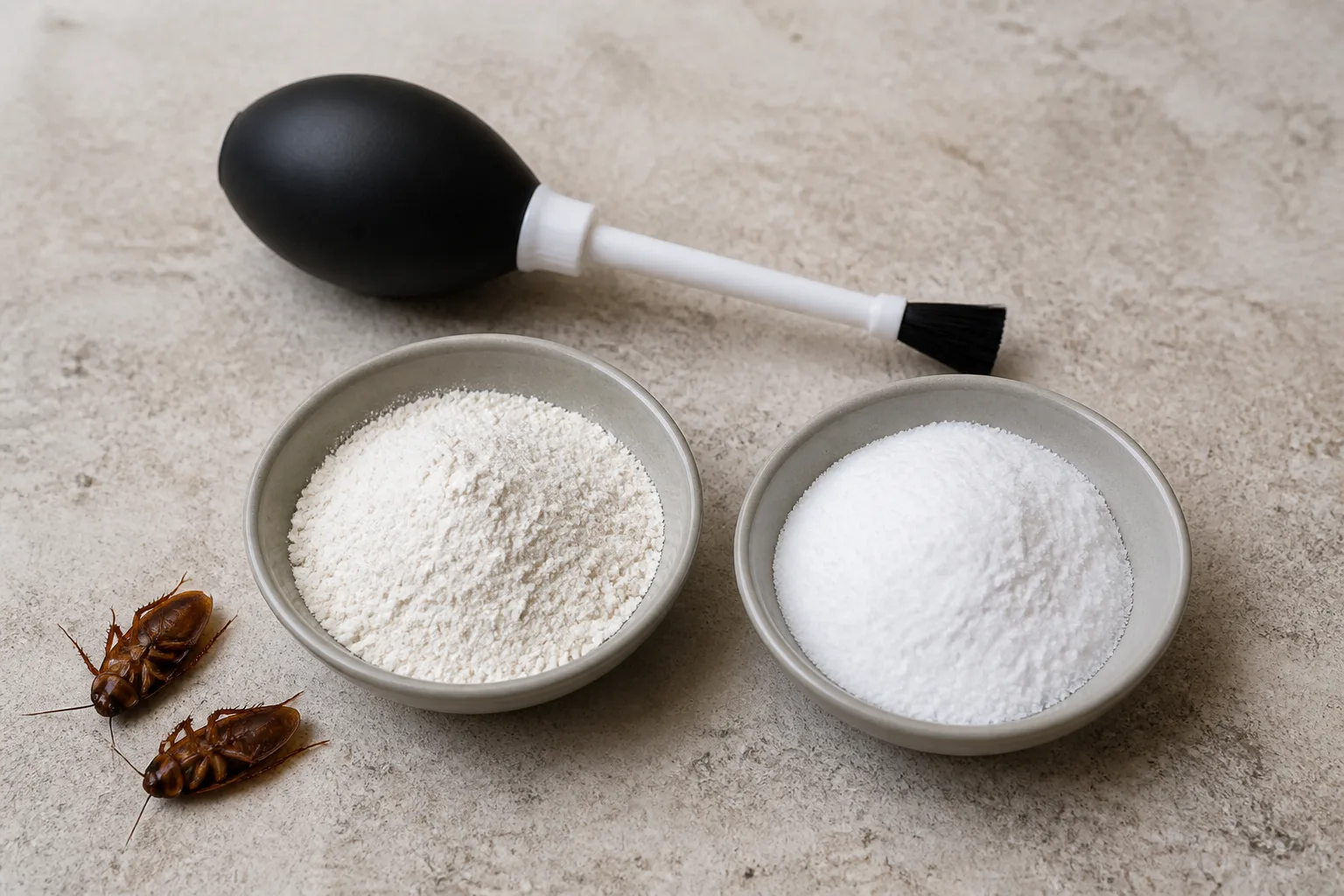
When to Choose Each Tool
Reach for DE first when you want a low-odor, non-bait dust in a dry void—behind a stationary refrigerator, along a pipe chase, or in a utility closet where pets might find gel bait. DE is also reasonable as a preventive dust in vacant apartments or seasonal cabins before roaches establish.
Switch priority to boric acid or gel baits when you are seeing roaches nightly in the kitchen, finding oothecae (egg cases), or dealing with German cockroaches—the species that breeds entirely indoors and is the main public-health pest in multi-unit housing (UC IPM).
Skip sprays as your main plan. If you already fogged and now see roaches scattered in new rooms, stop spraying, set sticky monitors to find the new harborages, and use baits or dusts targeted to those spots.
Identify Your Roach Species Before You Treat
Identification changes where you dust and whether outdoor perimeter work matters.
German cockroach — Tan to light brown, about 1/2 inch long, two dark stripes behind the head. Lives and breeds indoors; favors kitchens and bathrooms. This is the species DE users struggle with most because populations rebound from egg cases unless you combine dust with baits and sanitation.
American cockroach — Reddish brown, up to 1 1/2 inches, often enters from sewers, drains, or mulch. You may need outdoor bait stations and door sweeps as much as indoor dust.
Oriental cockroach — Dark brown to black, prefers cool, damp areas (basements, floor drains). DE in dry upper cabinets will not touch them if they are living in a wet crawl space.
Brownbanded cockroach — Smaller, lighter bands on wings; hides in warm, elevated spots (electronics, upper cabinets), not always near food prep.
Place sticky traps along wall edges for a few nights and compare what you catch to extension ID photos before you commit to a dust-only plan (UC IPM).
Where to Apply Diatomaceous Earth for Roaches
Think like a roach: dark, warm, humid, within a few feet of food or water, with surfaces touching both sides of the body. DE must sit in those travel lanes, not where you wish roaches would walk.
Kitchen and Bathroom Harborages
Priority indoor zones include:
- Along the junction where baseboards meet the floor, especially behind the stove and refrigerator
- Under and behind the dishwasher, where grease and moisture meet
- Cabinet voids along back corners and hinge gaps—apply through small openings, not across dishes
- Pipe penetrations under sinks; dust the void between the cabinet wall and drywall
- Behind toilet and vanity bases where condensation collects
- Door frames and window frames on ground-floor rooms if American or Oriental roaches enter from outside
Leave a visible thin film, not snow drifts. Thick layers can repel roaches and are more likely to be kicked up by foot traffic or vacuuming.
Cracks, Voids, and Appliance Gaps
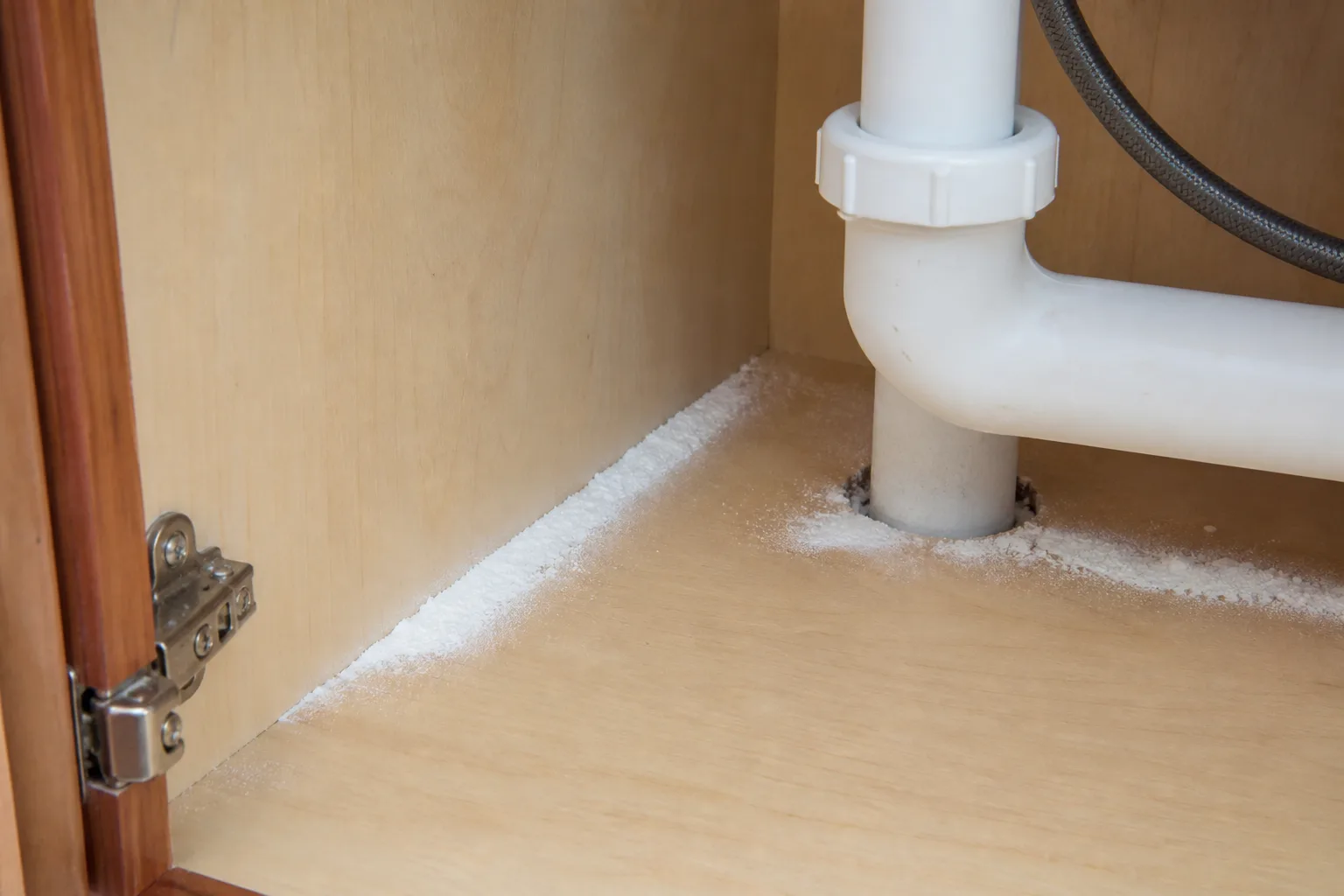
Remove kick plates from stoves and refrigerators when possible and blow a light dust into the void with a puff duster. UC IPM recommends thin films throughout undisturbed voids under appliances—the same principle pros use for boric acid (UC IPM).
Target electrical outlet boxes only if you are qualified to remove cover plates safely; otherwise dust the floor edge below outlets. Drill a small hole in the top of a sink cabinet kick panel and inject dust into the dead space if your kitchen layout has one.
Do not dust open countertops, cutting boards, pet food bowls, dish racks, or anywhere food is prepared. DE is low toxicity, not no toxicity—and abrasive dust on food surfaces is unacceptable.
Step-by-Step: How to Apply DE Without Wasting It
- Clean and dry first. Wipe grease along stove backs and mop sticky floors. Wet or greasy surfaces cake dust. Fix dripping faucets so bathroom harborages dry out.
- Remove clutter—cardboard, paper bags, and stacked magazines are roach apartments. You are buying access, not just applying powder.
- Don PPE: N95 or P100 dust mask, safety glasses, long sleeves. NPIC notes DE can irritate nose, eyes, and skin when airborne (NPIC).
- Fill a bulb duster or squeeze bottle with a narrow nozzle (a clean condiment bottle works in a pinch). Keep the bottle dry.
- Apply a fine line along cracks, not clouds in the room center. Squeeze gently while moving along the seam.
- Leave undisturbed 7 to 10 days in each treated zone if possible. Avoid mopping treated baseboard edges during this window.
- Vacuum dead roaches and spent dust with a HEPA vacuum, then reapply thinly to active harborages. Continue at least one full month if you still catch roaches on monitors—longer for heavy German roach infestations.
- Add gel baits or boric acid in parallel if nightly sightings continue past two weeks. DE alone is often too slow as the only tactic.
Best Tools for Thin, Even Dusting
A hand bellows duster gives the most control for wall voids and under-appliance work. Plastic squeeze bottles with a rigid tip help for baseboard seams. Avoid shaking DE straight from the bag—you will over-apply and inhale more dust.
Epic Gardening’s practical guidance for garden DE applies indoors too: sifters and dusters beat bare-handed sprinkling for even coverage, and always read the product label before starting (Epic Gardening).
Timeline: How Long DE Takes to Kill Roaches
Contact begins immediately when a roach walks through treated dust, but death is a dehydration process. Individual insects often die within one to three days under ideal dry conditions. Population-level control—when you stop seeing live roaches on traps—usually needs three to four weeks minimum if DE is your only active ingredient, because:
- New nymphs hatch from egg cases on a rolling schedule
- Roaches that detour around visible dust never contact it
- Mopping, steam, or humidity resets treated zones
Set sticky traps before treatment and check them twice weekly. Flat or declining catch counts mean your harborages are right. Flat lines with nightly kitchen sightings mean reposition dust, add baits, or both.
Why DE Does Not Kill Cockroach Eggs
Female cockroaches deposit oothecae—protective egg cases—in hidden crevices. German cockroach females carry the case until just before hatch; other species glue cases in secluded spots where dust rarely penetrates. DE does not penetrate the egg case wall, so each case can release 30 to 40 nymphs after you kill the adults.
That is why extension IPM programs emphasize continuous monitoring and repeated treatments through at least one full nymphal generation—often longer for German roaches (UC IPM). Vacuuming visible oothecae with a HEPA vacuum removes future hatch waves; dusting alone does not.
Safety for People, Pets, and Indoor Air
Food-grade and pesticide-labeled DE are low toxicity if eaten in small amounts, but they are not harmless dust. NPIC lists irritation of the nose and nasal passages, coughing with large inhalation exposures, eye abrasion, and skin dryness (NPIC).
Practical safety rules:
- Apply when children and pets are out of the room until dust settles—usually 30 to 60 minutes with gentle ventilation
- Do not sleep in a bedroom where you just puffed dust along every baseboard
- Avoid broadcasting DE on carpets where toddlers crawl; prefer cracks and voids
- Store DE in a sealed container labeled clearly—never next to pool chemicals
- If anyone has asthma or COPD, have them leave during application
Dogs and cats that walk through heavy floor dust may track it or inhale it while grooming. Thin edge applications reduce that risk compared with carpet powdering.
Prevention Habits That Make DE Worth Using
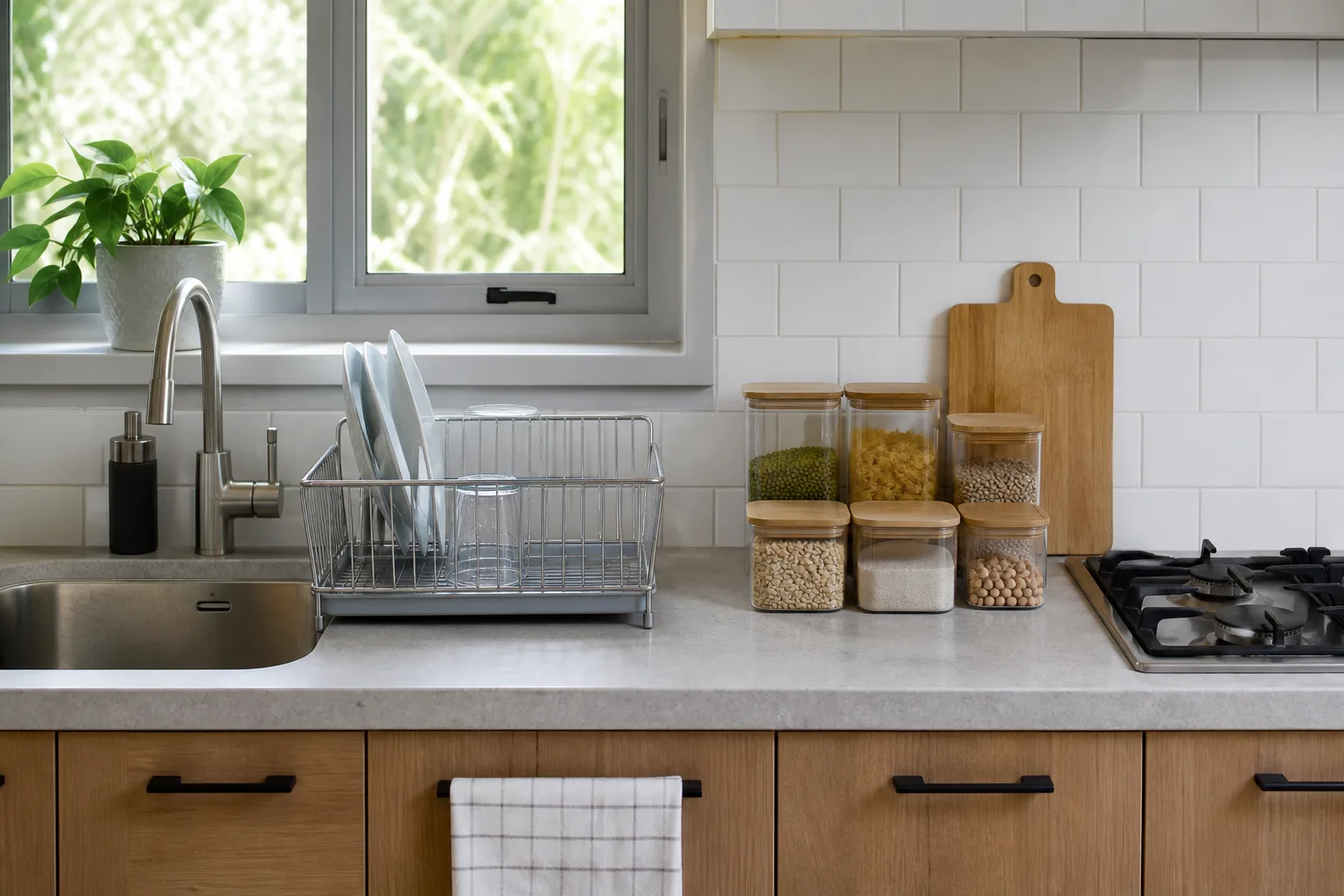
Dust without sanitation is a treadmill. Roaches need food, water, and shelter; remove one leg and DE has a fighting chance.
- Wipe counters and stovetops nightly; even grease film feeds roaches
- Fix leaks under sinks and around tub surrounds
- Store dry food in sealed containers; do not leave pet food out overnight
- Take kitchen trash out daily and rinse recyclables
- Declutter cardboard—German roaches love corrugated hiding spots
- Seal gaps around pipes, escutcheon plates, and door sweeps so new roaches cannot bypass your dust lines
- Vacuum cracks and crevices weekly with a HEPA vacuum to remove feces, oothecae, and shed skins that attract more roaches
Integrated pest management succeeds when exclusion and cleaning shrink the population while dusts and baits finish the job—not when powder substitutes for doing dishes.
When to Call a Pest Professional
DIY DE is reasonable for occasional invaders, light bathroom sightings, or supplemental void treatment. Call a licensed pest control operator when:
- You see roaches every night after four weeks of targeted baiting, dusting, and sanitation
- You live in multi-unit housing and neighbors will not treat—German roaches will reinfest from shared wall voids
- Someone in the home has severe asthma triggered by pests or dust
- You are finding oothecae in multiple rooms, indicating established breeding
- You cannot access voids safely (electrical, gas lines, sealed cabinet boxes)
Pros have access to commercial baits, flush-and-vacuum protocols, and void dusting tools that reach where retail bottles cannot. That is not a failure on your part—it is matching the tool to an entrenched population.
Conclusion
Diatomaceous earth does kill roaches by damaging the waxy cuticle and dehydrating insects that crawl through dry, undisturbed dust. It is a legitimate, low-toxicity option registered for cockroach control and supported by extension IPM guidance for void and crack treatments. It is also slow, egg-blind, and useless when wet—which means it works best as part of a plan that includes sanitation, exclusion, monitoring, and often faster-acting baits or boric acid dust where roaches actually travel.
Apply thin lines in harborages, wear a mask, leave dust dry for at least a week between disturbances, and judge success with sticky traps—not wishful thinking. If populations are still rising after a month, DE was never the wrong chemistry; it was the wrong only chemistry. Adjust the plan, and you will get the natural control outcome you were looking for.