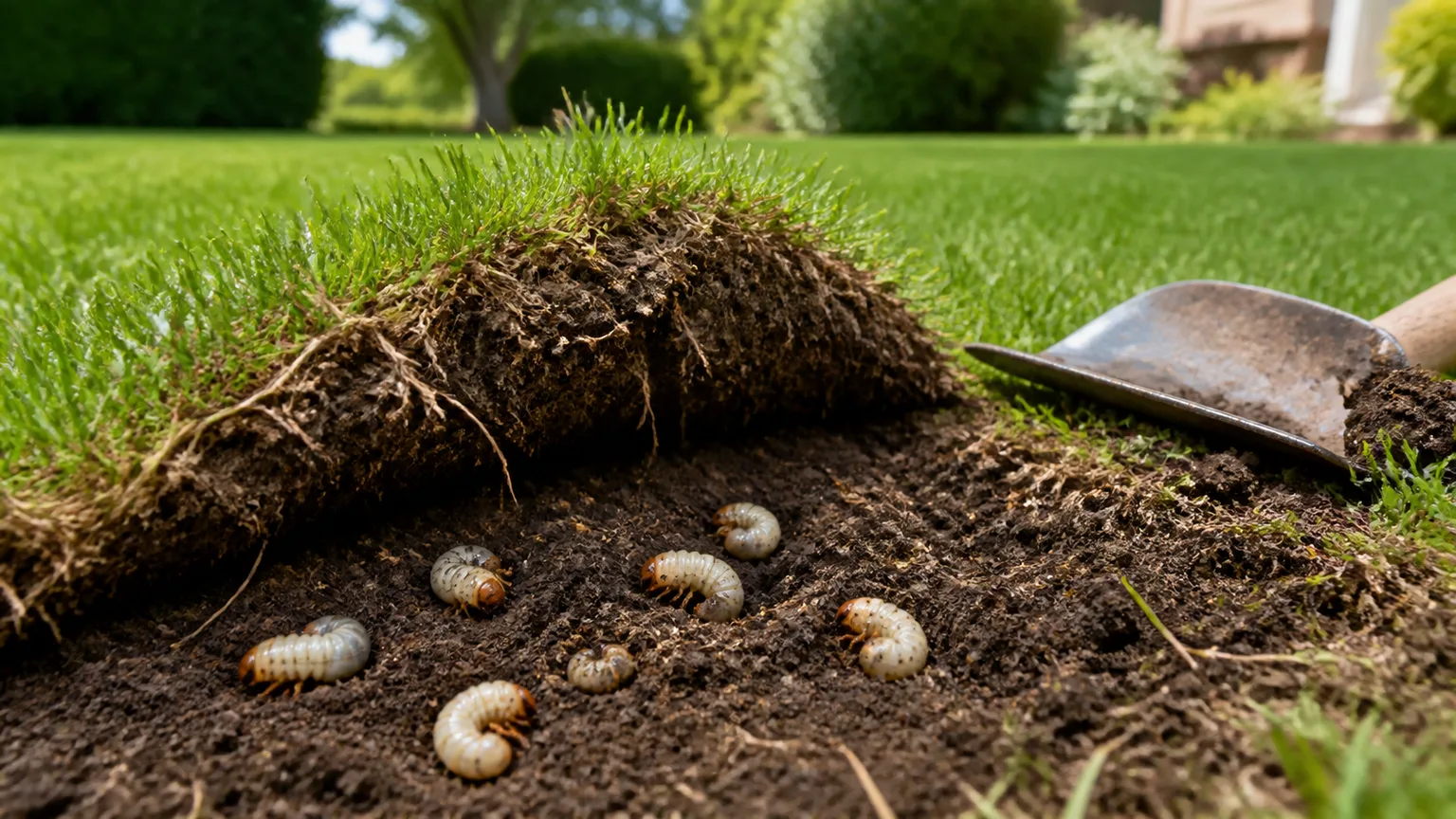
5 Ways to Use Diatomaceous Earth for Pest Control
Learn five practical ways to use diatomaceous earth for pest control, plus product grades, dry-weather rules, safety limits, and better next steps.
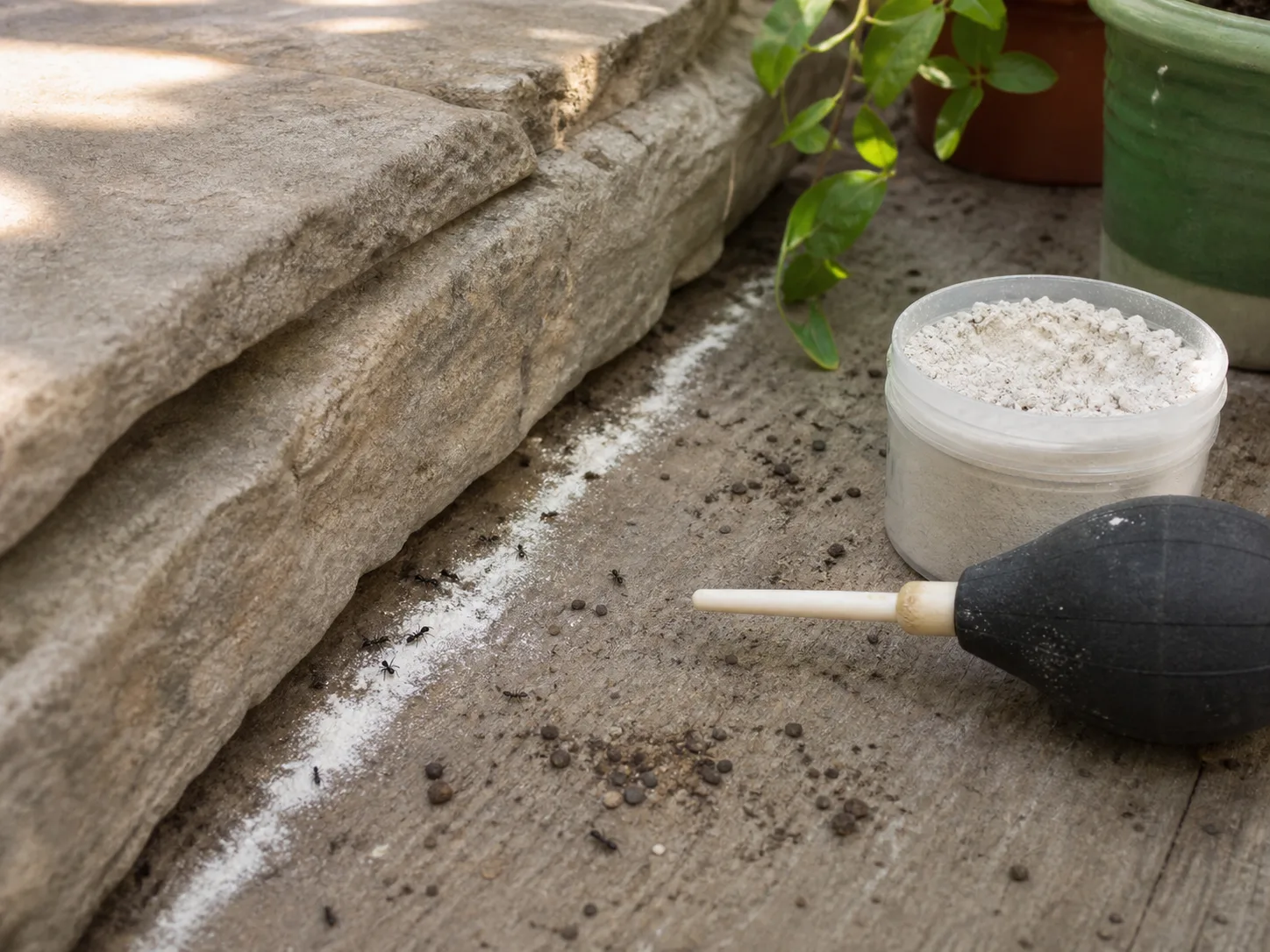
Diatomaceous earth (DE) is most useful as a dry, targeted contact barrier—not as a magic powder to spread across every surface. It is made from the fossilized remains of microscopic aquatic organisms called diatoms. The particles can abrade an insect’s waxy outer layer and absorb surface oils, increasing water loss until the pest dies. The pest has to cross the deposit, and the deposit has to remain dry enough to work.
That requirement gives DE a narrow but practical role in an integrated pest-management plan. It can help at a door threshold, in a dry crack, on a dry soil surface, or around a protected resting zone. It cannot seal structural gaps, remove a food source, reach every pest hidden in furniture, or replace a labeled treatment when an infestation is established.
The five uses below are arranged around that reality. Each one tells you where the powder belongs, what preparation makes it more effective, and when another control is the better choice.
What diatomaceous earth does—and what it does not do
DE is a physical insecticide. It does not need to be eaten, and it is not a repellent in the same way a scent-based product might be. A crawling pest must make contact with a sufficiently dry, undisturbed layer. The National Pesticide Information Center explains that diatomaceous earth works by absorbing oils and fats from an insect or mite’s outer covering; it remains effective only while it is dry and undisturbed (NPIC).
That distinction changes how you use it. A thin line tucked into a dry crack can be more useful than a thick white coating in an open, damp area. A powder ring around a plant may intercept some crawlers, but it will not kill aphids feeding on new leaves. DE may kill a flea crossing carpet, but it does not remove flea eggs and larvae throughout a home by itself. It may injure a bed bug that contacts it, but it does not make an infested mattress safe after one application.
Why dry contact matters
Water, dew, irrigation, steam, and high humidity reduce the performance of loose DE. A wet slurry may dry into a residue, but a homemade spray is not automatically equivalent to a pesticide product labeled for wet application. Do not assume that making DE stick to a leaf makes it work better. The physical mechanism depends on dry contact, while a wet coat can also make scouting harder and spread powder to places where people, pets, beneficial insects, or air vents contact it.
The practical test is simple: can the pest reach a thin deposit, and can that deposit stay dry and protected? If the answer is no, choose exclusion, sanitation, traps, washing, or a labeled pesticide instead.
Choose the right product before you apply it
Read the entire package, not only the words “natural” or “food grade.” Products can differ in formulation, allowed sites, pest claims, protective-equipment directions, and whether they are registered for a particular use. Pool-filter products are not a substitute for a pest-control product. They may contain a higher proportion of crystalline silica, and the label is not interchangeable with a garden or household product.
Food-grade DE is commonly sold for uses around food or animals, but “food grade” does not mean “safe to breathe as airborne dust” or “approved for every pest-control site.” Fine particles can irritate the nose, lungs, eyes, and skin. A pesticide-labeled product can be the more appropriate choice when the label supports your target pest and location. Follow the exact directions for application, re-entry, ventilation, and disposal.
Before buying, check four things:
- The active ingredient and formulation. Look for the product’s ingredient statement and avoid pool-filter material for household pest control.
- The allowed site. Indoor cracks, outdoor soil, food crops, animal areas, and houseplant soil are not automatically interchangeable.
- The target pest. A product labeled for crawling insects may not cover mites, fleas, bed bugs, or slugs.
- The safety directions. Use the specified protective equipment and keep people and animals away while dust is airborne.
Use 1: Seal entry points with a dry exterior barrier
DE works best as a temporary interception zone outside a small, identified entry route. First locate the route: a gap below a door, a crack around a pipe, a window corner, or a foundation joint. Then fix the route with weatherstripping, caulk, a door sweep, mesh, or another appropriate repair. Put DE only in the protected area the pest must cross while the repair is pending or as a supplemental dry barrier.
Do not make a ring around an entire house and call the job finished. Wind, rain, sprinklers, leaves, and soil moisture break the deposit. A broad outdoor application can also expose ants, beetles, spiders, bees, and other non-target organisms. A narrow line inside a dry threshold is easier to monitor and less likely to become a landscape-wide residue.
For ants, remove crumbs, sugary spills, pet food, and water sources first. Follow the trail to the entry point, clean the route, then repair the gap. DE is most useful after the attractant and access problem are addressed. If the trail continues from a wall void or a nest, a bait-based integrated plan may outperform a surface barrier because workers can carry bait back to the colony.
Use 2: Treat crawling routes inside the home
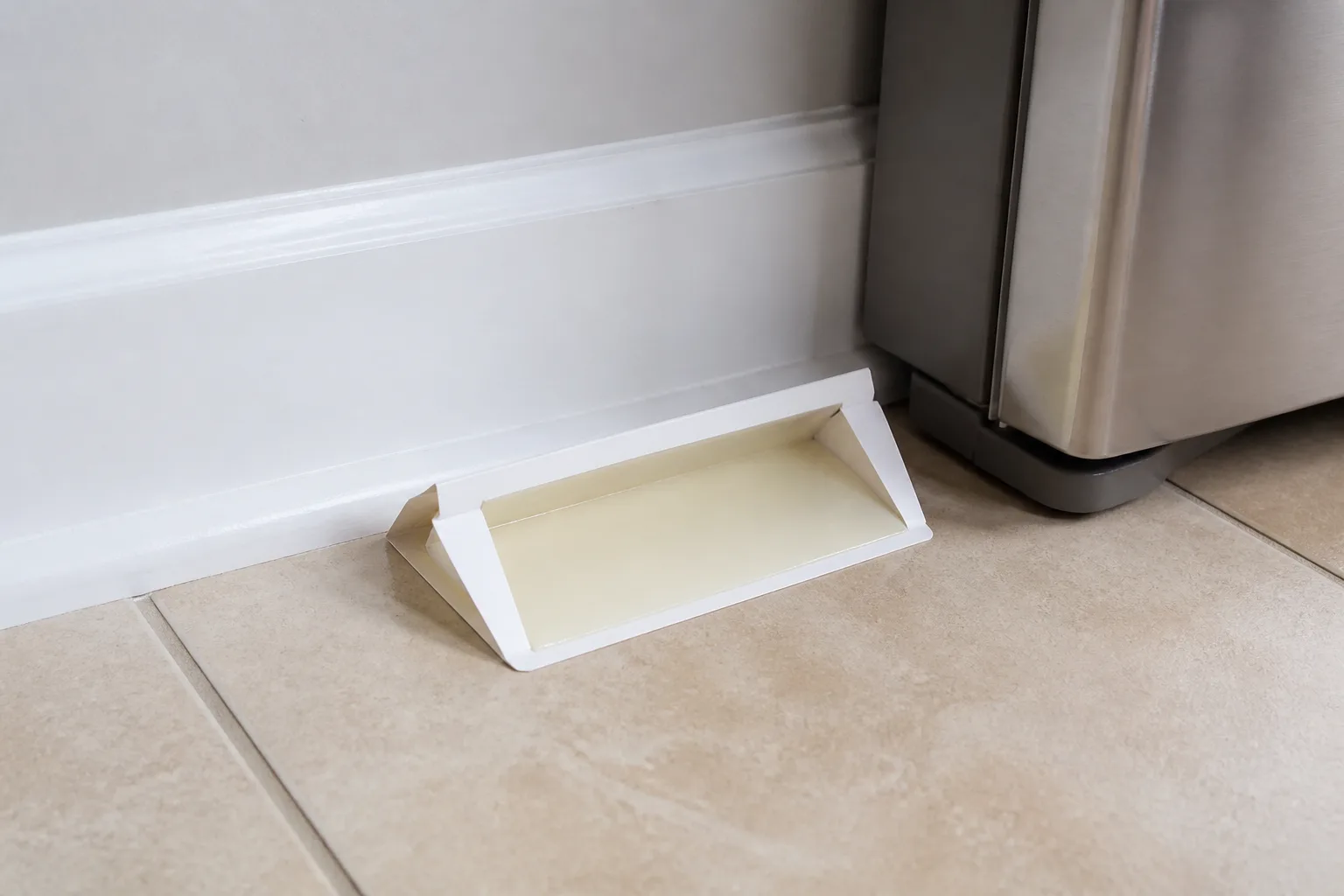
Inside, apply a very light layer in protected cracks and crevices where a crawling pest actually travels: behind a toe-kick, under an appliance edge, around a pipe penetration, or inside a void that people and pets cannot easily disturb. A heavy visible pile is not more reliable. It can be blown into the air, tracked through the home, or avoided by a pest that walks around it.
Put the powder where pests travel
Move appliances only if you can do so safely. Vacuum crumbs and droppings, repair leaks, reduce clutter, and close the gap after treatment when possible. For roaches, DE is a supplement to sanitation, monitoring, exclusion, and bait placement—not a replacement for them. For silverfish or earwigs, moisture correction may be more important than a dust line.
Use a hand duster or spoon to place the smallest practical amount. Never blow on a pile, shake a bag over a room, or apply it near an HVAC return or a running fan. Label directions control how long it stays and when it must be removed. If you cannot keep the dust away from a child’s hands, a pet’s bedding, food-preparation surfaces, or a floor that is regularly walked on, do not use loose DE there.
Use 3: Protect houseplants from soil-line pests
DE has a limited role on houseplants because many common pests feed on foliage, hide in leaf axils, or fly rather than crawl across the soil. It is a better match for a dry soil surface where larvae, small crawlers, or wandering adults must cross. Let the top of the mix dry according to the plant’s care needs, then apply a thin trace around the soil surface without burying the stem or coating leaves.
Do not use a soil dust as a treatment for an unseen root problem, fungus gnat outbreak, aphid colony, or spider mite infestation without confirming the pest. Yellow leaves and wilting can have non-pest causes. For fungus gnats, reduce consistently wet soil and use monitoring cards; for spider mites, inspect leaf undersides and wash or use a labeled contact product as appropriate. DE on the top of the pot cannot reach mites feeding under leaves.
Keep DE out of flowers and avoid dusting plants that pollinators visit. It is a non-selective physical material: a bee or predatory insect that contacts a dry deposit can be affected too. Watering can also turn the dust into a crust and wash it into places you did not intend to treat. Reapply only when the label allows and the surface is dry.
Use 4: Support bed-bug control in cracks and furniture zones
Bed bugs are a high-stakes example of where DE must be treated as one part of a documented control plan. Use only a product labeled for bed bugs and the exact sites you intend to treat. Put a minimal amount into inaccessible cracks, screw holes, bed-frame joints, and other protected harborages after reducing clutter and vacuuming according to the product or professional plan.
Do not coat the top of a mattress, bedding, clothing, or the entire bedroom floor. Those applications increase exposure and may be disturbed before they help. They also make it harder to see whether bugs are still present. Encase mattresses and box springs, launder and dry items using appropriate heat, install monitoring interceptors, and inspect on a schedule. If people continue receiving bites or live bugs are found after cleanup, contact a licensed pest professional; bed bugs often require coordinated heat, steam, vacuuming, encasement, or labeled insecticide work.
DE does not repel bed bugs or sterilize an infested room. A dry deposit can kill a bug that crosses it, but bugs can remain in untreated voids and eggs can hatch later. Reinspect rather than assuming that a quiet week means the problem is gone.
Use 5: Reduce flea pressure in carpets and resting areas
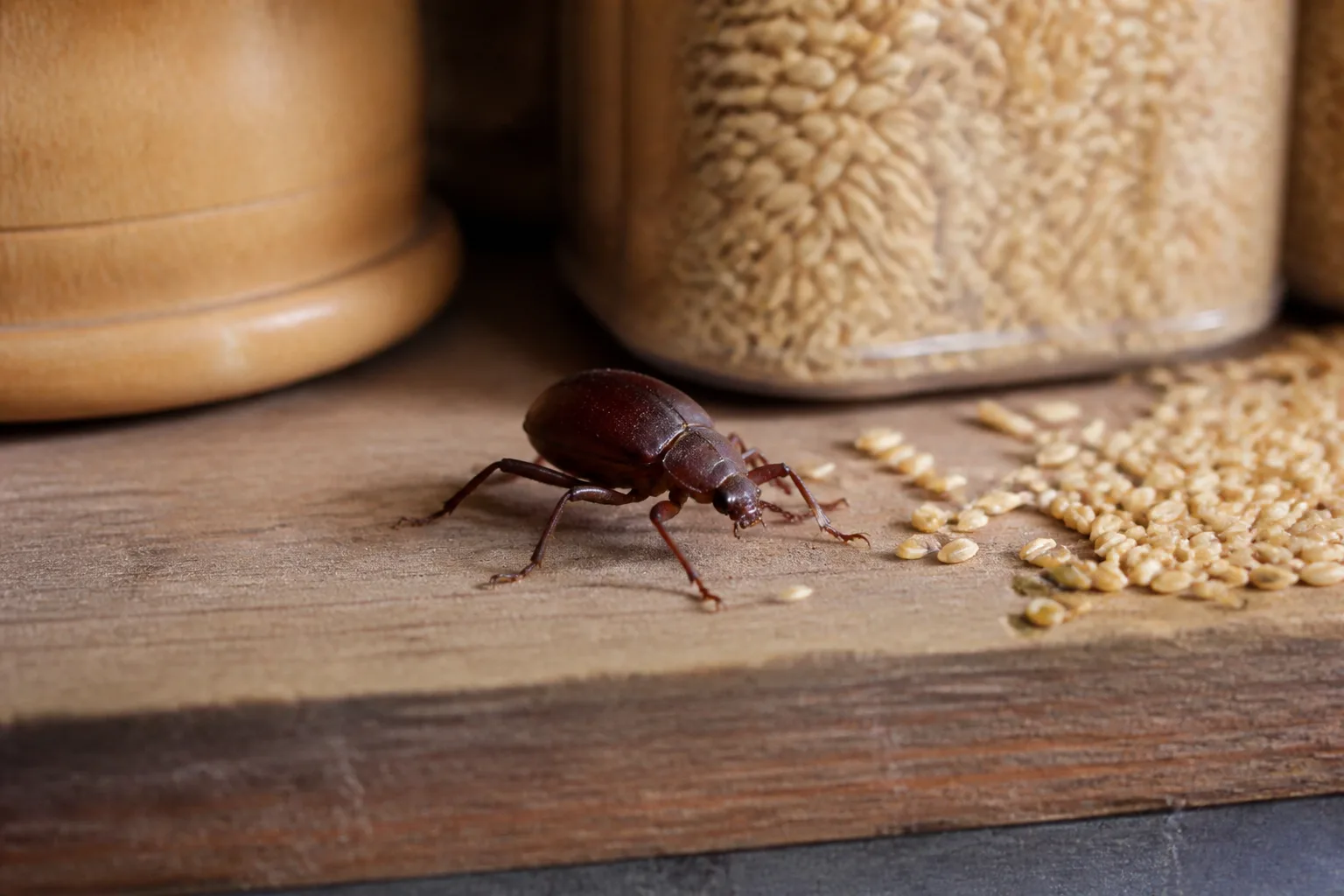
Flea control has to include the animal, the home, and the environment. Vacuuming removes adults, eggs, larvae, and pupae from carpet edges, furniture seams, and under furniture; empty the vacuum safely. Wash pet bedding using the hottest safe cycle and follow veterinary advice for an appropriate flea product. DE can be a limited supplemental treatment on a dry, label-approved surface, left only as directed and then removed thoroughly.
Do not dust a pet’s coat, face, bedding, or sleeping place casually. Fine powder can be inhaled, get into eyes, or worsen respiratory problems. A pet may groom the residue, and “natural” does not remove the need for species-specific veterinary guidance. Cats, dogs, rabbits, birds, and other animals do not share the same tolerance for pest-control products.
If fleas keep appearing, the main failure is usually an incomplete life-cycle plan rather than too little powder. Pupae can remain protected in carpet and emerge later. Continue vacuuming and follow the timing of the veterinary and household products you use. DE alone cannot keep a treated pet from bringing in more fleas.
How to apply DE without creating a dust problem
Prepare the space first. Remove food, bowls, toys, and unnecessary clutter. Open ventilation only in a way that does not blow dust through the room. Wear the label-required protection, keep children and animals away, and apply a thin, controlled layer with a duster rather than broadcasting powder.
Then follow this sequence:
- Confirm the pest and identify its travel route.
- Clean the attractant, food residue, moisture, and clutter.
- Repair the entry point or harboring condition you can fix.
- Apply the smallest label-compliant amount to a dry, protected site.
- Keep the area undisturbed for the label’s contact period.
- Monitor with traps, inspections, or a hand lens instead of adding more powder automatically.
- Remove excess residue safely and reassess if live pests remain.
Never mix DE with household cleaners, essential oils, or an untested spray recipe. Do not put it into the air intentionally, and do not use compressed air to distribute it. If dust gets in your eyes, rinse with clean water and follow the product first-aid instructions. For breathing symptoms or a substantial exposure, seek medical or poison-control guidance.
Moisture, rain, and reapplication
DE is not a set-and-forget product. Outdoor rain, dew, irrigation, and sprinklers can stop a deposit from functioning. Indoor mopping, leaks, condensation, and steam do the same. Reapply only after the area is dry and only as often as the label permits. If a site repeatedly becomes wet, solve the moisture problem or select a different control.
Do not respond to a wet deposit by adding a thicker one. That increases residue without restoring the original dry-contact conditions. Remove or refresh the product as directed, correct the moisture, and inspect the pest route. Weather and airflow matter especially around doors, patios, raised beds, and plant shelves.
Pets, children, lungs, and pollinators
DE is not a harmless cloud. The National Pesticide Information Center notes that dust can irritate the respiratory tract and eyes, and that inhaling a large amount can cause coughing or shortness of breath. Keep the application low, localized, and undisturbed. Avoid use in rooms occupied by anyone with asthma or reactive airways unless a qualified professional and the label support that choice.
Outdoors, protect pollinators by avoiding flowers, flowering weeds, open blooms, and active foraging areas. Do not treat a plant in bloom with a blanket dusting. Indoors, keep powder off food-contact surfaces, children’s play areas, pet bowls, and bedding. Store the container closed, labeled, and away from moisture.
Why DE fails—and what to do next
The common failure modes are predictable:
- The wrong pest was identified. A sticky leaf, pale plant, or bite is not proof that DE is the right treatment.
- The pest never crossed the powder. Hidden nests, leaf undersides, wall voids, and carpet depths remain untreated.
- The deposit got wet. Reapplying over damp material wastes product.
- The layer was too thick or too exposed. Pests may avoid it, and people or pets may disturb it.
- The source was not corrected. Food, leaks, cracks, wildlife, or an untreated pet can keep restarting the problem.
- The control was expected to be immediate. Eggs, pupae, and protected life stages can survive.
After a failed application, stop adding powder. Reconfirm the pest, inspect at night if appropriate, use sticky monitors or a hand lens, and identify the source. Switch to the control that matches the biology: exclusion for entry pests, bait and sanitation for ants or roaches, washing and labeled contact treatments for foliage pests, and veterinary or professional help for fleas or bed bugs.
A simple decision guide for five common pests
| Problem | Where DE may fit | What must happen with it | When to choose another approach |
|---|---|---|---|
| Ants | A dry, protected entry route | Remove food and seal the gap | The colony is inside a wall or the trail returns after cleaning |
| Roaches | Dry cracks and voids | Sanitation, monitoring, exclusion, and bait | Heavy activity or inaccessible harborages persist |
| Houseplant soil pests | A dry soil surface if the label allows | Correct overwatering and monitor adults | Pests are on leaves, flying, or feeding inside tissue |
| Bed bugs | Labeled, inaccessible harborages | Encasement, inspection, vacuuming, and monitoring | Live bugs persist or multiple rooms are involved |
| Fleas | A dry, approved carpet or resting-area supplement | Treat pets, vacuum, wash bedding, and repeat on schedule | The animal is untreated, respiratory risk is present, or fleas recur |
Conclusion: use DE as a targeted tool
Diatomaceous earth can be useful when a pest must cross a dry, protected deposit and when the product label supports the site. Its five practical roles are targeted entry barriers, protected indoor routes, dry houseplant soil surfaces, carefully managed bed-bug harborages, and limited flea-environment support. In every case, preparation and monitoring matter more than a large amount of powder.
Use DE sparingly, keep it dry, protect people, pets, and beneficial insects, and pair it with exclusion, cleaning, moisture control, traps, or professional help. If you cannot explain where the pest will contact the powder—or how you will know whether the pest is gone—DE is probably not the right first move.