How to Get Rid of Snails Before They Damage Plants
Get rid of garden snails fast with a first-night hand-picking routine, shelter traps, watering changes, copper limits, and pet-aware bait guidance.
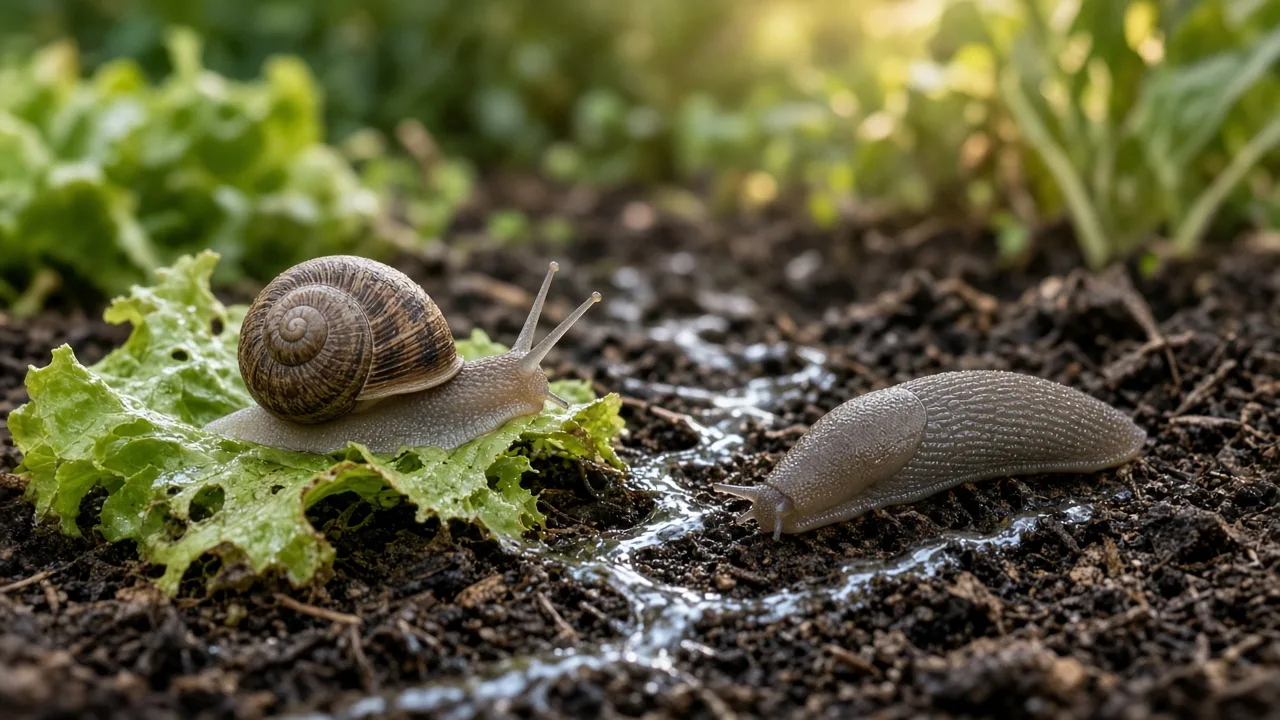
If snails are chewing fresh holes in your lettuce, basil, hostas, strawberries, or seedlings, start tonight with a flashlight—not a random spray. The fastest useful response is a short sequence: confirm the pest, hand-pick the snails you can find, place a daytime shelter trap, and remove the damp hiding places nearest the damaged plants.
That sequence matters because snails are usually hidden when you notice the damage. They feed at night, on cloudy days, and after wet weather, then retreat beneath boards, pots, stones, mulch, leaf litter, dense ground cover, and low foliage. Bait can reduce numbers, but it will not solve a garden that continues to provide food, moisture, and safe shelter. UC IPM recommends combining habitat modification, trapping, exclusion, hand-picking, and—when justified—baiting.
Start with a 10-minute confirmation
Before you treat the bed, inspect the damaged plant just after dark or early the next morning. Look underneath leaves, around the crown, under the pot rim, along the bed edge, and on the soil surface. A quick inspection prevents you from chasing snails when the real culprit is an earwig, caterpillar, beetle, rabbit, or a leaf disease.
What snail damage looks like
Snails and slugs make irregular holes with comparatively smooth, scraped edges. They may remove the center of a leaf, nibble through the margin, clip a young seedling at ground level, or leave shallow feeding marks on fruit close to the soil. The strongest confirmation is a shiny or silvery slime trail on the leaf, pot, soil, edging, or nearby paving; holes alone are not proof. UC IPM specifically advises looking for mucous trails because several other pests make similar holes.
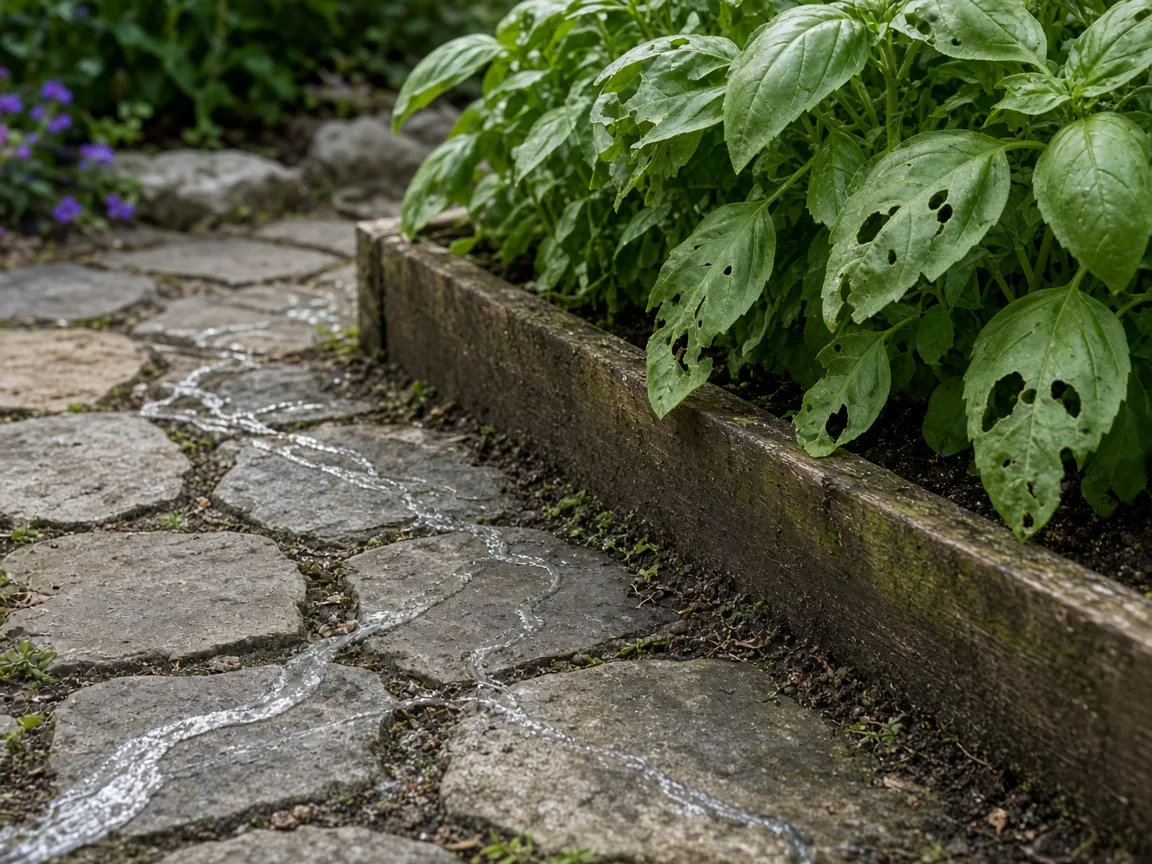
Slime trails are the clearest field clue that mollusks, rather than another chewing pest, made the holes.
Snails carry an external shell; slugs do not have a visible shell, but the two groups behave similarly enough that the first control steps are the same. Do not spend your first evening trying to identify the exact species unless your local extension office needs a photograph. The useful question is simpler: are mollusks feeding on a plant you need to protect, and where are they hiding during the day?
The fastest first-night control sequence
If a seedling bed is being stripped overnight, use this order. It provides immediate protection while you gather evidence for a longer plan.
- Water the target area in the late afternoon only if the soil is dry. Moisture draws hidden snails into motion after dusk, but do not saturate the bed or keep foliage wet all night.
- Search with a flashlight after dark. Check the underside of leaves and the shaded side of bed edging, containers, stones, and pots. Wear gloves or use tweezers if you prefer not to touch them.
- Remove every snail and slug you find from the protected zone. Put captured pests in a sealed bag for the trash or into a container of soapy water, then dispose of the contents responsibly. Do not throw them into a neighboring natural area; some species can be invasive or may simply return.
- Cover the most vulnerable plants overnight. A simple cloche, fine mesh, or an upturned ventilated container can buy a seedling one night of growth, provided it does not overheat or press on the foliage. Remove or vent the cover in the morning.
- Set a shelter trap before bed. Put a short board raised slightly above the soil, an inverted pot with one edge propped up, or a melon rind cut side down near the damaged area. Check underneath early the next morning and remove what has gathered there.
This is faster than waiting for a repellent to work because it removes active feeders from the plant and puts the next hiding place where you can inspect it. Repeat the search nightly for several nights; once the count falls, switch to twice-weekly checks during wet or mild weather.
Hand-pick after dusk
Hand-picking is underrated because it looks too simple to be a control program. In a small bed, however, repeated night searches can sharply reduce the local population, especially when you inspect the exact shelters where the animals spend the day. UC IPM recommends daily hand-picking at the beginning, followed by weekly removal once numbers decline.
Make the job easier by searching a route rather than wandering randomly: start at the outside edge, follow the bed perimeter, inspect the damaged plants, then check boards, pots, rocks, dense mulch, and fence ledges. Keep a simple count in your phone. If you find 18 one night, 11 the next, and two after that, you have evidence that the routine is working even though a few snails remain.
Build a daytime shelter trap
Shelter traps work with the animal’s daytime behavior rather than trying to make the entire garden hostile. Lay a piece of untreated board flat on short runners, or prop a terracotta pot so there is a dark gap beneath it. Damp cardboard, a half grapefruit, orange, or melon rind can also create a temporary hiding site. The key is inspection: a trap that is never checked is only extra habitat.
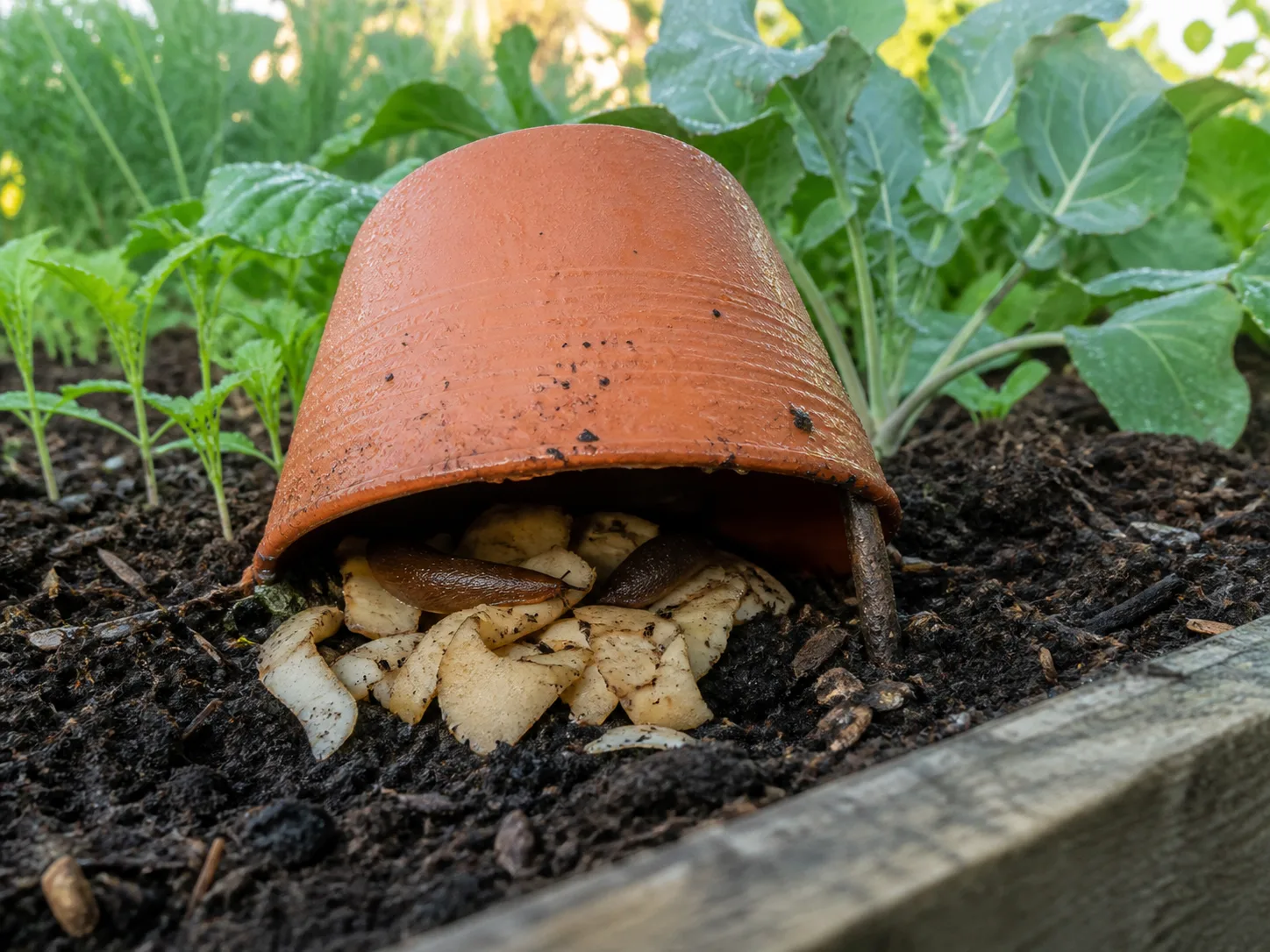
A covered daytime trap concentrates snails where you can inspect and remove them each morning.
Put traps near, but not directly against, the most damaged plants. Check them in the morning before the sun warms and dries the surface. Scrape or pick off the snails, reset the shelter if the count is still high, and remove the trap when the pressure has dropped. This concentrates the pests where you can reach them instead of distributing them through the bed.
Beer or yeast traps are a secondary option. Sink a container so its rim is level with the soil, use a deep-sided vessel, and check it daily. Fermented bait attracts mollusks only from a small nearby area, evaporates or dilutes in rain, and needs frequent replenishment; it cannot protect a whole yard. UC IPM describes beer and sugar-water/yeast traps as local traps that work best when kept deep enough to drown and protected from evaporation.
Remove the conditions that keep snails returning
The garden itself is often the reason a control effort seems to fail. Snails do not need a special invitation; a damp board, a thick mat of dead leaves, an overgrown bed edge, and tender foliage close by can supply everything they need.
Change watering and moisture timing
Water in the morning whenever the plant’s needs allow it. Morning irrigation gives the foliage and soil surface time to dry before the main feeding period, while evening sprinkling leaves a cool, wet route open all night. Drip irrigation or a soaker line aimed at the root zone is more useful than a broad sprinkler for a snail-prone bed because it wets less surface area. UC IPM identifies morning irrigation and drip systems as ways to reduce the humid surfaces snails prefer.
Do not respond by drought-stressing the plants. The goal is to stop unnecessary overnight wetness, not to let lettuce, seedlings, or shallow-rooted annuals wilt. Fix leaking hose connections, blocked gutters, and low spots that stay muddy; those wet edges can function as a permanent staging area.
Clear fallen fruit, damaged leaves, and rotting plant debris from around susceptible plants. Thin foliage that lies on the soil, lift containers off persistently wet surfaces, and move boards, spare pots, and stones away from the bed edge when they are not serving a deliberate wildlife or garden purpose. Ask Extension likewise emphasizes removing decaying debris and thinning plants so air and sunlight reach the ground.
Mulch needs judgment rather than an all-or-nothing rule. A thick, damp layer can hide snails and eggs, but removing every bit of organic matter also removes shelter for ground beetles and other beneficial organisms. Pull mulch back from seedling stems and crowns, keep it loose rather than matted, and inspect beneath it after rain. If your bed stays persistently wet, a thinner or coarser mulch layer may be a better compromise than a bare, overheated soil surface.
Choose protection by garden situation
Control works best when it is aimed at the plant that actually needs protection. A few snails in a mature shrub border are a different problem from snails clipping every lettuce seedling at soil level.
Raised beds and vulnerable seedlings
For a raised bed, first remove resident snails and slugs from inside the bed, then inspect the outside edge for bridges. A leaf, trellis tie, weed, or piece of mulch touching the rim can give a mollusk a route over an otherwise continuous barrier. Keep the rim clean, trim foliage that hangs over it, and place shelter traps just outside the bed so you can monitor the approach.
Protect new transplants with a physical cover while they establish. Sturdy transplants generally tolerate feeding better than tiny seedlings, and the Royal Horticultural Society recommends growing stronger plantlets in pots before setting them out when mollusk pressure is high. In a small vegetable bed, that extra week or two can be more effective than scattering a product across every row.
Containers are easier to protect but not automatically snail-proof. Inspect the drainage holes, saucer, pot feet, wall behind the container, and foliage touching the ground. A pot can be a raised island during the day and a bridge-connected feeding station at night if it sits beside a damp wall or dense plant.
Use barriers and bait with clear limits
Barriers prevent access; traps remove animals already present; baits reduce active feeders; habitat changes reduce the number that survives nearby. Choosing the method by job is more reliable than asking which single remedy is “best.”
Copper barriers are exclusion, not magic
Copper flashing, foil, or tape may repel slugs and snails when it forms a clean, continuous band. UC IPM describes copper as reacting with the mucus on the animal’s foot and recommends a broad band for garden edges, with part of a vertical barrier buried so pests cannot crawl underneath. In a container or isolated raised bed, copper is most plausible when the soil is cleared first and no leaf, stake, mulch, or wall bypasses the band.
Treat copper as a testable exclusion, not a guarantee. The RHS notes that copper barriers have repelled mollusks in some studies, but a recent garden-realistic experiment found no reduction in slug damage from several barrier materials, including copper tape, bark mulch, eggshells, sharp grit, and wool pellets. If a clean copper band fails after you remove bridges and resident pests, stop spending time polishing it and switch to covers, traps, or targeted bait.
Iron-based baits versus metaldehyde
If damage is severe, the bed is large, or nightly hand-picking is not practical, a labeled molluscicide can be part of an integrated program. Read the active ingredient and the entire label, not just the front of the package. Apply only where the label allows, keep pellets off harvested produce, observe any crop restrictions or pre-harvest interval, and never assume “organic” means harmless.
UC IPM describes iron phosphate baits as a lower-risk choice around children, pets, birds, fish, and other wildlife than metaldehyde products, while still requiring label compliance. Snails may stop feeding after ingesting iron phosphate but can take several days to a week to die, so a lack of visible bodies does not necessarily mean the product failed. Ferric sodium EDTA works similarly and may act faster, but UC IPM notes that it is not labeled for organic use.
Metaldehyde deserves particular caution in homes with dogs or cats because it can be highly poisonous and the pellets may attract them. UC IPM also notes risks to birds and that some metaldehyde products break down with sunlight, rain, or irrigation. Keep people and pets away exactly as the label directs, store the product securely, never pile pellets in mounds, and do not use an old product based on advice that ignores the current label.
Timing affects performance. Mollusks are more active on warm, damp evenings than in hot, dry, or cold conditions. If the label permits, apply when they are moving and scatter bait in moist protected routes near—but not on—the plants rather than dumping a pile at the stem. A light pre-application watering may encourage activity, but heavy rain or irrigation afterward can make pellets moldy or less attractive.
Which home remedies are worth your time?
Home remedies are attractive because they are cheap and familiar. The problem is that many create a visible ring or smell without producing a complete, durable barrier.
Why salt, eggshells, and coffee grounds disappoint
Salt kills by drawing water from a soft body, but it also dissolves into the soil and raises salinity around plant roots. Do not sprinkle salt on beds, pots, paths that drain into beds, or captured pests where the runoff can reach growing soil. A sealed disposal method is less damaging than turning your garden into a salt treatment.
Crushed eggshells and coffee grounds are not dependable snail barriers. They may look rough or unpleasant, but UC IPM says eggshells and coffee grounds have not been shown to deter these pests. Use eggshells in compost if they fit your system; do not treat a ring of shell fragments as a substitute for a cover, a clean physical edge, or a monitored trap.
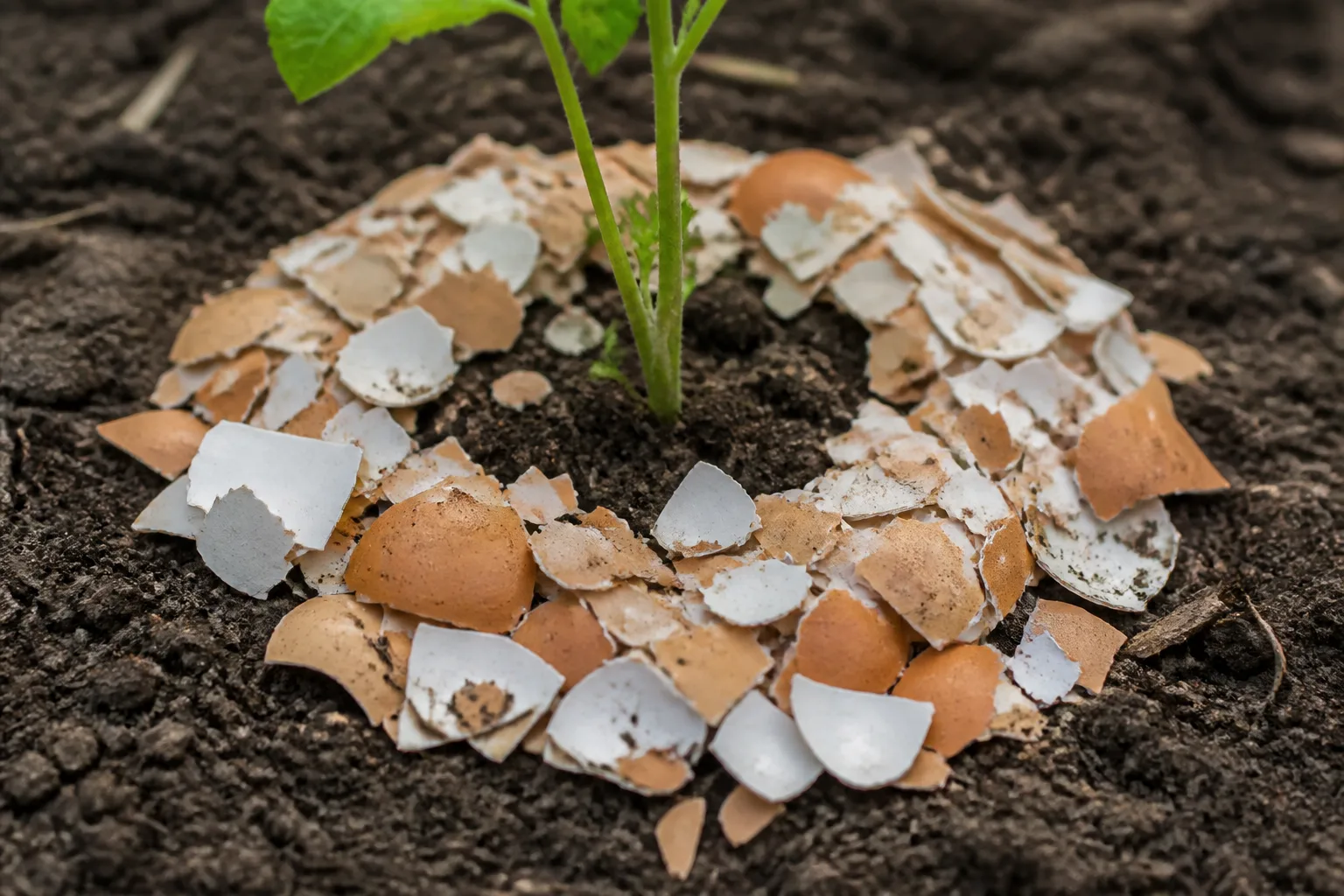
A crushed-eggshell ring is a familiar home remedy, but it should not be treated as a proven snail barrier.
Diatomaceous earth has a narrower use than many online tips suggest. A dry, thick band may abrade soft-bodied pests, but it loses effectiveness when damp, which makes it a poor fit for a rainy bed or an area watered by a sprinkler. If a product label allows its use, apply it exactly as directed and expect to replace it after moisture; do not rely on it as a one-time perimeter.
Garlic sprays, citrus peels, coffee, strong-smelling herbs, and similar repellents may alter a small area briefly, but scent is not the same as exclusion. If a plant is directly beside a damp hiding place and the night is favorable, hunger and shelter can outweigh a smell. Put your effort into reducing the route and protecting the plant first.
Use plant choice and wildlife as supporting controls
Snails do not eat every plant with equal enthusiasm. Tender seedlings, succulent foliage, young shoots, and low fruit are often the most exposed, while thick, waxy, woody, or strongly scented foliage may suffer less damage. Gardening Know How and the RHS both caution, in different ways, that not every snail is a plant pest and that plant selection can reduce pressure without promising immunity.
Make tender plants harder to reach
Group the most vulnerable crops where you can inspect and cover them, rather than scattering lettuce, basil, strawberries, and young flowers through every damp corner. Start seedlings in pots, harden them off, and transplant once they have several sturdy leaves. Keep low foliage from touching walls, long grass, or the soil edge, and harvest ripe fruit promptly so it does not become a ground-level food source.
In ornamental areas with chronic damage, mix high-value tender plants with less palatable choices such as lavender, rosemary, sage, ferns, lantana, or other plants suited to your climate and light. These plants are not a chemical fence. Their value is practical: they can reduce the amount of irresistible, low-growing foliage in the most exposed spots and make monitoring easier.
Encourage predators without expecting a cure
Birds, frogs, toads, ground beetles, and other wildlife eat some snails and slugs. Provide dense but intentional habitat, avoid blanket insecticide use, and keep a water source clean and shallow where appropriate. The RHS describes these animals as important parts of the garden food web, while UC IPM cautions that natural enemies alone are rarely enough for satisfactory control in a typical garden.
Do not release predatory snails or other biological-control organisms on your own. UC IPM notes that decollate snails can affect native mollusks and are legally restricted in parts of California; bait can also kill them. For slug-only problems, some regions offer nematode biological controls, but they require the right soil temperature and moisture and are unlikely to control snails that spend less time in soil. Local extension guidance and the product label should determine whether such a treatment is legal and appropriate.
A seven-day plan for stopping repeat damage
Day 1: confirm and remove. Photograph the damage, check for slime trails after dark, and hand-pick the pests from the plant and nearby shelters. Cover seedlings overnight and set one or two shelter traps.
Day 2: inspect the route. Empty the traps in the morning. Trace the bed edge to find damp boards, stones, dense weeds, low branches, pot rims, and other bridges. Clear only the unnecessary shelter and keep intentional wildlife habitat away from the plants you are protecting.
Day 3: change water delivery. Move irrigation to early morning, repair leaks, and switch a sprinkler zone to drip or a root-zone soaker if practical. Check whether the soil is staying saturated longer than the plant requires.
Day 4: add physical protection. Install a cloche, fine mesh, or clean copper test band around the highest-value plants. Before closing a container or bed with a barrier, remove the snails already inside; exclusion cannot remove a pest that has already crossed the line.
Day 5: choose bait only if needed. If the count remains high and damage continues, compare active ingredients, pet exposure, crop labeling, rainfastness, and placement instructions. Use the smallest labeled treatment area that matches the problem, and scatter rather than pile.
Days 6 and 7: measure, then adjust. Repeat a short nighttime inspection and record the count and fresh damage. If both are falling, keep the morning-watering and shelter routine. If damage continues despite no trails, reassess the diagnosis; if trails continue despite the routine, inspect the neighboring edge and any bridge you missed.
Common snail-control mistakes
The most common mistake is treating a whole garden when only one bed is vulnerable. Targeted control protects the plants that matter and leaves room for harmless decomposers and predators elsewhere. The RHS emphasizes that many slugs and snails recycle dead organic material and provide food for other wildlife, so total eradication is neither realistic nor desirable.
Another mistake is using a barrier without closing the route. Copper tape cannot help if a leaf touches the wall, a stake crosses the band, or the soil inside the container already contains snails. A third is setting a beer trap and forgetting it; a diluted, empty, or overflowing trap is not a control plan.
Avoid evening overhead watering, salt, bait piles, unlabeled pesticide use, and products stored where pets can reach them. Do not assume that a product is safe because it is marketed as natural, that a few missing shells mean every pest is gone, or that a plant list can replace inspection. The dependable pattern is evidence, removal, access control, moisture management, and follow-up.
Conclusion
To get rid of snails fast, begin after dusk: prove the damage, hand-pick the active feeders, cover the most vulnerable plants, and set a shelter trap for the morning. Then make the garden less convenient by watering early, reducing unnecessary damp hiding places, and keeping foliage from forming bridges into beds and containers.
Use copper only as a clean, monitored exclusion test; use iron-based bait only when the label and your household’s pet and wildlife risks make it appropriate; and skip salt and unproven scattered barriers. A few snails will remain in a healthy garden. The goal is to move them away from seedlings and high-value plants, reduce repeat damage, and keep control focused enough that the rest of the garden can still function as an ecosystem.