How to Grow and Care for Japanese Aralia
Learn how to grow and care for Japanese aralia indoors or outdoors, with practical advice on light, watering, soil, pruning, propagation, pests, and winter care.
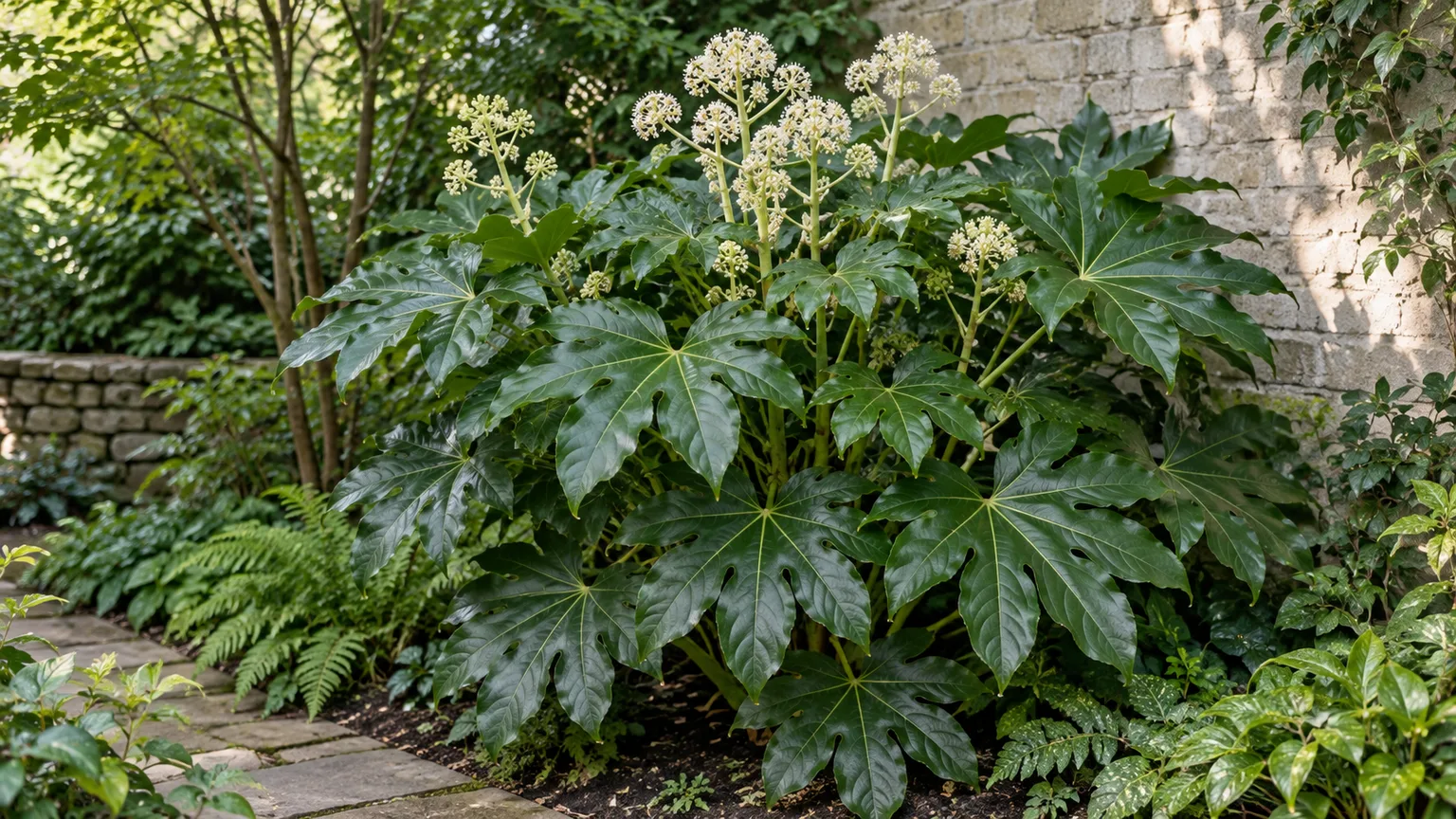
Japanese aralia (Fatsia japonica) is the answer to a difficult garden brief: you want large, tropical-looking foliage, but the available space is shaded. Its glossy, hand-shaped leaves bring structure to a dark courtyard, woodland border, sheltered entrance, or north-facing patio. The same plant can live indoors, although an indoor Fatsia usually needs more usable light and closer watering attention than the phrase “low light” suggests.
The care shortcut is simple: protect the leaves from hot, direct sun; keep the root zone evenly moist but never stagnant; and give the plant shelter from drying wind. NC State Extension describes Fatsia as a broadleaf evergreen shrub or small tree from Japan and Korea that prefers part to full shade, fertile humus-rich soil, and good drainage, while tolerating clay, sand, pollution, and short dry periods once established. NC State Extension Plant Toolbox also lists familiar names such as paper plant, Japanese fatsia, and big-leaf paper plant.
The species is not a miniature houseplant by nature. A mature outdoor specimen can become a substantial, rounded plant, commonly around 6 to 10 feet tall and wide in a garden, and potentially larger in especially favorable conditions. Before you buy one, decide whether you are growing a permanent shade shrub, a movable patio container, or a houseplant that will need periodic pruning and repotting.
Start with the right placement
Placement determines more of Japanese aralia’s success than any fertilizer. If the site is wrong, extra feeding will not repair sun-bleached leaves, wind-tattered foliage, or roots sitting in cold water.
Outdoor light and shelter
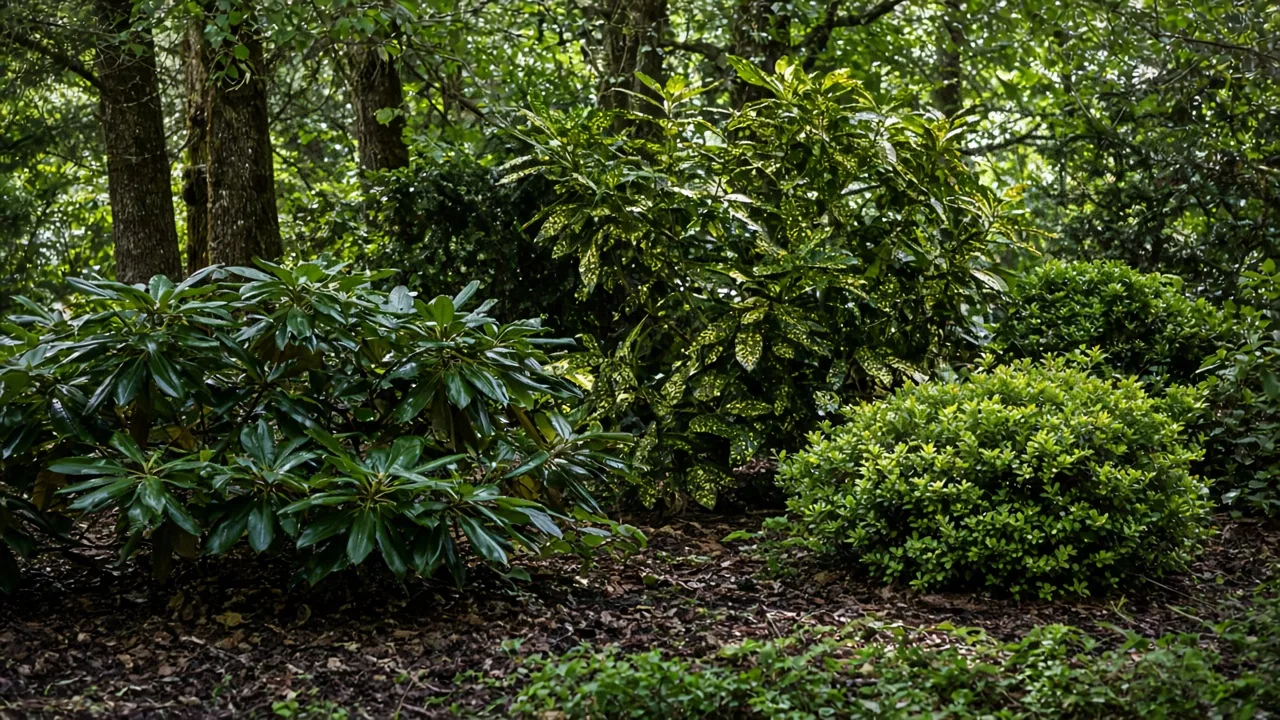
Give outdoor Japanese aralia deep shade to bright dappled shade, with gentle morning light acceptable when the soil does not dry quickly. The safest spots are beneath high tree canopies, beside a north- or east-facing wall, in a sheltered courtyard, or at the edge of a woodland bed where it receives reflected light rather than a hot beam all afternoon.
The large leaves act like sails. A plant can be in shade and still suffer if a windy passage pulls moisture from the foliage faster than the roots can replace it. Avoid exposed corners, hot south- or west-facing walls, and locations where reflected heat bounces off pale paving. UF/IFAS Gardening Solutions calls Fatsia a shade-loving shrub for moist conditions and notes that its broad leaves and arching stems make it especially useful in entranceways and containers. UF/IFAS Gardening Solutions is a useful reference for the plant’s landscape scale and coastal tolerance.
Indoor light without sun scorch
Indoors, place Fatsia near a bright window with filtered light, or a few feet back from an east window. A north window can work if the room is genuinely bright; a dim interior corner may keep the plant alive but produce long, weak stems, sparse leaves, and a plant that leans toward the glass.
Do not move an indoor plant straight into outdoor sun for summer. Transition it over a week or two by starting in bright shade, then increasing gentle morning exposure only if the leaves remain firm and unmarked. Sunburn appears as bleached, tan, or crisp patches that do not disappear when watering improves. If you see that pattern, reduce light intensity first rather than applying more fertilizer.
Plant Japanese aralia in moisture-retentive soil that drains
Japanese aralia is adaptable about soil texture, but “moist” does not mean permanently wet. The best garden soil holds enough water for broad leaves while allowing excess water to move away from the roots. Blend finished compost or leaf mold into poor, compacted soil, but do not fill the planting hole with a radically different, fluffy pocket that drains unlike the surrounding ground.
Clay soil can work if it is not waterlogged. On heavy ground that stays saturated after rain, plant slightly high with the top of the root ball level with or just above the surrounding soil, then taper the amended soil outward. On very sandy ground, organic matter and a mulch layer improve water retention, but the plant will still need more frequent checks while it establishes.
For a container, use a quality indoor or multipurpose potting mix amended only if it collapses or stays wet for too long. Avoid garden soil in a pot: it compacts, reduces air space, and can leave a large root ball wet long after the surface looks dry. Choose a pot with a drainage hole, and use a saucer only to protect the surface; empty standing water after it drains.
Water by root-zone conditions, not by calendar
Water a newly planted outdoor Fatsia deeply whenever the upper soil begins to dry, especially through its first growing season. A slow soak that wets the whole root ball is more useful than a daily splash around the stem. Once established in shade, Japanese aralia can tolerate brief dry spells, but drought tolerance is not a reason to let a container plant or a newly planted shrub wilt repeatedly.
For an indoor plant, press a finger into the mix or use a wooden skewer to check below the surface. Water when the upper layer has begun to dry but the root ball is not bone-dry. Pour slowly until water exits the drainage hole, let the pot drain fully, and never leave the base submerged. Reduce frequency in a cool, dim winter room; increase checks in a warm room, near air conditioning, or during active spring growth.
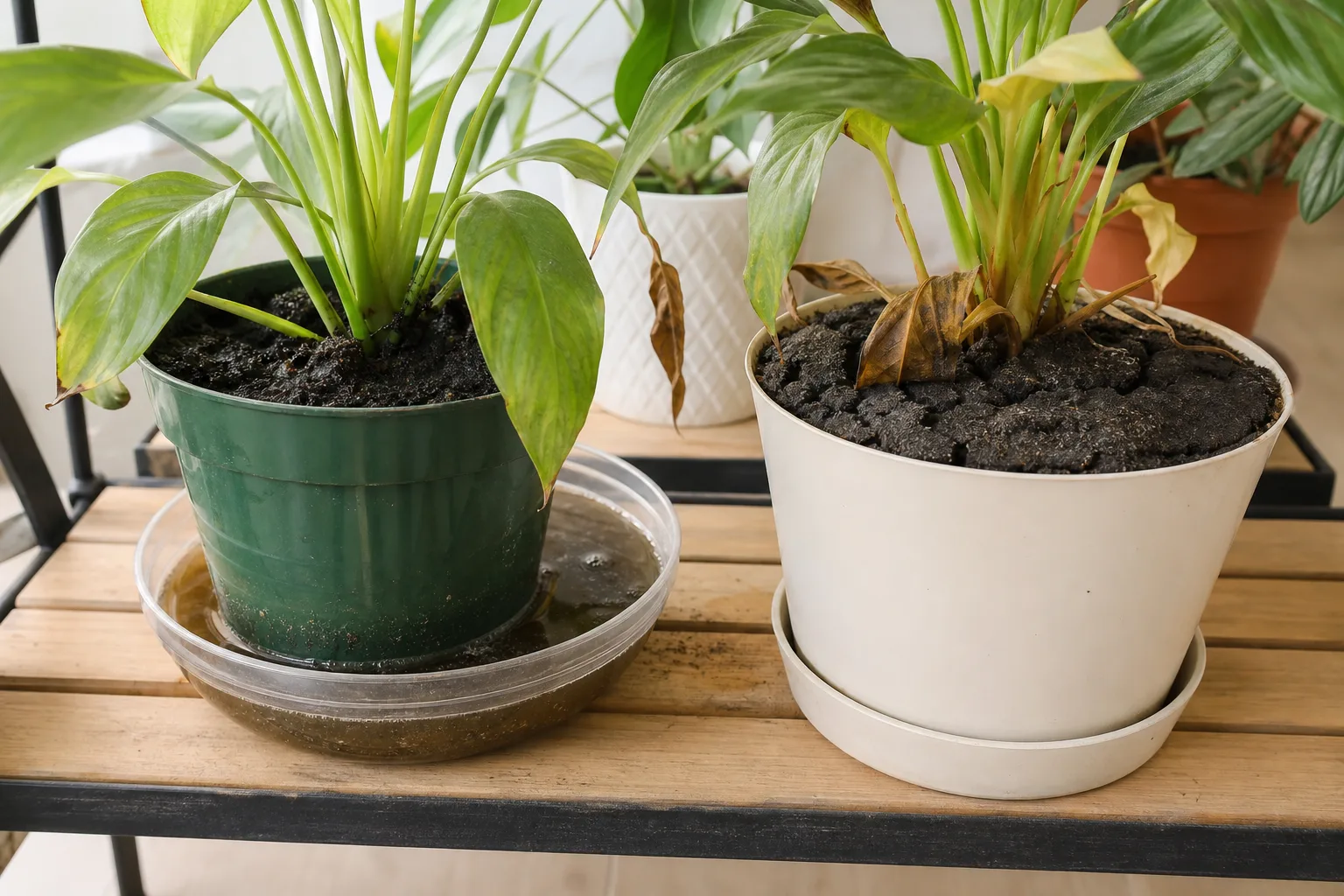
Two opposite mistakes look similar at first. A thirsty plant may droop and recover after a thorough drink, while a waterlogged plant may stay limp because damaged roots cannot move water into the leaves. If the mix is wet and the plant is drooping, stop watering and inspect drainage and roots instead of assuming it needs another drink.
Fertilize lightly during active growth
Feed outdoor plants in spring with a balanced slow-release fertilizer or a thin layer of finished compost. Container plants can receive a balanced liquid feed at label strength during active growth, then less or none in a cool, low-light winter. More fertilizer is not a substitute for light: excess salts can burn leaf margins and roots, particularly in a pot that is watered lightly.
When growth is soft, pale, or stretched, check light, root health, and watering before feeding again. A healthy Fatsia in good soil is not meant to be pushed into rapid, lanky growth.
Choose ground or container based on winter exposure
In the United States, Japanese aralia is commonly associated with USDA zones 7b through 10b, but a zone number is only a starting point. A mature plant in the ground has more root insulation than a plant in a pot, and a sheltered courtyard is different from an exposed ridge in the same zone. Cold, drying wind can damage leaves before the roots are threatened.
Established ground plants usually need a 2- to 3-inch layer of organic mulch over the root zone in late fall, kept a few inches away from the stems. Young plants benefit from extra shelter during their first winters. If a hard freeze causes the leaves to hang limp, wait for thawing before pruning or watering; frozen foliage can look alarming and still recover.
Container plants are more exposed because cold reaches the root ball from every side. Move a pot against a protected wall, wrap the container when a severe freeze is forecast, or place it in an unheated porch or garage that still has some light. Do not bring a plant from cold outdoor conditions into a hot, dry room overnight if you can avoid it; a gradual move reduces shock. GrowTropicals’ Fatsia outdoor care guide makes the useful distinction that potted plants are less hardy than established plants in the ground and that wind can mark foliage well before extreme cold arrives.
Build a stable container setup
Use a heavy pot that will not tip when the arching stems become top-heavy. The container should be only one size larger than the current root ball, with several open drainage holes. An oversized pot holds a large volume of wet mix around a small root system, which increases the chance of root trouble.
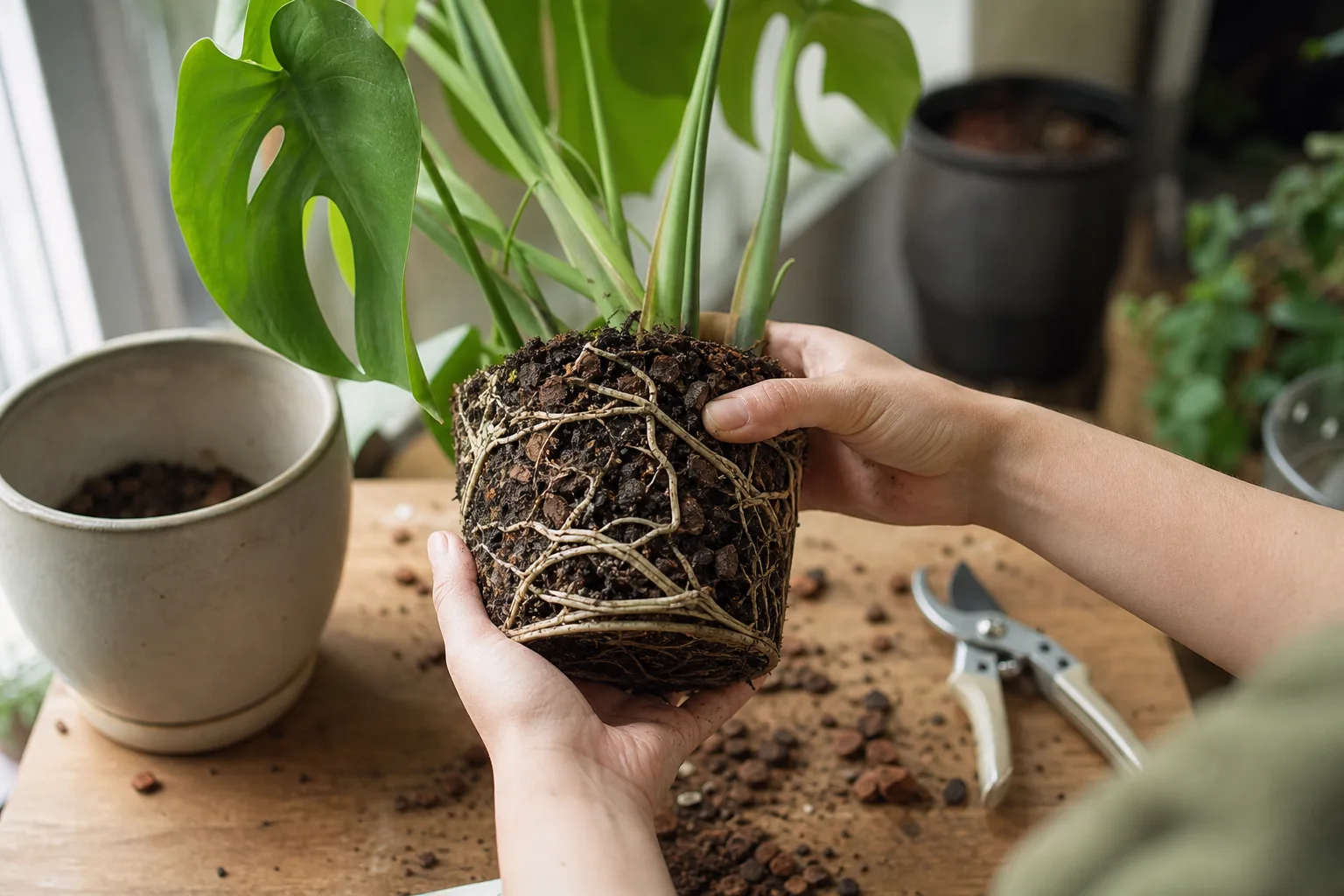
Repot in spring or early summer when the plant is actively making roots. Slide it out gently, loosen only tightly circling roots, and set it at the same depth. Refresh the mix around the sides, water thoroughly, and keep it in bright filtered light while it settles. Repotting is due when roots circle densely, emerge from drainage holes, the mix has broken down, or watering runs straight through without wetting the root ball.
Give mature plants room and use a sensible planting timeline
Plant outdoor Japanese aralia in spring after the ground is workable, or in early fall where winters are mild enough for roots to establish before hard freezes. Dig a hole about twice as wide as the root ball and no deeper. Set the plant so the top of the root ball is level with the soil surface, backfill with the excavated soil improved with modest organic matter, water slowly, and mulch.
Allow room for the plant’s mature width rather than spacing it like a small nursery pot. For a group or informal screen, measure the expected spread of the chosen cultivar and leave enough air around each plant for leaves to dry after rain. A crowded Fatsia is harder to inspect, prune, and water accurately.
The first year is the establishment year. Keep the root zone consistently moist, protect the plant from competition by lawn or aggressive ground covers, and do not judge its final form by the initial nursery shape. New basal shoots can emerge as older stems arch outward; this is part of the plant’s natural habit, not automatically a sign that it needs staking.
Prune for shape, size, and fuller regrowth
Japanese aralia does not require routine pruning to remain healthy, but pruning can correct a bare lower stem, reduce width, and encourage a fuller framework. Start by deciding what you want: a multi-stemmed shrub, a shorter container plant, or a taller specimen with an open, arching shape.
For ordinary shaping, remove a damaged or badly placed stem at its base, or shorten a long stem just above a healthy leaf node. Make clean cuts with sharp, disinfected pruners. If the plant has become leggy, cut back only some of the oldest stems first so it can keep making leaves while new shoots develop.
For rejuvenation, late winter or spring is the safest broad window, after the worst cold has passed and before vigorous new growth. You can reduce the whole framework substantially on a well-established plant, or remove about one-third of the oldest stems over several seasons. Mobile County Master Gardeners reports that cutting stems back hard in late winter can rejuvenate Fatsia and produce fuller foliage; their plant profile also gives a realistic mature size for garden conditions.
Timing affects flowers. Fatsia’s creamy flower clusters appear on new growth in fall, so heavy pruning immediately before the flowering season may remove the stems that would carry them. If flowers and berries matter, prune after flowering or do the main renovation during late winter, accepting that a hard cut may delay the next display. Wear gloves if the sap irritates your skin, and remove dead, frost-damaged wood only after you can see where live tissue resumes.
Propagate from cuttings or seed
Japanese aralia can be propagated from seed or stem cuttings, but the best method depends on your goal. Seed is useful when you want several plants and do not need exact copies. Cuttings take more attention but preserve the traits of a named cultivar such as ‘Spider’s Web’ or ‘Variegata’.
Use stem cuttings for cultivar fidelity
Take a 4- to 6-inch cutting from healthy, non-flowering new growth in late summer or during another active growth period. Cut just below a node, remove the lower leaves, and trim overly large remaining leaves by about half to reduce water loss. A small pot of moist, airy propagation mix works better than dense garden soil.
Dip the base in rooting hormone if you choose to use it, then insert the cutting so at least one node is below the surface. Firm the mix around it, cover the pot with a clear humidity tent that does not touch the leaves, and place it in bright indirect light with gentle warmth. Keep the medium evenly damp, not saturated. Vent the tent occasionally and check for rot rather than misting constantly.
After several weeks, tug very gently. Resistance suggests roots are forming, but do not pull repeatedly; new roots are fragile. Once the cutting holds itself and begins new growth, gradually remove the humidity cover and pot it into regular mix. Gardening Know How’s Japanese aralia care guide also notes that cuttings are the reliable route when you want variegated plants to remain true to the parent.
Use seed for quantity, not clones
Outdoor Fatsia may flower in fall and carry dark fruit into winter. If you collect seed, remove the fleshy pulp, rinse the seeds, and sow them promptly in a sterile, well-drained seed-starting mix. Keep the tray warm and evenly moist in bright indirect light. Germination can be quick, but seedlings still need time to develop before they make a substantial garden plant.
Seedlings may differ from the parent, especially when the parent is a named variegated cultivar. That is the trade-off: seed is straightforward for producing more plants, while cuttings are the better choice when leaf pattern and growth habit matter.
Solve common Japanese aralia problems
Diagnose the root zone and the plant’s recent exposure together. One yellow leaf at the base of a mature plant can be normal aging; a rapid flush of yellow leaves with wet soil is a different problem. The sequence below helps you avoid treating every symptom as thirst or fertilizer deficiency.
Yellow leaves and leaf drop
First check whether the yellow leaves are old and lowest on the stems or new leaves throughout the canopy. Occasional aging leaves are usually not a crisis. Widespread yellowing, slow growth, and persistently wet mix point more strongly to poor drainage or overwatering; inspect the roots if the pot stays wet for many days.
If the soil is dry well below the surface and leaves are limp, water deeply and observe the plant for the next day. If it does not recover, inspect the roots rather than repeating the watering. Pale new growth can also reflect weak light or a nutrient issue, but do not add fertilizer until you have ruled out root stress and improved the light available to an indoor specimen.
Brown or scorched leaves
Brown patches on the sun-facing side, bleached centers, or crisp margins usually mean too much direct light, hot reflected heat, or drying wind. Move a container to bright shade and let new leaves reveal whether the location is fixed; damaged tissue will not turn green again. Avoid stripping every marked leaf immediately if the plant still needs that leaf to support recovery.
Brown tips can also follow a period of drought, salt buildup, low humidity near a heater, or root damage. Check the mix, drainage, and room conditions before choosing a single cause. Japanese aralia does not need a constantly misted room, but it does better when protected from hot, dry air and abrupt swings.
Pests, leaf spot, and root problems
Outdoor Fatsia is generally low-maintenance, while indoor plants may attract aphids, mealybugs, scale, thrips, or spider mites. Inspect leaf undersides, stem joints, and the newest growth whenever you bring a plant indoors or notice sticky residue, stippling, cottony patches, or tiny moving insects. Isolate an infested houseplant, wipe small colonies away, and repeat an appropriate treatment as directed on the product label; do not mix homemade sprays or assume a garden pesticide is safe indoors.
Leaf spots become more likely when foliage stays wet, air circulation is poor, or old infected leaves remain in the planting. Water at the soil line, thin congested growth, remove badly spotted leaves, and clear fallen debris. If spotting continues or spreads rapidly, seek local extension advice before applying a fungicide because the correct product and label differ by region.
Root rot is a root-zone failure, not a disease cured by feeding. A sour-smelling mix, black or mushy roots, persistent droop despite wet soil, and a pot that never dries are reasons to unpot the plant. Trim only clearly dead roots with clean shears, move the plant into fresh airy mix and a clean pot with drainage, and reduce watering until the remaining roots begin to function. If most roots are gone, take healthy cuttings as insurance rather than keeping a collapsing root ball in wet soil.
Use Japanese aralia in a shade design
Japanese aralia earns its space through texture more than through constant flowers. The oversized palmate leaves make a strong focal point among fine-textured ferns, grasses, mossy stones, or small-leaved evergreen ground covers. Use the green species where you need weight in deep shade; variegated forms such as ‘Spider’s Web’, ‘Variegata’, and ‘Murakumo-nishiki’ (‘Camouflage’) can brighten a dim border but may appreciate slightly more indirect light to maintain strong patterning.
The fall flower clusters are an unexpected bonus, and the dark winter fruit adds seasonal interest where it develops. In a small garden, a container lets you enjoy the foliage near a doorway while keeping the plant’s size manageable through pruning. In a large border, give the shrub enough room to arch naturally instead of forcing it into a narrow hedge that will need constant cutting.
The most reliable Japanese aralia is not the one receiving the most attention. It is the one planted where shade, shelter, moisture, and drainage already agree. Solve those four conditions first, then use pruning to shape the plant, propagation to multiply the form you actually like, and symptom checks to correct the root cause instead of layering fixes on top of stress.
Conclusion
Grow Japanese aralia as a shade plant first and a houseplant second. Outdoors, choose a sheltered site with deep or dappled shade, fertile soil that drains, and enough room for a broad evergreen shrub. Indoors, provide bright filtered light, a free-draining pot, and a watering rhythm based on the root ball rather than a weekly reminder.
Protect new plants from harsh winter and wind, prune in late winter or spring when you want fuller regrowth, and use cuttings when a named cultivar must stay true. When leaves yellow, scorch, droop, or spot, inspect light, roots, moisture, and pests in that order. With the right placement, Fatsia japonica gives you dramatic foliage and surprisingly little fuss in the part of the garden where many plants struggle.



