Can Diatomaceous Earth Get Rid of Spider Mites?
Diatomaceous earth can kill spider mites on dry contact, but it rarely clears an infestation. Learn placement limits, NPIC safety warnings, and better IPM steps.
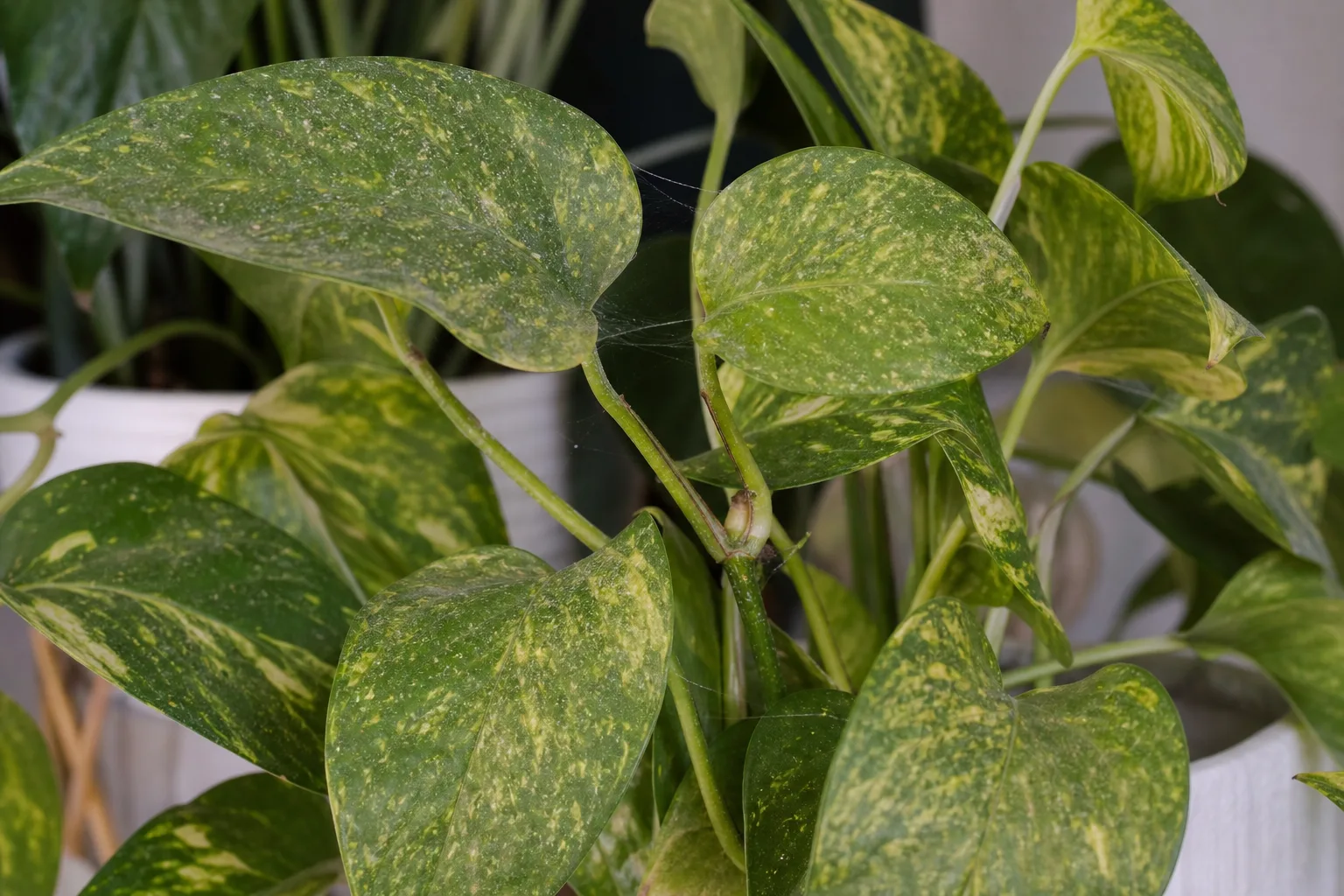
Yes—dry diatomaceous earth can kill a spider mite that walks through an effective deposit. No—dusting your potting soil or the top of a leaf is not a reliable way to get rid of a spider-mite infestation on a houseplant. The gap between those two sentences is the whole reason this question keeps coming up: DE works by contact, while spider mites live where powder rarely stays useful.
Written by Sai Ananth (B.Pharmacy, pharmacognosy background; LeafyPixels lead writer and indoor grower) and reviewed by Dr. Priya Menon (botanist and indoor plant specialist) on the LeafyPixels Review Board. For full identification, wash schedules, humidity strategy, and recovery checklists, start with our spider mites on houseplants guide. This page stays focused on what DE can and cannot do for Tetranychus urticae and close relatives indoors.
The Short Answer: Contact Kill Is Not Infestation Control
Diatomaceous earth (DE) is a fine powder made from fossilized diatoms. Its pesticide mode of action is physical, not chemical: sharp particles abrade the waxy outer layer of small arthropods and help pull moisture from the body. The National Pesticide Information Center states that DE causes insects and mites to dry out by absorbing oils and fats from the cuticle, and that it remains effective only as long as it is kept dry and undisturbed.
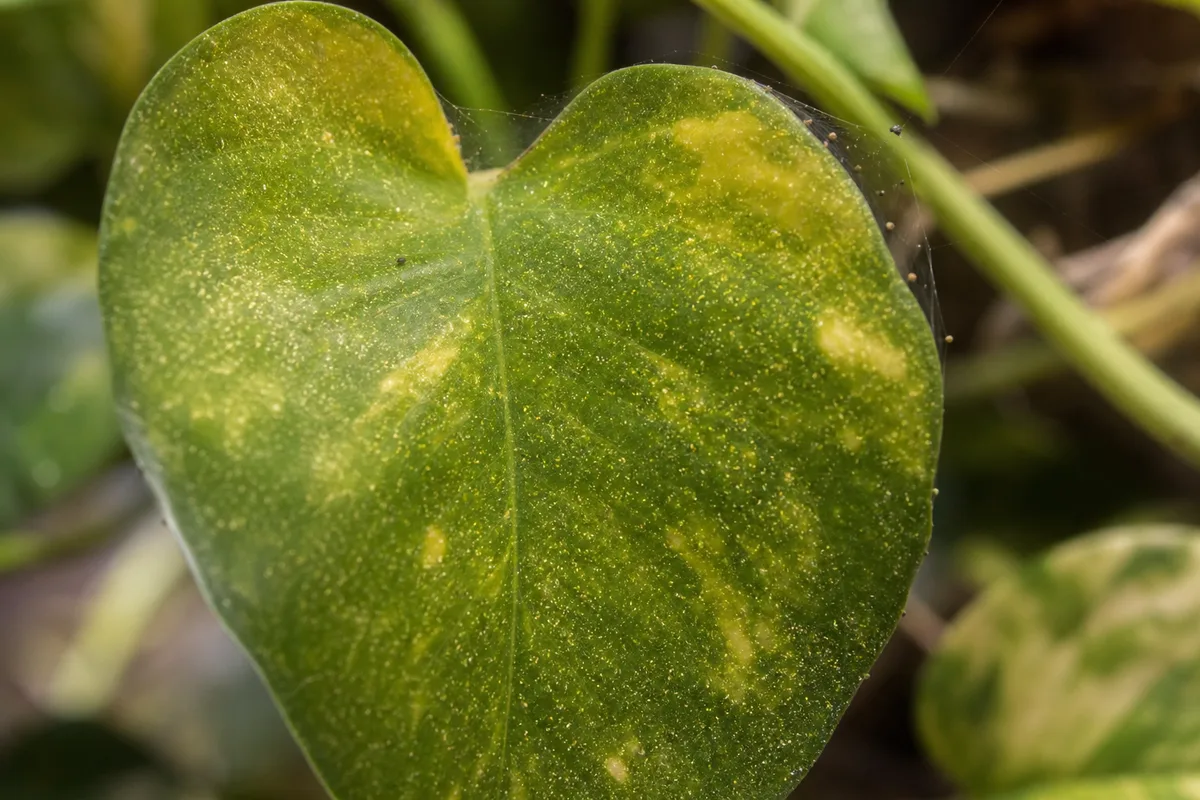
That last clause is the problem on foliage. Spider mites are arachnids—relatives of spiders, not insects—and the species most common on houseplants, the two-spotted spider mite (Tetranychus urticae), feeds and reproduces primarily on leaf undersides. Colonies can number in the hundreds per leaf, often under fine silk webbing. A powder that must stay dry on a surface mites do not cross is a poor match for a pest that hides on the sheltered side of a leaf.
So the honest answer to “Can DE get rid of spider mites?” is:
- On contact: often yes, if the mite touches dry, effective powder.
- On an established infestation: usually no as a stand-alone treatment, because placement, moisture, webbing, and eggs defeat contact coverage.
Think of DE as a narrow supplement in an integrated pest management (IPM) plan—not the plan itself.
How Dry Diatomaceous Earth Kills Small Arthropods
DE products registered as pesticides contain silicon dioxide. Most are amorphous, not crystalline. NPIC notes that the first pesticide products with silicon dioxide were registered in 1960 to kill insects and mites, and that DE is not poisonous: the pest does not need to ingest it.
The kill mechanism is desiccation. When a mite crawls through a dry layer, abrasive particles damage the cuticle and absorb protective surface oils. Water loss accelerates. This is why DE is discussed for crawling pests on dry routes—ant trails, soil surfaces, cracks—more often than for pests glued to humid leaf undersides.
University of Minnesota Extension describes twospotted spider mites as about 1/50 inch long—small enough that a hand lens helps, but large enough that you can see movement on white paper. UC IPM notes adults are less than 1/20 inch and live in colonies mostly on leaf undersides. Size matters for DE: the pest must physically intersect the powder.
Why the Powder Must Stay Dry
NPIC is explicit: DE remains effective as long as it is kept dry and undisturbed. Humidity, overhead watering, foliar misting, shower rinses, and rain all change that equation. Once powder absorbs moisture, it no longer behaves like loose, abrasive dust. Even after it dries, a crusted residue may not give you the same contact performance as a fresh, thin application.
Indoor growers often discover this during heating season. A thin ring of DE on dry potting mix can look intact while RH near the canopy stays high enough that mites keep breeding on undersides above it. Editorial note (March 2026, north-central Ohio apartment): After a confirmed two-spotted spider mite outbreak on a pothos, we washed the plant thoroughly, let foliage dry overnight, then applied a trace of food-grade DE only to the dry soil surface around the stem—not the leaves. Live mites were still present on undersides within 48 hours; a labeled insecticidal soap cycle on a 5–7 day schedule was what actually broke the population. DE did not harm the plant, but it also did not replace underside coverage.
Why Wet DE Sprays Fail the Mechanism Test
Social posts often recommend mixing DE with water and spraying leaf undersides so the powder “sticks.” That advice confuses adhesion with mode of action. A wet slurry may coat a surface, but it is not a functioning desiccant while wet. NPIC’s mechanism description applies to dry contact. Some wettable DE products exist on pesticide labels, but you must follow the specific product label—not a kitchen-spray recipe.
For spider mites on houseplants, a labeled insecticidal soap or horticultural oil is the more logical wet foliar treatment because those products are formulated to wet pests and leaf surfaces on contact. Our neem oil and spider mites guide explains how oil-based products differ in formulation, coverage, and repeat intervals. For general DE handling—including outdoor barrier use—see how to use diatomaceous earth.
Why DE Rarely Reaches Spider Mites on Houseplants
Spider mite damage usually appears on the upper leaf surface first: pale stippling, bronzing, dull color, or yellowing from cell contents being sucked out below. The mites themselves are on the underside, along veins and in webbing. Dusting the top of a leaf is like treating a ceiling stain while ignoring the leak above it.
UC IPM emphasizes checking undersides with a hand lens, shaking mites onto white paper, and confirming live pests before treating. Colorado State University Extension likewise describes stippling on the upper surface with mites, eggs, and cast skins underneath. Neither source positions DE as a primary spider-mite treatment; both prioritize water sprays, insecticidal oils, and insecticidal soaps with thorough underside coverage.
Undersides, Webbing, and Eggs
Silk webbing is not decorative. It shelters mites and eggs and can block sprays—and dry powder—from reaching every individual. Eggs are tiny, translucent spheres that may survive treatments that only knock down adults. Under favorable conditions, UC IPM notes a spider mite generation can complete in less than a week; CSU Extension describes overlapping life stages indoors, which is why one-shot treatments fail.
DE does not travel through leaf tissue. It does not systemicly poison mites feeding above a soil ring. A mite that never walks across your powder line is unaffected. Editorial note (July 2026): On a calathea with early webbing at the crown, a light DE dust on upper leaves turned into a chalky film that made stippling harder to monitor and produced noticeable airborne dust when a ceiling fan ran. Washing removed the powder; soap on schedule cleared the mites. The lesson was not “DE is toxic”—it was that indoor dusting obscures scouting and adds inhalation exposure without reaching the colony.
Confirm Spider Mites Before You Dust
Do not treat a hunch. Pale leaves can mean thrips, overwatering, sun stress, or nutrient issues. Before any powder comes out:
- Run the white-paper tap test: hold paper under a leaf, tap firmly, watch for moving specks.
- Inspect undersides of several leaves with a magnifier.
- Look for fine webbing at nodes and growing tips.
If mites are confirmed, note how many plants are affected and whether neighbors were touching the infested pot. Full ID steps, lookalikes, and quarantine length live in the spider mites on houseplants hub—this page assumes you have already asked “is it mites?” and are now asking “should DE be part of the fix?”
Safe, Targeted DE Use Indoors
“Food grade” describes a product category, not a guarantee that dusting your living room is risk-free. Pool-filter-grade DE is not interchangeable with pest-labeled products. Read the label for allowed sites, pests, and protective equipment.
NPIC Respiratory and Eye Warnings
Fine silica dust is easy to inhale when you squeeze a bag, blow powder, or dust near a fan or HVAC return. NPIC warns that breathing DE can irritate the nose and nasal passages, and that inhaling a large amount may cause coughing and shortness of breath. DE may also irritate the eyes because of its abrasive nature; any dust can irritate eyes. Skin contact can cause irritation and dryness.
Practical indoor rules:
- Apply the smallest amount that might create a contact zone—never a white-out coat on foliage.
- Avoid creating a visible dust cloud; use a spoon or puff duster, not a shaken bag.
- Keep children and pets away until dust settles; vacuum stray powder from floors and shelves.
- Ventilate the room; pause if anyone in the home has asthma or reactive airways.
- Wear the label-specified protection; at minimum, avoid breathing the dust.
If exposure occurs, follow the product’s first-aid directions and contact Poison Control at 800-222-1222 for guidance.
Realistic Placement Zones on Houseplants
If you still want to try DE after reading the limits, limit it to places mites might crawl while keeping leaves breathable:
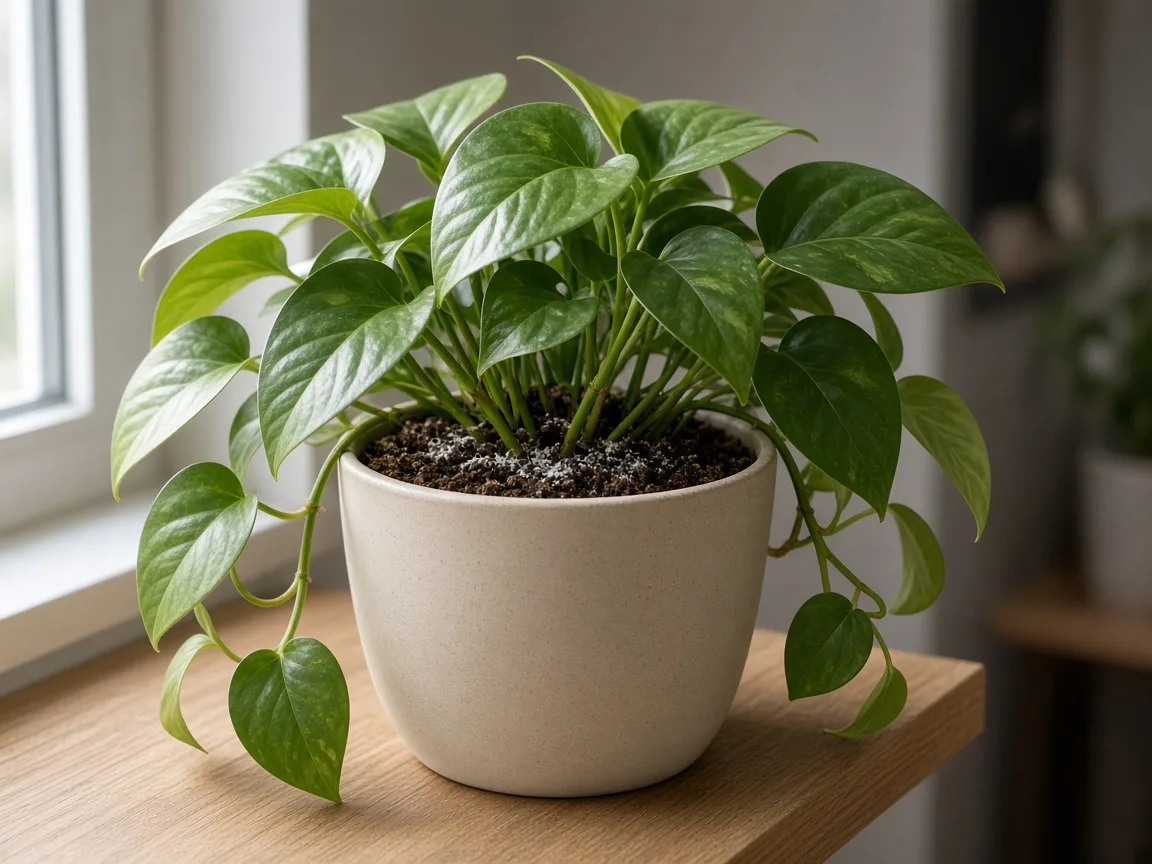
- A thin trace on dry potting mix around the stem base—only when the soil surface is dry and you are not about to water.
- A dry stem junction or support stake mites use as a highway—never a thick cake.
- Not open flowers, not saturated leaves, not the entire canopy.
Do not apply DE at the same time as a foliar soap or oil spray. Pick a sequence, observe the plant, and keep notes. After any wash or rinse, wait until foliage is fully dry before a soil-surface dust if you use one at all.
What to Do First Instead of Dusting the Whole Plant
For most houseplants, day one should look like IPM—not powder:
- Isolate the plant before brushing against neighbors.
- Prune only leaves that are heavily webbed or mostly dead; bag them for trash, not compost.
- Wash both leaf surfaces with a firm, plant-safe stream, targeting undersides and webbing.
- Reinspect in two to three days with the paper test.
If live mites remain, escalate to a labeled insecticidal soap or horticultural oil with complete underside coverage. UC IPM recommends these selective materials over broad-spectrum insecticides that can kill predators and flare mite populations. CSU warns against improvised dish-soap recipes because household detergents are not tested pesticides and can injure foliage.
That sequence—isolate, wash, labeled contact spray, repeat on a schedule—is the backbone of our spider mites on houseplants guide. DE, if used at all, comes after you understand where mites actually are.
When DE Might Help as a Supplement
DE is most plausible when:
- Mites are early and limited to crawl zones you can keep dry.
- You are treating dry soil surfaces in a quarantine area where mites might drop and recrawl.
- You are combining DE with barrier thinking outdoors—not as foliar blanket on a humid houseplant.
It is least plausible when:
- Webbing is already dense.
- You mist frequently or run humidifiers near the canopy.
- You plan to release predatory mites—DE and other pesticides can harm beneficial mites and insects such as lacewings and minute pirate bugs that otherwise help limit outbreaks.
Predatory mites such as Phytoseiulus persimilis can be effective biological control when released early in a suitable environment, but they need humidity and absence of incompatible residues. University of Maryland Extension notes predatory mites feed on eggs, nymphs, and adults of plant-feeding mites. Do not dust DE and release predators the same week without checking supplier guidance.
DE vs Soap, Oil, Neem, and Predatory Mites
| Option | Best use for spider mites | Main limitation | Practical note |
|---|---|---|---|
| Dry DE | Dry crawl zones (soil surface, stem base) | Poor reach on leaf undersides; inactive when wet | Thin trace only; NPIC inhalation precautions indoors |
| Water rinse | Immediate knockdown of mites and webbing | No residual control | Repeat during active outbreak; see hub for full wash protocol |
| Insecticidal soap | Direct contact on accessible mites | No residual; can injure sensitive plants | Cover undersides; test first; hub guide |
| Horticultural oil | Thorough contact on many mite stages | Phytotoxicity if misapplied | Not on water-stressed or hot sun-hit foliage |
| Neem oil | Labeled oil option where product allows mites | Formulation and results vary | See does neem oil kill spider mites |
| Predatory mites | Biological control in stable indoor/greenhouse setups | Needs prey, humidity, no incompatible sprays | Release early; skip DE residues |
None of these reverse old stippling. Judge success by fewer live mites, no new webbing, and clean new growth—not by leaves magically turning green again.
Reapplication Schedule When You Escalate Beyond DE
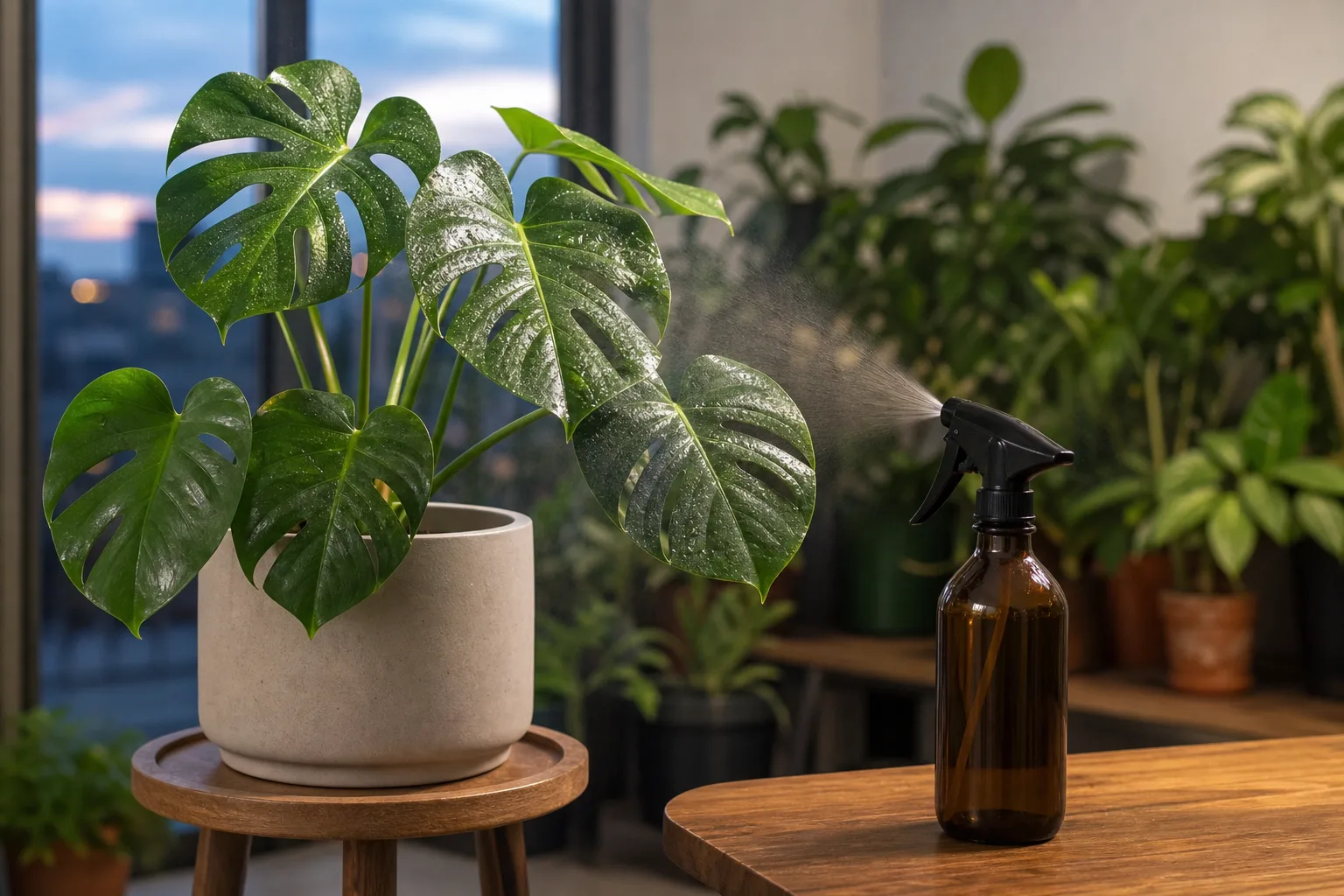
Because eggs and immatures often survive the first contact treatment, spider mite IPM requires repeated applications on a life-cycle schedule—not a one-time dusting.
Colorado State University Extension and UC IPM both frame spider mite populations as capable of rapid increase in warm, dry conditions, with multiple overlapping stages present at once. In practice, for indoor temperatures near 70°F (21°C), plan contact treatments every 5–7 days for at least three to four cycles, continuing until you have two clean inspections with no new stippling or live mites on undersides. Cooler rooms may stretch toward 7–10 days, but the principle is the same: hit newly hatched mites before they lay the next round.
If you tried DE on dry soil for a week and mites persist on foliage, stop adding powder and switch to wash plus labeled soap or oil on that 5–7 day cadence. More DE does not fix a coverage problem on undersides.
When to Discard a Heavily Infested Plant
Disposal is sometimes the rational IPM decision—especially indoors where one reservoir plant reinfects a collection.
Consider discarding the plant when:
- Foliage is heavily webbed or skeletonized and the plant lacks enough healthy leaves to recover.
- You have completed several honest soap/oil cycles on schedule and still find dense live mites.
- The plant is inexpensive or weak, and quarantine space is limited.
- It keeps reinfecting neighbors despite isolation.
Bag the plant for household trash rather than composting. Protecting the rest of the collection matters more than saving one chronically infested specimen. Threshold details and quarantine timing are expanded in the spider mites on houseplants guide.
What Not to Do
- Do not coat an entire houseplant in DE. You gain little mite contact, create inhalation risk, and lose the ability to scout new stippling.
- Do not assume food grade means safe for every use. Follow pesticide labels for pest control; NPIC exposure guidance still applies to dust.
- Do not mix DE with water and call it a mite cure without a labeled wettable product and legal directions.
- Do not skip identification and dust for “prevention” on a healthy plant near a heat vent.
- Do not combine frantic sprays—soap, oil, alcohol, neem, and cleaners—in one afternoon. Burn risk and diagnostic confusion rise together.
- Do not use broad-spectrum insecticides hoping they will fix mites; UC IPM documents mite flares after some insecticide classes when predators are killed.
Prevention in Brief
Spider mites favor warm, dry, dusty conditions and stressed plants. Long-term prevention—quarantine for new plants, regular underside checks during heating season, appropriate watering, and avoiding overfertilization on stressed specimens—is covered in depth in the spider mites on houseplants hub. DE is not a preventive shield around a healthy collection; scouting is.
Conclusion
Diatomaceous earth can kill spider mites that cross a dry, effective deposit, and NPIC’s desiccation mechanism is real. It rarely gets rid of a spider-mite infestation on a houseplant because mites feed on humid leaf undersides, webbing blocks contact, eggs survive missed coverage, and indoor moisture disables dry powder.
Start with confirmation and isolation, wash thoroughly, and—if needed—use labeled soap or oil on a 5–7 day repeat schedule until inspections stay clean. Use DE only as a thin, targeted, dry supplement where crawl routes exist, with NPIC respiratory and eye precautions in mind. When webbing wins or cycles fail, discard the plant to protect the rest of your collection. For everything beyond DE—humidity strategy, soap-vs-oil choice, predatory mites, and recovery checklists—keep the spider mites on houseplants guide bookmarked.



