Does Neem Oil Kill Spider Mites? What to Know
Does neem oil kill spider mites? Learn when it works, how to spray safely, why coverage and repeat treatments matter, and what to try when it fails.
Spider mites are small enough to hide in plain sight, but their damage is not subtle for long. A plant may develop pale stippling, yellowing, bronze patches, premature leaf drop, or fine webbing before you ever see a mite. That makes neem oil attractive: it is widely available, plant-derived, and often sold as a gentler alternative to broad-spectrum insecticides.
The honest answer is yes, a properly labeled neem-oil product can help kill and suppress spider mites. It is not, however, a guaranteed one-spray cure. Neem products differ in chemistry, many work only when spray contacts the pest, eggs may survive a treatment, and a stressed plant can be injured by oil even when the mixture is technically correct. The best result usually comes from a sequence: confirm the pest, reduce the population with water and removal, apply the labeled product thoroughly, then monitor and repeat only as directed.
Quick answer: neem can help, but it is not a one-spray cure
Neem is worth considering when you have a confirmed, early-to-moderate spider-mite infestation and can reach the undersides of the leaves. UC Integrated Pest Management lists neem among the plant-based oils used against spider mites, while Colorado State University Extension lists oils among useful controls for spider mites more broadly. Both sources emphasize the same practical constraint: oils and soaps must contact the mites, coverage matters, and repeat applications may be needed. (UC IPM spider mite guidance; Colorado State University Extension spider mite guide)
That is different from saying neem instantly eradicates every life stage. A spray may kill exposed mobile mites, reduce feeding, or interfere with development depending on the formulation, but it cannot rescue tissue that has already been stippled. The leaves that are already yellow or bronzed will not become healthy again; judge success by whether new damage slows, live mites become harder to find, and new growth emerges cleanly.
If the plant is severely covered in webbing, dropping leaves, and losing vigor, neem may still be part of the plan, but it should not be the entire plan. Remove the worst leaves if the plant can spare them, wash the remaining foliage, and decide whether the plant is worth repeated treatment. A nearly bare annual or a heavily infested plant sitting among valuable houseplants may be a poor candidate for a long rescue attempt.
Confirm spider mites before you reach for neem
Spraying the wrong pest wastes time and can make a different problem harder to diagnose. Spider-mite damage is often confused with thrips, nutrient stress, sun scorch, hard-water residue, or ordinary aging. Neem is not a general-purpose answer to every pale leaf.
The damage pattern to look for
Start with the leaves, not the bottle. Spider mites feed by piercing plant cells and removing their contents, so early damage looks like many tiny pale dots or a fine, sandblasted stippling across the leaf. As feeding continues, the leaf can turn yellowish, gray, bronze, or reddish, and severe infestations may produce fine silk between leaves, petioles, and stems. The most revealing evidence is usually on the underside of the leaf, along the midrib and veins, where mites, eggs, shed skins, and webbing can collect.
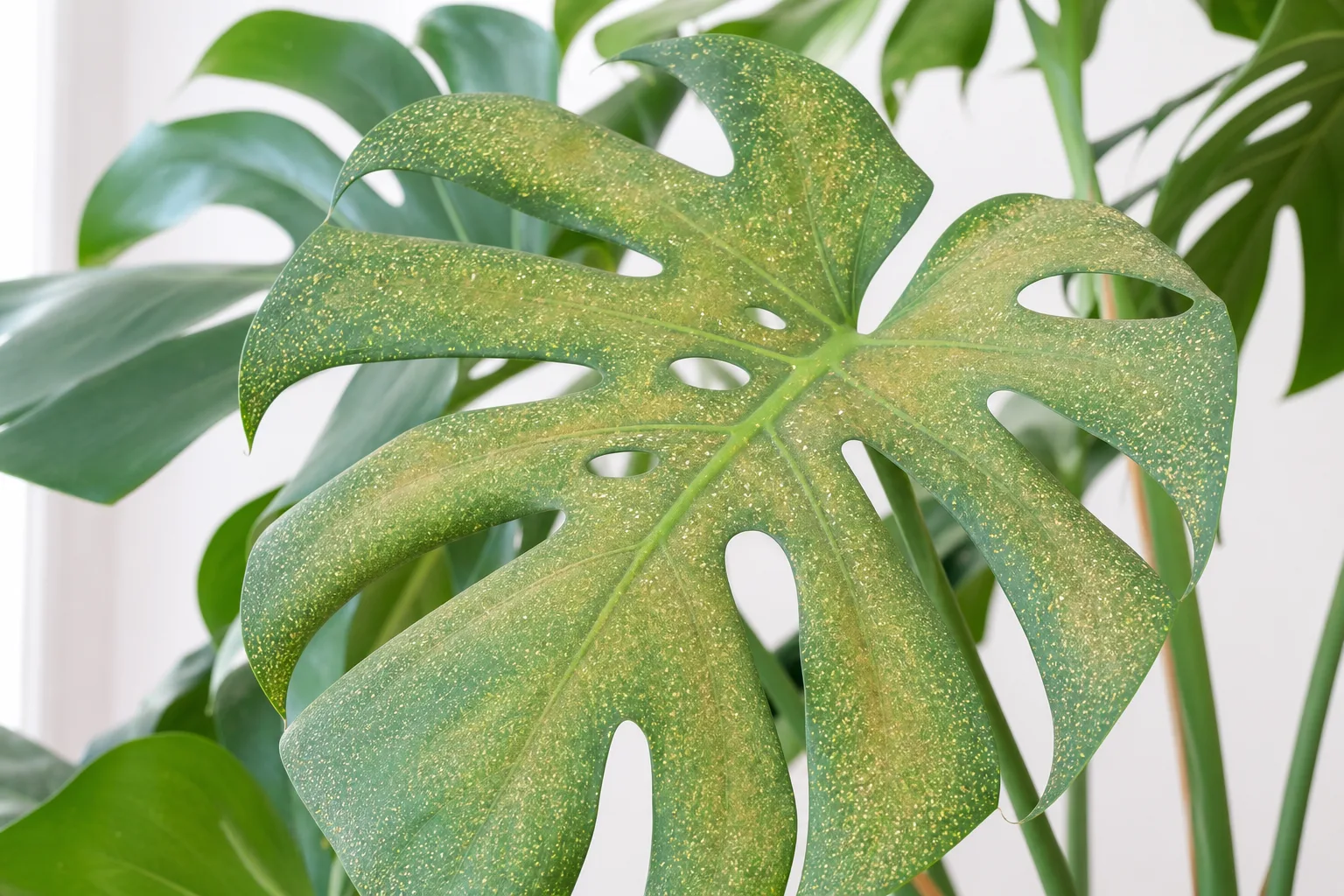
Look at several leaves from different parts of the plant. One damaged leaf is not enough to diagnose an infestation, especially on a plant that has recently moved, dried out, or sat in harsh sun. Spider mites favor hot, dry conditions, and water stress makes plants less tolerant of their feeding, but dry soil alone does not prove mites are present. (Penn State Extension twospotted spider mite guide; Colorado State University Extension spider mite guide)
The white-paper tap test
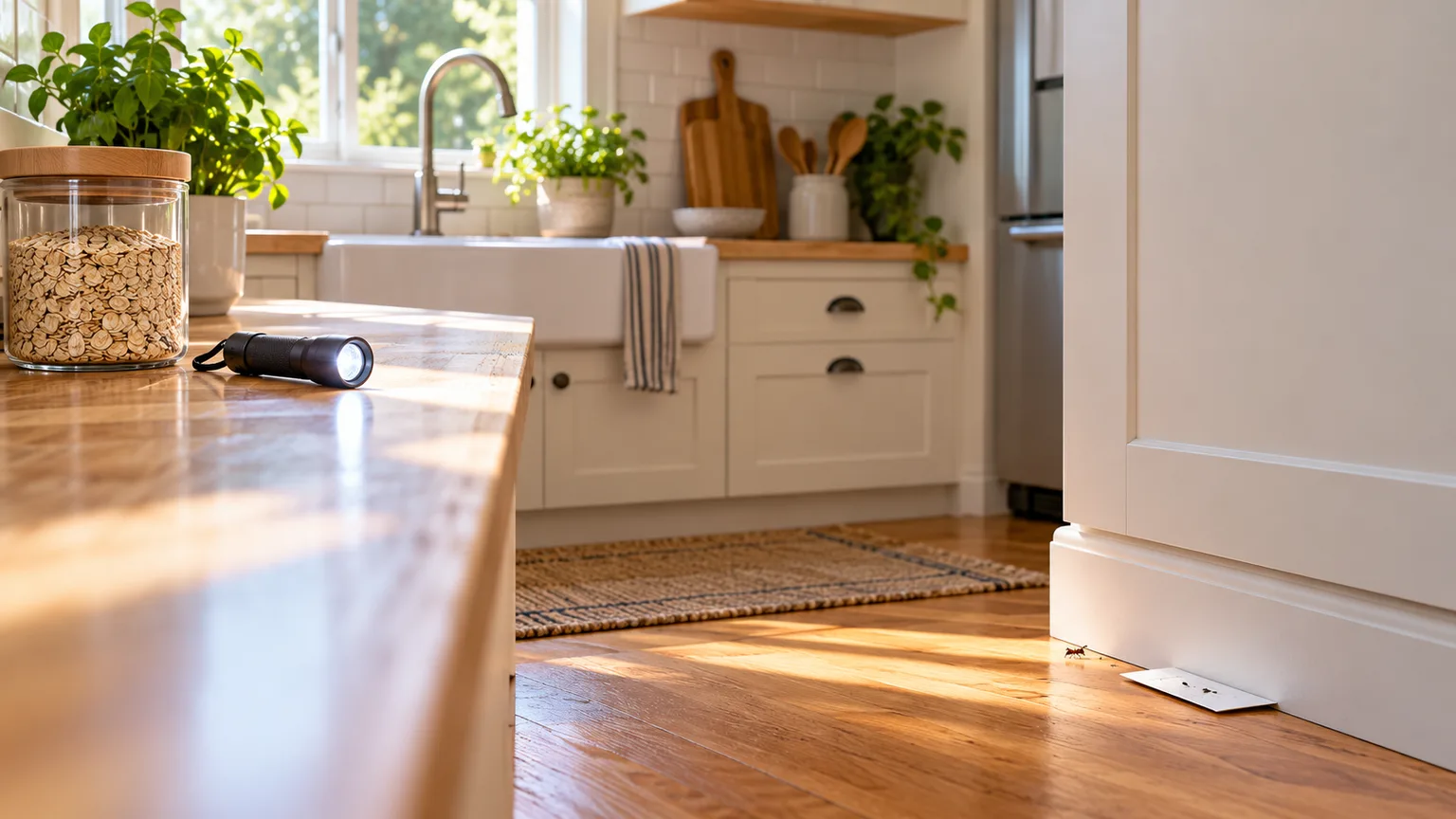
Hold a sheet of white paper beneath a suspect leaf or branch and tap the foliage firmly. If mites are present, tiny moving specks may fall onto the paper and begin crawling. A hand lens makes confirmation easier, but movement is often the useful clue: dust does not walk, and shed skins do not suddenly scatter across the paper.
Check the plant again the next day if the result is ambiguous. UC IPM advises monitoring before treatment because damage can remain after mites have moved on, and plants may recover once the population has declined. If you find no moving mites, pause before spraying and investigate other causes of the leaf pattern. (UC IPM spider mite guidance)
What neem oil actually does to spider mites
Neem oil is not one perfectly standardized substance. It is a mixture derived from neem seeds, and products can be made from different fractions of that mixture or formulated for different uses. The National Pesticide Information Center explains that azadirachtin is the most active component for repelling and killing pests, while the portion left after it is removed is called clarified hydrophobic neem oil. (National Pesticide Information Center neem oil fact sheet)
Neem compounds can reduce feeding and interfere with insect growth and egg-laying. The oil fraction can also act as a contact material that coats exposed pests. For spider mites, that means the visible result depends heavily on where the spray lands. A shiny upper surface does little for mites protected under a leaf, inside webbing, or in a crowded plant center.
This is also why “natural” does not mean “instant” or “risk-free.” A product that depends mostly on direct contact behaves differently from a product whose active ingredient changes feeding or development. The label tells you which pests, crops, rates, application method, and intervals have been evaluated for that product. Fine Gardening’s practical neem overview also describes both contact smothering and effects on feeding and development, but the product in your hand still controls the actual directions. (Fine Gardening neem overview)
Do not assume that a bottle labeled “neem oil” has the same active profile as every other bottle. Some products contain cold-pressed neem oil or an extract that includes azadirachtin; others are clarified hydrophobic extract products that rely more on the physical action of oil. A home gardener does not need to memorize pesticide chemistry, but does need to read the active ingredient and directions instead of transferring a recipe from another product.
That distinction matters when you interpret a slow result. A product may be working by reducing feeding or disrupting development rather than dropping every adult immediately. It also matters when you compare a product to horticultural oil: both are oils, but their labels, crop registrations, rates, and expected effects can differ. Use the label as the source of truth and the visible mite count as your feedback loop.
The treatment sequence that gives neem a fair chance
Neem works best as one part of integrated pest management, not as a substitute for inspection and sanitation. A reliable sequence is more valuable than a stronger mixture.
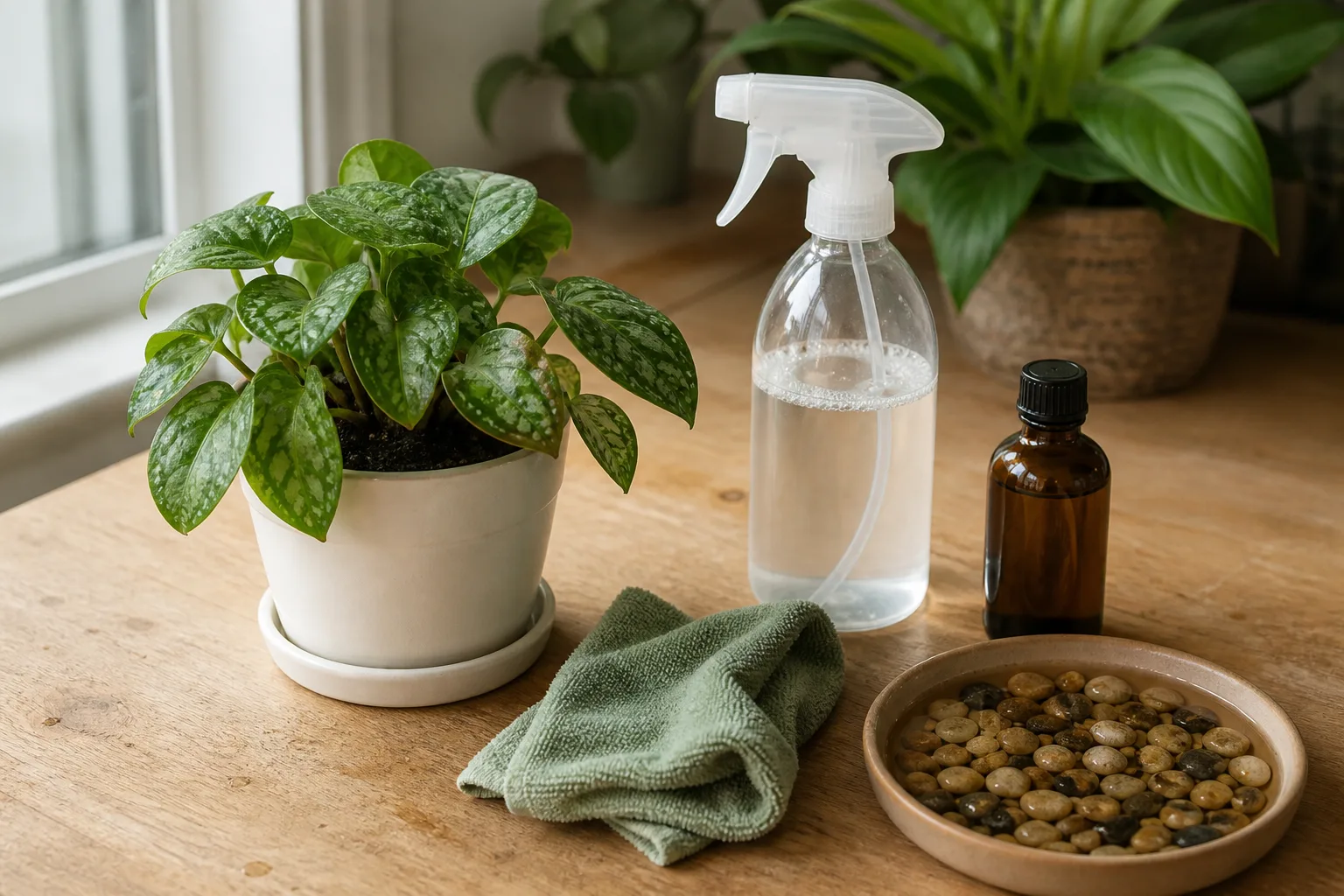
Isolate the plant and inspect the whole collection
Move a suspect houseplant away from its neighbors before you spray. Spider mites can spread through contact, shared plant stands, drifting webbing, clothing, or air movement, and a single untreated plant can keep reseeding the plants you just cleaned. Inspect nearby plants, especially those with broad, thin leaves or plants positioned in a hot, dry window.
Remove only leaves that are heavily webbed, badly bronzed, or too damaged to contribute much photosynthesis. Seal them in a bag rather than dropping them into a nearby pot or compost pile. Do not prune so aggressively that a weak plant is left with no useful foliage; the goal is to lower the population and improve coverage, not to create a second stress event.
Wash away mites and webbing first
For a houseplant, rinse the foliage in a shower, sink, or outdoor hose stream that is strong enough to move mites but not strong enough to tear leaves or compact the potting mix. Aim at the undersides and leaf joints. For an outdoor plant, a forceful but controlled spray can physically remove many mites, loosen webbing, and wash dust from leaves. Colorado State University Extension notes that periodic hosing can remove mites and dust that interferes with natural enemies. (Colorado State University Extension spider mite guide)
Let the plant drain and let the leaf surfaces dry before applying an oil product. This first wash is not a reason to skip follow-up; it is a way to lower the population so the next treatment has fewer pests to reach. It also lets you see the foliage more clearly and reduces the temptation to compensate for poor coverage by mixing a stronger spray.
Spray for coverage, not shine
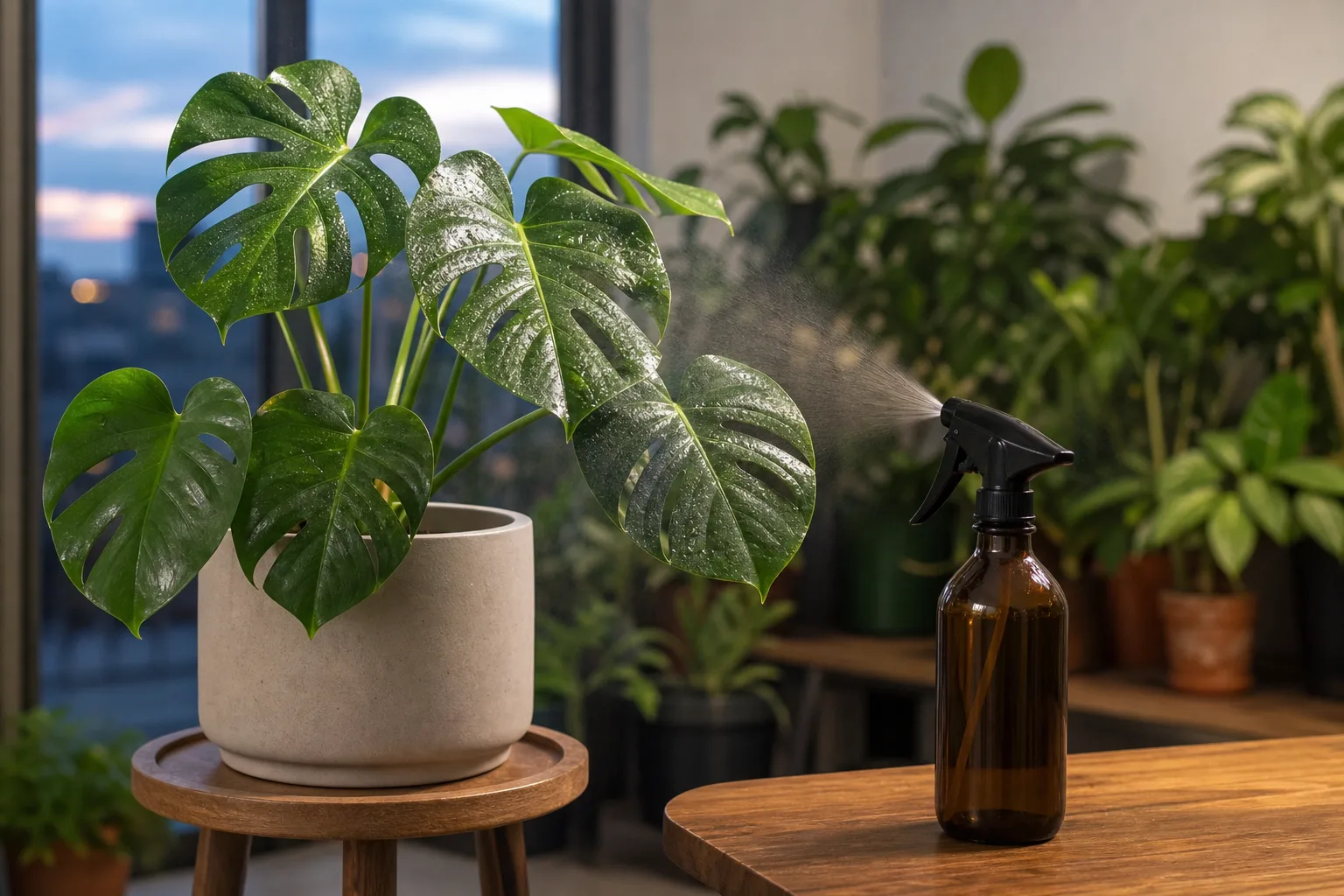
If the label allows the product for your plant and pest, mix it exactly as directed and use enough spray to wet the target surfaces without creating runoff down the stem or onto the floor. Start at the lower leaves and work upward. Turn or lift leaves so the spray reaches the underside, petiole junctions, newest growth, and sheltered areas where webbing is thickest.
The goal is not to make every leaf glossy. The goal is to make contact with the pest while avoiding puddles that stay wet or leave an excessive oil film. A fine mist that lands only on the upper canopy can look thorough while missing the colony. If the plant is too dense to reach the underside, thin a few leaves, rotate the pot, or choose a water or soap treatment that you can apply more completely.
Repeat around the mite life cycle
Spider mites develop quickly in warm conditions, and eggs, larvae, nymphs, and adults may overlap on the same plant. Penn State Extension reports that twospotted spider mites can complete a generation in roughly 7 to 20 days depending on weather, while Colorado State University Extension notes that many miticides do not affect eggs and therefore need a repeat application at an interval stated on the label. (Penn State Extension twospotted spider mite guide; Colorado State University Extension spider mite guide)
Do not turn that biology into a universal “spray every seven days” command. Some products specify different intervals, and some labels restrict how often a product can be used. Instead, write down the application date, product, rate, plant, weather, and what you observed. Recheck the paper test and undersides between applications. Repeat only when the label allows it and the monitoring shows that mites remain active.
How to use neem oil without burning the plant
The most important neem-oil safety advice is boring and powerful: read the product label before you mix anything. The National Pesticide Information Center says pesticide labels tell you how much to use, where and how to apply it, what protective equipment is needed, environmental hazards, first aid, and how to store or dispose of the product. Using more does not make a pesticide more effective and can harm plants, people, pets, or the environment. (NPIC pesticide label guidance)
Let the product label set the dilution
Avoid treating a tablespoon of neem oil plus dish soap in a gallon of water as a universal formula. Products differ in concentration, emulsifiers, crop registrations, and whether they are ready-to-use or meant to be diluted. A kitchen soap can also be harsher than a labeled insecticidal soap, and adding it may conflict with the product directions.
For an ornamental houseplant, confirm that the product permits indoor or houseplant use and names the pest or a category that includes mites. For vegetables, herbs, and fruit, confirm that the crop is listed and check the product’s preharvest interval. “Organic,” “natural,” and “neem” do not replace a crop label. If your plant or use is not listed, do not improvise.
Choose a cool, dry application window
Do not spray an oil on a drought-stressed, recently transplanted, wet, or heat-baked plant. UC IPM advises against using soaps or oils on water-stressed plants or when temperatures exceed 90°F, and CSU Extension warns that oil injury becomes more likely in extreme heat, cold, wet foliage, rain, high humidity, or on stressed plants. (UC IPM spider mite guidance; Colorado State University Extension horticultural oils guide)
Water the plant normally ahead of time, but let the leaves dry. Apply in the cooler part of the day, out of direct sun, when the forecast gives the spray time to dry and the label permits treatment. Do not treat open flowers while pollinators are actively foraging. Neem is relatively low in toxicity to birds, mammals, bees, and plants according to NPIC, but it is slightly toxic to fish and other aquatic organisms, and any pesticide can cause problems when applied carelessly. Keep spray and rinse water out of ponds, streams, and aquariums. (National Pesticide Information Center neem oil fact sheet)
Never combine neem or another oil with sulfur unless both product labels explicitly allow the timing. Oil-and-sulfur combinations can increase the risk of leaf spotting and scorch, and waiting periods vary by product. Record recent treatments so you do not accidentally stack incompatible sprays.
Run a small patch test
Test the mixed product on one or two leaves, ideally on a less visible part of the plant. Wait the interval stated on the label, or at least long enough to observe the plant through the next bright-light period, before treating the whole collection. Look for translucent spots, brown patches, distorted new growth, or an oily residue that does not dry normally.
Patch testing is especially important for thin-leaved, fuzzy, waxy, newly purchased, or already stressed plants. A product that behaves well on a pothos may still injure a sensitive fern, orchid, impatiens, fuchsia, hibiscus, or another plant listed as oil-sensitive by a label or extension guide. If a patch burns, rinse the plant with clean water if the product label permits, move it out of harsh light, and do not repeat that product on the rest of the plant.
Why neem oil fails on spider mites
The most common failure is coverage failure. Spider mites live on leaf undersides and within webbing, so a plant that was sprayed from above may look treated while the colony remains untouched. Rotate the plant, lift leaves, and use enough volume to reach the hiding places without flooding the pot.
The second failure is treating once and judging the product the next morning. Eggs may hatch after the first spray, and some neem products work by reducing feeding or development rather than providing immediate knockdown. If the plant is still producing new stippling after the label-allowed repeat interval, continue monitoring rather than applying a stronger unapproved dose.
The third failure is the wrong product or wrong expectation. A bottle containing clarified hydrophobic neem extract may rely on contact, while a product containing azadirachtin may show more gradual effects. A product registered for ornamental plants may not be approved for edible crops. A homemade recipe may be too weak to work, too strong for the foliage, or incompatible with the plant. Verify the active ingredient and label before deciding that “neem” failed.
The fourth failure is an unconfirmed diagnosis. Thrips, broad mites, nutrient problems, sun scorch, and hard-water residue can look similar. If you cannot find moving mites, eggs, or characteristic webbing, stop repeating oil and investigate the symptom instead.
Finally, the plant may be under too much environmental pressure. Drought, hot glass, dusty leaves, a recent move, or a root problem can keep new damage appearing even after the mites decline. Improve watering and airflow, clean dust from the foliage, and judge the plant by fresh growth rather than trying to erase old damage.
Neem oil versus water, soap, horticultural oil, and predators
Neem is one option, not automatically the best option. Match the tool to the plant, the size of the infestation, and your ability to achieve full coverage.
| Option | Best use | Main limitation |
|---|---|---|
| Forceful water spray | Early infestations, sturdy leaves, houseplants that can be moved to a sink or shower | Requires repetition and can damage delicate foliage if the stream is too strong |
| Insecticidal soap | Contact treatment when you can wet the mites directly | Can burn sensitive or stressed plants; it has little residual activity |
| Neem oil | Confirmed infestations where a labeled oil product can reach leaf undersides and repeat treatment is practical | Product chemistry varies, direct contact matters, and leaf injury is possible |
| Horticultural oil | Established mite problems on plants listed by the product label | Phytotoxicity risk increases with heat, drought stress, wet foliage, and sensitive plants |
| Predatory mites and other natural enemies | Greenhouses, larger plantings, or gardeners who can preserve biological control | Predators need the right conditions and can be harmed by broad-spectrum sprays |
UC IPM recommends monitoring first, preserving natural enemies, providing adequate irrigation, and using water, soaps, or oils when needed. Colorado State University Extension warns that some broad-spectrum insecticides can destroy mite predators or even aggravate outbreaks. That is why a “stronger” insecticide is not always a smarter next step. (UC IPM spider mite guidance; Colorado State University Extension spider mite guide)
For a small houseplant infestation, washing plus a labeled soap or oil may be enough. For a collection with repeated outbreaks, identify which plants are most susceptible, improve the dry or dusty conditions that favor mites, and consider professional or biological-control advice rather than rotating random home remedies.
Adjust the plan for houseplants, edible crops, and outdoor beds
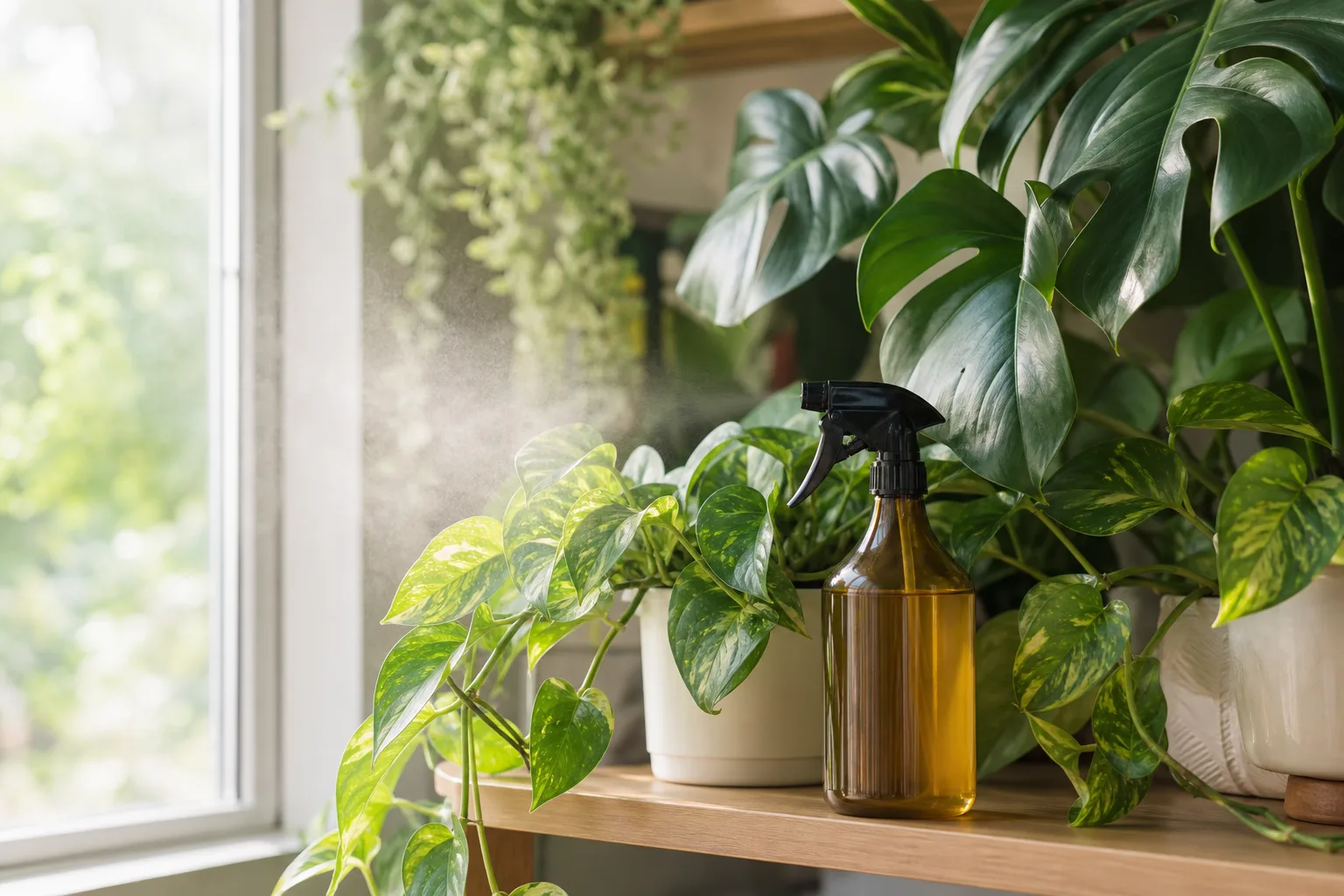
Houseplants: Isolate first and treat every susceptible plant nearby, not just the one with the worst leaves. A small plant can often be rinsed thoroughly in a sink or shower, while a large plant may need leaf-by-leaf inspection and wiping. Keep pets away from freshly treated foliage and prevent cats or dogs from chewing leaves; NPIC reports adverse reactions from some direct cat exposures to neem products, so a plant spray is not a pet flea treatment.
Edible crops: The crop listing and preharvest interval on the product label are non-negotiable. Neem oil is sold in many registered pesticide products, and the fact that one product can be used on an herb does not mean every neem product can. Do not spray a vegetable, fruit, or culinary herb with an ornamental-only product, and do not assume a zero-day harvest interval from a different bottle.
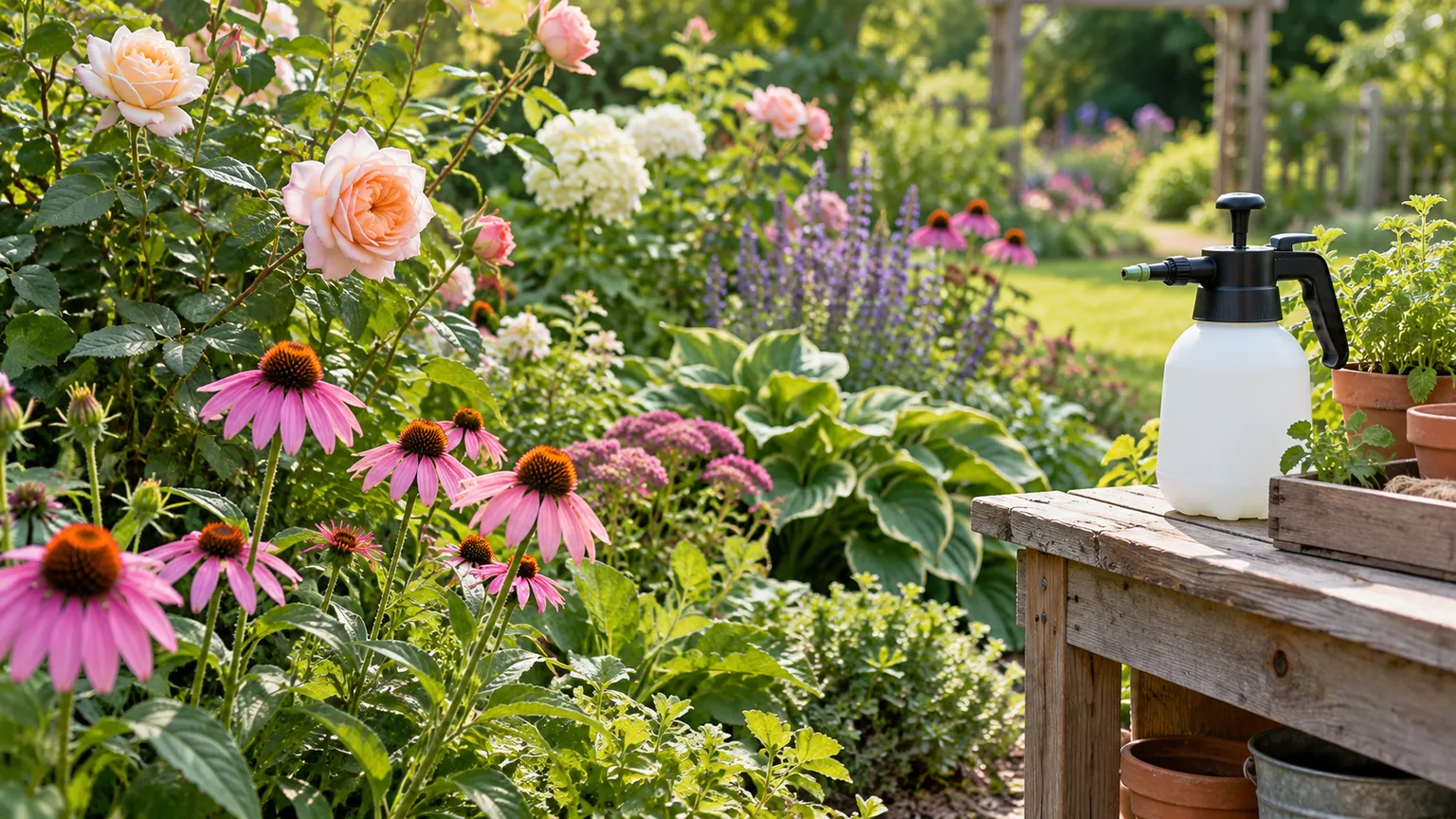
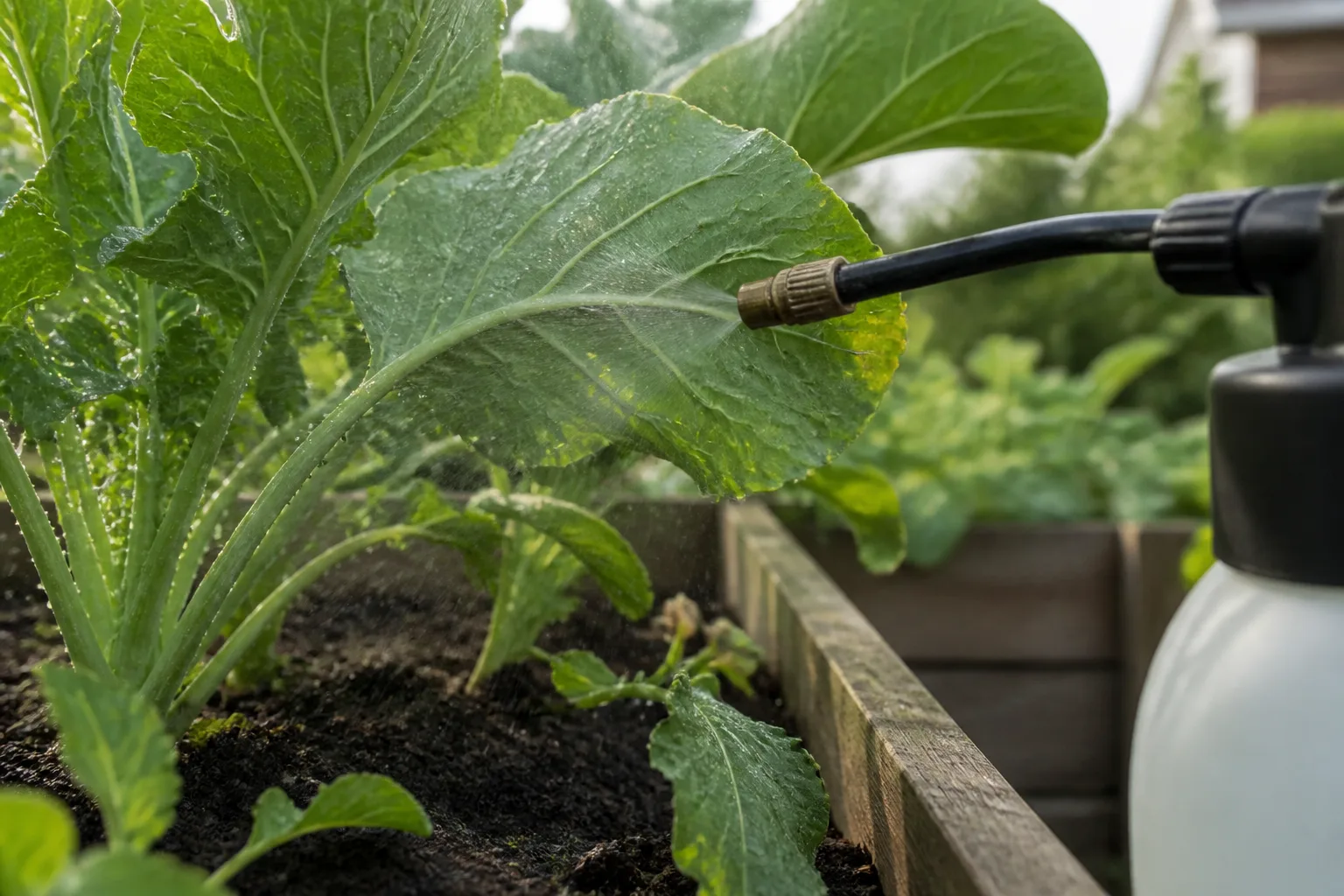
Outdoor ornamentals: Check for bees and other beneficial insects before you spray, avoid open flowers, and protect ponds and water features from drift and runoff. Preserve natural enemies whenever possible. On a rose, shrub, or perennial with a mild infestation, a hose and better irrigation may reduce pressure with less disruption than a repeated oil program.
Conifers and trees: Identify the mite species and read the label for the site and plant. “Spider mite” is a group of related species with different seasonal habits; twospotted spider mites on a houseplant are not the same management problem as a cool-season mite on a conifer. Extension guidance can help when the plant is valuable, large, or declining despite treatment. The label remains the final authority for pesticide use.
Prevention after the infestation is under control
Prevention is less about keeping a bottle on a calendar and more about removing the conditions that let mites multiply unnoticed. Check the undersides of leaves when you water, especially after moving a plant indoors, placing it near hot glass, or bringing home a new plant. Quarantine new plants long enough to inspect them more than once; eggs and small nymphs are easy to miss in a single visit.
Keep plants adequately watered without turning the potting mix into a swamp. Spider mites favor hot, dry conditions, and water-stressed plants tolerate their feeding poorly, but constantly wet roots create a different problem. Clean dust from foliage with water when the plant tolerates it, improve air movement, and avoid unnecessary broad-spectrum insecticides that kill predators.
If you use neem as a maintenance spray, follow the label rather than treating every plant automatically. Routine spraying can expose healthy leaves and beneficial insects without solving the conditions that caused the outbreak. Monitoring gives you a better trigger: treat when the confirmed pest is building and the product is appropriate, then stop when the plant is clean and new growth is stable.
Conclusion: use neem as one tool in a monitored plan
Neem oil can kill or suppress spider mites, but it earns that result through correct identification, complete coverage, label-directed use, safe weather, and follow-up. It is not a magic eraser for damaged leaves and it is not one universal recipe in a brown bottle.
Start by tapping the plant over white paper and checking leaf undersides. Rinse away as many mites and webs as the plant can tolerate, isolate the plant, patch-test the labeled product, and spray the hiding places rather than just the visible top leaves. Recheck the plant on a schedule that matches the label and the mite life cycle. If the population stays active, switch tactics thoughtfully—water, insecticidal soap, a labeled horticultural oil, biological control, or extension advice—rather than simply making the neem mixture stronger.