How to Grow and Care for Epipremnum Pinnatum
Grow Epipremnum pinnatum with a practical light and watering routine, the right potting mix, moss-pole tips, propagation steps, and problem fixes.
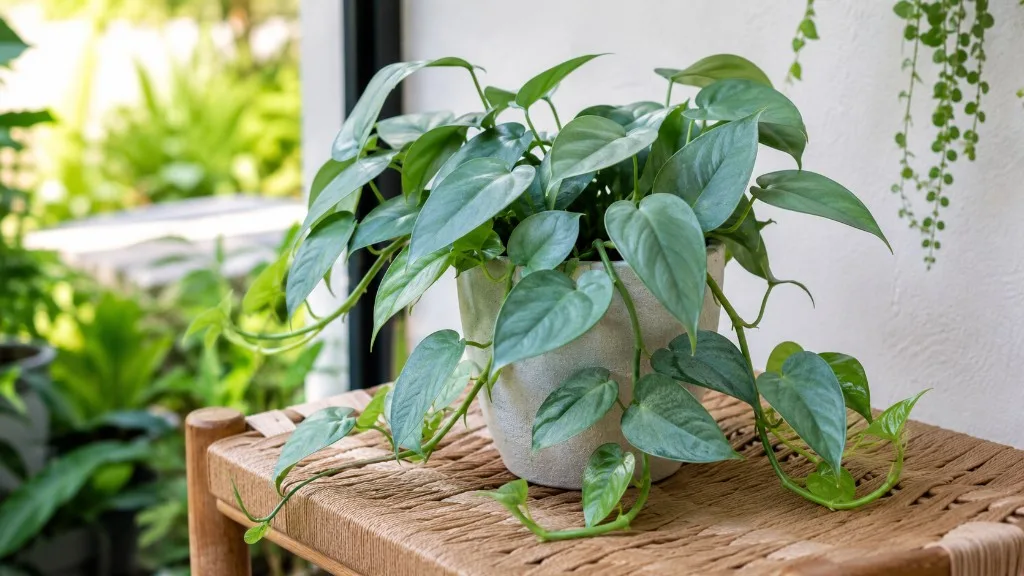
Epipremnum pinnatum is a tropical climbing aroid sold under names including dragon-tail plant, silver vine, centipede tongavine, Tibatib, Cebu Blue, and Baltic Blue. It is related to golden pothos, but it is not the same species, and it often rewards brighter light and vertical support with more distinctive foliage.
The most dependable routine is straightforward: provide bright filtered light, use a pot with an open drainage hole, water only after the upper mix dries, and keep the plant warm and away from drafts. If you want larger, split leaves, add a stable support and give the vine enough time to mature. A moss pole is an invitation to climb, not a guarantee of fenestration.
Epipremnum Pinnatum Care at a Glance
Use this table as a starting point, then adjust for pot size, room temperature, season, and light. The same plant can dry in five days on a bright shelf or remain wet for two weeks in a large pot in a dim room.
| Care factor | Practical target | First sign the setup is off |
|---|---|---|
| Light | Bright, indirect or filtered light | Long bare internodes, pale growth, or scorched patches |
| Water | Thorough watering after the top 1–2 inches of mix dry | Heavy wet pot with yellow leaves, or a very light pot with curl |
| Soil | Open, slightly acidic, moisture-retentive but well drained | Slow dry-down, sour odor, or water running around a compacted root ball |
| Temperature | About 65–86°F (18–30°C) | Stalled growth after cold drafts or heat-vent exposure |
| Humidity | Average home air is usually workable; moderate humidity helps | Crispy tips when watering and roots are otherwise sound |
| Feeding | Diluted balanced fertilizer during active growth | Brown tips or white salt crust after repeated feeding |
| Growth form | Trail from a basket or climb a pole, trellis, or stake | Tangled vines, leaning pot, or small juvenile leaves |
| Safety | Keep leaves, stems, and cuttings out of reach | Chewing access for pets or children |
Know the Plant Before You Change Its Care
Kew lists Epipremnum pinnatum as the accepted species name in the arum family, Araceae, while NC State Extension records older names such as Pothos pinnatus, Monstera pinnata, and Rhaphidophora pinnata. That naming history explains why a plant tag may say “pothos” or even “philodendron” while the botanical identity points elsewhere. The plant is an evergreen vine that can climb with aerial roots and live partly or wholly above the ground in its native habitat. Kew Plants of the World Online and NC State Extension both support this distinction.
The species is naturally distributed across tropical and subtropical parts of Asia, the Pacific, and northern Australia. Its growth strategy is useful to understand indoors: juvenile plants creep or trail, then climb toward better light. NParks describes the species as a root-climbing aroid with leaf dimorphism, meaning the young and mature leaves can look noticeably different on the same plant.
Common cultivars are not interchangeable in appearance. ‘Cebu Blue’ has narrow blue-green leaves, ‘Baltic Blue’ can develop fenestrations while keeping a blue-green cast, ‘Albo-Variegata’ carries creamy white patches and usually grows more slowly, and ‘Skeleton Key’ has a distinctive narrow leaf tip. NC State Extension also lists ‘Marble King’ among the cultivated forms. Treat the cultivar name as a clue to leaf shape and growth rate, not as a reason to keep the root zone wetter.
Why Mature Leaves May Not Appear Indoors
Young E. pinnatum leaves are usually whole-edged and narrower. As the vine climbs, gains height, and has enough light and warmth to support the change, new leaves may become larger and deeply divided or fenestrated. That transition is a developmental response, not a cosmetic effect that fertilizer can switch on.
Many plants remain juvenile in hanging baskets for years, and that is perfectly acceptable. A trailing specimen can still be healthy and attractive. If mature foliage is your goal, give the vine a stable vertical route, keep the support close enough for aerial roots to contact, and improve light before adding more fertilizer. A pole cannot compensate for a dim room, cold roots, or a pot that stays wet.
Give It Bright, Filtered Light
Place the plant near a bright east- or west-facing window, or a short distance back from a bright south-facing window behind a sheer curtain. The goal is strong ambient light for much of the day without hot, unfiltered afternoon rays resting on the leaves. The RHS growing guide recommends bright indirect light and warns that direct sun can scorch foliage, while Epic Gardening notes that Cebu Blue usually needs more light than the most tolerant golden-pothos types.
Low light will not always kill this vine, but it changes the way it grows. Expect longer gaps between leaves, smaller new foliage, slower drying of the pot, and less visible color in blue-green or variegated forms. This combination is dangerous because growers often respond to slow growth with more water, even though the dim plant is using less of it.
Harsh sun creates a different pattern: tan or bleached patches on the window-facing side, curled edges, and dry areas that do not improve after watering. Move a scorched plant to softer light; do not cut off every damaged leaf immediately if much of the leaf is still green. When moving a plant from a dark corner to a bright window, make the change gradually over a week or two.
Judge the new location by new growth. A firm leaf that opens with good color and a shorter internode is more useful evidence than an old leaf that remains stretched. In a genuinely dark room, a full-spectrum grow light on a timer can supplement daylight, but keep it far enough away to avoid heating or bleaching the foliage.
Water by Root-Zone Dryness
Do not water Epipremnum pinnatum every Sunday simply because a care label says “weekly.” Press a finger into the upper 1–2 inches of mix, use a wooden skewer, and lift the pot to learn its light-versus-heavy weight. When the upper layer is dry and the container feels lighter, water slowly across the surface until a little drains from the bottom.
Empty the saucer or decorative cachepot after the pot has finished draining. The plant likes moisture, but its roots also need oxygen. Repeatedly keeping the root ball saturated is a faster route to yellowing, mushy stems, and root rot than allowing a short, ordinary dry-down.
In spring and summer, a warm plant in bright light may need water about every 7–10 days. In autumn and winter, or in a cool room with weaker light, the interval may stretch to two weeks or more. Those numbers are observation prompts, not rules. Plastic and ceramic pots dry differently, a large pot holds moisture longer than a small one, and a crowded root ball can dry quickly even when the mix looks rich.
If the surface is dry but the center remains heavy and damp, wait and investigate drainage or light. If water races down the sides and the root ball stays dry, the mix may have become hydrophobic; water in several slow passes or rewet the mix from below once, then return to normal top watering. Do not compensate for a dry surface by watering repeatedly without checking the middle of the pot.
Build an Airy Soil Mix and Use a Drainage Pot
Roots need a mix that holds enough moisture for a tropical vine while leaving air spaces after watering. A practical starting blend is two parts quality indoor potting mix, one part perlite, and a small amount of medium orchid bark if the base mix compacts easily. The exact recipe matters less than the result: it should moisten evenly, drain freely, and not remain swampy for many days.
The RHS describes an open, slightly acidic, moisture-retentive compost and gives a blend of three parts peat-free ericaceous compost, one part grit, and one part medium orchid bark. You can use that as a model rather than a prescription. If your commercial mix is already airy, adding a little perlite may be enough; if it dries too fast, use more moisture-retentive mix rather than jumping to a much larger pot.
Always use a container with an open drainage hole. A cachepot can hide a nursery pot, but runoff should not remain in the outer vessel. A gravel layer at the bottom does not repair a pot without drainage and can reduce the usable root zone. For a climber, choose a container heavy or wide enough to anchor the support without tipping, but keep the pot only one size larger than the root ball.
Keep Temperature and Humidity Steady
Aim for roughly 65–86°F (18–30°C) while the plant is actively growing. Keep it away from cold window glass, drafty doors, air-conditioning outlets, radiators, and heat vents. A brief cool spell may only slow a leaf, but repeated temperature swings can trigger curl, stalled growth, or leaf drop.
This is a tropical plant, yet it usually adapts to ordinary indoor humidity. The RHS guide specifically notes that epipremnums do not need high humidity compared with many tropical houseplants. If the room is very dry and tips crisp despite a sound watering routine, group plants together or use a small humidifier measured with a hygrometer.
Misting is not a dependable substitute for room humidity. It wets the leaf briefly, then evaporates, and repeated wet foliage in still air can encourage spotting. Keep the root zone correctly watered, keep air moving gently, and change the room’s humidity only if the measured conditions justify it. A pebble tray may be decorative, but it will not rescue a plant sitting in waterlogged soil.
Choose Between Trailing and Climbing
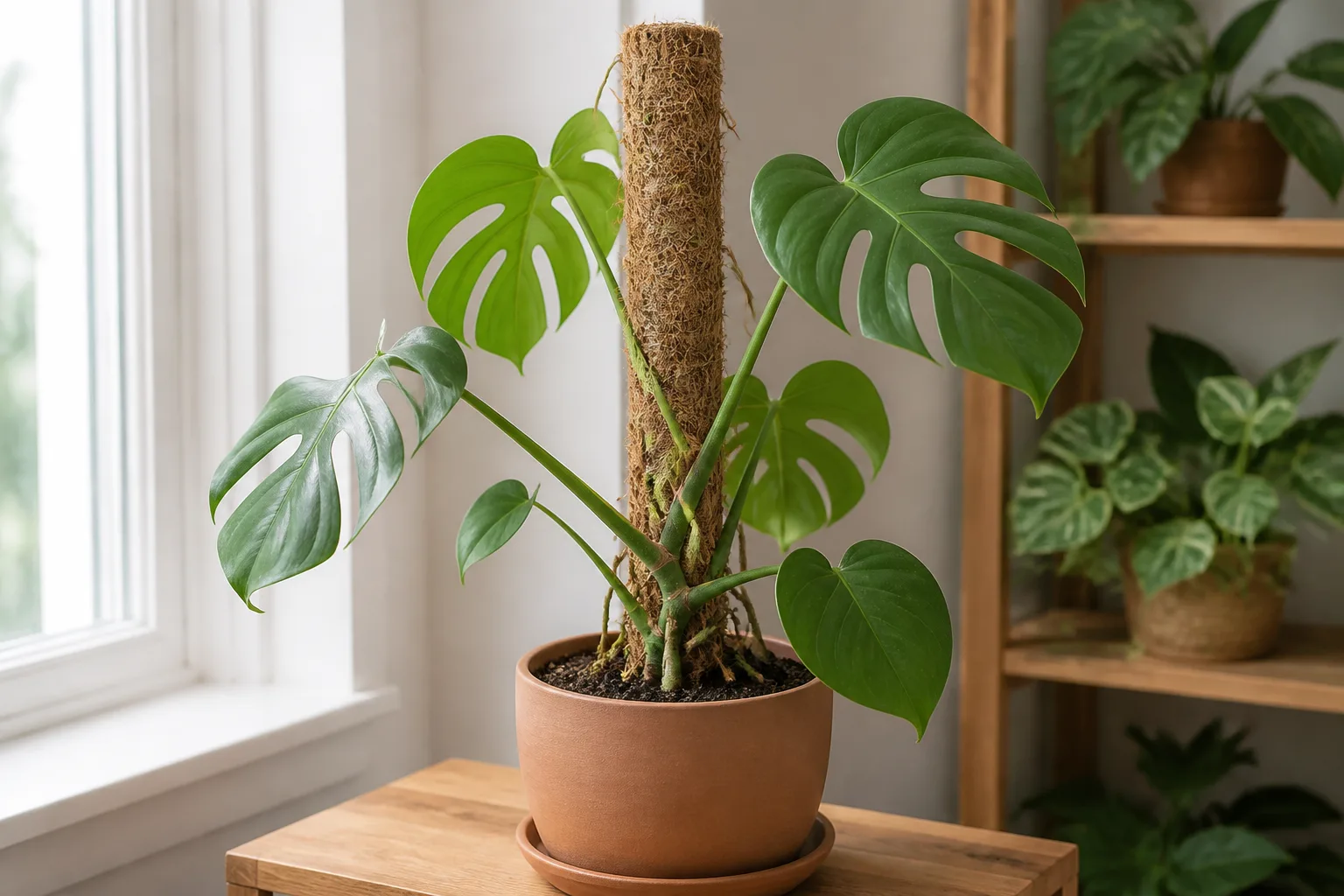
You can grow this vine as a cascade or as a climber. A hanging basket or high shelf is simplest and keeps juvenile foliage manageable. A moss pole, coir pole, trellis, or sturdy stake takes more training but gives aerial roots something to grip and can support larger, more mature leaves when light and warmth are adequate.
Choose the growth form before the stems become tangled. A trailing plant can be pruned into a fuller pot, while a climbing plant needs a support with a stable base and enough height for the next season of growth. If you want a dramatic change in leaf form, think of the support as one part of a system: light supplies energy, warmth keeps growth active, and the root zone must remain healthy.
Train Stems Without Crushing Them
Set the support close to the main stems during potting or repotting. Guide each vine gently against it and use soft ties or loose clips, leaving room for the stem to thicken. Do not force a sharp bend at a node, bury a long section of stem, or cinch a tie tightly around a growing vine.
If the pole is wrapped in moss or coir, keep its surface lightly damp during active growth so aerial roots have a chance to attach. A dry pole still provides structure, but it behaves more like a trellis. Do not keep the potting mix wet just to keep the pole damp; support moisture and root-zone moisture are separate decisions.
Fertilize Lightly During Active Growth
Feed a healthy, actively growing plant once every four weeks with a balanced water-soluble houseplant fertilizer diluted to one-quarter or one-half of the label strength. Apply it to already-moist mix, not to a bone-dry root ball. The RHS recommends monthly feeding during the growing season, while GardenBeast also treats the plant as a light feeder that benefits from regular but restrained feeding.
Follow the plant’s growth rather than a calendar. Hold fertilizer when the plant is nearly dormant, immediately after repotting, or recovering from root damage. Extra nutrients cannot make a dim vine bushy or make a waterlogged root system healthy.
Brown tips and a pale crust on the soil surface can point to accumulated salts. Flush the pot with plain water until runoff is clear, let it drain fully, and restart at a lower concentration or frequency. If the plant is already stressed, correct light and moisture first and wait for new growth before feeding again.
Prune for Fullness and Propagation Material
Pruning is optional for health but useful for shape. Remove dead or mostly damaged leaves with clean scissors, then shorten long bare stems by cutting just above a healthy node. That node can produce a side shoot, and the removed section can become a cutting.
For a fuller container, root several cuttings and plant them back into the same pot after they establish. Avoid removing most of the live canopy at once; the parent needs leaves to keep making energy. Spring or another period of active growth is the easiest time for a harder reset, but a small trim is possible whenever a vine is crowding its space.
Clean the blade before moving from a suspect plant to a healthy one. Wear gloves if the sap irritates your skin, keep cuttings away from food and drinking glasses, and wash your hands after handling. Pruning will not fix low light by itself; it only gives the plant a better shape after the environmental cause is corrected.
Propagate from Stem Cuttings
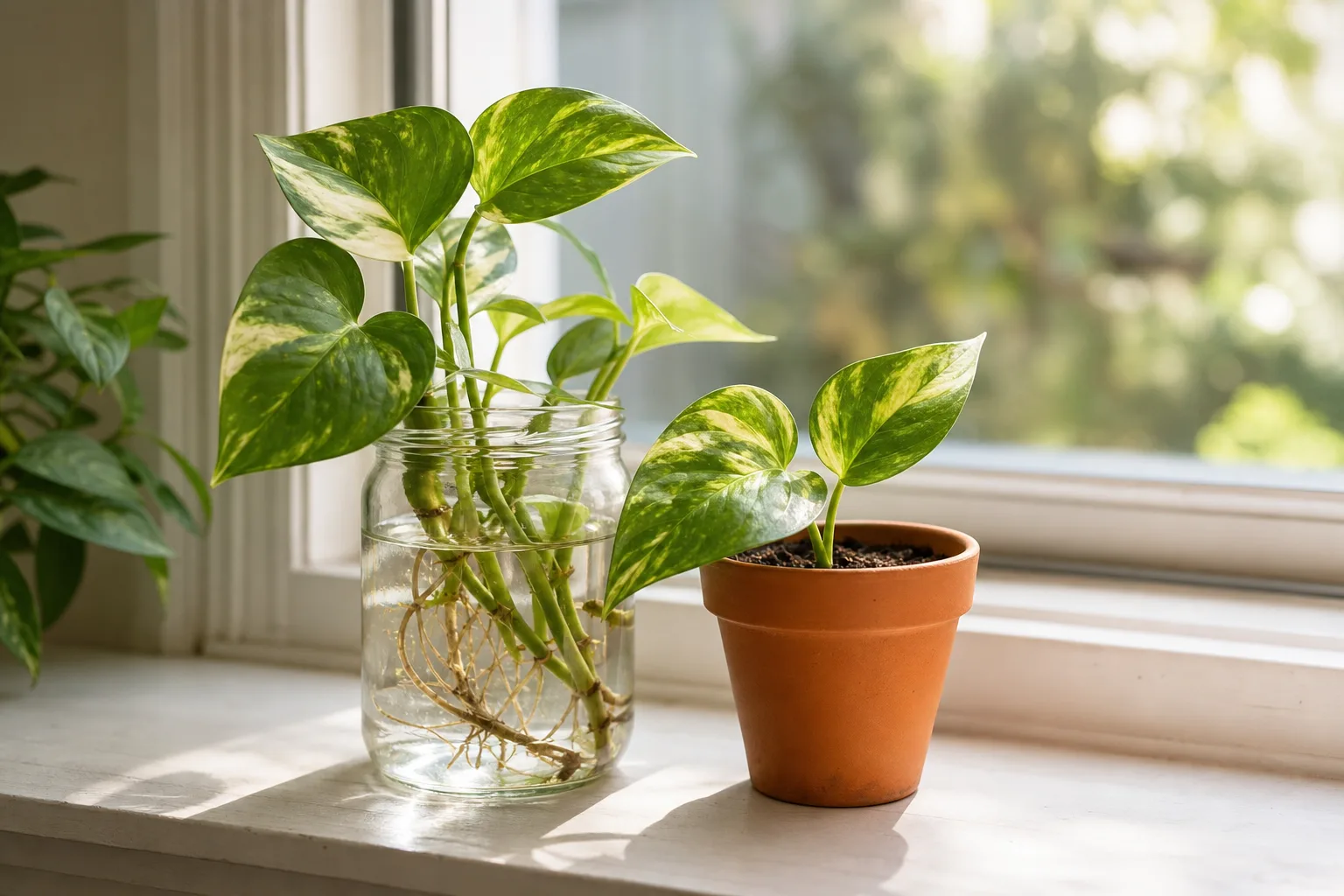
The dependable rule is that every cutting needs a node: the joint where a leaf, aerial root, or bud emerges. A leaf or petiole without a node may remain green, but it cannot grow into a complete vine. NC State Extension lists stem cuttings as the recommended propagation strategy, and the RHS also recommends stem cuttings and layering.
To root a cutting in water:
- Choose a firm, healthy vine and cut just below a node with clean, sharp scissors. A 4–6-inch piece with two or three nodes gives you room to work.
- Remove leaves that would sit below the waterline. Submerged leaves decay and can foul the jar.
- Place the cutting in room-temperature water with at least one bare node below the surface and all leaves above it.
- Keep the jar warm and in bright indirect light. Change the water about once a week or sooner if it becomes cloudy or smells sour.
- Move the cutting to potting mix when roots are about 1–2 inches long and beginning to branch. Longer roots can also work, but very old water roots may take more time to adjust.
Rooting can take a few weeks and slows in cool, dim conditions. If the base turns brown and soft, cut back to firm tissue, wash the jar, refresh the water, and improve light. If no node was included, start again with a correctly positioned cutting instead of waiting for a leaf to perform a job it cannot do.
You can also root directly in moist, airy mix or use layering. For layering, pin a node from a still-attached vine against lightly moist mix; once it roots, cut the connection to the parent. This is useful when a long vine is already resting near another pot and you want to avoid the water-to-soil transition.
Move Water-Rooted Cuttings into Soil
Water roots are accustomed to constant moisture, so a cutting can droop briefly after potting. Use a small container with drainage, cover the node lightly, and water once to settle the mix. For the first one or two weeks, keep the mix evenly moist but never saturated.
After the cutting shows firm growth, return to the established dry-down routine. Do not fertilize until you see new growth. A small amount of transplant shock is less concerning than a soft stem, rotting base, or mix that never dries.
Repot Only When the Root Ball Needs Room
Repot when roots circle the container, emerge from drainage holes, the mix has broken down, or the plant dries unusually fast despite normal conditions. Spring is convenient because the plant is entering active growth, but a failing, sour, or waterlogged mix should be corrected whenever you find it.
Slide the plant out and inspect rather than assuming slow growth means it needs a bigger pot. Choose a container only 1–2 inches wider than the root ball, set the plant at the same depth, and backfill with fresh airy mix. Water once, allow it to drain, and then resume checking the pot by weight and upper-mix dryness.
If root rot is suspected, remove brown, soft, hollow, or collapsing roots with clean scissors and keep firm roots intact. Use a clean container and fresh mix. Do not add fertilizer while the plant is rebuilding, and do not place the recovering plant in a much larger pot “for room”; excess wet mix creates a new rot risk.
Diagnose Yellow Leaves, Curling, and Slow Growth
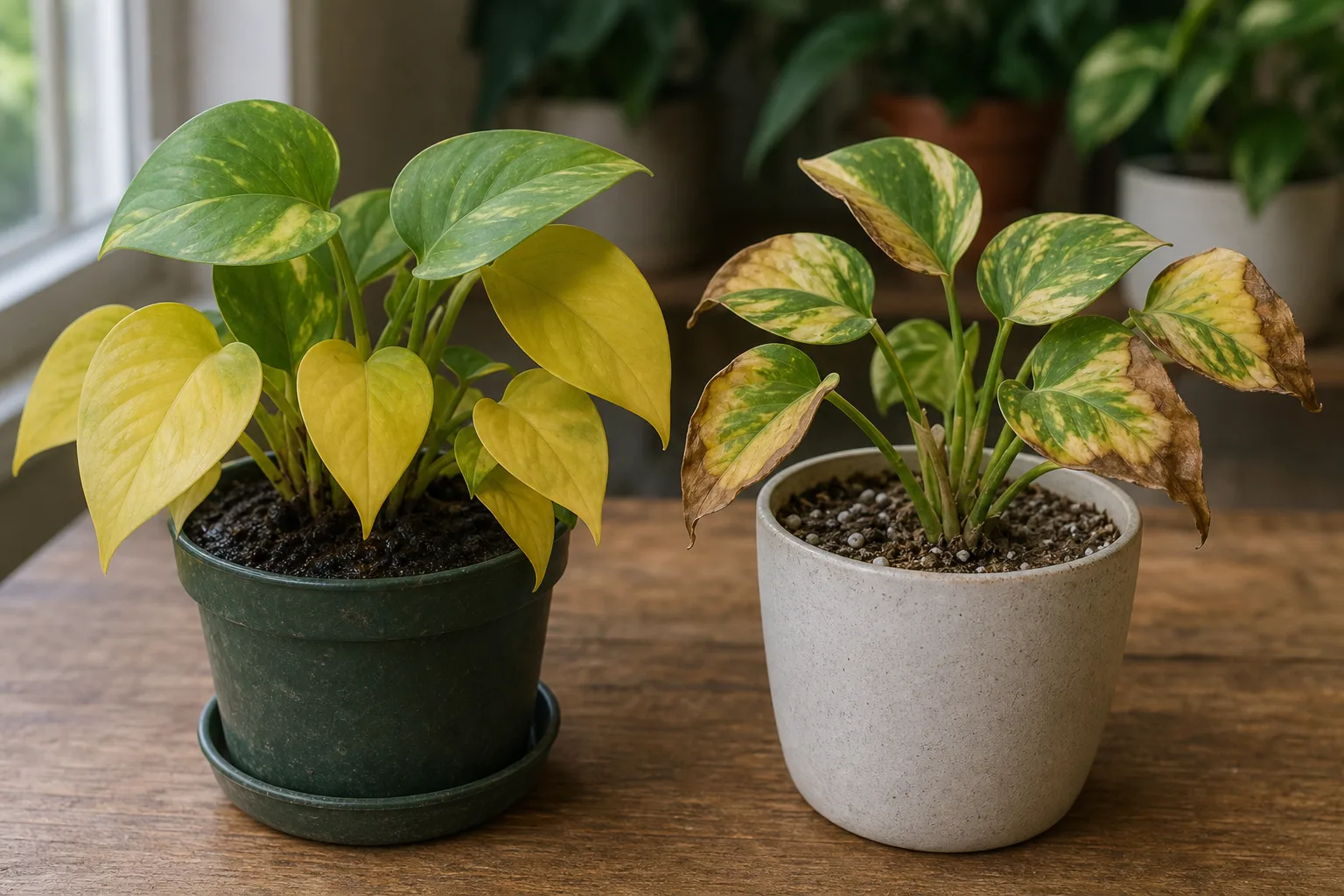
One oldest lower leaf slowly fading can be normal aging. Several leaves yellowing at once, yellowing that reaches new growth, or wilting while the mix is wet deserves a root-zone check. Change one major condition at a time so you can tell which correction helped.
| Symptom pattern | Check first | Likely direction |
|---|---|---|
| One oldest lower leaf yellow; new growth is firm | Root-zone moisture and the rest of the canopy | Normal leaf turnover if isolated |
| Several soft yellow leaves; pot stays heavy | Drainage, mix, stem base, and roots | Overwatering or root stress |
| Curling with a very light pot and dry mix | Moisture several inches down | Underwatering or a dry root ball |
| Small pale leaves with long gaps | Window distance and recent light changes | Insufficient light |
| Tan patches on the window-facing side | Direct sun and heat at the glass | Sun scorch |
| Brown tips with dry mix or salt crust | Water consistency, humidity, and salts | Dryness or root-zone buildup |
| Wilting while the soil is wet and sour | Roots and stem firmness | Root damage rather than thirst |
Yellow or scorched tissue will not turn green again. Remove a leaf when it is mostly damaged, then judge the fix by the next leaf. For root rot, slide the plant out, inspect the roots, remove only decayed tissue, and repot into fresh, open mix. For underwatering, rehydrate slowly and confirm that water reaches the center instead of running down a gap at the pot wall.
If the roots are healthy but the vine is thin, improve light and add support before increasing fertilizer. If the plant has no fenestrations but otherwise grows firmly, it may simply be juvenile or still trailing. A symptom is evidence to interpret, not a command to water, feed, or repot immediately.
Manage Pests Before They Spread
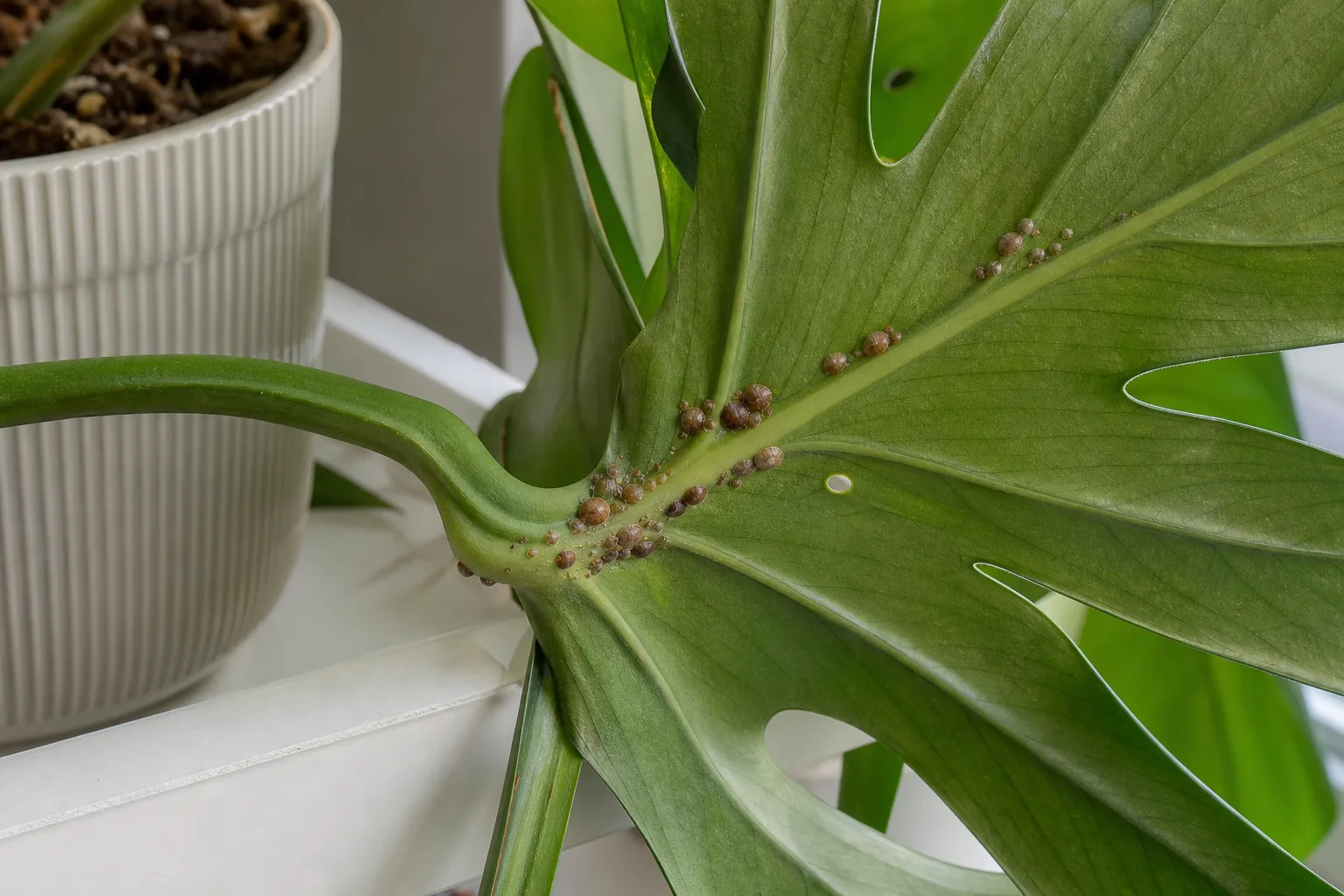
NC State Extension lists mealybugs, scale, thrips, and spider mites among the pests to monitor on E. pinnatum. Persistently wet surface mix can also support fungus gnats. Inspect new plants before they join a collection, then check leaf undersides, nodes, stems, and the back of a moss pole every few weeks.
Mealybugs look cottony and often hide at nodes. Scale appears as fixed brown or tan bumps. Spider mites can leave fine webbing and pale stippling, while thrips may scar unfolding leaves. Isolate a suspect plant, remove visible insects, rinse foliage only when the plant can dry quickly, and use a product labeled for that pest and plant if further treatment is needed.
Treatment fails when the plant returns to the collection after one pass. Follow the product label for rechecks and repeat applications, wipe the undersides of leaves, clean the shelf, and correct the stress that made the plant vulnerable. Do not use an improvised concentration of rubbing alcohol, vinegar, neem, or soap on a valuable leaf without checking that the product and dilution are safe for plant tissue.
Keep the Plant Away from Pets and Children
NC State Extension classifies Epipremnum pinnatum as having medium-severity poison characteristics and identifies calcium oxalate crystals in the leaves and stems. Ingestion can cause mouth and throat irritation, drooling, vomiting, and difficulty swallowing. Keep the plant, pruning debris, and water-propagation jars out of reach of pets and children.
The ASPCA Poison Control page for golden pothos, Epipremnum aureum, documents the same broad insoluble-calcium-oxalate symptom pattern for that related Epipremnum species. Use the species-specific NC State listing for E. pinnatum, and contact a veterinarian or poison-control service promptly if a pet may have chewed the plant. If the person or animal has breathing difficulty or significant swelling, treat that as urgent.
Conclusion
Epipremnum pinnatum becomes easier to grow when you stop treating it like a generic low-light pothos. Give it bright filtered light, an airy mix in a draining pot, and a thorough drink only after the upper root zone dries. Keep temperatures stable, feed lightly during active growth, and choose a trailing basket or climbing support based on the foliage and shape you want.
If the plant is leggy, look at light before fertilizer. If it is yellow with wet soil, inspect roots before watering again. If it has whole-edged juvenile leaves, give it time and support rather than forcing maturity. With that sequence, dragon-tail plant care is forgiving, propagation is straightforward, and the plant has a fair chance to show the climbing habit that makes this species special.