How to Revive a Faded Hydrangea Overnight
Hydrangeas can wilt in heat even when soil is damp. Use this rescue sequence to tell heat stress from thirst, root trouble, and naturally aging blooms.
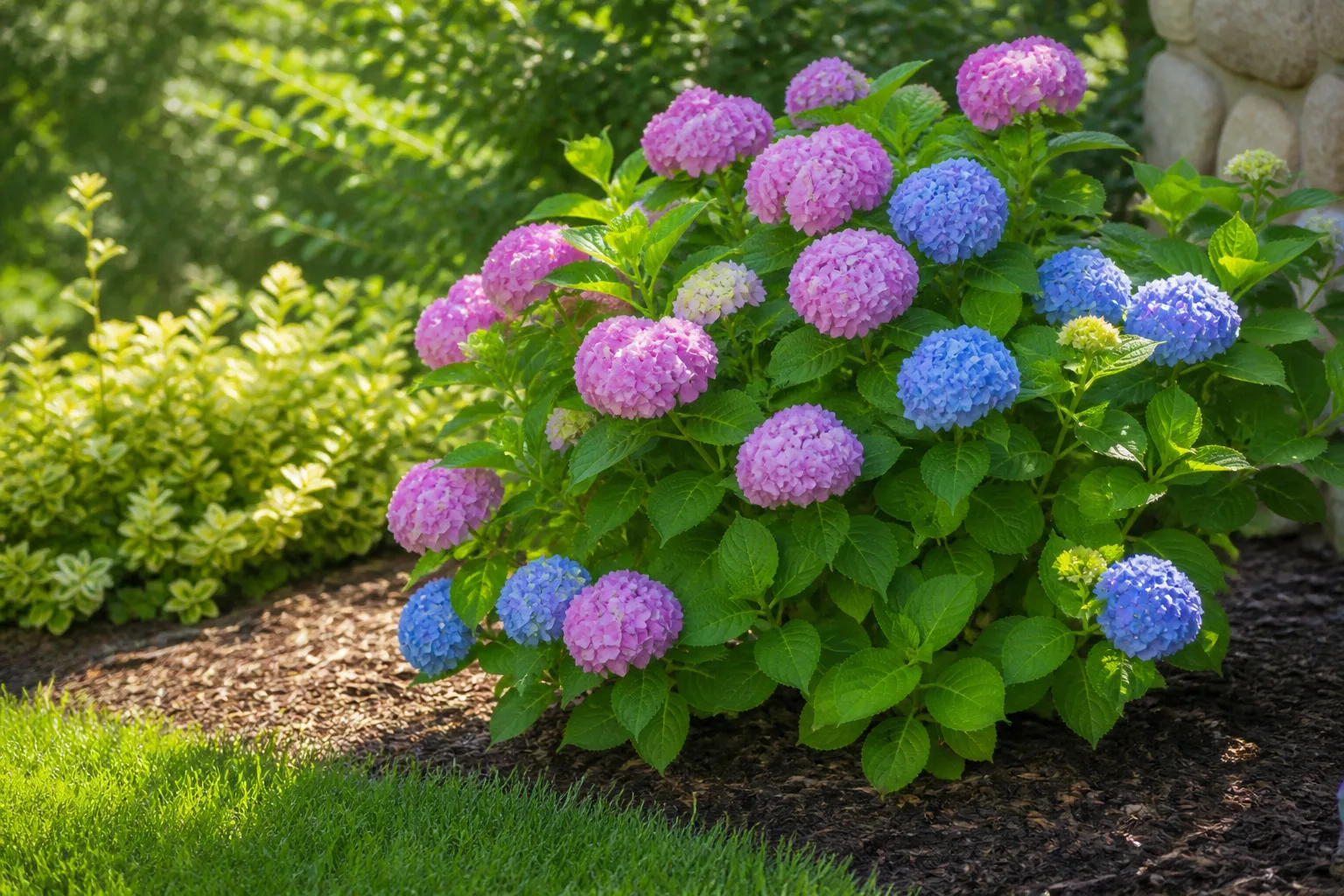
If your hydrangea collapses in the afternoon, do not reach for the hose on autopilot. The fastest rescue is usually temporary shade followed by a root-zone moisture check: protect the leaves and flowerheads from the hottest light, then water slowly only if the soil is actually dry.
That distinction is what makes the plant perk up by morning in many heat-stress cases. It also prevents the opposite mistake—adding more water to soil that is already saturated, leaving the roots short of oxygen while the leaves continue to droop.
There is one important limit to the “overnight” promise. Heat wilt can reverse quickly, but brown scorch, crispy flower florets, damaged roots, and normal end-of-season color changes will not turn fresh simply because the plant spends a night in shade. The goal is to identify which problem you have before you intervene.
The Overnight Trick Is Shade First, Water Second
Start by reducing the plant’s water loss. Move a potted hydrangea out of harsh afternoon sun, or place a temporary shade cloth, patio umbrella, or other breathable screen between the shrub and the strongest late-day light. For an in-ground plant, the shade only needs to cover the plant during the heat peak; it does not need to turn the bed into a dark permanent corner.
Once the plant is protected, push a finger or narrow soil probe several inches into the root zone, a few inches out from the stems. If the soil feels dry at that depth, water at the base in a slow ring under the canopy. If it feels cool and moist, do not add water yet—let the plant cool down and check it again after sunset or early the next morning.
This order matters because a hydrangea can wilt while the soil is damp. In high heat, the leaves may lose water through transpiration faster than the roots can replace it for a few hours. The Royal Horticultural Society’s guidance places hydrangeas in moist soil that drains well and notes that they tolerate more sun when the soil does not dry out; it does not treat permanently wet soil as a cure (RHS guide to growing shrubby hydrangeas).
Why Hydrangeas Wilt or Fade in Heat
Hydrangeas have large, soft leaves and flowerheads that can lose moisture quickly in hot, bright, or windy conditions. A plant in a newly planted bed is especially vulnerable because its root system has not yet spread through the surrounding soil. A container can be just as vulnerable because a small root ball may exhaust its limited potting mix before the surrounding garden soil is even dry.
The RHS groups drought, high temperatures, wind, and waterlogging among weather stresses that can cause wilting, scorch, leaf drop, and dieback. Those symptoms overlap with pest, disease, and nutrient problems, which is why the weather history and root-zone condition are more useful than the drooping leaves alone (RHS advice on weather damage).
Heat wilt is different from true dehydration
Heat wilt is a timing problem as much as a watering problem. If the leaves droop during the hottest part of the day but become firmer after temperatures fall, the plant may be limiting water loss temporarily rather than failing to find water. Gardening Know How describes the same heat-stress pattern: leaves can wilt even when soil is moist because water loss temporarily outpaces uptake (Gardening Know How’s heat-stress guidance). It still needs protection and consistent moisture, but more water is not automatically the missing ingredient.
True dehydration is more likely when the soil is dry several inches down, the pot feels unusually light, the leaves remain limp after the heat passes, or the flowerheads feel papery and begin to brown. Newly planted shrubs and containers can move from “a little dry” to severe stress quickly, so do not wait for the entire canopy to collapse before checking.
The reverse problem is possible too. Overwatering or slow drainage can damage roots so they cannot take up water efficiently, leaving a plant that looks thirsty in wet soil. The University of Wisconsin–Madison Extension recommends checking soil moisture rather than watering by habit and applying water slowly enough to penetrate instead of running off (Wisconsin Extension guidance on drought and watering ornamental plants).
Faded blooms may simply be aging
Not every faded hydrangea needs reviving. As flowerheads mature, many hydrangeas naturally shift from bright blue, pink, or white into green, pink, red, tan, or a muted combination of colors. The RHS notes that this seasonal color change is normal as flowers age, especially late in the season.
Use the leaves to separate aging from stress. If the foliage is firm, green, and upright while only the flower color has changed, leave the blooms in place or deadhead them for appearance according to the type. If leaves and stems droop at the same time, inspect the soil and light before deciding the flowers are finished.
Do This 10-Minute Check Before Watering
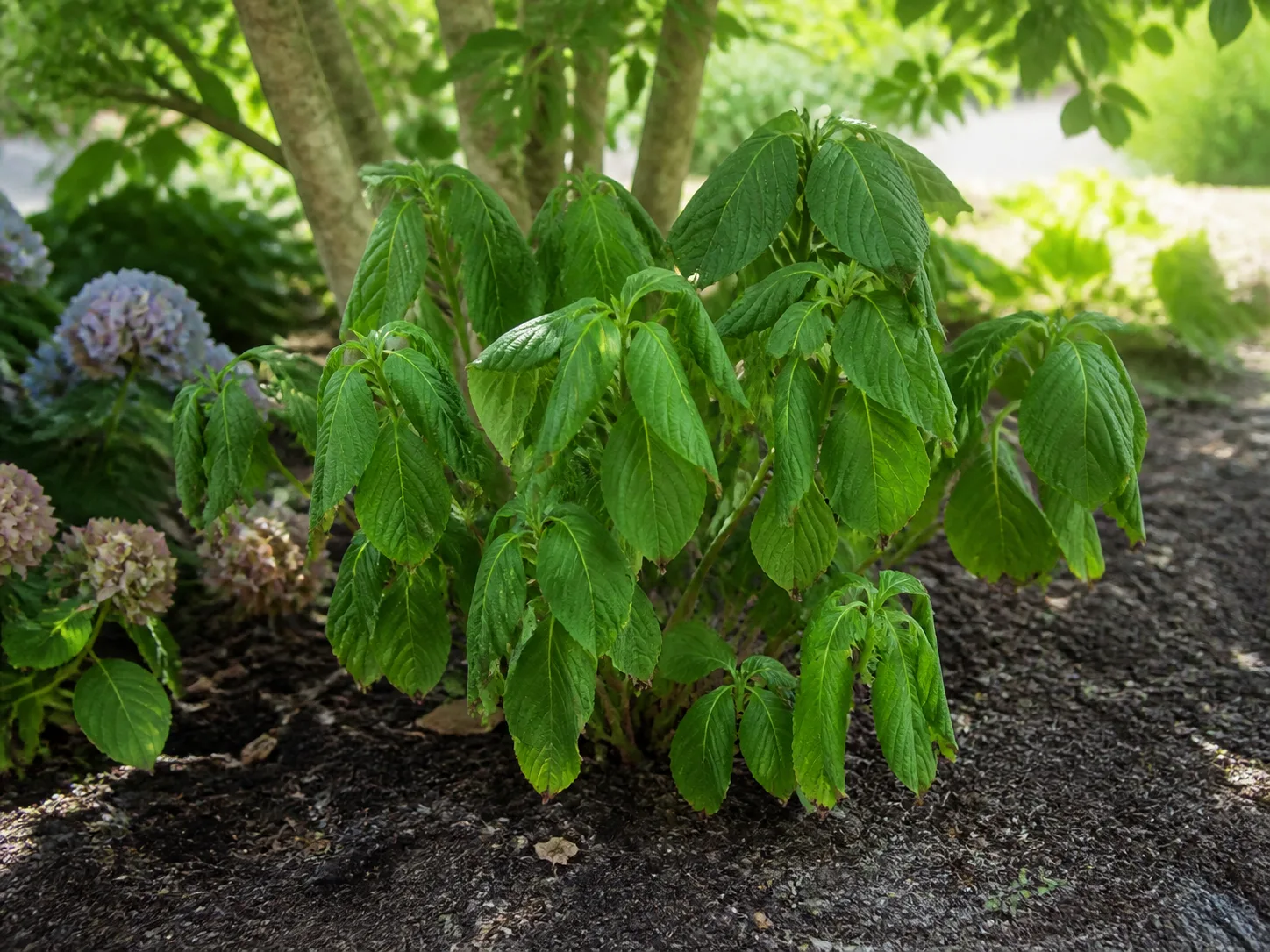
Take a close look at the plant from top to bottom, but do not make the flowerhead the only evidence. A hydrangea can have tired-looking blooms and perfectly healthy roots, or bright blooms above a root system that is drowning below the soil.
Feel the root zone, not just the surface
Check several inches down in two or three spots around the plant, avoiding the tight area immediately against the stems. The surface can look dry because mulch and sun heat it quickly, while the root zone remains moist. Conversely, a crusted surface can hide a dry pocket if water has been running off instead of soaking in.
For an in-ground shrub, use a finger, bamboo skewer, or narrow hand trowel to test the soil. For a container, check near the drainage holes as well as near the top. If the potting mix has pulled away from the sides of the pot, water may run down the gap without wetting the root ball; a slower, repeated application is more useful than one fast splash.
A moisture meter can help when the soil is difficult to reach, but it is not a substitute for checking drainage and observing the plant. Treat the reading as one clue. A hydrangea in compacted, waterlogged soil can still be stressed even when a meter reports plenty of moisture.
Read the leaves, stems, and flowerheads together
Uniform afternoon droop with otherwise green leaves points more toward heat or water-balance stress than an isolated leaf disease. Crisp brown margins, tan patches on the sun-facing side, and damage that remains after the evening cools suggest scorch or drought injury rather than a momentary wilt.
Look for pattern changes. Wilting on the exposed side after a hot, windy day is consistent with weather stress. Yellowing lower leaves, a sour smell, persistently soggy soil, blackened roots, or a plant that declines even in mild weather deserves a drainage or root-health investigation. Spots, webbing, sticky residue, chewing, or distorted new growth shift the problem toward pests or disease.
The practical rule is simple: one hot afternoon is a cue to check; repeated morning wilt is a cue to diagnose. Do not let the dramatic appearance of a drooping flowerhead push you into changing several variables at once.
The Rescue Sequence for a Hydrangea That Wilts by Afternoon
Once you have checked the soil, use this four-part sequence. It is deliberately conservative: it reduces water loss immediately, restores moisture only when needed, and gives the plant time to show whether the first intervention worked.
Move a container or add temporary shade
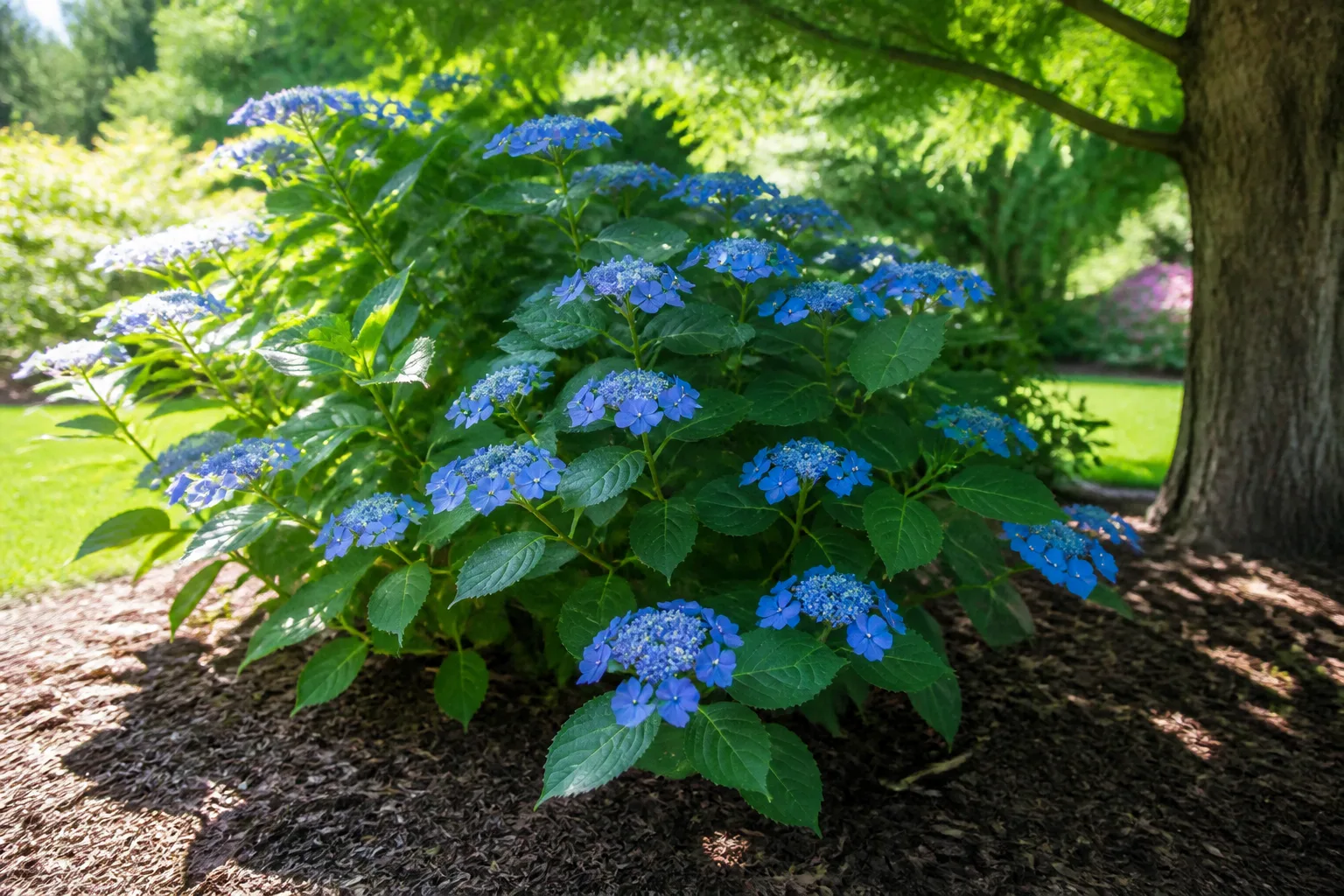
Move a potted hydrangea to bright shade or morning sun with afternoon protection. Avoid placing it in a dark, airless garage for days; the aim is to reduce heat load, not to remove useful light. If the plant is too large to move, use shade cloth or an umbrella that allows airflow around the leaves.
For an in-ground hydrangea, shade the plant during the hottest part of the day and keep the cover from pressing against the foliage. A breathable screen is safer than wrapping the shrub in plastic, which can trap heat and humidity. Do not transplant an established shrub in the middle of a heat wave just because it wilted once; plan a permanent move for a cooler planting window.
Give dry soil a slow, deep drink
If the root zone is dry, water at the soil line rather than spraying the leaves. Apply water slowly around the outer part of the root ball and beneath the canopy so it can soak downward and outward. Pause if water begins to run off, then resume after it has had time to enter the soil.
For a garden shrub, a soaker hose or low-flow drip line is easier to control than a high-pressure spray. For a container, water until it drains from the bottom, then empty any saucer so the pot is not left standing in water. A dry root ball may need a second slow pass because the first water can travel down the sides of the container.
Do not turn a single emergency watering into a fixed every-other-day schedule without checking the soil again. Water demand changes with pot size, plant age, soil texture, rain, wind, humidity, and cultivar. The University of Illinois Extension describes smooth hydrangea as best in partial to full shade but able to tolerate full sun when watered regularly, with moist, well-drained soil preferred (University of Illinois Extension smooth hydrangea profile). That is a useful reminder that light and moisture have to be managed together.
Recheck the plant the next morning
The morning check is more informative than the first dramatic glance. Leaves that are firmer, less curled, and no longer hanging may confirm a temporary heat response. If the plant is still limp after a cool night and the soil remains dry, repeat a slow root-zone watering and investigate whether water is actually reaching the roots.
If the plant is still limp in moist soil, stop adding water. Inspect drainage, roots if the plant is in a pot, recent fertilizer use, transplant timing, and the possibility of pests or disease. A plant that recovers only under shade but collapses every day may need a permanent light change, deeper mulch, a better watering method, or relocation when conditions are safe.
Do not fertilize while the shrub is heat-stressed. Feeding encourages new growth at exactly the moment the plant is trying to balance water loss and repair existing tissue. Wait until temperatures moderate and the plant shows steady recovery, then follow the fertilizer label and the needs of the specific hydrangea.
If the Soil Is Wet but the Hydrangea Still Wilts
Wet soil changes the rescue plan. Shade can still reduce the immediate water loss, but adding more water can worsen the root problem. Roots need both water and air; prolonged saturation removes the air spaces that support healthy root function.
Check whether the soil drains after rain or irrigation. In a container, confirm that the drainage hole is open and that the pot is not sitting in a full saucer or decorative cachepot. In the ground, look for a low spot, compacted clay, downspout discharge, or an irrigation emitter that applies more water than the soil can absorb.
If the plant smells sour, shows widespread yellowing, or declines despite cool, moist conditions, do not “flush” it with more water. Improve drainage and ask a local extension service or qualified garden professional to help identify root damage, especially before using a fungicide. A treatment chosen for the wrong problem can add expense without restoring the roots.
One wet day after a storm is not automatically root rot. Give the bed time to drain, keep the plant shaded during extreme heat, and observe the trend. Root damage is more concerning when wetness and wilt persist together, when roots are brown and soft, or when the plant fails to produce healthy new growth after weather improves.
Adjust the Rescue for Potted Hydrangeas
Containers magnify every watering mistake. They heat up faster than garden soil, hold less water, and can dry unevenly when a dense root ball occupies most of the pot. Botanical Interests also lists small containers, inadequate water, poor drainage, poor potting mix, and competition from companion plants among common reasons a potted hydrangea droops (Botanical Interests’ guide to hydrangea wilting).
During a hot spell, check a container daily, but do not water daily by rule. Lift the pot when possible, feel the mix below the surface, and watch whether water drains freely. A hydrangea that needs water every few hours, dries almost immediately after a thorough soak, or has roots circling a very small container may need a larger pot and a better root environment—but repot after the heat emergency, not during the worst afternoon.
Avoid placing the pot against a sun-baked wall or on a dark surface that radiates heat into the root zone. Raise the container slightly if drainage is poor, keep the drainage hole clear, and group it with plants only when all of them share similar moisture and light needs. A hydrangea competing with thirsty neighboring plants can wilt even though the container was watered recently.
Prevent the Next Heat Slump
The best rescue is a site and watering routine that prevent the plant from reaching the crisis point. You do not need to keep the soil constantly wet; you need a stable root zone that stays moist enough for the plant’s demand and drains excess water after rain.
Build a moisture buffer with mulch and soil
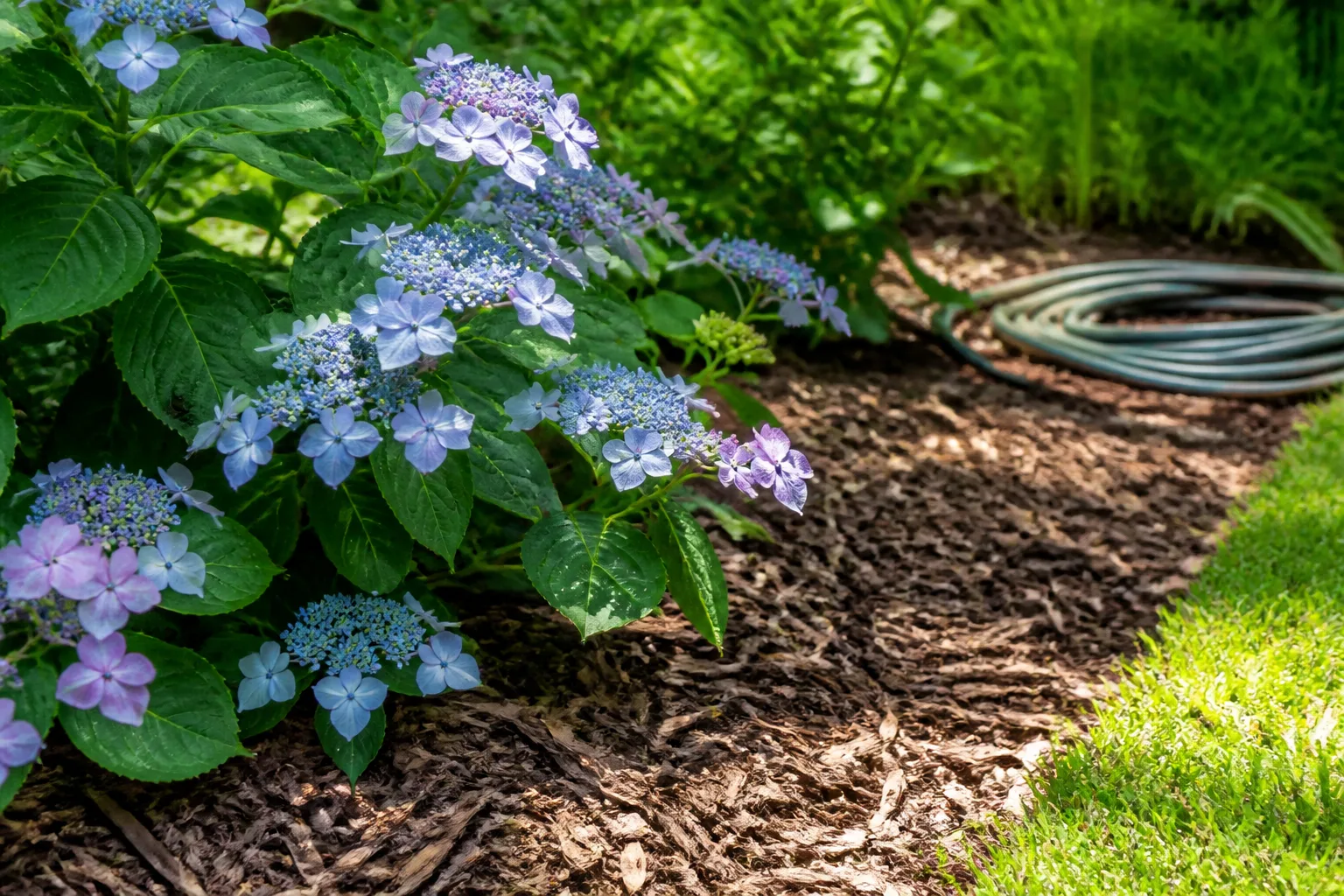
Spread a roughly 2- to 3-inch layer of organic mulch over the root area, keeping it away from the stems and crown. Compost, leaf mold, or suitable bark mulch can reduce evaporation and moderate soil temperature. The mulch should sit on the soil like a blanket, not pile against the plant like a volcano.
The RHS recommends mulching hydrangeas with organic matter to improve moisture retention, while Wisconsin Extension cautions that excessive mulch can interfere with water movement and encourage pest or disease issues around the base. Refresh a thin, even layer as it settles rather than adding new material every time the surface looks bare.
Improve soil structure gradually with organic matter when the bed is being prepared or replanted. Do not dig aggressively around an established hydrangea’s shallow roots during a heat wave. If the soil is heavy and stays saturated, moisture retention is not the main problem—drainage and site selection are.
Match light to the hydrangea type and your climate
Morning sun and afternoon protection is a dependable starting point for many hydrangeas, especially in hot climates or exposed yards. But cultivar matters. Bigleaf types are often more vulnerable to hot afternoon conditions, smooth hydrangeas can tolerate more sun when their soil stays moist, and panicle types commonly handle brighter sites better than shade-loving forms.
Read the plant label, observe the plant’s response, and adjust for your local heat rather than copying a light rule from a cooler region. A hydrangea that thrives in full sun in a mild, moist climate may scorch in a hot inland yard. The right site is the one where the plant gets enough light to flower without losing water faster than its roots can replace it.
Use drip irrigation or a soaker hose when possible, and water in the morning so the root zone is hydrated before the day’s heat peaks. If a prolonged dry spell is forecast, check the soil before the leaves droop and water deeply enough to reach the root area. Newly planted shrubs need closer monitoring than established plants because they have not yet built a broad root network.
What to Do With Faded, Scorched, or Brown Blooms
First decide whether the flowerhead is old, wilted, or damaged. Old blooms may be changing color while the plant remains healthy. Wilted blooms may lift when the plant cools and the roots regain access to water. Scorched or brown florets have lost tissue and will not become fresh again.
If only a few flowerheads are ugly and the leaves are healthy, deadheading is a cosmetic choice. Use clean pruners and cut according to the hydrangea type and season rather than removing stems at random. The RHS advises waiting until mid-spring to remove faded mophead flowers in many cases because the old blooms can help protect tender growth; pruning times differ for bigleaf, panicle, smooth, oakleaf, and other hydrangeas.
Do not cut off a whole branch simply because its flowerhead drooped during one hot afternoon. Give it a cool night and a moisture check first. Remove leaves or blooms only when they are fully dead, badly scorched, diseased, or no longer useful—and avoid stripping live foliage that the plant still needs to recover.
When Wilting Means More Than Heat
Call the problem bigger than a routine heat slump when the plant does not recover during cool hours, wilts in the morning, or declines despite soil that is appropriately moist. Persistent symptoms can come from waterlogging, root injury, transplant stress, nutrient problems, pests, or disease, and those causes need different solutions.
Look for a pattern rather than one damaged leaf. A few sun-facing brown patches after a heat wave suggest scorch. Uniform yellowing, soggy soil, and weak growth suggest a root-zone issue. Fine webbing, stippling, sticky residue, holes, distorted new leaves, or visible insects suggest pests. Leaf spots that spread or appear with gray mold, powdery growth, or stem dieback deserve a local diagnosis before treatment.
Newly planted hydrangeas also deserve extra patience. Transplant shock can make leaves wilt even when the plant is not dying, but moving, fertilizing, hard-pruning, and repeatedly flooding the root ball all add stress. Keep the soil evenly moist, provide temporary protection, and remove only tissue that is clearly dead after the plant has had time to settle.
The RHS notes that weather damage often looks like pest, disease, or nutrient damage and that some symptoms appear weeks or months after the stress event. Record when the wilting began, what the weather did, how often you watered, and whether the soil was wet or dry. That short history can be more useful to an extension diagnostician than a close-up photograph with no context.
Conclusion
The reliable faded-hydrangea trick is not a mystery additive or a promise that every flower will look new by sunrise. It is a sequence: reduce heat and sun exposure, check the root zone, water slowly only when it is dry, and reassess after a cool night.
If the plant perks up by morning, improve the site with afternoon shade, an even layer of mulch, and a watering method that reaches the roots without keeping them saturated. If it stays limp in wet soil, shows scorch or brown tissue, or declines during cool weather, stop treating it as simple thirst and investigate the root, pest, disease, or cultivar issue. That small pause before watering is what turns a dramatic afternoon wilt into a manageable plant-care decision.