How to Grow and Care for Florida Beauty
Keep Florida Beauty’s spotted leaves bright with a practical routine for light, moisture, feeding, pruning, propagation, repotting, and pet safety.
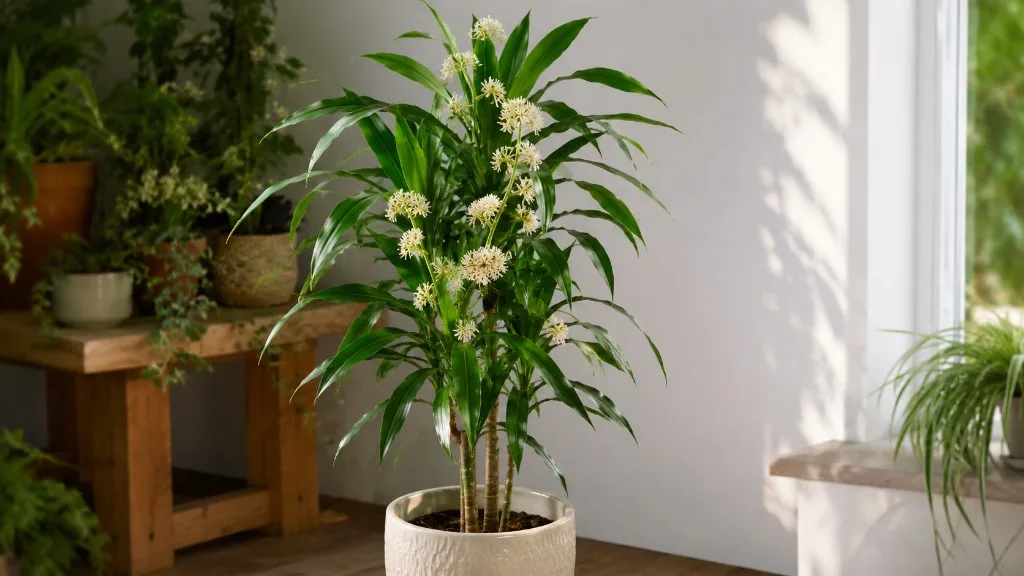
Florida Beauty is a slow-growing, spotted dracaena that rewards a steady routine more than constant attention. Give it bright filtered light, a potting mix that drains quickly, and enough moisture to keep the root ball from drying completely without leaving it wet for days. The plant can tolerate an ordinary home, but it does not tolerate a careless combination of dim light, soggy soil, cold drafts, and repeated fertilizer buildup.
The name refers to Dracaena surculosa ‘Florida Beauty’, a cultivar also sold as gold dust dracaena or spotted dracaena. NC State Extension describes the cultivar as having green leaves densely marked with creamy yellow, while the Royal Horticultural Society cultivar profile lists it as an evergreen shrub with slender branches and heavily blotched leaves. Those spots are not just decoration: they are useful feedback about whether the plant is receiving enough usable light.
What Florida Beauty Is and How It Grows
Florida Beauty is a tropical, branching houseplant in the Asparagaceae family, native to western tropical Africa. It grows as a cluster of narrow upright stems with glossy, elliptic leaves arranged along the branches. Mature specimens can become pleasantly shrub-like rather than forming the single tall cane associated with some other dracaenas. NC State notes that the species is slow-growing, evergreen, and suited to containers, patios, interiorscapes, and shade gardens in warm climates.
The cultivar’s dense cream or yellow spotting distinguishes it from a plain green Dracaena surculosa. The RHS profile gives ‘Florida Beauty’ a mature height and spread of roughly 0.5 to 1 meter under its growing conditions, but indoor plants are often smaller for years because growth is measured in new shoots and leaves rather than a dramatic weekly change. Treat slow growth as normal unless it comes with pale new leaves, very long gaps between leaves, weak stems, or a root problem.
Flowers are possible but uncommon indoors. When a mature plant does bloom, it may produce small greenish-white, fragrant flowers followed by berries in conditions that are much brighter, warmer, and more spacious than most living rooms provide. Do not feed heavily or keep the soil wet in an attempt to force flowers; healthy foliage is the realistic indoor goal.
Quick Care Snapshot
| Need | Practical target | What to watch for |
|---|---|---|
| Light | Bright, filtered light; gentle morning sun can work | Fading spots in dim light; scorch in hot direct sun |
| Water | Water thoroughly when the upper mix has dried somewhat | Yellow leaves and soft stems from staying wet |
| Soil | Loose, moisture-retentive but fast-draining mix | A pot that stays heavy and wet for many days |
| Temperature | Warm, stable conditions away from drafts | Leaf drop after cold windows, vents, or doors |
| Humidity | Average home humidity is workable; moderate humidity is better | Brown tips when air is dry or water quality is poor |
| Feeding | Balanced liquid fertilizer during active growth | Brown margins or crusty soil from overfeeding |
| Pot | Drainage holes and a snug root zone | Slow drying after moving to an oversized pot |
This table is a starting point, not a calendar. A Florida Beauty in a bright, warm room may use water faster than one in a cool, dim room. Seasonal changes, pot size, root density, and the texture of the mix matter more than a rule such as “water every Sunday.”
Choose a Location by Leaf Color, Not Just Sun
Put Florida Beauty close to a bright window with a sheer curtain, or a few feet back from an unobstructed east or west window. A south window can work if the plant is protected from intense midday rays. The goal is enough light for dense growth and stable variegation, not direct sun beating on the leaves all afternoon.
Variegated plants contain less green tissue in each leaf, so the cream-spotted parts contribute less energy than fully green foliage. Plantura’s Dracaena surculosa guide makes the useful distinction that varieties with more yellow or white on the leaves need more light than greener forms. Florida Beauty therefore usually needs a brighter position than a plain green dracaena, even though both dislike harsh heat through glass.
Avoid placing it directly beside a radiator, heat pump, wood stove, or frequently opened exterior door. A bright spot with moving cold or hot air can be less suitable than a slightly dimmer but stable spot. Rotate the pot a quarter turn every week or two if one side leans toward the window, but do not move it from shade to strong sun in a single day.
Signs the Light Is Right
New leaves should open with the cultivar’s characteristic spotting, and the stems should remain firm enough to hold the foliage upright. If new growth is increasingly green, the spaces between leaves lengthen, or the plant slowly leans toward the glass, increase light gradually. A grow light on a timer can help in a dark room, but it should supplement a sensible location rather than compensate for chronically wet soil.
If the leaf edges turn tan and papery on the window-facing side, suspect sun or heat stress before adding water. Move the plant farther from the glass or filter the light for a week, then remove only the damaged tissue once the plant has stabilized. Brown areas will not turn green again; the useful measure is whether new leaves emerge cleanly.
Build an Airy Potting Mix
Florida Beauty wants moisture around its roots, but it also needs air-filled spaces after watering. Choose a quality indoor potting mix and amend it with a coarse, drainage-promoting material such as fine orchid bark, pumice, or perlite according to how quickly your home’s mix dries. The exact recipe matters less than the result: the mix should absorb water evenly, drain from the bottom, and become lighter as it dries instead of forming a dense, shrinking block.
The RHS recommends a peat-free, loam-based potting compost for indoor cultivation, with full light protected from hot sun and moderate humidity. Plantura describes a humus-rich blend that combines acidic soil, sand, and universal potting soil. Those are different recipes, but they point to the same principle: a rich yet open medium, not garden soil packed into a decorative pot.
Always use a container with a real drainage hole. A cachepot without a hole is fine as an outer sleeve, but remove the growing pot for watering and let it drain before returning it. Do not add a permanent reservoir of water beneath the pot; a wet base keeps the lowest roots oxygen-starved even when the top of the mix looks dry.
Water by Root-Zone Dryness
Water Florida Beauty when the upper part of the potting mix has dried somewhat, then soak the root ball thoroughly until water exits the drainage holes. Empty the saucer after a few minutes. This pattern gives the plant both moisture and air: the mix is refreshed, but the roots are not left in a stagnant pool.
Use your finger or a wooden skewer to check below the surface rather than judging by the top crust alone. A dry-looking surface can hide a wet center in a large pot, while a very small pot may dry much faster than expected. Lift the container occasionally; the change from freshly watered to noticeably lighter is a useful second signal once you learn that pot’s rhythm.
Water more often during bright, warm active growth and less often during winter or a cloudy stretch. Do not automatically keep the mix “evenly moist” by adding small sips every day. Frequent sips wet only the upper roots and can leave salts concentrated in the lower mix. A full watering followed by an evidence-based pause is safer.
How to Water Without Creating Root Rot
If the pot stays heavy and wet for more than a week, stop watering and investigate the setup. Check that the drainage hole is open, the pot is not sitting in a cachepot of water, and the mix is not compacted. Yellowing lower leaves, a sour smell, soft stems, or roots that are brown and mushy together point toward chronic wetness rather than thirst.
For early root trouble, remove the plant gently, trim only dead or mushy roots with clean scissors, and repot into fresh, airy mix in a clean pot. Do not jump to a much larger container. Keep the recovering plant in bright filtered light and wait until the mix has dried appropriately before watering again. A plant with severe stem collapse may not recover fully, so preventing repeated saturation is more valuable than trying to rescue a plant after every root has failed.
Water quality can also show up as brown tips. Gardening Know How notes that dracaenas may react to fluoride in water, along with low humidity, direct sun, overwatering, and poor drainage. If the routine is sound but new tips keep browning, try rainwater where safe to collect it, filtered water, or another low-mineral source for several weeks and compare new growth rather than expecting old damage to disappear.
Keep It Warm and Humid Without Overdoing It
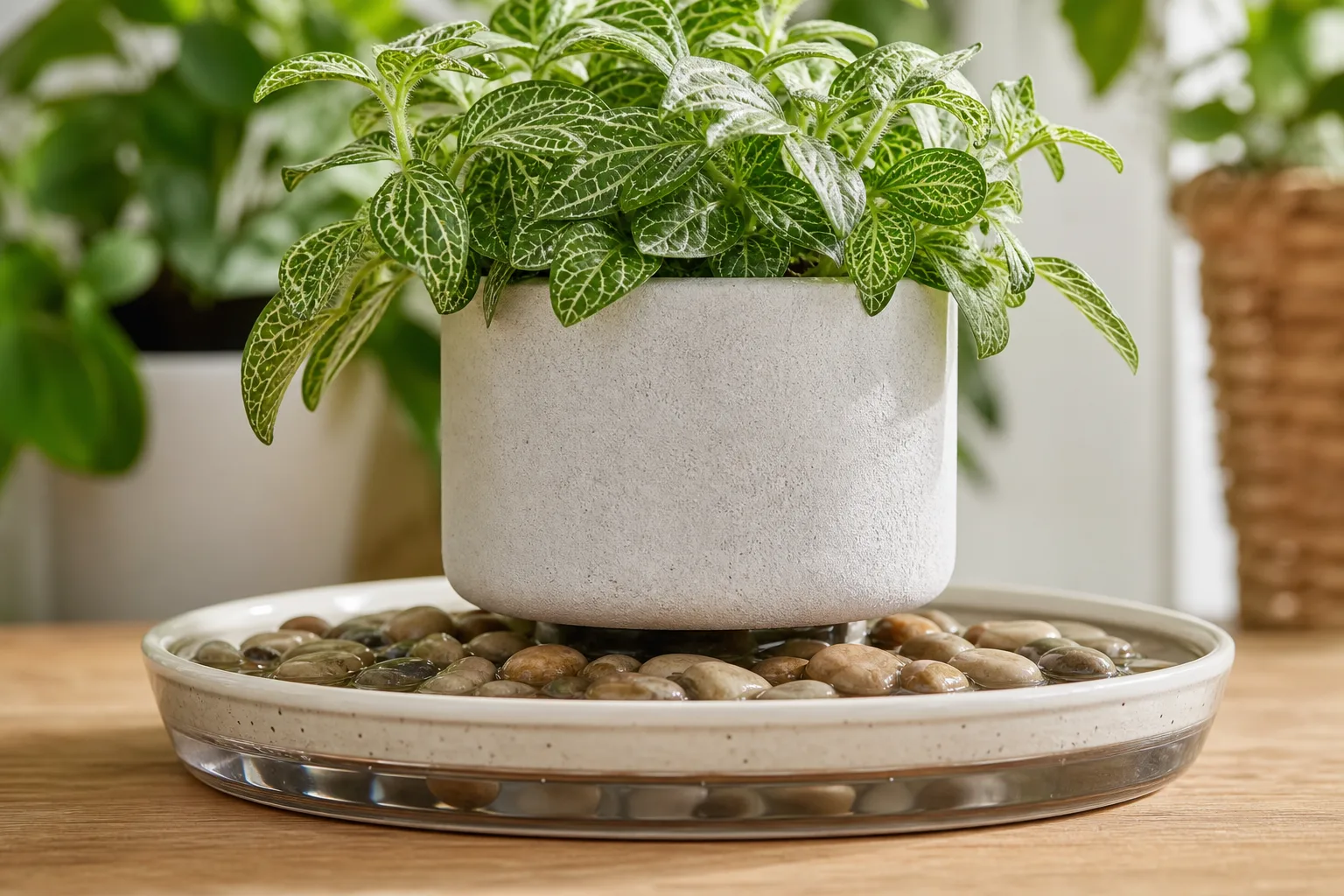
Florida Beauty is happiest in a warm, stable room with moderate humidity and good air movement. The RHS recommends moderate humidity indoors and warns that the plant should be shaded from hot sun; Plantura advises protecting it from drafts and temperatures below 15°C (59°F). In practice, keep it away from cold glass at night, air-conditioning vents, and doors that open onto winter air.
You do not need to create a tropical greenhouse. Grouping plants, using a room humidifier, or setting a correctly made pebble tray nearby can help when indoor air is very dry. A pebble tray should hold water below the top of the stones while the pot rests above the waterline. It raises humidity only in the immediate area, so it is a modest aid, not a substitute for drainage or a cure for brown tips caused by salts, pests, or sun.
Misting is optional and temporary. It can wet leaves without meaningfully changing the room’s average humidity, and repeatedly wet foliage in a stagnant corner may encourage spotting. If you mist, use room-temperature water early in the day and keep air moving. A hygrometer is more useful than guessing; if the room is comfortable and the plant is growing cleanly, there is no need to chase a perfect percentage.
Fertilize Lightly During Active Growth
Feed Florida Beauty only when it is actively growing and the soil is already moderately moist. A balanced liquid houseplant fertilizer diluted according to its label, applied about monthly from spring into late summer, is a conservative starting point. The RHS gives monthly balanced feeding from spring to autumn, while Plantura suggests feeding every two to three weeks from March to August. Use the less frequent end of that range in low light or when growth is slow.
Never use fertilizer to compensate for dim light, root damage, or a plant that is newly repotted into fresh mix. Those problems reduce the plant’s ability to use nutrients and make salt buildup more likely. Pause feeding in winter, after repotting until the roots reestablish, or whenever the plant is stressed by pests or a sudden move.
Brown margins, a white crust on the soil, and a sharp fertilizer smell are reasons to flush the mix with plain water and improve drainage. If the damage keeps spreading, repot rather than repeatedly adding supplements. Old brown tissue will not recover, so judge the correction by the next leaves and the plant’s overall firmness.
Prune to Shape and Rejuvenate
Pruning is optional when Florida Beauty is compact and healthy, but it is useful when stems become too tall, bare, or uneven. Use sharp, clean pruners and cut just above a node or branch junction. New shoots can develop below the cut, and the removed tip can become a propagation cutting.
Spring is the easiest time for substantial pruning because warmth and brighter days support recovery. The RHS says weak growth can be cut back to within about 15 centimeters of the base in spring; NC State also describes cutting back overgrown stems to rejuvenate the plant and maintain a desired height. Do not remove every green leaf at once. Keep several healthy stems or leaves so the plant can continue photosynthesis while it rebuilds.
For routine maintenance, remove yellowing leaves at their base once they are mostly spent, and cut only the brown portion from a damaged tip if the shape bothers you. Sterilize the blade between plants, especially if one has pests or suspicious spots. Pruning cannot fix a root problem; it only reduces the canopy’s demand while you correct the cause.
Propagate From Tip or Stem Cuttings
The simplest way to make more Florida Beauty plants is to root healthy tip or stem cuttings in spring or early summer. Plantura recommends young, still-soft cuttings about 8 to 15 centimeters long with one to three leaves, while NC State lists tip or stem cuttings and division as propagation options. For a home grower, a healthy tip cutting is the most straightforward because it already has a growing point.
Prepare a small pot with moist, airy propagation mix. Make a clean cut below a node, remove leaves that would sit below the surface, and insert the stem deeply enough to stand upright. Covering the pot loosely with a clear bag can hold humidity, but leave space around the leaves and open it periodically so stale, saturated air does not turn the cutting mushy.
Keep the cutting warm and in bright indirect light. Do not place it in direct sun under a plastic cover, and do not keep adding water because the surface looks slightly lighter. The rooting medium should remain lightly and consistently moist, never muddy. Plantura gives a soil temperature range of about 20–24°C (68–75°F) and a covered period of roughly five to six weeks as a useful propagation model.
Aftercare for New Cuttings
Rooting is easier to confirm by gentle resistance than by pulling the cutting out. Once new growth appears or roots are visible at the drainage holes, begin opening the humidity cover over several days. Then move the young plant into normal room conditions and water when the top layer dries, just as you would an established Florida Beauty.
Do not move a tiny cutting directly into a large decorative pot. A small container dries more predictably and keeps the developing roots close to the moisture they need. Pot up only when the root ball holds the mix together or new growth is clearly established. If a cutting turns soft at the base, discard that section, recut into firm tissue if possible, and restart in fresh medium rather than trying to save rotting tissue.
Repot Only When the Root Ball Calls for It
Repot Florida Beauty when roots circle densely around the root ball, emerge repeatedly from the drainage hole, the mix has broken down and stays wet, or the plant dries out unusually fast despite a healthy root system. A calendar can be a reminder to inspect, but it should not force a repot. Slow-growing plants often do well in the same container for years.
Choose a pot only one size larger, with drainage holes. Slide the plant out, loosen a few circling roots, and remove only exhausted or rotten material. Set it at the same depth, fill around the root ball with fresh mix, and water once to settle it. Keep it in bright filtered light for a week or two and wait before fertilizing.
An oversized pot is a common mistake because it looks generous but holds a larger volume of wet mix around a small root system. If the plant is root-bound but the current pot is attractive, you can refresh the upper mix and wait for a more suitable season. Healthy roots need room to extend, not a deep swamp of unused soil.
Outdoor Summering and Winter Protection
Florida Beauty can spend warm months outdoors in a sheltered container, but acclimate it gradually. Start in bright shade, then introduce gentle morning light over one to two weeks. Protect the leaves from hot afternoon sun, wind, heavy rain, and abrupt temperature drops. Outdoor light is much stronger than indoor window light, so a plant that looks fine inside can scorch quickly when moved straight into a sunny patio.
NC State recommends bringing the plant indoors when nighttime temperatures fall below 50°F (10°C). Plantura gives a higher cold limit of 15°C (59°F), and the RHS classifies the cultivar as a warm, protected plant grown under glass or indoors in cooler climates. Use the more cautious threshold for a newly moved or stressed plant, and move it before the first cold snap rather than after leaves have been damaged.
Before bringing it indoors, inspect leaf undersides, stem joints, and the pot rim for mealybugs, scale, and hitchhiking insects. Rinse the foliage, isolate the plant from your collection, and watch it for at least a couple of weeks. A warm patio season can produce excellent growth, but it also exposes the plant to pests and water swings that are easier to manage when you plan the transition.
Diagnose Brown, Yellow, or Dropping Leaves
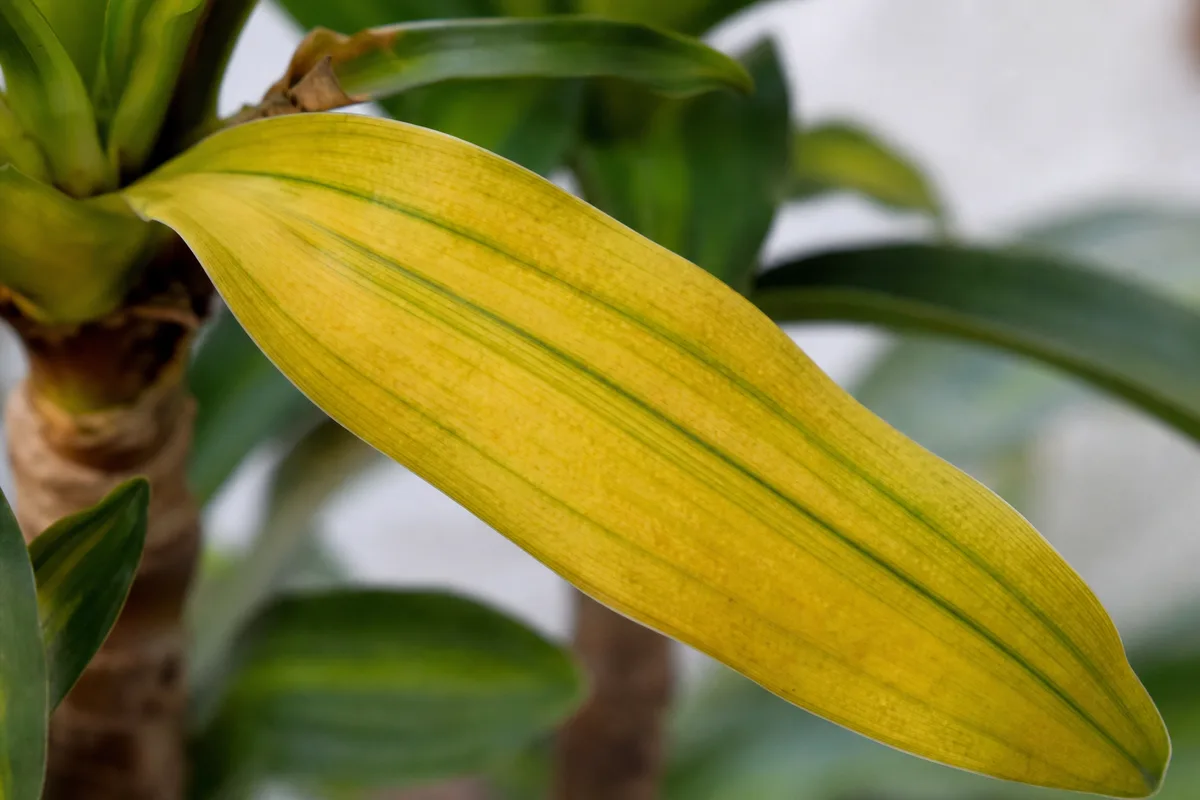
Florida Beauty symptoms overlap, so diagnose the pattern instead of treating one color as one cause. Start with four questions: Which leaves are affected, where is the damage, how wet is the root ball, and what changed recently? This avoids the common mistake of watering a sunburned plant or feeding a plant whose roots cannot breathe.
Brown tips or margins: Dry air, fluoride or mineral buildup, irregular watering, fertilizer salts, direct sun, and damaged roots can all contribute. Check the root zone first, then light and water quality. Trim the cosmetic damage, correct the cause, and judge success by clean new growth.
Yellow lower leaves: One old leaf yellowing slowly can be normal aging. Several leaves yellowing at once, especially when the soil is wet and the stem feels soft, points toward overwatering or poor drainage. If leaves are pale but the mix is dry and the plant is stretching, inspect light before adding fertilizer.
Fading spots or greener new leaves: Move the plant closer to bright filtered light. Do it gradually if the current location is very dim. More fertilizer will not restore variegation when the plant lacks enough light to support dense growth.
Sudden leaf drop: Consider a cold draft, a move from low light to strong sun, root stress, or a sharp watering change. Remove only leaves that are fully dead, stabilize the location, and avoid repeated moves. A plant can drop older leaves after stress while still recovering if the stems and newest growth remain firm.
Wilting with wet soil: Treat this as a root warning, not proof that the plant needs more water. Unpot and inspect if the problem persists. Wilting with a dry, light pot is more consistent with underwatering, but water slowly and thoroughly rather than flooding a bone-dry, hydrophobic mix in one rush.
Pests, Disease, and Pet Safety

Florida Beauty is generally resilient, but indoor pests can appear when plants are crowded, stressed, or brought in from outdoors. Mealybugs look like white cottony clusters around stem joints and leaf bases. Scale appears as small brown or tan bumps, and spider mites may leave stippling or fine webbing in dry conditions. The RHS lists scale and glasshouse red spider mite as possible pests under glass, while NC State notes root mealybugs as a problem that can stunt growth.
Isolate an affected plant first. Wipe visible mealybugs or scale with a cotton swab or cloth, rinse the plant where practical, and repeat inspections every few days because eggs and hidden insects escape one treatment. A labeled insecticidal soap or horticultural oil may help when used exactly as directed for that plant and pest; test a small area first, keep the plant out of harsh light while wet, and never treat a struggling plant with a homemade concentration.
Most disease-like problems begin with environmental stress: saturated mix, poor airflow, cold damage, or foliage that stays wet. Remove badly damaged leaves, improve drainage and air circulation, and avoid sharing pruners between plants without cleaning them. If the stem is collapsing or the roots are broadly mushy, propagation from firm healthy tissue may be more realistic than trying to restore the original root system.
Keep Florida Beauty away from cats and dogs that chew plants. ASPCA lists Florida Beauty as toxic to dogs and cats, identifies saponins as the toxic principle, and reports signs such as vomiting, depression, loss of appetite, hypersalivation, and dilated pupils in cats. NC State also records low-severity poison characteristics for humans and pets. If a pet may have eaten part of the plant, remove access and contact a veterinarian or the ASPCA Animal Poison Control Center promptly; do not wait for symptoms or try to induce vomiting unless a professional tells you to.
The plant is not dangerous to touch under ordinary care, but wash sap from your hands and keep pruned pieces, fallen leaves, and propagation cuttings out of reach. Pet safety is a placement decision, not a reason to panic: use a high, inaccessible stand only if it is stable, or choose a different plant for homes where chewing cannot be prevented.
Conclusion
The best Florida Beauty plant care routine is simple but observant. Give the plant bright filtered light so its spots stay strong, use an airy mix in a draining pot, water thoroughly only after the upper mix has dried somewhat, and protect it from cold drafts and hot glass. Feed lightly during active growth, prune in spring when shaping is needed, and repot only when the roots or exhausted mix justify the disturbance.
When something goes wrong, check the root zone and recent environmental change before reaching for fertilizer or a spray. Brown tips call for a pattern check, yellow leaves call for a wet-versus-dry investigation, and leaf drop calls for a review of temperature, light, and movement. With that order of operations—and a firm plan to keep the plant away from chewing pets—Florida Beauty can remain a compact, architectural houseplant with distinctive spotted foliage for years.