How to Grow and Care for Lentil Plants
Grow lentils at home with clear guidance on soil, inoculation, spacing, support, pests, harvest timing, threshing, storage, and realistic yields.
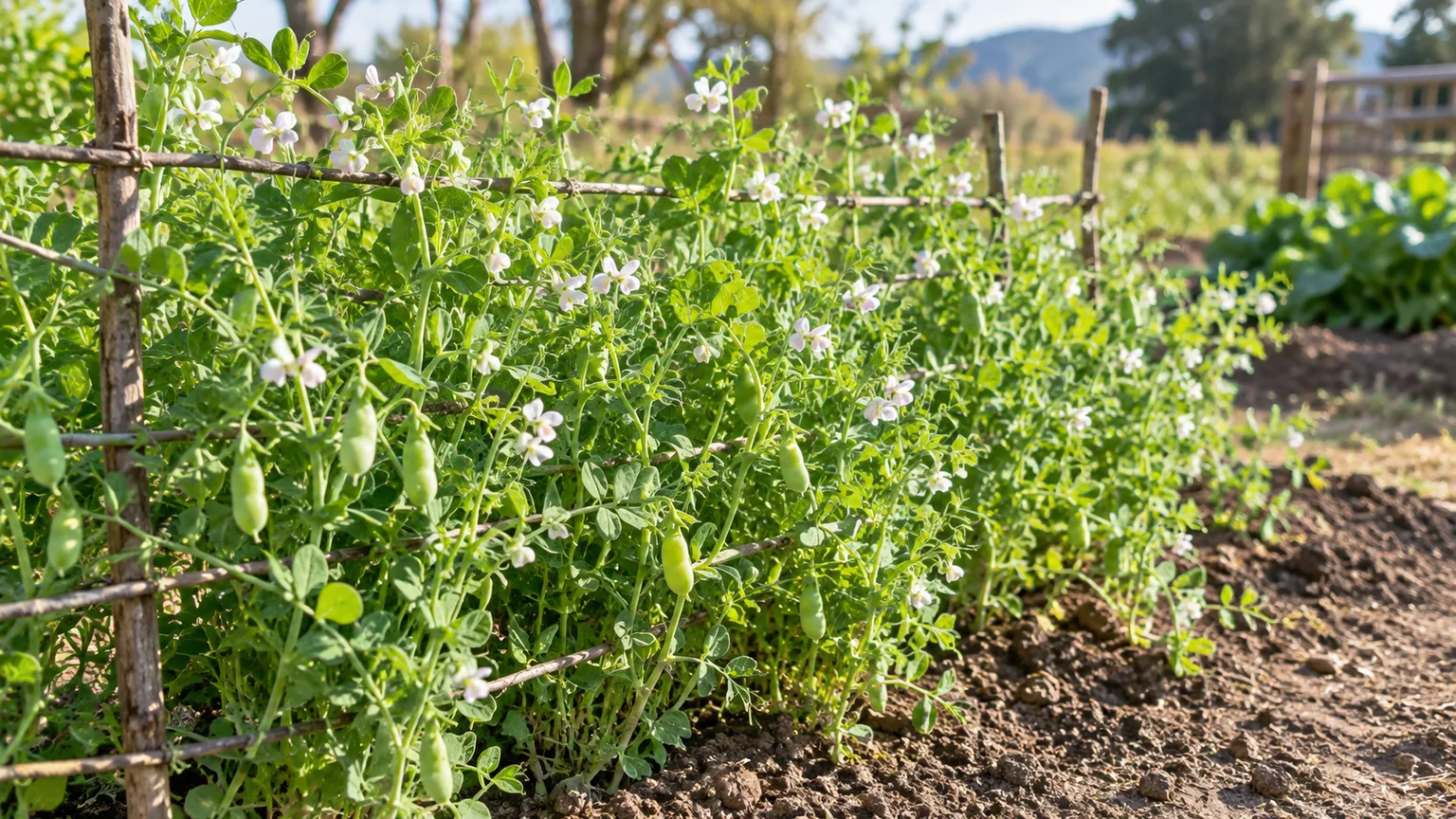
Lentils are small, cool-season legumes that reward good timing more than constant attention. The plants stay fairly low, carry delicate white, lilac, or pale-blue flowers, and fill short pods with usually one or two lens-shaped seeds. They are not a high-yield substitute for a pantry bag in a small bed, but they are a satisfying crop to grow, a useful source of home-saved seed, and a good lesson in how soil bacteria help legumes feed themselves.
The basic recipe is simple: use whole, viable seed; sow it into a sunny bed as soon as the soil is workable; protect the young stand from weeds and standing water; and plan the crop so flowering happens before your hottest weather.
Decide Whether Lentils Fit Your Garden
Start with the harvest you actually want. For dry lentils, grow a patch rather than one or two plants; every pod is small and commonly contains only one or two seeds.
Lentils make the most sense where spring is cool and relatively dry, or where a mild winter lets a gardener grow a cool-season crop before summer heat arrives. They are less appealing in a wet garden that stays humid through the whole season, a low spot that holds water, or a short bed where a high-yielding bean would return more food. Raised beds and careful timing can help, but weather will set the ceiling.
Think of lentils as a three-part crop. You get a dry seed harvest, the experience of growing a pulse that is usually bought at the store, and a legume that can form nitrogen-fixing nodules when the right bacteria are present. The nitrogen benefit is not a promise that the next crop needs no fertilizer, and it does not make a poor site suitable, but it is a useful bonus when the plants are grown as part of a rotation.
Understand the Lentil Plant
The cultivated lentil, Lens culinaris, is an annual member of the Fabaceae family. It grows as a slender, erect to semi-erect plant, usually about 12 to 30 inches tall, with several branches, compound leaves, and a small tendril at the tip of each leaf. The stems are not as sturdy as a bush bean’s, so mature plants can lodge, or fall outward, especially after rain or on an exposed site.
Lentils flower progressively from the lower branches upward. That matters at harvest because the lowest pods can be ready while flowers or green pods remain higher on the plant. The flowers generally self-pollinate, and each short, flat-to-rhomboid pod usually holds one or two seeds. The University of Wisconsin–Madison Alternative Field Crops Manual describes the crop’s cool-season habit, weak mature stems, low-growing branches, and gradual flowering pattern in useful detail.
The seeds are not all the same. Brown and green lentils are common cooking types, while red, black, and French green or Puy-style lentils offer different colors and cooking qualities. A seed packet may describe a cultivar by name, color, seed size, maturity, or intended market class; for a home garden, maturity and reliable seed quality matter more than choosing the most fashionable color.
Choose Seed and a Variety
Whole dried lentils from a grocery bag may sprout, but germination is not guaranteed. Split lentils have lost the structure needed to produce a seedling, and some food lentils may have been treated, stored too long, or handled in a way that reduces their garden performance. If you try pantry lentils, test a small batch in a damp paper towel first and use only whole seeds that swell and produce a root.
For a harvest you plan to eat or save, seed sold for planting is the better choice. It is selected for germination and gives you a named maturity window, while a food bag gives you almost no information about variety, disease status, or how the seed was handled. The distinction is especially important in a humid area, where bringing seed-borne problems into a clean bed can be more costly than the packet.
Choose the variety around your weather. A small-seeded, early type such as Eston or an early red type can make sense where the frost-free season is short. Brown, green, black, and French green types are all worth trying in a longer or reliably cool season, but compare the days to maturity supplied by the seed company rather than assuming all lentils finish together. If you want to save seed, grow one or two clearly identified varieties and label them at planting.
Time Planting Around Cool Weather
Lentils should grow, flower, and fill pods in mild weather. In a cold or short-season climate, direct-sow in early spring as soon as the soil is workable and reaches roughly 40 to 41°F (4 to 5°C) at seed depth. Young lentil seedlings tolerate light frost, so waiting for warm summer soil can be a mistake; late planting often pushes flowering and pod fill into heat, which shortens the productive window. This soil-temperature approach also matches the practical timing guidance in Homes & Gardens’ lentil-growing overview.
Do not treat the last-frost date as the only rule. If your soil is cold, sticky, and saturated, a calendar-perfect sowing can rot before it emerges. If a hard freeze is forecast just after emergence, a light row cover can protect a small planting. The practical target is workable soil, a cool forecast, and enough time for the crop to mature before your hottest stretch.
In mild-winter regions with hot summers, reverse the calendar. Sow in fall or winter so the plants flower and fill pods before the heat arrives. This is particularly useful in warm parts of the Southwest, southern California, the Gulf Coast, and similar climates. A peer-reviewed Frontiers study on high-temperature stress in lentils reports that temperatures above about 90°F (32°C) during flowering and podding can damage reproductive organs and reduce grain yield; the exact response varies by genotype, but the planning lesson is consistent: do not schedule flowering for the hottest part of the year.
Prepare a Sunny, Well-Drained Bed
Pick the sunniest practical location, with at least six hours of direct light and preferably closer to eight. Lentils tolerate a range of textures from sand to clay loam, but they do not tolerate saturated roots. A raised bed or a gently elevated row is often a better fix for heavy soil than adding a large amount of amendment and hoping the drainage changes.
The ideal soil is loose, friable, and quick to drain while still holding enough moisture for germination. A pH around 6.0 to 7.0 is a sensible garden target; lentils can tolerate a broader range, so do not apply lime or sulfur without a soil test. Work in a modest amount of mature compost if the bed is compacted or low in organic matter, but do not turn the planting row into a rich, soft compost trench that stays wet.
Prepare the bed before seed arrives. Remove perennial weeds, break up large clods, rake out stones that interfere with even depth, and make a firm seedbed. Lentil seedlings are poor competitors, and a weedy row can lose the season before the plants are large enough to shade the soil. Avoid fresh manure and heavy nitrogen fertilizer; both can encourage foliage while doing little for pod production.
Rotation is part of site preparation. Do not plant lentils repeatedly in the same place, and avoid following peas, beans, fava beans, or another pulse too closely. Lentils share several disease risks with other legumes and can leave infected residue behind. A three-year break from lentils and related host crops is a practical minimum when disease has appeared; use a longer rotation if your local extension service recommends one.
Good rotation partners include small grains and corn, which do not share the same set of legume diseases. The Penn State PlantVillage lentil profile lists several disease pathways and reinforces the value of clean seed, drainage, airflow, and rotation. Remove visibly diseased lentil residue rather than chopping it into the bed and planting another legume immediately.
Sow Lentils Directly
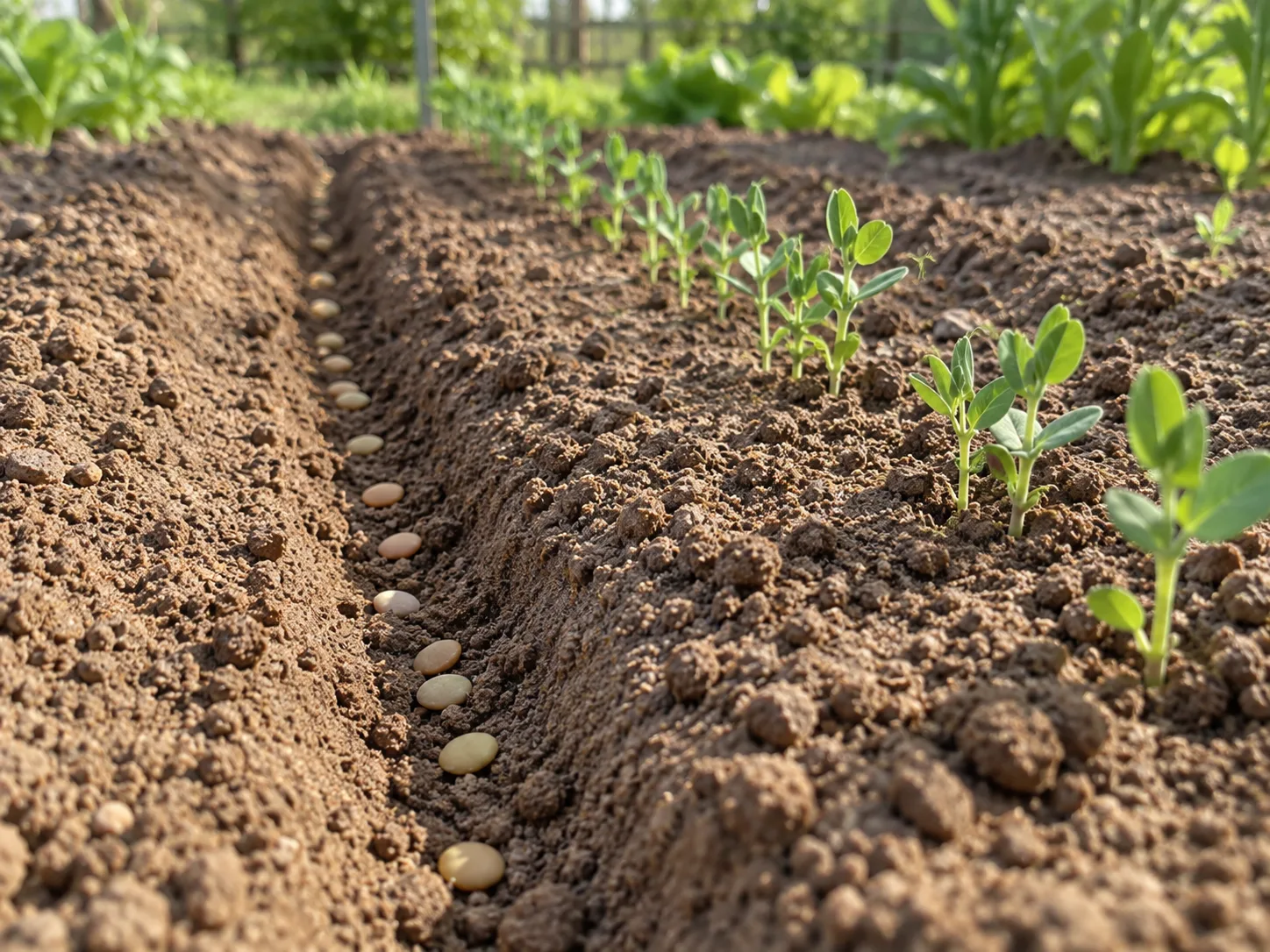
Direct sowing is usually the least stressful method because lentils dislike having their small roots disturbed. Mark a shallow furrow and plant seed 1 to 2 inches deep, choosing the shallower end in heavy soil. Drop seeds about 2 to 3 inches apart, then thin only if the stand is crowded; leave roughly 12 to 18 inches between rows so you can weed and harvest without stepping on the plants.
Use this sequence on planting day:
- Check that the soil is workable and at least about 40 to 41°F at seed depth.
- Inoculate the seed if appropriate for your bed, following the product label.
- Sow one seed every 2 to 3 inches at about 1 inch deep; use 2 inches only where the soil is light and the seed can emerge easily.
- Firm the soil gently for good seed-to-soil contact.
- Water once to settle the row, then keep it lightly and evenly moist until seedlings appear.
- Mark the row so you can distinguish slow lentil emergence from a failed stand and remove weeds before they are established.
Do not bury lentils extra deeply to protect them from birds. A crusted surface or excess depth can stop the growing point before it reaches light. If birds are a problem, use a temporary light cover or fine netting that allows air and water through, then remove it once the stand is up.
Start Indoors Only in a Short Season
Starting lentils indoors is useful only when spring is so short, cold, or wet that you need a small head start. It is not automatically better. The plants can tolerate light frost, and transplanting a root-disturbed lentil can erase the time you gained.
If you must start inside, sow two seeds in a biodegradable pot two or three weeks before the outdoor planting window. Use a light seed-starting mix, plant about 1 inch deep, provide strong light as soon as shoots emerge, and thin to the stronger seedling. Harden the plants off for seven to ten days and transplant the whole pot before roots wind around the container; disturb the root ball as little as possible.
Do not treat lentils as a houseplant; indoor sowing is a scheduling tool, not a substitute for outdoor space, airflow, and a dry finish.
Care for Lentils Through the Season
Once lentils establish, care is mostly about protecting the conditions you created. Walk the row once or twice a week, especially after rain, and look at the soil surface, the newest growth, and the lower canopy. A quick inspection catches weeds, aphids, lodging, and waterlogging before they become harvest problems.
Water Without Waterlogging
Keep the soil evenly moist from sowing through emergence, then water deeply when the upper soil begins to dry. As a starting point, aim for about 1 inch of water per week from rainfall and irrigation during establishment, flowering, and early pod fill, adjusting for soil and weather. Sandy soil may need more frequent watering; a heavy bed may need less water but better drainage.
Water at the soil line when possible, especially in humid weather. Frequent shallow sprinkling keeps the surface wet without supplying a deep reserve and can splash soil-borne pathogens onto lower leaves. Once most pods are filling and the lower foliage begins to yellow, reduce irrigation; when pods are clearly turning tan and drying, stop routine watering unless the plant is still green and a severe drought threatens seed development.
The goal is not lushness. Drought after establishment can reduce the number and size of seeds, but saturation can kill roots, delay maturity, and create a damp canopy that diseases favor. If a planting repeatedly wilts even though the soil is wet, improve drainage rather than adding more water.
Support Stems and Control Weeds
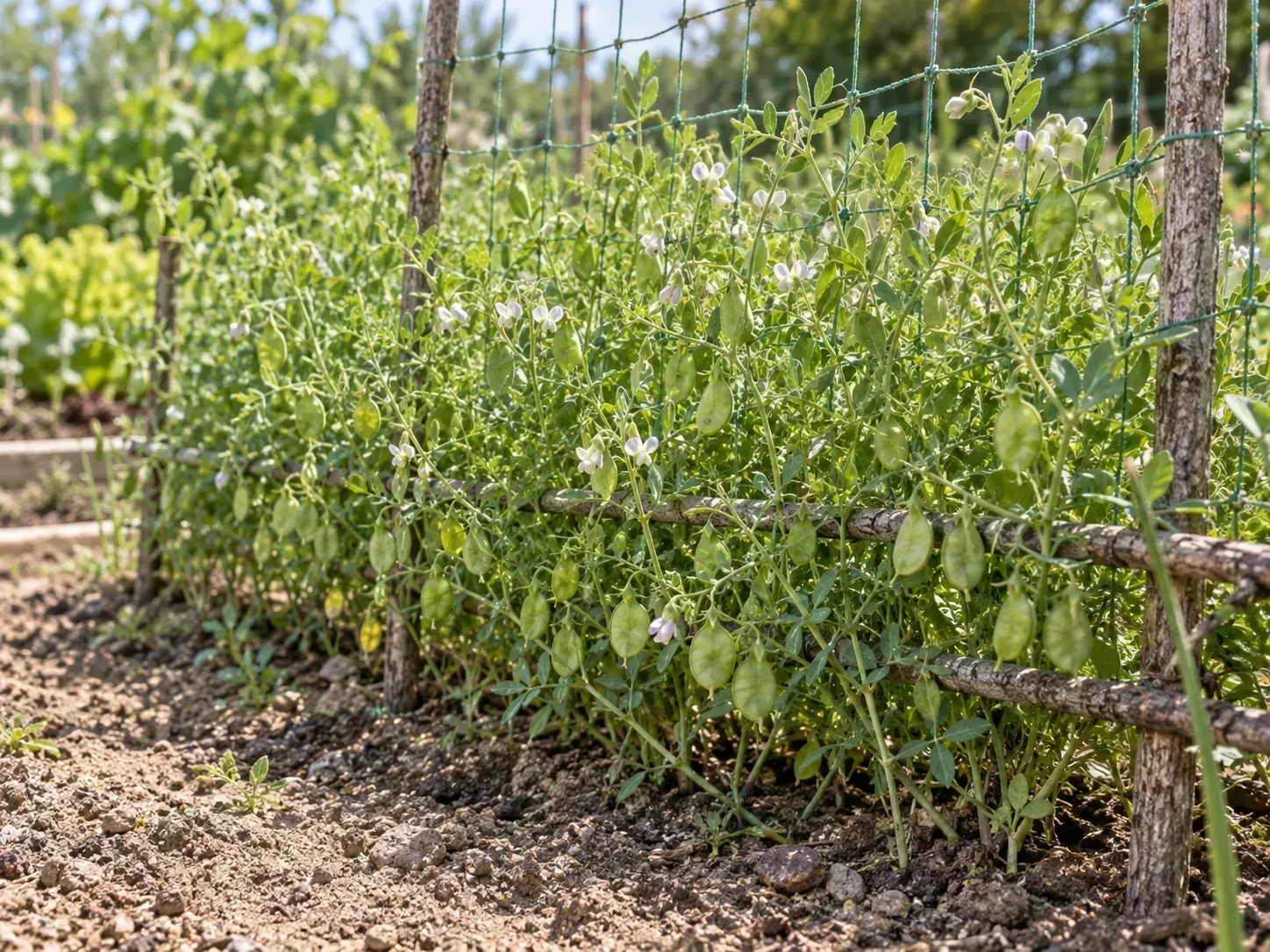
Lentils do not always need a trellis, but a low support is one of the most useful improvements for a home planting. As stems reach about 6 inches, place twiggy brush, a 12- to 18-inch pea net, or a short mesh fence along the row. The plants can lean into it, keeping pods above wet soil and making the lower pods easier to find.
In a sheltered bed, close neighboring plants may support one another. In an exposed bed, a support protects against wind and rain. Do not wait until a tangled mat is already flowering; trying to lift lodged stems can break them and can spread wet foliage against healthy plants.
Weed early and shallowly. Hand-pull weeds close to the stems and use a hoe between rows while weeds are tiny. Once the lentils are established, a thin layer of clean mulch can reduce new germination, but keep mulch away from the stems and do not cover a cold, wet seedbed before emergence. Lentils are especially vulnerable to early competition because their narrow canopy takes time to close.
Fertilize with Soil Information, Not Habit
Lentils can obtain nitrogen through a partnership with Rhizobium bacteria in root nodules. If lentils or peas have not grown in the bed recently, use an inoculant labeled for peas, vetch, and lentils. Dampen the seed only as directed, coat it with the inoculant, keep it out of direct sun and heat, and sow it promptly; some products specify a time limit after coating.
Inoculation is insurance, not a guarantee. In a multi-year Montana State University study, inoculation increased lentil yield in some site-years and did not reduce it in any, while nitrogen fixation improved in a subset of site-years. The Montana State University Extension trial report is field research, not a promise that a backyard bed will gain the same amount.
Do not automatically feed a green lentil crop with high-nitrogen fertilizer or compost tea. Excess nitrogen can produce tall, soft growth and delay pod maturity while suppressing the plant’s bacterial partnership. Use a soil test if the bed is genuinely poor; phosphorus, potassium, or sulfur may matter in deficient soil, but rates belong to the test and local recommendations, not to a universal recipe.
Prevent and Diagnose Pests and Diseases
Lentils grown in a sunny, dry-season site often have fewer pest problems than more succulent vegetables, but “usually quiet” does not mean pest-proof. Check tender growing tips for aphids, inspect stems and pods for lesions, and look at the soil line if seedlings collapse. Remove badly diseased plants promptly and do not compost them if the disease is unknown or clearly spreading.
Aphids and other insects. Aphids may cluster on new shoots and flower stems, causing curled or distorted growth. Thrips, Lygus bugs, wireworms, seedcorn maggots, and cutworms are also possible, though serious infestations are not typical in every garden. A strong stream of water can dislodge a small aphid colony; repeat after a few days and protect beneficial insects whenever possible.
If a problem is widespread, identify the insect before treating. Use only a product labeled for the crop and pest in your area, follow the label exactly, and observe harvest intervals. A local extension office can help distinguish direct feeding from virus symptoms, which matters because removing a badly infected plant may do more good than spraying a mild aphid population.
Damping-off, blight, and mildew. Seed that rots before emergence or seedlings that collapse at the soil line usually point to cold, wet conditions, poor drainage, or an overly deep sowing. Let the surface dry slightly between waterings, improve the bed, and resow with clean seed rather than repeatedly flooding the same row.
Ascochyta blight and anthracnose can produce tan to brown lesions with darker margins on leaves, stems, or pods, particularly during wet weather. Gray mold favors cool, damp canopies, while powdery mildew appears as pale or gray-white growth on leaves. Wide enough rows for airflow, disease-free planting seed, soil-level watering, removal of infected residue, and a multi-year rotation are the core home-garden defenses.
Troubleshoot Poor Growth and Empty Pods
Use the pattern of the problem rather than one symptom in isolation. A seed that never emerges from a wet row needs a drainage and depth check; a tall, leafy plant with few pods needs a light, nitrogen, and heat review; flowers that appear and then vanish during a hot spell usually point to reproductive heat stress rather than a lack of fertilizer.
Here is a practical first-response guide:
- No seedlings: Check depth, crusting, seed viability, soil temperature, and whether the row stayed saturated. Test the remaining seed in a damp towel before resowing.
- Thin or weak stand: Look for damping-off, cutworms, birds, or a crusted surface. Repair the cause before adding more seed.
- Leggy plants with few pods: Give full sun, stop nitrogen feeding, and review whether the crop was planted too late for your climate.
- Flowers but no filled pods: Check for heat during flowering, severe drought, and aphids on growing tips. Shade is not the usual answer; earlier timing is.
- Plants lying flat: Add low support before the next rain, and avoid trying to force brittle, wet stems upright.
- Pods discoloring in wet weather: Improve airflow and harvest the mature portion under cover rather than leaving ready pods exposed to repeated rain.
- Seeds splitting or appearing on the soil: Harvest earlier, when most lower pods are tan and rattling but the whole plant is not yet brittle.
Harvest Green Pods or Dry Lentils
You can pick a few young, flat pods when the seeds inside are still small and soft, but dry lentils are the crop’s main garden harvest. Green-pod timing is a taste experiment; do not judge a variety’s dry yield by stripping all its pods early.
For dry seed, watch the plant instead of counting days alone. Lentils often mature from the bottom upward, and the harvest window can be only a few days in hot, dry weather. Foliage begins to yellow, lower pods turn yellow-brown or tan, and the seeds inside become firm. Shake a pod: mature seed may rattle slightly, while an immature seed feels soft and does not hold its shape.
Pull or cut the plants when most of the lower and middle pods are mature, even if a few upper pods are still green. Harvest in the cool morning or on a dry, mild day and place the plants on a tarp so any seed that shatters is caught. Waiting for every pod to become bone-dry maximizes the risk of losing seed to the soil and of exposing the ready pods to rain.
Thresh, Dry, Store, and Save Seed
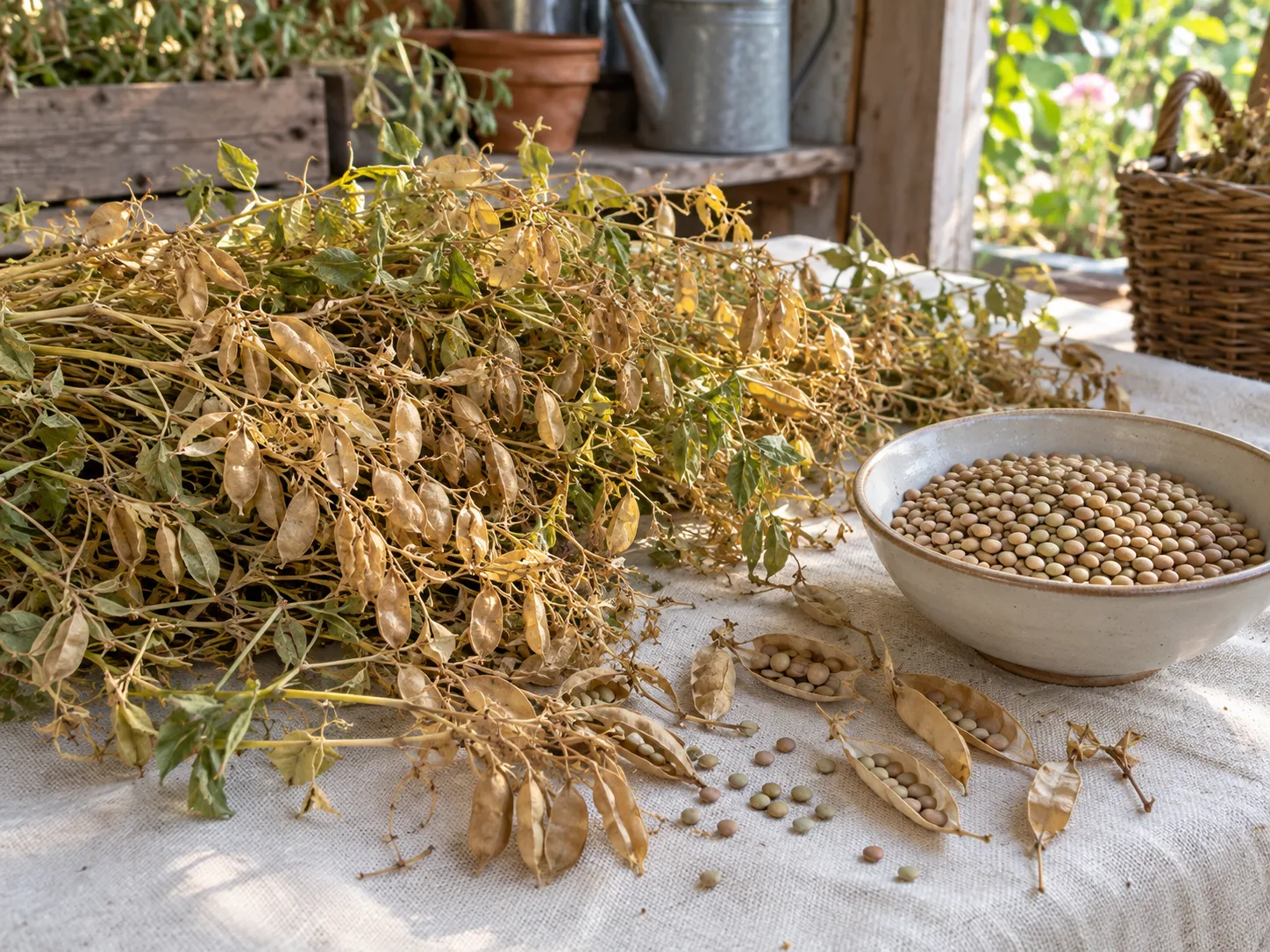
Lay harvested plants in a dry, airy place for several days to a week or two, depending on humidity and how mature they were at pulling. They are ready to thresh when the pods feel crisp and crackle rather than bend. A protected shed, porch, greenhouse, or spare room with good ventilation is safer than a humid garden bed.
For a small crop, put the dried plants into a clean cloth bag or a large paper sack and tread or shake it gently over a tarp. You can also rub the pods between gloved hands. Pour the seed-and-chaff mixture slowly from one container to another in front of a box fan outdoors or in a well-ventilated space; the light chaff blows away while the heavier lentils fall.
Do not rush the last drying step. A lentil that dents or smears when pressed is not ready for storage; a fully dry seed is hard and cleanly cracks under pressure. If you use heated air, keep it gentle—older university crop guidance recommends no more than about 110°F to reduce seed-coat cracking. Air drying in a thin layer is easier to control for a garden-sized harvest.
Store clean, dry lentils in an airtight container in a cool, dark cupboard. Inspect the crop occasionally for small round holes or powder, which can indicate seed beetles or weevils that arrived in the pod. For a pest-prone harvest, fully dry seed can be sealed and frozen before storage, but never freeze damp seed and never heat-treat seed you intend to plant.
To save seed, reserve pods from the healthiest, earliest, best-supported plants and allow them to become fully brown and dry. Lentils self-pollinate, so saving seed is straightforward; label the variety and keep it separate from mixed or unidentified pantry seed. Before sowing next year, test 20 seeds in a damp paper towel; if fewer than about 14 sprout, buy fresh seed or increase the sowing rate.
Grow Lentils in Containers
Lentils can grow in pots, but a container is best for an experiment rather than a large dry harvest. Choose a pot at least 8 to 10 inches deep with several drainage holes, fill it with a free-draining potting mix, and place it where it receives full sun. Do not use a shallow decorative bowl or a pot without drainage; wet roots are a faster route to failure than a missed feeding.
Sow several seeds in a container, then thin to the spacing the pot can support. A 12-inch pot can hold a small group, but crowded plants tangle and dry slowly after rain. Keep the mix evenly moist during emergence, check it more often than a garden bed once warm weather arrives, and add a short support before the plants lean over the rim.
If a container is your only option, choose an early variety, grow more than one pot if you want a meaningful taste, and accept that the result may be a handful of seeds. A container also lets you move an almost-ripe crop under cover when late rain threatens, which can be more valuable than trying to force a larger planting into a poor garden bed.
Set a Realistic Home-Garden Yield
Lentils are a low-yielding crop at backyard scale because the pods are small and each contains so little seed. A named home-garden estimate from Growing In The Garden puts a good dry harvest around 0.3 to 0.7 ounces per square foot, but the author correctly presents it as a practical estimate rather than a replicated extension trial. Weather, stand density, bird pressure, disease, and how carefully you harvest can move the number substantially.
That range means a 10-square-foot patch might return only a few ounces, while 25 to 50 square feet could approach a pound under favorable conditions. Treat those figures as planning guidance, not a guarantee. If your goal is maximum food from a tiny space, beans, peas, or greens may be a better choice; if your goal is to grow an unusual pulse, save seed, learn a cool-season crop, or improve a rotation, lentils can earn their space even when the jar is small.
Conclusion
Grow lentils by matching the crop to the season: spring-sow where summers are mild, fall- or winter-sow where summers become hot, and avoid scheduling flowering for extreme heat. Give the plants full sun, fast drainage, early weed control, modest water, and a low support that keeps the canopy and pods off the soil.
Use planting-quality whole seed when possible, inoculate it when the bed lacks a recent lentil or pea history, and avoid feeding nitrogen by habit. Then harvest when lower pods are tan and rattling, cure the plants under cover, thresh gently, dry the seed completely, and store it airtight. The dry harvest may be modest, but a well-timed lentil patch can still deliver a useful handful of food and the satisfaction of carrying a crop all the way from seed to pantry.