How to Grow and Care for Monkey Puzzle Tree
Learn how to grow and care for monkey puzzle tree with practical advice on light, soil, watering, planting space, pruning, seed, pests, and winter care.
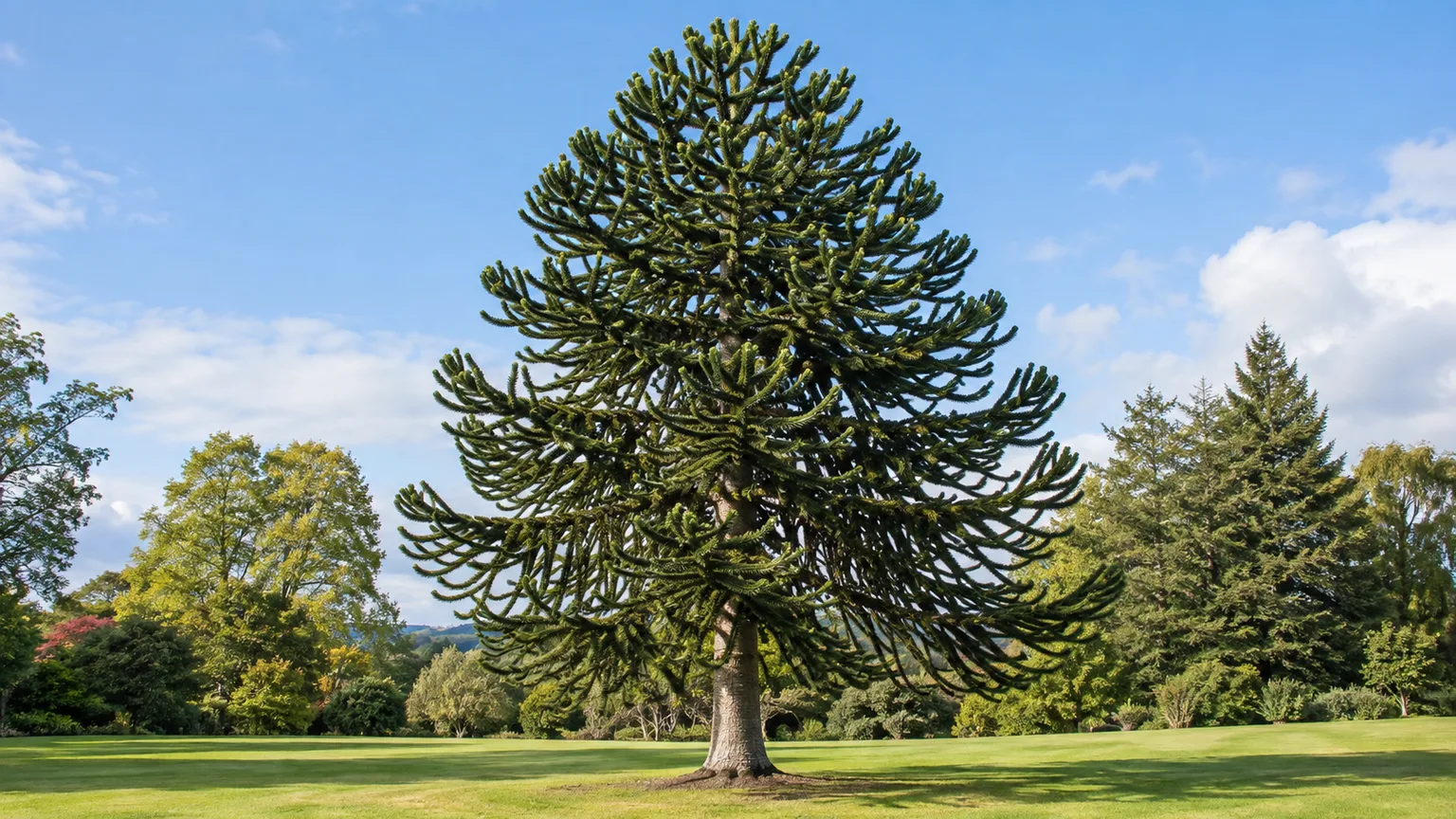
Monkey puzzle tree (Araucaria araucana), also called Chilean pine, is a tree you choose for character as much as for evergreen cover. Its stiff, triangular leaves overlap along horizontal branches, giving young trees a geometric, almost prehistoric outline. With age, the trunk rises and the canopy broadens into a specimen that can dominate an entire lawn.
That scale is the first care instruction. A monkey puzzle tree is not a large houseplant that can be kept small indefinitely, and it is not a tidy conifer for a narrow foundation bed. Give it the cool, moist conditions, excellent drainage, open sky, and long-term space it needs, and care becomes fairly restrained. Put it in a hot, cramped, wet, or polluted site, and no fertilizer schedule will compensate.
Is a Monkey Puzzle Tree Right for Your Garden?
Start with the decision that is often skipped: do you have the right place for a tree that may outlive the gardener who plants it? NC State Extension lists cultivated dimensions in the broad range of 50 to 80 feet tall and 20 to 30 feet wide, while Oregon State University notes that trees in cultivation are often about half the size of native specimens but still spread substantially. Treat those numbers as planning boundaries rather than a promise of maximum growth.
This is a strong choice for a spacious lawn, estate border, park-like garden, or open coastal landscape where its silhouette can be seen from a distance. It is a poor choice for a small city lot, a narrow strip beside a driveway, a planting bed under wires, or a spot where heavy cones would fall over a play area, walkway, parked car, or neighbor’s roof.
The species is native to the Andes of Chile and western Argentina and is endangered in its native range. Kew Science and the Brooklyn Botanic Garden describe its conservation importance, its long relationship with Indigenous communities, and the pressure that habitat loss, fire, grazing, logging, heat, and drought have placed on wild populations. Buy a nursery-propagated tree from a reputable source, and do not collect material from wild trees.
Know the Tree Before You Plant
The monkey puzzle is an evergreen conifer, but its broad, overlapping leaves do not resemble the needles of a pine or fir. A young tree is usually conical, with regularly spaced branches. A mature specimen develops a tall trunk, an umbrella-like crown, and fewer lower branches. The gray-brown bark becomes deeply folded, and the individual leaves can persist for many years.
It is usually dioecious, meaning male and female cones occur on separate trees, although occasional trees can bear both sexes. Female cones are large and rounded; male cones are narrower and elongated. NC State Extension reports that mature female cones may contain up to about 200 seeds and take two to three years to mature. A small nursery tree will not provide a quick seed harvest: cone production typically waits until the tree is several decades old.
The seeds, known as piñones in their native range, are edible and culturally important, but a backyard tree should not be treated as a dependable food crop. You need a mature female tree, viable seed, and often a male tree nearby for pollination. The practical reason to grow this species is its structure and longevity, with seeds an occasional bonus rather than the main yield.
Choose a Site That Can Handle Its Mature Size
Look upward, outward, and underground before you dig. Leave generous open space around the trunk, keep the future crown away from overhead utility lines, and do not put the tree where surface roots could lift paving or interfere with mowing. A minimum of roughly 24 feet of unobstructed room around a young tree is only a starting point; a mature crown may need 30 feet or more of lateral clearance depending on climate, soil, and exposure.
Place the tree where it can be viewed against open sky. That makes its shape useful in the landscape and reduces the temptation to prune away branches that naturally grow in tiers. Keep it away from the corner of a house or tight fence line, where wind can funnel through the canopy and where future root or branch problems become expensive to solve.
Account for climate, wind, and microclimate
Monkey puzzle tree is commonly listed for USDA Zones 7 through 10, with some horticultural references extending the range into Zone 11. The zone number is not the whole story. The species is best adapted to cool, mild, moist conditions, similar to its maritime mountain environment. A humid or coastal Zone 9 can be more suitable than a hot, drought-prone inland Zone 9, while a Zone 7 site may work if it is sheltered from drying winter wind and severe exposure.
Choose full sun to partial shade, depending on climate. In a cool garden, an open sunny site encourages a strong, symmetrical crown. In a hot region, morning sun with light afternoon shade can reduce heat and drought stress. Avoid deep shade: a tree may survive for a while but develop weaker growth and a less satisfying form.
Shelter does not mean a sealed corner. A hedge, wall, or nearby group of trees can soften wind, but dense tree roots may compete for moisture and a solid wall can intensify reflected heat. If your yard is exposed to road salt, industrial pollution, or persistent hot wind, be cautious even if your winter temperatures fall within the published hardiness range. Oregon State notes tolerance of maritime exposure and salt-laden winds; that is not the same as repeated contact with deicing salt in a roadside planting.
Planting Steps for a Strong Start
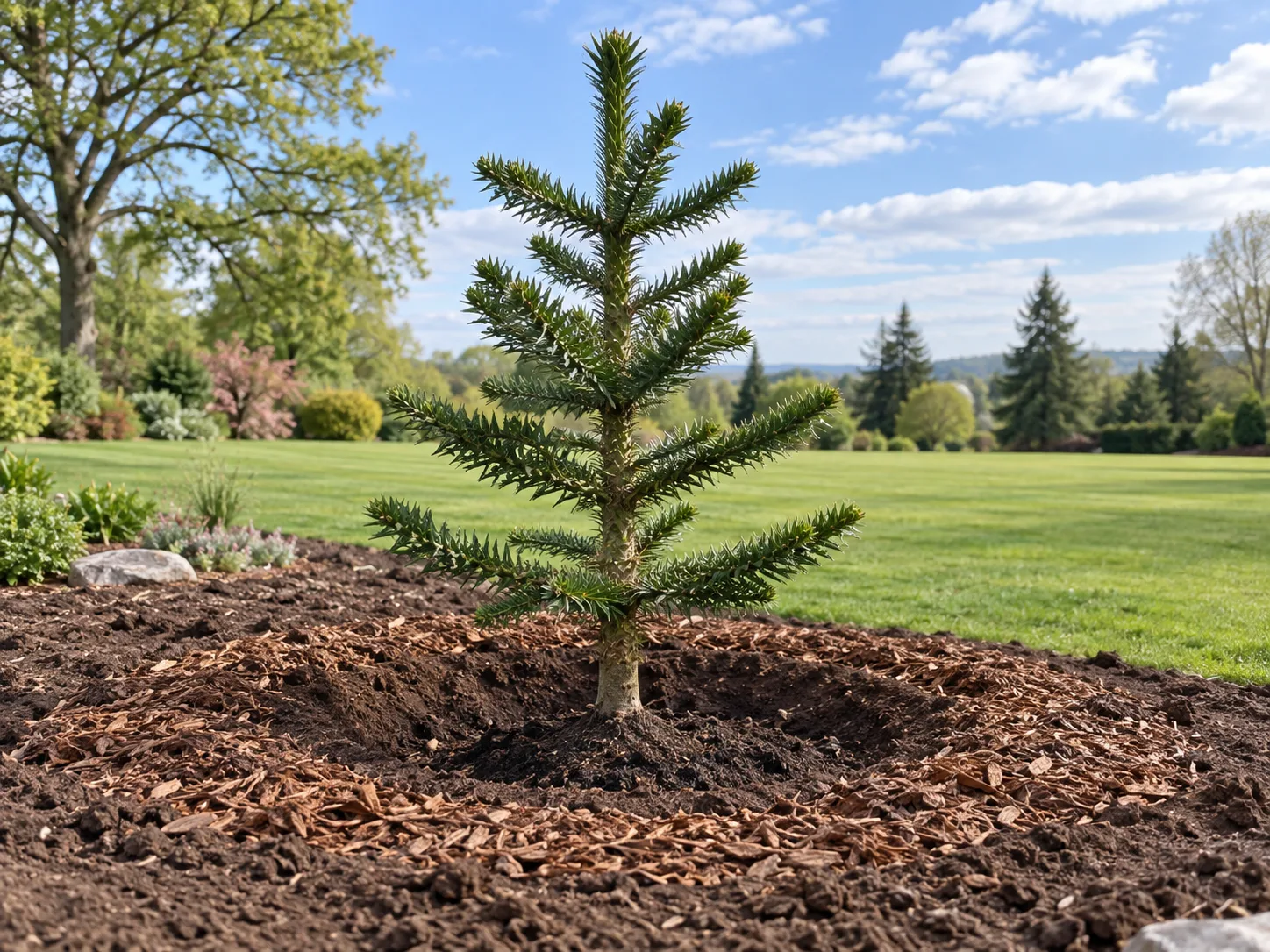
Plant in autumn or in spring after the worst freezes, choosing a cool period when the soil is workable. Autumn gives roots time to settle before the following summer, but spring is a sensible choice where winter is severe or the nursery tree arrives actively growing. This timing agrees with the practical guidance in Gardeners’ World. Do not plant into waterlogged ground simply because the calendar says it is planting season.
Before the tree arrives, remove perennial weeds from a broad area and test how quickly water drains after a deep soak. Improve poor soil across the planting area with mature compost, but do not replace the native soil in the hole with a soft, rich pocket that holds water around the root ball. A tree establishes more evenly when the surrounding soil has a similar texture and drainage profile.
Dig a hole two to three times wider than the root ball and no deeper than the root ball’s height. Set the tree so the root flare—the point where the trunk widens into the upper roots—sits at or just above the finished soil level. Backfilling too deeply is one of the easiest ways to create chronic stem moisture and slow establishment.
Set the root flare at the right height
Remove loose soil from the top of a container root ball if the trunk disappears below the surface. Do not bury a woody trunk to make a small tree look more stable. If the tree leans or the root ball shifts, correct the planting depth, firm the soil beneath it, and use temporary staking only when wind or a top-heavy canopy truly requires support.
Backfill with the excavated soil, firm it gently, and water slowly until the soil settles around the roots. Add a two- to three-inch layer of organic mulch over the root zone, keeping it several inches away from the trunk. A mulch ring reduces competition from turf and moderates moisture swings; a mulch volcano against the bark creates a damp hiding place for problems.
For the first year, inspect the tree after wind and heavy rain. Make sure the root flare is still visible, the trunk is upright, and water is not collecting in the planting basin. A small correction early is safer than excavating an established tree later.
Light and Soil: The Two Conditions You Cannot Fake
Aim for at least six hours of direct light where the climate allows it, or bright partial shade where summer heat is punishing. Full sun produces the best form in mild regions. In a hot, dry interior, a little protection from late-afternoon exposure may keep the foliage from browning, but deep shade will not solve the larger climate mismatch. The RHS plant profile likewise lists full sun to partial shade and emphasizes shelter.
Soil type is flexible; drainage is not. NC State Extension lists clay, loam, sand, rocky soil, and a wide pH range among the conditions the species can tolerate when drainage is good. The useful translation is that you do not need perfect soil, but you do need oxygen around the roots. Clay that drains after rain can work. A low spot that stays saturated for days is a poor site even if it is fertile.
If water stands after a normal rain, plant on a broad raised mound or choose another location. Do not try to cure a drainage problem with gravel in the bottom of the hole; that can create a perched wet layer rather than a drainage outlet. Compost worked through the surrounding soil, a gently raised bed, or a different planting site is more dependable.
Watering Without Creating Root Rot
Water a new tree deeply and slowly, then allow the upper part of the root zone to begin drying before watering again. The exact interval changes with soil, temperature, wind, mulch, and root-ball size. Check several inches down with your finger or a narrow trowel rather than watering from a calendar reminder.
During the first growing season, a young tree may need regular supplemental water even in a climate where mature specimens survive on rainfall. In the second year, extend the interval as roots move into the surrounding soil. Water more during a long hot or dry spell, especially in sandy soil or beside thirsty turf, and less during cool rainy weather.
The goal is even moisture, not permanently wet soil. Daily shallow sprinkles wet the surface while leaving deeper roots dry, and frequent irrigation of a slow-draining site removes oxygen from the root zone. Drip emitters or a slowly moving hose around the outer root area are easier to manage than a spray that hits the trunk and foliage.
Established trees tolerate short dry periods better than newly planted ones, but “drought tolerant once mature” does not mean “ignore during drought.” Prolonged stress can thin the canopy, brown older foliage, and make recovery slower. If a mature tree begins browning, check soil moisture and drainage together: both drought and saturated roots can produce similar symptoms.
Feeding, Mulching, and Groundcover
An in-ground monkey puzzle tree usually needs little fertilizer once it is planted in reasonably fertile soil. A yearly surface layer of finished compost or leaf mold is a gentle way to support soil structure without forcing soft, fast growth. Spread it over the root zone, not against the trunk, and do not dig aggressively around established surface roots.
If a soil test or a clear pattern of weak new growth indicates a deficiency, choose a fertilizer appropriate for trees and follow the label rate. Avoid high-nitrogen feeding as a reflex. It can push lush, tender growth that is more vulnerable to drought, wind, or cold, while doing nothing to fix compacted soil, root injury, or poor light.
Keep a grass-free mulch ring beneath the tree while it establishes. Turf competes for water and makes it harder to see the root flare. Once the tree is large, low plants may be used outside the main root flare if they tolerate dry shade and do not require constant digging or irrigation. Do not turn the area under the canopy into a bed that is regularly cultivated around shallow roots.
Pruning: What to Remove and What to Leave Alone
Routine shaping is usually unnecessary. A monkey puzzle tree’s tiered branches are the feature, and cutting healthy green tips to make the tree more symmetrical can permanently damage its form. The RHS notes that only young specimens respond well to pruning back into older wood, so avoid assuming that a bare branch will sprout again after a severe cut.
Prune only for a clear reason: remove a dead branch, a broken branch, a crossing branch on a young tree, or a limb that has become a genuine safety hazard. Use clean, sharp tools for small branches and make the cut just outside the branch collar. Do not leave a long stub, and do not top the tree or cut the central leader to control height.
Lower branches may die and drop as the tree ages. That is often natural self-pruning, especially when the upper crown remains dense and green. A sudden loss of several living branches, browning at the top, a cracked trunk, a new lean, or root heaving is different; keep people away from the area and have a qualified arborist inspect a large or unstable tree.
Growing Monkey Puzzle Tree From Seed
Seed is the most practical propagation method for home growers, but it rewards freshness rather than patience with an old seed packet. Kew Science describes monkey puzzle seed as sensitive to drying, and NC State Extension notes that mature cone production begins only after several decades. Buy fresh seed from a specialist supplier or sow seed soon after it is collected from a known, legal source.
Why fresh seed and orientation matter
Use a deep, clean container filled with a free-draining seed-starting mix. Soak the seed overnight, then sow it with the pointed end down and the upper part near the surface. The goal is to keep the seed from being buried deeply while giving the emerging root a direct path downward.
Place the container in bright light at roughly room temperature, around 68 degrees Fahrenheit, and keep the mix evenly moist but never saturated. Germination may take a few weeks to two months. Check the container regularly rather than watering heavily to compensate for a missed day; a wet, airless mix can rot a seed before it has a chance to sprout.
When the seedling is large enough to handle, move it into its own deep pot without tearing the young root. Grow it on in bright light and protect it from abrupt temperature changes. A seedling is not ready for a harsh open site simply because it has produced a few leaves. Container culture for a couple of years lets the root system strengthen, and gradual hardening off in spring helps it transition outdoors.
Vegetative propagation is a specialist project. The RHS lists midsummer cuttings from vertical shoot tips as a possibility, but cuttings from horizontal side branches will not form a normally upright tree. If a nursery-grown specimen is available, it is usually the better route for a predictable landscape plant.
Containers and Indoor Overwintering
A young monkey puzzle tree can be grown in a container temporarily, especially in a cold region where it must spend winter indoors. Gardening Know How describes container culture as an option for small specimens, but it is not a realistic permanent houseplant for most homes. Even a slow-growing tree eventually needs more root room, stronger light, and a cool, airy environment than a living room reliably provides.
Choose a heavy pot with a drainage hole and use a mix that holds some moisture but drains freely. The container should be only modestly larger than the root ball; an oversized pot stays wet longer and makes overwatering more likely. Water thoroughly when the mix begins to dry, then empty any saucer rather than leaving the tree in standing water.
Give a potted tree as much bright light as possible, ideally near a sunny south- or west-facing window in winter. Keep it away from radiators, heat vents, and very dry air. If it spends summer outside, move it gradually into stronger light so the foliage does not scorch after a sudden change from indoor conditions.
In cold-winter climates, bring the container indoors before a hard freeze, but do not wait until the root ball is frozen solid. A cool, bright porch, greenhouse, or sunroom is usually more suitable than a warm, dim room. When spring returns, harden the tree off again over one to two weeks.
Repot when roots circle densely or emerge from the drainage hole, usually after several years rather than every season. Handle the root ball carefully. Severe root pruning is not a substitute for choosing a suitable long-term home; it can turn a manageable container tree into a stressed one.
Seasonal Care Calendar
Late winter and early spring: Inspect the trunk, root flare, and crown for winter damage. Delay fertilizer until the tree is actively growing and the soil is workable. If a container tree has been indoors, begin moving it toward outdoor conditions gradually after hard freezes have passed.
Spring and summer: Check new plantings weekly during dry weather and water the root zone deeply when it begins to dry. Watch for scale or spider mites on indoor and container plants, especially when air is hot and dry. Keep mulch loose and away from the trunk, and avoid digging around surface roots.
Autumn: Expect mature female cones to become a landscape issue rather than a decorative curiosity. Keep paths, play spaces, and parking areas clear beneath a cone-bearing tree. If you are sowing seed, use fresh seed and protect young seedlings from drying out.
Winter: Leave established in-ground trees outdoors in suitable climates, but protect young or exposed trees from desiccating wind as much as local conditions require. Move container trees indoors before hard freezes. Provide bright light and cool temperatures, and reduce watering to match slower growth without allowing the root ball to become bone dry.
Pests, Diseases, and Fast Diagnosis
Monkey puzzle tree is generally low-maintenance, but it is not immune to trouble. NC State Extension lists scale, leaf spot, sooty mold, and Phytophthora-related root problems among possible concerns. Gardening Know How also notes that scale can produce honeydew that supports sooty mold, while spider mites are more likely to appear on stressed indoor plants.
Use the symptom pattern to choose the first action:
- A few brown lower leaves: Check whether those leaves are old and shaded before assuming disease. If browning is spreading, inspect soil moisture, wind exposure, root flare depth, and recent transplanting.
- Brown foliage on the windward side: Look for drought, hot reflected light, salt spray, or winter desiccation. Correct the exposure and root-zone moisture before applying fertilizer.
- Yellowing, sparse growth, or a declining crown in wet soil: Suspect a root-zone problem. Improve drainage if possible, stop routine irrigation, and ask an arborist or plant clinic for help; advanced root rot cannot be cured with a surface spray.
- Sticky surfaces, black soot, or small bumps: Inspect stems and leaf bases for scale. Remove heavily infested small shoots, improve plant vigor, and use only a product labeled for the plant and situation. Do not spray oil on heat-stressed foliage or in conditions prohibited by the label.
- Fine webbing on a potted tree: Check for spider mites with a close inspection of leaf surfaces and crevices. Isolate the plant, rinse foliage if appropriate for the setting, and follow the label for any insecticidal soap or horticultural oil.
Large trees complicate treatment. A homeowner may be able to inspect a seedling, but spraying the canopy of a mature tree from a ladder is unsafe and often ineffective. Sudden dieback, hanging limbs, trunk cracks, root lifting, or a change in lean is an arborist problem first and a fertilizer problem never.
Cones, Surface Roots, and Other Long-Term Surprises
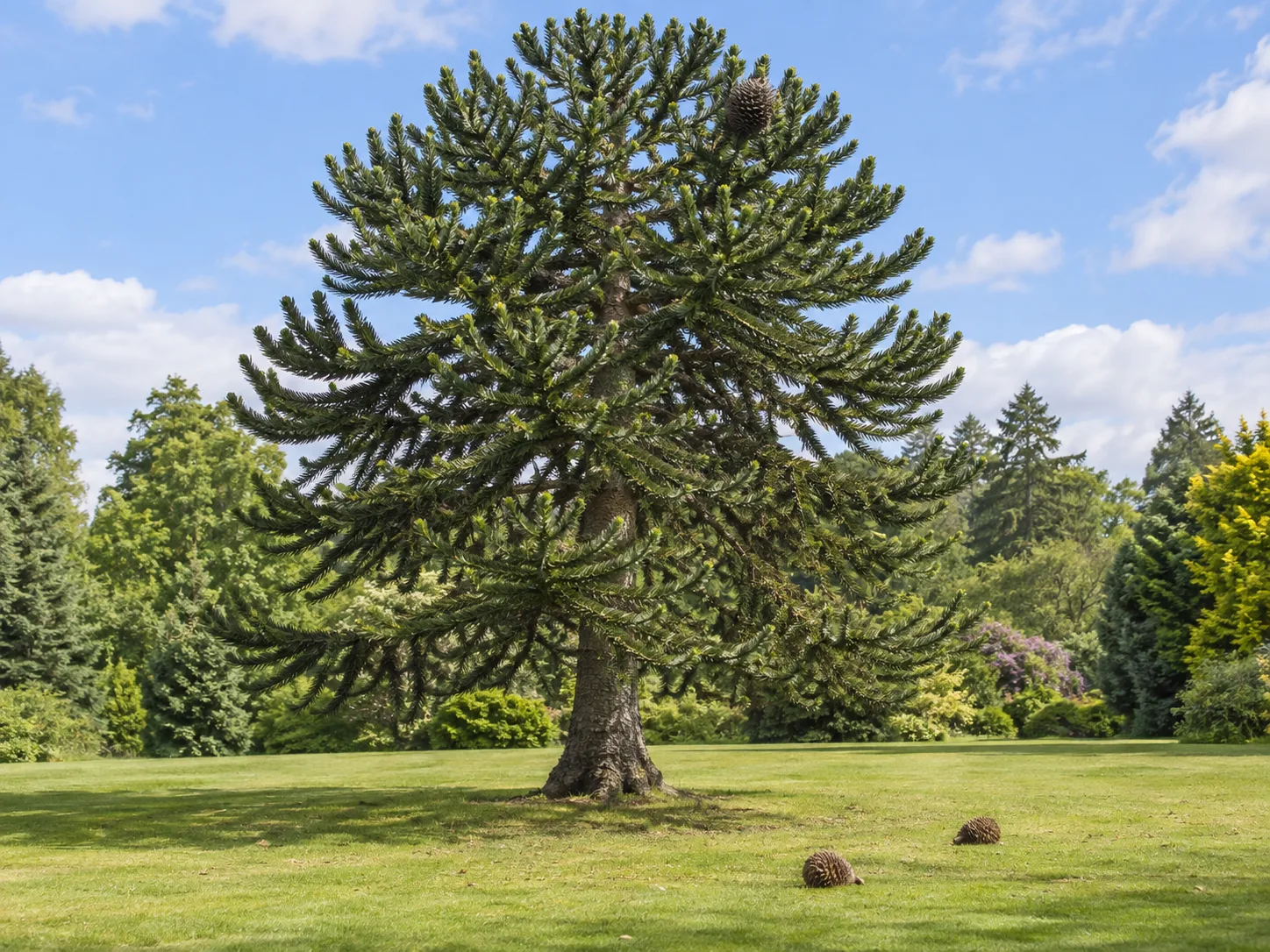
The tree’s most memorable features can also be its biggest maintenance liabilities. Female trees eventually produce heavy cones that fall from considerable height, and the surface roots can spread into lawn or hardscape. That does not make the species a bad tree; it means the site must be designed around what the mature tree naturally does.
Do not plant it beside a sidewalk just because a young nursery specimen looks narrow. Do not place it where a future crown will conflict with wires, gutters, or a roof. Leave lawn access around the trunk, keep hardscape outside the main root zone, and plan a safe way to remove fallen cones without walking beneath an actively dropping canopy.
The same long view applies to branch loss. A mature monkey puzzle will not retain every lower branch forever, and a formally clipped silhouette is not the natural shape. If you want a tree that stays small, flowers heavily, or tolerates repeated shaping, choose a different plant rather than trying to force this one into the wrong job.
Conclusion
Successful monkey puzzle tree care is mostly a placement decision followed by patient establishment. Choose a cool or moderate climate, give the tree full sun or light shade with protection from punishing wind, provide soil that drains freely but does not dry rapidly, and water deeply while the root system is young.
Then leave the tree room to become itself. Avoid routine pruning, excessive fertilizer, saturated soil, repeated moves, and cramped planting. If you plan for the mature canopy, surface roots, sharp foliage, and falling cones at the beginning, Araucaria araucana can become a striking, long-lived evergreen specimen with surprisingly little day-to-day maintenance.