How to Grow and Care for Homalomena
Keep Homalomena lush with a root-safe watering routine, airy soil, indirect light, division propagation, and clear fixes for common problems.
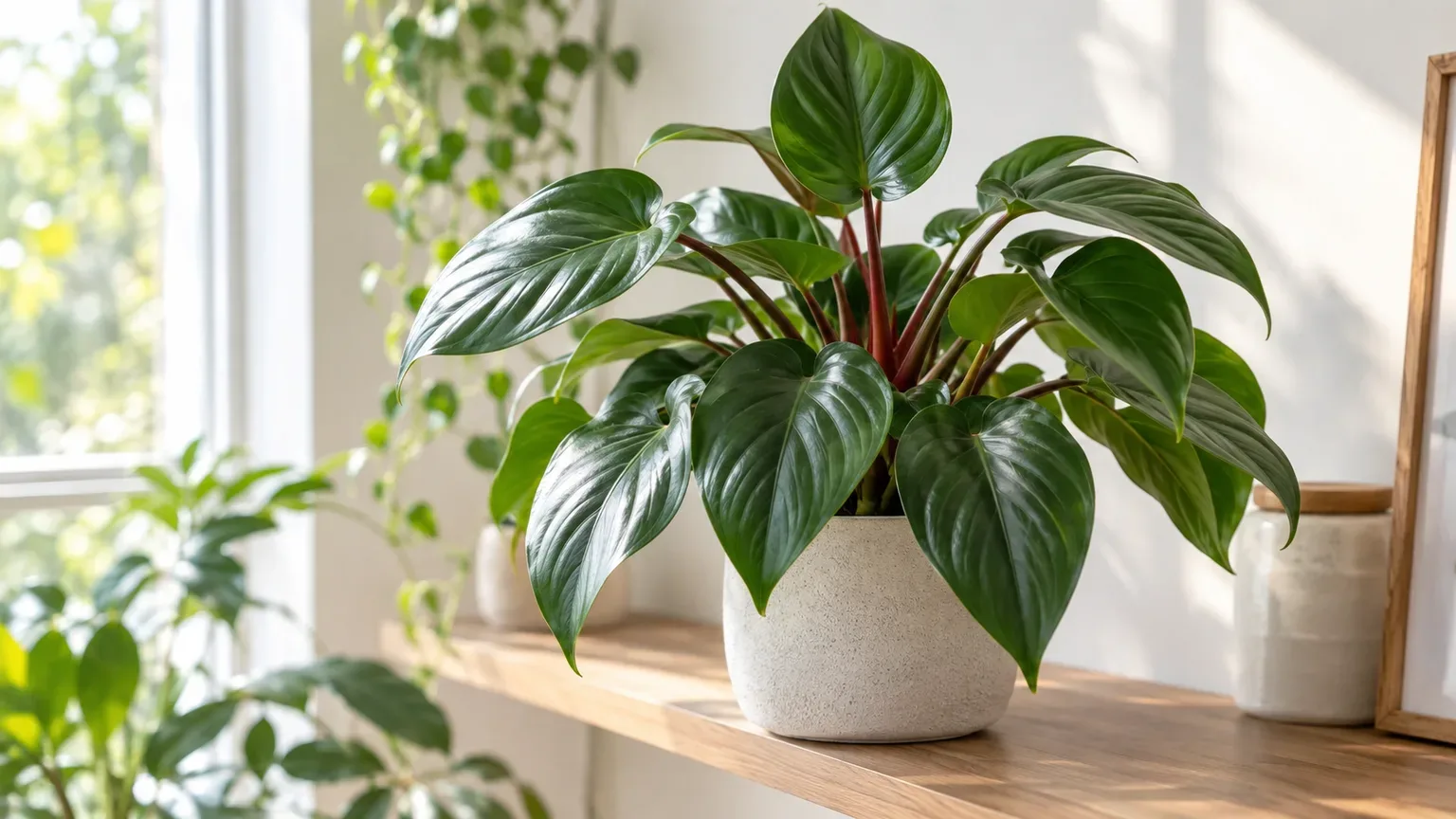
Homalomena is a foliage-first tropical houseplant with a compact shape, upright leaf stalks, and leaves that may be glossy, corrugated, silvery, mottled, or deep green. It is often sold as Emerald Gem or Queen of Hearts, and it is easier to keep attractive when you care for the root zone—not just the leaves. Give it filtered light, an airy container mix, and a thorough drink only after the upper mix has started to dry.
The plant is forgiving about an occasional missed watering, but it is not forgiving of a pot that stays wet for weeks. The same drooping leaves can mean dry soil, cold-damaged roots, or root rot, so a reliable routine starts with checking the pot and mix before reaching for the watering can.
Homalomena at a Glance
| Care factor | Practical indoor target | What to watch for |
|---|---|---|
| Botanical name | Homalomena spp. | Trade labels may name a cultivar rather than a confirmed species |
| Family | Araceae | Keep the plant away from pets and children who may chew foliage |
| Growth habit | Compact, self-heading clump or rosette | A loose, leaning shape usually points to weak light |
| Mature size | Often about 1–3 feet indoors, depending on cultivar | Allow for leaf spread, not just pot height |
| Light | Medium to bright, indirect or filtered light | Harsh afternoon sun scorches; deep shade slows growth |
| Water | Thoroughly water when the upper 1–2 inches of mix dry | Wet soil plus drooping leaves is not a thirst signal |
| Soil | Loose, moisture-retentive but fast-draining aroid mix | Dense mix stays wet and starves roots of oxygen |
| Temperature | Stable warmth, roughly 65–85°F; protect from cold drafts | Cold glass and wet soil are a particularly poor combination |
| Humidity | Average home humidity is workable; moderate humidity helps | Misting does not replace room humidity or airflow |
| Fertilizer | Diluted balanced feed during active growth | Salt crust or brown margins can mean too much fertilizer |
| Propagation | Division of a mature clump with roots and a growth point | A leaf without a node or crown will not reliably make a new plant |
The genus is diverse, so size, leaf texture, color, and growth rate vary more than a single care chart suggests. Use the table as a starting point, then adjust for the pot material, pot size, room temperature, light level, and how quickly the mix dries.
Understand the Plant Before You Change Its Care
Homalomena belongs to the arum family, Araceae, alongside philodendrons, peace lilies, anthuriums, and many other aroids. It is not a philodendron; the two are separate genera that happen to share family traits and some broad care preferences. Kew’s Plants of the World Online search for Homalomena shows why a genus-level label matters: Homalomena includes numerous accepted species and synonyms rather than one uniform houseplant.
Most indoor plants are selected for leaves rather than flowers. Mature plants may produce a small spadix enclosed by a spathe, usually low in the foliage and much less dramatic than the leaves. A flower is a bonus, not a useful health test; a plant that never blooms indoors can still be growing exactly as it should.
The underground structure also explains why division works better than casual cuttings. A mature pot often contains several crowns or closely joined growth points, each with its own roots. Separating those natural clumps preserves the part of the plant that can produce new leaves. Cutting a leaf or petiole without a viable crown is not the same thing and may only create tissue that eventually rots.
Choose a Light Spot That Preserves Foliage
Start with bright, indirect light: near an east-facing window, or a little back from a brighter south- or west-facing window with a sheer curtain. A few hours of gentle morning sun can be useful, but hard afternoon rays through glass may bleach the surface, create tan patches, and leave crispy edges. If the plant arrives from a dim nursery, increase light gradually over a week rather than placing it directly in intense sun.
Solid green Homalomena usually tolerates a dimmer position better than a highly variegated selection. That tolerance means survival, not peak performance. Brighter filtered light normally supports larger new leaves, shorter gaps between leaf stalks, and stronger color contrast, while low light slows drying and therefore changes how often the plant needs water.
How to Tell When Light Is Too Low
Look at the newest growth instead of judging the oldest leaf. If new leaves are noticeably smaller, the plant leans toward one side, leaf stalks become unusually long, or a variegated pattern fades while the plant remains otherwise healthy, move it closer to filtered light or add an LED grow light. Rotate the pot occasionally if one side receives all the illumination.
Do not respond to weak growth with extra fertilizer before correcting light. A plant cannot turn a dim location into strong growth simply by receiving more nutrients, and extra fertilizer in a slow-drying pot raises the risk of salt injury. Give it better light first, then wait for the next leaf or two before deciding whether feeding is needed.
Water by Root-Zone Dryness, Not a Calendar
Homalomena likes a consistent supply of moisture but needs oxygen around its roots between waterings. Water when the top 1–2 inches of mix feel dry and the pot is noticeably lighter than it was just after watering. In a very large container, do not trust a dry surface alone; use a wooden skewer or your finger to test farther down, because the center may still be saturated.
When it is time to water, soak the entire root ball until water flows from the drainage holes. Let the pot drain completely, then empty the saucer or cachepot. Small daily sips can leave the outer roots dry while keeping the center wet, whereas a full soak followed by a sensible dry-down rehydrates the whole mix more evenly.
The exact interval depends on light, temperature, pot material, root mass, and season. A small plastic pot in bright summer light may need water every several days; a large pot in a cool, dim room may take two weeks or longer. The principle described by The Thrifted Planter’s Homalomena growing guide is useful here: check the actual soil depth rather than treating “once a week” as a rule.
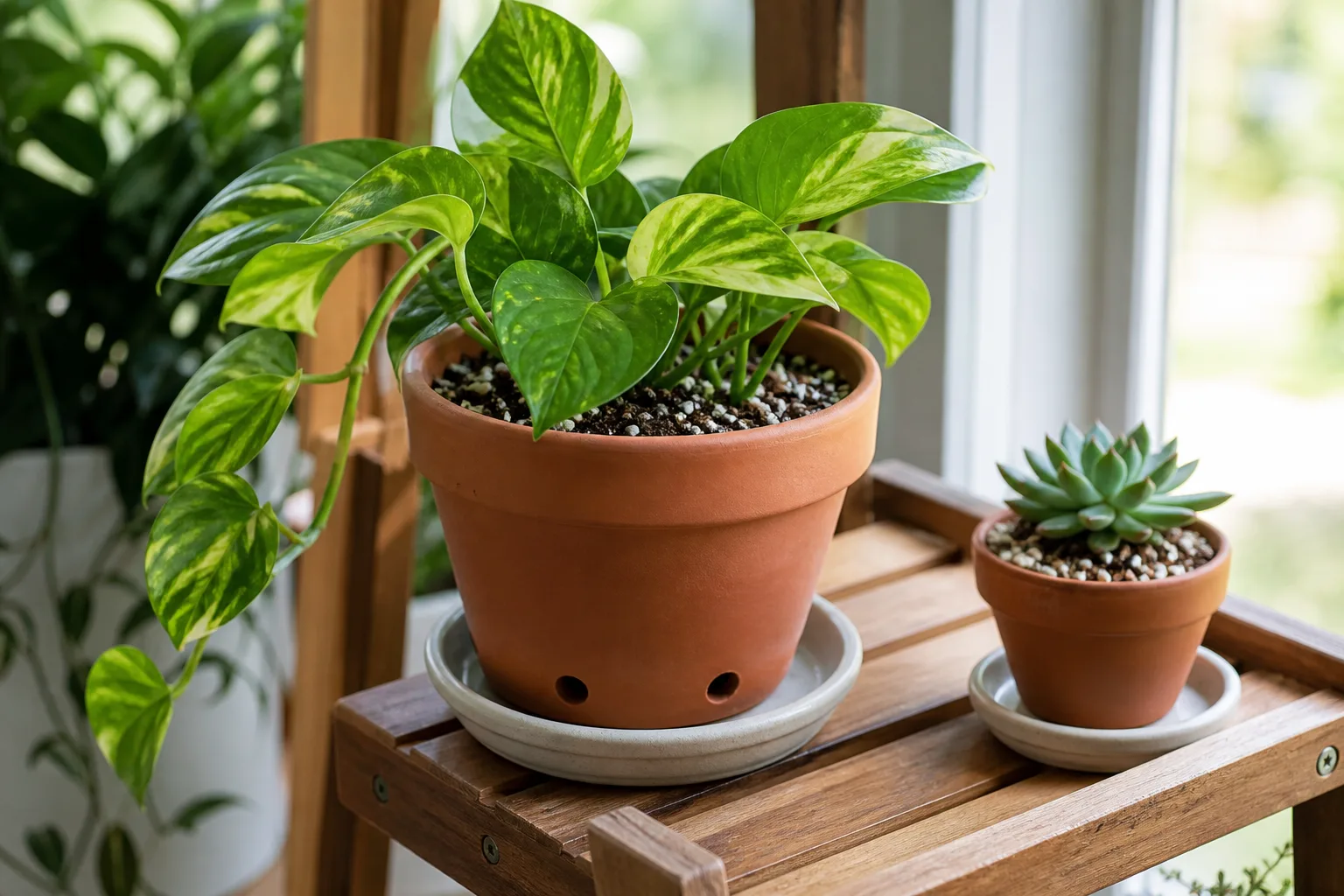
A Reliable Watering Routine
Use this four-part check before watering:
- Feel the mix. The upper layer should be dry, not merely the surface crust.
- Lift the pot. A recently watered pot should feel heavier than one ready to drink.
- Read the plant. Mild loss of firmness can support the diagnosis, but dramatic collapse is not a goal.
- Check the exit. Water should be able to leave the pot freely; runoff that pools beneath the container defeats good watering technique.
If the plant droops while the mix is dry and the pot is light, water thoroughly and reassess over the next day. If it droops while the mix is wet and the pot is heavy, do not add more water. That combination suggests oxygen-starved or damaged roots, a blocked drainage path, cold stress, or a root ball that has become too compacted to function normally.
Bottom watering can help a severely dry, shrunken mix absorb water, but it is not a permanent reservoir. Set the pot in shallow water long enough for the mix to rehydrate, then lift it out and let it drain. Top watering is the better default because it flushes some accumulated salts through the holes and lets you observe whether water actually penetrates the mix.
Use an Airy Mix and a Draining Pot
The right Homalomena soil is not simply “rich.” It must hold enough moisture for broad leaves while leaving large enough air spaces for roots to recover oxygen after watering. A practical starting blend is two parts quality peat-free or coco-based houseplant mix, one part medium orchid bark, and one part perlite. Adjust the bark and perlite if your base mix is already chunky or dries unusually fast.
Use a nursery pot with one or more open drainage holes, then place it inside a decorative cachepot if you want a finished look. A decorative container without a drainage hole can work only as an outer cover; remove the inner pot to water and do not leave runoff pooled inside it. A layer of gravel at the bottom of a sealed pot does not create drainage—it raises the wet zone inside the container.
Choose a pot only one size larger when the plant truly needs repotting. Extra soil around a small root ball stays wet longer than the roots can use it. The result is often mistaken for a plant that “needs more water” because wet-root plants wilt, when the real problem is insufficient aeration.
Keep It Warm and Use Humidity as Support
Keep Homalomena in a stable warm room, ideally around 65–85°F, and protect it from prolonged exposure below about 60°F. Keep the pot away from drafty doors, cold window glass, heating vents, and air-conditioning outlets. A sudden temperature change can cause leaf yellowing or collapse even when the watering routine has not changed.
Average indoor humidity is often adequate if the plant is warm, well lit, and watered appropriately. Moderate humidity can improve leaf margins and help new leaves unfurl cleanly, but it should support—not replace—good roots and light. A hygrometer is more useful than guessing from the calendar or misting whenever a leaf looks tired.
If the air is dry, group plants with space between them, run a clean humidifier nearby, or choose a naturally humid room that still has enough light. A pebble tray may slightly raise humidity immediately around the foliage, but the pot base must sit above the waterline. Misting gives short-lived wetness to the leaf surface; it does not create stable room humidity and can leave moisture trapped in textured foliage when airflow is poor.
Feed Only When It Is Actively Growing
Feed in spring and summer when the plant is producing new leaves. A balanced liquid houseplant fertilizer diluted to one-quarter or one-half of the label strength every four weeks is a conservative starting point. Plants under strong grow lights may remain active longer; plants in low winter light may need no fertilizer until new growth resumes.
Apply fertilizer to already moist soil, never to a dry, wilted, recently divided, or root-damaged plant. Pause after repotting until the plant has settled and begun growing again. If you see a white crust on the mix or pot rim, brown tips that appeared after feeding, or stalled growth despite wet soil, stop feeding and flush the container thoroughly with plain water when drainage is reliable.
More fertilizer cannot compensate for low light, cold roots, or a compacted mix. In fact, extra soluble salts make a stressed root system work harder. The practical care guidance from Sanjay Nursery’s Homalomena guide supports seasonal feeding, but the plant’s active growth—not a date on the calendar—should determine when you start and stop.
Prune, Clean, and Handle Flowers
Homalomena rarely needs shaping. Remove a completely yellow, brown, or damaged leaf by cutting its stalk close to the base with clean scissors. Do not strip healthy green leaves just to make the plant look smaller; each leaf helps power the next round of growth.
Dust can collect on large or textured foliage and block light from reaching the leaf surface. Wipe leaves gently with a damp, soft cloth or rinse the plant with lukewarm water when the room is warm and the foliage can dry quickly. Avoid polishing products, which can leave residues and interfere with the natural leaf surface.
If an indoor plant produces a small flower structure, keep it or remove it according to your preference. It is not a sign that the plant needs a special fertilizer. Cut spent structures near the base with clean tools if they become unattractive, and avoid cutting into the crown where new leaves emerge.
Repot When the Root Ball Needs It
Repot when roots circle densely around the root ball, emerge from drainage holes, the mix has collapsed and stopped draining evenly, or the plant dries much faster than it used to despite unchanged conditions. A two-year interval can be a useful inspection point, but it is not a compulsory schedule. A slow-growing plant in a stable pot may be happier staying put.
Spring or early summer is a convenient time because warmth and active growth support recovery. Slide the plant out, inspect the roots, and increase the container by only one size. Preserve the original planting depth; burying the crown or compressing new mix tightly around it can create another rot problem.
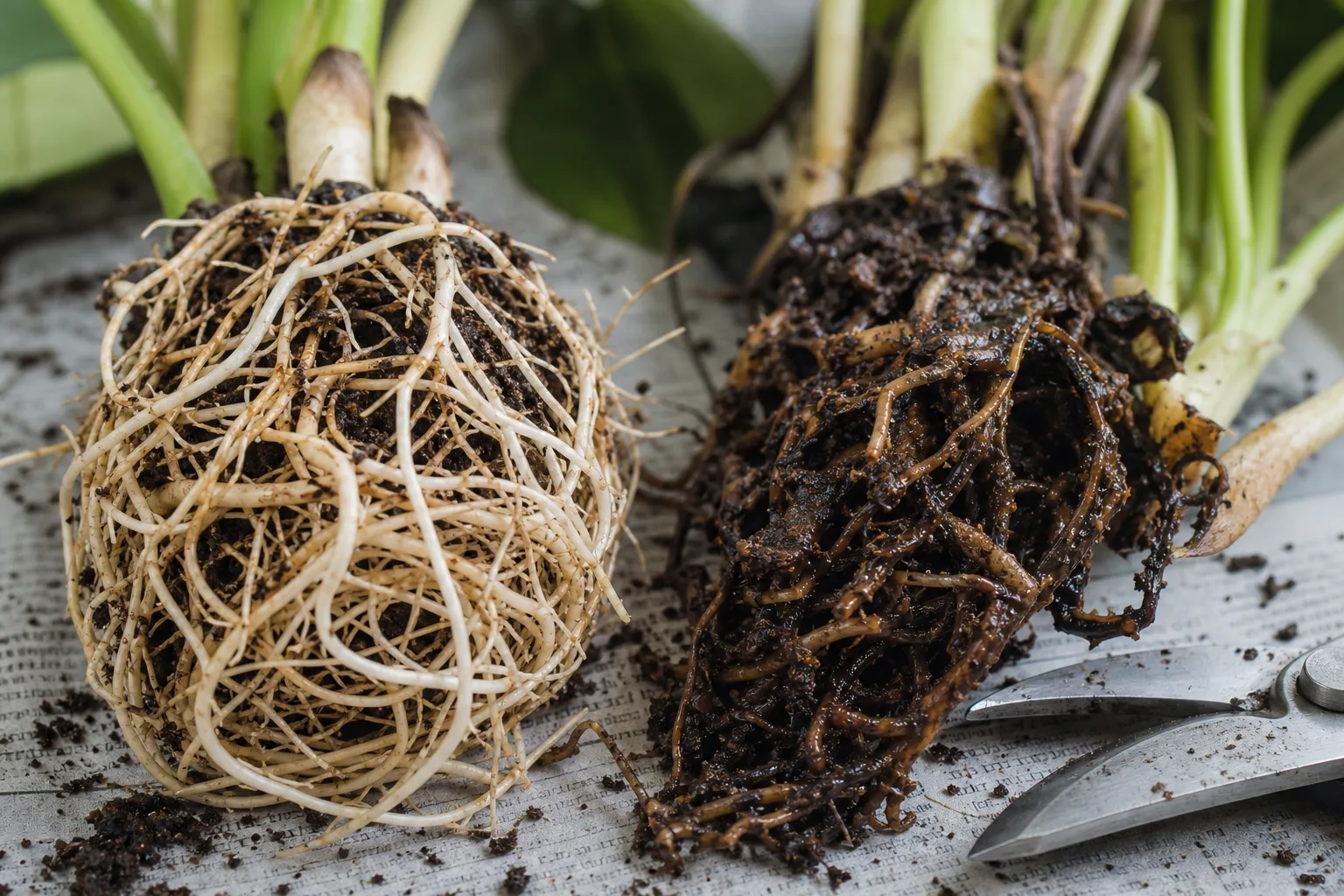
If the mix is healthy, disturb the roots as little as possible. If roots are dark, soft, or foul-smelling, remove loose wet mix and cut away rotten tissue with a clean blade. Repot the viable portion in fresh airy medium and use a container sized for the roots that remain, not the leaves you hope the plant will grow.
Propagate by Division
Division is the most dependable way to make new Homalomena plants because it preserves roots and a growing crown together. Wait until the parent plant is well established and has multiple natural clumps. Propagation is easiest during warm active growth, when a divided plant can replace roots and leaves more quickly.
Do not divide a plant that is already collapsing from root rot unless you are separating clearly healthy tissue from the damaged portion. A stressed plant has less energy for recovery. Likewise, a single leaf or petiole without a crown is not a reliable shortcut to a new Homalomena; choose a division with roots and a visible growth point.
How to Divide a Mature Plant
- Water the parent lightly a day before division if the mix is bone dry, but do not work with a soggy root ball.
- Slide the plant from its pot and brush away enough mix to see where crowns and roots join.
- Look for a natural separation. Ease the clumps apart with your fingers, or use a clean knife only where tissue is genuinely joined.
- Keep at least one healthy crown or growth point, several roots, and a few leaves with every division. A leafless root fragment may not recover.
- Pot each section snugly in fresh airy mix at the same depth it was growing before. Oversized pots stay wet during recovery.
- Water once to settle the mix, let all runoff drain, and place the divisions in bright indirect light with warmth and gentle airflow.
Hold fertilizer for several weeks, or until a division shows stable firmness and new growth. Keep the mix lightly and evenly moist while new roots establish, but do not turn it into a wet nursery bed. Temporary drooping is possible after root disturbance; worsening softness, sour smell, or blackening tissue means the plant is staying too wet or was divided through damaged tissue.
Common Homalomena Types and Labels
Homalomena rubescens is associated with glossy heart-shaped foliage and is often sold through named selections such as Pink Splash, Pink Diamond, or Mint. Homalomena wallisii and the synonym Adelonema wallisii appear on some labels for compact patterned plants, including Camouflage and Selby. Emerald Gem is usually an upright, dark-green selection, while Purple Sword is sold for green leaves with silvery markings and darker undersides. Black Velvet is marketed for unusually dark, velvety foliage.
Treat those names as useful buying clues, not a guarantee of a confirmed botanical identity. Commercial aroid labels can mix species, synonyms, cultivar names, and marketing names. The plant’s actual leaf shape, growth habit, and care response matter more than a perfect label when you are deciding where to place it.
When choosing a plant, look for firm leaves, a solid crown, active central growth, and no cottony residue in leaf joints. Lift the nursery pot from its sleeve to check that it is not sitting in standing water. Avoid a plant with widespread yellowing, a sour-smelling mix, a soft base, or pests hidden under leaves; a full-looking top can conceal a failing root system.
Diagnose Yellow, Brown, or Drooping Leaves
Start with the pattern, the newest growth, and the root-zone moisture. UC Statewide IPM’s houseplant-problem guide notes that yellowing, wilting, brown margins, and weak growth can come from several overlapping causes, including too much or too little water, poor drainage, low light, temperature changes, fertilizer salts, root disease, and sap-sucking pests.
One older lower leaf turning yellow slowly can be normal aging. Several leaves changing quickly, especially near the top, deserve inspection. Yellowing with wet mix points toward overwatering, poor drainage, cold roots, or root damage; yellowing with a very dry, light pot points toward drought stress. Check the roots if the problem continues after you correct the obvious environmental issue.
Brown tips and margins are not a humidity diagnosis by themselves. Dry roots, hot direct sun, fertilizer salts, mineral buildup, cold drafts, and low humidity can all produce similar edges. If the damage is on the window-facing side, correct the light. If it follows feeding, flush salts. If the pot is bone dry, rehydrate the root ball slowly. If the mix stays wet, fix drainage before increasing humidity.
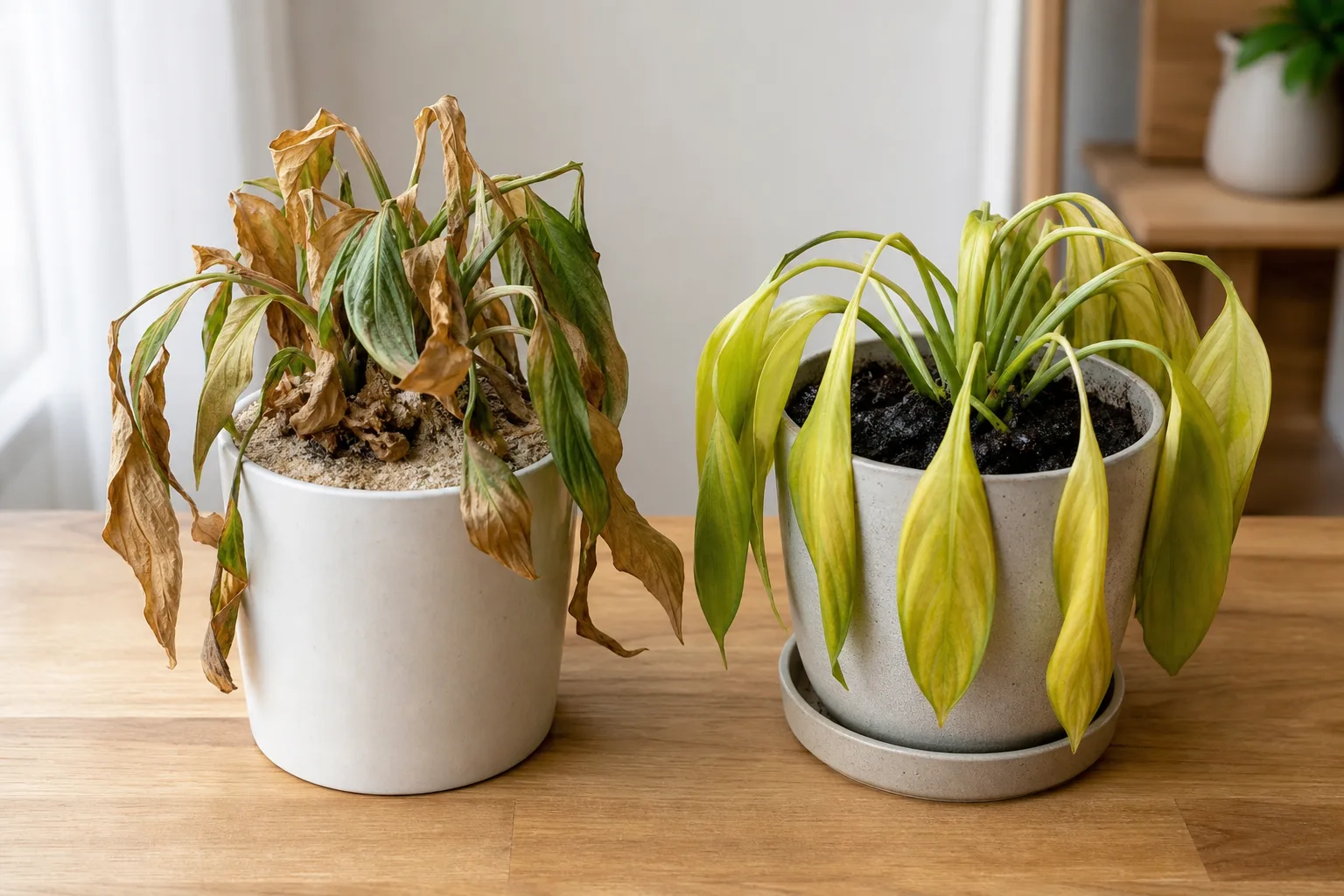
Drooping is especially easy to misread. Dry mix plus a light pot usually calls for water. Wet mix plus a heavy pot calls for an examination of roots, drainage, temperature, and the crown—not another drink. Leaves that remain limp after the mix has been properly rehydrated may have lost root function, and damaged leaves will not regain perfect shape even after the underlying problem is fixed.
Change one major variable at a time when the plant is stable. Moving it, repotting it, fertilizing it, and changing the watering method together makes it impossible to learn which correction worked. When the crown is soft or rot is spreading, act quickly instead of waiting for a controlled experiment.
Manage Pests and Root Rot
Inspect leaf undersides, petiole joints, and the tight center of the plant whenever you water. Spider mites cause fine pale stippling and may leave webbing, especially in hot, dry rooms. Mealybugs look like white cottony clusters, while scale appears as small attached bumps and may produce sticky honeydew. Fungus gnats are a sign that organic mix is staying persistently damp; their larvae live in moist media.
Isolate an affected plant immediately. Rinse foliage and stems when the plant can dry quickly, wipe away visible pests, remove badly infested leaves, and repeat inspections every few days. For a persistent infestation, use an insecticidal soap or horticultural oil only if the product label includes the pest and the plant is suitable for that use. Test on a small area first, avoid hot sun during treatment, and follow all label safety directions. Do not assume homemade dish-soap mixtures are harmless; leaf sensitivity varies.
Root rot is a root-zone failure associated with persistent saturation, compacted or aging mix, poor drainage, cold conditions, or sometimes disease organisms. Healthy roots are generally firm and light colored; rotten roots are dark, soft, slimy, or easily stripped. A plant can wilt from root rot while the soil is wet because damaged roots cannot supply the leaves.
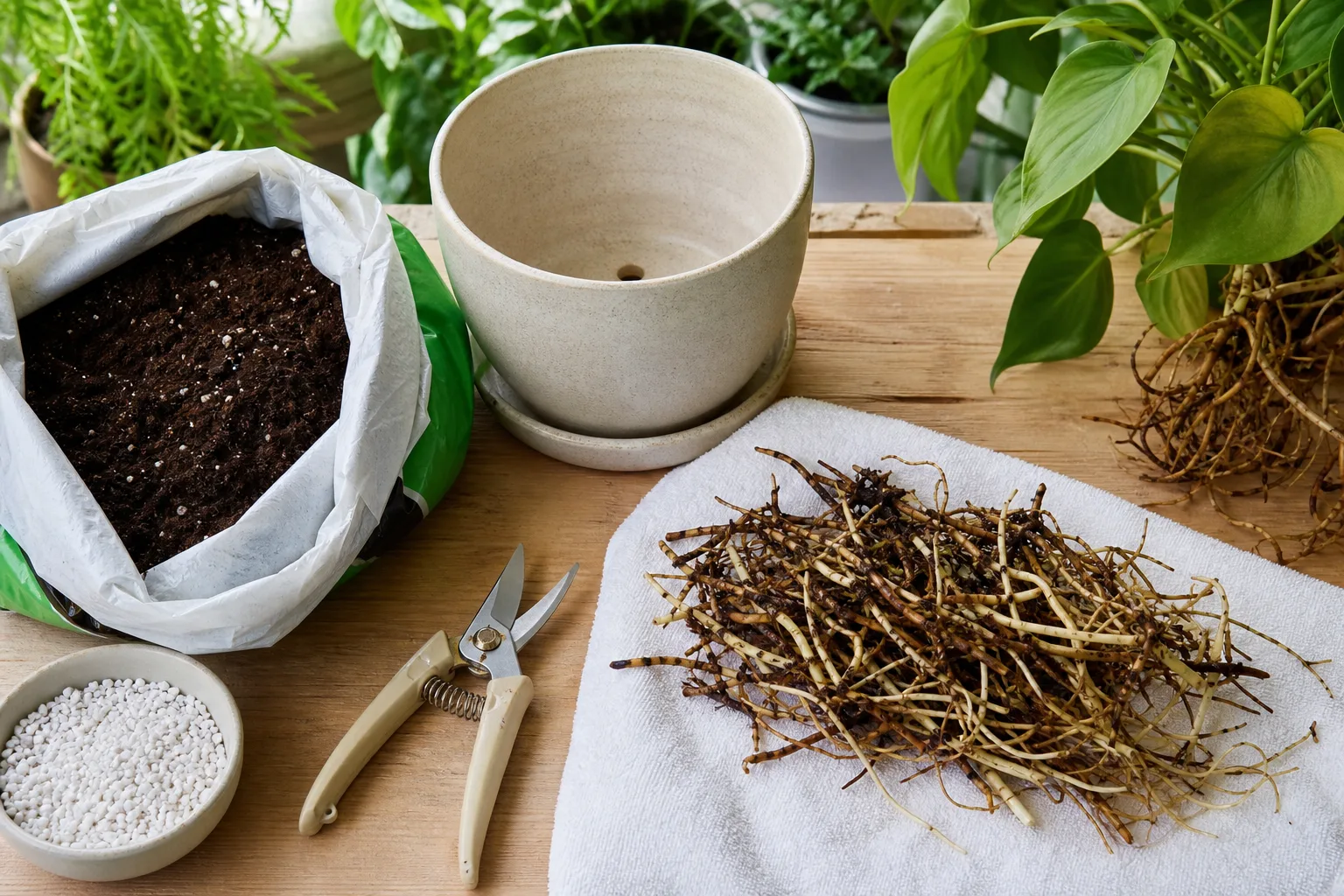
To rescue it, unpot the plant, remove wet mix, and cut away soft roots and crown tissue with a clean blade. Keep only firm viable tissue, choose a smaller draining pot, and repot in fresh airy mix. Water once, let the container drain completely, and place it in warm indirect light. If almost no healthy crown or root remains, taking clean divisions or other viable propagation material may be more realistic than repeatedly watering a decaying plant.
Safety Around Children and Pets
Homalomena is generally treated as a potentially toxic aroid. The National Gardening Association’s Homalomena growing guide flags all parts for calcium oxalate crystals, while the ASPCA’s entry for cutleaf philodendron documents the mouth irritation, drooling, vomiting, and swallowing difficulty that insoluble calcium oxalates can cause in a comparable Araceae plant. Species- and cultivar-level safety databases are not always complete, so an absent listing should not be treated as proof that a plant is safe.
Place Homalomena where children and pets cannot chew the leaves or dig in the pot. Wear gloves if your skin is sensitive when pruning or repotting, and wash your hands after handling sap or contaminated soil. If a child or pet may have ingested any part of the plant, identify the plant, keep a sample or clear photograph available, and contact a poison-control service, physician, or veterinarian for situation-specific instructions rather than guessing at home treatment.
A Seasonal Routine That Stays Simple
In spring and summer, check the plant more often because stronger light, warmth, and new growth can increase water use. This is the best window for repotting, division, and light feeding. Keep the plant in bright filtered light and rotate it occasionally so the clump develops evenly.
In autumn and winter, do not switch to a fixed “winter schedule.” Check less often if the mix dries slowly, but still water when the root zone reaches the right dryness. Move the pot away from cold glass and heaters, stop feeding if growth pauses, and watch for dry-air symptoms without keeping the soil wetter to compensate.
Once a month, inspect the leaf undersides and crown, wipe dust from the foliage, check that the drainage hole is clear, and lift the pot to learn its watered and ready-to-water weights. That short inspection catches pests, blocked drainage, and changing water use before the plant has to announce the problem with widespread yellowing.
Conclusion
Successful Homalomena care is a balance: bright enough light for compact growth, water that reaches the whole root ball but allows a dry-down, and a mix that holds moisture without becoming airless. Warmth and moderate humidity support the plant, but neither can rescue roots trapped in a heavy, saturated pot.
Use the newest growth, pot weight, soil depth, and root condition as your feedback system. With that approach, you can keep a green or variegated cultivar healthy, divide a mature clump when it is ready, and respond to yellow, brown, or drooping leaves with a diagnosis instead of a guess.