Lily Care Guide: How to Grow True Lilium Lilies
Lilium spp.
Learn to grow true lilies (Lilium): match soil to the lily group, keep bulbs moist but well drained, preserve foliage after flowering, and protect cats from toxic pollen and bulbs.
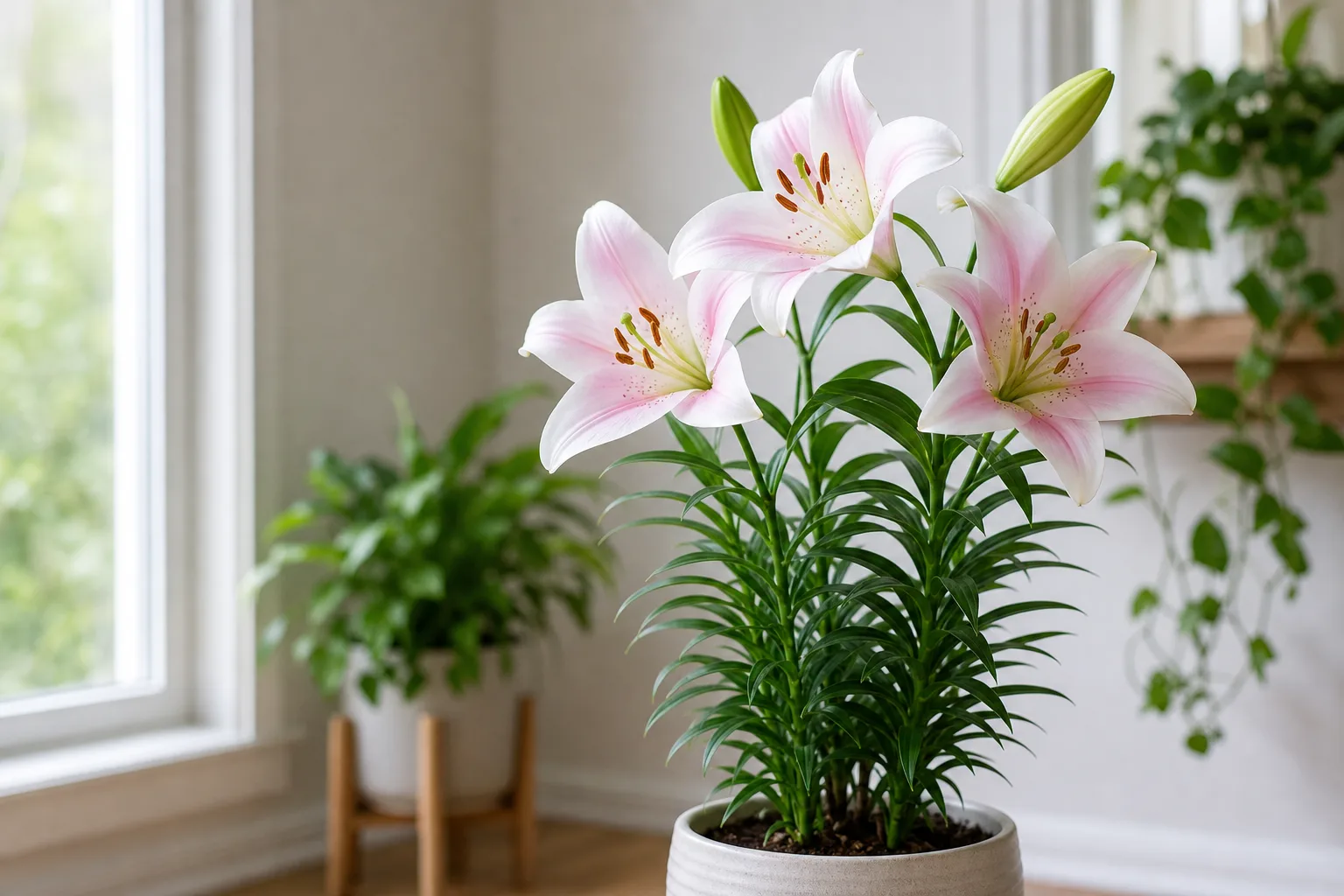
Lily Care: Growing True Lilies (Lilium)
Start with wateringThe most common care mistake for LilyWatering guide →Lily care essentials
Light
Full sun or light shade, with the root zone kept cool
Water
Keep soil evenly moist while shoots grow and flowers form, but never saturated. Water at soil level when rainfall is not keeping the root zone lightly moist. Bulbs can rot in persistently wet soil, while prolonged dryness stresses active growth.
Soil
Use fertile, humus-rich soil that holds some moisture but drains freely. Heavy, waterlogged soil can rot lily bulbs. In containers, choose a deep pot and free-draining compost suited to the lily group.
Humidity
Temperature
Fertilizer
About Lily
Lily is native to Temperate regions of North America, Europe, and Asia; species ranges vary, typically reaches About 30 cm to 2.5 m tall; spread varies by species and cultivar indoors, with seasonal spring and summer growth from perennial bulbs growth. Lily has a bulbous herbaceous perennial growth habit and part of the Liliaceae family. It is also known as True lily, Garden lily, Asiatic lily, Oriental lily, and Easter lily.
| Detail | Information |
|---|---|
| Also known as | True lily, Garden lily, Asiatic lily, Oriental lily, Easter lily |
| Native region | Temperate regions of North America, Europe, and Asia; species ranges vary |
| Mature size | About 30 cm to 2.5 m tall; spread varies by species and cultivar |
| Growth rate | Seasonal spring and summer growth from perennial bulbs |
| Growth habit | Bulbous Herbaceous Perennial |
| Scientific name | Lilium spp. |
| Family | Liliaceae |
How to care for Lily?
How much light does Lily need?
Full sun or light shade, with the root zone kept cool. Partial shade. Dappled shade for woodland groups such as Martagon lilies. direct sun
- Full sun or light shade, with the root zone kept cool - Full sun or light shade, with the root zone kept cool.
- Partial shade - Partial shade.
- Dappled shade for woodland groups such as Martagon lilies - Dappled shade for woodland groups such as Martagon lilies.
- direct sun - direct sun.
When should you water Lily?
Keep soil evenly moist while shoots grow and flowers form, but never saturated. Water at soil level when rainfall is not keeping the root zone lightly moist. Bulbs can rot in persistently wet soil, while prolonged dryness stresses active growth.
- Feel the soil around the root zone a few centimeters below the surface. If it is starting to dry during active growth - Bulbs can rot in persistently wet soil, while prolonged dryness stresses active growth.
- water deeply and empty any pot saucer so the bulb does not sit in water - Water at soil level when rainfall is not keeping the root zone lightly moist.
- Drain excess water - Water at soil level when rainfall is not keeping the root zone lightly moist.
What soil works best for Lily?
Use fertile, humus-rich soil that holds some moisture but drains freely. Heavy, waterlogged soil can rot lily bulbs. In containers, choose a deep pot and free-draining compost suited to the lily group.
- For beds
- improve structure with organic matter and keep the bulb zone free-draining - In containers, choose a deep pot and free-draining compost suited to the lily group.
- For pots
- use a deep container with peat-free multipurpose compost - In containers, choose a deep pot and free-draining compost suited to the lily group.
- choose ericaceous compost for Oriental lilies where needed - In containers, choose a deep pot and free-draining compost suited to the lily group.
- Apply an organic mulch to keep roots cooler without trapping water around the bulb. - Heavy, waterlogged soil can rot lily bulbs.
Grower notes for Lily
Check the botanical name before buying
This hub covers true lilies in the genus Lilium. Daylilies (Hemerocallis), peace lilies (Spathiphyllum), lily-of-the-valley (Convallaria), and Peruvian lilies (Alstroemeria) are different plants with different care and toxicity profiles. Use the botanical label when choosing a plant or checking safety advice.
Match soil to the lily group
There is no single soil pH for every lily. Oriental lilies prefer acidic soil, while Asiatic hybrids do better in alkaline conditions; trumpet and longiflorum groups tolerate a wider range. Check the bulb label instead of changing the whole bed to suit one group.
Give flowers sun and keep roots cool
Most lilies flower best in sun or light shade, but their roots benefit from cool soil. Plant with low companions or apply a light organic mulch. Woodland types such as Martagon lilies can suit dappled shade; deep shade is a poor choice for most garden lilies.
Plant bulbs deeply in free-draining soil
Follow instructions for the variety. Gardeners' World gives a general guide of planting bulbs at about three times their height and recommends deep containers. Good drainage matters because standing water can rot bulbs.
Leave green foliage after flowering
Deadhead spent flowers if you do not want seed, but keep green stems and leaves until they yellow and die back naturally. The foliage replenishes the bulb for next year's growth. Tall varieties may need a support before their flower heads become heavy.
Keep true lilies away from cats
ASPCA Poison Control identifies Lilium lilies as a serious hazard to cats: pollen, flowers, leaves, bulbs, and even vase water can be dangerous. Choose another cut flower for a home with cats. Dog and horse classifications are less consistent across the sources reviewed here, so keep bulbs and flowers out of their reach as well.
Are true lilies safe around pets?
True lilies (Lilium spp.) are highly dangerous to cats. ASPCA Poison Control says all parts, including pollen and vase water, can cause severe kidney injury. ASPCA also reports possible toxicity to dogs, while NC State lists Lilium as non-toxic to dogs and horses; those classifications conflict. Keep lilies and bulbs away from pets, and seek veterinary advice after possible ingestion.
This profile covers Lilium only. ASPCA Poison Control identifies Lilium spp. including Asiatic, Easter, Stargazer, and Oriental lilies as toxic to cats; all plant parts, pollen, and vase water can cause severe kidney injury, even after small exposures. ASPCA also says lilies may be toxic to dogs, although effects are much more severe in cats. NC State's Plant Toolbox tags Lilium as non-toxic to dogs and horses, so the dog and horse classifications are marked for review rather than presented as settled. RHS notes that lily bulbs may pose a risk to pets generally. Keep bulbs and flowers inaccessible; if a cat may have contacted a lily, contact a veterinarian or poison-control service urgently. Do not apply these claims to daylilies, peace lilies, lily-of-the-valley, or Peruvian lilies.
Watering Lily
For Lily, feel the soil around the root zone a few centimeters below the surface. If it is starting to dry during active growth, water deeply and empty any pot saucer so the bulb does not sit in water. and water check the soil rather than following a fixed schedule. Beds may need little extra water in rainy weather; containers dry faster and need more checks in warm spells. Water thoroughly when the upper layer starts to dry, then let excess water drain. Maintain steady moisture from shoot emergence through flowering, adjusting for rainfall and container conditions. After flowering, reduce supplemental water as the foliage yellows and dies back; keep dormant bulbs out of waterlogged soil.
| Detail | Information |
|---|---|
| How often | Check the soil rather than following a fixed schedule. Beds may need little extra water in rainy weather; containers dry faster and need more checks in warm spells. Water thoroughly when the upper layer starts to dry, then let excess water drain. |
| How to check | Feel the soil around the root zone a few centimeters below the surface. If it is starting to dry during active growth, water deeply and empty any pot saucer so the bulb does not sit in water. |
| Seasonal changes | Maintain steady moisture from shoot emergence through flowering, adjusting for rainfall and container conditions. After flowering, reduce supplemental water as the foliage yellows and dies back; keep dormant bulbs out of waterlogged soil. |
Signs of overwatering
- Soil remains saturated or water pools around the plant after rain.
- Leaves or stems decline while the soil is still wet.
- Bulbs soften or rot in a heavy, poorly drained bed or pot.
Signs of underwatering
- Soil around actively growing lilies dries out completely for long periods.
- Leaves wilt during a dry spell and flowering growth stalls.
- Container mix dries much faster than the surrounding garden soil.
Soil & potting for Lily
Use a mix of For beds, improve structure with organic matter and keep the bulb zone free-draining., For pots, use a deep container with peat-free multipurpose compost; choose ericaceous compost for Oriental lilies where needed., Apply an organic mulch to keep roots cooler without trapping water around the bulb. for Lily. Free drainage is essential. Avoid compacted clay and places where rainwater stands; a deep container is useful where garden drainage is poor. Target soil pH around Soil preference varies by group: Oriental lilies prefer acidic soil, while Asiatic hybrids prefer or tolerate alkaline conditions. Many other garden lilies grow in neutral to slightly acidic soil, so check the cultivar label. Repot divide and replant crowded container lilies when flowering declines or bulbs fill the pot, often after three or four years., ideally in replant or divide bulbs in autumn after foliage dies back, or in spring when bulbs are available. Plant newly purchased bulbs promptly so they do not dry out.
| Detail | Information |
|---|---|
| Recommended mix | For beds, improve structure with organic matter and keep the bulb zone free-draining., For pots, use a deep container with peat-free multipurpose compost; choose ericaceous compost for Oriental lilies where needed., Apply an organic mulch to keep roots cooler without trapping water around the bulb. |
| Drainage | Free drainage is essential. Avoid compacted clay and places where rainwater stands; a deep container is useful where garden drainage is poor. |
| Soil pH | Soil preference varies by group: Oriental lilies prefer acidic soil, while Asiatic hybrids prefer or tolerate alkaline conditions. Many other garden lilies grow in neutral to slightly acidic soil, so check the cultivar label. |
| Repotting frequency | Divide and replant crowded container lilies when flowering declines or bulbs fill the pot, often after three or four years. |
| Best season to repot | Replant or divide bulbs in autumn after foliage dies back, or in spring when bulbs are available. Plant newly purchased bulbs promptly so they do not dry out. |
Signs it needs repotting
- Several shoots are crowded together and the bulbs have filled the pot.
- Flowering becomes weaker as the container clump becomes congested.
- Bulbs press against the pot wall or the mix no longer drains freely.