How to Grow and Care for Fire Lily (Clivia) Plants
Learn fire lily care for Clivia: choose filtered light, water safely, plan a frost-free winter rest, and troubleshoot missing blooms and short stalks.
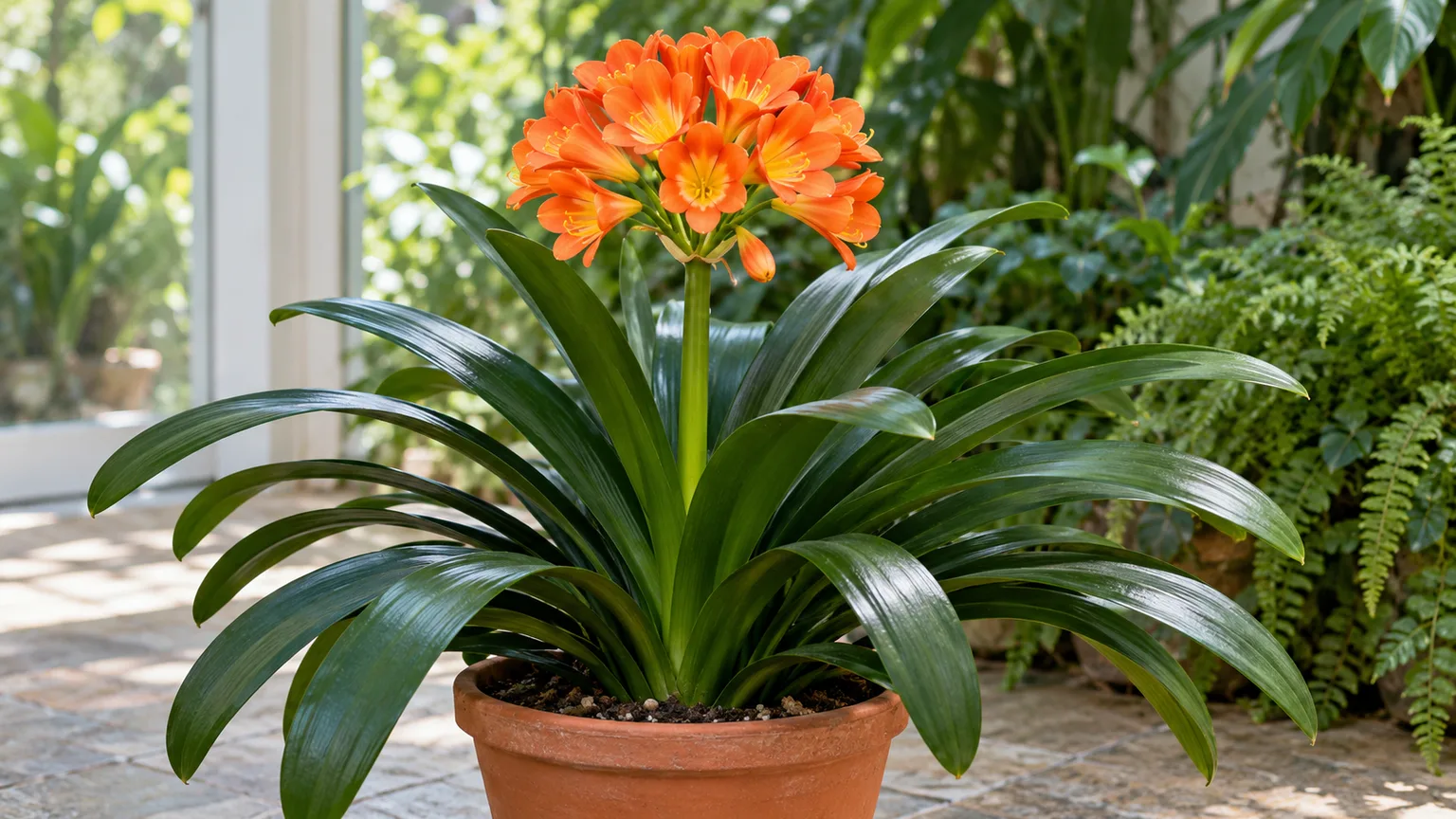
Clivia is a patient grower: it can keep glossy leaves for years while a warm, comfortable room quietly prevents it from flowering. The most useful adjustment is usually seasonal, not a stronger fertilizer or a bigger pot. Give Clivia miniata bright filtered light while it grows, let its mix drain freely, then provide a cool, drier winter rest without exposing the roots to freezing temperatures.
Fire lily care at a glance
| Need | Practical starting point |
|---|---|
| Light | Bright, indirect light indoors; dappled shade outside |
| Active-season temperature | Ordinary warm room conditions; protect from hot sun and cold drafts |
| Winter rest | About six to eight weeks in a cool, frost-free place near 50°F (10°C), with much less water |
| Water | Soak thoroughly in active growth, then let the mix dry partly before watering again |
| Soil | Airy, organic, fast-draining potting mix in a pot with drainage |
| Fertilizer | Diluted balanced feed during active growth; none during the cool rest |
| Repotting | Infrequent; wait for crowded roots, declining mix, or poor drainage |
| Propagation | Divide a sizeable, rooted offset after flowering; seed takes much longer |
These are starting conditions, not a calendar to follow regardless of your room. A small pot in warm, bright air dries faster than a large pot on a cool shelf, so check the mix and the plant before watering. Flowering also depends on age and previous-season growth; a healthy young division may need time before it is mature enough to bloom.
Identify the plant and its common names
“Fire lily” usually refers to Clivia miniata, an evergreen South African plant in the amaryllis family, Amaryllidaceae. It is not a true lily and does not grow from a typical tunicate bulb; its thick, fleshy roots and short underground base support a fan of broad strap-shaped leaves. Mature plants send up a sturdy stalk topped by a rounded cluster, or umbel, of trumpet-like flowers, most often orange with yellow throats.
The name on a nursery tag can vary: bush lily and Natal lily are also used, while “fire lily” can be applied to unrelated plants in some catalogs. Check for the botanical name Clivia miniata before following care advice, especially if a seller’s “lily” turns out to have a different growth habit. Most household advice here is for C. miniata; less common Clivia species and hybrids can differ somewhat in flower shape and seasonal response.
Clivia earns its reputation as a foliage plant even when it is not in bloom. A mature clump can become broad and heavy, and it is slower to respond to a change than a fast-growing tropical houseplant. Keeping its position, watering, and seasonal routine steady is usually more effective than repeatedly moving it or disturbing its root system.
Choose indoor or outdoor growing
In a cool or frost-prone climate, a container is the simplest way to grow fire lily. It can spend warm months outdoors in a sheltered, shaded spot, then move back inside before nights become cold. Acclimate it over several days to outdoor light and air; a sudden move from a room to a bright patio can scorch leaves even when the outdoor bed looks shaded.
In a genuinely frost-free subtropical garden, clivia can grow as a landscape perennial beneath trees or along a protected wall. Choose a site with loose, organic soil that drains after rain, and avoid low spots that stay wet through winter. Hardiness listings vary among horticultural references and depend on exposure, drainage, and how long the cold lasts, so treat a forecast frost as a reason to protect or move a container plant rather than testing its limit.
Outdoor summering is optional, not a requirement for flowers. If your home has a bright shaded window and you can provide a cool winter rest, the plant can remain indoors year-round. Bring outdoor plants inside before frost and check the leaf bases for pests before placing them near other houseplants.
Choose bright, filtered light
Aim for a bright room where sun is softened by distance, a sheer curtain, or a roof overhang. A north- or east-facing window is often an easy starting point; a west or south exposure can work if the plant sits back from intense afternoon rays. Wisconsin Extension describes bright diffused light as a dependable indoor placement, and the RHS also recommends protecting clivias from direct summer sun. (UW–Madison Extension; RHS growing guide)
Clivia tolerates lower light better than many flowering plants, but tolerance is not the same as bloom-ready light. In deep shade it may keep its leaves yet fail to build enough energy for flower buds. If a plant has grown indoors in dim conditions, move it gradually toward brighter filtered light over a week or two rather than putting it straight into direct sun.
Pale, bleached patches or dry brown areas on the window-facing side usually point to sun scorch, especially after a seasonal move. Shift the plant out of the harsh beam and keep healthy green leaves; they continue to support next year’s flowering. Do not cut off a mostly green leaf simply because it has one damaged patch.
Follow its seasonal temperature rhythm
During active growth, normal indoor temperatures are usually suitable. Keep the pot away from heater outlets, air-conditioning vents, and cold glass where the temperature can swing sharply. Stable warmth helps leaves and roots grow; the cooler period is a separate seasonal signal rather than a year-round temperature preference.
A Clivia’s flowering cycle is easiest to manage by season, not by a universal month. In the Northern Hemisphere, growers often provide the rest in fall or early winter, then return the plant to brighter, warmer conditions as the flower stalk begins to rise. Reverse those months in the Southern Hemisphere, and let local seasons—not a printed calendar—guide the sequence.
Give it a cool rest without risking the roots
For a practical home routine, place the plant in a bright, frost-free room around 50°F (10°C) for roughly six to eight weeks, and reduce watering sharply. The RHS recommends a cool winter position near 10°C, while the New York Botanical Garden and Wisconsin Extension describe colder rest windows, generally below 50°F but above freezing, paired with very limited water. The sources differ on the lower threshold, so there is no reason to chase near-freezing conditions in an ordinary home. (RHS growing guide; NYBG Clivia guide; UW–Madison Extension)
The critical combination is coolness and less moisture, not placing the plant in darkness or letting its roots sit in cold, wet compost. Stop feeding during this rest. Check the pot occasionally: a little leaf softening is less concerning than a saturated mix, but do not let the root ball become so dry that leaves shrivel severely. A bright enclosed porch, cool hallway, or spare room may work if it stays above freezing overnight.
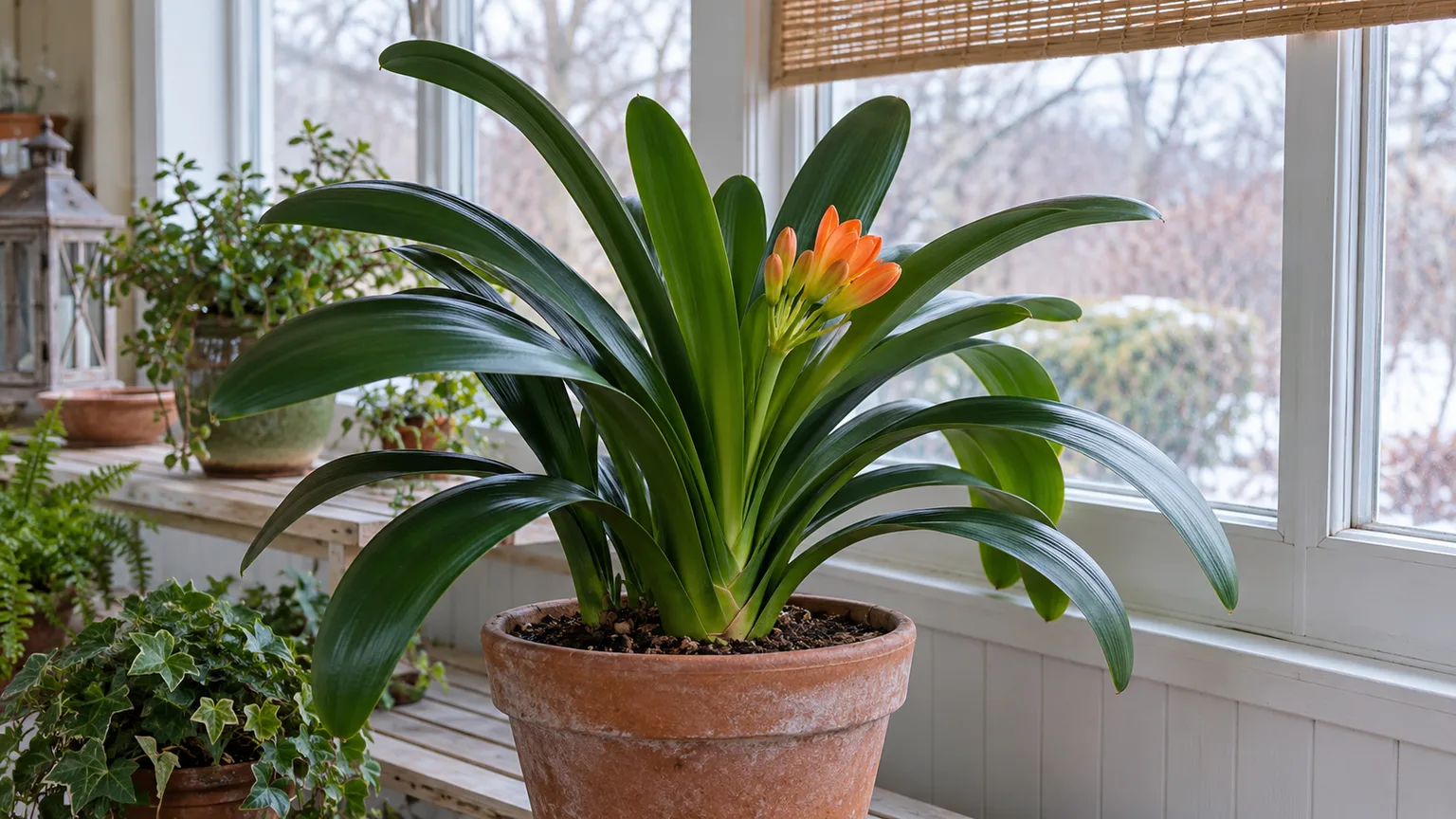
When the rest period is over, return the Clivia to warmer room conditions gradually and resume watering in measured steps. Once a flower stalk appears, give it bright filtered light and enough water to support the buds, allowing excess to drain. If you cannot provide a cool spot, keep the plant healthy rather than chilling it unsafely; it may still grow attractive foliage even if flowering is sparse or irregular.
Water by pot condition
During spring and summer growth, water thoroughly until excess runs from the drainage holes, then empty the saucer or cachepot. Wait until the upper part of the mix has dried before watering again; do not interpret that as a command to let the whole root ball become bone-dry each time. Thick roots store some water, but they still need air around them and can rot in a pot that remains saturated.
A fixed weekly schedule is unreliable because temperature, pot size, mix, and light all change how quickly a container dries. Lift the pot after watering to learn its full weight, then lift it again as the mix dries; combine that cue with a finger check near the top. If the plant is in cool rest, water sparingly and only enough to keep the roots from becoming severely desiccated.
Avoid repeatedly pouring water into the tight center of the leaf fan, where moisture can linger. If the plant lives outdoors, shelter it from prolonged heavy rain and never leave the pot standing in runoff. Yellow lower leaves paired with soggy soil, a sour odor, or soft roots point toward too much water or poor drainage; adding fertilizer will not correct that problem.
Use an airy mix and a snug pot
Choose a potting medium that holds some moisture but drains quickly after a deep watering. A good starting blend is quality houseplant mix amended with fine orchid bark and perlite or pumice; adjust the proportions if the mix stays wet for days in your home. The goal is open structure around the fleshy roots, not a particular branded recipe or a dry, gritty medium that forces constant watering.
Use a container with an unobstructed drainage hole and enough weight to support a wide leaf fan. A clay pot can dry faster and help stabilize a large plant, but it is not essential if you water carefully. Do not add a gravel layer to “improve drainage”; the drainage comes from a free hole and an airy mix throughout the root zone.
Clivia usually flowers well when its roots are somewhat crowded, so resist the urge to move it to a larger pot just because it looks top-heavy. A pot that is far wider than the root mass contains extra wet mix that can dry slowly and encourage root problems. A saucer is fine for catching water as long as you empty it after the pot has drained.
Feed modestly during active growth
Clivia does not need a bloom-booster formula to make flowers. After the cool rest, use a balanced houseplant fertilizer at a conservative dilution while the plant is actively growing, following the product label and stopping when the plant returns to cool rest. Wisconsin Extension suggests monthly feeding at half strength; the RHS describes more frequent spring feeding, so a modest monthly schedule is a reasonable starting point for a container in an average home. (UW–Madison Extension; RHS growing guide)
If you already fertilize regularly, do not increase the amount in response to a missing flower. Excess salts can burn leaf tips and stress the roots, while extra nitrogen can favor foliage over the seasonal flowering cycle. If you see a white crust on the mix or recurring brown tips after feeding, pause fertilizer and flush the pot thoroughly with water that drains freely; resume at a lower label rate only after active growth returns.
Get a mature Clivia to flower
Start with the factors in the order the plant uses them: maturity, enough filtered light, and a cool, drier rest. A seedling or small offset may produce leaves for years before it is large enough to flower, so do not treat a young plant’s first missed bloom as a care failure. A mature plant can also skip or delay flowering after a recent division, root damage, or a major shift in its growing conditions.
A simple annual sequence makes the process easier to repeat:
- Spring and summer: keep it in bright filtered light, water when the mix partly dries, and feed modestly during growth.
- Fall or early winter: stop feeding and move it to a cool, frost-free place.
- Rest period: keep the mix much drier for about six to eight weeks.
- Return to growth: warm it gradually, increase water as a stalk develops, and keep it in bright indirect light.
This sequence reflects institutional guidance from the RHS, Wisconsin Extension, and NYBG; practical Clivia coverage from Gardening Flow and The Garden Helper also emphasizes a cool, reduced-water period and restraint with repotting. (Gardening Flow’s Clivia guide; The Garden Helper’s Clivia notes)
Do not divide, repot, or heavily prune the plant just before its rest period if the main goal is flowers that season. Those jobs can interrupt the cycle and put recovery ahead of bloom production. If the plant is healthy but does not flower after a season, change one condition at a time—usually light or the rest period—so you can tell what helped.
Fix buds or a short flower stalk
When buds appear low among the leaves instead of rising on a visible stalk, first review the previous six to eight weeks. A rest that stayed too warm or too wet is a common explanation in NYBG’s growing guidance, but inadequate light, a recent disturbance, and plant maturity can also affect the result. (NYBG Clivia guide)
If a stalk has already started, do not move the plant from cool to hot conditions overnight or force it with extra fertilizer. Bring it gradually to ordinary room temperature, keep the light bright but filtered, and water as the mix begins to dry rather than keeping it soggy. The current stalk may remain short; the useful correction is to improve the following cycle, not to keep changing conditions while the buds are developing.
Care for Clivia after flowering
Once the flowers have faded, cut the stalk near its base with a clean tool unless you want to try for seed. Removing it prevents the plant from putting effort into fruit and seeds, while leaving the green leaves intact allows them to replenish the roots. Wear gloves when cutting and wash the tool afterward because Clivia is poisonous if eaten. (RHS growing guide; UW–Madison Extension)
As growth resumes, return to the active-season watering and modest feeding routine. This is also the best time to decide whether the plant genuinely needs repotting or has a large, well-rooted offset worth dividing. If neither is necessary, leave the root ball alone; flowering tends to reward steady care and a settled container.
You can move a potted Clivia outdoors for summer where temperatures are warm, but harden it off first. Start in deep shade, then keep it in dappled light protected from midday and afternoon sun. Bring it back inside before cold nights or frost, and inspect under the leaves and at the base for mealybugs before it rejoins indoor plants.
Repot only when it earns a new pot
Repot when roots are densely circling or pushing through drainage holes, when the plant is being forced upward from the pot, or when old mix has compacted and no longer drains reliably. Roots filling the pot alone are not an emergency: Clivia is slow growing and often blooms better when somewhat root-bound. RHS and NYBG both recommend infrequent repotting and moving up only slightly in size. (RHS growing guide; NYBG Clivia guide)
If a move is needed, do it after flowering or as new growth begins in spring. Choose a pot just one size larger, preserve as much of the fleshy root mass as possible, and settle the plant at its former depth in fresh airy mix. A pot too large for the roots stays wet longer, while rough handling can set back the next bloom cycle.
After repotting, water enough to settle the medium and let it drain fully. Keep the plant in stable filtered light while it recovers; there is no benefit to placing it in cool rest immediately after root disturbance. If it is root-bound but still growing well and the mix drains, waiting another season is often kinder than repotting on schedule.
Divide mature offsets
Division is the fastest way to make another plant that resembles the parent. Wait until an offset has several leaves—about three or four is a useful cue—and its own roots, then separate it after the parent has flowered. Wisconsin Extension and the RHS both describe rooted offsets as the practical route; a tiny shoot without roots is more likely to stall than a well-developed division. (UW–Madison Extension; RHS growing guide)
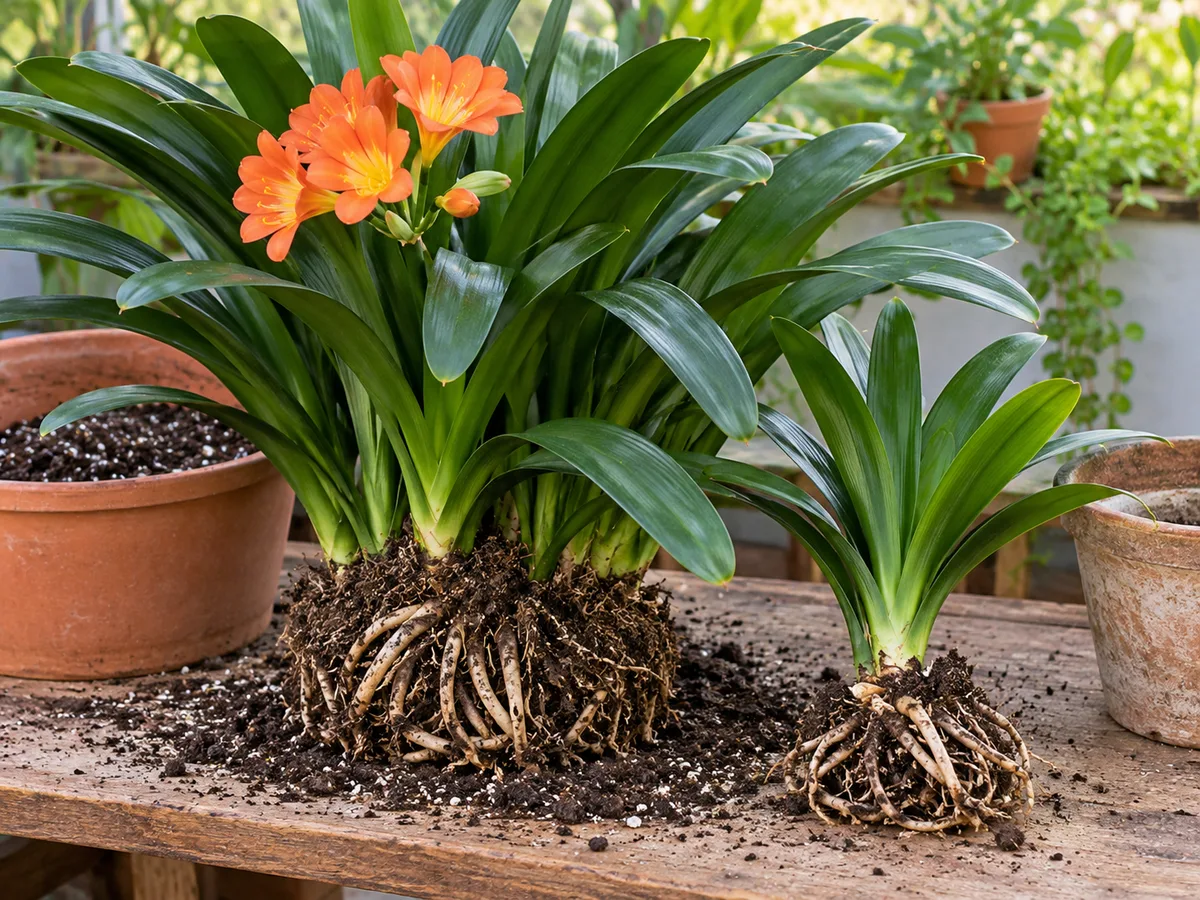
Wear gloves and work on a surface that can be cleaned. Ease the plant from its pot, identify a natural join, and use a clean sharp knife only if the offset does not separate with gentle pressure. Keep a generous share of roots with each division, set it in a small pot sized to those roots, and keep the leaf fan above the mix rather than burying the crown.
Water lightly after planting, then allow the medium to partly dry before watering again. Keep the new plant warm and in bright indirect light while roots re-establish; do not put it into the cool rest until it is growing steadily. An offset can take more than one season to reach flowering size, and separating it may delay the parent’s next bloom, so divide only when you want another plant or the clump is genuinely crowded.
Grow Clivia from seed
Seed is a patient project, not a shortcut to a flowering plant. A flower must be pollinated before it forms viable seed; indoors, you may need to transfer pollen between flowers with a small clean brush. After pollination, berries can take many months to ripen, and seedlings may take several years to reach flowering size. Wisconsin Extension estimates three to five years to the first bloom, with longer possible depending on the plant. (UW–Madison Extension)
Sow fresh ripe seed in a warm, lightly moist, free-draining medium and keep it in bright indirect light. Do not let the seed tray become waterlogged, and do not disturb a seedling simply because the first root grows slowly. Seed-grown plants may differ from the parent, particularly if it is a named hybrid, so choose division when you want a faster, more predictable copy.
If the stalk produces a berry and you are not planning to raise seedlings, remove the spent stalk after flowering. That lets the established plant return to leaf and root growth rather than carry fruit for months. Keep berries and all other plant material away from children and animals because Clivia is not edible.
Troubleshoot leaves, roots, and pests
A Clivia that looks unwell often gives a clue in both its foliage and the potting mix. Check moisture and drainage before applying fertilizer or changing several conditions at once. A yellow leaf by itself can be normal aging; a yellowing pattern combined with soft roots, a sour smell, or persistently wet mix points to a more urgent root problem.
Read yellowing and brown patches correctly
Bleached or dry brown patches on the side facing a window are consistent with sun scorch. Move the plant to filtered light and keep the remaining green leaf tissue; scorched areas will not turn green again, but healthy leaves still support future growth. Brown tips are less specific and can follow drought, root crowding, excess fertilizer salts, or hot dry air, so check the mix and recent care before changing humidity or feeding.
If lower leaves yellow while the medium stays wet, stop routine watering and check whether water can escape the pot. If the base is soft or the roots are mushy, remove the plant from standing water and trim only clearly rotten tissue with a clean tool; repot into a fresh, airy mix if necessary. Do not pour on fertilizer or keep the plant in cool damp conditions while the root system is compromised.
Mealybugs can hide where the strap leaves overlap, so look into the center of the fan and around the lower leaf bases rather than inspecting only the leaf surfaces. Isolate an infested pot, remove visible insects with a damp cloth or a directed rinse, and recheck the tight spaces over the following weeks. A single pass may miss insects protected in the crown.
If the plant has spent summer outside, inspect it before bringing it near a collection of houseplants. Avoid letting rinse water pool in the leaf fan, and dry the plant in a bright, airy place. For a heavy infestation or any pesticide use, follow the product label and seek locally appropriate guidance; the practical first step is isolation and careful repeat inspection.
Fire lily toxicity and safe handling
The ASPCA lists Clivia Lily as toxic to cats and dogs and identifies lycorine and other alkaloids as the toxic principles. Wisconsin Extension also describes Clivia as poisonous, so treat the whole plant—including leaves, roots, flowers, and berries—as inedible, and place it where curious children and animals cannot chew it. (ASPCA Animal Poison Control; UW–Madison Extension)
Wear gloves when dividing, repotting, or cutting the flower stalk, then wash your hands and tools. Gloves are a sensible handling precaution, but they do not make ingestion safe; do not use any part of the plant as food or a home remedy. If a pet chews Clivia, contact a veterinarian or the ASPCA Animal Poison Control promptly; for a person who swallows any part, contact a local poison center or medical professional for advice.
Conclusion
Grow fire lily in bright filtered light, let the pot drain, and avoid moving it to a much larger container without a reason. For dependable flowers, give a mature, healthy Clivia a cool, frost-free rest with sharply reduced watering, then return it gradually to active growth. If it still skips a bloom, check the previous season’s light, maturity, and rest before feeding harder or disturbing the roots.



