Fiddle Leaf Fig Brown Spots: Causes and Fixes
Diagnose fiddle leaf fig brown spots by their texture, location, and spread. Learn when to check roots, adjust watering, isolate, or prune.
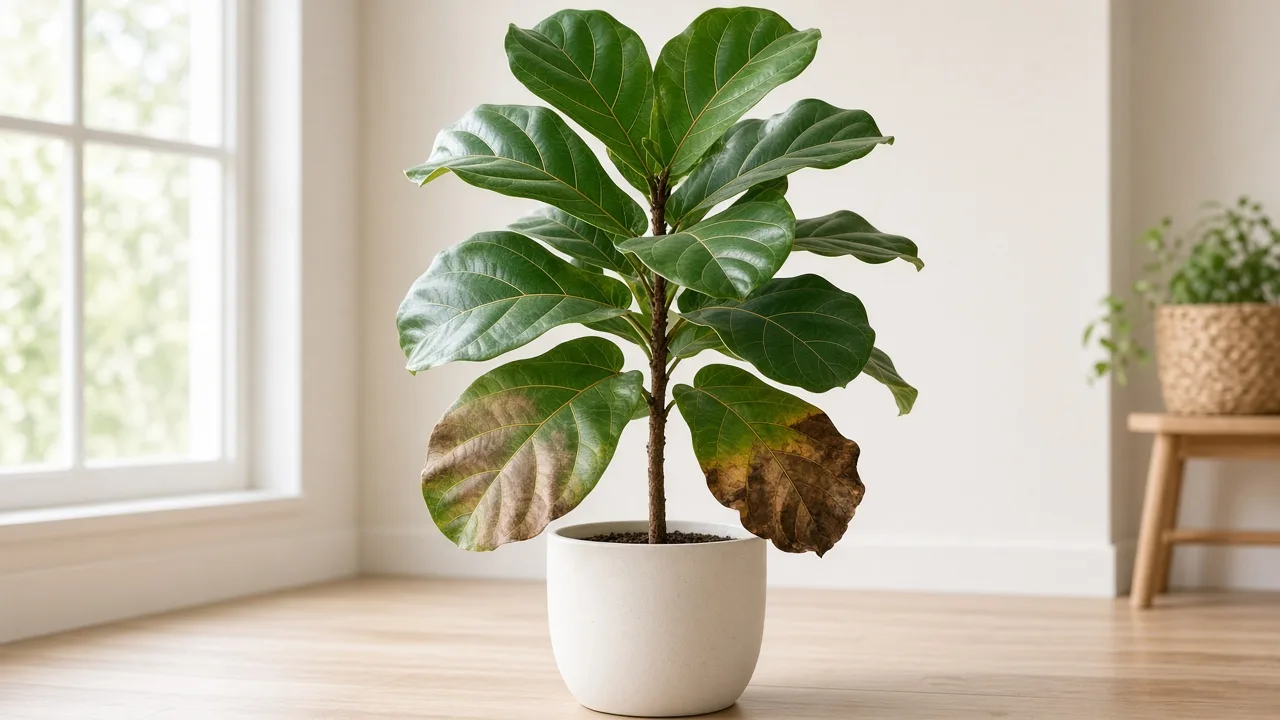
Brown spots on a fiddle leaf fig are a symptom, not a diagnosis. A dry tan patch that faces a sunny window calls for a different response from a soft, spreading mark on a plant sitting in wet soil, and raised pinprick bumps under a new leaf may not be a disease at all.
Start with four clues: where the damage is, whether it feels dry or soft, whether it is spreading, and how wet the root zone is. Check both sides of several leaves before changing the watering routine. That short inspection can keep you from watering a plant with damaged roots or disturbing a plant whose spots are only cosmetic.
Quick diagnosis: match the pattern before acting
| What you notice | More likely explanation | Check first |
|---|---|---|
| Brown or black patches with soft, yellowing leaves; mix stays wet | Overwatering or root trouble | Moisture below the surface, drainage, and root condition |
| Dry, papery edges that move inward; pot is very light | Underwatering or a dry root ball | Whether water reaches the full root mass |
| Bleached or tan, crisp patch on the window-facing side | Sun or heat scorch | Recent move, stronger sun, or grow-light distance |
| Small raised, corky marks mainly underneath leaves | Edema (oedema) | Recent wet soil, cool conditions, and low airflow |
| Discrete dark spots with yellow margins that keep appearing | Possible leaf-spot disease | Spread to new leaves, wet foliage, crowding, and airflow |
| Fine pale stippling, webbing, sticky residue, or visible insects | Pest damage | Leaf undersides, stem joints, and nearby plants |
| Damage appeared after a cold night or a temperature change | Cold or draft stress | Window glass, air-conditioning, and heating vents |
These patterns are useful clues, not guarantees. Several problems can overlap: a plant in dim light uses water slowly, so a weekly watering habit can leave the mix wet; weak roots can then produce leaves that look thirsty even though the pot is damp. Guidance from the Royal Horticultural Society on houseplant leaf damage likewise treats location and growing conditions as part of the diagnosis, rather than relying on brown color alone.
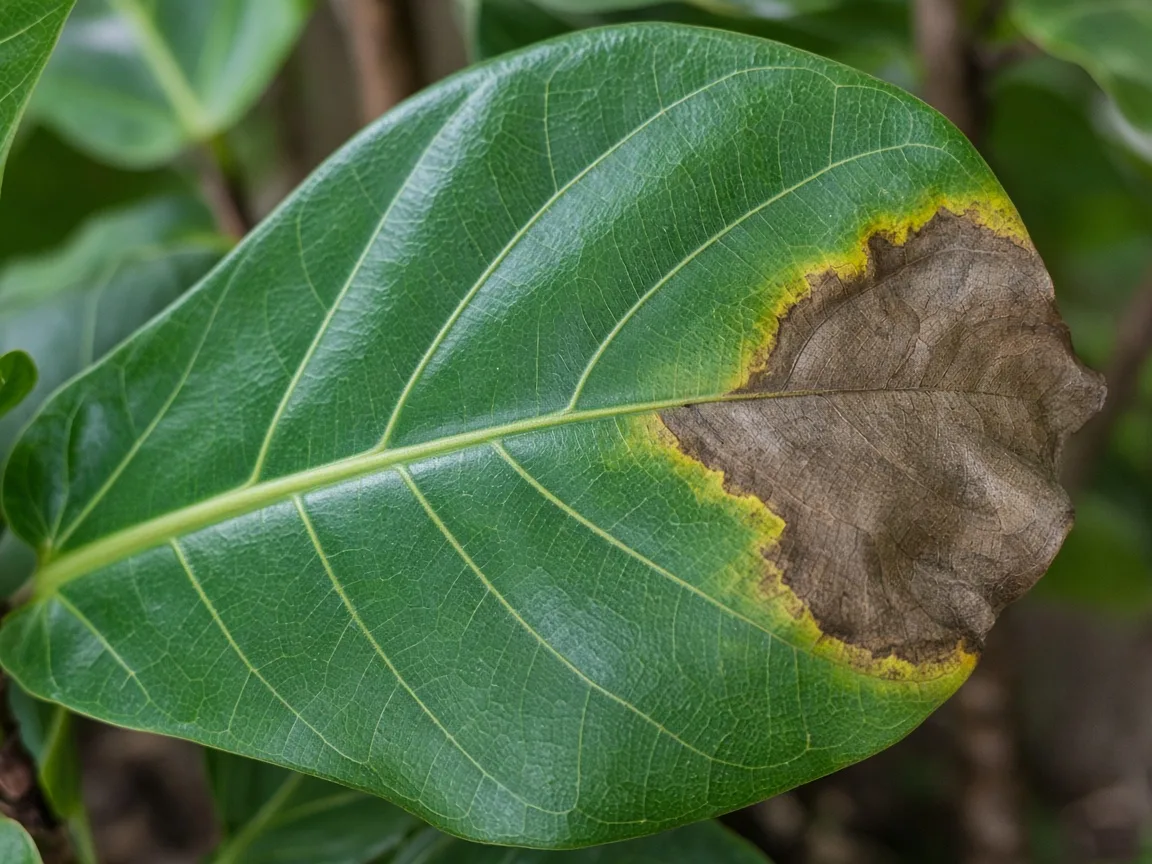
Brown, dry tissue is permanent; the edge and the condition of the rest of the plant help narrow the cause.
How location, texture, and spread narrow the cause
Brown spots do not have a universal map. Middle-of-leaf blotches can accompany persistently wet roots, while brown margins can follow drought, root damage, dry air, or salt buildup. A spot’s texture and progression matter more than a rigid rule about where a particular cause must appear.
Touch the damaged area gently. A dry, brittle edge is different from tissue that feels soft or water-soaked. Then inspect the underside: raised corky marks suggest a physiological water-balance problem, while fine stippling or silk-like threads point toward mites. Look at the whole plant, not only the worst leaf, and note whether the newest leaves are clean.
Which leaves are affected?
A few older lower leaves can age out naturally, especially if the rest of the plant is stable and the change is gradual. Several leaves yellowing or spotting in a short period, marks reaching new growth, or repeated leaf drop deserves a closer check. If only the side facing a window is damaged, think about exposure; if the symptoms are scattered across leaves at different heights, inspect for pests, wet foliage, and root stress.
Take a photo today and another in a week from the same angle. Marking which leaves already had spots separates old damage from new spread. A single snapshot can’t show whether the plant is improving, and old brown areas will not disappear even after the cause is fixed.
Excess moisture and root damage
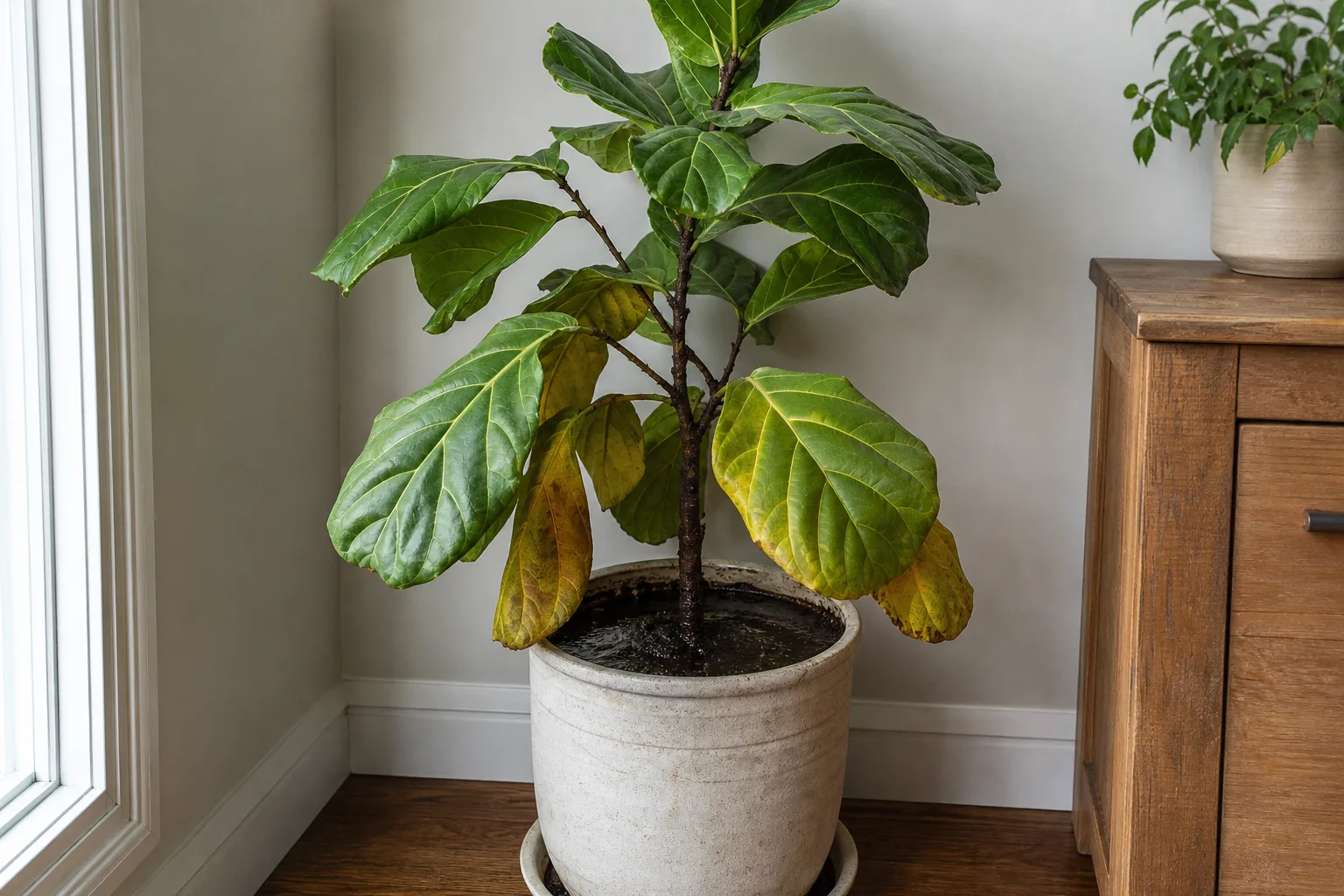
Fiddle leaf figs are sensitive to waterlogged conditions. When potting mix stays saturated, roots have less air available and may stop functioning well; advanced damage can lead to rot. Leaves may develop dark or brown patches, yellowing, or drop, but none of those leaf symptoms proves root rot by itself. Check the pot and soil history before reaching for a larger container.
Feel the mix a few centimeters below the surface and compare the pot’s weight with how it feels after it dries. Check that the drainage hole is open and that the inner pot is not standing in water inside a decorative cachepot. If the soil remains wet for many days, especially in a cool or dim room, pause watering and review drainage, pot size, and light. North Carolina State Extension notes that fiddle leaf figs are sensitive to overwatering and need well-drained conditions in its Ficus lyrata profile.
When to inspect the roots
Unpotting is reasonable when the mix has stayed wet, the pot smells sour, drainage is blocked, or several leaves are yellowing or dropping while the root ball remains damp. It is not the first move for one old, dry spot on a plant whose soil drains and dries normally. Root inspection can stress a fiddle leaf fig, so use it when the evidence suggests a problem below the soil line.
Slide the root ball out carefully and look at several roots rather than judging by soil color alone. Healthy roots are generally firm and pale to tan; rotten roots tend to be dark, soft, and may smell unpleasant. The House Beautiful houseplant recovery guide also recommends using root appearance alongside foliage to assess plant health. If you confirm decay, trim only mushy roots with clean shears, remove loose saturated mix, and repot into a clean pot with drainage and fresh, airy medium. Do not automatically move into a much larger pot: extra unused soil can stay wet longer.
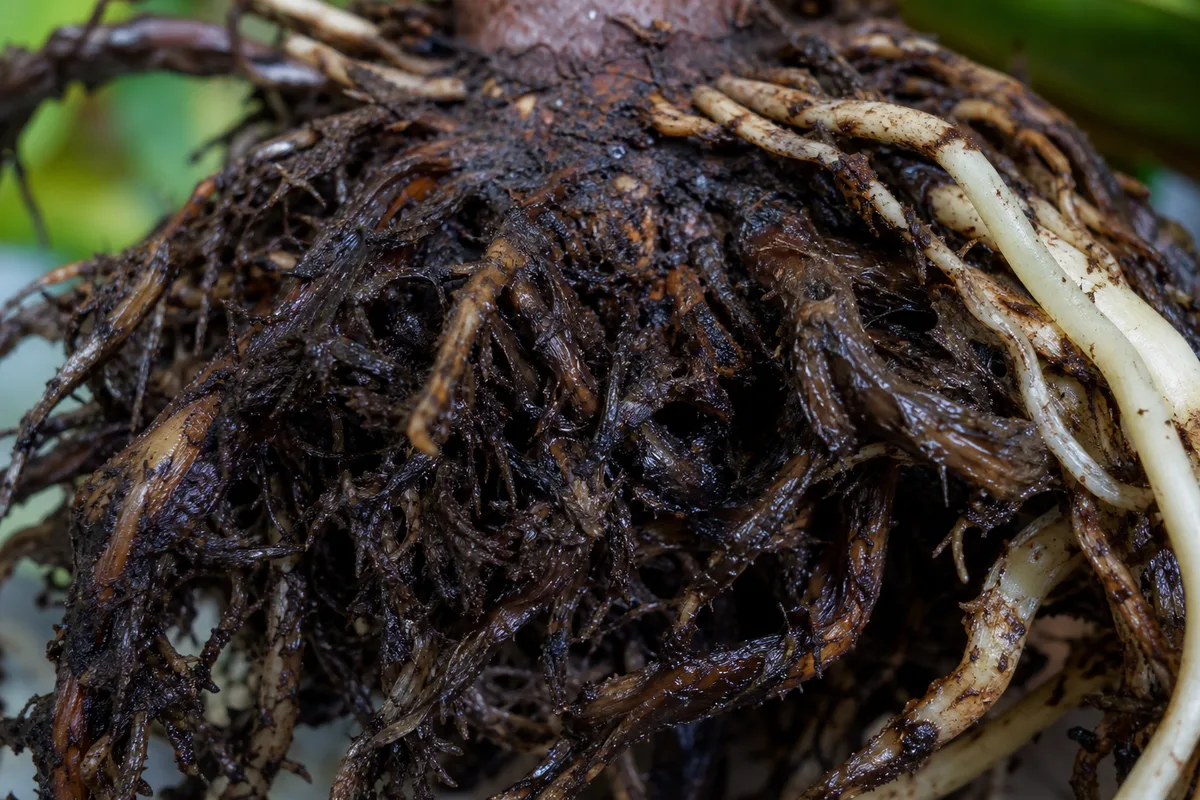
Inspect roots when wet soil and whole-plant decline point below the surface; one leaf spot alone is not enough reason to unpot.
Underwatering and an unevenly dry root ball
A truly dry root ball often produces crisp, papery margins, curled or limp leaves, and a pot that feels unusually light. Soil may shrink away from the pot edge, or water may run down the gap and out of the drainage hole before the center of the root ball absorbs much. Dry damage can be mistaken for root rot because injured roots may also fail to supply water; check moisture before adding more.
If the mix is dry at several depths, water slowly and thoroughly until excess drains from the bottom. When peat-heavy or compacted mix has become water-repellent, apply water in two or three passes a few minutes apart, or briefly bottom-water the nursery pot, then allow it to drain fully. Do not leave it sitting in the saucer. Recheck the center of the root ball after draining; if it is still dry, the water bypassed the compacted mix and the plant may need fresh medium rather than more frequent shallow sips.
If only the outer layer is dry and the center remains moist, wait and check again. A fixed “once a week” schedule can overwater a plant in winter or low light and underwater one in a warm, bright room. A practical overview from Gardening Know How on fiddle leaf fig brown spots also emphasizes that brown marks have several possible causes; use soil condition to decide whether water is actually the missing piece.
Sunburn and heat exposure
Sun scorch usually leaves a dry, bleached tan patch that becomes brown and crisp. It is strongest on the surface facing direct sun, a hot window, or a nearby grow light, and it often follows a recent move outdoors or closer to the glass. Damage stops appearing once the exposure changes, but the burned area remains.
Move the plant a short distance back from harsh afternoon sun or soften the beam with a sheer curtain. Fiddle leaf figs need bright light, so avoid swinging from intense direct sun to a dark corner. If you are increasing light, do it gradually over several days and watch the newest leaves. NC State Extension describes the plant as suited to bright indirect light or partial shade and warns that afternoon sun can scorch it.
Heat from a radiator or HVAC outlet can dry one side of a leaf and its nearby air, while direct afternoon sun can heat the leaf itself. Check the temperature at leaf height and the location of the vent, not only the thermostat across the room. Turning the pot slightly can help even out growth, but repeated large moves while the plant is stressed add another variable.
Edema: raised spots that are not an infection
Edema (also spelled oedema) happens when roots take up water faster than the leaves can release it. The early damage can look water-soaked; later, the cells rupture and form raised, rough, corky marks, often on the underside. A cluster of tiny reddish-brown spots on a young leaf can fit this pattern, but color alone cannot confirm it. Check whether the bumps are raised and stationary, and whether you can find pests or expanding lesions elsewhere.
Edema is a physiological disorder, not a contagious disease. Do not spray the plant or strip off every spotted leaf. The RHS explanation of oedema describes excess water uptake and ruptured leaf cells; its advice is to correct soil and air conditions so new growth can develop normally. Let the mix dry somewhat between waterings, make sure the pot drains, and improve air movement without placing the plant in a cold draft. Existing corky marks will remain, but later leaves may emerge unmarked.
Bacterial or fungal leaf spot
A disease becomes more plausible when separate lesions keep appearing, particularly if spots are water-soaked, dark, ringed by yellow, or expanding across leaves after repeated wetting. Some fungal and bacterial leaf spots look alike, and a yellow margin is not a laboratory diagnosis. The RHS notes that dark spots with yellow margins can be associated with fungal leaf spot, while its general guide to poorly houseplants recommends improving ventilation and growing conditions to limit many disease problems.
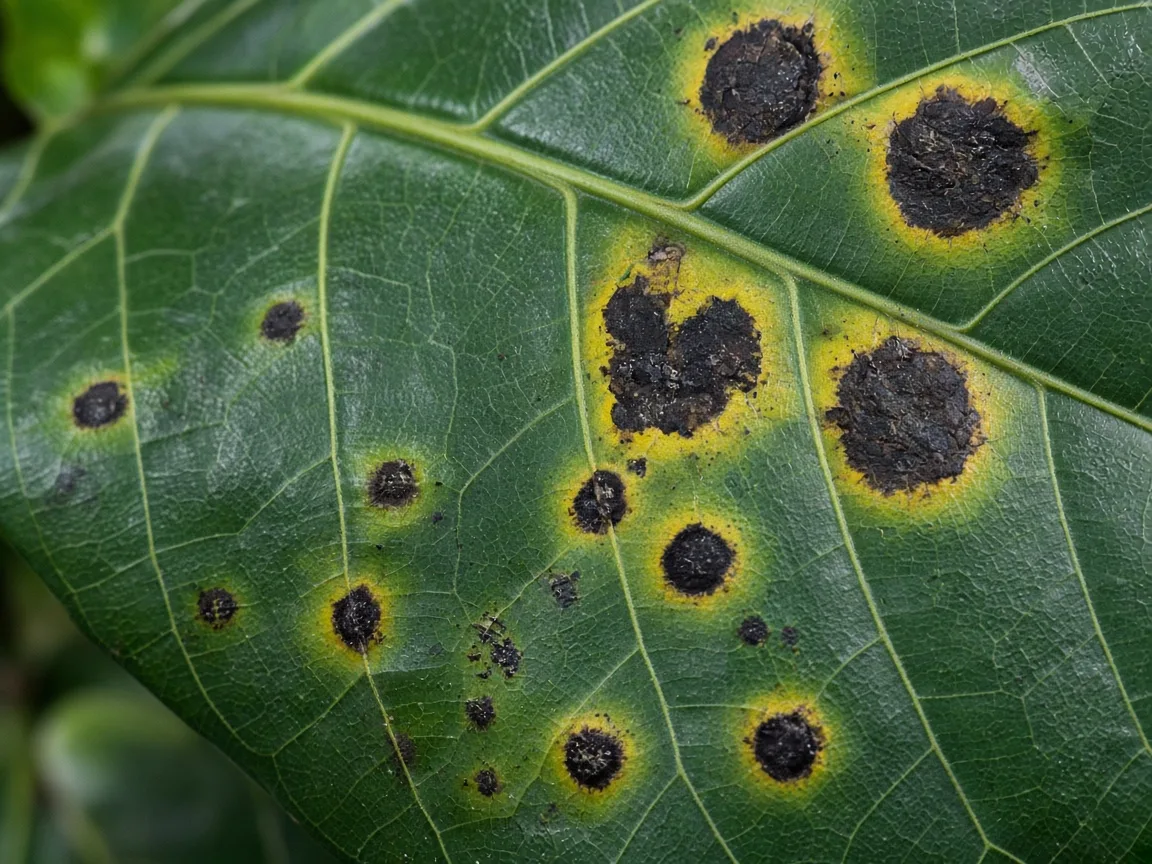
Dark lesions with halos merit monitoring, but a photo cannot identify the exact pathogen.
Separate a suspicious plant from close neighbors while you assess it. Keep leaves dry, water at the soil line, and avoid misting; droplets can spread pathogens and leave foliage wet for longer. Remove only badly affected leaves if spots are multiplying, using clean shears and discarding the clippings. Clean the blades between cuts and wash your hands afterward. A few stable dry marks do not justify applying a fungicide or bactericide; products differ, and treatment depends on the disease and local label. For uncertain, fast-moving damage, ask a local extension service or plant clinic to identify it before using a pesticide.
Cold drafts, cold water, and sudden changes
Fiddle leaf figs can show damage after a cold draft, a sharp room-temperature swing, or contact with cold water. Pale or straw-colored marks may appear where cold droplets sat; dry spots can also follow exposure close to a cold window or an air-conditioning outlet. Recent changes in the room are useful clues, especially when the soil is neither persistently wet nor fully dry.
Move the plant away from exterior glass, open doors, and heating or cooling vents, while keeping it in bright light. Water with room-temperature water and pour it onto the soil rather than across the leaves. The RHS houseplant damage guide distinguishes cold-water splash marks from some disease patterns and recommends checking the plant’s environment as part of diagnosis. If spotting stops after the position is corrected, leave the old leaves in place unless they are mostly damaged.
Spider mites and other pests that mimic spots
Spider mites usually cause many tiny pale specks or stippling as they feed, not just one clean brown patch. Check leaf undersides and the junctions between leaves and stems for fine webbing, eggs, or moving dots; a magnifier helps. Thrips may leave silvery scarring and dark specks, while scale or mealybugs are visible on stems and leaf joints. Sticky residue or distortion can add to the evidence.
Isolate the plant if you find pests. Rinse the leaves, especially their undersides, and wipe them carefully; repeat inspections because eggs and hidden pests can survive a single wash. If you choose an insecticidal soap or other product, use one labeled for the plant and pest, follow its directions, and test a small area first. Do not use a pesticide just because brown spots are present. North Carolina State Extension lists spider mites and several other sap-feeding insects among pests to monitor on Ficus lyrata.
A safe first response for any new spotting
Before cutting, watering, or repotting, do this short check:
- Photograph the leaf and note whether it is old or newly opened.
- Look at the top and underside; feel whether the spot is dry, soft, or raised.
- Check the soil below the surface, pot weight, drainage hole, and standing water.
- Inspect leaf undersides and stems for webbing, insects, or sticky residue.
- Recall recent changes: a move, repotting, cold night, stronger sun, vent, or watering change.
- Choose one likely cause and make one targeted adjustment; keep the other conditions stable while you monitor.
This sequence is deliberately modest. Brown tissue cannot be repaired, so removing it does not solve the cause. A plant with a single old scorch mark does not need a root rescue, while a plant losing several leaves in wet mix should not be watered because the leaves look limp. If lesions are multiplying quickly or the stem softens at the soil line, prioritize isolation and root inspection.
Set a watering routine around the pot, not the calendar
Check moisture at the same depth and in more than one spot near the root zone. For a large pot, a wooden skewer can reveal damp mix deeper down when the top feels dry. Compare pot weight over time, and keep a simple note of watering dates and how quickly the mix dries. The goal is not to keep the soil wet; it is to water thoroughly when the root zone has begun to dry, then let excess drain away.
When it is time, water evenly across the soil surface until water exits the drainage holes. Empty the cachepot or saucer after the pot drains. Avoid small frequent splashes that wet only the top layer, and do not let a schedule override what the soil tells you. In cooler months or lower light, drying takes longer; warm, bright conditions usually speed it up. The same plant may therefore need different intervals through the year.
Use a pot with open drainage and a loose, well-draining houseplant mix. A heavy decorative pot without a drainage hole can hold a nursery pot, but remove the inner pot to water and return it only after it has drained. Water quality can matter in some homes, but it is not the first explanation for sudden, soft spots or spreading lesions. Correct moisture and drainage before buying meters, additives, or treatments.
When to repot—and when to leave the roots alone
Repot when roots are clearly failing, drainage is blocked, the mix has collapsed and stays wet, or the plant is tightly root-bound and water cannot move through the root ball. Use a clean pot with drainage that is only modestly larger than the root mass. A very large jump in pot size leaves more wet mix around the roots than the plant can use. Choose fresh, airy potting medium rather than adding gravel to the bottom; gravel does not fix a waterlogged root zone.
If the plant has one dry spot, a normal drying cycle, and firm roots visible at the drainage holes, repotting can create needless stress. Do not add fertilizer to “heal” brown tissue. If you have removed rotting roots, allow the plant to settle and resume a restrained watering routine; wait for signs of stable growth before returning to regular feeding. Make one change at a time so you can tell what helped.
Should you prune spotted leaves?
Leave a leaf with a few dry, stable marks if most of it is still green and healthy. Green tissue still supports the plant, and edema or old sun scorch is not contagious. Remove a leaf when it is mostly brown or yellow, fully dry, badly torn, or carrying lesions that continue to spread. If disease is only suspected, remove the most affected foliage rather than stripping the canopy.
Use sharp, clean shears and avoid cutting into the stem unnecessarily. Fiddle leaf fig sap is milky and can irritate skin; NC State Extension recommends gloves when handling the plant, especially during pruning. Keep cut material and sap away from children and pets, and clean tools after use. If you trim only a brown edge for appearance, follow the leaf’s shape and leave a narrow margin of brown tissue rather than cutting into the green blade.
What recovery looks like and how to track it
Brown patches do not turn green again. A successful correction is shown by no new spots, fewer leaves dropping, and healthy new growth, not by the old leaves returning to their original color. Root or watering problems may take time to show above ground, so do not respond to every old mark with another change.
Check once a week for new lesions and compare photographs. If no fresh marks appear, keep the adjusted care steady for several weeks. If damage continues, revisit the evidence: soil still wet, new spots on young leaves, a pest you missed, direct sun at a new time of day, or cold air reaching the canopy. Several issues can coexist, so recheck rather than simply repeating the first treatment.
A fiddle leaf fig may lose a damaged leaf even after conditions improve. That alone does not mean the fix failed. A worsening pattern—multiple leaves yellowing, soft stems, persistent wet mix, or new lesions appearing rapidly—does mean the plant needs another look, and possibly a local diagnosis.
Prevent new spots with steadier growing conditions
Give the plant a bright location with filtered or indirect light, and avoid abrupt moves between dim rooms and strong direct sun. Keep it away from cold drafts and direct blasts of heated or cooled air. Leave enough space around the canopy for air to circulate, and turn the pot gradually if you want more even growth rather than rotating it sharply every few days.
Use drainage, an airy potting mix, and a soil-based watering decision. Wipe dust from large leaves with a soft damp cloth, but do not leave the foliage wet overnight. Inspect undersides during routine cleaning so mites or scale are found before they become a larger problem. Avoid unnecessary spraying, frequent repotting, and fertilizer applications while the plant is already stressed.
The RHS ornamental fig growing guide recommends warmth without large temperature swings and allowing the compost to dry slightly between waterings. Treat those as conditions to interpret in your home, not a rigid timetable. Light, pot size, temperature, and season all change how quickly the mix dries.
Conclusion
For brown spots on a fiddle leaf fig, inspect before you intervene. Dry and crispy damage, soft spots in wet soil, raised corky bumps, sun-facing scorch, spreading lesions, and pest stippling call for different responses. Combine leaf clues with soil moisture, drainage, roots, and recent environmental changes instead of diagnosing by color alone.
Correct the likely cause, make only the necessary cuts or repot, and watch the next leaves. Old spots will remain, but a stable plant that stops developing new damage is moving in the right direction.



