How to Grow and Care for Dwarf Jade (Portulacaria afra)
Keep dwarf jade healthy indoors or outdoors with species-specific advice on light, watering, soil, pruning, propagation, cold protection, and common pests.
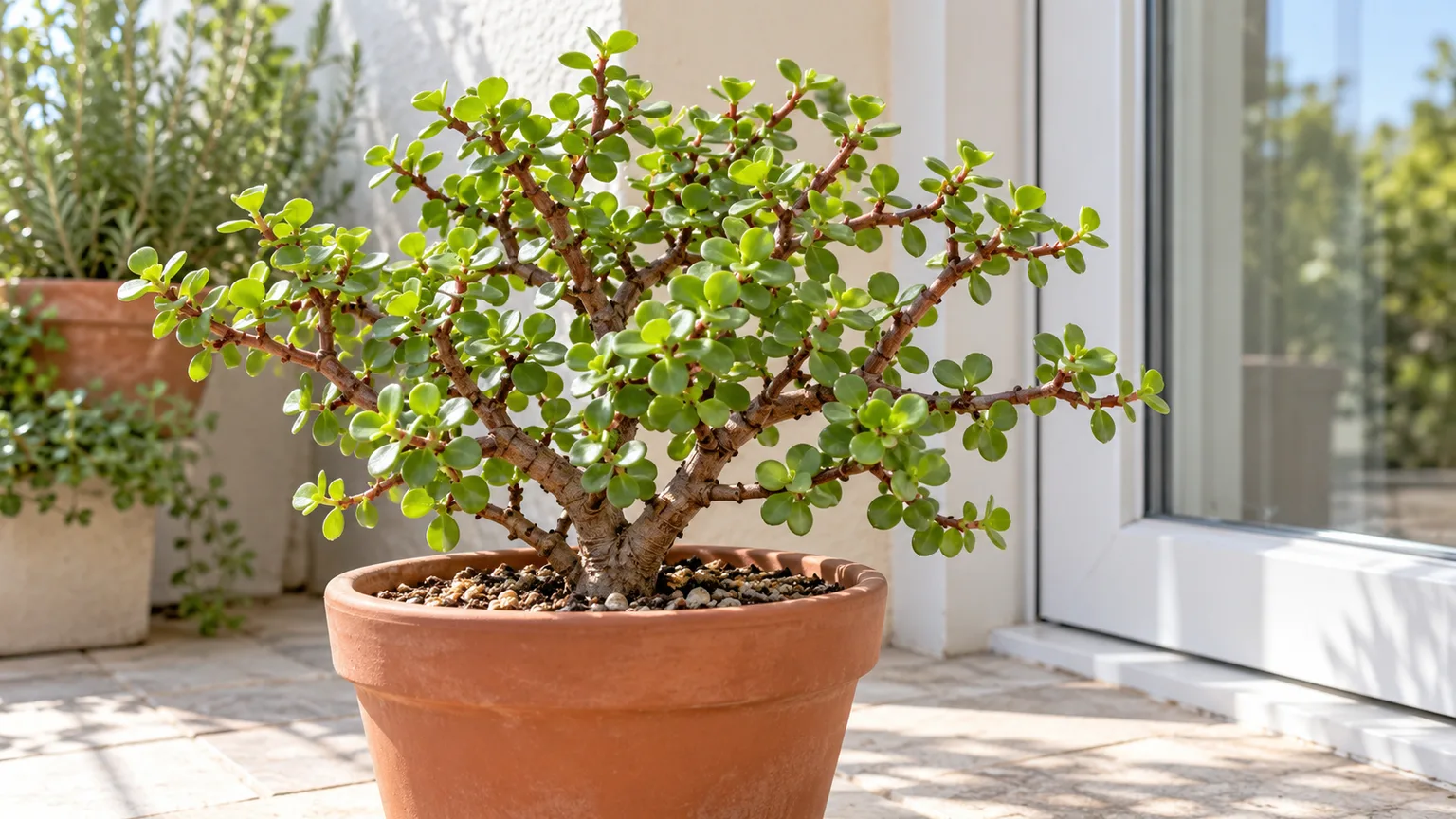
Dwarf jade is forgiving when its roots can dry between waterings and its leaves receive strong light. Most problems begin when a plant is treated like a tropical houseplant: it sits in dense, damp soil, receives small frequent drinks, or is moved suddenly from a dim room into hot sun.
The plant sold as dwarf jade, elephant bush, or spekboom is Portulacaria afra, a woody succulent from South Africa. It can stay compact in a pot, trail from a basket, or become a many-branched shrub in a warm outdoor garden. Give it a draining root zone, adjust light in measured steps, and use the leaves and soil together to decide what it needs.
What Dwarf Jade Is—and What It Is Not
Portulacaria afra has small, rounded, fleshy leaves arranged in pairs along reddish stems that become gray and woody with age. It can resemble a jade plant, but the two are not close substitutes: true jade is Crassula ovata, while elephant bush belongs to the Didiereaceae. For care of that different species, see our jade plant care guide. The University of Wisconsin–Madison Extension’s profile describes its South African range, opposite leaves, brittle branches, and mature shrub form; the South African National Biodiversity Institute’s PlantZAfrica profile documents its natural habitat and the many common names used for the species.
A label that says “miniature jade” does not mean the plant will remain miniature. In frost-free ground it can grow into a substantial shrub or small tree; in a container, limited root space and pruning keep it smaller, but it still develops woody branches and can become top-heavy. The useful distinction is its growth habit: this is a succulent shrub that can be trained, not a tiny rosette succulent that stays low without shaping.
Common names also create safety confusion. Dwarf jade is not Crassula ovata, so do not apply a pet-safety claim for one species to the other based on the word “jade.” The ASPCA’s general plant guidance notes that eating plant material can cause gastrointestinal upset even when a plant is listed as non-toxic; keep it from pets that chew plants and contact a veterinarian if an animal eats a large amount or becomes unwell.
Quick Care Profile
| Need | Practical starting point |
|---|---|
| Light | Brightest available window indoors; outdoor sun only after gradual acclimation |
| Water | Let the mix dry through most of the root ball, then water fully and drain |
| Soil | Open, fast-draining succulent mix amended with pumice, perlite, or grit |
| Pot | A container with an unobstructed drainage hole; avoid oversized pots |
| Temperature | Frost-free conditions are safest; bring exposed pots in before cold nights |
| Feeding | Modest fertilizer during spring and summer growth; reduce or stop in winter |
| Pruning | Cut just above a leaf pair or branch junction to direct new growth |
Use this as a starting framework, not a calendar. A small terracotta pot near a sunny window dries faster than a large glazed pot in a cool room, and a plant that has just moved outdoors needs time to adjust before it can handle stronger sun. When a symptom appears, check the potting mix and recent changes before adding water, fertilizer, or a treatment.
Give It Bright Light, Then Adjust Gradually
Indoors, choose the brightest location you can provide, usually close to an unobstructed south-, east-, or west-facing window. Dwarf jade tolerates bright direct sun better when it has adjusted to it; the concern is abrupt exposure, especially through hot glass after the plant has spent weeks in dim conditions. The Wisconsin Extension recommends bright light and notes that excess direct sun can redden or yellow leaf tips and, in stronger cases, burn foliage. Those color changes are clues to read alongside the plant’s normal coloring and the timing of a move.
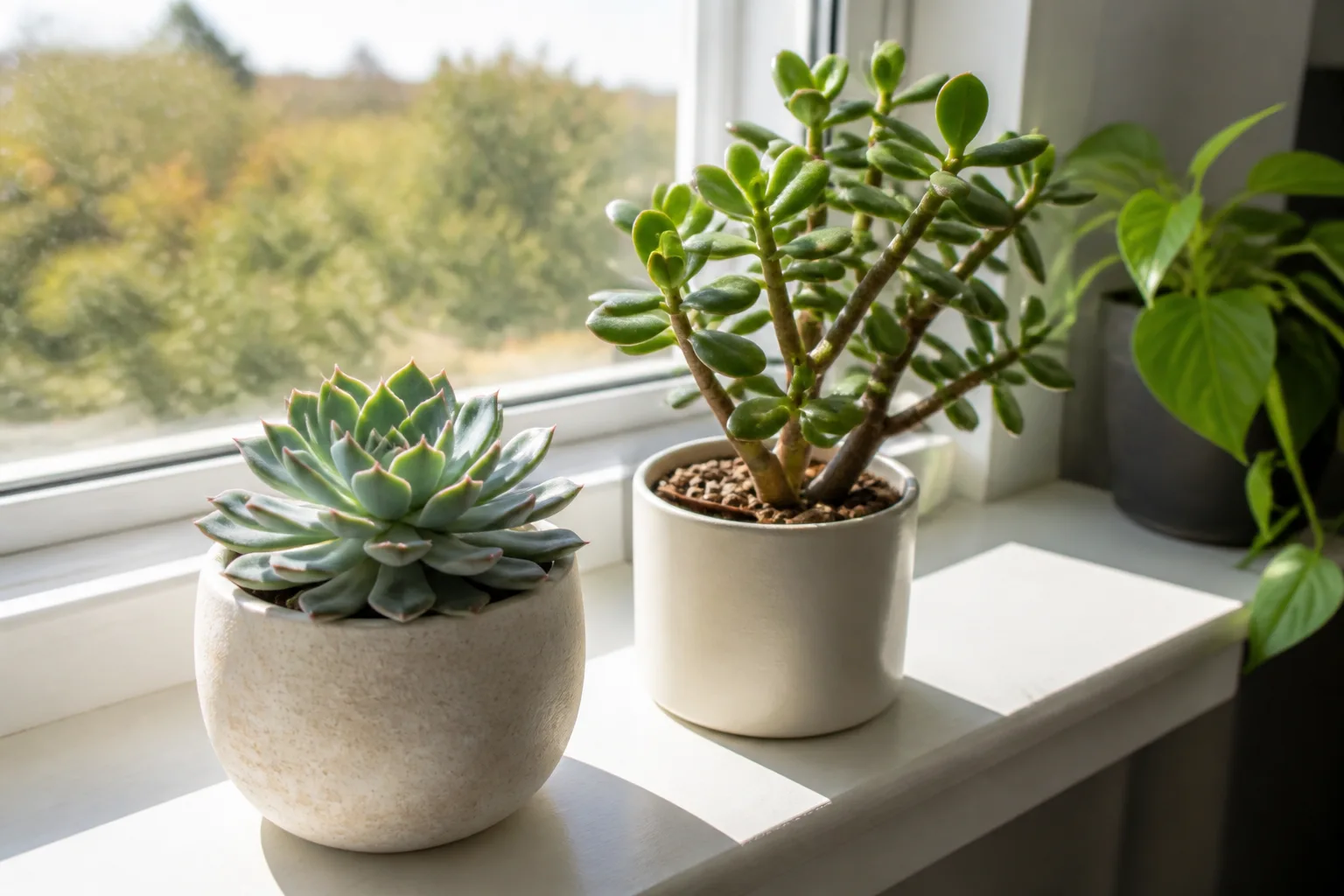
Look at the spacing between new leaves rather than relying on a single “hours of sun” number. If stems lengthen, leaves become farther apart, or branches lean toward the window, the plant is reaching for more light. Move it closer to the window or add a grow light, making the change gradually; rotating the pot every week or two helps keep one side from carrying all the new growth.
A plant with healthy compact growth and firm leaves may already have enough light even if the room does not feel especially sunny to you. Variegated forms with cream or pale leaves can scorch sooner than the plain green form, so give them bright light while watching for new patches of bleached or dry tissue. Do not respond to a red edge alone by moving the plant into deep shade: some cultivars naturally color in strong light, and a sudden drop in brightness can cause weak growth.
Acclimate a Plant Before Moving It Outdoors
A warm-season outdoor stay can improve growth, but an indoor plant should not go straight from a window to all-day midday sun. Begin in bright shade or gentle morning light for several days, then increase exposure in small increments over the next week or two. If new leaves develop pale, papery patches, return it to softer light; existing scorch will not turn green again, though healthy new growth can cover the visual gap over time.
Choose a sheltered spot where the container drains freely and can be moved if the weather turns cold. The Royal Horticultural Society’s species profile lists full sun to partial shade for P. afra, while the Wisconsin Extension explains why acclimation matters when moving a potted plant outdoors. Together these support a flexible approach: aim for bright conditions, but let the plant’s recent light history determine how fast you increase exposure.
Water by Checking the Root Zone, Not the Calendar
Do not water dwarf jade on a fixed weekly schedule. Wait until the potting mix has dried through most of the root zone, then water slowly until excess runs from the drainage hole. Empty the saucer or cachepot afterward so the pot does not stand in runoff. A dry surface alone can be misleading: the top layer may dry while the center of a large or moisture-retentive root ball is still damp.
Check below the surface with a wooden skewer, your finger, or the pot’s weight. A skewer that comes out cool and dark with mix clinging to it indicates moisture remains deeper down. A much lighter pot and dry mix near the bottom suggest it is time to water. This combined check is more useful than trying to decide whether the plant needs water because a certain number of days has passed.
The University of Wisconsin Extension notes that elephant bush is drought tolerant but grows more actively with adequate water, and that consistently wet soil can lead to root rot. The Succulents and Sunshine guide to Portulacaria afra likewise describes a soak-and-dry approach and observes that wrinkling can signal water need when the mix is dry. The practical rule is to respond to both signals: dry mix plus thinning or wrinkling leaves points toward watering; wet mix plus yellowing or soft leaves points toward a root-zone problem, not more water.
When you do water, a complete soak followed by full drainage encourages roots throughout the pot. Tiny sips can leave some roots dry while keeping the top layer damp, which makes diagnosis harder. If water immediately runs down the sides without wetting the center, the mix may have become hydrophobic; water in several slow passes or briefly bottom-water, then drain completely and return to normal dry-down checks.
In winter, a cool, dim plant uses water more slowly, so extend the dry period and water only when the root ball has dried and the leaves begin to lose firmness. Do not wait for severe shriveling as a routine; that is a sign the plant has been without usable water for a while, not a target condition. A warm, brightly lit plant may continue to grow in winter and need occasional water, so season matters less than light, temperature, and the actual mix.
Build a Fast-Draining Soil and Pot Setup
Roots need oxygen as well as moisture. Start with a commercial cactus or succulent mix, then add a mineral component such as pumice, perlite, or small horticultural grit if the mix stays damp for too long. The RHS species profile recommends well-drained compost, and Wisconsin Extension suggests a gritty, porous medium and cautions that fine sand can fill air spaces rather than improve drainage.
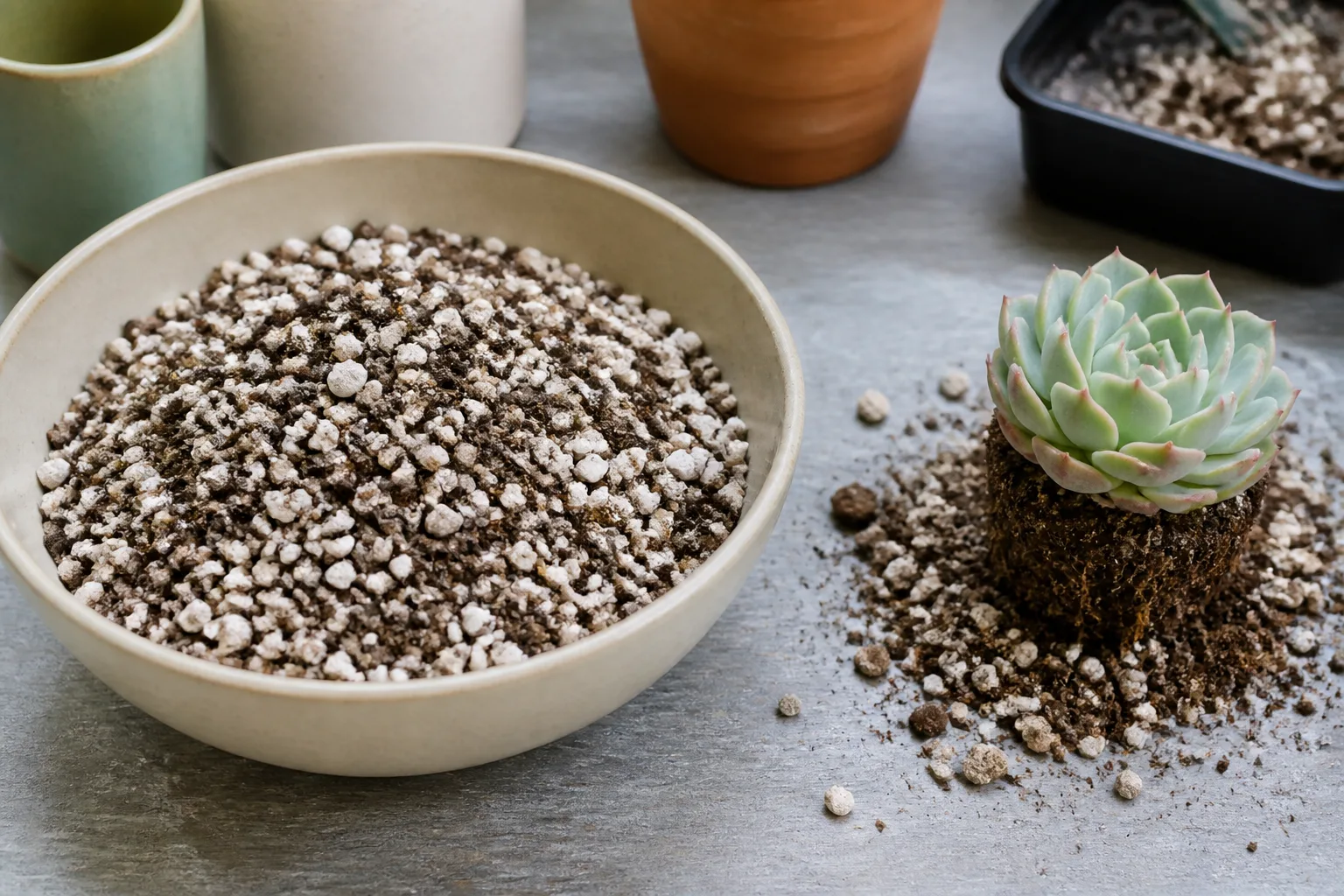
You do not need a complicated recipe. A useful mix should wet evenly when watered, let excess run out promptly, and then dry at a reasonable pace for your home. If the mix remains wet for many days in a cool room, blend in more coarse mineral material or use a smaller pot; if it dries in a day during hot weather, reduce the mineral share slightly or water more attentively. Avoid filling a pot with garden soil, which can compact in a container, and do not add a gravel layer at the bottom as a substitute for an open drain hole.
Choose a pot only modestly wider than the root ball. A huge container holds more damp mix than the roots can use, increasing the time the center stays wet. Unglazed terracotta can help the sides dry, but a glazed pot also works if its drainage hole is open and watering is adjusted to its slower evaporation. A hanging basket suits trailing forms, while a shallow bonsai pot can work for a trained specimen once the root system fits; both still need drainage.
Protect Dwarf Jade From Cold and Seasonal Swings
Dwarf jade is a frost-tender succulent in most home-growing situations. It can grow outside year-round in mild climates with suitable drainage, but container-grown plants are more exposed to cold than established shrubs in the ground. Sources differ in how they describe the plant’s hardiness: the RHS species profile lists it for houseplant, patio, and container growing and classifies it as tender, while regional references describe outdoor culture in warmer zones. For a potted plant, a conservative frost-free plan is safer than relying on a zone label that cannot account for wind, wet soil, pot size, or a sudden cold snap.
The Wisconsin Extension advises moving elephant bush back indoors when nighttime temperatures drop below about 40°F (4°C). Gardening Know How’s elephant bush guide also recommends moving it in as nights cool and acclimating it before outdoor placement. Use that as a practical early warning rather than waiting for frost on the leaves. Cold, wet roots are especially vulnerable, so move the plant under cover before a cold rain and do not place it in a dark garage for months unless you can provide enough light and airflow.
Seasonal changes can trigger leaf drop even without a serious disease. A plant moved from an outdoor patio to a dimmer indoor room may shed older leaves as it adjusts; sudden changes in temperature, draft exposure, and watering also contribute. Keep the new location as bright as possible, avoid a cold windowpane or heat vent, and allow a week or two of stability before changing the soil or applying fertilizer.
Decide When a Container Plant Should Move Inside
For outdoor containers, watch overnight lows and the length of the cold spell, not just the afternoon high. Bring the pot in before frost is forecast, and move it sooner if temperatures are trending downward or the soil is already wet. If you are unsure of the plant’s cold tolerance, protecting it early is reversible; frost injury is not.
When moving it back outdoors in spring, reverse the process: start in shade, increase sun over several days, and wait until frost risk has passed. Inspect leaf joints and stems for mealybugs or scale before bringing the plant inside, and keep a newly returned pot away from other houseplants while you check it. This makes the seasonal move a predictable transition rather than a repeated source of sunburn and pests.
Feed Lightly During Active Growth
A dwarf jade that receives bright light and is growing does not need heavy feeding. From spring through summer, use a balanced houseplant or succulent fertilizer at a diluted label rate, roughly once a month at most. The Wisconsin Extension recommends monthly feeding for container plants during the growing season; reduce or stop during the darker winter period when growth slows.
Apply fertilizer to already-moist soil rather than a bone-dry root ball, and do not feed a plant with soft, stretched growth, damaged roots, or recent transplant stress. Extra fertilizer cannot correct low light or a wet mix. If the plant is healthy but grows slowly, that may simply reflect its season or the limits of indoor light; pushing it with stronger feed can produce longer internodes and a less compact shape.
Repot Only When the Root Ball Needs More Room
Repot when roots fill the container, emerge from drainage holes, or the plant repeatedly dries too quickly despite a sound mix. A slow-growing plant does not need a yearly pot upgrade. The new container should be just one size larger, with enough depth and weight to support the woody top without leaving a large reservoir of unused soil around the roots.
Slide out the root ball and inspect it before disturbing healthy roots. Remove only dead, mushy material with a clean blade, loosen circling roots gently, and settle the plant at the same depth in fresh dry mix. Keep the trunk upright while backfilling; if a mature plant is top-heavy, use a heavier pot or a temporary support rather than burying more stem than before.
If roots were cut or damaged during repotting, give those wounds time to dry before watering; a short pause is useful because wet mix against fresh root cuts can encourage rot. If the root ball was intact, do not force a long drought just because the calendar says to wait a week. Resume watering when the mix and the plant’s condition call for it, then drain the pot fully.
Prune for a Fuller Shrub or Bonsai Shape
Dwarf jade responds well to pruning and can be trained as an upright miniature tree, a rounded shrub, or a trailing plant. New buds can emerge near cuts, so pruning is a way to direct the plant’s shape as well as reduce size. The SANBI PlantZAfrica profile describes P. afra as a frequently used bonsai and garden shrub; the Wisconsin Extension notes that removing branches or leaves can stimulate new buds along the stems.
Use clean, sharp scissors or a bypass pruner and cut just above a pair of leaves or a branch junction. To make a plant bushier, shorten a long bare branch to a point where you want new shoots to start; to expose a trunk for a bonsai look, remove selected lower branches gradually rather than stripping the plant all at once. Keep enough leaves on each branch for ongoing growth, and avoid a severe shape change while the plant is cold, recently repotted, or struggling with root problems.
A useful shaping routine is to step back before every cut and imagine where the next branch will emerge. Remove crossing or weak growth first, then shorten the longest branches to balance the silhouette. If a branch is thick or heavy, support it before cutting because the fleshy wood can split or break unexpectedly. Let large cuts dry in a bright, airy place; avoid immediately soaking the plant or sealing cuts with household products.
Pruned stems are useful propagation material. Set healthy pieces aside before you discard them, but do not try to root soft, diseased, or pest-covered tissue. A few deliberate cuts every growing season usually create a more manageable plant than one drastic pruning session every several years.
Propagate Elephant Bush From Stem Cuttings
Stem cuttings are the easiest dependable way to make another Portulacaria afra. Spring and summer are convenient because warmth and active growth support rooting, although a bright, warm indoor setup can work at other times. Wisconsin Extension reports that cuttings commonly root within four to six weeks under suitable warm conditions; treat that range as an estimate, not a deadline, because temperature, cutting condition, and moisture all affect timing.
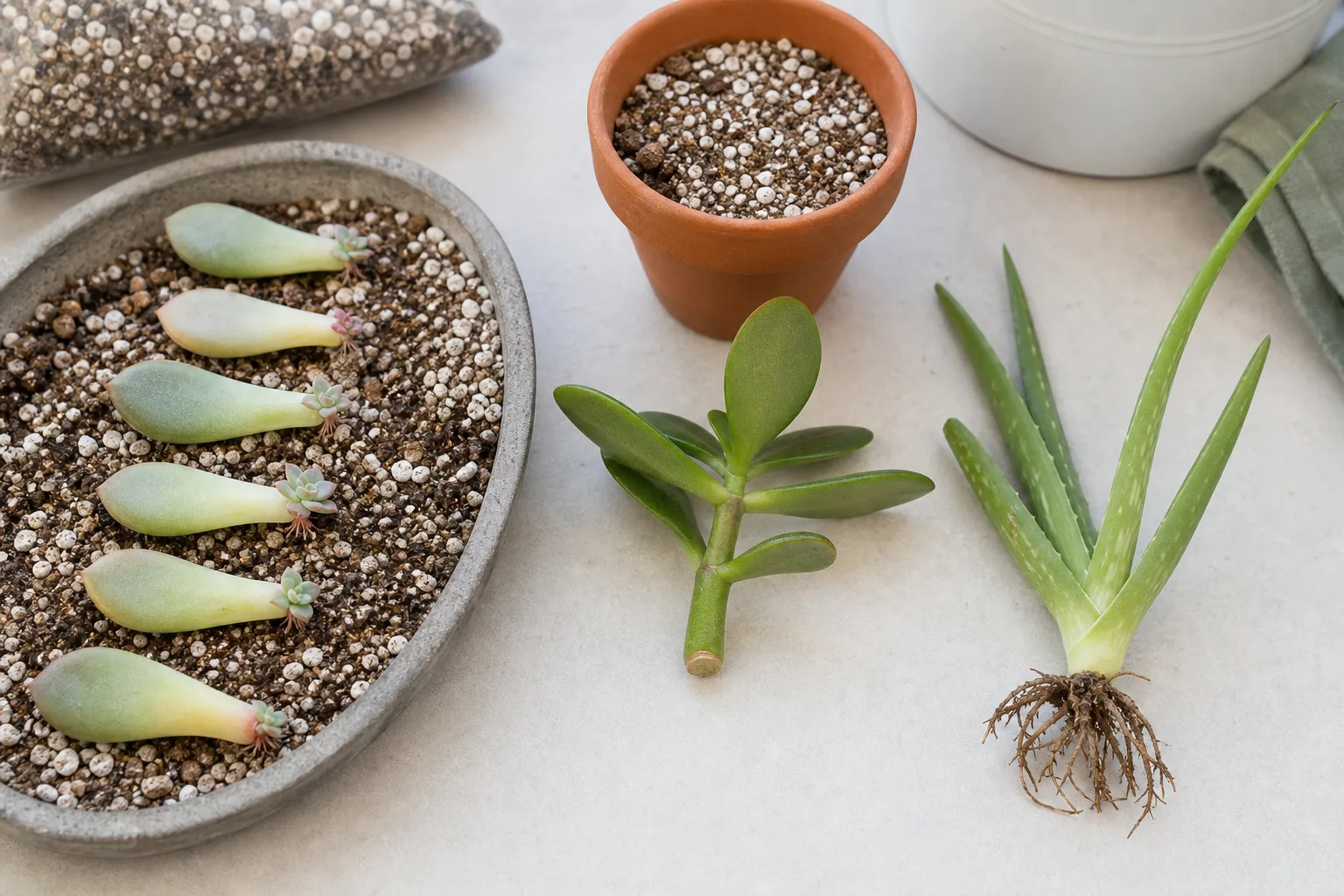
Choose a healthy, firm stem several inches long and make a clean cut below a node. Remove leaves from the lower portion that will sit in the medium, then leave the cutting in a dry, shaded, airy place until the cut surface feels dry and callused. A short callusing period lowers the risk of rot; do not leave it in harsh sun where the small cutting can dehydrate before it roots.
Set the callused end into a small pot of dry or barely moist, fast-draining mix and place it in bright indirect light. Keep the medium only lightly moist while roots develop, never continuously wet; a sealed plastic bag is unnecessary and can trap more humidity than a succulent cutting needs. Check for resistance with a gentle tug after a few weeks rather than repeatedly unpotting the stem to look for roots.
Once the cutting is anchored and begins new growth, transition to the normal soak-and-dry routine. If the cutting shrivels but remains firm, it may be drawing on stored water while rooting; if its base turns soft or dark, remove the rotted portion if healthy tissue remains, let the fresh cut dry, and restart in clean mix. Rooting hormone is optional, not a requirement for this plant.
Individual leaves may also root, but they are less predictable and produce a slower start than a stem section with a node. The RHS guidance recommends stem cuttings for propagation, which is the better method when you want a plant with a clear branch structure. Keep the parent plant’s label with any cuttings, especially if you are propagating a variegated cultivar whose seedlings or reversions may not match it.
Choose a Dwarf Jade Variety for Your Space
The plain green species is usually the easiest form to grow vigorously. Variegated types such as ‘Variegata’ or ‘Medio-picta’ bring cream or pale markings, while ‘Aurea’ has yellow-toned new growth. Wisconsin Extension and SANBI PlantZAfrica also describe ‘Prostrata’ as a low-growing form, ‘Limpopo’ as a larger-leaved form, and ‘Cork Bark’ as a bonsai selection with textured bark.
Names on retail labels are not always consistent, and the same-looking plants may be sold under different cultivar names. For care notes on the cream-edged form, see our rainbow elephant bush guide. Choose a plant by its visible habit and the space you have: an upright, compact plant is easier to train on a shelf, a trailing form suits a hanging container, and a variegated plant usually benefits from brighter but less abruptly intense light. Because variegated forms can grow more slowly and may be less robust, avoid treating their water and sun needs as identical to those of the vigorous green form.
Understand Why Indoor Blooming Is Uncommon
Mature elephant bush can produce clusters of tiny pale pink flowers, but flowering is uncommon on indoor plants. SANBI records mass flowering in the plant’s natural setting, while Wisconsin Extension notes that blooms are rare in cultivation and most likely on plants grown in the ground in mild climates. A windowsill plant may remain healthy for years without flowering, so lack of blooms is not a sign that care has failed.
Do not deliberately dehydrate the plant for a month or two to force flowers. Severe water stress can shrivel leaves, weaken a small container plant, and still produce no bloom. Prioritize strong light, a stable warm growing season, and sound roots; if a mature outdoor plant blooms, enjoy it as a response to conditions rather than a result that can be guaranteed indoors.
Diagnose Leaf Changes Before You Change the Routine
Leaf symptoms are clues, not diagnoses. A yellow leaf can result from normal aging, a low-light move, overwatering, or root injury; a wrinkled leaf can mean either a dry plant or roots that are too damaged to take up water. Look at the whole plant, the moisture below the surface, and what changed in the last few weeks before deciding what to do.
Separate Overwatering, Underwatering, and Low Light
| What you see | Check first | Better first response |
|---|---|---|
| Yellow, soft, or translucent leaves; mix still damp | Drainage, saucer water, and root condition | Stop watering; let the mix dry and inspect roots if decline continues |
| Wrinkled or limp leaves; mix dry through the pot | Root-zone dryness and recent watering | Water thoroughly once, drain, and monitor for firm new growth |
| Wrinkled leaves; mix is damp or stems are soft | Possible root damage rather than thirst | Do not add water; inspect the root ball and correct drainage |
| Long gaps between leaves; branches lean toward a window | Light level and direction | Increase usable light gradually and rotate the pot |
| Leaves drop after moving outdoors or indoors | Recent light, temperature, or draft change | Stabilize the location and avoid several care changes at once |
| Pale or crisp patches on the window-facing side | Sudden direct sun or hot glass | Move to gentler light, then acclimate more slowly |
If soil is damp and leaves yellow, leave the plant unwatered until the mix dries and confirm that the drainage hole is clear. If the decline continues, slide the root ball out: healthy roots should be firm, while dark, mushy roots or a sour smell suggest rot. Trim only the damaged roots with clean tools, repot into fresh, airy mix, and let the wounds dry before resuming careful watering.
If the soil is thoroughly dry and leaves are wrinkled, water to runoff and empty the saucer. The leaves will not always plump immediately, so avoid repeating the dose the next day. If the plant does not recover over the following days, check for root loss, an undersized root ball, or a recent move; a plant with very few functioning roots may stay limp despite wet soil.
Manage Mealybugs and Other Occasional Pests
Dwarf jade has relatively few serious pest problems, but mealybugs can hide in leaf joints and along woody stems; scale and spider mites may also appear indoors. Inspect the undersides of leaves, branch forks, and the pot rim when the plant comes inside for winter or when new growth looks distorted. Isolate an affected plant so pests do not spread to nearby succulents.
Start by removing visible insects and cleaning debris from the plant. Succulent leaves can be sensitive to sprays, and Wisconsin Extension specifically warns that some pesticide products can damage P. afra; follow the product label and test a small area before treating the whole plant. Avoid repeatedly applying an untested oil, alcohol, or detergent mixture across all foliage. Recheck weekly, because a single cleanup may miss insects tucked into dense branching.
Conclusion
For reliable dwarf jade care, prioritize a bright location, a draining pot and mix, and a full dry-down between deep waterings. Adjust the details to the plant’s season and setting: acclimate it before stronger sun, bring an outdoor container in before cold nights, and use pruning to keep its naturally branching shape in bounds. When leaves change, inspect the roots and recent conditions before reaching for more water or fertilizer; that simple diagnosis prevents most avoidable setbacks.



