How to Grow and Care for Rainbow Elephant Bush
Keep Portulacaria afra ‘Variegata’ compact and colorful with practical advice on sun acclimation, watering, cuttings, and common problems.
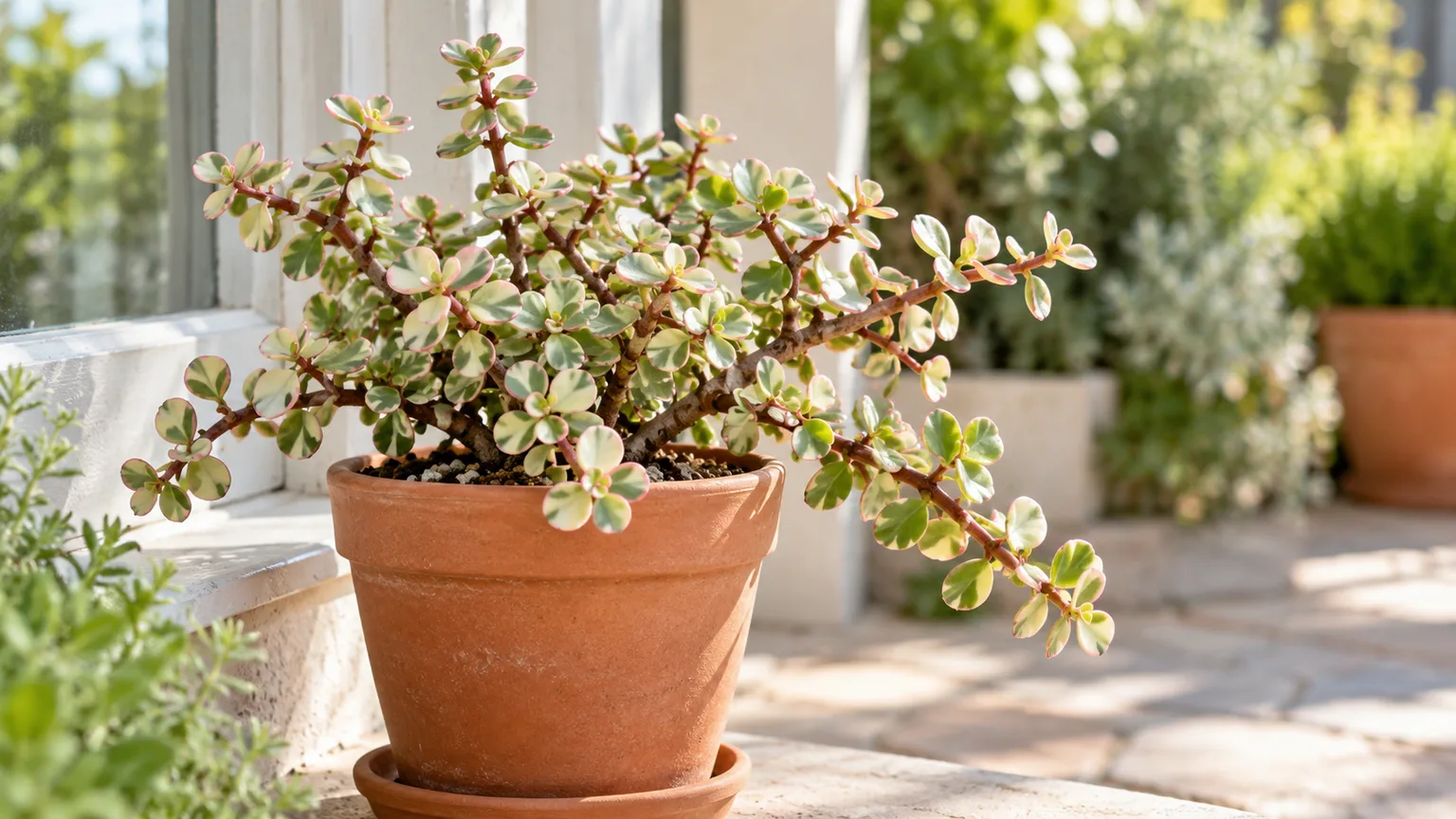
Rainbow elephant bush has small, fleshy leaves edged in cream and often flushed pink along reddish stems. That pattern is attractive, but it changes how the plant behaves: the variegated form grows less vigorously than the all-green species and is less tolerant of harsh sun. Give it bright light, let its mix dry between thorough waterings, and protect it from cold; most problems begin when one of those conditions is out of balance.
The plant is Portulacaria afra ‘Variegata’, also sold as rainbow bush or variegated elephant bush. It can live for years in a pot and can be shaped into a compact shrub or allowed to trail. The goal indoors is not to imitate a South African landscape in miniature, but to provide enough light and a repeatable dry-down without exposing the tender leaves to extremes.
Start with the plant you actually have
Look for rounded, succulent leaves on reddish or brown stems, with pale cream-to-white areas and sometimes pink margins. The amount of pink changes with light, temperature, and the individual plant; a greener patch does not automatically mean the plant is reverting or unhealthy. ‘Variegata’ is a cultivated form of Portulacaria afra, a shrub native to southern Africa. In mild climates the species can become a substantial woody shrub, while a container specimen stays smaller because roots and shoots have less room.
Names in garden centers can be confusing. “Elephant bush,” “elephant food,” “rainbow bush,” and “miniature jade” may all appear on tags, but elephant bush is not the jade plant (Crassula ovata). The two have superficially similar fleshy leaves; elephant bush has smaller leaves set along fine reddish stems, while jade typically has larger leaves and stouter branches. The University of Wisconsin–Madison Extension describes variegated forms as smaller and less robust than green plants, with ‘Variegata’ particularly sensitive to bright sun. (Wisconsin Horticulture, University of Wisconsin–Madison Extension)
That distinction is also reflected in Gardening Know How’s cultivar coverage: the cream-edged form is described as less tolerant of bright sun than other elephant bushes. (Gardening Know How)
How it differs from jade and green elephant bush
The practical distinction is exposure. Advice written for green elephant bush or jade can encourage more direct sun than a cream-edged rainbow bush can comfortably take, especially after a plant has spent weeks behind glass. The pale areas contain less chlorophyll, so the plant has less margin for abrupt heat and light changes. Start with strong indirect light and introduce direct sun in small increments rather than assuming a succulent is automatically sun-proof.
Variegation also tends to come with slower, less forceful growth. If a plant adds leaves gradually, that can be normal; it is not a cue to increase fertilizer or keep the soil wet. Compare new growth with the older leaves and note whether stems remain firm and compact. Healthy color varies, but sustained long internodes, leaning shoots, or smaller leaves usually point to insufficient usable light, while bleached, crispy patches after a move point to sun stress.
Choose light by watching new growth
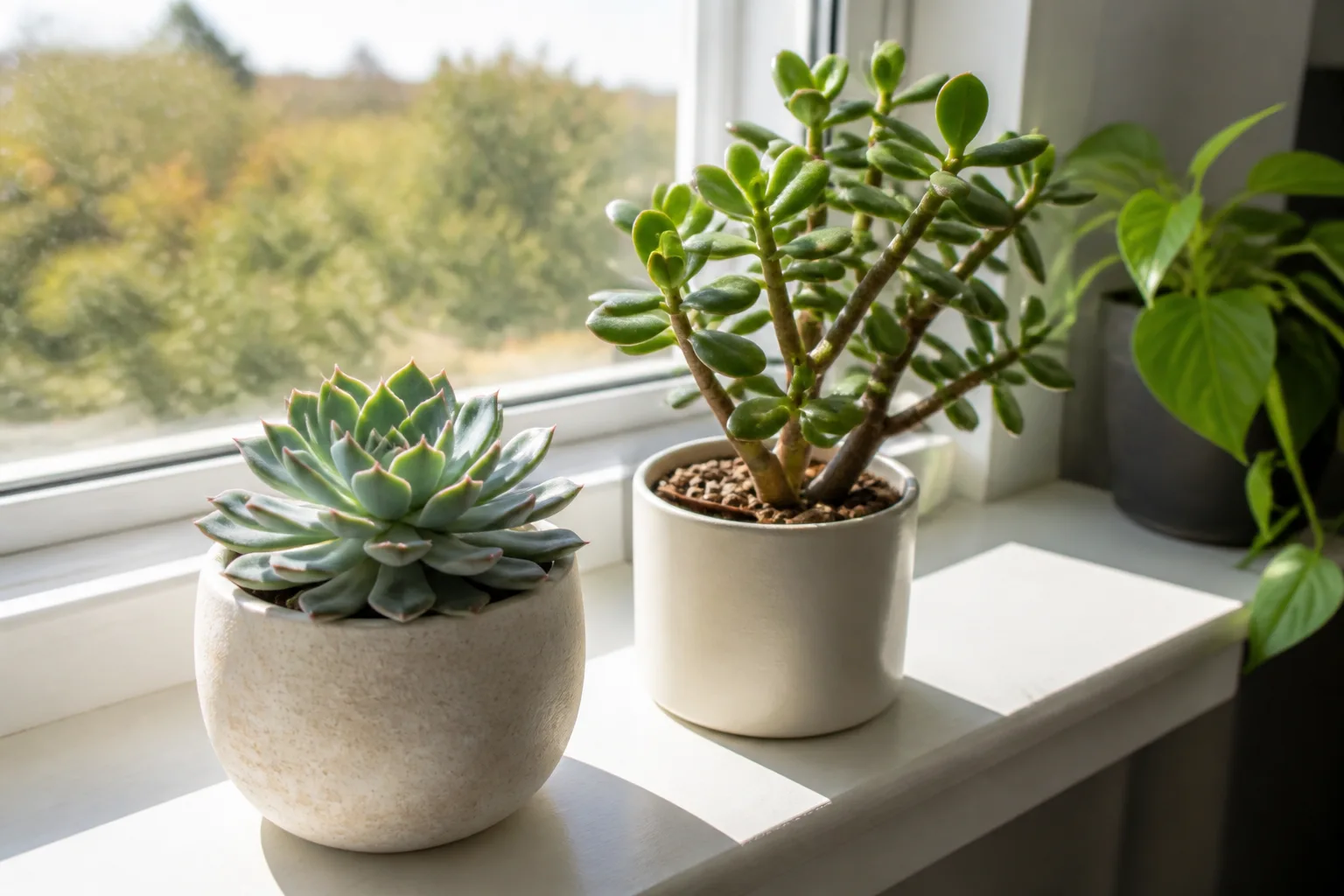
Set the plant close to your brightest window, where the canopy receives several hours of strong ambient daylight. An east- or west-facing window often gives a useful balance; a south-facing window can work in many Northern Hemisphere homes if the plant is set back or screened during intense afternoon sun. Window direction is only a starting point: glass, season, latitude, nearby buildings, and curtains all change the light that reaches the leaves.
Let the plant tell you whether the spot works. Compact new stems with normal-sized leaves suggest that light is adequate. Long gaps between leaf pairs, a canopy that leans toward the window, or a gradual loss of cream contrast indicate that it may need a brighter position; move it closer to the glass or add a grow light rather than increasing water. If leaves develop dry tan or bleached patches on the window side, or redden suddenly after relocation, step back from direct sun and let the plant settle.
An outdoor summer break can improve growth, but indoor leaves are not pre-acclimated to full outdoor sun. Begin in bright shade for several days, then offer morning sun and increase exposure over one to two weeks while checking leaves. The variegated form should generally get less intense direct sun than the green species. Bring it back a step if fresh patches appear; previous sunburn will not turn green again, so judge the adjustment by new growth.
Water by dry-down, not by calendar
Water deeply enough to wet the root ball and let excess run from the drainage holes, then empty the saucer or cachepot. Wait for the mix to dry nearly all the way through before watering again. A finger can check the surface, but it may miss moisture in the lower half of a deep pot; use a wooden skewer near the root zone or compare the pot’s weight after watering with its weight once dry. These repeatable signals are more useful than “every seven days.”
Dry-down speed changes with light, room temperature, airflow, pot size, and season. A small terracotta pot in a warm bright room may dry much faster than a large glazed container on a cool windowsill. If the mix remains damp for many days, do not add water because the leaves look limp; inspect the drainage, soil structure, and roots first. Consistently wet roots lose oxygen and are vulnerable to rot, while drought-tolerant leaves can wrinkle from thirst without needing a daily mist.
How season and pot size change the interval
During active growth in spring and summer, a healthy plant uses water more quickly. In shorter winter days and cooler rooms, the same plant may take much longer to dry. Wisconsin Horticulture Extension recommends restricting winter water and allowing the mix to dry deeply; an indoor plant in a dim, cool room may need very little until days lengthen, while a warm, brightly lit specimen still needs occasional checks. (Wisconsin Horticulture Extension)
Use the leaves as a cross-check, not as the only gauge. Mildly thinner or wrinkled leaves with a dry root zone can indicate that it is time to water. Soft, translucent, yellowing leaves together with a wet mix are a reason to stop watering and inspect roots. Do not “make up” missed watering with repeated small splashes; when the plant is due, water thoroughly, then let it drain and dry.
Build a mix and container that dry predictably
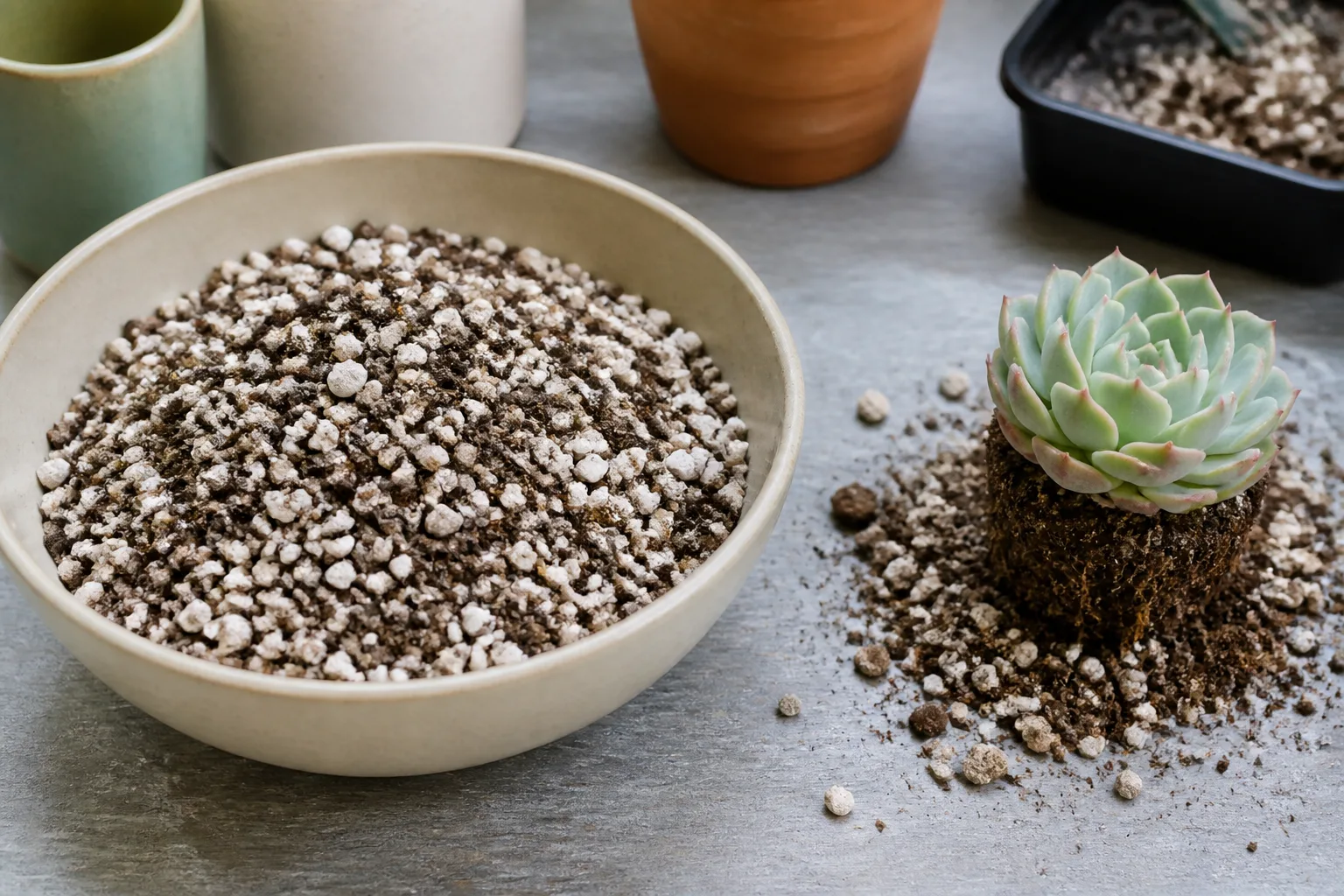
Use a porous succulent mix that holds the plant upright but leaves open air spaces after watering. A practical starting blend is equal parts commercial cactus mix and coarse pumice or perlite by volume. In a humid home, a cool room, or a plastic pot, increase the mineral portion; in a hot, dry location where tiny pots desiccate quickly, retain a little more organic mix. These are starting points, not a fixed recipe—the right mix is one that drains freely and dries at a reasonable pace in your conditions.
Avoid fine sand or dense garden soil. Fine particles can settle into gaps and reduce air movement instead of improving drainage. Pea gravel, poultry grit, or other stable coarse mineral particles can work, and Wisconsin Extension specifically recommends generous nonporous amendments and a pot with large drainage holes. Do not add a gravel layer at the bottom as a substitute for drainage; the entire root zone should have a consistent, open texture.
Choose a pot with at least one unobstructed drainage hole. Unglazed clay can speed drying in humid conditions, but a plastic or glazed pot is not automatically wrong if your mix and watering adjust to it. The shallow root system may not anchor a broad canopy well, so a low, stable pot or a heavier outer cachepot can prevent tipping. Never leave the nursery pot standing in collected water, and do not jump into a much larger pot: unused wet mix around a small root ball takes longer to dry.
Keep temperatures steady and acclimate outdoors
Rainbow elephant bush is a warm-climate succulent, not a frost-hardy patio plant. Keep it in a stable room and away from cold drafts, exterior doors, and blasts from heaters or air conditioners. When nights approach 40°F (about 4°C), move an outdoor pot inside; colder exposure can cause leaf loss or tissue damage, and wet soil makes cold stress harder to recover from. Wisconsin Extension gives 40°F as a conservative point for moving container plants indoors.
Hardiness claims vary, and a single plant surviving a brief cold snap does not establish a reliable threshold for a potted variegated specimen. The University of North Florida Botanical Garden describes an outdoor elephant bush in Jacksonville and notes that reports differ, including one low-temperature report near 25°F; the same page warns that the plant is near the northern limit of its tolerance there. Treat that as an observation, not a target. (University of North Florida Botanical Garden)
Move a plant outside only after frost danger has passed and nighttime temperatures remain mild. Acclimate it over a week or two: bright shade first, then a little gentler morning sun, while avoiding sudden placement against a hot south- or west-facing wall. Reverse the transition before autumn nights become cold. Some leaf drop during a move can happen, but heavy loss, limp stems, or blackened tissue means the change was too abrupt or the plant was exposed to cold or sun damage.
Fertilize lightly only during active growth
A rainbow elephant bush in fresh, airy mix needs little fertilizer. If it is growing steadily, use a balanced houseplant fertilizer diluted to half strength once in spring, then reassess before feeding again in midsummer. A weak-growing plant in poor light will not become compact because it receives more nitrogen; extra fertilizer can instead produce softer, longer growth and salt buildup in a small container.
Skip fertilizer in winter or when the roots are stressed, the plant has just been repotted, or the soil is staying wet. Water the mix before feeding if it is very dry, and do not leave concentrated solution in the saucer. If growth is pale and stretched, correct light first; if growth is simply slow but firm, remember that variegated forms are naturally less vigorous than green ones. Feeding should support active growth, not try to force it.
Prune for shape without stripping the plant
Pruning keeps long stems from becoming tangled and lets you choose between a trailing basket, rounded shrub, or small bonsai-like form. It is also a way to remove weak, crossing, or damaged growth. Do not prune by the calendar if the plant is cold, dormant, or losing leaves from stress. The safest window is when days are lengthening and you can provide warm, bright aftercare, usually spring into early summer indoors.
Use clean, sharp snips and make cuts just above a pair of leaves or a node. New shoots can develop near removed branches, which helps fill a sparse outline, but the cut cannot replace the light that the plant needs to hold its shape. Wisconsin Extension notes that elephant bush responds well to pinching and cuts just above leaf pairs; a trusted practical overview from Epic Gardening likewise frames late-spring pruning as a way to shape active growth. (Epic Gardening, “How to Plant, Grow and Care for Elephant Bush”)
A low-risk pruning sequence
Start by removing dead, broken, or clearly crossing branches. Then step back and decide what silhouette you want before shortening healthy shoots; otherwise, repeated small cuts can leave the plant thinner than intended. For an established plant, remove no more than about a quarter to a third of the leafy canopy in one session. If it needs a major size reduction, divide the work across growing seasons.
Keep enough leaves on each branch for photosynthesis, and do not strip interior growth simply to expose a bare trunk. Support a top-heavy plant while it adjusts, particularly if it is in a shallow bonsai pot. After pruning, give it bright indirect light, keep the mix on its normal dry-down cycle, and hold fertilizer until you see active new growth. Do not water extra to “heal” cuts; these are succulent stems and saturated soil creates a larger risk than a dry pruning wound.
Propagate from stem cuttings
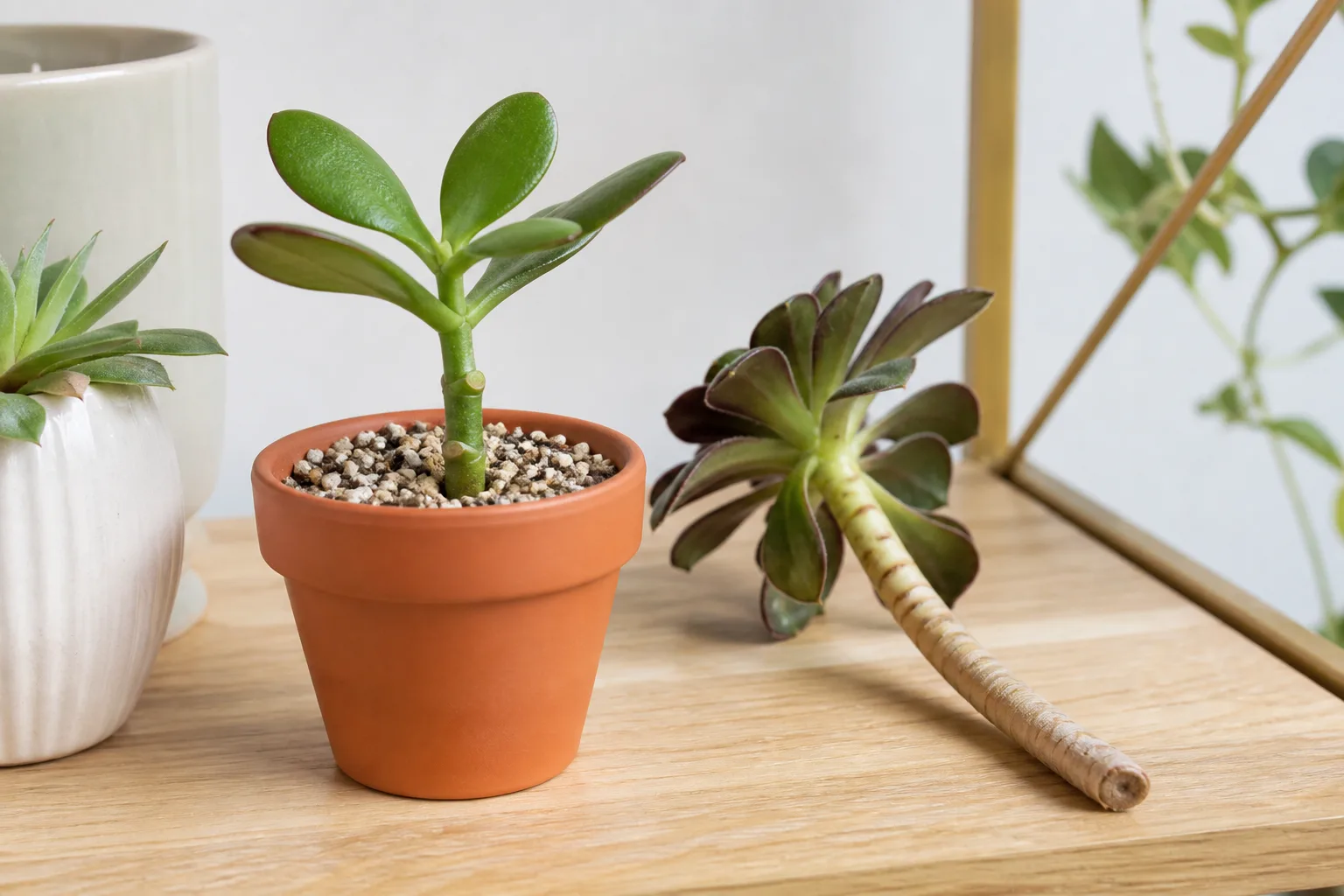
Stem cuttings are the reliable way to make another rainbow elephant bush. Take them while the plant is actively growing, using a clean blade to cut a healthy, firm stem about 3 to 5 inches long. Choose a piece with several leaf pairs and at least one node near its base; avoid stems with mealybugs, soft spots, or recent sunburn. If you are pruning for shape, suitable healthy offcuts can become starts.
Remove leaves from the lowest inch or two, leaving foliage near the tip. Let the cut end dry in a bright, shaded, airy place until the surface is sealed, usually a day or a few days depending on warmth and humidity. Set the callused base into a small pot of barely damp, gritty mix, just deep enough to stand upright. Keep it warm in bright indirect light, not direct midday sun. Do not keep the pot saturated while roots are forming.
Patience matters more than repeated handling. A cutting may not show new leaves immediately because it first has to form roots, and a leafless or slightly shriveled lower section is not necessarily a failure if the stem stays firm. After several weeks, a gentle tug that meets resistance suggests it has anchored; then resume the parent plant’s soak-and-dry routine. Wisconsin Extension reports that warm stem cuttings can root within four to six weeks, though conditions and cutting size affect timing. (Wisconsin Horticulture, University of Wisconsin–Madison Extension)
Why leaves and water rooting are less predictable
A fallen leaf may root or persist for a while, but not every detached leaf contains the tissue needed to make a complete new plant. A stem cutting includes nodes and buds that can produce shoots, so it is a better choice when you want a predictable clone. Do not keep plucking leaves from the parent to multiply it; that removes stored energy without giving you the same odds as a branch cutting.
Water rooting is possible, but it is not necessary and adds a transition when the cutting is moved into soil. If you use water, keep leaves above the waterline, change the water when it becomes cloudy, and transfer the cutting once roots are short and visible rather than waiting for a tangled mass. Direct rooting in an airy mix avoids that water-to-soil transition. Epic Gardening also describes stem cuttings as the easiest method and notes that leaf propagation is slower and less dependable. (Epic Gardening)
Repot only when the roots or mix call for it
Repot in spring or early summer if roots fill the container, emerge from the drainage hole, the plant dries unusually fast despite normal conditions, or the mix has broken down and stays wet. A pot that is slightly snug is usually easier to manage than an oversized one. When you do repot, move up only one pot size and use a container with drainage; set the root ball at its former depth rather than burying the stem base.
Let the plant’s condition determine whether to disturb it. If it is healthy and the mix drains, a tight root ball by itself is not an emergency. If you suspect rot, unpot it and check roots: healthy roots are firm, while rotten roots are soft, dark, or foul-smelling. Trim damaged tissue with clean tools, discard soggy old mix, and replant into fresh dry or barely moist succulent mix. Wait several days before the first thorough watering so fresh cuts have time to dry.
After a routine repot, keep the plant in bright indirect light while roots settle, then return it gradually to its usual exposure. Do not combine repotting, heavy pruning, strong direct sun, and fertilizer in the same week. Each change is manageable on its own; stacking them makes it harder to tell what caused stress and gives the plant fewer stable conditions for recovery.
Diagnose changes before changing care
A symptom is a clue, not a diagnosis. Before moving the plant or watering it, note whether the soil is dry or damp, whether the stem is firm, what the newest leaves look like, and whether the plant recently changed location. That short check prevents a common mistake: giving more water to a plant that is already failing in wet mix or moving a thirsty plant into stronger sun.
Use the most recent change to narrow the cause. Leaf scorch after moving outdoors points toward light acclimation; limp leaves in wet soil point toward a root-zone problem; stretched stems point toward low light. One old leaf turning yellow may simply be aging. Several leaves changing together, repeated leaf drop, or stem softening deserves closer inspection.
Yellow or dropping leaves
A few old leaves at the base can yellow and fall without signaling a crisis. Widespread yellowing or leaf drop needs context. If the pot is heavy and the mix remains damp, pause watering and inspect drainage. If stems are stretched and leaves are otherwise firm, increase usable light gradually. If pale, crispy patches appear on the side facing a window, filter intense direct sun rather than moving the plant to a dark corner.
Sudden leaf loss may follow a move between indoor and outdoor conditions, a cold draft, or a sharp change in sunlight. Return the plant to a stable bright spot, remove only dead tissue, and wait to see what new growth does. Do not respond to every fallen leaf with pruning, misting, and repotting at once; changing one factor at a time gives you a clearer result.
Wrinkled leaves, soft stems, and suspected rot
Thin or wrinkled leaves can signal that stored water is running low, particularly if the root zone is dry and stems remain firm. Give the plant one thorough watering, allow it to drain, and observe over the next few days. If the soil is already damp, more water is not the fix. Look for soft, translucent leaves, a sour smell, blackened stem bases, or roots that collapse when touched—signs that justify checking for rot.
If the mix is wet for a long time, empty the cachepot and improve the conditions that keep it wet: replace compacted mix, clear drainage holes, or use a pot that is not much larger than the root ball. Do not put a weak plant straight into blazing sun or feed it while the roots are compromised. Once the plant stabilizes, return to normal light and watering in small steps.
Pests and surface damage
Inspect leaf joints and stem forks for mealybugs, which look like small white cottony clusters, and look for hard scale bumps or fine webbing that can indicate spider mites. Isolate an infested plant from nearby houseplants, then remove visible insects with a damp cloth or cotton swab. Check again every few days because eggs or hidden insects may escape the first pass.
Succulent leaves can be sensitive to sprays, and University of Wisconsin Extension warns that some pesticide sprays, particularly petroleum-based products, can damage elephant bush foliage. Test any labeled product on a small part of the plant and follow its instructions rather than mixing a homemade treatment. For ordinary dust or water spots, gently wipe the leaves and improve airflow; avoid frequent misting, which does not solve a pest problem and leaves foliage wet without fixing the cause.
Winter rest, flowers, and expectations
Short days reduce growth, so a rainbow elephant bush may need less water and no fertilizer through winter. Keep it in the brightest warm location available, away from cold glass at night and hot heater blasts. Wait for the root zone to dry deeply before watering again. If the room is cool and dim, the plant can go a surprisingly long time between drinks; if it remains warm and gets strong light, check its soil rather than withholding water by rule.
Flowering is uncommon for indoor plants and should not be the measure of success. Mature elephant bush can produce small pale pink or white flowers in warm, mild climates, often after a dry winter, but container plants may never bloom. Do not deliberately stress a small plant or withhold water until it wilts just to trigger flowers. Compact new growth, firm stems, and healthy leaves are better signs that the care routine is working.
Conclusion
Give rainbow elephant bush the brightest gentle light you can, introduce direct sun slowly, and water only after the root zone has dried. A gritty mix, drainage hole, warm winter placement, and light pruning will do more for the plant than frequent feeding or a fixed watering schedule. If leaves change, check soil moisture, stem firmness, and recent light or temperature shifts before making another change; the variegated form usually rewards steady conditions more than intervention.



