Jade Plant Care Guide: Light, Watering, Soil and Problems
Learn jade plant care for Crassula ovata: bright sun, soak-and-dry watering, gritty soil, edema tips, and pet toxicity.
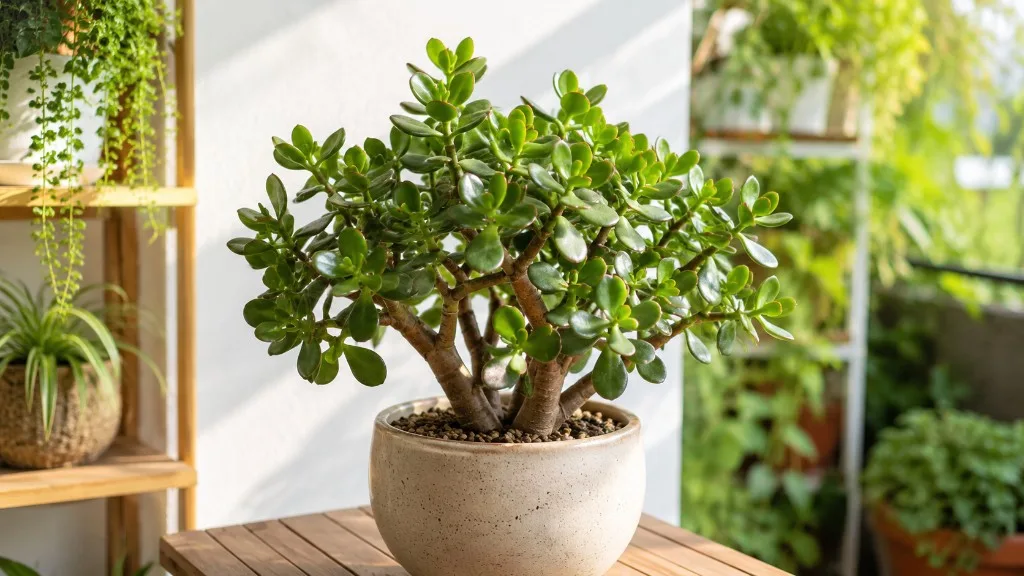
Jade Plant Care: Bright Light, Dry-Down Watering, Fast Drainage
Jade plant care works when you treat Crassula ovata as a bright-light succulent with a water tank in its leaves—not as a tropical foliage plant that likes evenly moist soil. Thick leaves and woody stems forgive missed drinks. Wet roots do not. The routine that keeps plants compact for decades is short: strong light, water only after the mix has dried through the pot, a fast-draining succulent mix, and protection from frost and curious pets.
Most indoor failures follow one pattern. The jade sits a few feet back from a “bright” room, the peat-heavy nursery mix stays damp for weeks, and soft yellow leaves or a mushy stem base show up before anyone connects light, drainage, and watering. Fix placement and soil first. Watering intervals become obvious once the plant actually uses water.
A healthy jade stays firm and compact when it gets real sun hours and a mix that empties fast after each soak.
Quick Care Snapshot for Indoor Crassula ovata
For healthy indoor jade, aim for four or more hours of direct sun once acclimated, water when the mix is dry deep in the pot, use a gritty succulent mix with a drainage hole, and fertilize lightly only during active growth. Clemson HGIC and Wisconsin Horticulture both target four or more hours of direct sunlight for best results. (Clemson HGIC) (Wisconsin Horticulture)
| Care factor | Baseline target | Open this when you need depth |
|---|---|---|
| Light | 4+ hours strong/direct sun when acclimated | Jade Plant light guide |
| Water | Soak when dry through the pot; empty saucer | Jade Plant watering guide |
| Soil | Gritty succulent mix, fast drain | Jade Plant soil guide |
| Feed | Dilute fertilizer in spring–summer only | Jade Plant fertilizer guide |
| Temp | Roughly 65–75°F days; protect from frost | Jade Plant hub overview |
A jade in a small terracotta pot on a south sill will not dry on the same clock as one in a large plastic nursery pot under office LEDs. Treat calendar ranges as check reminders, not commandments.
How This Page Fits the Jade Plant Hub
Use this guide when you want one jade-specific care system—light, watering logic, soil, pests, pet safety, and the failure modes that show up most often on Crassula ovata. Use the Jade Plant care hub when a single symptom needs its own workflow: overwatering, root rot, yellow leaves, mealybugs, leggy growth, or step-by-step propagation, repotting, and pruning.
If general dry-soil watering is still new, pair this with how to water indoor plants the right way. The finger-and-pot-weight habit transfers directly because jade stores water the way many succulents do.
What Crassula ovata Is
Jade plant is a woody succulent grown for glossy, oval leaves on stout stems that slowly thicken into a miniature-tree form. Missouri Botanical Garden describes Crassula ovata as a South African branched succulent shrub that can reach about 3 to 6 feet outdoors in warm climates, while indoor plants commonly stay closer to 18 to 30 inches for years. (Missouri Botanical Garden) Slow growth is a feature: less frequent repotting, a stable silhouette, and a plant that can live for decades when roots stay healthy.
Wisconsin Horticulture notes that jade grows well in restricted root space, likes typical indoor warmth and dryness, and tolerates some neglect—as long as light and drainage are reasonable. (Wisconsin Horticulture) That reputation becomes a trap when “neglect” means a dark corner and weekly water. Survival and compact, red-edged growth are different goals.
Naming Traps, Native Range, and Indoor Size
The accepted name is Crassula ovata in the stonecrop family Crassulaceae. Older tags may say Crassula argentea; botanists treat these as the same species for practical care. Common names include lucky plant, friendship plant, jade tree, and money plant. One naming trap: “money plant” sometimes means Pachira aquatica, a tropical tree with different water needs. If your plant has fleshy coin-shaped leaves on woody stems, you are in jade-plant care territory. (NC State Extension)
Native range matters. In South Africa, jade grows on dry, rocky slopes with strong sun and fast drainage. Indoors, that biology means bright light, complete dry-down between soaks, and gritty soil. Dim survival is possible for months because stored water buys time, but etiolated stems and rot risk climb as water use slows.
Cultivars Worth Knowing Indoors
Most care rules transfer across common cultivars. Leaf shape changes the look more than the watering logic. Wisconsin lists ‘Gollum’ (nearly tubular leaves with suction-cup tips), ‘Hobbit’ (tubular reddish ends, dense foliage), ‘Sunset’ / gold-edged types, and variegated forms among others. (Wisconsin Horticulture) Clemson likewise describes Hobbit and golden-edged selections as the same bright-light, fast-drainage plant with tubular or edged leaves. (Clemson HGIC)
Variegated and tubular types often want the same soak-and-dry rhythm but show stress faster in low light because less green tissue means less energy. Keep them closer to the glass than a deep-green ovata if you want color and tight internodes.
Light: Windows, Acclimation, and Grow Lights
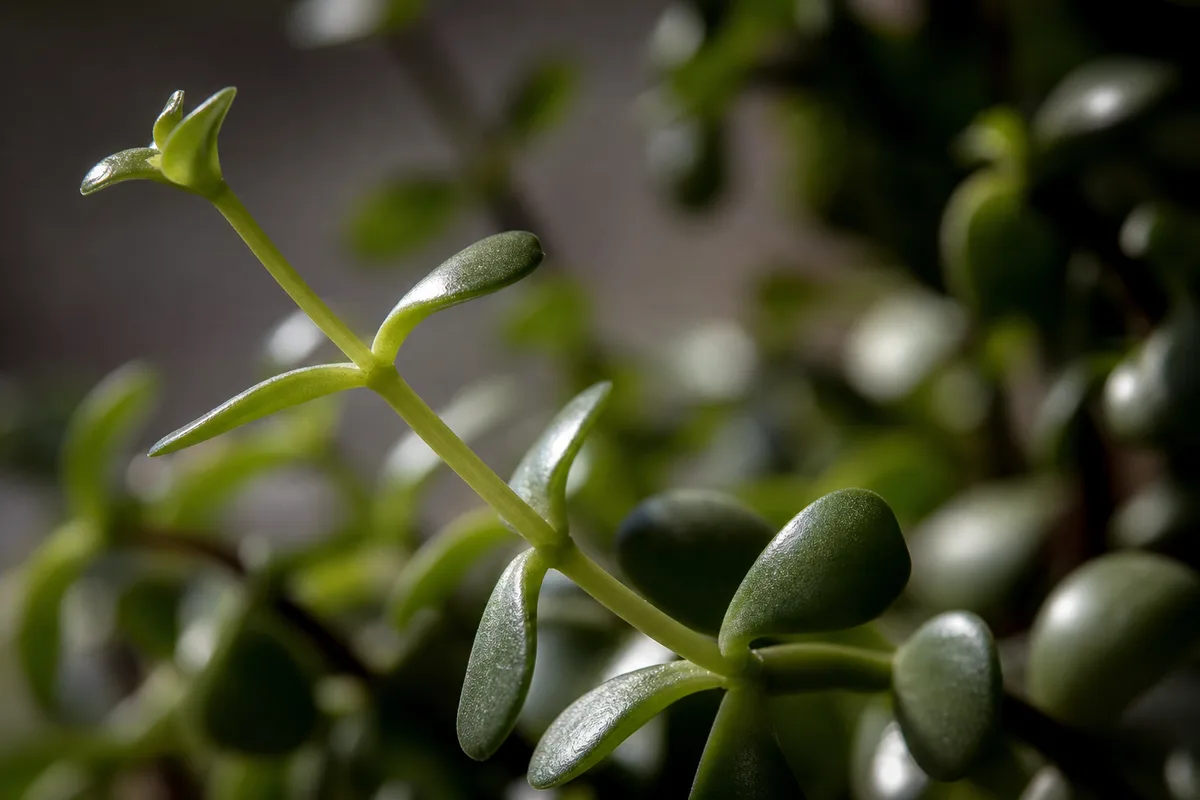
Jade plant is a sun-loving succulent, not a shade houseplant. Penn State Extension recommends four or more hours of direct sunlight daily for indoor jade and notes that insufficient light produces pale green leaves without attractive red edges. (Penn State Extension) Wisconsin adds that plants in bright indirect light alone often develop deep green leaves and drooping, stretched stems rather than compact growth and reddish coloration. (Wisconsin Horticulture)
Light also sets water use. A bright jade dries its pot on a predictable rhythm. A stretched jade in a dim corner holds moisture longer and is far more vulnerable to root rot if you keep watering on a sunny-windowsill schedule. Light is the throttle for everything downstream.
In the Northern Hemisphere, a south-facing window usually delivers the strongest daily light. An east window is often excellent because morning sun is bright but cooler. West works with careful summer distance from hot glass. North windows rarely provide enough direct sun without a grow light. Keep the pot close to the glass without pressing leaves against freezing winter panes or scorching summer glass. A plant six feet from a south window is not getting south-window light.
If natural sun is weak, run a full-spectrum LED above the canopy on a timer; Penn State notes that about twelve hours of artificial light can meet sunlight needs when the fixture stays close enough that the plant does not stretch. (Penn State Extension) For placement diagrams and grow-light distance, use the Jade Plant light guide.
Etiolation vs Scorch
Too little light shows as long gaps between leaf pairs, pale or floppy stems, leaning hard toward the window, and loss of red margins. That stretch is etiolation. Pruning alone will not fix it permanently until light improves—see leggy growth on Jade Plant and not enough light.
Too much sudden light shows as bleached patches, brown crispy spots on the sun-facing side, or leaf drop after a move. Leaves formed in low light burn if you slam the pot against hot south glass in July. Step up exposure over two to three weeks. Outdoor summer vacations help woodiness and red margins, but acclimate gradually and bring the plant inside before frost. Damaged tissue will not re-green; judge recovery by newest leaves.
Watering: Soak-and-Dry, Leaf Texture, Winter Rest, and Edema
Water jade when the root-zone mix is dry, not when the calendar says so. Wisconsin Horticulture states jade plants do best when soil is allowed to dry out between deep waterings, with liberal water in active growth and restricted watering in winter when plants are semi-dormant. (Wisconsin Horticulture) Clemson similarly warns that jade is highly susceptible to rot from overly frequent watering or poorly draining mix, while extreme drought can cause leaf drop. (Clemson HGIC)
For many homes, a rough active-season range is every two to four weeks, stretching to four to eight weeks in cool, short days. A small terracotta pot in a south window may dry in about ten days; a large plastic pot in a dim office may go six weeks in December. Details live in the Jade Plant watering guide.
When the mix is dry about two inches (5 cm) deep and the pot feels light, water thoroughly until excess runs from the drainage hole. Empty the saucer. Do not leave the nursery pot sitting in a cachepot of runoff. Shallow frequent sips keep the upper mix damp while the lower zone never fully breathes—a classic setup for weak roots and fungus gnats.
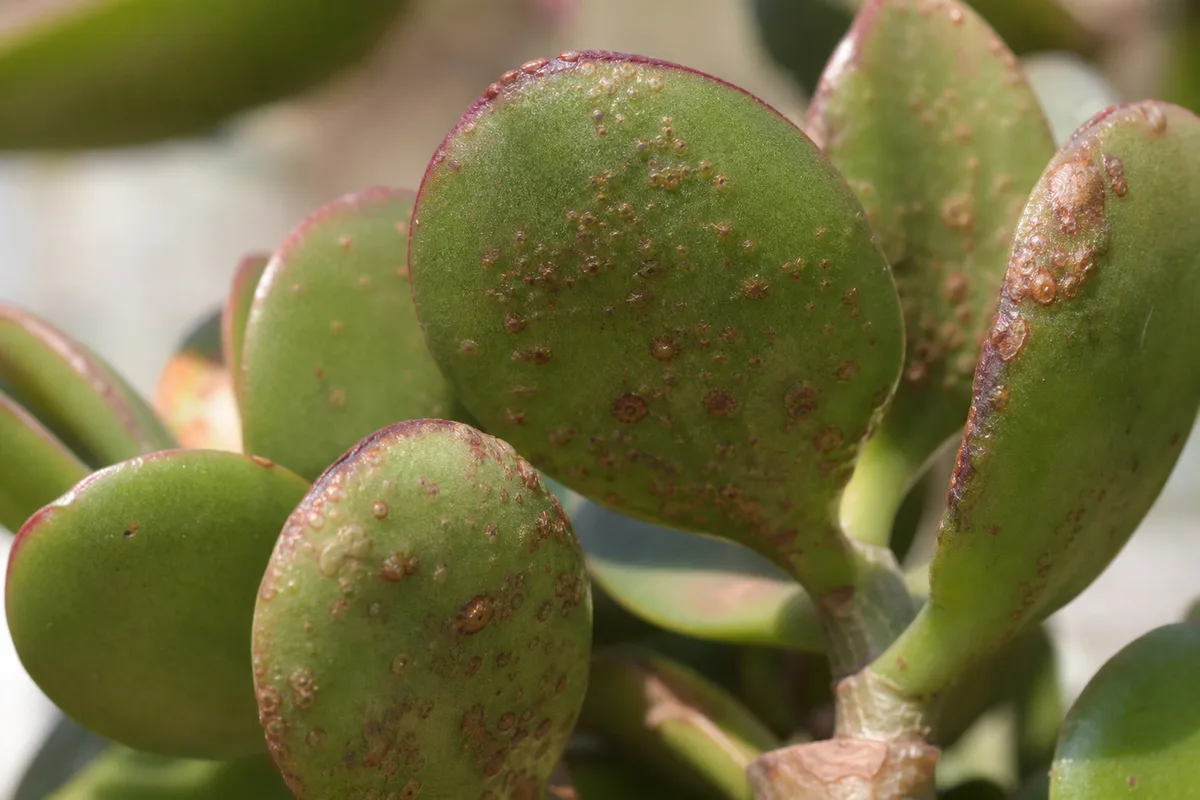
UConn notes that excess water uptake in cool, cloudy weather can also cause edema—corky brown spots on leaves—when roots take up more water than leaves can use. (UConn Home Garden) If corky spots appear with persistently damp soil, lengthen the dry-down rather than misting or feeding. See edema on Jade Plant.
In fall and winter, Missouri Botanical Garden notes jade appreciates a resting period with reduced watering from fall to late winter. (Missouri Botanical Garden) Keep soil on the dry side, pause fertilizer, and pull pots slightly off freezing glass on cold nights.
Drought vs Rot Decision Tree
Texture separates thirst from rot better than leaf color alone.
| What you feel / see | Pot / soil context | Most likely cause | First move |
|---|---|---|---|
| Firm leaves with slight wrinkling | Light pot; mix dry at depth | Drought stress | Thorough soak; empty saucer |
| Soft, translucent, or mushy leaves | Heavy pot; mix still damp | Overwatering / early rot | Stop watering; check roots |
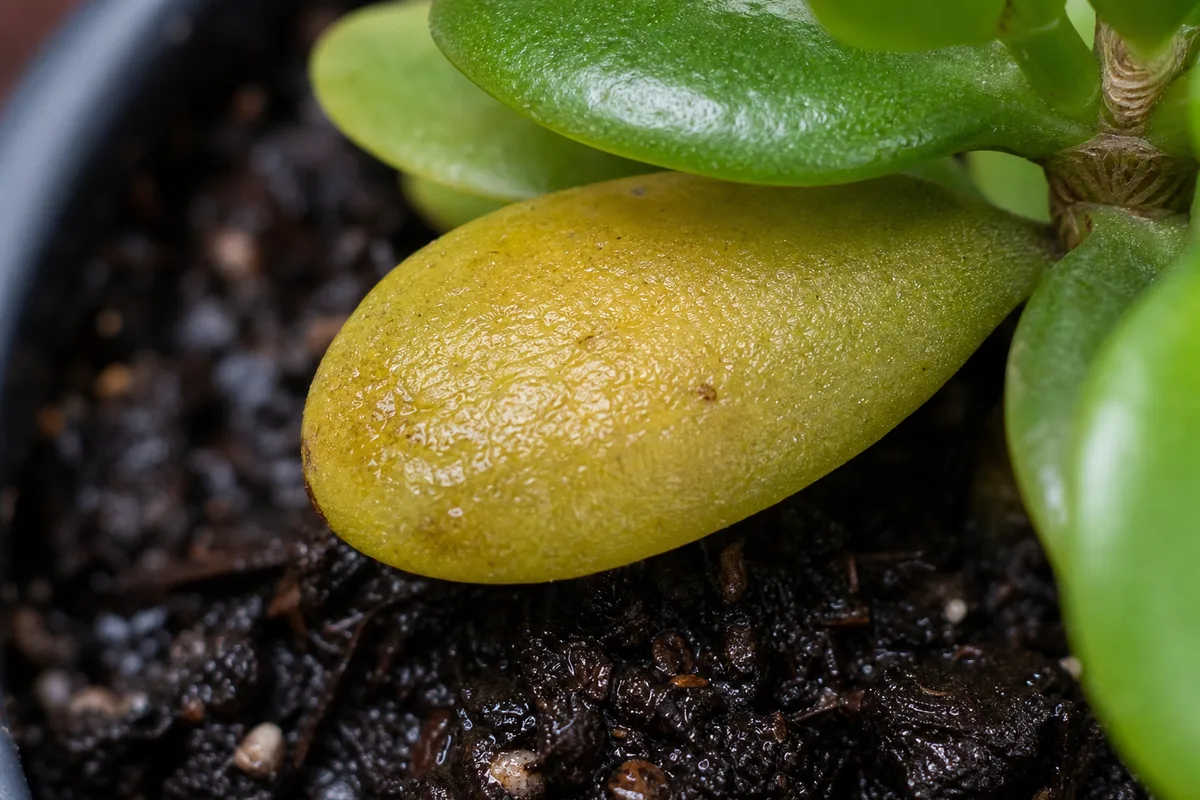
| Yellow leaves + soft stem base | Wet mix; sour smell | Root rot | Unpot; cut mush; restart cuttings if needed |
| Corky brown spots | Cool, cloudy week; damp mix | Edema | Longer dry-down; more light/air |
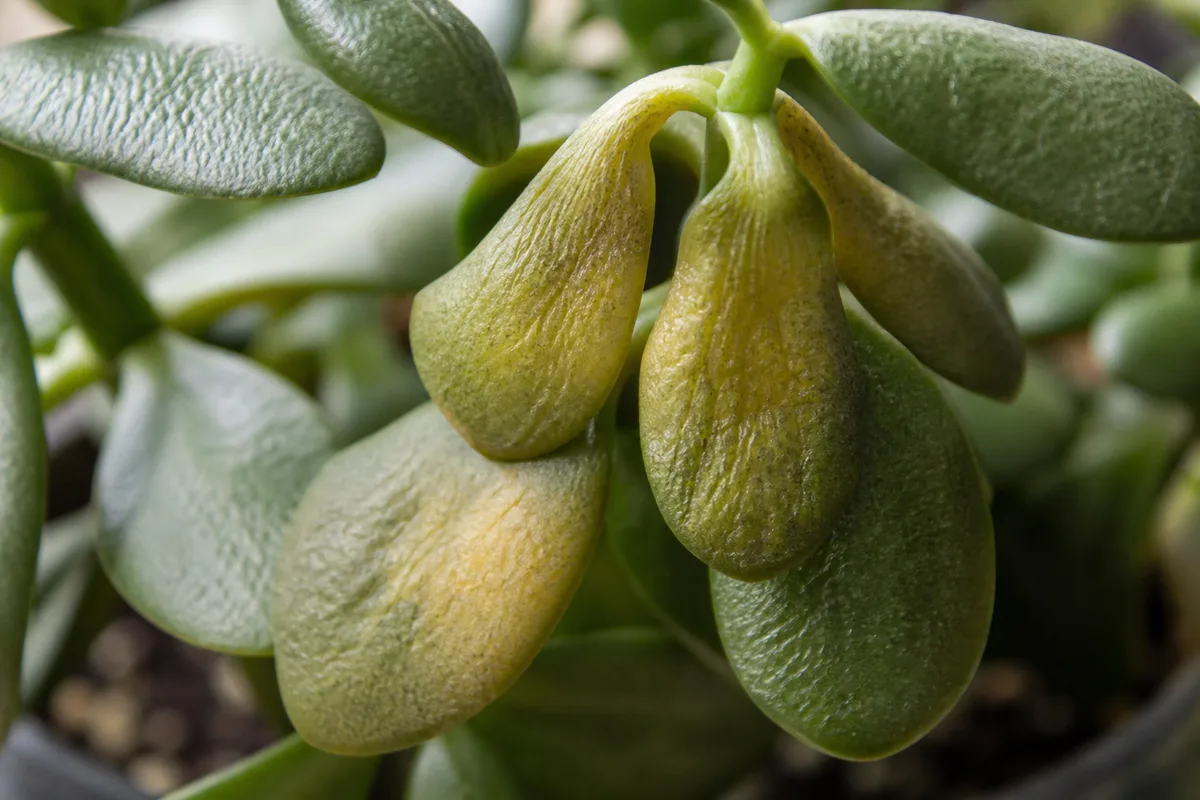
Soft, collapsing tissue with a still-wet mix points to rot—not thirst. Adding water accelerates collapse.
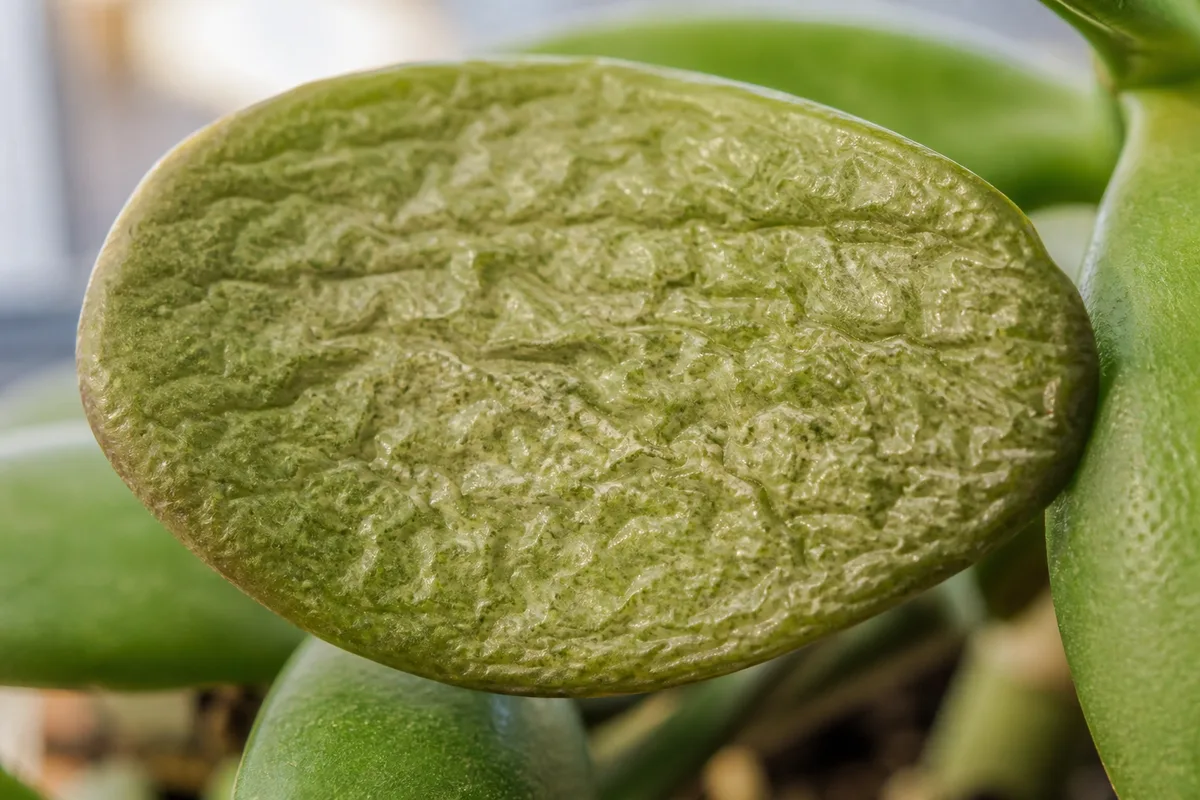
Wrinkled but still mostly firm leaves on a light, dry pot usually mean it is time to soak—not to repot or fertilize.
Soil, Pot, and Repot Timing
Jade plants are intolerant of moist, poorly drained soils. (Missouri Botanical Garden) Dense peat houseplant mix is the most common silent killer because leaves stay plump while roots smother. Drainage is infrastructure: water must leave the pot, and air must return to the root zone afterward.
Always use a pot with a drainage hole. Unglazed terracotta accelerates dry-down and helps top-heavy plants stay upright. Move up only one pot size when repotting; oversized containers hold unused wet mix that roots cannot colonize quickly. Wisconsin suggests repotting about every two to three years or when the plant becomes top-heavy and tips easily. (Wisconsin Horticulture)
Use a succulent or cactus mix amended for speed. Clemson recommends a cactus mix with added organic matter, or roughly one part sterilized organic soil, one part sphagnum peat, and three parts coarse sand by volume. (Clemson HGIC) UConn targets a pH near 6.5 and notes that clay or ceramic pots suit these hefty plants. (UConn Home Garden)
A practical DIY blend used in LeafyPixels jade plant-detail guidance is about 40% quality potting base, 30% perlite, and 30% coarse grit or pumice. After watering, the top inch should feel dry within a few days in a typical room. If the surface stays damp for two weeks, the mix is too organic, the pot is too large, or light is too low—often all three. Full recipes and pot sizing live in the Jade Plant soil guide and repotting guide.
Temperature, Humidity, Frost, and Flowering Odds
Clemson HGIC recommends daytime temperatures about 65 to 75°F and nighttime temperatures about 50 to 55°F, with protection from drafts and cold window glass in winter. (Clemson HGIC) UConn similarly keeps plants around 60 to 70°F by day with nights in the 50s when encouraging buds. (UConn Home Garden) Frost kills jade—The Old Farmer’s Almanac advises bringing outdoor summer plants inside once temperatures fall toward about 50°F (10°C) in autumn. (The Old Farmer’s Almanac) In USDA Zones 11–12 it can live outdoors year-round; elsewhere it is a container houseplant or summer patio plant. (Missouri Botanical Garden)
Humidity is easy. Jade prefers average to low household humidity and does not need misting. Misting adds leaf wetness without fixing root-zone dryness. Very dry heated air may invite spider mites, so inspect leaf undersides in winter rather than spraying the plant daily.
Flowering is a bonus, not a baseline. Wisconsin Horticulture describes winter bloom after cool nights around 55°F, reduced fall watering, and long nights without supplemental light. (Wisconsin Horticulture) Many indoor plants never see that combination under LEDs and warm rooms. Treat starry white or pink clusters as a pleasant surprise on a mature specimen—not as a report card on your care if the plant stays firm and compact.
Fertilizer, Pruning, and Propagation Basics
Jade is a light feeder. Soft, stretched growth and white salt crust usually mean too much fertilizer, not too little. Dilute to half strength or less, apply to moist soil, and skip winter feeds. Deep steps live in the Jade Plant fertilizer guide.
Prune to shape a thicker trunk and fuller canopy. Cut just above a leaf pair with clean tools, then let wounds dry. Wisconsin notes spring cuts to a lateral branch help the trunk support heavy foliage. (Wisconsin Horticulture) Use the Jade Plant pruning guide for bonsai-style structure.
Propagation is straightforward from stem cuttings. Take a healthy two- to four-inch tip, strip lower leaves, and let the cut callus for several days before inserting into barely moist gritty mix. Wisconsin notes cuttings root most easily in summer but can be taken year-round, and that dried cut surfaces resist rot better. (Wisconsin Horticulture) Leaf cuttings work more slowly. Do not propagate from soft, rotting, or heavily infested parents. Timing lives in the Jade Plant propagation guide.
How to Reconcile Conflicting Fertilizer Schedules
Clemson suggests fertilizing about once every three to four months with a liquid houseplant fertilizer and waiting four months after repotting before feeding. (Clemson HGIC) UConn recommends feeding every other month from April through September with a flowering houseplant fertilizer. (UConn Home Garden) Penn State suggests a balanced liquid fertilizer two to three times in spring and summer, warning that overfeeding can cause leggy growth. (Penn State Extension)
Use this decision rule:
- Bright south/east sill, active new leaf pairs, mix drying in ≤3 weeks: follow the denser end (roughly every 6–8 weeks at half strength from spring through early fall).
- Moderate light, slow growth, or large pot that stays wet longer: follow Clemson’s every-3–4-months cadence—or skip a feed.
- Winter, newly repotted, soft growth, or salt crust on the surface: do not fertilize until roots and light are stable.
Fertilizer never replaces missing photons. Feeding a stretching plant in a dim corner only softens growth further.
Problems: Yellow Leaves, Soft Trunks, and Mealybugs
Most problems are environmental: too much water, poor drainage, low light paired with wet soil, sudden harsh sun, cold drafts, or pests hiding in leaf axils. Inspect in that order—soil moisture and pot weight first, then light, then pests—before changing three variables at once.
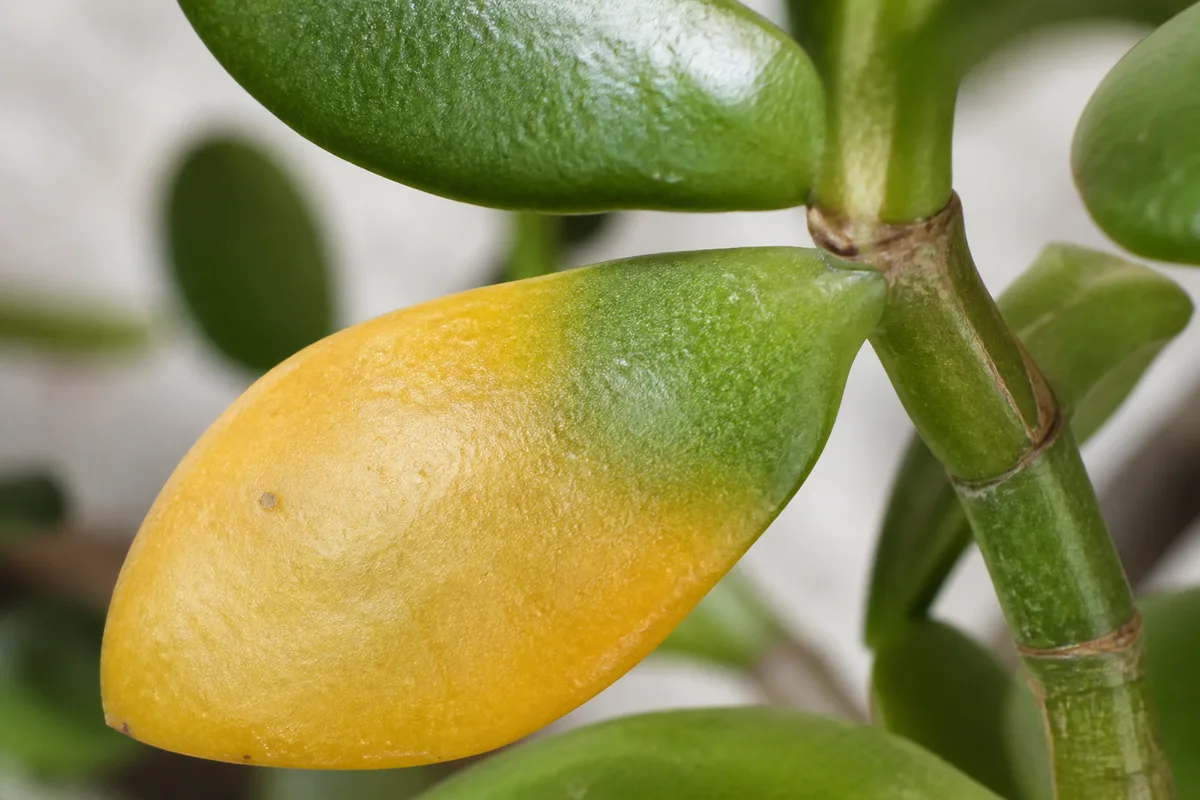
Yellow leaves are common and not diagnostic alone. Wet soil plus soft stems or a sour smell points to overwatering and possible root rot. Dry, light soil with wrinkled leaves points to drought. Occasional lower-leaf drop on an otherwise firm plant can be normal aging. Mass drop with a blackening stem base is an emergency: unpot, cut away mushy roots and stem tissue, and restart from firm cuttings if the main trunk is compromised. For color-only troubleshooting, use yellow leaves on Jade Plant and leaf drop.
Mealybugs are the most common jade pest. They look like white cotton in leaf axils and branch forks. Clemson recommends wiping them with alcohol on a cotton swab and warns that insecticidal soap may damage jade plants. (Clemson HGIC) Wisconsin likewise flags phytotoxicity risk with insecticides on succulent leaves. (Wisconsin Horticulture) Isolate the plant, dab every visible colony, and recheck weekly for several weeks. UConn and Missouri Botanical Garden also list mealybugs, scale, spider mites, and aphids as occasional issues. (UConn Home Garden) (Missouri Botanical Garden)
White cotton in leaf axils is usually mealybugs—dab with alcohol and recheck weekly rather than spraying soap on jade.
Dedicated pages: mealybugs on Jade Plant, spider mites, and scale insects.
Pet Safety and Toxicity
Jade plant is not pet-safe. The ASPCA lists jade plant (Crassula argentea / Crassula species) as toxic to dogs, cats, and horses, with clinical signs including vomiting, depression, and incoordination. (ASPCA) NC State also flags the species as a problem for cats, dogs, and horses. (NC State Extension)
Keep jade on high shelves or in rooms pets cannot access. If ingestion is suspected, contact a veterinarian or ASPCA Animal Poison Control at (888) 426-4435. Do not wait for severe symptoms. Common names are unreliable when you are shopping for pet-safer succulents—verify each species on the ASPCA list individually.
First-Hand Notes From Growing Jade Indoors
These notes are LeafyPixels editorial observations from plants kept while researching the jade plant hub, not a controlled trial. Conditions matter; your intervals will differ.
Terracotta vs plastic dry-down (north-central Ohio, USDA zone 6a, heated winter room ~68°F). A mature Crassula ovata in a 6-inch unglazed terracotta pot on an unobstructed east sill with morning sun dried to a light pot weight in about 10–14 days in May–June after a full soak. The same root mass moved into a plastic nursery liner of similar volume, still on that sill, stayed heavy for 18–24 days before the skewer showed dryness at depth. Same plant, same room—the liner held water long enough that a “water every two weeks” habit would have overlapped wet soil. We kept the terracotta and slowed winter checks to 4–6 weeks once nights cooled and growth paused.
Mealybug treatment outcome. Cottony colonies appeared in axils on a ‘Gollum’-type specimen after a crowded shelf summer. Alcohol swabs every 3–4 days for three weeks, plus isolation, cleared visible insects; one soft tip that stayed sticky was cut and discarded. We did not use insecticidal soap after Clemson’s phytotoxicity warning—leaf spotting from spray damage would have muddied diagnosis.
Mix performance. The 40% potting base / 30% perlite / 30% coarse grit blend from LeafyPixels jade plant-detail guidance drained within minutes in terracotta and showed a dry top crust in 2–4 days under that east window. Straight peat houseplant mix in a decorative cachepot without a liner stayed damp past two weeks and produced the first soft lower leaves we saw on any jade in the set—prompting an immediate unpot and mix change.
Related Guides
- How to water indoor plants the right way — dry-soil checks that prevent jade overwatering
- Indoor succulent care — shared light and drainage rules for Crassula and other succulents
- Aloe vera care — another bright-light succulent with soak-and-dry watering
- ZZ plant care — low-water alternative for rooms that stay dimmer
- Snake plant care — upright low-maintenance option when jade light is unavailable
First-Week Checklist After You Bring Jade Home
- Quarantine and inspect axils for mealybugs before it joins other plants.
- Do not repot on day one unless the mix smells sour, stays swampy, or pests are obvious.
- Place it where it can get real sun hours (south or east glass, or a close grow light)—not a decorative mid-room shelf.
- Learn dry-down: check pot weight and a skewer at depth before the first drink.
- Empty the saucer after every soak; lift nursery liners out of cachepots.
- Skip fertilizer for at least a month while the plant adjusts.
- If leaves wrinkle on a light pot, soak once. If leaves soften on a heavy pot, stop watering and use the hub’s root-rot or overwatering pages linked above.
Conclusion
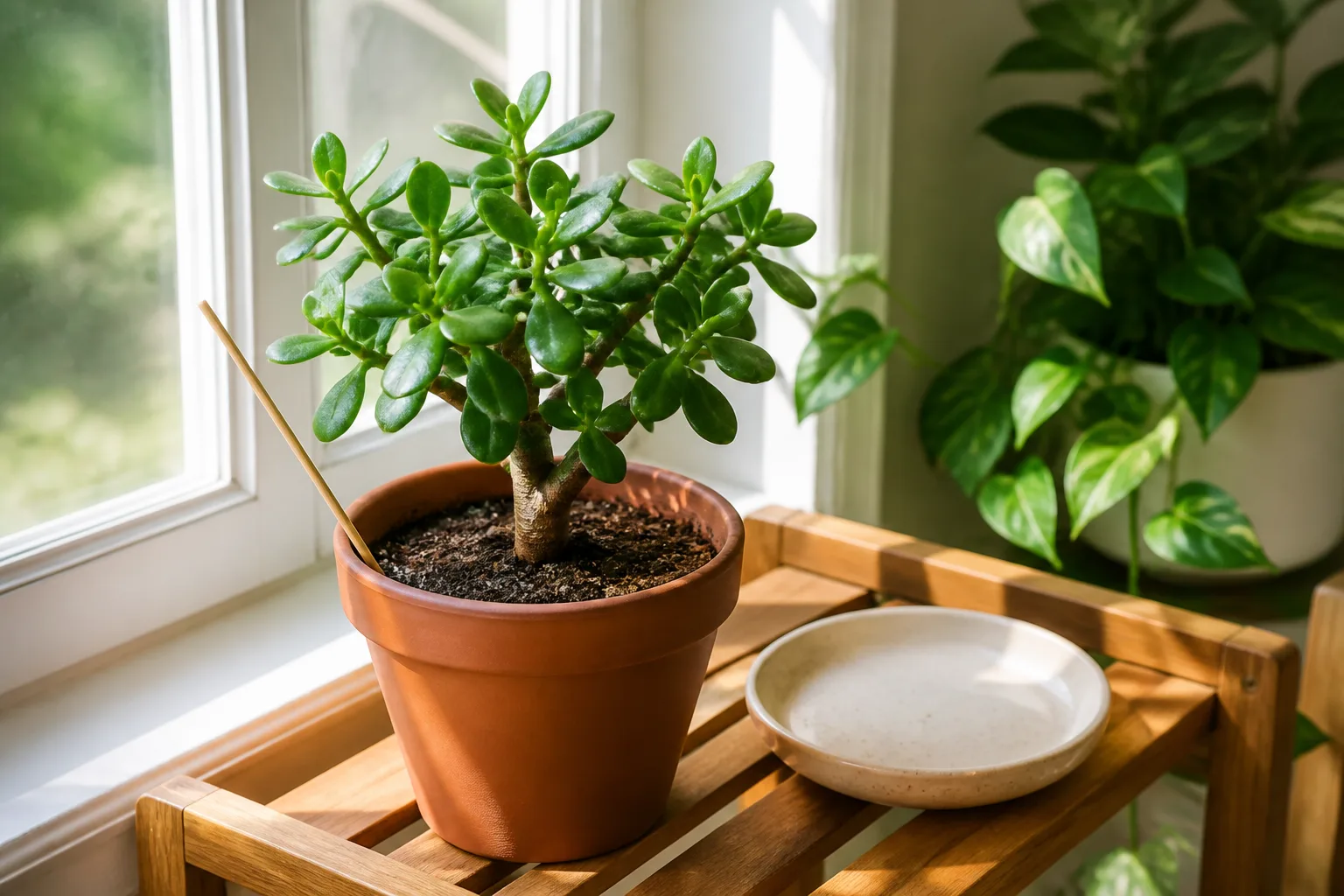
Good jade plant care is a short system: bright sun, full dry-downs, gritty draining soil, winter restraint, and sober pet placement. Read new growth for light quality, leaf texture plus pot weight for water need, and the stem base for root health. When a symptom needs its own page instead of another guess from leaf color alone, open the Jade Plant care hub and follow the matching problem or topic guide.