Root Rot on Jade Plant: Causes, Checks & Fixes
Quick answer
Root rot on jade plant usually starts with chronic wet soil: leaves soften on a heavy pot, roots turn brown and mushy, and the stem base can collapse. Stop watering first, unpot to confirm root condition, then trim rot and repot into fast-draining mix.
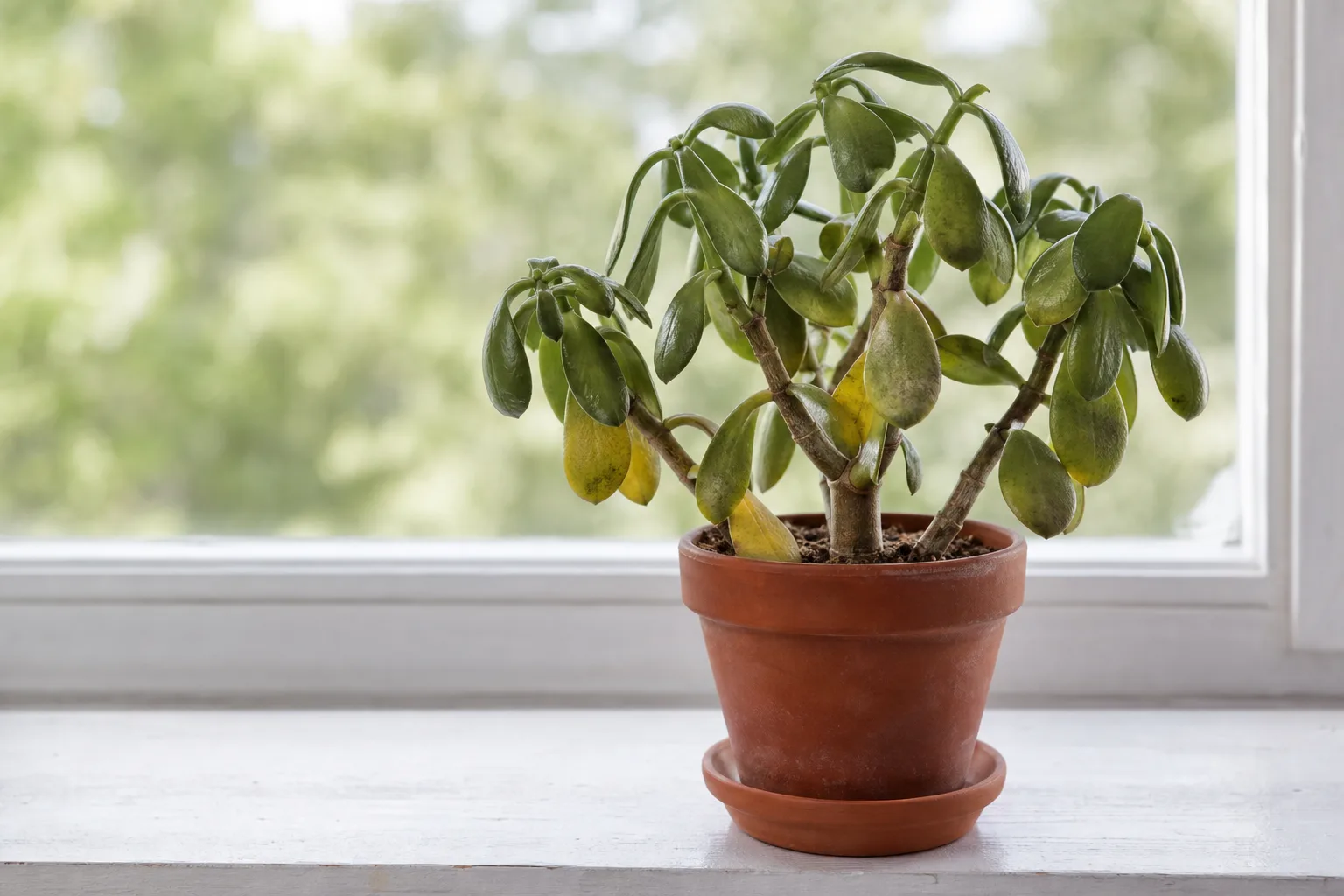
Root Rot on Jade Plant: Causes, Checks & Fixes
This guide covers root rot on Jade Plant. See also the general Root Rot guide, watering, and light pages for this plant.
Root Rot on Jade Plant: Causes, Checks & Fixes
Quick answer
Root rot on jade plant is usually a wet-soil problem, not a fertilizer problem or a single bad watering. Crassula ovata is adapted to dry conditions and is intolerant of moist, poorly drained soils. The first fix is simple: stop watering immediately. Then unpot and inspect roots before doing anything else.
If roots are still partly firm and the trunk base is hard, recovery is realistic. If the stem base is soft and dark while soil smells sour, treat it as urgent and move straight to rescue steps in this guide.
Why Jade Plant gets root rot
Jade evolved on dry rocky hillsides in South Africa, so its roots expect air between waterings. Indoors, three patterns usually trigger rot:
- Calendar watering instead of moisture-based watering
- Slow-draining soil that stays wet too long around roots
- Winter overwatering during semi-dormancy, when jade uses less water (Clemson HGIC)
Pacific Northwest disease guidance notes the primary cause of rotting jade plants is overwatering. Once roots are oxygen-starved, root tissue declines and rot organisms can spread.
What root rot looks like on Jade Plant
Early root rot can look like thirst, which is why people accidentally make it worse.
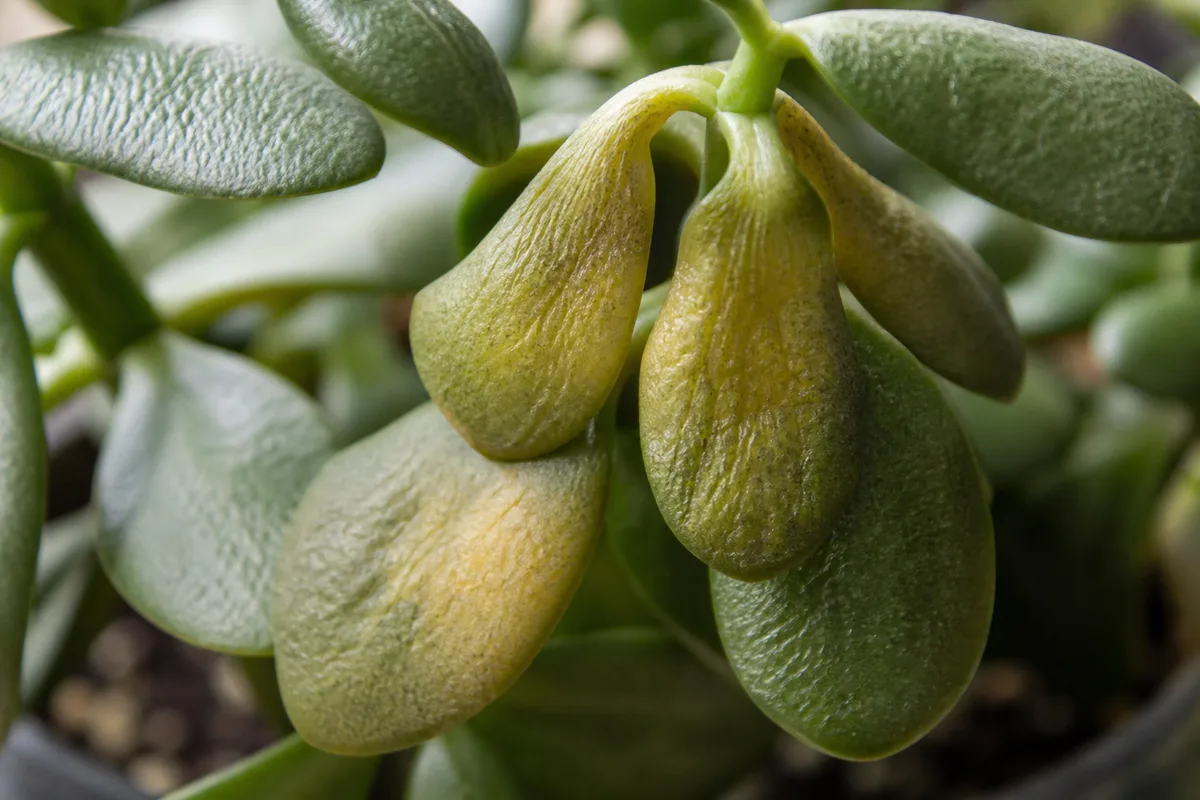
Root Rot symptoms on Jade Plant - compare with healthy tissue on the same plant.
- Leaves soften, wrinkle, or droop while the pot still feels heavy
- Older leaves yellow and drop
- Growth stalls even in warm season
- Soil may smell sour
As rot advances, roots turn brown and mushy, and the woody stem base can soften or darken. Wisconsin Extension notes a common rot pattern: plants wilt even when soil is wet, with soft brown roots and possible odor. On jade, a soft crown is the warning sign to act the same day.
Root rot vs lookalikes on jade
Use this quick split before you water:
- Likely root rot: heavy wet pot, soft stem base, mushy roots, sour smell
- Likely underwatering: very light pot, dry mix throughout, wrinkled but firm leaves
- Likely transplant stress: temporary droop after repot, but stem base stays firm and soil is not sour
If the pot is wet and the stem base is soft, treat as root rot even if leaves look thirsty.
How to confirm the cause
Do this in order:
- Check pot moisture at depth. Use a skewer to the bottom drainage area.
- Feel stem-base firmness. Healthy jade wood is firm, not squishy.
- Unpot and inspect roots. Healthy roots are firm and pale; rotted roots are brown, translucent, or mushy.
- Smell the root zone. Sour odor supports wet-soil rot.
Missouri Botanical Garden notes that plants can wilt when rotting roots cannot take up water, so wilt on wet soil is a key confirmation clue.
Severity ladder (what can still be saved)
Mild
Some root loss, but trunk and crown are firm. These plants often recover with root trim, dry reset, and corrected watering.
Moderate
Large root loss with a still-firm upper trunk. Recovery is possible, but slower, and repeat overwatering can finish the plant.
Severe
Crown or trunk is soft through most of the base with extensive root mush. Whole-plant recovery is unlikely. Prioritize propagation from firm, clean cuttings.
First fix for Jade Plant
Stop all watering now. Do not fertilize, do not flush, and do not “test with a small drink.” Keeping roots wet is what drives rot progression.
After that first stop, unpot and remove all wet soil so you can see what tissue is still alive.
Step-by-step recovery
- Unpot and rinse gently to separate firm roots from rot.
- Trim all mushy roots back to healthy tissue with clean blades.
- Let cut surfaces air-dry before Jade Plant repotting guide.
- Repot into a slightly smaller pot with drainage and gritty mix.
- Keep the plant dry briefly after repot, then resume careful soak-and-dry only after the mix dries fully again.
- Place in bright light and good airflow; hold fertilizer until clear recovery.
For mix structure and long-term prevention, use the jade soil guide and jade watering guide.
Recovery timeline
- Week 1: No new growth yet; goal is stopping decline.
- Weeks 2–4: Leaves should stop rapidly softening; stem base should stay firm.
- Weeks 4–8+: New firm growth at tips is the best recovery signal.
Old damaged leaves usually do not “heal.” Judge progress by stable stem firmness, healthy new growth, and no further softening spread.
What not to do
Do not keep watering a heavy, wet pot because leaves look thirsty. Do not repot into dense regular potting mix. Do not move a rotting jade into deep shade “to reduce stress.” Do not fertilize until recovery is obvious. And keep trimmings away from pets, because jade is toxic to cats and dogs.
How to prevent root rot next time
Allow soils to dry between waterings, then water deeply and let them dry again. In winter, reduce frequency because jade slows down (Clemson HGIC). Use pots with drainage holes, avoid oversized containers, and keep mix gritty and fast-draining.
Add this habit: every watering day, do a 10-second stem-base squeeze check. Firm base plus full dry-down is your best early-warning system.
When to worry
Escalate immediately when:
- Softness climbs above the crown into trunk tissue
- Most roots are mushy
- Sour odor persists after repot
- Collapse continues despite dry reset
In severe cases, shift from “save the whole plant” to “save genetics” by propagating firm, non-mushy segments in the jade propagation guide. For adjacent diagnosis paths, see overwatering, underwatering, and stem rot.
When to use this page vs other Jade Plant guides
- Jade Plant watering guide - Use for routine moisture checks before assuming root rot is the main issue.
- Jade Plant problems hub - Browse all 49 common issues on this species.
- Overwatering on Jade Plant - Different entry point when symptoms overlap with root rot.
- Yellow Leaves on Jade Plant - Different entry point when symptoms overlap with root rot.
- Wilting on Jade Plant - Different entry point when symptoms overlap with root rot.