Underwatering on Jade Plant: Causes, Checks & Fixes
Quick answer
Underwatering on jade plant shows as wrinkled but firm leaves and a light dry pot when the mix has been dry too long in active growth. Confirm dryness at the pot bottom, water deeply once, then wait for the entire root zone to dry again before the next soak.
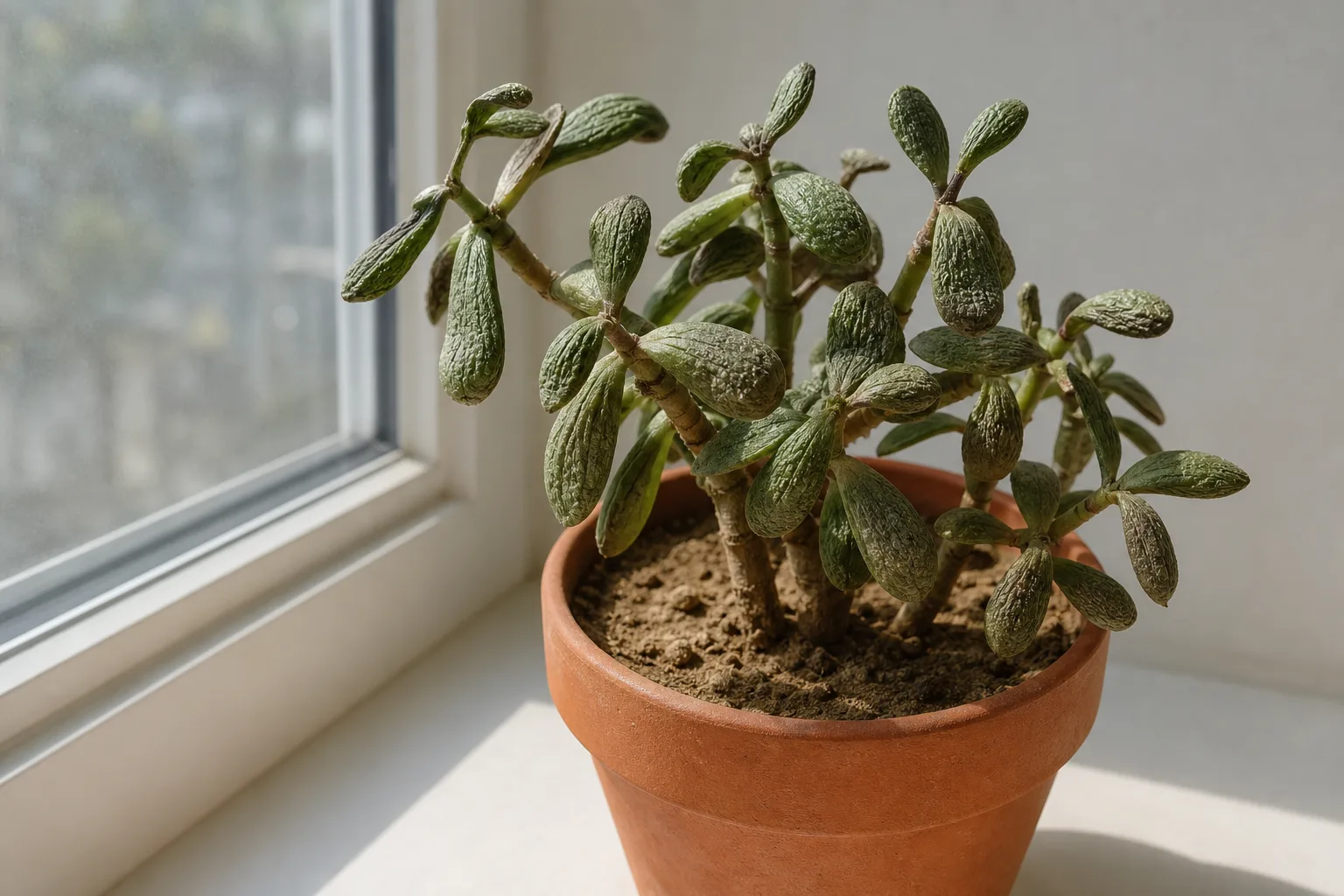
Underwatering on Jade Plant: Causes, Checks & Fixes
This guide covers underwatering on Jade Plant. See also the general Underwatering guide, watering, and light pages for this plant.
Underwatering on Jade Plant: Causes, Checks & Fixes
Quick answer
Underwatering on jade plant (Crassula ovata) means the root zone stayed dry too long for the plant to replace water lost from its thick leaves and woody stems. The classic signal is wrinkled or less plump leaves paired with a light pot and dusty dry mix-not soft mushy foliage on wet soil.
First step: confirm the mix is dry throughout the pot, then give one thorough soak. Water until excess runs from drainage holes, or bottom-water for 30–45 minutes if old mix repels surface water. Empty the saucer afterward. Do not switch to daily shallow sips.
If leaves are wrinkled but soil checks show moisture at depth, you may have the root-loss paradox-damaged roots cannot uptake water even when present. Inspect roots before soaking; see overwatering on jade for the wet-soil lookalike.
What underwatering looks like on Jade Plant
Jade is a stem-and-leaf succulent that stores water in fleshy leaves, woody stems, and roots-an adaptation to dry rocky hillsides in South Africa where rain arrives in bursts. When uptake falls behind loss, leaves lose turgor before stems soften.
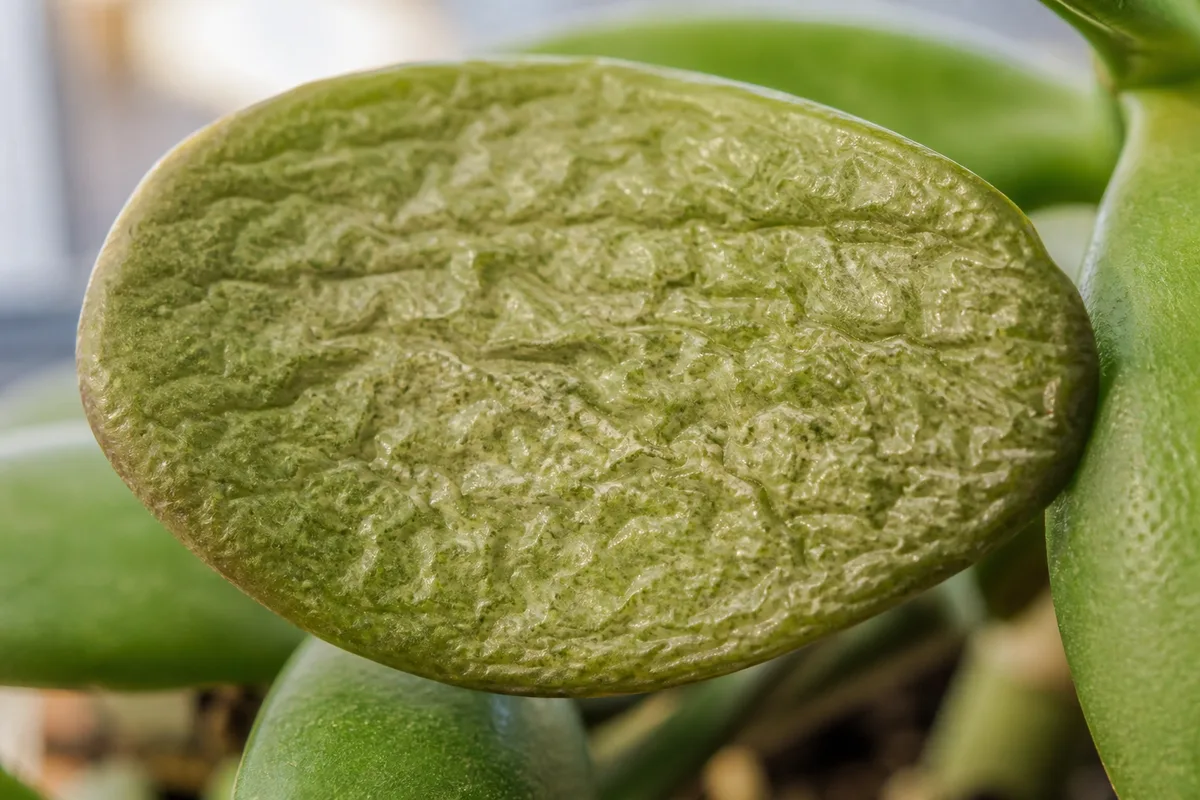
Underwatering symptoms on Jade Plant - compare with healthy tissue on the same plant.
Typical underwatering signs:
- Wrinkled, shriveled, or less plump leaves that still feel firm, not mushy-like a grape drying toward a raisin, not a waterlogged sponge
- Dry, dusty soil throughout the pot; mix may pull away from pot walls with white mineral crust
- A very lightweight pot when lifted compared with right after watering
- Slow leaf drop of older lower foliage after prolonged dryness
- Stunted new growth in bright warm conditions despite adequate light
- Leaves that perk and plump within 24 hours after a deep soak-if roots are still healthy
What underwatering usually is not on jade:
- Soft, translucent, waterlogged leaves on a heavy wet pot
- Yellow leaves that drop easily while soil stays damp
- Sour smell from the pot or mushy tissue at the woody stem base
- Wrinkled leaves on wet mix-that pattern fits root damage from overwatering more often than simple drought
Firm wrinkled leaves vs. edema spots
Drought wrinkling affects the whole leaf surface-fine lines and a deflated feel when you pinch. Edema from excess moisture shows as small brown or corky raised spots on otherwise plump leaves, often in cool dim rooms with damp mix. Edema means reduce watering, not soak; drought wrinkling on dry mix means soak once.
Why Jade Plant gets underwatered
Jade tolerates drought better than soggy soil, so many growers under-correct after overwatering scares-waiting until leaves shrivel before watering. Wrinkling is a distress signal, not a reliable calendar reminder.
Common jade-specific triggers:
Terracotta and bright windows. A small terracotta pot in a south window can dry in 48–72 hours during peak summer. Plastic or glazed ceramic in the same room may need two to three times longer-same plant, different dry-down speed.
Travel and forgotten checks. Jade’s leaf storage masks early drought, so the first visible sign is often wrinkling after the mix has been dry for days-not a gentle reminder to check tomorrow.
Hydrophobic old mix. Peat-heavy soil that dried completely can repel surface water. A quick pour wets the top inch while the root ball stays bone dry-the plant looks underwatered because it is, even though you “watered yesterday.”
Winter-rest confusion. Jade enters semi-dormancy in fall and winter and needs far less water-but heated indoor rooms still dry small pots. Cutting back to zero water for months in a warm living room causes chronic drought stress while growth has only slowed, not stopped.
Root-bound summer pots. A dense root mass in a 4-inch terracotta pot during active growth can dry the entire container in a week. That is normal seasonal rhythm, not a sign to wait another two weeks.
Underwatering vs. overwatering vs. root-loss paradox
The same wrinkled leaf can mean opposite fixes. Run this table before you reach for the watering can.
| Signal | Likely cause | Pot / soil | First move |
|---|---|---|---|
| Firm wrinkled leaves, very light pot | Underwatering | Dry throughout | One deep soak once dry |
| Soft mushy leaves, heavy wet pot | Overwatering | Damp throughout | Stop water; dry-down or root trim |
| Wrinkled leaves, wet mix at depth, firm stem | Root-loss paradox | Damp but roots damaged | Unpot and inspect; do not soak |
| Yellow leaves, firm stem, short winter days | Normal winter rest | Dry to lightly dry | Reduce watering; do not repot |
| Cascading lower leaf drop, dry mix, firm stems | Prolonged drought | Dry throughout | Deep soak; watch 24-hour perk test |
| Sour smell, mushy stem base | Advancing root rot | Chronically wet | Same-day unpot and trim |
The root-loss paradox
If leaves wrinkle but a skewer to the pot bottom comes out wet and cool, the plant cannot move water upward even though moisture is present-usually because past overwatering killed fine roots. Adding more water deepens the problem. Gently slide the plant out: healthy jade roots are white to tan and firm; brown slimy roots need the overwatering recovery path, not another soak-root rot usually results from overly frequent watering or slow-draining mix.
How to confirm the cause
Work through these checks in order:
- Pot weight - Lift the pot. Very light compared with your memory of it after watering strongly suggests dry soil throughout.
- Skewer to the bottom - Push a dry chopstick or skewer through the drainage hole or down the pot wall to the drainage area. Dusty and clean means drought; cool and soil-stained means wait-do not water.
- Leaf feel - Pinch a mature leaf. Firm with fine wrinkles on dry mix confirms underwatering. Mushy or translucent on wet mix points to overwatering.
- Stem base - A healthy jade trunk feels woody and firm. Soft squishy tissue at the crown while mix is moist is rot, not thirst.
- 24-hour perk preview - If all dry-soil checks pass, note leaf firmness now. You will recheck tomorrow after one soak to confirm recovery.
- Season and placement - Peak summer in a sunny terracotta pot favors drought; cool winter with recent watering favors overwatering instead.
Two or more dry-soil matches confirm underwatering before you soak.
First fix for Jade Plant
After confirming dry soil throughout the pot, give one full rehydration-not repeated splashes.
Deep top soak (standard fix)
- Use room-temperature water.
- Water slowly and evenly across the surface until excess runs freely from drainage holes-roughly 200–350 ml (¾ to 1¼ cups) for a typical 6-inch pot, judged by drainage not a fixed measure.
- Let the pot drain 15–30 minutes, then empty the saucer completely.
- Wait until the entire root zone dries throughout before the next soak-the full soak-and-dry rhythm lives in the jade watering guide.
Bottom soak (hydrophobic or very dry mix)
- Fill a sink or basin with 5–8 cm (2–3 in) of room-temperature water.
- Set the pot in the water without the saucer for 30–45 minutes.
- If the surface stays dry, poke shallow holes in the crust or add a light top pour after wicking.
- Drain fully before returning the plant to its spot.
Do not panic-flood daily after one dry spell. One thorough drink followed by a full dry-down beats shallow sips every morning.
Recovery timeline
0–24 hours: Healthy roots absorb water; leaves should look noticeably plumper and stems stiffer. Mild limpness resolving within hours is a strong positive sign.
24–48 hours: Most drought-wrinkled leaves regain turgor. Permanently brown crispy edges will not green up, but new growth should not look shriveled.
48 hours–2 weeks: If the 24-hour perk test fails-leaves stay wrinkled on confirmed dry mix after a proper soak-fine roots may have died back during the drought. Unpot and inspect before soaking again.
2–4 weeks: New firm leaves at branch tips confirm the watering rhythm is restored. Lower leaves that dropped from prolonged drought will not regrow on the same node; the plant fills in from new tips-drought can cause leaf drop and, if extreme, plant decline.
When recovery stalls: Wrinkled leaves on wet mix, sour soil smell, or soft stem base means switch to the overwatering or root rot protocol-do not keep soaking.
What not to do
Do not switch to daily shallow watering; jade prefers deep drinks after full dry-down periods. Do not soak when soil is wet at depth and stems feel soft-that worsens rot. Do not confuse winter semi-dormancy with permission to ignore water entirely in heated rooms. Do not fertilize a drought-stressed plant until new growth proves roots are taking up water again.
Wear gloves when handling dropped leaves or repotting; jade is toxic to cats and dogs. Contact your veterinarian if a pet ingests plant tissue.
How to prevent underwatering next time
Track pot weight through the seasons rather than a fixed calendar. In active spring and summer, many indoor jades need a full drink every two to four weeks-but a small terracotta pot in four or more hours of direct sun may need checks every 7–14 days. In winter semi-dormancy, stretch to four to eight weeks or longer in a cool room, but still let the soil dry between waterings before any drink.
Match terracotta pot size to root mass so the mix dries evenly. Pair fast-draining succulent mix with drainage holes. For the full seasonal rhythm, dryness checks, and ml-volume guidance, see the jade watering guide.
When to worry
Underwatering is rarely life-threatening on a jade with firm woody stems-leaf storage buys time. Treat as urgent today when:
- A proper deep soak fails the 24-hour perk test on confirmed dry mix
- Lower leaves drop in a cascade after weeks of peak-summer drought on a root-bound terracotta pot
- Soil has pulled away from the pot edge and the entire plant is limp in hot sun after more than a week without water
- Wrinkled leaves persist on wet mix-inspect roots the same day instead of soaking
Mild wrinkling on a light dry pot with firm stems is correctable with one soak and rhythm reset. Persistent yellow leaves on wet soil or wilting despite moisture point to overwatering, not drought.
Related Jade Plant guides
- Jade plant overview - culture, seasonal rhythm, troubleshooting hub
- Jade plant watering guide - soak-and-dry method, winter reduction, dryness checks
- Overwatering on jade - soft leaves and wilt paradox on wet soil
- Root rot on jade - rescue when stems soften after failed recovery
- Yellow leaves on jade - yellowing on wet vs. dry mix
- Jade plant soil guide - gritty mix and drainage
Related tool
Use the Plant Watering Calculator to narrow causes for underwatering on this plant before changing multiple variables at once.