Spider Mites on Jade Plant: Causes, Checks & Fixes
Quick answer
Spider mites on Jade Plant cause fine stippling and silk webbing on crown leaves in hot, dry window air. First step: isolate the plant and rinse leaf undersides with lukewarm water before applying any soap or oil.
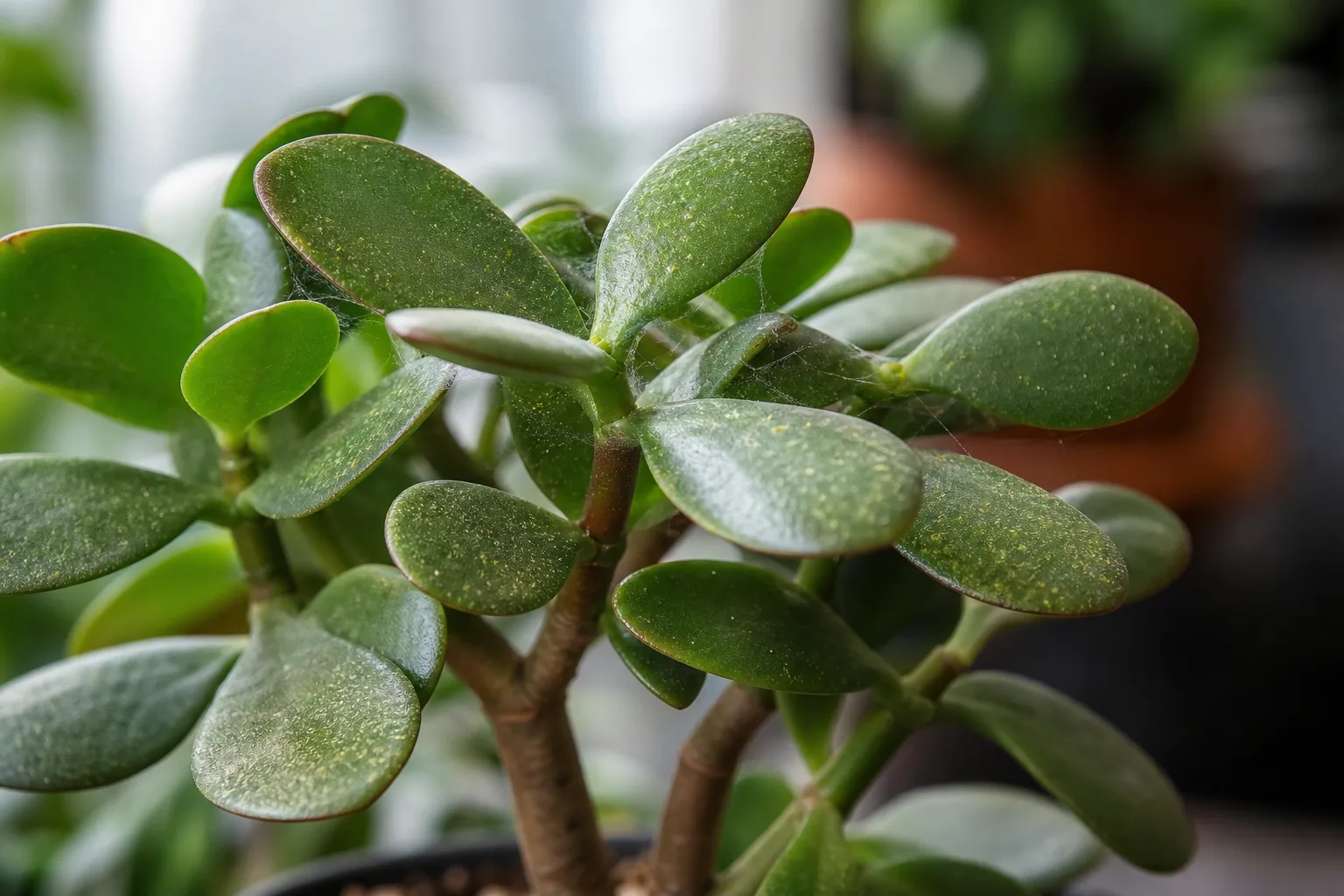
Spider Mites on Jade Plant: Causes, Checks & Fixes
This guide covers spider mites on Jade Plant. See also the general Spider Mites guide, watering, and light pages for this plant.
Spider Mites on Jade Plant: Causes, Checks & Fixes
Quick answer
Spider mites on Jade Plant (Crassula ovata) are tiny arachnids that pierce leaf cells, leaving pale yellow or bronze stipples and, when colonies build, fine silk webbing at branch tips. On thick glossy jade leaves, the damage shows up as thousands of pinprick dots before the whole leaf dulls-often on the sunniest crown first.
First step: isolate the plant and rinse leaf undersides with lukewarm water. Move jade away from other succulents, shower or hose the foliage (undersides and stem joints), and let the pot drain fully without leaving the saucer full. Sprays of water knock mites down and isolating infested plants limits spread while you confirm active pests. Jade stores water in leaves and woody stems-a rinse is safe when drainage is sharp, but you do not want the root zone soggy for days after treatment.
Confirm with a white-paper tap test before reaching for sprays. On slow-growing jade, early isolation and timed repeats beat one heavy chemical application that can burn succulent foliage.
What spider mites look like on Jade Plant
Spider mites are easiest to catch on crown leaves and branch tips-the same warm, bright zone where jade reddens at the margins in strong light. Look there first on a miniature-tree specimen before checking lower woody branches.
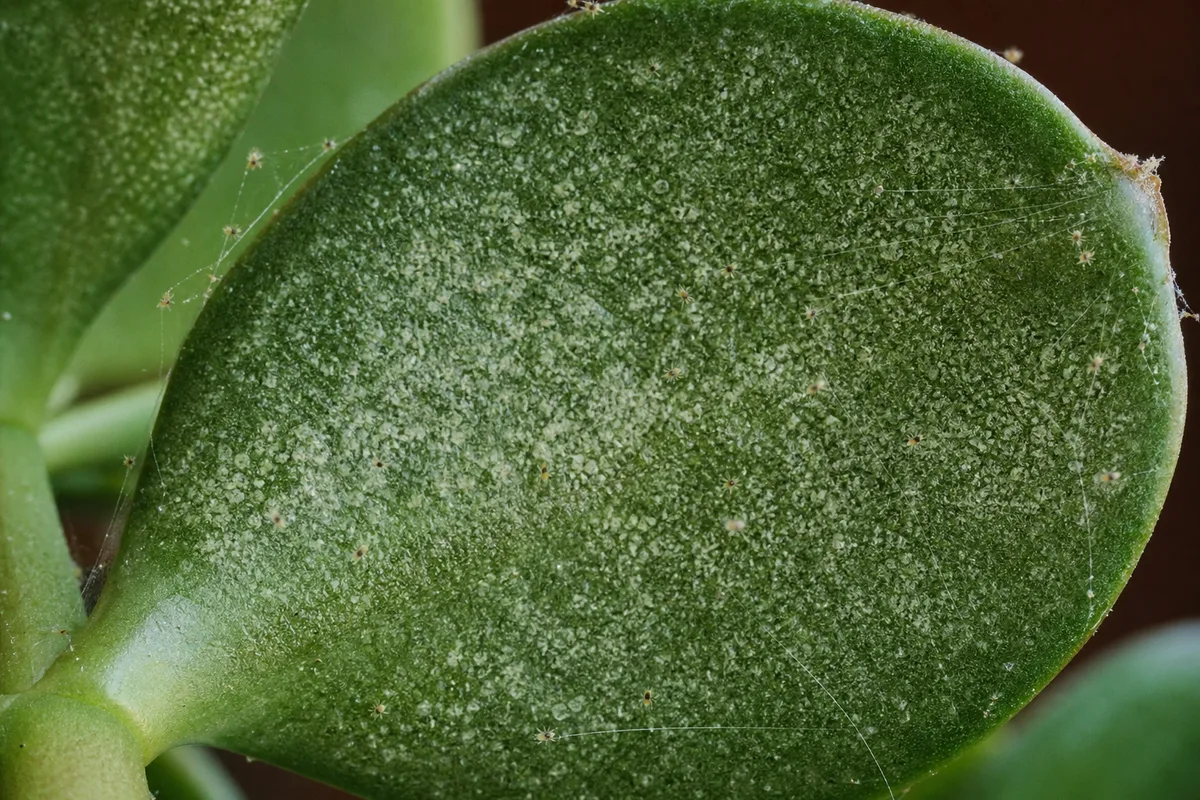
Spider Mites symptoms on Jade Plant - compare with healthy tissue on the same plant.
Typical signs include:
- Fine yellow or white stippling across the leaf face-thousands of tiny pale dots where mites pierced cells; stippling reads faster on thick succulent tissue than on thin tropical leaves because each lost cell shows against glossy green
- Bronzing or dulling as feeding continues; heavily damaged leaves may curl slightly at the edges but stay firm unless a second problem is present
- Fine silk webbing at branch tips, leaf axils, and between leaf pairs-webbing plus stippling is the mite signature, not generic yellowing
- Tiny moving dots on leaf undersides or on white paper after a tap test-mites are arachnids, not insects; a hand lens helps
- Cast skins and eggs along veins and in branch forks jade’s dense crown protects from casual rinsing
Unlike mealybugs, mites do not form white cottony masses. Unlike aphids, they do not cluster as plump pear-shaped insects on soft new tips or leave sticky honeydew. Unlike drought stress, stippling is speckled and patterned, not uniform wrinkling along the whole leaf.
Stippled leaves stay marked permanently. Jade will not heal old pinprick damage. Judge recovery by clean new leaf pairs emerging glossy above treated branches-not by old tissue clearing.
Why Jade Plant gets spider mites
Spider mites are not a jade-specific disease-they are common houseplant pests that explode in hot, dry air. What makes jade vulnerable indoors is the microclimate around a sunny window combined with how slowly the plant replaces damaged tissue.
Heating vents and winter sun create mite hotspots. Central heat strips humidity from room air just as jade sits in its brightest placement. Twospotted spider mites complete development in five to twenty days near 80°F, so a warm sill beside a heat register can sustain overlapping generations all winter-exactly when you water jade less and dust accumulates on leaves.
Dust on glossy jade foliage accelerates stress. Jade leaves reflect light when clean; a dusty crown heats up, photosynthesizes poorly, and sits in the same dry pocket mites prefer. Dusty indoor collections see more pest problems because stressed plants and dry air stack in one spot.
Dense miniature-tree branching hides webbing. Mites lay eggs along veins and in forks where a single wipe or rinse misses. On Crassula ovata, one rinse dislodges adults but often leaves silk and eggs in protected joints-why repeat timing matters more than product strength.
Autumn indoor moves concentrate pests. Jade brought inside after summer outdoors-or grouped on a shelf for winter-can carry mites on leaves you never inspected. Warm stable indoor temperatures let populations build without rain or predators to knock them back.
Missouri Botanical Garden lists spider mites among potential pests on jade alongside mealybugs, aphids, and scale. Mites are often secondary to mealybugs in jade collections, but dry-window conditions make them common enough to treat at first stippling.
Grower note: what recovery looks like on slow jade
In January 2026, a miniature-tree jade on a south-facing sill showed stippling only on the sunniest crown leaves-lower woody branches still glossy. Weekly lukewarm rinses (undersides and branch forks) plus two insecticidal soap cycles five days apart stopped new stippling by week four. Old leaf pairs stayed speckled; new pairs emerged clean and firm. That timeline matches how slowly Crassula ovata replaces foliage-patience and repeat coverage beat a single rescue spray.
How to confirm the cause
Work through these checks before treating:
- Tap test - Hold white paper under a suspect leaf and tap sharply. Slow-moving specks confirm mites; static dust does not crawl.
- Webbing plus stippling - Fine silk at a branch tip with pinprick dots on the same stem strongly supports mites-not nutrient wash or edema alone.
- Sunniest side first - Mites often hit the warmest crown leaves before lower shade branches. Uniform yellowing on old leaves everywhere suggests a different cause.
- Underside inspection - Use a 10× lens on veins and axils. Mites, cast skins, and eggs cluster where jade leaves overlap.
- No honeydew trail - Sticky shine with ants points to aphids or scale. Dry stippling without stickiness fits mites.
- Soil and stem base - Press the lower stem. Firm wood with dry mix suggests a foliage pest. Soft base with sour soil is rot-see overwatering and root rot, not mites alone.
- Neighbor plants - Check every succulent on the same shelf. Mites travel on webbing strands and touching leaves.
If you see stippling but no mites yet, re-check in three days with the tap test-early colonies are easy to miss before webbing appears.
First fix for Jade Plant
Isolate the plant and rinse leaf undersides thoroughly with lukewarm water.
Move jade to a sink, shower, or outdoor hose (shade, mild weather). Spray undersides, stem joints, and branch forks with enough force to knock mites loose, but avoid blasting soil out of the pot. Let the plant drain completely; empty the saucer. Follow your normal soak-and-dry watering rhythm-do not water again just because you rinsed foliage.
Repeat the rinse every three to five days during active treatment. Most miticides and soaps do not kill eggs, so one rinse rarely ends an indoor infestation.
Only after rinsing, if live mites remain:
- Apply insecticidal soap or horticultural oil labeled for spider mites, covering undersides until runoff
- Patch-test one branch and wait 24 hours-jade succulent leaves can show phytotoxicity from insecticides, especially in hot sun or on drought-stressed plants
- Treat in early morning or evening, not on a sun-hot windowsill; do not use soaps or oils above 90°F or on water-stressed plants
Repeat labeled applications at five- to seven-day intervals for at least two to three cycles to catch newly hatched nymphs. On jade, that usually means two to three weeks of scheduled treatment-not one weekend spray.
Do not repot, fertilize, or prune heavily on day one. Focus on foliage treatment and keeping the root zone appropriately dry.
Step-by-step recovery
Once mites are confirmed, work in this order:
- Isolate - Keep jade separate until two clean tap tests a week apart show no moving specks.
- Rinse - Knock down adults and webbing with lukewarm water; protect drainage so the mix does not stay wet.
- Manual cleanup - Wipe dense forks with a damp cloth after rinsing to remove silk residue mites re-colonize.
- Soap or oil - Apply labeled product after a patch test; coat undersides and branch joints missed by rinse alone.
- Monitor with tap tests - Check crown leaves weekly; one surviving female restarts the cycle indoors.
- Treat neighbors - Inspect and treat every succulent that shared the shelf or touched leaves.
Hold fertilizer until new growth looks firm for two weeks after the last live mite. Nitrogen pushes soft tissue that is harder to inspect and easier for pests to hide in.
Recovery timeline
First week: Live mite counts should drop after isolation and the first two rinses. Expect old stippled leaves to remain marked-that damage is permanent on jade.
Two to three weeks: With repeated soap or oil cycles on schedule, you should find no new stippling on emerging leaf pairs. Webbing stops spreading at branch tips.
Four to six weeks: Clean new leaf pairs emerging glossy and firm are the best success sign on slow-growing jade. Trim badly bronzed leaves for appearance once the plant is pest-free.
Long term: Woody branches rebuild slowly. A defoliated stem may look sparse for a season before filling in-normal on Crassula ovata when the stem stays firm.
Worsening signs: Webbing blankets the crown despite treatment, stippling spreads to lower woody branches with dry soil, or leaves drop in clusters during heat-re-check coverage timing before assuming the plant is lost.
Lookalike symptoms
| Symptom pattern | Likely cause | Key check |
|---|---|---|
| Pinprick yellow dots + fine webbing on crown | Spider mites | Tap test shows moving specks |
| White cottony clumps in branch forks | Mealybugs | Alcohol dab turns bodies gray-orange |
| Clusters on soft new tips + sticky honeydew | Aphids | Pear-shaped insects on tender growth |
| Silvery scars, no webbing | Thrips | Slender fast insects with a lens |
| Corky raised bumps after wet soil in dim light | Edema | No insects; follows overwatering pattern |
| Uniform pale older leaves, no dots or webbing | Nutrient or light stress | Pattern across age classes, not crown-only |
| Lengthwise wrinkles, firm deflated leaves | Underwatering | Soil bone dry; no stippling |
| Soft translucent leaves + sour wet soil | Overwatering / rot | Stem base soft; not a pest-primary pattern |
| Chalky crust that wipes off | Mineral buildup / low humidity salt | Wipe test; no moving specks |
What not to do
Do not use harsh dish soap mixes as a default on jade. Homemade detergents burn succulent cuticles more often than commercial insecticidal soap. University of Minnesota Extension advises against homemade soap products for indoor plants because of phytotoxicity risk-and jade plant is listed among soap-sensitive species.
Do not apply horticultural oil, neem, or soap in full sun or above 90°F. Heat-stressed jade on a south-facing sill is more likely to spot or drop leaves after treatment.
Do not stop after one spray or rinse. Mite eggs hatch in about three days under warm conditions; a single application rarely clears an indoor infestation.
Do not overwater while treating. Rinsing plus extra watering invites root rot on jade, which kills faster than mites. Keep the soak-and-dry rhythm.
Do not return an isolated plant to the collection early. Two pest-free weeks with clean tap tests is a minimum after the last live mite.
Do not mist the crown as “humidity therapy” while mites are active without also rinsing and treating-warm mist on dusty leaves can leave foliage wet too long on a plant that prefers dry air between waterings.
Wear gloves when handling infested foliage; jade plant is toxic to cats and dogs. Wash hands and tools after cleanup. Contact your veterinarian if a pet chews jade leaves or drinks rinse runoff during miticide treatment.
How to prevent spider mites next time
Quarantine every new plant for at least two weeks before it joins your jade shelf. Run a tap test on crown leaves before merging collections-especially plants that summered outdoors.
Rinse dusty crown foliage monthly in summer when jade sits in strong window light. Clean leaves photosynthesize better and remove mite habitat before stippling starts.
Inspect the warmest window side weekly during heating season. Low indoor humidity in winter favors mites; the sunniest jade leaves dry fastest and heat up most.
Keep jade in bright light with sharp drainage so growth stays firm. Weak etiolated shoots in dim corners stress the plant without solving dry-air mite pressure near glass.
Improve airflow between pots so leaves dry after rinsing and dust does not accumulate in still corners.
Monitor the whole collection when one plant shows stippling. Mites on jade often mean unchecked neighbors on the same shelf-including thrips and other sap feeders that share dry indoor conditions.
When to worry
Escalate treatment when fine webbing blankets the crown, stippling covers most leaf pairs on multiple branches, or leaves drop in clusters during a dry heat spell. Sap loss on slow-growing woody jade adds up over weeks even if the plant does not wilt immediately-defoliation can waste a full season of growth on a mature specimen.
Seek a different diagnosis if stems soften at the base, soil smells sour, or leaves turn mushy while mix stays wet-that is rot, not mites alone.
If repeated labeled treatments fail and mites persist on lower woody stems after three full treatment cycles, consider professional identification or isolating the plant away from a large collection until you can confirm clean tap tests.
Conclusion
Spider mites on Jade Plant are manageable when you catch stippling on the sunniest crown before webbing spreads through dense branch forks. Isolate, rinse undersides, confirm with tap tests, then treat with caution on succulent leaves-patch-test soap or oil, repeat on schedule, and judge success by clean new leaf pairs, not by old speckled tissue. Prevention comes from quarantine, dust control, dry-window awareness, and firm growth on proper watering-not from spraying once and assuming indoor mites disappear on their own.
Related Jade Plant guides
- Jade plant overview - light, seasonal rhythm, and culture
- Jade watering guide - soak-and-dry rhythm during treatment
- Mealybugs on jade - cottony masses in branch forks
- Aphids on jade - honeydew and soft new growth
- Thrips on jade - silvery scars without webbing
- Low humidity on jade - dry winter air and salt crust
Related tool
Use the Pest Identifier Tool to narrow causes for spider mites on this plant before changing multiple variables at once.