Amaryllis Care: How to Grow and Rebloom Hippeastrum
Hippeastrum spp.
Learn how to grow Hippeastrum amaryllis in a snug, well-drained pot, care for its leaves after flowering, time an optional rest, and keep bulbs away from pets.
Amaryllis Care: How to Grow and Rebloom Hippeastrum
Start with wateringThe most common care mistake for AmaryllisWatering guide →Amaryllis care essentials
Light
Bright filtered light indoors; full sun to partial shade during active growth outdoors in mild weather
Water
When starting a dormant bulb, water sparingly until shoots or leaves begin to grow. Then water regularly enough to keep the potting mix lightly moist, but never leave the bulb sitting in water. After flowering, keep the leaves in bright light and continue watering so the bulb can rebuild energy. If you choose a cool resting period to time the next bloom, gradually reduce and pause watering while the bulb rests.
Soil
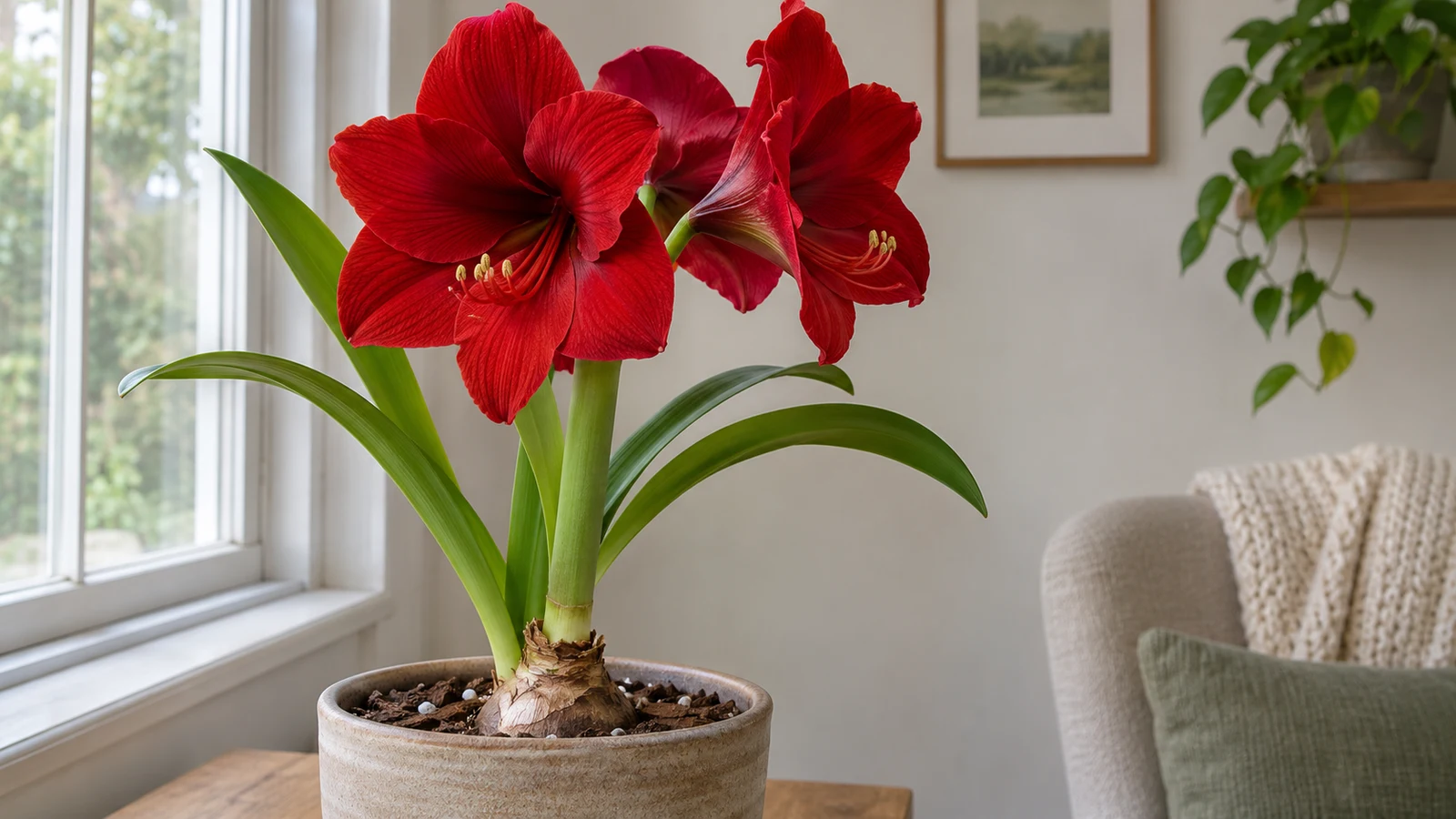
Use a loose, organic-rich potting mix that drains freely. A container only a little wider than the bulb helps keep the plant stable without surrounding it with a large volume of wet mix. Plant the lower roots and bulb base, leaving roughly the upper third to half of the bulb above the surface.
Humidity
Temperature
Fertilizer
About Amaryllis
Amaryllis is native to Central and South America; Hippeastrum species span tropical and subtropical parts of the Americas, typically reaches About 1–3 ft (30–90 cm) tall and 9–12 in (23–30 cm) wide; cultivar and bulb size affect the display indoors, with rapid during active growth growth. Amaryllis has a tender bulbous perennial, usually grown indoors as a seasonal flowering bulb in frost prone climates growth habit and part of the Amaryllidaceae family. It is also known as Dutch Amaryllis, Barbados Lily, Fire Lily, and Knight's Star Lily.
| Detail | Information |
|---|---|
| Also known as | Dutch Amaryllis, Barbados Lily, Fire Lily, Knight's Star Lily |
| Native region | Central and South America; Hippeastrum species span tropical and subtropical parts of the Americas |
| Mature size | About 1–3 ft (30–90 cm) tall and 9–12 in (23–30 cm) wide; cultivar and bulb size affect the display |
| Growth rate | Rapid during active growth |
| Growth habit | Tender Bulbous Perennial, Usually Grown Indoors As A Seasonal Flowering Bulb In Frost Prone Climates |
| Scientific name | Hippeastrum spp. |
| Family | Amaryllidaceae |
Amaryllis Care: How to Grow and Rebloom Hippeastrum
An amaryllis bulb has two distinct jobs: it puts on a flower display, then its leaves rebuild the bulb for another cycle. The key is to care for the plant that is present now. A dormant bulb needs restrained watering; a leafy plant needs light and steady moisture; a finished flower stalk can be removed while healthy leaves stay. This guide covers the commonly sold Hippeastrum group, often labeled amaryllis, and explains where a rest period fits without treating one calendar as universal.
What an amaryllis bulb actually is
The potted “amaryllis” sold for indoor flowers is a tender bulbous perennial. A mature bulb can send up one or more stout flower stalks, often before its strap-like leaves are fully developed. The bulb carries reserves that help start that first display; after the flowers fade, the leaves become the working part of the plant. They capture light and support the bulb’s recovery rather than being leftover decoration. The RHS describes Hippeastrum as a bulb with leafless flowering stems and strap-shaped foliage, usually flowering in winter or spring (RHS plant profile).
That sequence explains why a bulb that blooms beautifully in its first weeks may need several months of ordinary foliage care before it flowers again. Do not judge the whole plant by whether it has blooms at every stage. Green leaves after flowering are a sign that the bulb is still growing.
Confirm that your bulb is Hippeastrum
The common name is confusing. Most indoor gift bulbs sold as amaryllis are Hippeastrum hybrids; the true genus Amaryllis, including Amaryllis belladonna, is a different group native to South Africa. Wisconsin Horticulture explains this distinction and identifies the commonly cultivated bulbs as Hippeastrum (Wisconsin Horticulture). Check a label for the botanical name before applying advice written for another bulb sold under the same common name.
The care here is for Hippeastrum spp. and their hybrids. Cultivars differ in flower form, size, and how many stalks a bulb produces, so one bulb’s display is not a reliable measure of another’s health. Their basic indoor cycle—plant, grow, flower, then keep leaves active or give an optional rest—is more useful than expecting every cultivar to match a fixed holiday timetable.
Check a bulb before planting
Choose a bulb that feels firm and heavy for its size, with dry outer scales and no soft, wet, moldy, or foul-smelling area. A damaged bulb may still grow, but hidden decay is harder to manage once it is buried. If a bulb is already potted and growing, inspect the visible neck and the mix surface rather than repeatedly unpotting it.
If you receive a waxed or otherwise packaged bulb, follow its specific instructions because its roots and potting setup may differ from a standard loose bulb. For a normal soil-grown bulb, use a container with a drainage hole and a stable base. A tall flowering stalk can make a light plastic pot tip; a heavier outer cachepot can steady it, but empty any water that collects inside.
Choose a snug pot with drainage
Hippeastrum does not need a large volume of wet mix around its bulb. Select a pot only slightly wider than the bulb, leaving room for roots and a little fresh mix. Gardening Know How recommends a close-fitting, draining container (Gardening Know How). A pot that is much too large can stay wet longer than the roots can use the water.
Use a loose, well-draining potting mix intended for containers or bulbs. Garden soil in a small indoor pot can compact and hold water unevenly. The practical test is not a special ingredient list: water should move through the mix and drain from the bottom, while the mix can still hold enough moisture for active roots. Never leave the pot standing in a full saucer.
Plant with the bulb shoulders exposed
Spread the roots gently over the mix and set the bulb upright. Cover the roots and basal plate, but leave the neck and a substantial portion of the bulb above the surface. RHS advises leaving about two-thirds of the bulb above the compost (RHS growing guide). Do not bury the whole bulb in damp mix.
After planting, water enough to settle the mix around the roots, then let excess drain completely. If the bulb is still dormant, wait to water again until growth begins or the mix is nearly dry. A bulb that is planted too deep and kept wet is more vulnerable to rot than one with its shoulders visible and air around the neck.
Give bright light, then protect the flowers
While the bulb is starting, place it in a warm, bright spot. Once leaves develop, keep it in bright filtered light or gentle sun indoors so the foliage can make energy. RHS recommends bright filtered light, sparing water until leaves develop, then regular watering; a prepared bulb usually flowers about six to eight weeks after planting, and cooler conditions around 15–18°C (60–65°F) can extend the display (RHS growing guide). A dim room may keep the plant alive, but it is a poor place for the months of leaf growth that support future flowering.
If you move the pot outdoors after flowering in a warm, frost-free season, acclimate it over several days. Start in bright shade, then increase exposure gradually; harsh afternoon sun can scorch leaves that were grown indoors. In a very hot or rainy period, a bright sheltered position with good air movement is safer than leaving the pot in constant rain.
Water less at first and more as leaves grow
Watering should follow the bulb’s growth stage, not a weekly reminder. After planting a dormant bulb, water sparingly until the shoot or leaves are growing. Then water the mix when its surface begins to dry, and let the pot drain. Keep the mix lightly moist during active growth without letting excess collect in the saucer.
During active leaf growth, check the mix with a finger rather than pouring a fixed amount on a schedule. A warm, bright room and a larger leafy plant will use water faster than a cool, dim room or a newly planted dormant bulb. If the mix remains wet for days, stop watering and check drainage before assuming the plant is thirsty.
Keep the flowers upright and cool
Flower stalks can lean toward the brightest window. Turn the pot a little every few days while the stalk is extending, or add a discreet support if a large flower head makes it unstable. Once the flowers open, move the plant away from hot direct sun and vents. A flower stalk that takes longer than several weeks is not automatically a problem if the bulb is firm and new growth is progressing.
After flowering, preserve the leaves
Remove each faded flower so the plant does not spend effort making seed. When the whole flower stalk yellows, cut it close to the bulb without cutting into the neck. Keep green leaves intact. Gardeners’ Path explains that the leaves replenish the bulb’s reserves after flowering and recommends continuing bright light and regular, measured watering (Gardeners’ Path).
Do not cut healthy leaves just because the flower display is over. They may look less dramatic than the flowers, but removing them early reduces the plant’s chance to store energy. If leaves begin to yellow gradually after months of growth, the bulb may be entering a resting phase. Sudden yellowing while the mix is wet calls for a root and drainage check instead.
Keep the foliage growing through its recovery phase
For a bulb you want to keep, treat the leafy period as the main recovery season. Provide the brightest suitable light available, water when the surface starts to dry, and use a balanced liquid fertilizer at the label rate while leaves are actively growing. More fertilizer is not a shortcut; an excessive dose can build salts and injure roots (Wisconsin Horticulture).
In a warm climate, a pot can spend part of the year outdoors if nights are comfortably warm and the plant is protected from sudden exposure. Introduce outdoor light gradually and keep drainage clear. Bring it back under cover before cold weather or prolonged heavy rain. If the bulb stays indoors, a bright window is preferable to a dark shelf even when no flowers are present.
Decide whether to give the bulb a rest
Care references disagree about whether every cultivated bulb needs a dry rest before blooming again. NC State Extension describes a dormant recovery period as part of the cycle; Wisconsin Horticulture notes that commercial Hippeastrum bulbs can remain evergreen and may bloom without a forced rest (NC State Extension; Wisconsin Horticulture). For a healthy commercial gift bulb, treat rest as a scheduling choice rather than a guarantee of flowers.
If you choose to rest it, first give the leaves time to grow and replenish the bulb. Then gradually reduce watering and feeding, allow foliage to yellow naturally, and place the pot in a cool, dry, ventilated location for roughly eight to ten weeks. Do not keep watering a bulb that is resting. Afterward, return it to warmth and bright light, water lightly at first, and increase watering as new growth appears. A bulb kept evergreen can skip this dry interval, though the timing of its next flower stalk may be less predictable.
Adjust the calendar for Indian and tropical homes
Many amaryllis instructions are written around Northern Hemisphere winter gift displays, but the month on the calendar is less important than the plant’s stage and the conditions you can provide. In India, a cool rest may be easy in some inland homes and impractical in a warm coastal room. Use the leaves as your cue: support active green growth; attempt a rest only if you can provide a genuinely cooler, dry period; resume growth in bright light when the rest ends.
During hot weather, protect the pot from harsh afternoon sun and standing rainwater. In monsoon conditions, keep the drainage hole clear, empty the saucer, and shelter the mix from prolonged downpours. These steps reduce the time the bulb sits in wet soil. If you cannot create a cool resting place, keep the bulb growing in good light rather than forcing a dark, warm “dormancy” by the calendar.
Why an amaryllis may not flower again
The first bloom may have been powered largely by reserves stored before the bulb was sold. To rebloom, it needs a strong leaf-growing period afterward. Too little light, premature removal of leaves, a weakened or undersized bulb, and repeated waterlogging can all undermine the next cycle. RHS also lists excessive shade and under-watering during the previous summer among possible reasons for failure to flower (RHS growing guide).
Start with the simplest checks: Was the bulb firm? Did it keep healthy leaves for months after bloom? Did those leaves receive bright light? Did the pot drain freely? If it grew well but did not flower on a holiday schedule, the bulb may simply need a longer active season or a better-timed rest. For a broader diagnosis, compare the signs with the general no-flowers guide before changing several conditions at once.
Troubleshoot yellowing, drooping, and a soft bulb
Yellowing leaves can be normal as an older leaf ages or a bulb approaches rest, but color alone does not identify the cause. Check when it started, whether the mix is wet or dry, whether the plant is actively growing, and whether light changed recently. Gardening Know How notes that drooping amaryllis leaves can accompany watering, light, fertilizer, or cycle-related problems (Gardening Know How’s symptom guide).
If leaves droop while the mix is dry during active growth, water thoroughly and let it drain. If they droop while the mix stays wet, stop watering and inspect the bulb and roots for softness or decay. A firm bulb with a few aging leaves may need routine care; a soft, foul-smelling base is a more urgent rot warning. Use the guides to overwatering and root rot for those general symptoms. You can also open the Amaryllis problems hub or use the plant problem diagnosis tool to compare symptoms before acting.
Keep Hippeastrum away from pets
The ASPCA lists Hippeastrum spp. (Barbados lily) as toxic to cats and dogs and identifies the bulb as the most poisonous part (ASPCA Animal Poison Control). Store dormant bulbs out of reach, keep fallen scales and trimmed plant parts away from curious animals, and do not leave a freshly planted bulb where pets can dig or chew it. Contact a veterinarian or animal poison-control service if a pet may have eaten any part; this guide is not a substitute for professional advice.
When to use this page vs other Amaryllis guides
Use this overview when you need the full bulb cycle—from planting to flowering, leaf recovery, and a possible rest. The Amaryllis plant hub gives a concise profile and quick-care reference. When you already know the symptom, the Amaryllis problems hub helps you choose a diagnosis route. A dedicated light guide is for comparing window conditions; a watering guide is for diagnosing moisture routines; soil and repotting guidance is for mix, pot size, and root crowding; fertilizer guidance is for feeding decisions; and propagation guidance is for offsets or seed. Those topic guides answer narrower questions than this life-cycle overview.
Related Amaryllis guides
For a fast overview, return to the Amaryllis plant hub. If something looks wrong, start with all plant symptoms or the Amaryllis problems hub, then narrow the issue with the diagnosis tool. If the bulb stays healthy but will not produce a stalk, use the no-flowers guide. Wet mix and collapsing growth point toward the overwatering guide or root-rot guide rather than more water. Use those pages for symptom-specific steps, and return here for the care cycle that connects them.
Conclusion
For reliable Amaryllis care, keep the bulb high in a close-fitting, draining pot, water sparingly until growth starts, and give active leaves bright light after flowering. Let the foliage rebuild the bulb before deciding whether to rest it. Commercial Hippeastrum can be kept evergreen, while a cooler, drier rest can help schedule a later display. Match that choice to your room and climate, watch the bulb itself for signs of rot, and keep it away from pets.
How to care for Amaryllis?
How much light does Amaryllis need?
Bright filtered light indoors; full sun to partial shade during active growth outdoors in mild weather. Partial shade. Bright indirect light. direct sun
- Bright filtered light indoors - Bright filtered light indoors; full sun to partial shade during active growth outdoors in mild weather.
- full sun to partial shade during active growth outdoors in mild weather - Bright filtered light indoors; full sun to partial shade during active growth outdoors in mild weather.
- Partial shade - Partial shade.
- Bright indirect light - Bright indirect light.
- direct sun - direct sun.
When should you water Amaryllis?
When starting a dormant bulb, water sparingly until shoots or leaves begin to grow. Then water regularly enough to keep the potting mix lightly moist, but never leave the bulb sitting in water. After flowering, keep the leaves in bright light and continue watering so the bulb can rebuild energy. If you choose a cool resting period to time the next bloom, gradually reduce and pause watering while the bulb rests.
- Feel the upper inch of potting mix. If it is still damp - Then water regularly enough to keep the potting mix lightly moist, but never leave the bulb sitting in water.
- wait
- when it begins to dry - When starting a dormant bulb, water sparingly until shoots or leaves begin to grow.
- water the root zone and let excess drain freely. Keep water away from the bulb neck where practical - After flowering, keep the leaves in bright light and continue watering so the bulb can rebuild energy.
- Drain excess water - When starting a dormant bulb, water sparingly until shoots or leaves begin to grow.
What soil works best for Amaryllis?
Use a loose, organic-rich potting mix that drains freely. A container only a little wider than the bulb helps keep the plant stable without surrounding it with a large volume of wet mix. Plant the lower roots and bulb base, leaving roughly the upper third to half of the bulb above the surface.
- Use a quality bulb or houseplant potting mix with organic matter and open drainage. - Use a loose, organic-rich potting mix that drains freely.
- Choose a pot with a drainage hole and only about 1–2 in (2.5–5 cm) of space around the bulb. - A container only a little wider than the bulb helps keep the plant stable without surrounding it with a large volume of wet mix.
Grower notes for Amaryllis
Check which plant the label means by “amaryllis”
Most potted bulbs sold as amaryllis are Hippeastrum hybrids. They are different from true Amaryllis belladonna, a South African genus. This hub covers the commonly sold Hippeastrum group; check the botanical name before applying its seasonal care or pet-safety notes to another plant.
Leave the bulb shoulders above the mix
Set the bulb upright in a snug pot with the roots covered and roughly the upper third to half of the bulb exposed. Keep the neck above the mix and choose a pot with a drainage hole. This keeps the bulb stable while avoiding a deep, wet planting pocket.
Increase watering as growth starts
A newly potted dormant bulb needs little water until shoots appear. Once leaves grow, water the mix when its surface begins to dry and pour away what collects below the pot. Warmth and active growth raise water use, but a wet bulb is still vulnerable to rot.
Keep the leaves after the flowers fade
Remove spent flowers and the flower stalk after blooming, but leave healthy leaves in bright light. The foliage continues growing and helps refill the bulb for future flowers. Continue measured watering while the leaves are active instead of cutting them back with the flower stem.
A resting period is a choice, not a universal requirement
Wisconsin Horticulture notes that commercial Hippeastrum bulbs can bloom while kept evergreen; a cool rest can instead help gardeners control flowering time. If you use one, let the bulb rest for about eight to ten weeks and withhold water, then return it to warmth and light when growth is due to resume.
Treat the bulb as a pet hazard
The ASPCA lists Hippeastrum under Barbados lily as toxic to cats and dogs, and identifies the bulb as the most poisonous part. Keep bulbs, leaves, and discarded plant material where pets cannot chew them; contact a veterinarian or animal poison-control service after a suspected ingestion.
Is Amaryllis safe for pets?
The commonly sold Hippeastrum group is not pet-safe. The ASPCA lists Hippeastrum spp. (Barbados lily) as toxic to cats and dogs; bulbs contain the most toxic material and can cause vomiting, salivation, and diarrhea. NC State Extension also flags Hippeastrum as a problem for horses. Keep the plant and bulb pieces away from pets, and contact a veterinarian or animal poison-control service after a suspected ingestion.
This profile covers Hippeastrum spp., the bulbs commonly sold as amaryllis; it does not treat those plants as interchangeable with true Amaryllis belladonna. NC State Extension describes Hippeastrum as poisonous and notes that bulbs are the most poisonous part, with vomiting, salivation, and diarrhea among the reported effects. ASPCA specifically lists Hippeastrum spp. under Barbados lily as toxic to cats and dogs. Keep the plant away from children and pets, and seek professional advice if any part is eaten.
Watering Amaryllis
For Amaryllis, feel the upper inch of potting mix. If it is still damp, wait; when it begins to dry, water the root zone and let excess drain freely. Keep water away from the bulb neck where practical. and water check the mix every few days while the plant is actively growing and water when the surface has begun to dry. The interval depends on pot size, warmth, and light; use the soil condition instead of a fixed calendar. Empty the saucer after watering. Water more consistently while leaves grow after flowering. Commercial Hippeastrum bulbs can be kept evergreen and may flower without a forced rest; a cool, drier rest of roughly eight to ten weeks is optional for gardeners who want to schedule flowering. Do not keep watering a bulb that is resting.
| Detail | Information |
|---|---|
| How often | Check the mix every few days while the plant is actively growing and water when the surface has begun to dry. The interval depends on pot size, warmth, and light; use the soil condition instead of a fixed calendar. Empty the saucer after watering. |
| How to check | Feel the upper inch of potting mix. If it is still damp, wait; when it begins to dry, water the root zone and let excess drain freely. Keep water away from the bulb neck where practical. |
| Seasonal changes | Water more consistently while leaves grow after flowering. Commercial Hippeastrum bulbs can be kept evergreen and may flower without a forced rest; a cool, drier rest of roughly eight to ten weeks is optional for gardeners who want to schedule flowering. Do not keep watering a bulb that is resting. |
Signs of overwatering
- The mix stays wet for long periods or water remains in the saucer.
- Leaves yellow or wilt even though the potting mix is wet.
- The bulb or roots become soft, discolored, or foul-smelling.
Signs of underwatering
- The potting mix is dry below the surface while leaves are actively growing.
- Leaves lose firmness or flower buds fail to develop during active growth.
Soil & potting for Amaryllis
Use a mix of Use a quality bulb or houseplant potting mix with organic matter and open drainage., Choose a pot with a drainage hole and only about 1–2 in (2.5–5 cm) of space around the bulb. for Amaryllis. Good drainage is essential; never leave the pot standing in water. Repot repot every two to three years, or when offsets and roots crowd the container. Hippeastrum prefers a snug pot, so move it only one size up rather than into a much larger container., ideally in after flowering or after an optional resting period, when the plant is ready to resume growth.
| Detail | Information |
|---|---|
| Recommended mix | Use a quality bulb or houseplant potting mix with organic matter and open drainage., Choose a pot with a drainage hole and only about 1–2 in (2.5–5 cm) of space around the bulb. |
| Drainage | Good drainage is essential; never leave the pot standing in water |
| Repotting frequency | Repot every two to three years, or when offsets and roots crowd the container. Hippeastrum prefers a snug pot, so move it only one size up rather than into a much larger container. |
| Best season to repot | After flowering or after an optional resting period, when the plant is ready to resume growth |
Signs it needs repotting
- Roots and offsets fill the pot or push the bulb upward.
- The potting mix has broken down or no longer drains freely.
- The bulb is unstable in its container or the pot dries unusually fast.