25 Christmas Plants for Indoors and Winter Gardens
Compare 25 Christmas plants for indoor flowers, natural greenery, and winter gardens. Check care, bloom timing, climate fit, and pet risks before you choose.
The best Christmas plant depends on where it will live after December. A bright flowering gift for a heated living room, an evergreen branch for a wreath, and a shrub that flowers outside in a mild winter are three different purchases; a plant can look festive in a shop and still fail in your climate or at home beside a curious cat.
Use the quick picks below to narrow the list. Then check the individual notes for light, timing, outdoor fit, and safety before you buy. “Christmas plant” is a seasonal use, not a promise that a plant blooms outdoors on December 25.
| If you want… | Start with… | Check first |
|---|---|---|
| A ready-made burst of indoor color | Poinsettia or flowering amaryllis | Sap irritation or bulb toxicity; keep away from pets that chew |
| A plant to keep growing for years | Christmas cactus, moth orchid, or rosemary | Match light and temperature; rosemary needs stronger sun |
| A fragrant indoor display | Paperwhites or gardenia | Paperwhite perfume can be intense; gardenia is particular about warmth and light |
| A small living “tree” | Norfolk Island pine | It is a subtropical houseplant, not a cold-climate outdoor Christmas tree |
| Natural evergreen décor | Holly, fir, spruce, or juniper branches | Sharp leaves, berries, pets, and local species fit |
| Flowers in a winter garden | Hellebore, snowdrops, or a winter-blooming camellia | Bloom date and survival depend on species, cultivar, and local weather |
Start with the right kind of festive plant
There are four useful categories. Florist plants such as poinsettia and cyclamen are sold in bloom and usually belong indoors in cool-to-moderate rooms; bulbs such as amaryllis and paperwhites can be timed, though flowering dates still vary. Evergreen sprigs are décor rather than houseplants, while trees and shrubs need outdoor space and a climate that suits the actual species.
If a bloom must be open for a specific gathering, buy a plant already showing color or buds. Starting a bulb from scratch is satisfying but less exact: Mississippi State Extension describes amaryllis, cyclamen, paperwhites, orchids, rosemary, poinsettia, and Norfolk Island pine among the holiday houseplants, each with different light, temperature, and water needs (Mississippi State University Extension).
Indoor flowering plants that shine in a warm house
These are the easiest choices when the goal is color on a table, windowsill, or bright shelf. Most are tropical or greenhouse-grown; keep them away from cold drafts, hot vents, and standing water, and treat each pot as a living plant rather than a disposable bouquet.
Showy blooms and reliable houseplant gifts
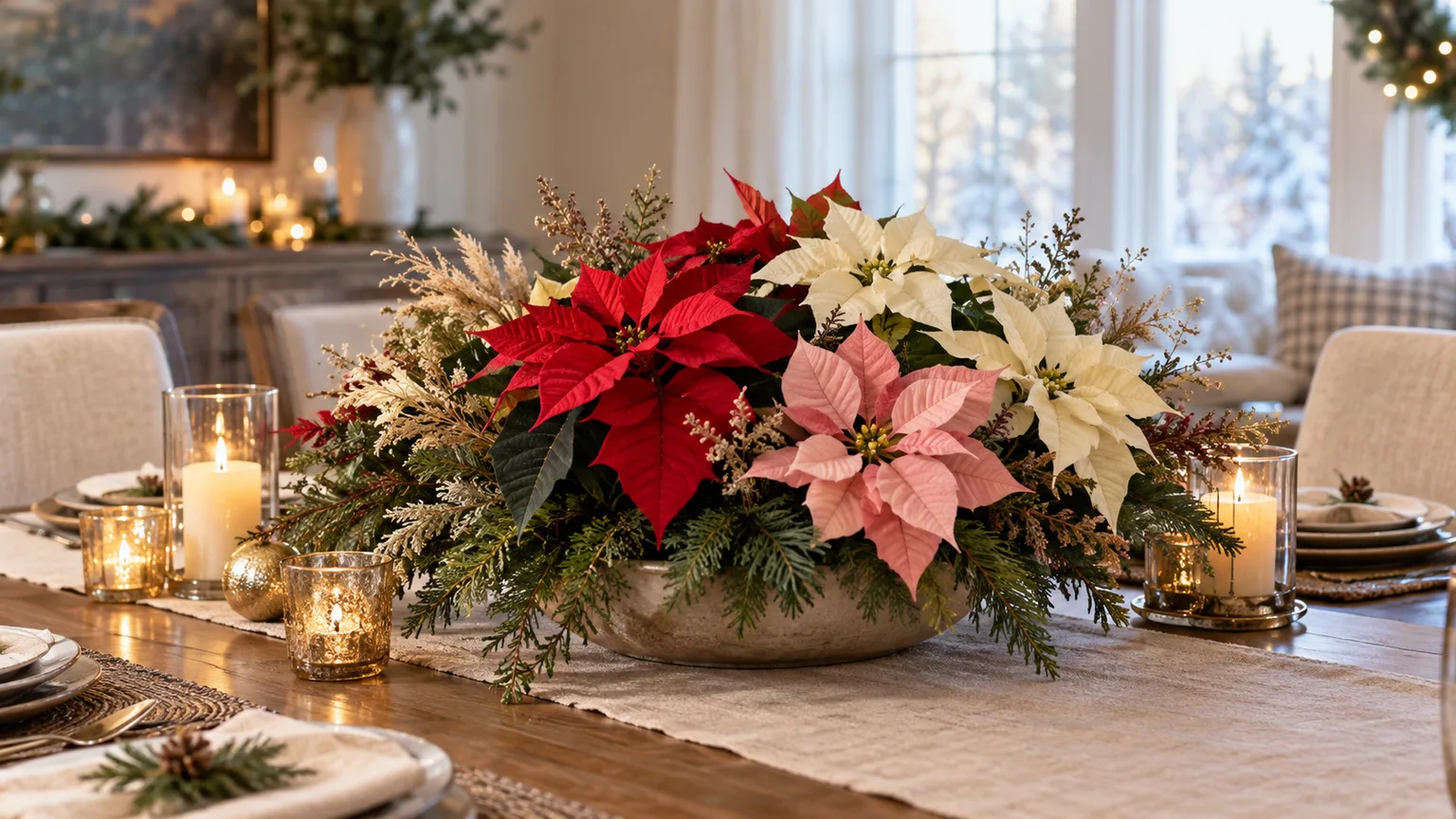
1. Poinsettia (Euphorbia pulcherrima). The red, pink, cream, or marbled parts are colored bracts around tiny yellow flowers. Put the plant in bright, indirect light, keep it out of cold drafts and heater blasts, and water when the surface begins to dry; remove decorative foil or drain the cover pot so water cannot collect around the roots. Poinsettias can be kept after the season, but reblooming into colored bracts takes a strict long-night schedule in autumn, so enjoy it as a green foliage plant if that routine is not appealing (University of Minnesota Extension).
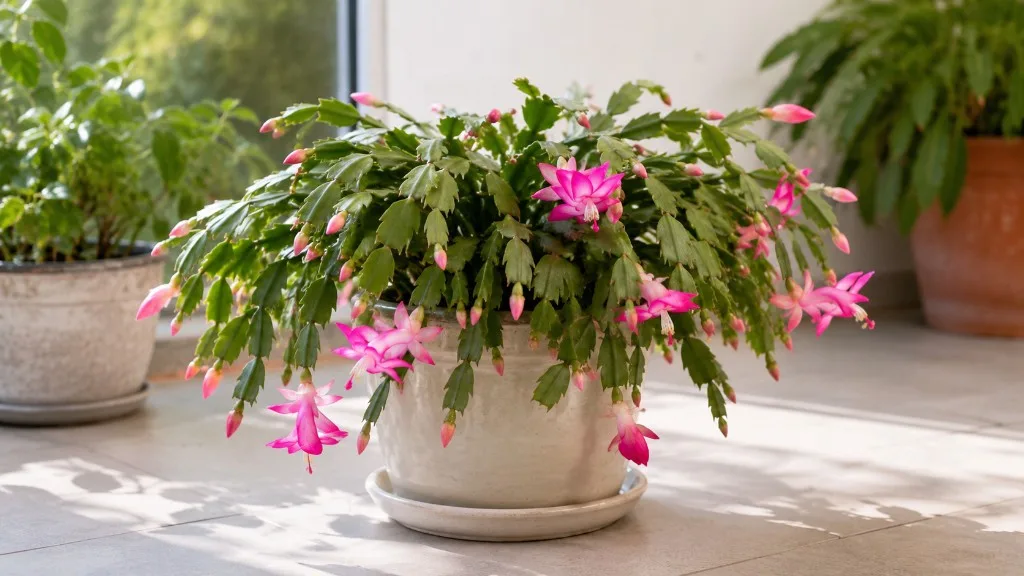
2. Christmas cactus (Schlumbergera hybrids). Unlike a desert cactus, this is an epiphyte from Brazil’s tropical forests, so it likes bright filtered light, a porous mix, and regular watering while actively growing—not months of bone-dry soil. Retail tags often use “Christmas cactus” loosely for Thanksgiving cactus and hybrids; the scalloped or pointed stem edges are a better clue than the label, and bloom timing responds to shorter days and cool nights. It is a long-lived gift and a lower-ingestion-risk choice for pet households; the ASPCA lists Christmas cactus as non-toxic to cats and dogs, though eating any plant can still upset a stomach (University of Minnesota Extension, ASPCA plant list).
3. Florist cyclamen (Cyclamen persicum). Its swept-back flowers and silver-marked leaves look best in a cool, bright spot; a hot room above a radiator can shorten the display quickly. Water at the pot rim or from below and let excess drain, keeping moisture out of the crown. The tuber is the main ingestion concern: NC State Extension and ASPCA both flag cyclamen as toxic, especially the tuber or roots, so it is a poor choice where a dog can dig or a toddler can pull at the plant (NC State Extension, ASPCA cyclamen listing).
Bulbs, orchids, and other flowering surprises
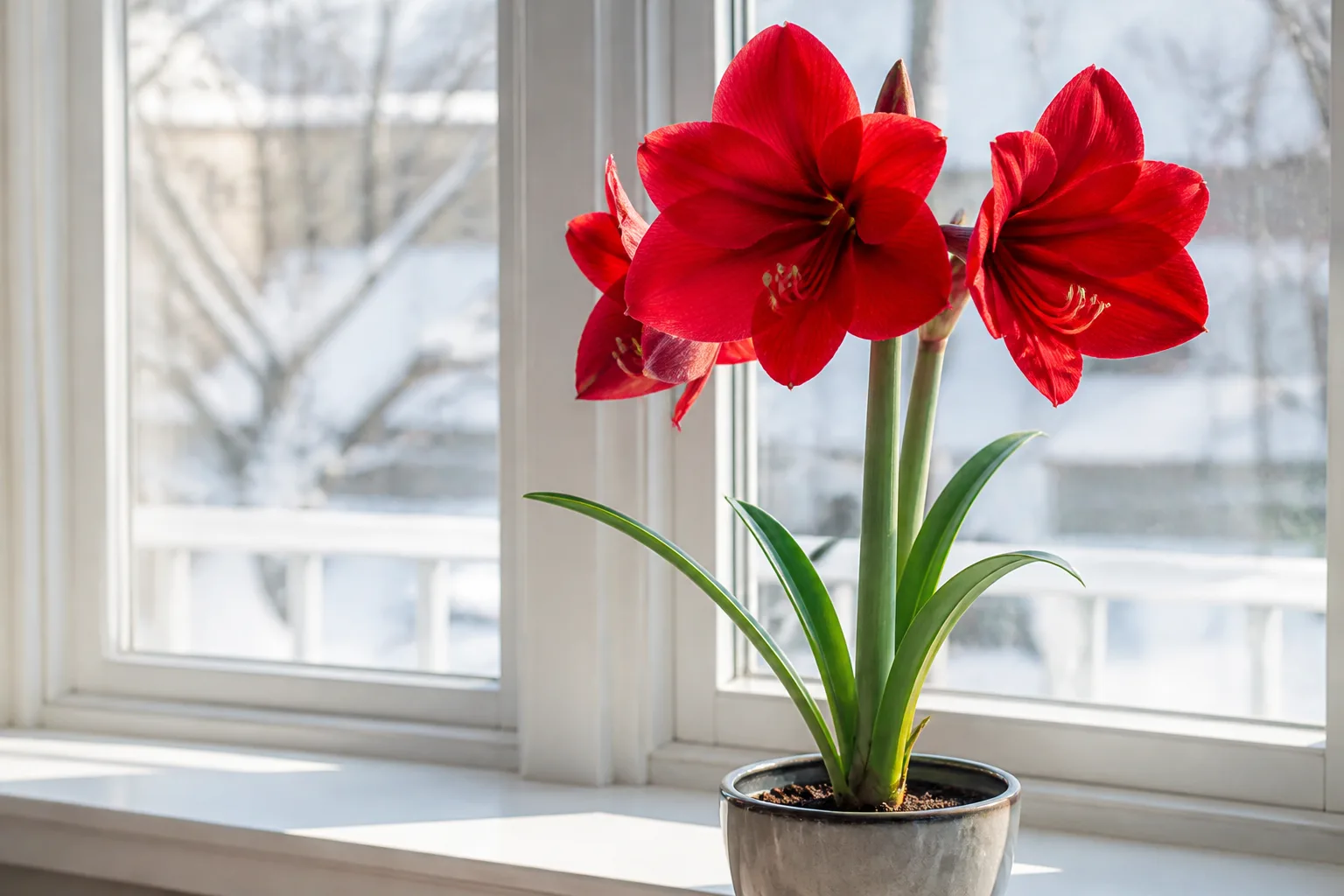
4. Amaryllis (Hippeastrum hybrids). The dramatic trumpet flowers are sold as “amaryllis,” though the winter bulbs in shops are generally Hippeastrum, not the true South African genus Amaryllis. Buy a bulb with a visible shoot or an already flowering plant for a reliable short-term display; a dormant bulb commonly needs several weeks to grow, and the exact pace depends on bulb size and warmth. Use a snug pot with drainage, leave the bulb’s upper portion exposed, and water sparingly until growth begins. The bulb and other parts can harm pets if eaten, so keep the pot and any loose bulbs inaccessible (NC State Extension, Penn State Extension).
5. Paperwhite narcissus (Narcissus papyraceus and related paperwhites). These fragrant white blooms are among the simplest bulbs to force indoors because they do not need a chilling period. Start them about four to six weeks before the date you want flowers, nestle the bulbs in gravel or potting mix, and keep water at the root zone rather than submerging the bulb; a bright, cooler position helps limit lanky stems. Illinois Extension notes that stems can flop and the scent is strong, so stake them or choose another flower if anyone in the room is sensitive to perfume. Narcissus bulbs are toxic if chewed, especially for pets, so store unused bulbs securely (University of Illinois Extension, Penn State Extension).
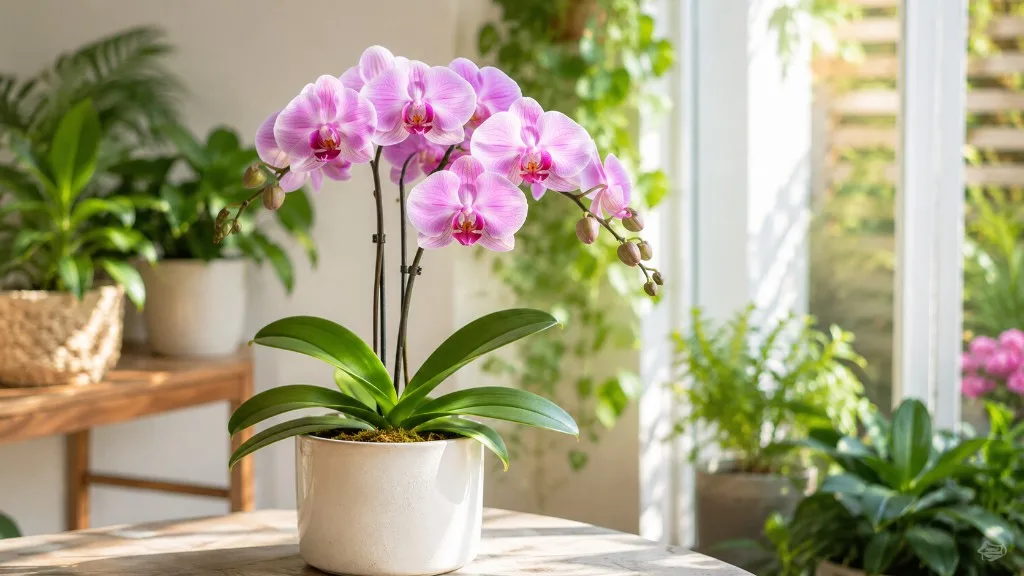
6. Moth orchid (Phalaenopsis spp.). A flowering orchid is a cleaner, longer-lasting gift than a cut bouquet if the recipient has a bright window without direct midday sun. Keep it warm, water when its bark mix is nearly dry, drain the pot fully, and never let the crown sit wet; a weekly calendar is only a rough check because bark, pot size, and room temperature change drying speed. Once the flowers fade, the plant can grow new leaves and flower again, though rebloom is not immediate. Orchids are commonly listed as pet-friendly, but do not encourage pets to chew any houseplant (University of Minnesota Extension).
7. Gardenia (Gardenia jasminoides). Choose this for glossy foliage and intensely fragrant white flowers, not for carefree maintenance. It needs strong light, evenly moist but well-drained acidic potting mix, and stable warmth; buds may yellow or drop when a plant is moved from humid greenhouse conditions to a dry room or set beside a draft. In warm regions it can be an outdoor evergreen shrub, but a holiday gift in a small nursery pot is usually best treated as an indoor flowering plant until temperatures are safely mild. ASPCA lists gardenia as toxic to pets, usually causing mild vomiting, diarrhea, or hives if eaten (ASPCA Gardenia listing).
8. Florist azalea (Rhododendron hybrids). A potted azalea can carry masses of pink, red, or white blooms and prefers a bright, cool room with consistently moist acidic mix. Do not mistake the temporary florist display for a houseplant that will thrive indefinitely in a dry, heated room; after flowering, gardeners in suitable mild climates can acclimate it outdoors, but cold-hardy landscape azaleas are different from some greenhouse cultivars. Rhododendrons and azaleas are poisonous to pets, so avoid them in homes where animals can reach the leaves or flowers (ASPCA plant list).
9. Anthurium (Anthurium andraeanum hybrids). The waxy red, pink, or white “flower” is a spathe, a modified leaf surrounding a slender spadix of tiny flowers. Give it warmth, bright indirect light, and an airy mix that drains quickly; a constantly wet pot is a common route to root trouble. The colored spathes can last for weeks, but the plant is not a chew-safe decoration: its calcium oxalate crystals irritate the mouth and throat, and ASPCA flags anthuriums as toxic to cats and dogs (Missouri Botanical Garden, ASPCA).
Greenery for small rooms, cooking, and natural décor
Use a living plant when you can provide its year-round conditions; choose clipped branches when the goal is a wreath, table display, or short seasonal accent. The tree and shrub options below are outdoor plants except for Norfolk Island pine, which is a subtropical houseplant that only goes outside year-round in warm, frost-free places.
Fragrant and potted greenery
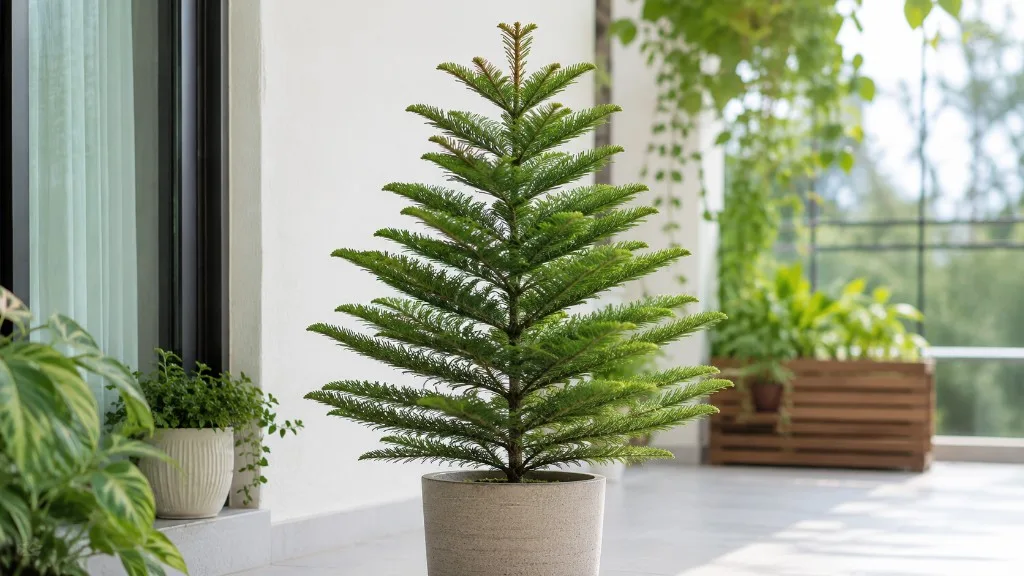
10. Norfolk Island pine (Araucaria heterophylla). Its tiered branches make a graceful tabletop or small-room tree, but it is not a true pine and will not tolerate a freezing winter. Indoors, place it in bright light, rotate it occasionally so it grows upright, water when the top of the mix starts to dry, and keep it away from dry heat; its branches are too delicate for heavy ornaments. It can become a substantial tree outdoors in subtropical climates, so do not buy one expecting to plant it in a cold-climate yard (NC State Extension).
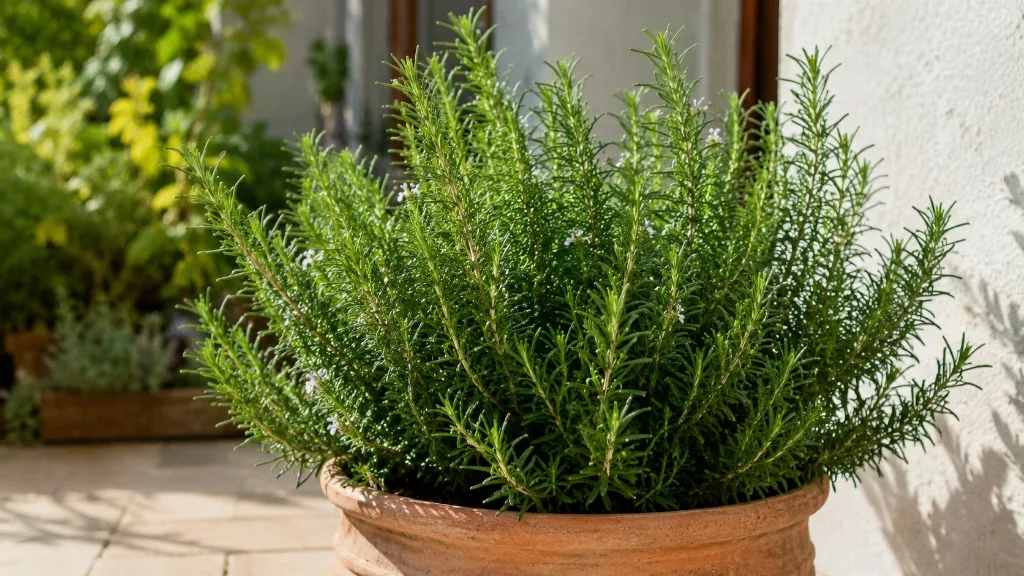
11. Rosemary (Salvia rosmarinus). A cone-shaped rosemary topiary gives the scent and outline of a miniature evergreen while remaining a culinary herb, provided the plant was grown and sold for edible use. Give it the brightest sunny window you have, a pot with drainage, and water only after the mix has begun to dry; dim, warm rooms often lead to weak growth and leaf drop. It is a Mediterranean shrub, not a frost-proof Christmas tree, so move it outdoors only when the local weather suits it and acclimate it gradually. UF/IFAS describes the sheared holiday topiary form and its preference for drying between waterings (UF/IFAS Gardening Solutions).
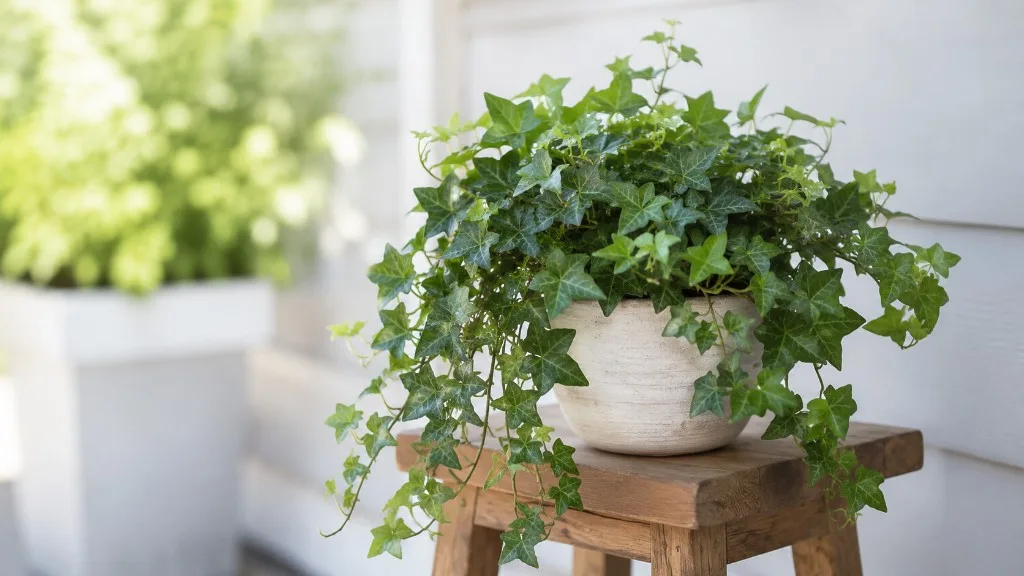
12. English ivy (Hedera helix). Ivy trails over a shelf, climbs a small indoor frame, or supplies green leaves for a wreath; indoors it does best in bright indirect light and a mix that drains. Outside it is vigorous and can climb trees or walls, so check local invasive-plant guidance before planting it in a garden. The berries and foliage are not snacks for pets: ASPCA lists English ivy as toxic to cats and dogs, and the trailing stems are easy for animals to reach (NC State Extension, ASPCA dog plant list).
13. Holly (Ilex spp.). Glossy evergreen leaves and red berries are classic cut decorations, but “holly” covers many species, and most berry-producing hollies need a female plant plus a compatible male pollinator nearby. For a garden, select a species or cultivar that fits your climate and mature size instead of relying on a generic hardiness range. For a home with toddlers or pets, remove berries from cut stems and sweep up anything that drops: even a small number of holly berries can cause nausea, vomiting, or diarrhea (NC State Extension, Poison Control).
14. American mistletoe (Phoradendron leucarpum). In the U.S., the familiar holiday sprig is often American mistletoe, a hemiparasite that grows on host-tree branches—not a normal soil-grown indoor plant. It is best treated as cut décor; cultivating it is complicated and can weaken its host tree. American mistletoe is less dangerous than the European species in small accidental ingestions, but it can still cause stomach upset and the berries or leaves should not be accessible to children or pets. Hang it securely, check for fallen pieces, and never decorate food with it (NC State Extension, Poison Control).
Cut branches and outdoor evergreens
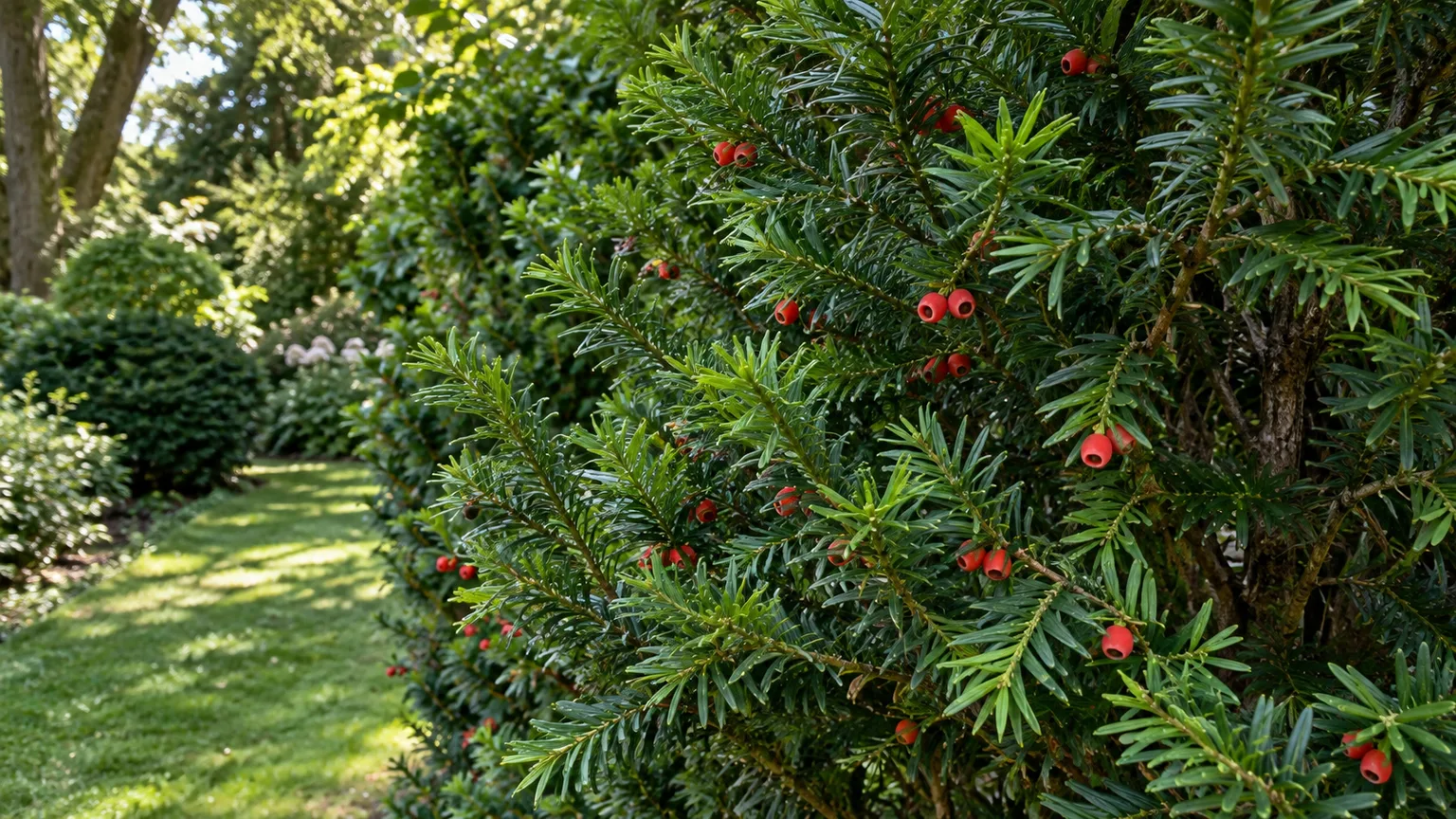
15. Yew (Taxus spp.). Yew’s dark evergreen needles and red seed coverings can look festive in a wreath, but this is one of the plants to handle with the greatest caution. Its needles, bark, and seed are poisonous; the fleshy red covering is not the dangerous part, but the seed sits inside it and can be swallowed. Do not use yew clippings where children, pets, or livestock can reach them, and never put the branches in a bowl of greenery that looks edible. If choosing a landscape yew, match the cultivar’s eventual size and give it well-drained soil (NC State Extension, Poison Control).
16. Douglas fir (Pseudotsuga menziesii). This is a popular cut Christmas tree and a useful source of fragrant boughs, but it is a large forest tree, not an indoor potted plant. Plant one only if your property has room for its eventual height and its local climate supports it; the species’ name says “fir,” but botanically it belongs to its own genus. For wreaths, use fresh, clean clippings and keep them out of reach of pets that chew needles (NC State Extension).
17. Blue spruce (Picea pungens). Its blue-gray needles offer a cooler color than fir, and clipped branches can be used in wreaths or arrangements. A living blue spruce belongs outdoors in full sun with room to mature; it is not a houseplant and can struggle in hot, humid sites outside its adapted range. Check the mature dimensions of a cultivar before buying a small nursery tree, since the young size is a poor guide to the eventual space it needs (NC State Extension).
18. Balsam fir (Abies balsamea). Balsam is valued for its strong evergreen scent and is a familiar cut Christmas tree in cool northern regions. Use its branches as short-term decorations or plant a living specimen only in a cool climate with moist, well-drained soil; it is a poor choice for a hot, humid yard. For a cut tree, keep the trunk base in water and away from heaters so the needles stay fresh longer (NC State Extension).
19. Juniper (Juniperus spp.). Junipers range from low groundcovers to upright shrubs and trees, so the name alone cannot tell you how large the plant will become. Choose a locally suitable species and cultivar for a sunny, well-drained site; the evergreen foliage and blue, purple, or copper-colored cones can bring winter structure to a garden. The berry-like cones are not a general-purpose food—use culinary juniper only when it is correctly identified and sold for that purpose (NC State Extension).
Outdoor plants with winter interest
These choices are for a garden, patio, or cool sheltered porch—not for a heated living room. In many U.S. regions, “winter flower” means late winter or early spring rather than a guaranteed Christmas bloom, and a warmer or colder season can shift the calendar by weeks.
Winter flowers close to the holiday season
20. Christmas rose (Helleborus niger). This evergreen perennial is a genuine winter-flowering plant in suitable conditions, though “Christmas rose” is a common name, not a promise that it will open on a particular holiday. Give it partial shade and rich soil that retains some moisture but drains freely; wet winter soil is more dangerous than cold alone. Hellebores are toxic if eaten and their sap may irritate skin, so site them away from children’s play and wear gloves when dividing or pruning (RHS hellebore guide, NC State Extension).
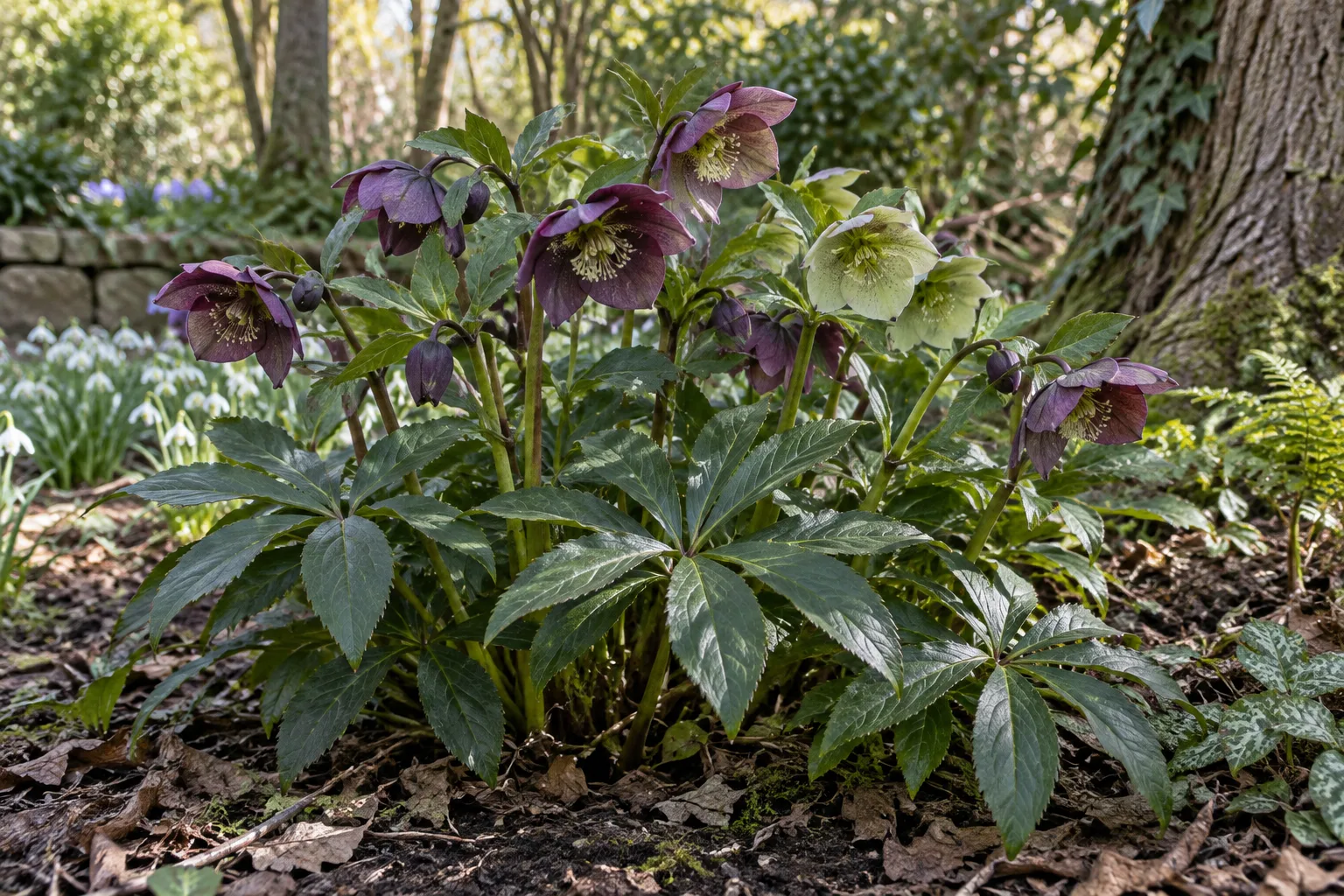
21. Snowdrops (Galanthus spp.). Snowdrops are tiny bulbs that often flower near the end of winter or at the start of spring, sometimes pushing through cold soil or snow. Plant bulbs promptly in partly shaded, moist but well-drained ground, such as beneath deciduous trees where they can receive spring light before the canopy fills in. Their white flowers make them seasonal winter-garden accents, but in most gardens they are not a dependable December display; as with other ornamental bulbs, do not let children or pets chew them (RHS snowdrop growing guide).
Berries and evergreen groundcovers
22. Wintergreen (Gaultheria procumbens). This low native groundcover brings glossy evergreen leaves and red berry-like fruit to shady, acidic garden beds or a cool container. Its crushed foliage has a minty scent; it does not bloom for Christmas, and its berries are typically present in autumn and winter. The fruits are described as edible when correctly identified, but do not treat an ornamental nursery plant as a snack, especially if it may have been treated or a child or pet could confuse it with another berry (NC State Extension).
Shrubs and orchard choices for suitable climates
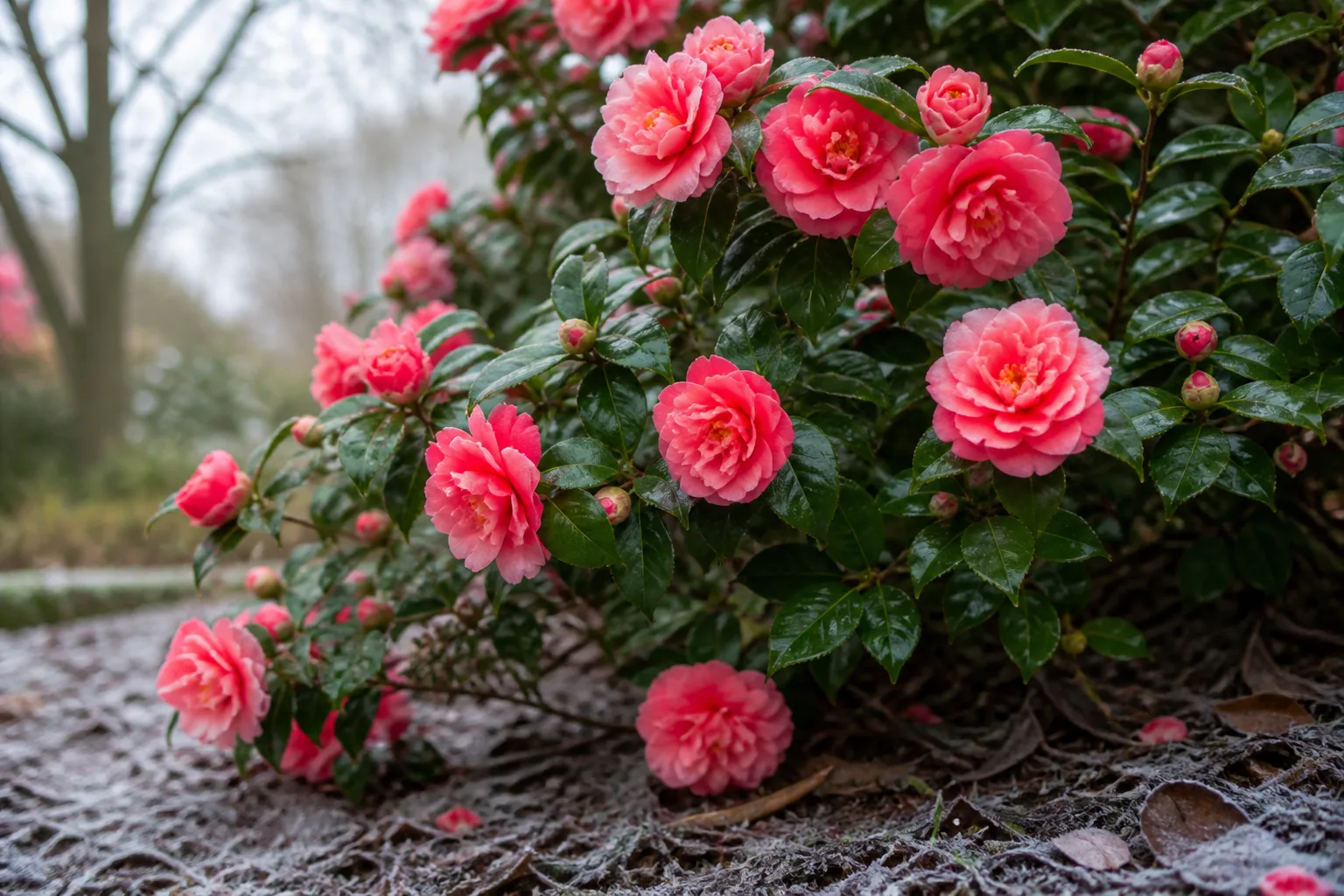
23. Yuletide camellia (Camellia sasanqua ‘Yuletide’). This evergreen shrub can open red flowers with gold centers in late fall or early winter, making it one of the strongest outdoor choices for holiday color in mild climates. Plant it in acidic, well-drained soil with sun to partial shade and shelter from harsh afternoon heat or drying winter winds. It is a landscape shrub, not a cold-room potted flower; in colder areas, choose a protected container you can overwinter or enjoy a different plant (NC State Extension).
24. Winter honeysuckle (Lonicera fragrantissima). Small cream-white flowers can perfume a mild winter day, but the shrub may be deciduous or semi-evergreen depending on local temperatures. It suits an outdoor garden with sun or partial shade and room for a spreading, arching habit; check whether it is invasive in your region before planting. This is a good pick for fragrance near a path or patio in climates where it flowers in winter, not a guaranteed indoor bloom (NC State Extension).
25. Pear tree (Pyrus communis). A pear tree is a long-term orchard gift with a Christmas-season association through its fruit and the familiar “partridge in a pear tree” image—not a plant that flowers in winter. Set a European pear outdoors in full sun, allow for its mature size, and choose compatible varieties if you want dependable fruit; many pears need cross-pollination, and bloom happens in spring. This is a meaningful choice for someone who wants an orchard tree, not a fast holiday display (Penn State Extension).
Which Christmas plants are safe around pets and children?
Use the botanical name from the tag when checking risk; common names such as “mistletoe,” “holly,” and “Christmas cactus” can refer to different species. Keep any plant out of reach if a child or pet mouths leaves, bulbs, or berries. ASPCA notes that its database is not exhaustive and that eating any plant material can upset a dog’s or cat’s stomach, so a “non-toxic” label is not an invitation to chew (ASPCA Toxic and Non-Toxic Plants).
| Plant or plant part | Practical caution |
|---|---|
| Yew (Taxus) | Needles, bark, and the seed inside the red aril are highly poisonous; keep cuttings and fruit away from children, pets, and livestock. |
| Amaryllis (Hippeastrum) and paperwhite narcissus | Bulbs are especially tempting to chew and can poison pets; store spare bulbs securely. |
| Cyclamen | The tuber or roots are the main concern; do not place it where pets dig. |
| Holly | Berries can cause illness; remove them from decorative branches in homes with small children or pets. |
| Mistletoe | American mistletoe is less toxic than its European namesake in small accidental ingestions, but berries and fallen leaves still belong out of reach. |
| Ivy, azalea, gardenia, and anthurium | ASPCA lists these as toxic to pets; anthurium can irritate the mouth and throat. |
| Poinsettia | Not the severe poison often rumored, but its sap can irritate skin and upset the stomach; avoid contact with eyes and keep it from chewing. |
Poinsettia is a useful example of why precise language matters: Poison Control reports that small exposures usually have little effect, but sap can irritate skin or eyes, and a large ingestion still merits individualized advice. By contrast, yew is a high-severity plant and holly berries can cause symptoms after small ingestions. If a child eats a plant, contact Poison Control in the U.S. at 1-800-222-1222 or use webPOISONCONTROL; if a pet chews a plant, contact a veterinarian or ASPCA Animal Poison Control at 888-426-4435. Keep the plant tag or a photo of it so responders can identify the species (Poison Control on poinsettias, Poison Control on holly berries, NC State Extension on yew).
A practical care plan for after the holidays
For a potted gift, remove any decorative wrap before watering, confirm that the nursery pot has drainage, and empty the saucer afterward. Put the plant in the brightest location that meets its temperature needs: sun-loving rosemary can use a sunny window, while cyclamen and poinsettia usually last longer in cooler rooms away from direct heat. Do not water by date alone; check the mix and pot weight, since a paperwhite, orchid, poinsettia, and rosemary dry at different rates.
Decide whether you want to keep the plant before it declines. Continue watering and feeding amaryllis after its flowers fade so the leaves can replenish the bulb; let paperwhites finish their brief display and compost them if they are not hardy in your climate. A Christmas cactus can become a year-round houseplant, while a florist azalea or gardenia may need a cool, bright recovery period and outdoor acclimation in suitable weather. Save the plant tag, because cultivar and treatment details matter more than the holiday label.
For evergreen trees and shrubs, keep the living plant outside unless it is a true houseplant such as Norfolk Island pine. A balled tree should spend only a short, gradual period indoors, away from heat, before planting in suitable soil; clipped boughs are simpler when you lack the space or climate for a full tree. Before setting any shrub or tree in the ground, check its mature dimensions, drainage needs, winter minimums, and local invasive status.
Conclusion
For a warm-room bloom, start with a poinsettia, Christmas cactus, amaryllis, cyclamen, or orchid and choose according to light, scent, and household safety. For natural greenery, use clipped branches or rosemary, and reserve firs, spruces, yews, camellias, and winter-blooming shrubs for an outdoor site that suits their real size and climate. A little attention to what the plant is—and where it will live in January—turns a seasonal decoration into a gift that lasts beyond the holiday.