Leaf Scorch on Plants: Read the Pattern, Find the Cause
Brown tips and scorched leaf edges have several causes. Use their pattern, timing, and growing conditions to find the likely problem and choose a safe fix.
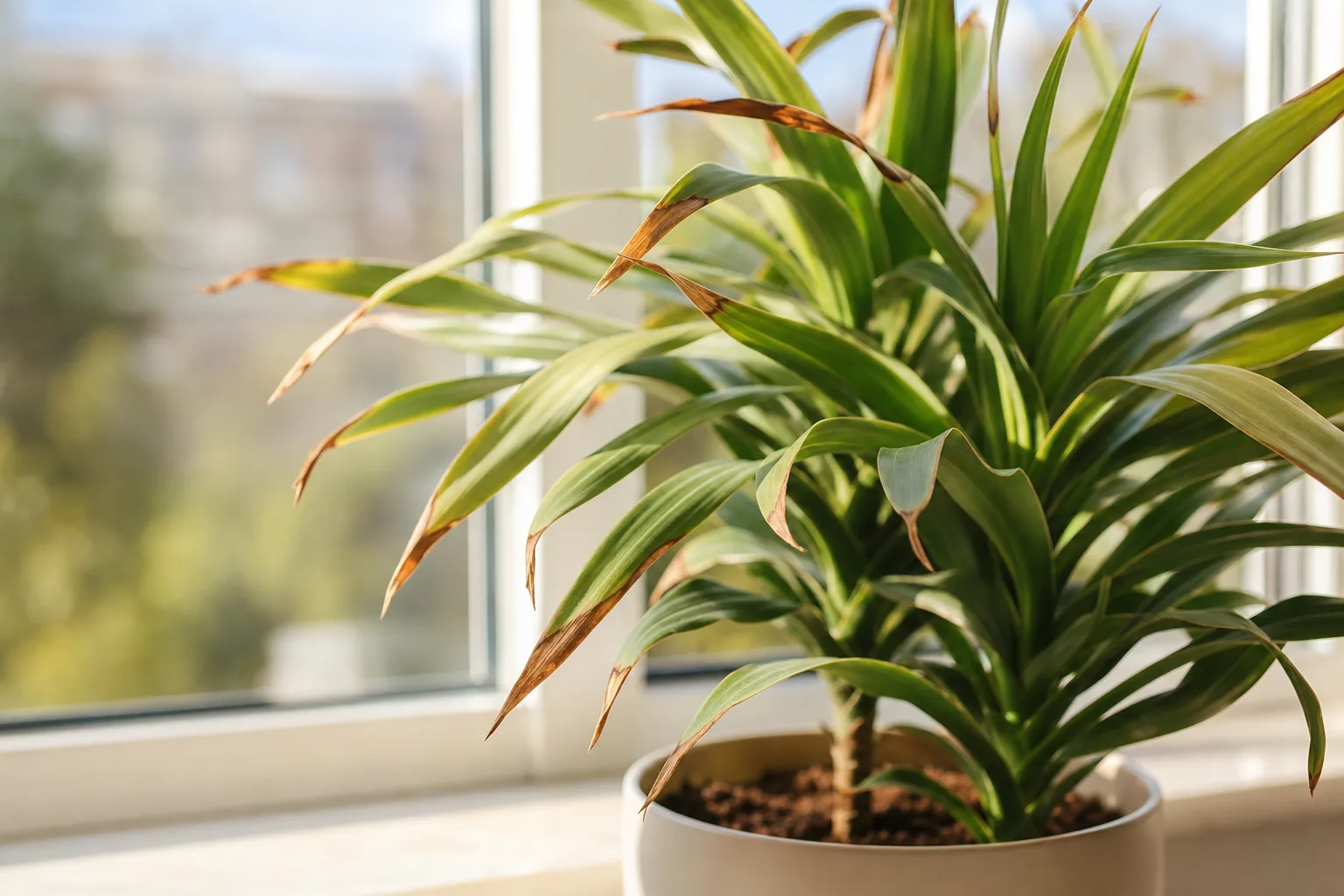
A brown leaf tip is a symptom, not a diagnosis. Leaf scorch can follow a dry root zone, damaged roots, hot sun, wind, cold, excess fertilizer, salts, a spray injury, or—in some woody plants—a disease that interferes with water movement. The dead tissue looks similar in several of these cases, so cutting it off or changing the watering routine may improve appearances without fixing the cause.
Start by noting which leaves are affected, where the browning begins, whether it is spreading, and what changed in the preceding days or weeks. Then check soil moisture, roots, exposure, and recent treatments in that order. A useful diagnosis is a set of clues that agree, not one brown edge that seems to point to a familiar cause.
First, know what leaf scorch can and cannot tell you
“Leaf scorch” describes injured or dead tissue, often at the tips or margins. It does not identify the agent that injured it. University of Wisconsin–Madison Extension makes that distinction for trees and shrubs: scorch is a recognizable symptom with several possible causes. UC IPM likewise groups drought or irrigation problems, poor drainage, sun and heat, frost, wind, salt or boron toxicity, and other injuries under leaf burn or scorch. (Wisconsin Extension on scorch and related problems; UC IPM on leaf burn or scorch)
That breadth matters because a thirsty-looking plant is not always short of water. A waterlogged root system, a compacted or damaged root zone, or disease in water-conducting tissues can prevent leaves from receiving enough moisture even when the soil is wet. Penn State Extension’s diagnostic key lists underwatering, overfertilization, pesticide injury, and vascular wilt among possible causes of dead leaf tips and margins. (Penn State Extension’s guide to diagnosing poor plant health)
Scorch can appear on indoor foliage, garden vegetables, perennials, shrubs, and trees. The setting narrows the possibilities: direct sun through glass may matter for a windowsill plant, while a recently planted tree may be struggling with restricted roots, compacted soil, or dry wind. Identify the plant and its normal exposure before deciding what “too much” or “too little” means.
Read where the damage starts
The shape and distribution of injury are useful clues, especially when paired with timing. Photograph the plant from a few feet away, then take close-ups of both the damaged and healthy leaves. Keep the images with notes about the plant’s location and care; a gradual change in the pattern can be more informative than a single snapshot.
Tip-only browning versus margin burn
A small, dry tip on several otherwise healthy leaves often points toward a chronic stress that builds at the far end of the leaf: inconsistent water uptake, dry indoor air for a sensitive tropical plant, or accumulated salts are possibilities. None is confirmed by tip browning alone. If the plant is otherwise firm and new leaves emerge normally, check those slower, repeated stresses before reaching for a disease treatment.
When the browning follows much of the leaf edge, moves inward between veins, or appears on many leaves at once, look for a wider change in conditions. Heat, wind, dry soil, damaged roots, soluble salts, and some diseases can all create marginal injury. A distinct yellow boundary, premature leaf drop, or a pattern that returns on the same branches deserves more attention than a few old tips.
One side, exposed leaves, or scattered spots
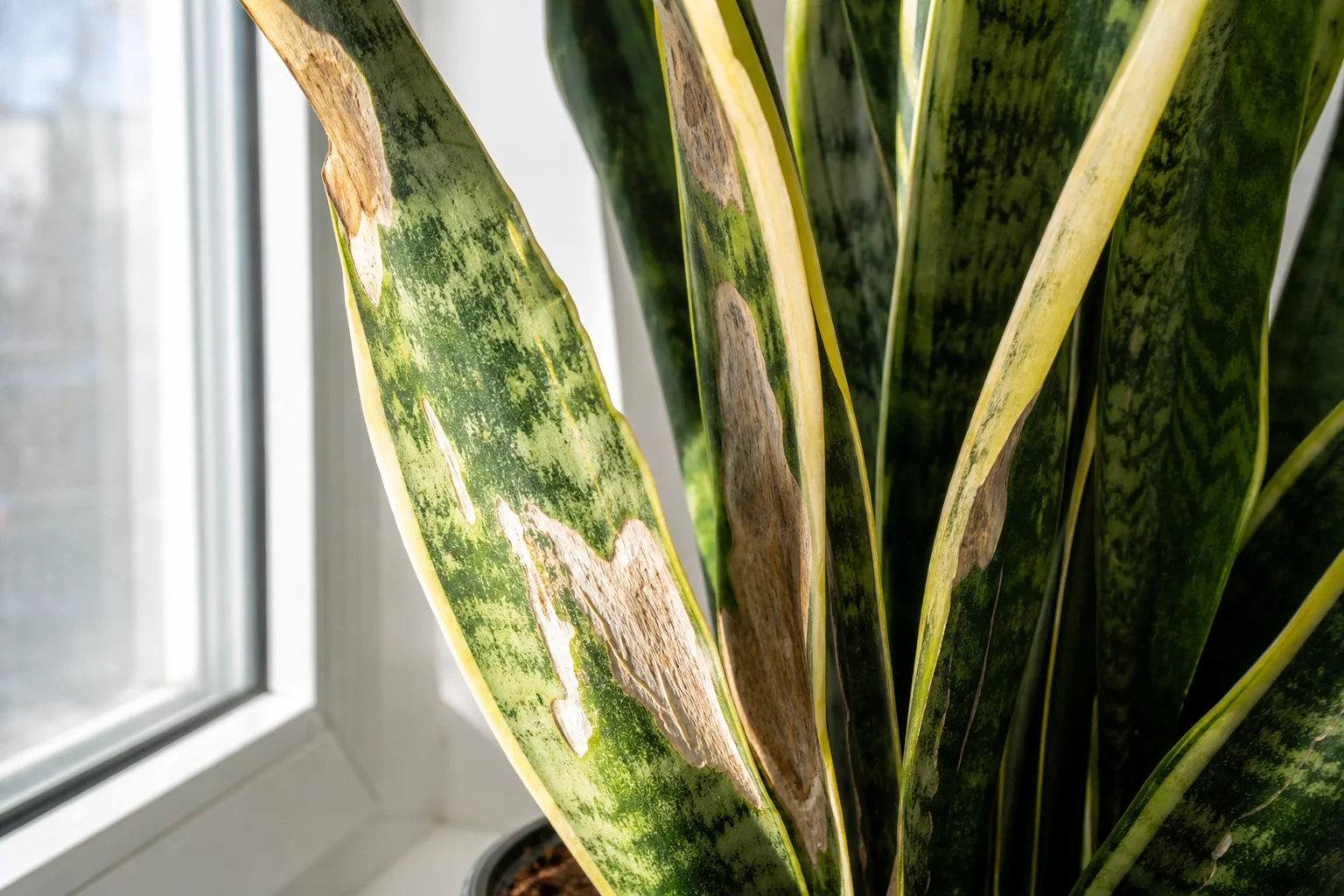
Damage concentrated on the window-facing side, the top of a canopy, or the leaves most exposed to afternoon sun supports a light or heat explanation—particularly after a plant was moved outdoors or closer to glass. A clear event, such as a heat wave or unexpected frost, strengthens that hypothesis. Epic Gardening’s practical overview also notes that sudden heat or cold and excessive direct sun can produce wilted, brown, or crisp foliage, while watering extremes can look similar. (Epic Gardening’s guide to brown, wilted, or crisp leaves)
Small, separate lesions, irregular flecks, rings, yellow halos, wet-looking patches, or damage that appears on sheltered leaves as well as exposed ones should not be treated as ordinary sun scorch without inspection. Turn leaves over and look for insects, webbing, sticky residue, fungal growth, or a sharply bounded spot pattern. The “front” and “back” of a plant can be telling: a one-sided exposure pattern is different from repeated lesions that spread across the canopy.
Reconstruct what changed before damage appeared
Plants may show stress after the trigger has passed. A leaf that browns today may have been developing during last week’s dry spell, a recent feed, a cold night, or a move to brighter light. Write down the first day you noticed the change and what happened in the previous month: watering gaps, heavy rain, repotting, fertilizer, a new window position, a heat wave, cold drafts, cleaning sprays, pesticide use, or nearby renovation.
Compare the affected plant with another of the same species if you have one. If both plants share the same water or feeding routine but only one gets direct afternoon sun, their difference helps prioritize exposure. If every plant in one room develops tip burn, investigate a shared vent, dry air, treated water, or spray product before diagnosing several unrelated diseases.
Also consider the plant’s age and season. A few old lower leaves yellowing and dying as new growth continues may be normal turnover; a wave of crisp young leaves, stalled growth, or twig dieback is not. Gardening Know How describes useful directional clues—such as damage on the light-facing side or browning that starts at the base during water stress—but those clues are best treated as leads to confirm with the plant’s actual conditions. (Gardening Know How on brown leaves in houseplants)
Triage in a safe order
Before making changes, use this short check. First, decide whether the damage is stable or spreading. Second, feel the growing medium below the surface rather than judging it from the top. Third, check for standing water, blocked drainage, an unusually tight root ball, or soft, dark roots if there is a clear reason to inspect them. Fourth, note recent sun, heat, cold, wind, fertilizer, water source, and sprays. Finally, inspect both leaf surfaces and stems for pests, lesions, or residue.
Take the lowest-risk action that fits the evidence. Move a plant away from a heater or a hot pane of glass if it is clearly exposed, but do not simultaneously repot it, prune heavily, flush the soil, add fertilizer, and buy a humidifier. Several changes at once may add stress and make it impossible to learn which condition mattered. If the plant is rapidly collapsing, protect it from an obvious extreme—such as freezing air or intense noon sun—while you investigate.
Sun, heat, and hot window glass
Sun injury is more likely when the damaged side faces strong direct light and the first symptoms follow a sudden exposure change. A plant grown indoors under filtered light can scorch when placed outside in full sun without acclimation; a shade plant can also burn behind hot glass even if it never leaves the room. Glass does not make every sunny window unsafe, but leaf contact with a hot pane and intense afternoon exposure can combine heat with bright light.
For a garden plant, check the species’ expected sun exposure and whether a heat wave, reflective wall, paving, or wind increased stress. If sun is the best-supported cause, provide temporary afternoon shade or move a container to bright indirect light. Keep the plant’s overall light adequate; permanent deep shade can solve a burn while creating weak, stretched growth. Reintroduce stronger light gradually once the weather eases rather than moving it straight back into the same harsh exposure.
Avoid spraying water on hot, stressed foliage as a “cooling treatment.” It does not repair dead tissue and can leave wet foliage in conditions that favor some leaf diseases. Water the root zone when its moisture check indicates it needs water, and address shade or heat exposure directly. For a houseplant with clear bleached patches after a move, the detailed guidance in our guide to sunburned houseplant leaves covers light acclimation and recovery in more depth.
Water delivery: drought, soggy roots, or uneven uptake
A plant can scorch when roots cannot replace water lost from the leaves. That may happen because the growing medium is dry, but also because roots are suffocating in persistently wet soil, have been damaged during transplanting, are restricted by compaction, or cannot access the whole root zone. Penn State Extension includes both insufficient moisture and killed or impaired roots among conditions that leave leaf margins short of water. (Penn State Extension’s explanation of bacterial leaf scorch and marginal burn)
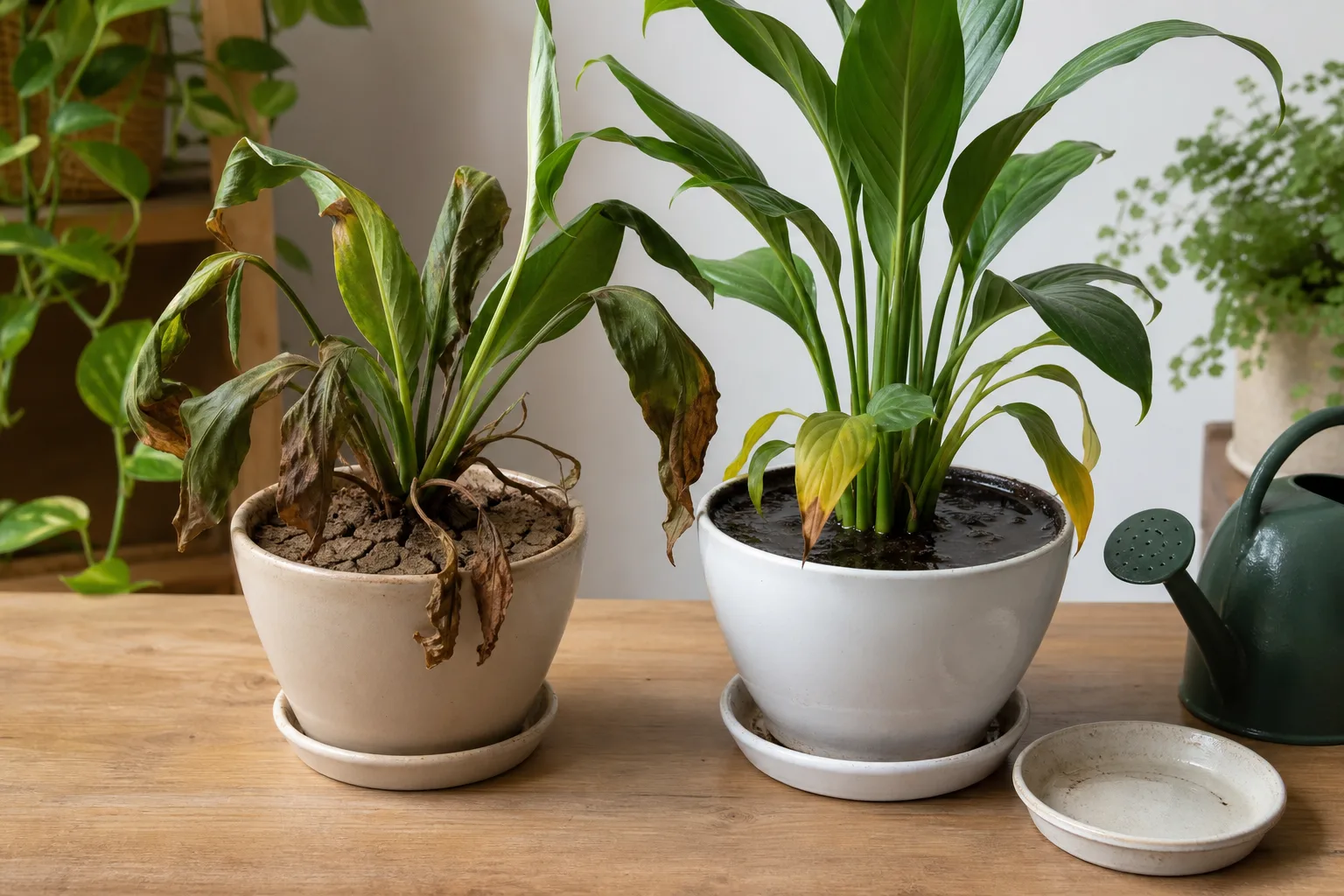
Check moisture several inches into the root zone or at the depth appropriate to the pot or bed, not just at the surface. A dry, light pot and dry mix support a water shortage; a persistently heavy pot, sour smell, standing water, or soft roots point toward poor drainage or root damage. Wilt alone is ambiguous: an overwatered plant may wilt because compromised roots cannot function. Do not water by calendar if the actual soil condition says otherwise.
When the root zone is dry, water thoroughly enough to moisten the active roots and let excess drain away. In a garden bed, water slowly so the soil absorbs it rather than running off. When soil is soggy, stop adding water until the medium drains and check whether the container has open drainage. Repeatedly alternating between bone-dry soil and a flood can stress roots as much as a consistently poor schedule. For a more detailed indoor watering diagnosis, see brown tips on houseplants.
Fertilizer, salts, and water quality
Excess fertilizer can injure roots and contribute to burned tips or margins. A strong clue is that new damage began soon after a concentrated feed, a double dose, or fertilizer applied to dry roots. White crust on the mix or pot rim can signal accumulated soluble material, but it is not a complete diagnosis; hard-water minerals and the pot itself can leave deposits too. UC IPM includes salt toxicity among potential causes of leaf burn, and Penn State lists overfertilization as one possible cause of dead tips and margins. (UC IPM on leaf burn or scorch; Penn State’s plant-health diagnostic key)
If feeding history fits, pause fertilizer while the plant recovers. Do not compensate for brown edges with extra plant food: damaged tissue cannot use a nutrient boost, and additional salts can worsen root stress. Leaching a pot with clean water may help when drainage is good and the roots are sound; it is a poor first move for a waterlogged plant, a pot without drainage, or a plant already showing root rot. For larger landscape problems, a soil or irrigation-water test is more useful than guessing at a nutrient deficiency.
Water quality is worth checking when sensitive plants develop repeated tip injury despite steady care. Municipal reports can tell you what treatment the local supply uses, but plant sensitivity varies, and not every brown tip is caused by fluoride or chlorine. If you test another water source, change only that variable and watch new growth. Avoid switching a collection to expensive bottled or distilled water based on one symptom. For an indoor salt-buildup flush and its limitations, see our fertilizer-burn guide.
Cold, wind, and dry indoor air
Cold injury often follows a chill rather than building evenly over months: foliage near a drafty window, touching cold glass, or exposed outdoors during a late frost may turn dark, watery, then brown. Wind can also dry leaf edges faster than roots replace water, especially in exposed garden sites or balconies. If damage began after a cold snap or windy day, protect the plant from that exposure and wait to see whether the affected area stabilizes before pruning.
Dry air can produce crispy tips on some tropical houseplants, particularly near heat vents or during a dry indoor season. It is one possible factor, not a universal explanation. Measure humidity near the foliage if the species is humidity-sensitive, and look for a shared dry-air source such as a heater or forced-air vent. If the air is the likely issue, moving the plant away from the vent or using a clean room humidifier gives more control than misting leaves repeatedly. A pebble tray does not reliably raise humidity across an entire room.
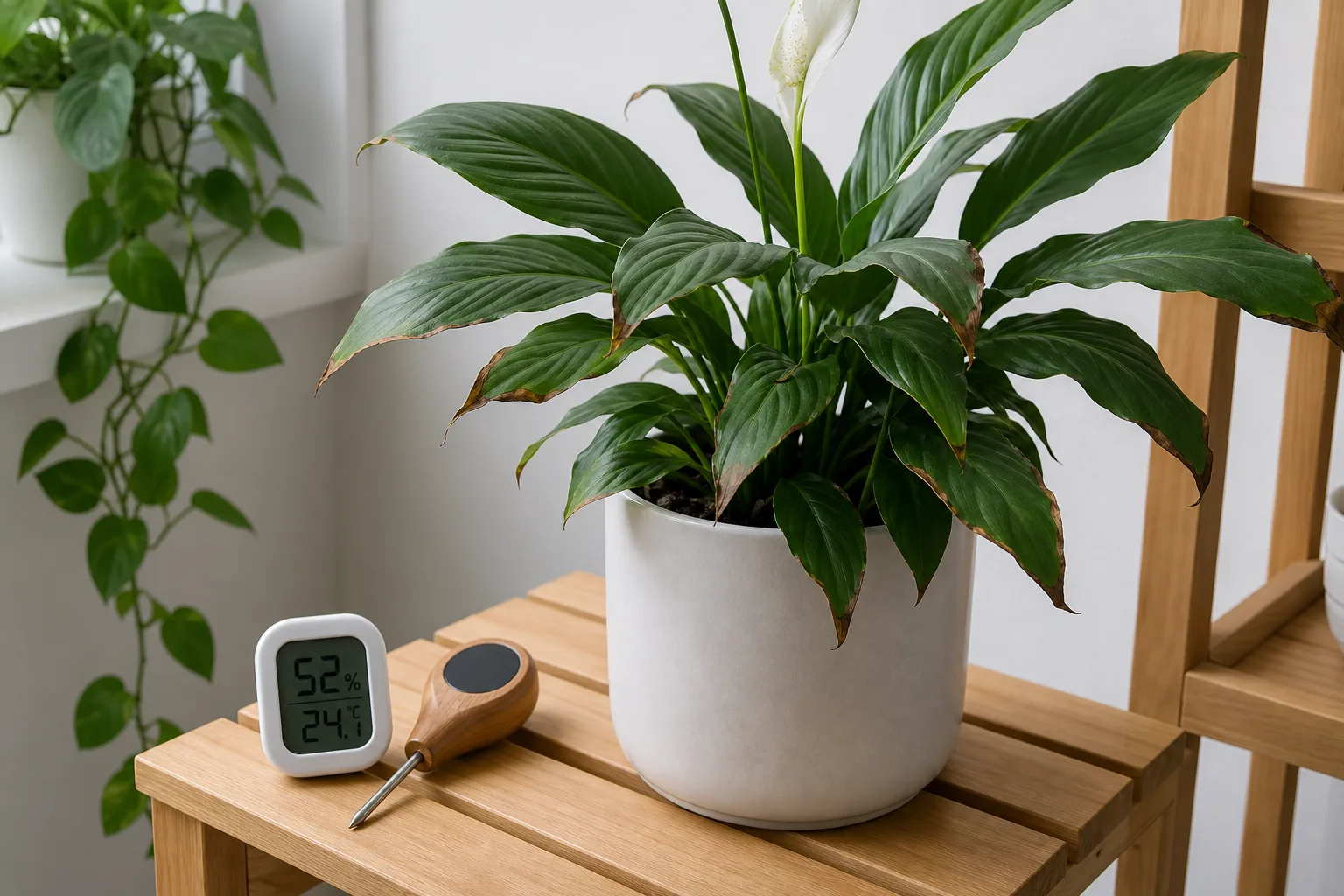
Cold, wind, and low humidity can overlap with watering stress. A plant in dry heated air may use water faster; a plant in cold saturated soil may use it more slowly. Adjust the condition that the evidence points to, then keep the rest of the routine steady. Do not respond to crispy edges by keeping soil constantly wet: that can exchange leaf stress for root rot.
Pesticides, cleaners, and accidental exposure
Chemical injury is easy to overlook because the exposure may be brief. Recent pesticide, leaf-shine product, fertilizer spray, household cleaner, or drift from a nearby application can leave spots, streaks, or edge damage. Penn State lists pesticide damage as a possible cause of dead leaf tips and margins. Check the product label and application record, and ask whether the spray was used in bright sun, at a different concentration, or on a plant species not listed for that product.
If a spray is a plausible trigger, do not apply another product to “neutralize” it. Move the plant away from the source, follow the product’s label for cleanup or re-entry, and rinse foliage only if the label permits and the rinse itself will not stress the plant. For outdoor drift, document wind direction, date, and nearby application if known; a county extension office or diagnostic service can help assess persistent injury. Keep children and pets away from products and treated areas according to the label.
When damage may be a pest or disease
Scorch-like tissue can accompany pests, root disease, leaf spots, or vascular problems. Inspect the underside of leaves, new tips, stems, and the soil line. Fine stippling and webbing point toward mites; sticky deposits may indicate sap-feeding insects; expanding circular or angular lesions, halos, or water-soaked areas are more consistent with leaf-spot problems than with a uniformly dry edge. Remove fallen diseased leaves and avoid wetting foliage while you identify the issue, but do not assume that every brown patch needs a fungicide.
Signs that deserve closer inspection
Get a closer diagnosis when browning advances from leaf to leaf despite stable care, lesions show distinct borders or halos, whole shoots wilt while the soil is moist, stems or roots are soft, or growth declines across a tree or shrub over successive seasons. A few old leaves with crisp ends are a different signal from repeating branch dieback or widespread premature leaf drop.
Bacterial leaf scorch is one disease that can mimic drought stress on some woody plants. Penn State notes that dogwood symptoms can be difficult to distinguish visually from drought and says laboratory diagnosis can confirm Xylella; the article also describes species-specific patterns in maple, elm, oak, sycamore, and other hosts. That does not mean a scorched tree has this disease. It means that recurrent, progressive scorch on a woody plant should not be treated as a houseplant watering problem by default. (Penn State Extension on bacterial leaf scorch)
For lesion patterns, see how to distinguish and manage brown leaf spots. If an indoor plant has a sudden, one-sided burn after strong light exposure, sunburned houseplant leaves may be the closer match.
Correct the cause without adding new stress
Once two or more clues point to a likely trigger, make one change and record the date. If direct sun is implicated, reduce the hottest exposure while retaining appropriate light. If the mix is dry, restore a deep, even watering pattern suited to the plant and season. If roots are in saturated soil, address drainage first. If a heavy feed preceded the damage, pause feeding rather than adding more.
Give the correction time to show up in new growth. Existing brown tissue will not regain its green color, so it is a poor measure of whether a change worked. Mark or photograph the edge of a lesion; if it stops expanding while newly formed leaves remain healthy, the suspected stress may be under control. If new damage continues, revisit the diagnosis rather than stacking on extra fixes.
For a shrub or tree, protect the root zone from repeated extremes and check the site: recent construction, buried roots, compacted soil, deicing salt, poor drainage, or a newly exposed canopy can all matter. Avoid heavy fertilization as a general “recovery” treatment. When a soil test or extension recommendation supports a specific correction, follow that evidence and the plant’s normal growth cycle.
Trim only tissue that is dead
Brown leaf tissue is dead, but a partly green leaf still contributes photosynthesis. You can leave a small brown tip in place or trim it for appearance; either choice will not cure the underlying cause. If you trim, use clean, sharp scissors and follow the leaf’s natural outline, leaving a narrow rim of brown rather than cutting into healthy green tissue. This reduces the chance of turning a cosmetic trim into a fresh wound.
Remove an entire leaf only when it is mostly dead, badly damaged, diseased, or likely to keep contacting healthy tissue. Do not strip a plant simply to make it look tidy, and avoid major pruning when the plant is already stressed unless disease guidance calls for it. Wash tools between plants when you suspect a transmissible disease. For a woody plant, pruning cuts should follow the species’ normal pruning guidance, not an attempt to remove every scorched leaf.
What recovery looks like and how long to monitor
Recovery means the damage stops progressing and the plant produces growth that fits its species—not that old leaves turn green again. A fast-growing herb may show a response sooner than a slow-growing tree or a houseplant resting in winter. Temperature, light, plant age, root condition, and season all affect timing, so a fixed number of days is not a reliable promise.
Check weekly for the first month, using the same views and notes. Compare new leaves with old ones and watch whether browning expands past the original boundary. Also track soil moisture and any new exposure change. If the plant has no active growth, stable damage can still indicate that the immediate trigger has stopped; wait for the next growth cycle before judging a correction that depends on new leaves.
Do not fertilize just to force visible recovery. If roots are healthy and the growing season has begun, resume the plant’s ordinary, conservative feeding routine only when it is due. Persistent damage, worsening wilt, or repeated scorch on newly formed leaves means the cause is unresolved—or there may be more than one cause.
When to get a formal diagnosis
Contact a local university extension office, certified arborist, or plant diagnostic clinic when a woody plant develops recurring marginal scorch, progressive branch dieback, premature leaf drop, or a pattern that returns each year. Ask about sample requirements before sending leaves or twigs; a usable diagnostic sample often needs both affected and healthy tissue and details about the plant, location, and timeline. A photo alone may not distinguish a water problem from a vascular disease.
For a houseplant, seek help if several care adjustments have failed, roots are rotting, stems are collapsing, or a new disease-like pattern is spreading. Bring clear photos, the plant’s name if known, watering and feeding notes, the water source, and any product labels. That record can make expert advice more useful than a description such as “the leaves are burning.”
Conclusion: follow the pattern, then change one factor
Leaf scorch tells you that tissue died; it does not tell you whether the problem was sun, drought, poor drainage, fertilizer salts, cold, wind, spray injury, or disease. Read the location and progression of the damage, reconstruct what changed, and check the root zone and exposure before treating. Then correct the best-supported cause with one measured change and judge recovery by new growth.
Brown tips can be frustrating because the damage is permanent, but the plant may still be healthy enough to grow well. Preserve sound foliage, keep notes, and ask for a formal diagnosis when the pattern spreads or recurs—especially on a tree or shrub.



