Which Daffodil Types Suit Your Garden? 15 Picks
Compare 15 types of daffodils by flower shape, color, fragrance, bloom time, and garden use, then choose bulbs suited to your space and climate each spring.
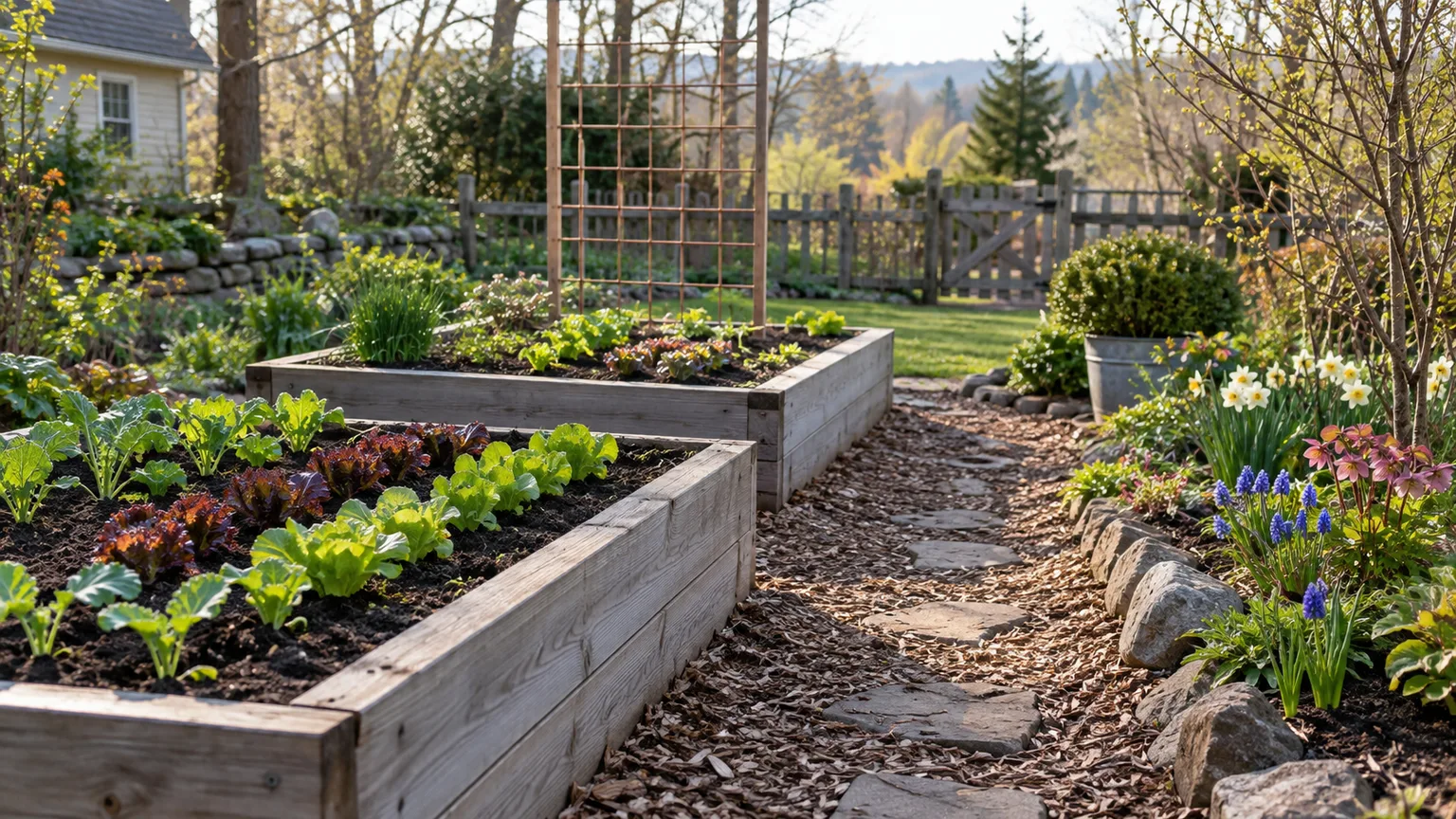
Daffodils are not one look repeated in yellow. Within Narcissus, breeders have created trumpet flowers, small cups, doubles, swept-back petals, split coronas, miniature stems, and clusters of fragrant blooms. Choosing by form and garden role makes it easier to buy bulbs you will enjoy after the novelty of a catalogue photo wears off.
The list below includes 15 named daffodils and Narcissus types, with the features that matter in an actual planting: scale, bloom period, fragrance, and where each fits. Bloom timing shifts with local winter and spring temperatures, so treat “early” or “late” as a relative window, then use the supplier’s regional notes when ordering.
How to Choose Among Daffodil Types
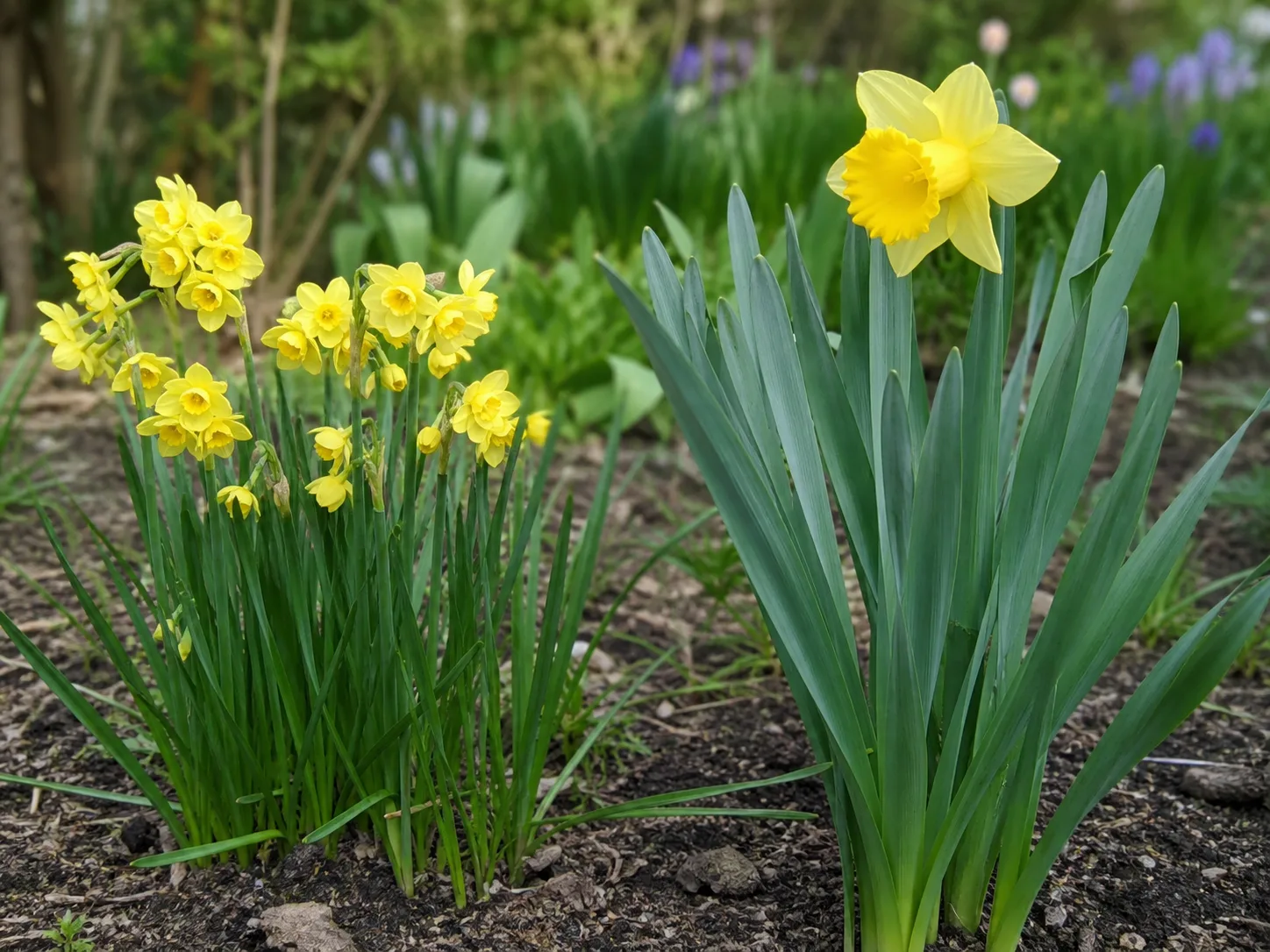
The central cup-like part of a daffodil is its corona; the surrounding petal-like segments are tepals. The Royal Horticultural Society’s growing guide describes 13 daffodil divisions based mainly on flower form. That system is useful because it helps you compare similar shapes: trumpets have a long corona, large-cupped forms have a shorter but still prominent one, double flowers have extra tepals or a doubled corona, and split-cupped types have a divided center. A cultivar’s division tells you how the bloom is built; it does not tell you whether it is the best choice for your yard.
Start with the space. Tall, single-flowered cultivars such as ‘Crewenna’ and ‘Dutch Master’ make visible drifts in a border, while compact ‘Toto’ or ‘New Baby’ can be appreciated close up in a pot or at the front of a bed. A small flower can disappear in a broad lawn planting, and a large double can look crowded in a tiny container. If you want flowers to cut, choose stems and forms you like in a vase; if you want a naturalized look, favor cultivars that suit your climate and can remain undisturbed while their foliage matures.
Then decide which spring effect you want. One early cultivar gives a sharp burst of color; pairing early, midseason, and late cultivars gives the bed a longer sequence. Color descriptions also need some flexibility: orange and pink cups can look warmer or cooler as they age and in different light. For the most dependable result, buy named cultivars from a supplier that states the bulb size, hardiness range, and expected flowering window for your region.
Daffodils are often described as low-maintenance, but location still matters. Most flower best in sun or light shade and need soil that drains well; a wet planting pocket can cause bulbs to rot. NC State Extension lists 13 divisions and describes Narcissus as a fall-planted bulb that needs moisture while actively growing and time to replenish its reserves after bloom. Its plant profile is a helpful reference for taxonomy, growing conditions, and safety.
15 Daffodil Varieties to Grow
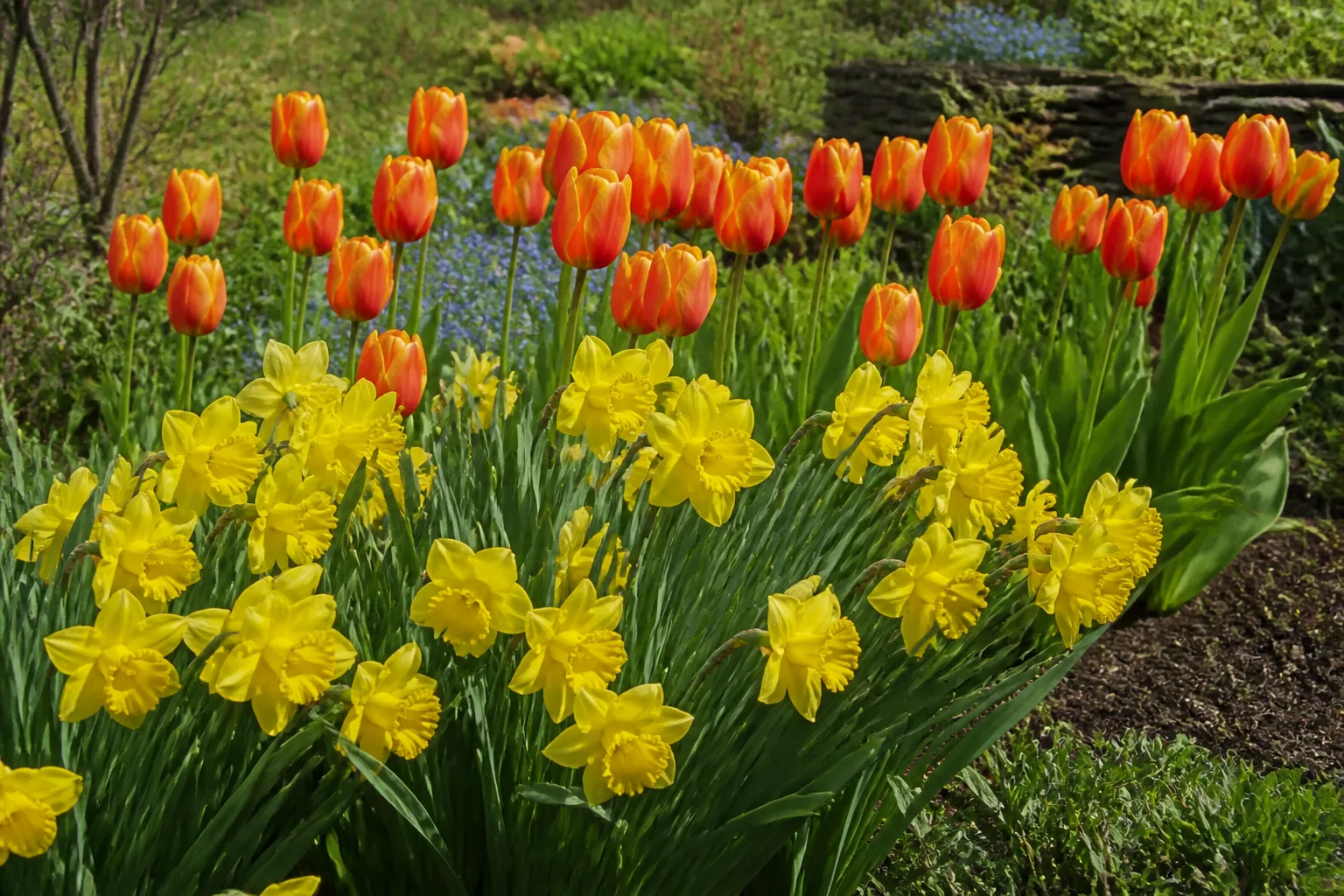
‘Petit Four’: A Full, Double Flower
‘Petit Four’ is for gardeners who want a daffodil with more texture than the familiar trumpet. It belongs to the double-flowered group, where extra floral parts create a full, layered center; the effect is showier and softer than a single bloom. Use it in a small group where the details can be seen, such as near a path or in a cutting bed, rather than scattering a few bulbs across a large lawn.
Its unusual form is also its trade-off: double flowers can be visually heavy beside delicate early bulbs, so pair them with simple shapes rather than several frilly flowers at once. Plant the bulbs at the depth and spacing recommended for their size, and judge the display as a group; a few doubles rarely have the same impact as a short drift. Like other cultivars, it needs its leaves left in place after flowering.
‘Tahiti’: Golden Petals and an Orange Center
‘Tahiti’ combines yellow outer tepals with a warm orange, doubled center. The layered flower makes a strong focal point without needing a rare color claim, and it is a good choice when a bed already has smaller yellow flowers but needs one conspicuous bloom. It is a double daffodil, so use it where the large, full center is visible from a path or window.
Choose ‘Tahiti’ for a deliberate color accent, not because the name promises tropical heat or a different climate requirement. Pair it with white or cool blue spring flowers to let the orange center stand out, or repeat it in two or three groups so the bed feels planned. The Epic Gardening Narcissus guide also features ‘Tahiti’ while explaining the floral parts and divisions that make this cultivar distinctive.
‘New Baby’: A Petite Jonquilla
‘New Baby’ is a miniature jonquilla-type daffodil with narrow foliage, a small flower, and a bright yellow edge around the petals. Its scale makes it easier to enjoy in a trough, rock garden, container, or border edge than a tall trumpet that would overwhelm the same space. Jonquilla daffodils can carry multiple flowers on a stem, giving a small plant more visual presence than a single bloom might suggest.
This is not the best pick if you want a dramatic flower viewed from across a deep lawn. Instead, set it near a walkway or on a patio where its size and fragrance are close at hand. Keep the container outdoors through the bulb’s natural growing cycle, protect it from waterlogging, and allow the foliage to yellow before removing it.
‘Crewenna’: A Classic Trumpet
‘Crewenna’ gives the clean outline many people picture when they hear “daffodil”: a long central trumpet surrounded by a ring of outer tepals. Its taller habit and early-season flowering make it useful for starting a succession before midseason varieties take over. Plant it in a group in a border or meadow-style patch, where a simple yellow or pale flower can read clearly at a distance.
A trumpet is defined by the corona being at least as long as the surrounding tepals, so this is an easy cultivar to compare with large-cupped choices such as ‘Ice Follies.’ The division system is especially helpful if you are mixing several forms and want contrast instead of fifteen nearly identical yellow blooms. Check the supplier’s hardiness and timing notes, because the same “early” label will not mean the same calendar date in every climate.
‘Red Devon’: A Warm, Red-Orange Cup
‘Red Devon’ puts a red-orange cup against yellow outer petals, bringing a warmer, almost coppery note to the usual yellow palette. The corona is large but shorter than the tepals, which places it among the large-cupped types. Use it where you want a clear focal flower in a mixed border or a color transition between yellow daffodils and later orange or red spring flowers.
The word “red” in a daffodil name should not be read as a promise of a true scarlet bloom. This cultivar is better chosen for its rich orange-red cup and contrast than for a pure red color. If color accuracy matters, look at current photographs from the bulb supplier and note that a cup may change tone as a flower opens and ages.
‘Valdrome’: A Late Split-Cup Flower
‘Valdrome’ has white outer tepals around a ruffled, divided yellow corona. Rather than forming a closed trumpet, the split center spreads across the middle of the flower, making it one of the more unusual daffodil forms. Its later flowering window can help carry a spring display after many standard trumpets have finished, though local weather determines the actual date.
Give this cultivar a place where its unusual center is easy to see: a path-side border, a small repeated cluster, or a container near a sitting area. It can look busy when surrounded by other highly ruffled flowers, so simpler white or green companions help define its shape. The division label to look for is split corona; that term narrows the choice more reliably than a vague label such as “novelty daffodil.”
‘Sir Winston Churchill’: A Fragrant Double
‘Sir Winston Churchill’ brings together creamy white petals, a bright center, a double form, and a noticeable fragrance. Multiple flowers can appear on a stem, so even a compact planting may read as generous. It is a useful choice for a path or a cut-flower area where visitors can appreciate the scent; it does not need to be planted as a large mass to make an impression.
If you are planning a bouquet, treat fragrance as a personal preference rather than an automatic benefit—some people love a strong floral scent and others find it overwhelming indoors. Plant it where the stems can be seen without crowding the neighboring flowers, and use straightforward single forms nearby to keep the border from becoming visually cluttered. The cultivar name matters when ordering because “double white daffodil” can refer to several different plants.
‘Ziva’: A Paperwhite for Indoor Forcing
‘Ziva’ is a paperwhite Narcissus, a strongly scented, multi-flowered type often grown indoors for winter blooms. It is a different proposition from a cold-hardy garden daffodil: in regions with freezing winters, it is usually safer to treat it as an indoor forcing bulb rather than assume it will survive outdoors. The RHS notes that paperwhites can be forced indoors for flowering around Christmas or New Year.
Choose it for an indoor display when you want clusters of white flowers and accept a strong fragrance in the room. Forcing bulbs in stones and water is popular, but keep the water below the bulb base rather than soaking the bulb; a wet, rotting bulb is not rescued by adding more water. If you want a perennial outdoor bed in a cold climate, choose a cultivar specifically rated for that use instead.
‘Toto’: A Compact White Daffodil
‘Toto’ is a small, white daffodil with a pale yellow center and a compact habit. The modest flower size makes it a better fit for a shallow view—window boxes, small pots, rock gardens, or the front of a border—than for a distant display where a larger cultivar would be easier to notice. Several flowers on a stem can make its low stature feel more substantial.
Small bulbs and small flowers are not a shortcut to a strong container planting: drainage and enough soil volume still matter. Use a pot with open drainage holes and do not leave it standing in a water-filled cachepot through winter. The RHS specifically highlights ‘Toto’ among daffodils suited to small containers, which makes it a practical option when space is limited rather than merely a miniature novelty.
‘Ice Follies’: A Dependable Large Cup
‘Ice Follies’ starts with white outer tepals and a frilled yellow cup that can fade toward cream as the flower matures. It is a large-cupped type, visually bold enough to work in a border or an informal drift while still looking lighter than an all-yellow trumpet. Its familiar, adaptable form makes it a sensible choice for gardeners who want one cultivar that reads well in more than one setting.
Plant it in groups rather than as isolated bulbs if you want a visible spring effect, and mix it with earlier or later cultivars when the goal is a longer sequence. Avoid treating a published bloom month as a guarantee: a warm winter may bring flowers forward, while a colder spring delays them. Gardener’s Path’s naturalizing cultivar list includes ‘Ice Follies’, while the RHS offers broader guidance on matching bulb scale to a planting site.
‘Rapture’: A Cyclamineus with Reflexed Petals
‘Rapture’ has the swept-back outer tepals characteristic of cyclamineus daffodils, with a forward-pointing cup and a more animated profile than a conventional trumpet. Its sulfur-yellow coloring is particularly effective in an early spring planting, where a few well-placed blooms can draw the eye before larger border plants have filled in. The unusual angle also makes it a useful contrast in a collection organized by flower shape.
Choose a cyclamineus type when you want a smaller, lighter-looking flower rather than a broad, round face. It works best where the flower’s shape can be seen from close range, such as a path edge or a low container. Because small cultivars may be visually lost among taller plants, place it in front of the border or repeat it in a compact group instead of mixing single bulbs throughout a crowded bed.
‘Mary Gay Lirette’: A Ruffled Split Corona
‘Mary Gay Lirette’ is a split-cupped daffodil with an especially ruffled center and a pink-toned corona. The petals and divided cup give it a soft, layered appearance that can look almost rose-like from a distance, while the daffodil structure becomes clearer up close. It adds a distinct color and form to a spring border without asking the gardener to manage a different kind of bulb.
The color is best understood as a pink or salmon impression in the center, not a uniformly pink flower. If you want that detail to register, plant it where it can be seen close up and give it a simple background; a busy mix of orange and yellow cultivars can make the subtle hue disappear. A few grouped bulbs are usually more legible than a single plant tucked among unrelated colors.
‘Dutch Master’: The Traditional Yellow Trumpet
‘Dutch Master’ is the straightforward, bright-yellow trumpet for a classic spring display. Its tall stems and large flower make it easy to see in a border, orchard edge, or broad drift, and the familiar color combines readily with blue grape hyacinths or white spring flowers. If your goal is a dependable-looking sweep rather than an unusual individual bloom, this is one of the most practical choices in the list.
The trumpet form has a corona at least as long as the tepals, an easy shape to identify when shopping by division. Keep in mind that “classic” does not mean immune to poor growing conditions: waterlogged soil and foliage cut back too early can still reduce performance. Gardener’s Path also recommends ‘Dutch Master’ for naturalized plantings, while NC State Extension notes that established daffodil clumps can remain in place for years.
Pheasant’s Eye: A Fragrant Species Daffodil
Pheasant’s eye, or poet’s narcissus, is Narcissus poeticus rather than a modern named hybrid. Its white outer tepals surround a small cup with a yellow center and red edge, and its later bloom and fragrance give it a different role from an early yellow trumpet. It is a strong option for someone who wants a more delicate, old-fashioned flower and is willing to wait until later in the season.
The division IX group is recognized by the poeticus flower form, with a small, shallow corona against white tepals. Use it near a path or in a smaller drift where the flower can be appreciated rather than expecting it to dominate from far away. Gardeners who want an early-spring mass effect should combine it with earlier types instead of relying on this late-season species alone.
‘Professor Einstein’: White Petals, Orange Cup
‘Professor Einstein’ pairs white outer tepals with a bright orange cup, creating a crisp two-tone flower that reads differently from the more traditional yellow-and-orange combinations. Its large-cupped form gives the corona enough space to stand out, so it suits a focal patch or a spring border where white blooms can balance stronger colors. The contrast can brighten a bed without requiring a mass planting of one color.
Choose it when you like the orange-center look but want the petals to remain light rather than yellow. It overlaps visually with ‘Red Devon,’ so growing both is most rewarding when the contrast between their outer petals and cups is part of the plan. Gardener’s Path features ‘Professor Einstein’ among cultivars for naturalized settings; use a locally suitable planting depth and let the foliage complete its cycle after flowering.
Plan Bloom Time, Planting, and Aftercare
For a longer show, combine cultivars that are described as early, midseason, and late by the bulb supplier. The labels are relative: a cultivar that opens early in a cool region may bloom later in a warmer garden, and spring temperature can move a flowering window by weeks. A practical mix might start with a cyclamineus or early trumpet, continue with ‘Dutch Master’ or ‘Ice Follies,’ then finish with ‘Valdrome’ or poeticus daffodils. Plant each choice in a small drift so its bloom can be seen and its timing judged over several seasons.
Buy firm bulbs without soft spots or mold, then plant them in fall while the soil is still workable. Choose a site with sun or light shade and good drainage; avoid hollows that stay wet after rain. The RHS recommends a planting depth around three times the bulb’s height, while supplier directions may account for the cultivar, soil, and local climate. Follow the pack’s spacing and depth guidance, water once to settle the soil if it is dry, and do not keep the bed saturated. In a warm-winter region, select cultivars suited to that climate and ask whether bulbs need pre-chilling; not every paperwhite or daffodil type has the same cold requirement.
After flowering, remove the spent flower if you do not want seed to form, but keep the green leaves. They are not decorative clutter; they are the plant’s way of restoring the bulb for the next season. Wait until foliage has yellowed and begun to die back before cutting or mowing it.
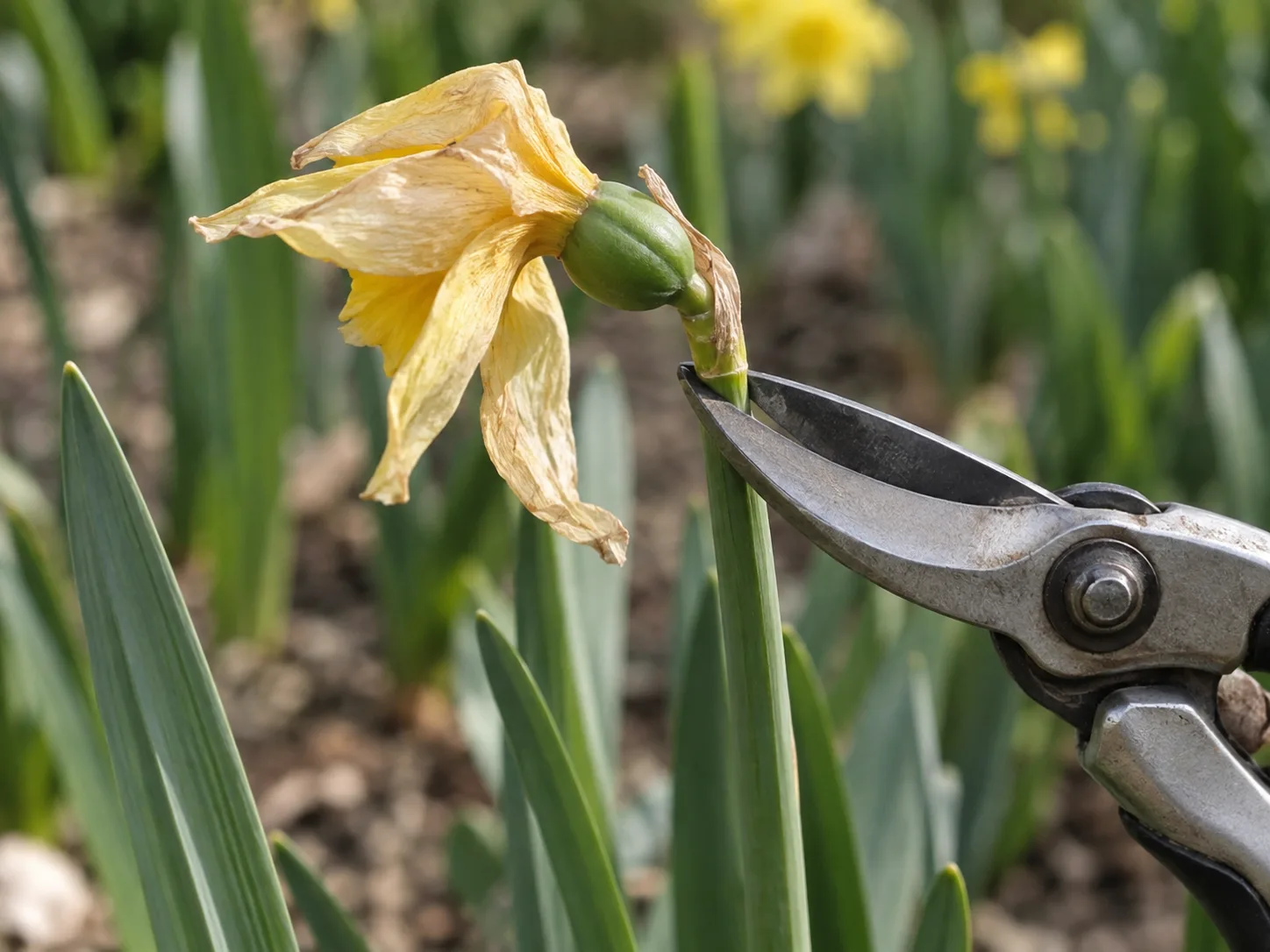
The RHS aftercare guidance and NC State’s Narcissus profile both emphasize leaving foliage to mature. Tying leaves into knots or braiding them does not make them finish sooner and can reduce the light they receive.
If an old clump produces leaves but few flowers, first check whether surrounding trees or shrubs now cast deeper shade, whether the soil stays wet, or whether leaves were removed early in prior years. Crowding can also reduce flowering; after the foliage dies back, lift and divide a congested clump, then replant the bulbs at the recommended depth. Daffodils can be long-lived, so division is a remedy for declining performance rather than a yearly chore.
One safety detail belongs in the planting plan: Narcissus is toxic if eaten, and NC State Extension reports that bulbs are the most poisonous part while contact with plant tissue can irritate skin. Wear gloves if bulbs or sap bother your skin, wash your hands after planting, and keep stored bulbs and cut plant material out of reach of children and pets. If someone or an animal chews a bulb or plant part, contact a poison-control service or veterinarian promptly rather than waiting for symptoms.
Conclusion
The best daffodil is the one whose size, bloom form, timing, and climate needs match the place you can give it. Use the 13 divisions as a visual guide, choose named cultivars for a specific role, and combine different bloom windows if you want color to last longer than one flush. Plant in well-drained soil, let the leaves yellow naturally, and the bulbs can return for many springs.



