How to Store Amaryllis Bulbs for the Next Bloom
Learn when to rest an amaryllis bulb, how to store it in its pot, the right cool temperature, and why hardy garden amaryllis needs a different plan.
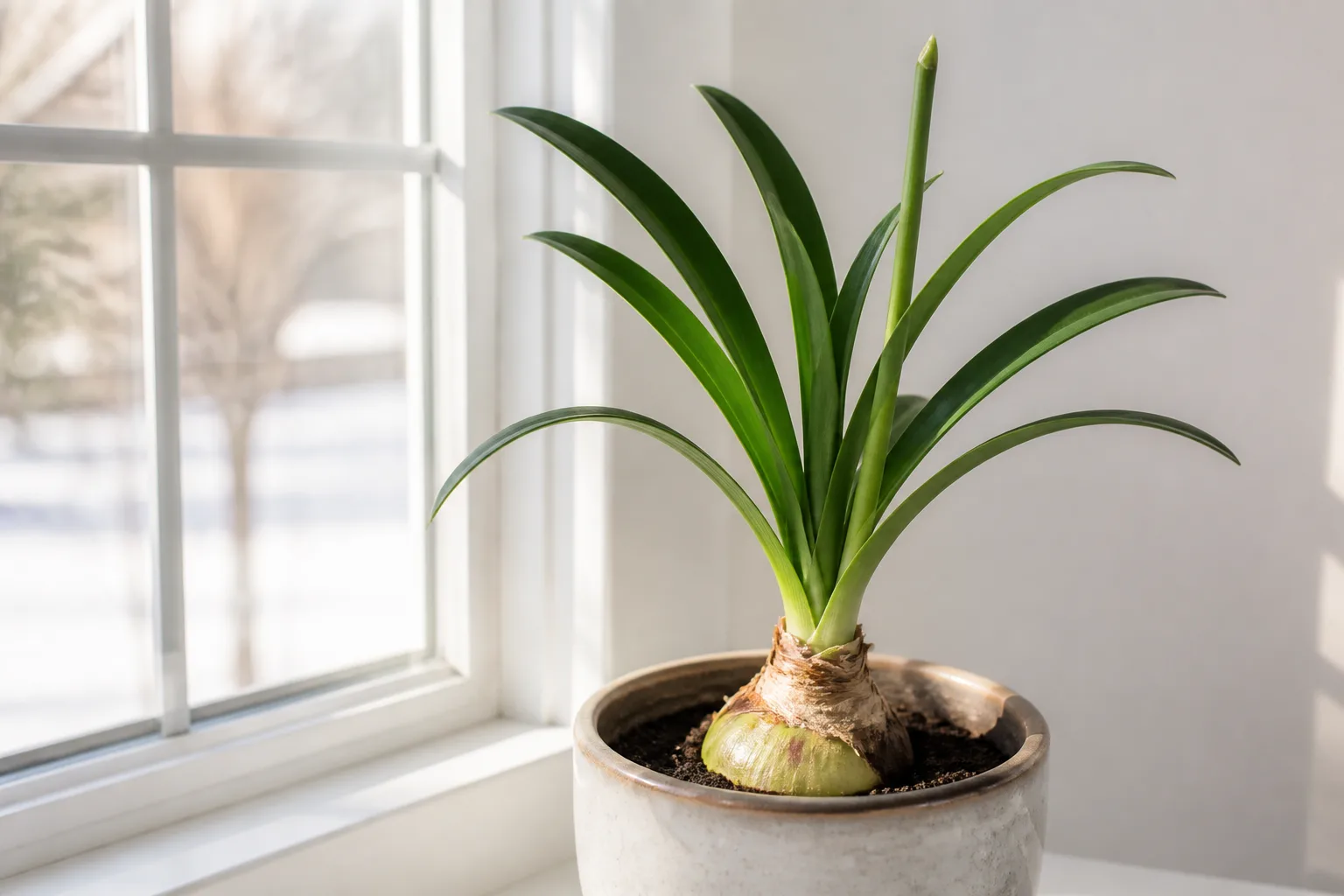
A finished amaryllis does not automatically need to be dug up, wrapped, and put in a refrigerator. The big holiday bulbs sold in pots are usually Hippeastrum; for those, the simplest storage method is usually to leave the bulb in its pot, let its leaves finish naturally, then give it a cool, dry rest if you want to encourage a predictable next bloom. True garden-grown Amaryllis belladonna follows a different seasonal cycle and may not need lifting at all.
The right first step is identification. Then decide whether the bulb is mature and healthy enough for a timed rest, wait until its foliage has finished doing its job, and store it where the temperature stays cool but above freezing. Storage protects a resting bulb; it cannot replace the bright, active growing period that fills the bulb back up after flowering.
Start by identifying which “amaryllis” you have
The common name covers two different plants. That matters because a tender potted Hippeastrum and a garden-grown Amaryllis belladonna do not share one storage calendar, and treating them as interchangeable can lead to premature leaf cutting or unnecessary digging.
Forced gift bulbs are usually Hippeastrum
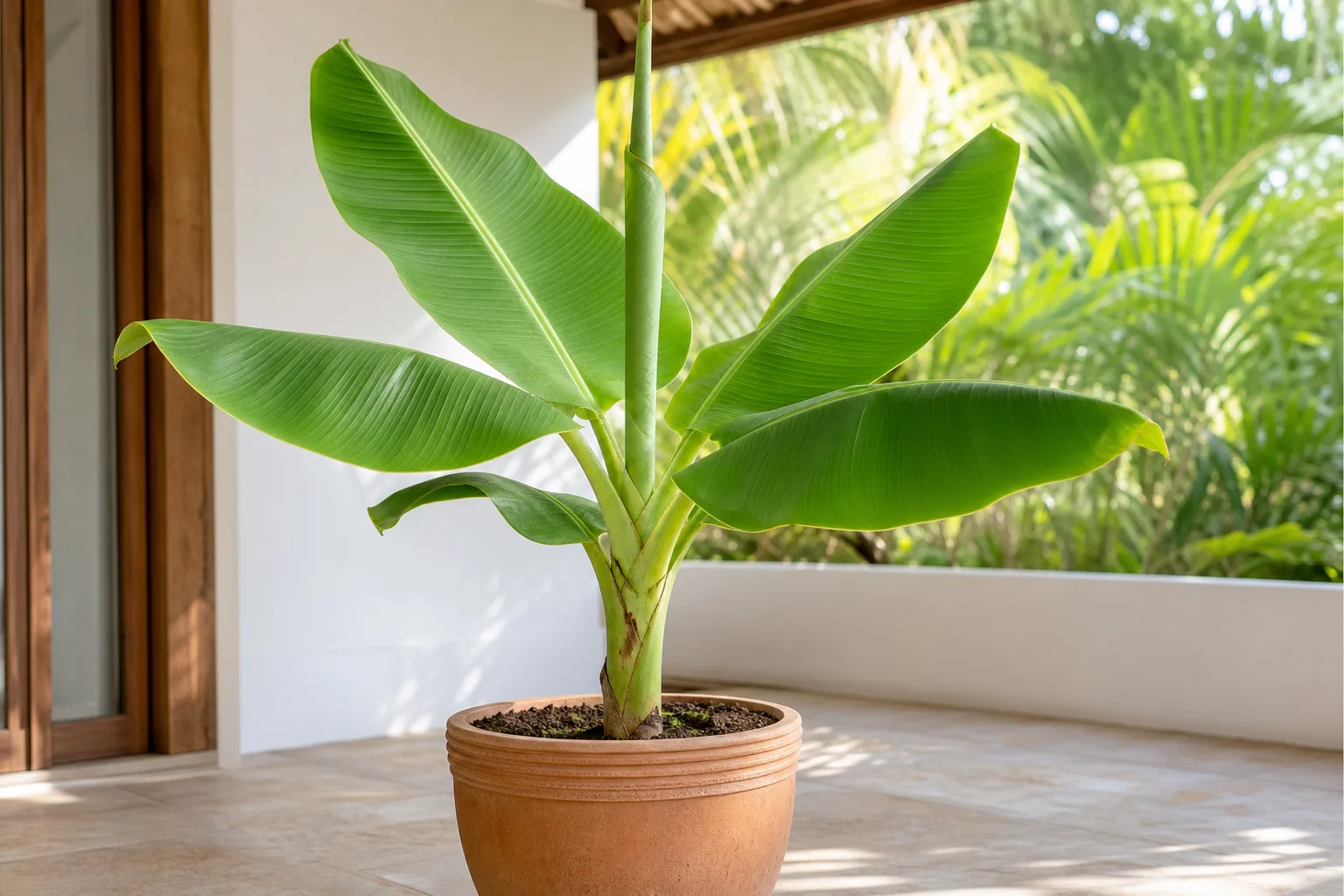
Most large bulbs sold as Christmas or winter “amaryllis” are hybrids of Hippeastrum, a tender bulb native to Central and South America. They are commonly grown in pots, often with the upper part of the bulb visible above the mix. NC State Extension notes that Hippeastrum is injured below 35°F and recommends a cool, semi-dark rest for indoor bulbs after the foliage turns brown; the NC State Plant Toolbox gives 50–55°F for eight to ten weeks.
If you bought a waxed bulb, a bulb kit, or a potted flowering bulb from a grocery store or florist, treat it as Hippeastrum unless its label says otherwise. It may have been forced to bloom on a commercial schedule, so its first rebloom at home may not line up with the same holiday. A rest can help you set a rhythm, but the bulb’s size, health, prior growing conditions, and cultivar still affect when it flowers.
Hardy garden amaryllis often means Amaryllis belladonna
True Amaryllis belladonna is a South African species grown outdoors in climates that suit it. Its leaves generally emerge in spring and die down by summer; flower stalks can appear in late summer or fall after the leaves disappear. That leafless interval is part of its natural cycle, not a sign that you should impose the Hippeastrum pot-rest schedule. See NC State’s profile of Amaryllis belladonna for its growth pattern and bulb-storage notes.
In a climate where the bulb is hardy and the soil drains well, leave it in the ground and let its natural cycle continue. In colder areas, NC State advises lifting bulbs below zone 8 and lists storage in peat or a container at 55–70°F; treat that as regional guidance, not a universal guarantee for every cultivar or garden. Check local extension advice for your site, especially where winter soil stays wet or temperatures regularly freeze. A planted-out Hippeastrum is a different case: because it is frost-sensitive, bring a pot indoors before cold weather or lift it if it cannot remain in a protected climate.
Decide whether a storage rest fits your plant
A cool, dry rest can help schedule Hippeastrum blooms
For a mature potted Hippeastrum, a cool, dry rest is useful when you want to encourage winter flowering or organize several bulbs on a schedule. NC State recommends eight to ten weeks at 50–55°F after the leaves turn brown, and the Royal Horticultural Society’s Hippeastrum guide describes a similar eight-to-ten-week semi-dormant period around 55°F. This is a mild rest, not the cold treatment used to prepare tulips or other spring bulbs.
A bulb that keeps growing does not need to be forced
You do not need to force a calendar on every bulb. A healthy Hippeastrum may remain in active leaf growth if it receives enough light and water, though its flowering can become less predictable. The editorial guide from Get Busy Gardening also describes keeping plants growing without a scheduled rest, while noting that flowering is less reliable. If your bulb is green and vigorous, there is no reason to cut off its leaves simply because September has arrived.
A rest is also not a cure for a weak bulb. If the plant spent months in dim light, lost most of its foliage early, or was kept too wet, it may not have rebuilt enough reserves to flower. In that case, prioritize a healthy growing season and postpone timed storage until the plant has had time to recover. For the larger post-bloom cycle—from spent flowers through summer growth and next flowering—use the amaryllis after-bloom care guide and reblooming guide.
Wait for natural leaf dieback before stopping water
Leaves are not packaging to remove before storage. While they remain green, they photosynthesize and help replenish the bulb’s reserves. The UF/IFAS amaryllis guide likewise advises growing foliage after flowering so the bulb can store energy for future blooms. Keep the plant in bright light during this active phase; do not place a leafy plant in a dark cupboard to make it look dormant.
After flowers finish, remove the spent bloom stalk as needed, but keep any healthy leaves. When you choose to begin a Hippeastrum rest, stop fertilizing and reduce watering gradually rather than abruptly flooding or starving a still-growing plant. As days shorten and the plant begins to slow, the leaves may yellow, then brown. Wait until foliage is fully brown and dry before trimming it near the bulb; yellow leaves can still contain useful green tissue, so do not remove them simply to make storage neater.
If leaves collapse suddenly in spring or summer, or yellow while the potting mix stays wet, do not assume dormancy is underway. Check drainage, feel the bulb for firmness, and inspect for a sour smell or soft base. Seasonal dieback is a gradual transition; rapid decline accompanied by a wet pot or mushy bulb suggests stress or rot. For exact leaf-cutting timing, see when to cut back amaryllis leaves.
Keep potted Hippeastrum in its pot when possible
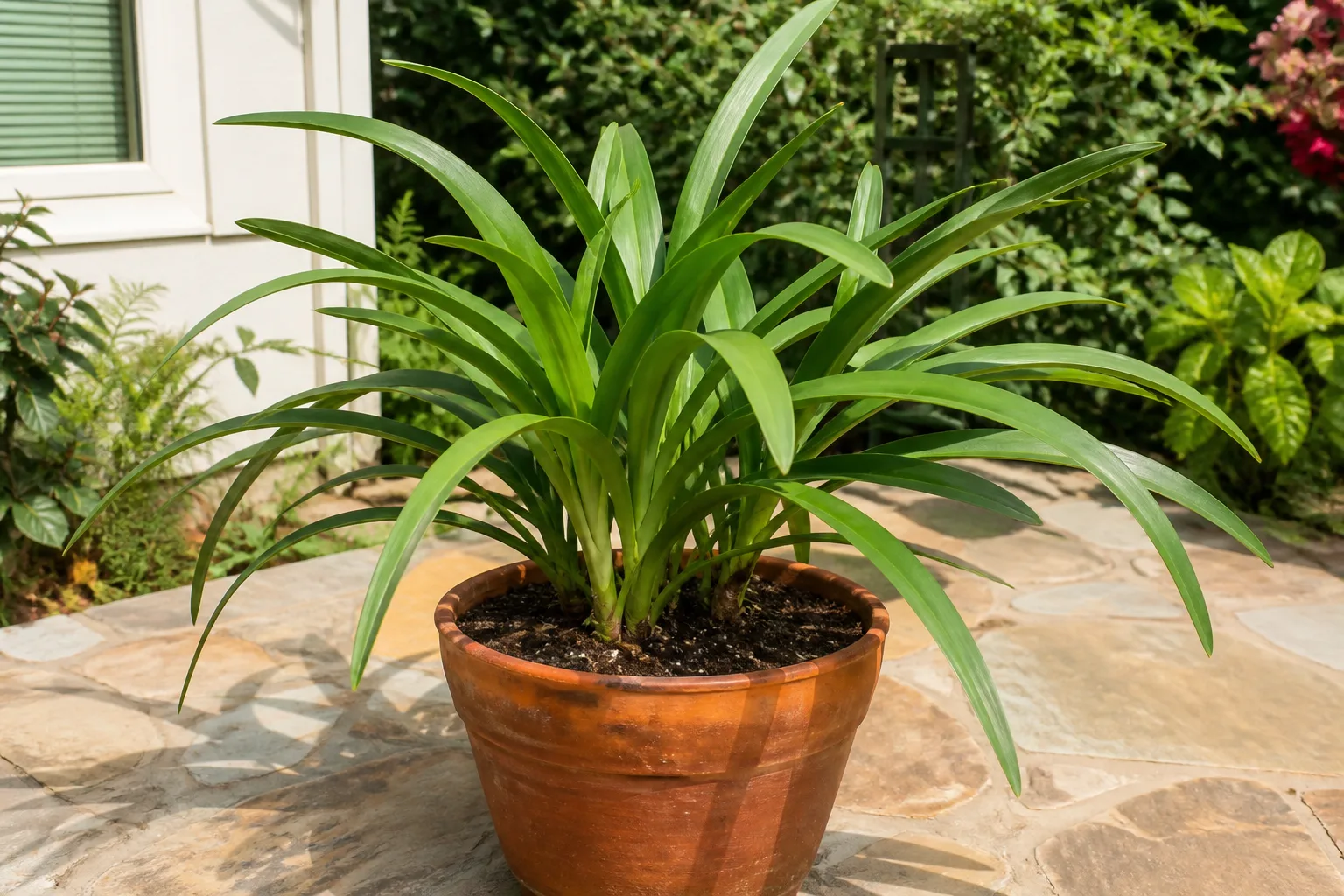
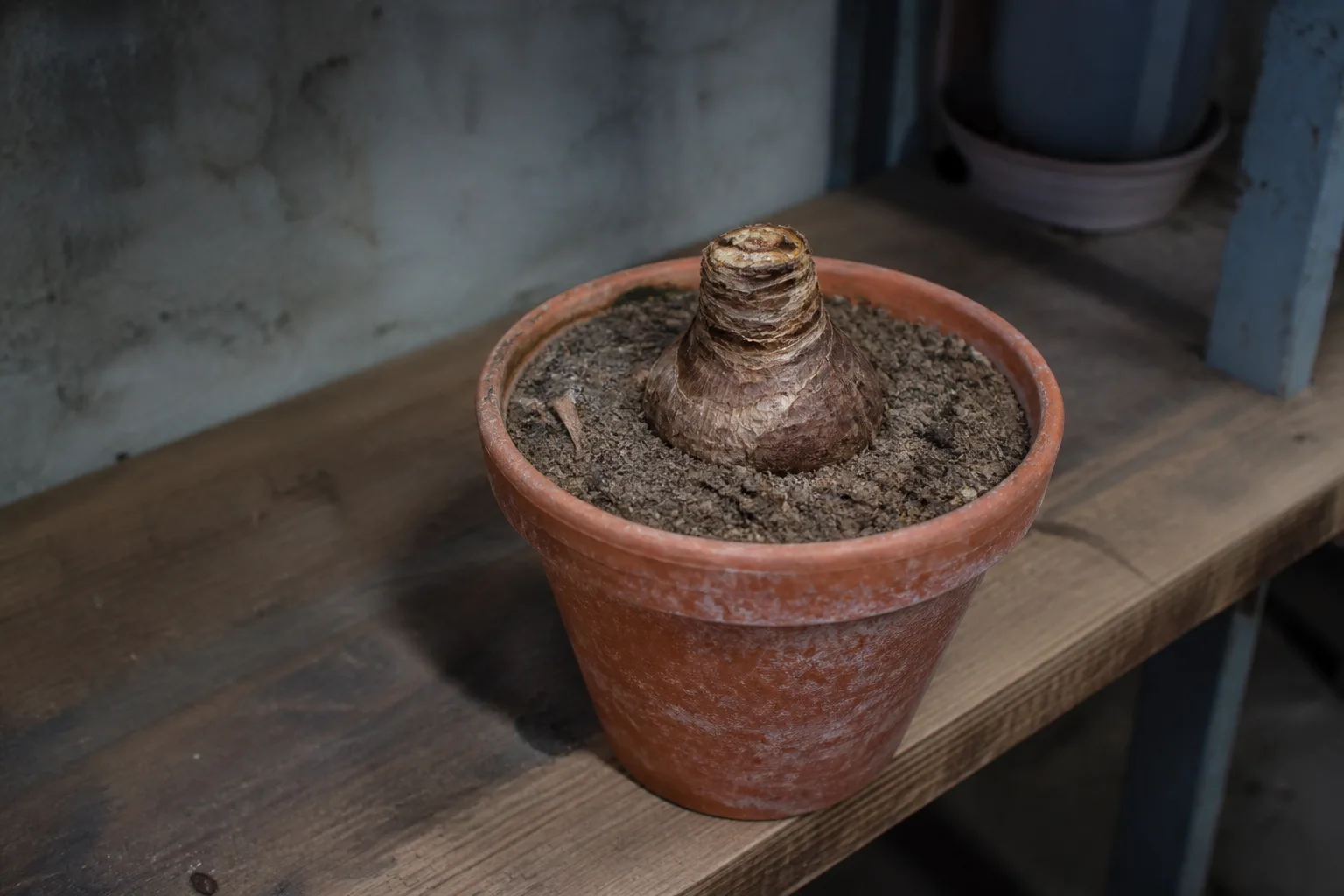
For a healthy florist bulb, storing it in its pot is usually the least disruptive option. The bulb and roots stay together, and you avoid scraping, bruising, or drying roots during an unnecessary transfer. The RHS describes both a cool, semi-dormant period in the pot and a drier method in which the pot is kept in a cool place for one to two months; NC State’s indoor guidance also leaves the plant potted while it rests.
Prepare the pot for a dry rest
Once the leaves have browned, remove them with clean scissors or pruners. Move the pot to a cool location and stop routine watering. If the pot sits inside a decorative cachepot, take it out so trapped water cannot pool around the base. A pot without drainage is a poor place to store a bulb in active growth; before restarting it, move the bulb into a container with drainage and fresh, well-draining potting mix.
Do not repot only because the bulb is entering rest. Hippeastrum can remain in the same pot for multiple seasons if it is healthy, the mix drains, and roots have room. If the plant needs repotting, handle that as a separate task at an appropriate point in the growth cycle rather than combining it with a rushed attempt to induce dormancy. The goal of storage is a calm, dry interval, not a major root disturbance.
Lift a bulb only when climate or container needs require it
A bulb growing in a garden bed should be lifted only if the climate is too cold for it to remain safely outdoors, or if you need to move or divide it. Wait for the foliage to die naturally; lifting a green plant interrupts the energy-replenishment phase. Loosen the soil around the bulb with a hand fork or trowel, working wider than the bulb so you do not slice its fleshy scales, then lift it gently.
Brush away loose, dry soil and discard damaged, soft, or foul-smelling bulbs. Do not wash a healthy bulb and put it straight into storage; wet scales and poor airflow raise the risk of rot. Let the surface dry in a shaded, ventilated place before placing it in a breathable box or paper bag with dry packing material. The Homes & Gardens storage feature similarly emphasizes airflow and removing mushy bulbs, but for a typical potted Hippeastrum, leaving the bulb in its pot remains the simpler default.
Set a safe storage location
A storage spot should be cool, dry, frost-free, and out of direct light. For indoor Hippeastrum, aim for 50–55°F (10–13°C), the range recommended by NC State and close to the RHS target of about 55°F. A cool closet, basement, or attached garage may work if a thermometer confirms that temperatures stay stable. Avoid a sunlit shelf, a warm utility room, an exterior shed that freezes, or a location beside a heater.
Choose stable, cool temperatures and semi-darkness
The bulb does not need refrigerator chilling. It is a tropical plant, and NC State warns that Hippeastrum can be injured below 35°F; the purpose of the rest is to give the bulb a cooler, drier pause, not to expose it to frost. A refrigerator may also fluctuate sharply near the cooling element or collect condensation when a cold pot is moved into warm air. Use a consistently cool indoor spot instead of treating the bulb like a tulip that needs pre-chilling.
Darkness is helpful while a pot is resting, but temperature and dryness are the important controls. NC State describes a semi-dark location, while the RHS method that withholds water says light is not necessary during the cool interval. If the storage area has occasional ambient light, that alone is not a reason to move the bulb; avoid direct sun that warms the pot or encourages premature growth. Aim for eight to ten weeks of cool rest for a mature Hippeastrum, then assess the bulb rather than insisting on an exact holiday date.
Prevent rot without letting the bulb dehydrate
During rest, do not water on a weekly or monthly schedule. A dormant pot should not remain damp, and water sitting in a saucer is a clear risk. The editorial storage advice from Homes & Gardens suggests checking a stored bulb about once a month for softness, excess moisture, and drying; this is a useful inspection rhythm, not a reason to add water.
A little surface wrinkling is not the same as a rotten bulb, and the bulb should not be wet to make it look plump. If it is severely shriveling, confirm that the spot is not hot or exposed to moving air and consider ending the rest earlier rather than repeatedly misting the bulb. Do not pack bulbs in damp moss or seal them in plastic. Ventilation and a dry resting medium are safer than trapped humidity.
Check stored bulbs without waking them
Inspect the pot or lifted bulb every few weeks, especially if the storage spot has wide temperature swings. A healthy resting bulb is generally firm and dry, without a foul odor or expanding wet patch. A small dry outer scale is not automatically a problem; the condition of the bulb’s base and inner scales matters more than a bit of papery skin.
Soft, collapsing tissue, a sour smell, or moisture spreading at the bulb base points to rot. Remove the affected pot from the storage area so it does not stay wet beside healthy bulbs. If rot has advanced into the base or most of the bulb is soft, discard it and wash the pot before reuse; a bulb that has lost its basal plate is unlikely to recover. If only a superficial outer scale is damaged and the interior remains firm, isolate it, remove only loose decayed tissue with a clean tool, and let it dry before deciding whether to pot it. There is no reliable way to promise recovery, so do not store a questionable bulb beside sound ones.
If the bulb is shrinking rapidly but remains firm, the storage area may be too warm or the rest may be stretching longer than planned. Check the thermometer and move it to a more stable cool spot. Do not respond by pouring water into a dormant pot; restart the plant if it is clearly waking or if a long storage period has already passed.
Restart the bulb after its rest
After eight to ten weeks, move a potted Hippeastrum into a warm, bright room, roughly 70–75°F (21–24°C), and resume watering cautiously. The NC State guide recommends a well-lit, warm location for restarting growth. Water the mix, let excess drain, and wait for new growth before returning to a regular watering rhythm; do not leave the bulb standing in water while roots are still inactive.
For a lifted bulb, plant it in fresh, well-draining mix with about half to two-thirds of the bulb above the soil line, then water lightly as growth starts. If the bulb is already potted and the mix is sound, you can usually restart it without repotting. New roots or a green tip may appear before a flower stalk, and a flower stalk may emerge before leaves; neither sequence means storage failed. For a complete bloom-timing plan, use the amaryllis rebloom guide.
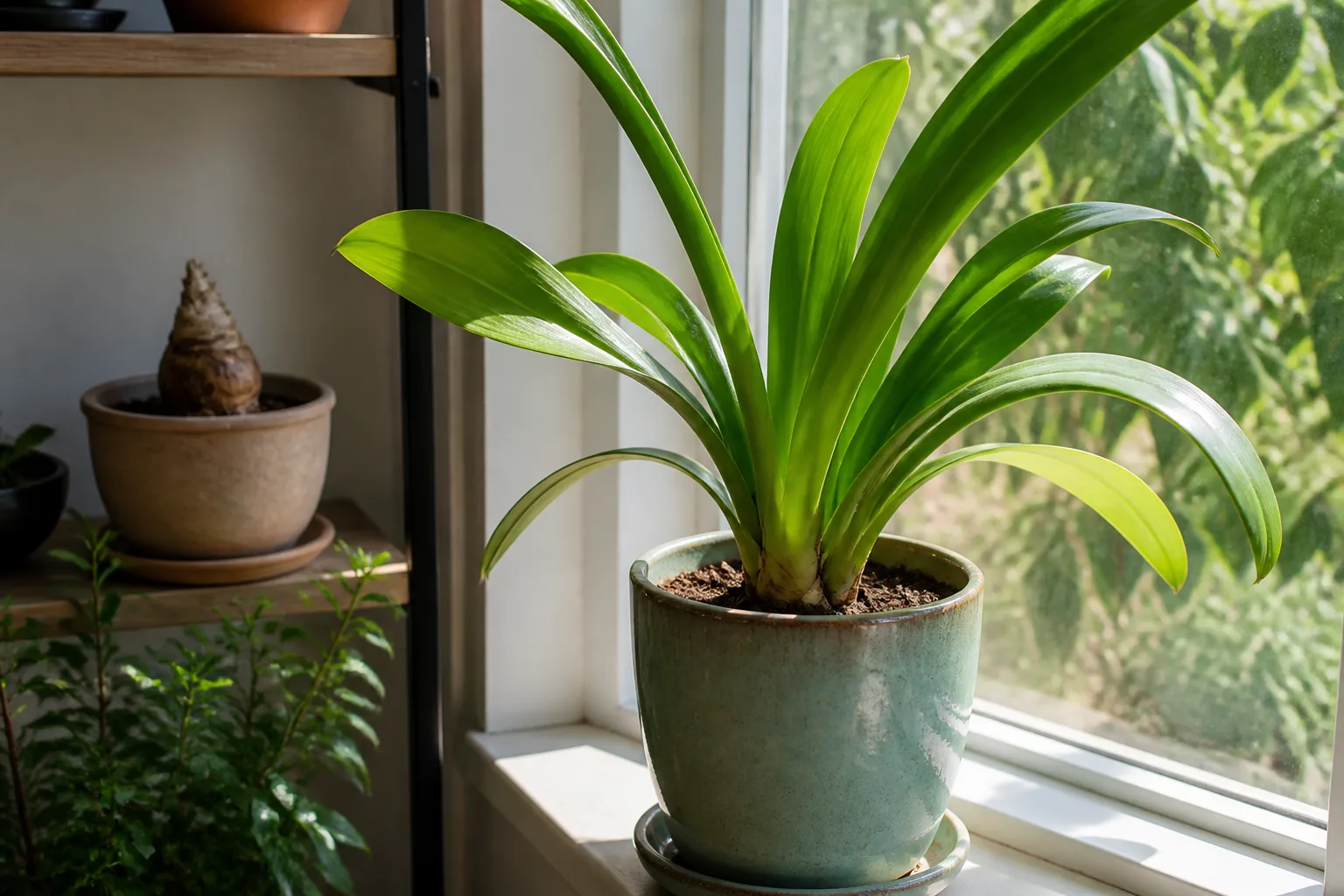
Do not start feeding a completely dry bulb in storage. Resume a balanced liquid fertilizer only after active leaf growth is underway and follow the label rate. Keep the pot bright and rotate it occasionally so the stalk does not lean toward the window. If you are waking several bulbs, stagger them by a week or two to spread the bloom period instead of forcing every bulb to flower at once.
Troubleshoot failed blooms, rot, and premature sprouting
The bulb made leaves but no flower stalk. Storage alone cannot create a flower bud in a bulb that lacked the reserves to make one. A bulb kept in weak light, cut back while leaves were green, or left in a cramped or waterlogged pot may need a longer active growing season before it blooms again. Smaller offsets also need time to reach flowering size. Give it bright light and a full healthy growing season, and review the amaryllis rebloom troubleshooting guide before changing the rest temperature.
The bulb is soft or smells bad. Stop watering and isolate it. Wet mix, poor drainage, or a cold damp storage spot can all contribute to rot; discard a bulb that is soft through the base or has a strong sour odor. Do not try to rescue a badly rotted bulb by burying it deeper or keeping it in a sealed bag.
The bulb sprouts before the planned date. A tip appearing early is not automatically a problem. Move the pot into light and warmth if you are ready for it to grow, accepting that flowering may happen sooner or later than your target. If the shoot is small and the bulb still feels firm, keep it in a safe cool place for a short time, but do not return it to freezing conditions or cut off healthy new growth.
The leaves never die back. If they are green and firm, the plant may simply be continuing active growth. Do not force it by cutting the foliage. Reduce watering only when you are ready to start a rest and the bulb has had a reasonable period of bright growth; if you prefer an evergreen houseplant, keep it growing and accept less predictable bloom timing.
A garden bulb returns but does not flower. For true Amaryllis belladonna, check the plant’s local growing conditions and seasonal cycle rather than copying a forced-bloom schedule for Hippeastrum. Crowded clumps, shade, poor drainage, a recent move, or unsuitable winter conditions can all affect flowering. Keep the bulb undisturbed if it is healthy, and ask a local extension office about hardiness and overwintering for your area.
Conclusion
For most holiday “amaryllis,” the safest storage plan is straightforward: identify the bulb as Hippeastrum, let its green leaves finish naturally, leave it in its pot, and give it a dry, frost-free rest near 50–55°F for about eight to ten weeks if you want to encourage a scheduled rebloom. Do not refrigerate it, keep it wet, or strip healthy foliage just to make it fit a calendar.
True Amaryllis belladonna is different: its seasonal leaf dieback is part of its garden cycle, and whether you lift it depends on local winter conditions. A firm bulb that has been stored dry can usually be restarted with warmth, light, and careful watering; a soft, wet, foul-smelling bulb needs attention before it can be trusted to grow again.