What to Do with Amaryllis After It Blooms
Flowers faded? Don't toss the bulb. Learn what to do with amaryllis after it blooms—from deadheading and leaf care through summer recharge, rest, and rebloom.
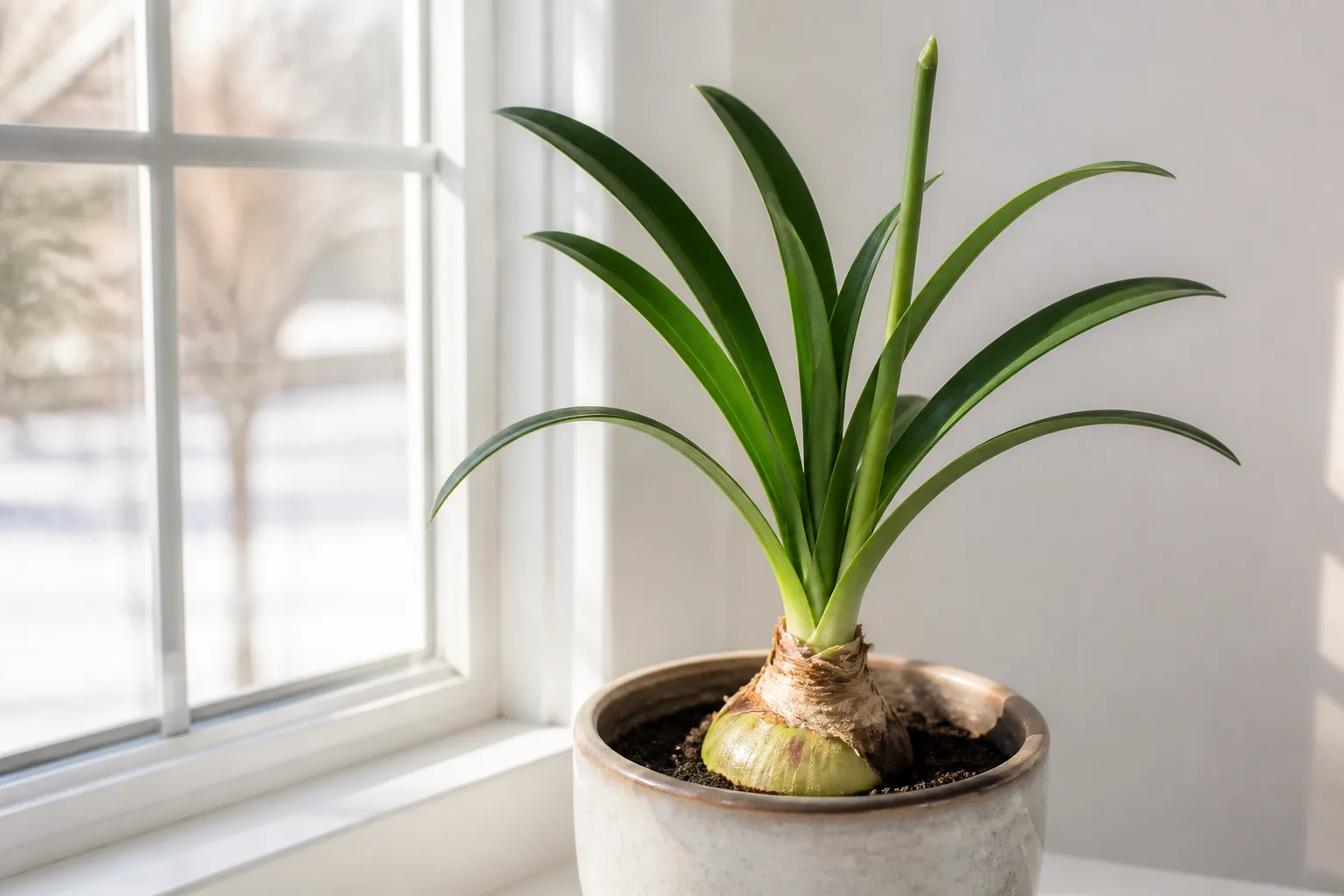
The last trumpet petal dropped onto the windowsill, and the room already feels quieter. Before you carry the pot to the compost pile, pause: that Hippeastrum bulb you enjoyed in December is not finished—it is entering the phase that determines whether you get another show next winter. What you do with amaryllis after it blooms is not complicated, but it is sequential. Cut the wrong parts too early, park the pot in a dim corner, or skip the summer recharge, and you will grow handsome leaves with no flower stalk in sight. Follow the three-stage rhythm—recharge leaves, rest the bulb cool and dry, wake it on your schedule—and the same bulb can flower again for years.
Why Your Spent Amaryllis Is Worth Keeping
Store-bought amaryllis bulbs are essentially batteries wrapped in papery scales. The spectacular winter bloom drained stored starch; your job now is to refill the tank through leaf photosynthesis. UF/IFAS Gardening Solutions recommends moving the plant outdoors after flowers fade and fertilizing to encourage new leaf growth that stores energy for future flowering. Bulbs can remain in the same pot for two or more years before repotting becomes necessary. That is the practical math: one afternoon of deadheading and a season of bright light buys repeat performances without buying a new jumbo bulb every December.
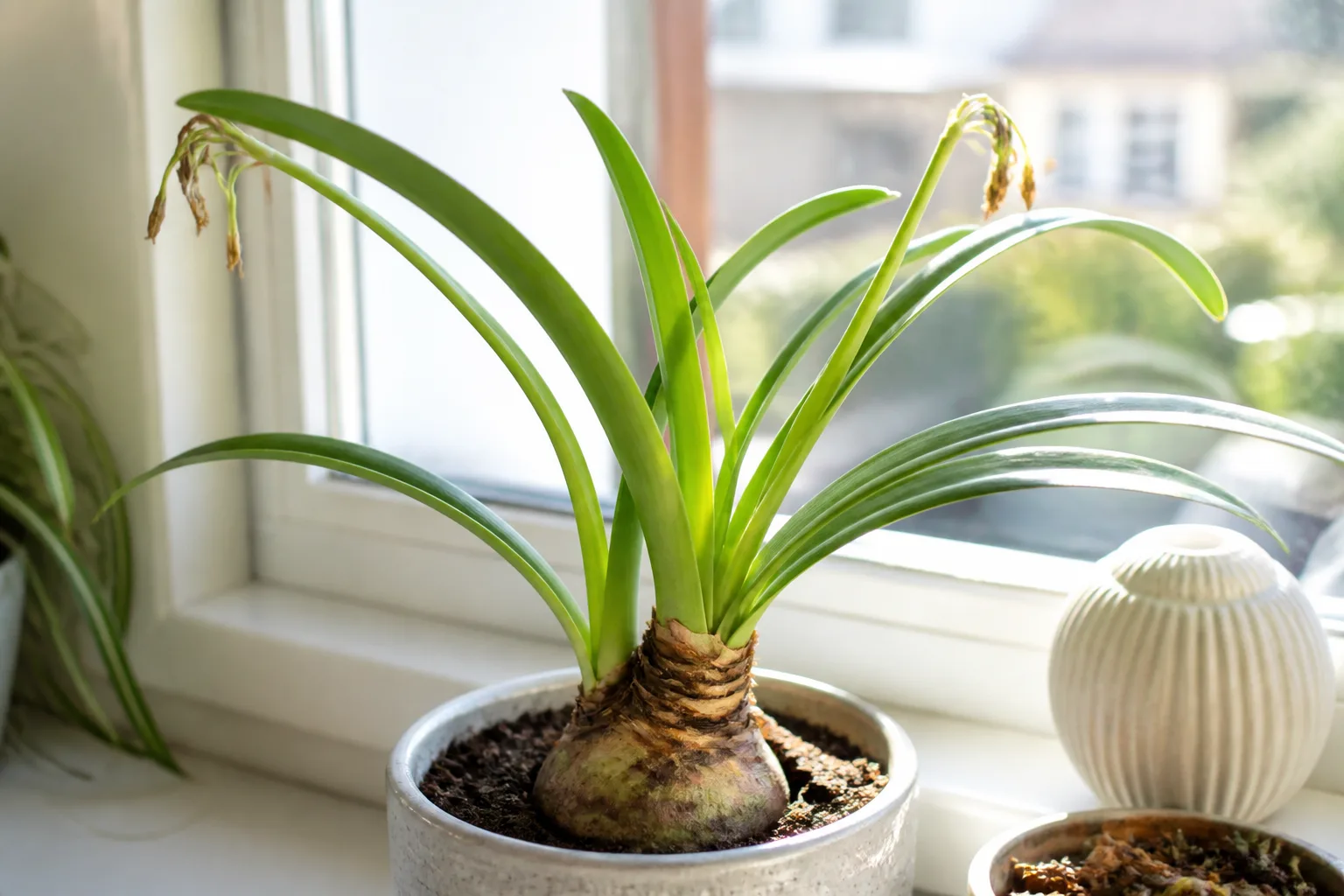
Many gardeners keep the same labeled pot for a decade—a red ‘Red Lion,’ a striped ‘Minerva,’ a variety you cannot find in stores anymore. Composting erases that continuity. Keeping the bulb turns a disposable centerpiece into a calendar plant with a predictable rhythm.
Hippeastrum vs. Throwaway Holiday Plants
Nearly every supermarket “amaryllis” is a Hippeastrum hybrid from Central and South America, not the hardy Amaryllis belladonna of mild coastal gardens. Hippeastrum do not need freezing winters; they cycle between active growth and a dry rest that mimics their native dry season. This is not tulip-style cold stratification. The RHS Hippeastrum growing guide describes indoor rebloom as bright light and regular water during leaf growth, then semi-dormancy around 13°C (55°F) for eight to ten weeks with reduced watering, followed by flowers about six to eight weeks after you restart growth. Understanding that rhythm is the foundation for everything that follows the last faded petal.
The First Week After Flowers Fade
Treat the seven days after bloom as triage—not dormancy. The bulb still has green tissue above the soil that needs to bank energy.
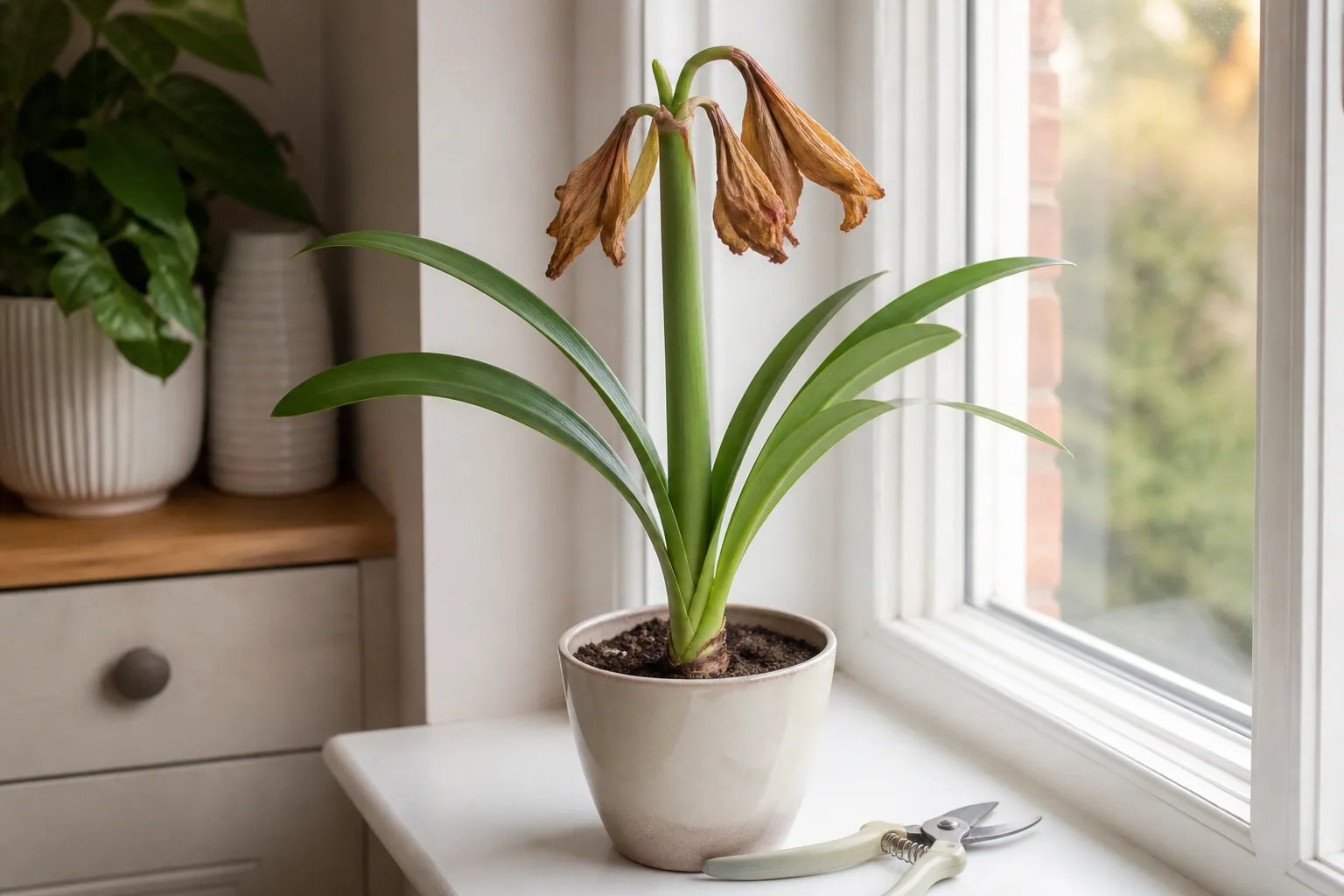
Snip each wilted flower at the top of the stalk as it fades. Seed formation steals starch you want in the bulb. Leave the green flower stalk in place until it yellows; while green, it photosynthesizes alongside the strap leaves. Move the pot to the brightest spot you have—a south- or west-facing window is ideal. If the only available sill is dim, add a full-spectrum grow light for twelve to fourteen hours daily. Water when the top inch of soil dries, keeping the mix moist but never soggy. Bulbs rot quickly in standing water. Begin feeding once active leaf growth is obvious: half-strength balanced liquid fertilizer every two to three weeks indoors, or weekly if you move the plant outside for summer as the RHS aftercare method recommends.
North Carolina Cooperative Extension advises removing flowers once they fade by cutting the stalk just above the bulb only after it starts dying back, and removing leaves only after they yellow. That distinction—flowers off early, stalk and leaves on while green—is the single most important post-bloom rule.
Understanding the Post-Bloom Life Cycle
In nature, Hippeastrum keeps growing after flowering. Strap leaves expand, capture light, and pack starch into bulb scales. Eventually foliage yellows, growth pauses for several weeks, then new leaves and one or more flower stalks emerge. Failure to send up a stalk almost always means the bulb did not collect enough energy during the post-bloom leaf phase or did not receive a full rest.
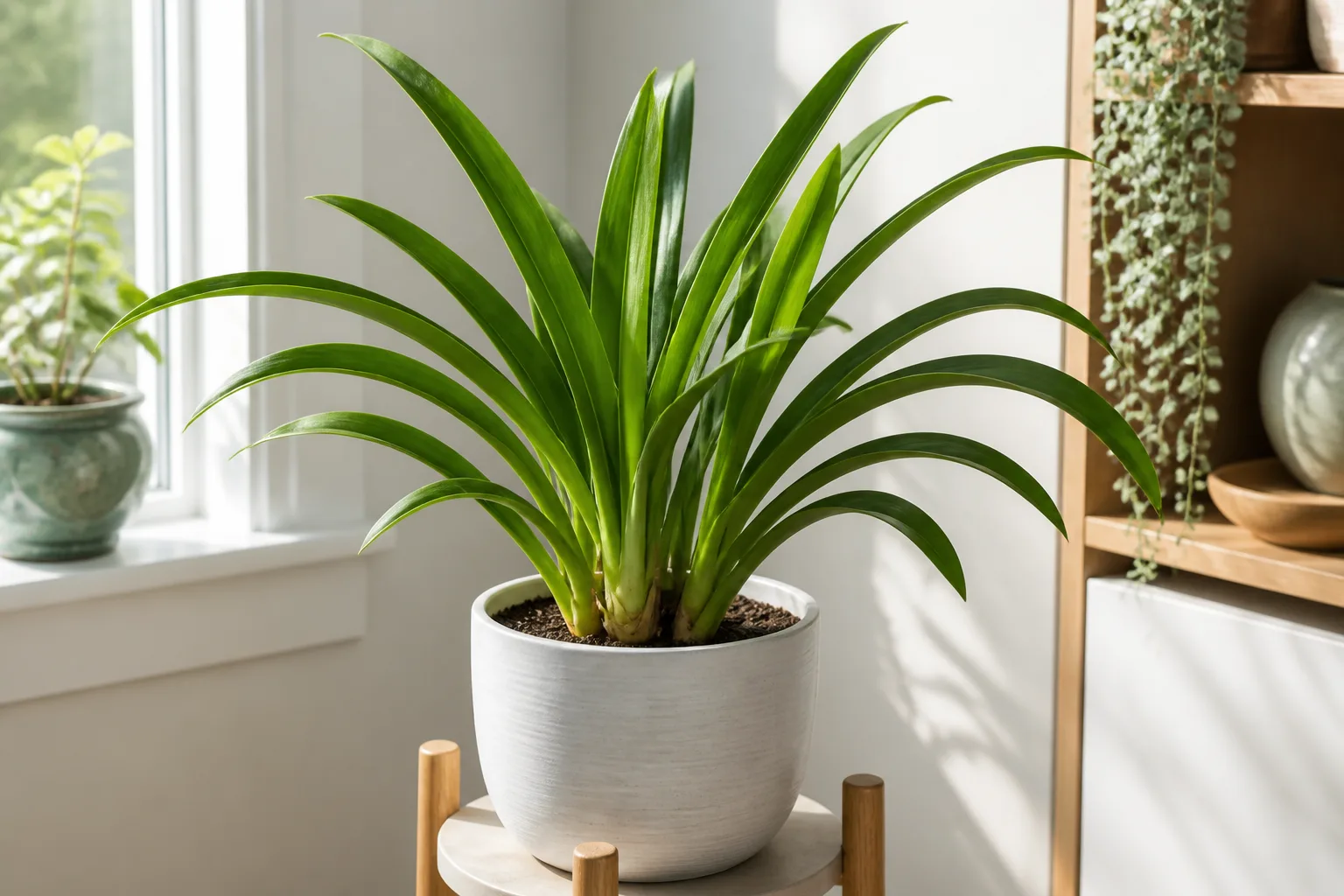
Three Stages of After-Bloom Care
| Stage | Typical timing (Northern Hemisphere) | Your main job |
|---|---|---|
| Leaf growth | Winter through late summer | Bright light, steady water, regular feed |
| Rest period | 8–12 weeks in fall/winter | Cool (45–60°F), dry, foliage removed when yellow |
| Regrowth & bloom | 4–6 weeks after wake-up | Warmth, water, bright light; flowers follow |
These stages overlap slightly depending on whether you force a holiday bloom or let the bulb follow its own calendar. The non-negotiables are summer-level light during leaf growth and a full-length cool dry rest before you expect trumpets again. For month-by-month wake-up math aimed at Christmas flowers, see our complete amaryllis rebloom guide.
Stage 1: Leaf Growth Through Late Summer
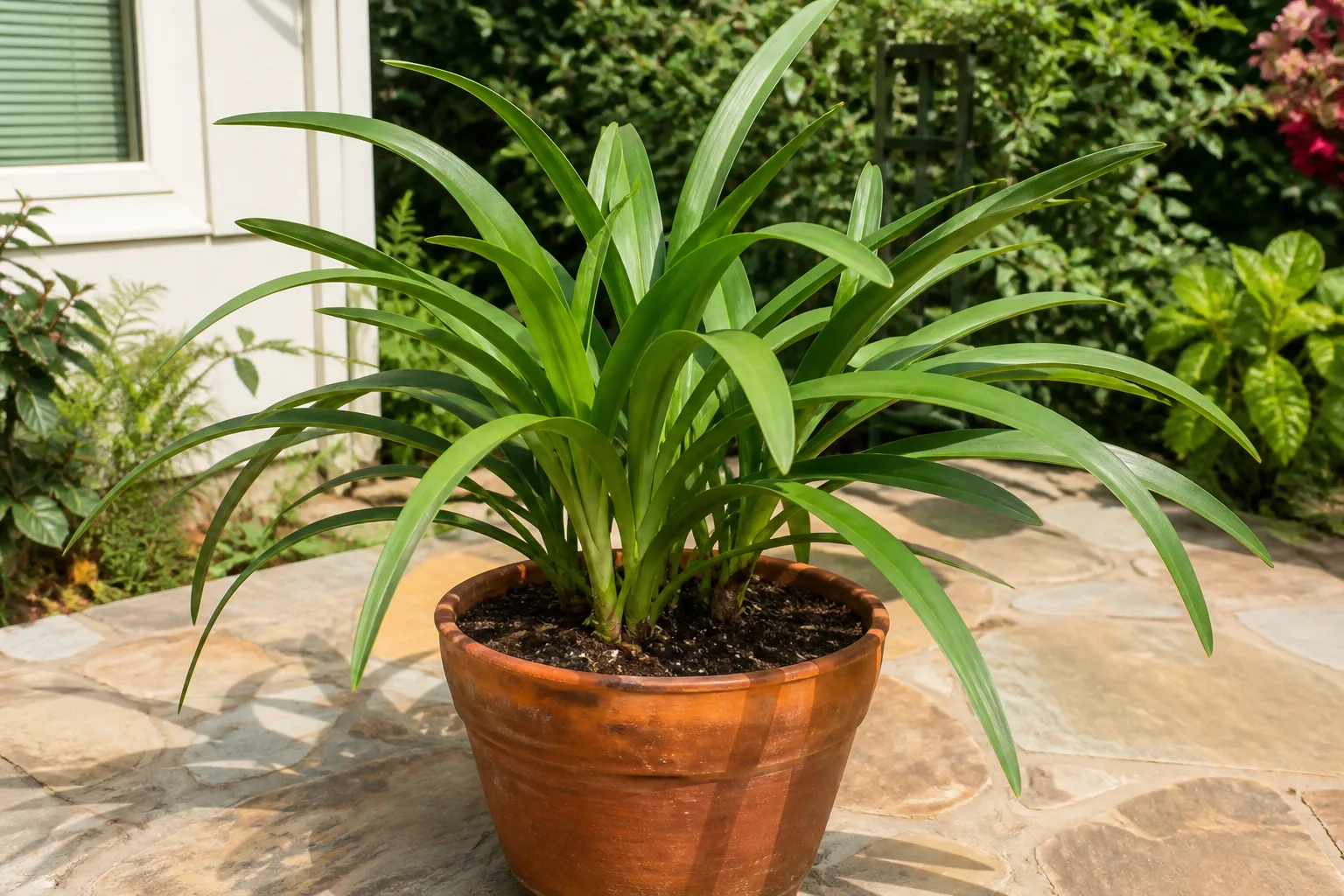
From the day flowers finish until late summer, your amaryllis is a foliage plant whose only job is to recharge the bulb. Think of it as charging a battery you will spend down next winter.
Light, Water, and Fertilizer Rules
Keep the pot in the sunniest location available. More light directly correlates with stronger next-year bloom. Water whenever the top 1–2 inches of soil feel dry—outdoor pots in summer heat may need water every day or two. Fertilize every two to three weeks with half-strength balanced houseplant fertilizer while leaves are actively green. Around August, stop fertilizing entirely to signal the approaching rest period. Wilting leaves during this phase usually mean underwatering; soft brown bases at the bulb neck suggest overwatering or rot—ease off water and check that the pot drains freely.
Moving Amaryllis Outdoors for Summer
If night temperatures stay consistently above 50°F (10°C) and frost danger has passed—often mid- to late spring in many climates—your amaryllis will recharge faster outdoors. UMaine Cooperative Extension notes that many gardeners place pots outdoors for the growing season and care for them like ordinary houseplants until late fall, when an eight- to twelve-week cool dormancy re-initiates flowering.
Harden off gradually: start in dappled shade for a week, then move to a spot with at least six hours of sun daily. Outdoor soil dries faster than indoor mix—check moisture daily. Return pots indoors before nights drop below 50°F again, typically late summer or early fall. No outdoor space? Maximize indoor sun and accept that bloom may be slightly weaker unless you supplement with grow lights.
Insert a bamboo stake beside the bulb early if the pot is lightweight; top-heavy winter scapes can topple before roots anchor. Staking late risks piercing the bulb.
Stage 2: The Rest Period
Once cool fall weather arrives indoors, the bulb needs a deliberate pause. Hippeastrum does not undergo true dormancy like a tulip in frozen ground—it enters a dry rest where metabolism slows, internal flower buds form, and old foliage dies back.
Two Paths to Rebloom: Timed vs. Natural
Timed rebloom (holiday schedule): Count back eight to twelve weeks from your target bloom date—Thanksgiving, Christmas, or Valentine’s Day. Stop watering and fertilizing at that start date. Move the dry pot to a cool, dark place at 55–60°F (13–16°C)—a basement, garage, or spare refrigerator (never freezing). Trim yellowed leaves to 1–2 inches above the bulb. Ignore the pot except to confirm the bulb stays firm.
Natural cycle: Instead of forcing darkness, place the pot in a cool bright room around 50–60°F with reduced watering—just enough to keep soil barely moist. Leaves yellow and drop on their own, often around December in northern homes. No fertilizer. The bulb still rests, but on its own timetable; regrowth may lag forced bulbs by a month or two.
| Approach | Best for | Rest location | Water during rest |
|---|---|---|---|
| Timed | Christmas blooms on schedule | Cool + dark | None |
| Natural | Low-maintenance growers | Cool + bright | Sparingly |
Both paths require the same prerequisite: a full summer of leaf growth beforehand. Skipping that step is why bulbs produce leaves only the following winter—a problem covered in our amaryllis didn’t bloom troubleshooting guide.
When and How to Cut Back Yellow Leaves
Never cut green leaves or a green flower stalk. While tissue is green, photosynthesis continues. Only after leaves turn yellow and brown—during the rest transition—trim them 1–2 inches above the bulb with clean, sharp pruners. Cutting early is the most common reason amaryllis refuses to flower next year. If leaves drop on their own, simply remove the debris. The RHS cuts remaining old leaves to about 10 cm (4 in) from the bulb neck when waking from the cool period, not while they are still green.
Stage 3: Wake-Up and Regrowth
After eight to twelve weeks of dry rest—or when you see a bud tip or fresh green shoot—move the pot to a warm, bright spot around 70–75°F (21–24°C). Resume watering lightly at first, then regularly as growth accelerates. Restart half-strength fertilizer every two to three weeks once leaves are expanding. A flower stalk usually appears four to six weeks after wake-up; some bulbs push leaves first, then the scape—both orders are normal.
Place the pot in the sunniest window you have and rotate weekly so the stalk grows straight. Switch to a bloom-booster or higher-phosphorus feed once the scape is visible if you want maximum flower size. When flowers open, slightly cooler room temperatures (60–65°F) extend bloom life. After this round finishes, return to Stage 1 care and repeat the annual cycle.
Waxed Amaryllis: Can You Save Them?
Waxed gift bulbs are engineered for one dramatic show—the wax blocks normal root function and moisture uptake. After bloom, peel off all wax and any wire support. Examine the bulb: firm and heavy is salvageable; mushy or hollow means compost. Pot in well-draining mix with one-third of the bulb above the soil line, water sparingly, and grow in bright light through summer exactly like a bare bulb. Run a full cool dry dormancy before expecting flowers again. Success rates are lower than bare bulbs because waxed specimens start with less reserve and damaged basal roots, but gardeners rescue them every year with patience.
Repotting, Offsets, and Long-Term Bulb Health
Repot only every two to four years, or when the bulb crowds the pot rim. Hippeastrum bloom best when slightly pot-bound with little excess soil around the bulb. Choose a container only 1–2 inches wider than the bulb with drainage holes. Plant with one-third of the bulb exposed. Small offsets around the mother bulb can be separated during repotting if they have their own roots—pot separately and grow on for three to four years before expecting flowers.
Watch indoor plants for spider mites and mealybugs during the long leaf phase; treat promptly with horticultural oil or insecticidal soap. Never let pots sit in saucers of standing water—bulb rot develops fast and is rarely reversible.
Planting Amaryllis in the Ground
In USDA Zones 8–10 (and warm Zone 7 microclimates with mulch), Hippeastrum can live outdoors year-round in well-drained soil and partial to full sun. Plant with the top third of the bulb above grade, mulch lightly, and expect spring blooms on a natural calendar. In colder zones, treat amaryllis as a container plant brought indoors before frost. NC Extension notes that bulbs can be planted outside after indoor bloom once frost risk passes, typically mid-spring, where hardiness allows.
Common Post-Bloom Mistakes
Composting the bulb wastes years of potential bloom. Removing green leaves or stalks starves the bulb. Hiding the pot in a dim hallway all winter produces weak recharge. Starting dormancy in January without a summer leaf phase guarantees foliage-only regrowth. Watering during the dry rest prevents flower-bud initiation. Leaving faded flowers on the stalk diverts energy to seed. Repotting into an oversized container encourages rot and delays bloom. Each mistake is fixable next season if you catch it—but the bulb only gets one recharge cycle per year.
Troubleshooting: Leaves but No Flowers Next Year
If your amaryllis pushes lush leaves and no scape after wake-up, work through this checklist: Did leaves grow in bright light for a full summer? Was the rest period at least eight weeks and genuinely dry? Were green leaves cut early? Was the bulb firm going into rest? If all phases were correct and you still get foliage only, the bulb may be undersized, exhausted, or need another full year of recharge. Our troubleshooting guide walks through each failure mode in depth.
Conclusion
What to do with amaryllis after it blooms comes down to one sentence: remove spent flowers, keep green tissue growing in bright light through summer, then rest the bulb cool and dry for eight to twelve weeks before waking it for the next show. The first week sets the tone—deadhead flowers, protect green stalks and leaves, brighten the window. Summer outdoors accelerates recharge if your climate allows. Fall brings a choice between timed darkness for holiday blooms or a natural cool rest on the bulb’s schedule. Wake with warmth and water, and trumpets return in four to six weeks. Skip any stage and you get leaves without flowers; run the full cycle and the same bulb becomes a winter tradition worth keeping.



