How to Get Amaryllis to Rebloom Year After Year
Finished blooming? Don't toss the bulb. Learn the month-by-month Hippeastrum cycle—deadheading, summer recharge, cool dormancy, and wake-up timing for holiday flowers again.
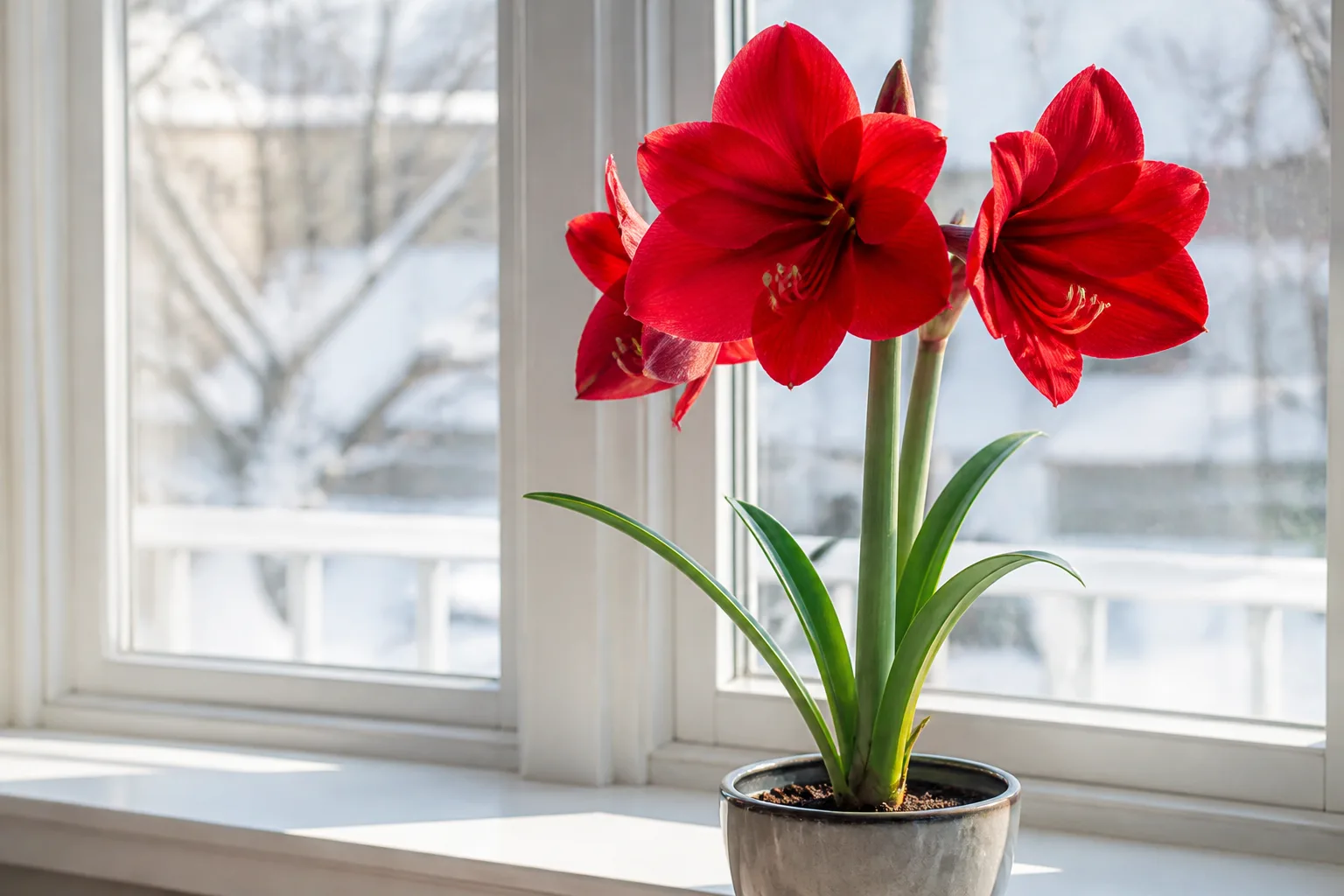
The trumpet flowers finally wilted, the living room looks ordinary again, and the compost bin is right there. Before you drop a perfectly good Hippeastrum bulb in the trash, know this: the show you just enjoyed was act one. With a predictable year-long rhythm—recharge leaves in spring and summer, rest the bulb cool and dry in fall, wake it on your schedule in winter—a single amaryllis can flower again for years, sometimes decades. The process is not instant magic, but it is far simpler than most holiday gift tags imply, and it costs less than buying a new jumbo bulb every December.
Why a Spent Bulb Is Still Worth Keeping
Store-bought amaryllis bulbs are an investment in stored energy. A large bulb already contains the starch to push up one spectacular scape; your job after bloom is to refill the tank so it can fund the next one. UF/IFAS Gardening Solutions notes that once flowers fade, moving the plant outdoors and fertilizing encourages leaf growth that stores energy for following years—bulbs can stay in the same pot for two or more seasons before repotting. That is the entire economic argument: one afternoon of deadheading and a summer by a sunny window buys you repeat performances.
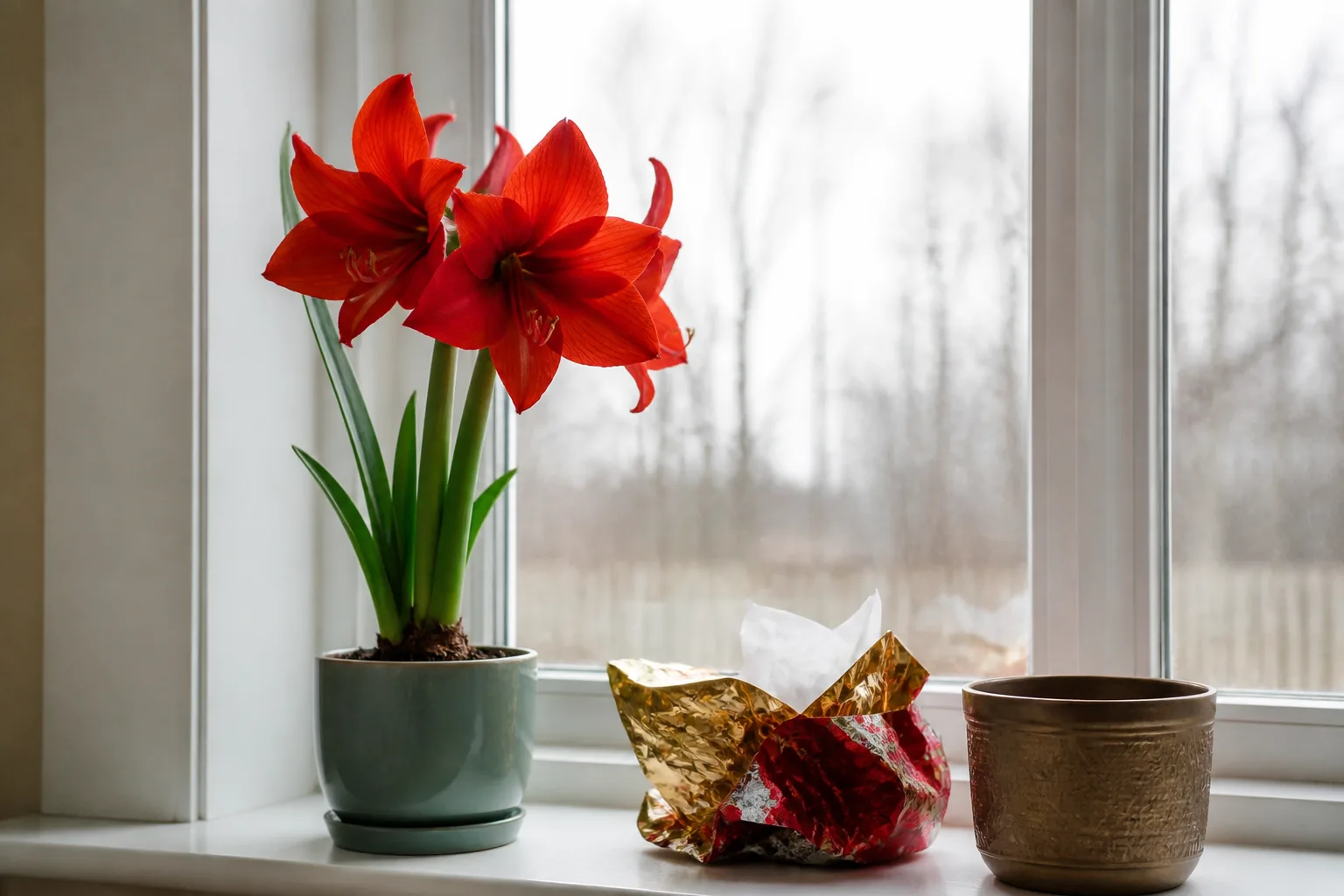
The emotional argument matters too. Many gardeners mark winters by the same pot returning to the sill—a red ‘Red Lion,’ a striped ‘Minerva,’ a pale green eccentricity you cannot find in stores anymore. Composting erases that continuity. Keeping the bulb turns a disposable centerpiece into a houseplant with a calendar.
A mature Hippeastrum bulb can reach the size of a grapefruit over several seasons, producing multiple flower stalks in a single winter when summer recharge goes well. Offsets that form around the mother bulb become gifts or backups. None of that happens if the bulb hits the trash in January.
Hippeastrum vs. “Throwaway” Holiday Plants
Nearly every “amaryllis” sold at supermarkets is a Hippeastrum hybrid, a tropical bulb from Central and South America—not the hardy Amaryllis belladonna grown in mild coastal gardens. Hippeastrum do not experience freezing winters; they cycle between active growth and a dry rest that mimics their native dry season. This is not tulip-style cold stratification. The RHS Hippeastrum growing guide describes indoor rebloom as warmth and bright light for leaf growth, then semi-dormancy around 13°C (55°F) for eight to ten weeks with reduced water, followed by flowers about six to eight weeks after you restart.
What the Bulb Does Between Bloom Cycles
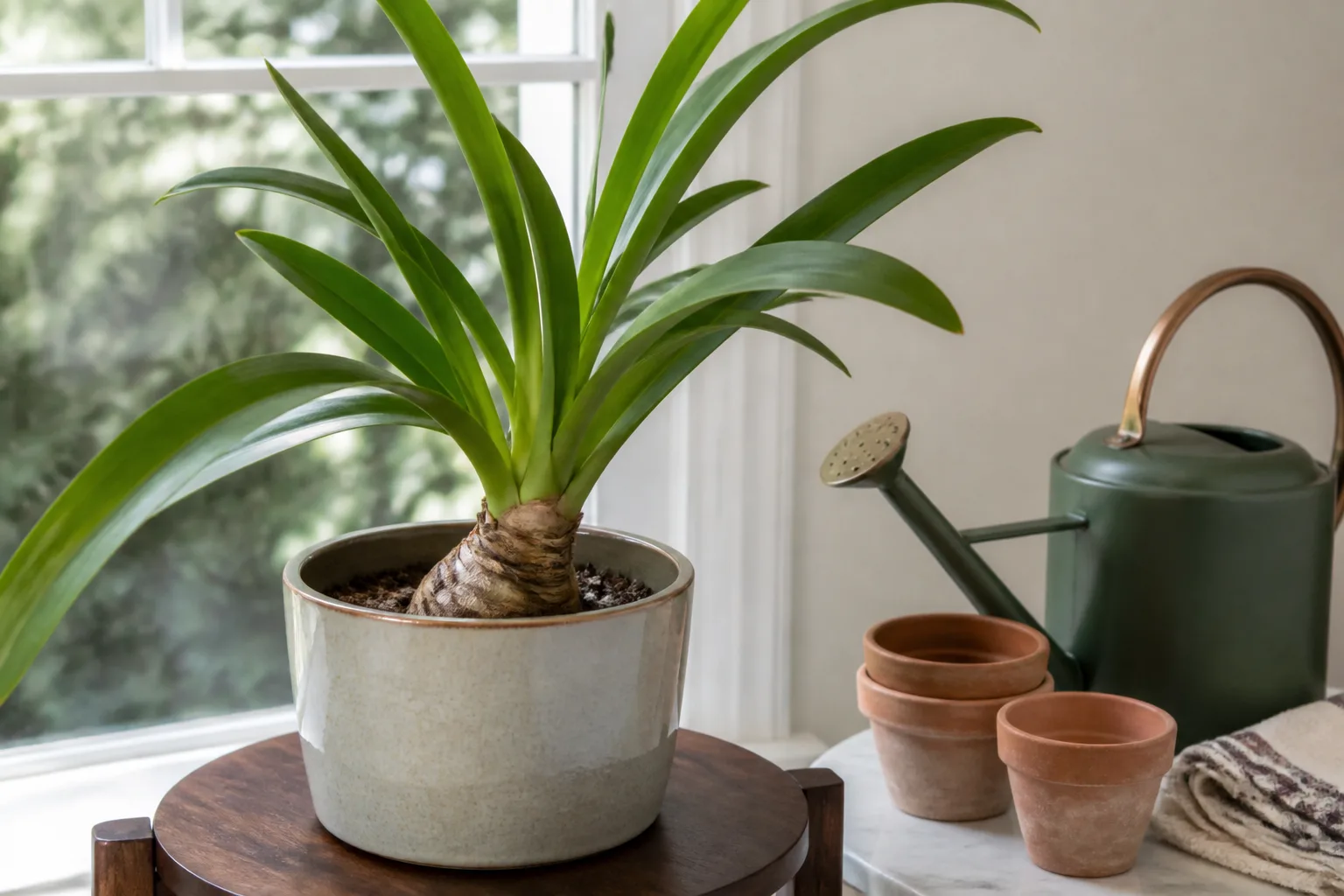
After flowers finish, strap-shaped leaves emerge (or continue) and photosynthesize, packing starch into bulb scales. That vegetative phase is non-negotiable—skip it and next year brings leaves without a stalk. When days shorten and you withhold water, foliage yellows and the bulb rests. Cool temperatures cue internal chemistry to form a new flower bud. Wake the bulb with light and moisture, and the scape rises four to six weeks later. Miss a phase and you get foliage drama instead of trumpets—a problem covered in depth in our amaryllis didn’t bloom troubleshooting guide, but preventable if you run the full cycle from the start.
The Rebloom Year at a Glance
| Phase | Typical timing (Northern Hemisphere) | Your main job |
|---|---|---|
| Post-bloom care | Winter–spring | Remove faded flowers; keep leaves in bright light |
| Summer recharge | After last frost → early fall | Sun, steady water, monthly feed; outdoor vacation optional |
| Dormancy trigger | Late August–September | Stop fertilizing; reduce then stop water |
| Cool dry rest | 8–12 weeks | 45–55°F, dry pot, foliage removed when yellow |
| Wake & bloom | 4–6 weeks before target date | Warmth, water, bright light; flowers follow |
 |
Treat the table as a compass, not a rigid script. Bulbs wake faster in a warm room and slower in a cool one. The non-negotiables are summer light and a full-length rest.
If this is your first time saving a bulb, pick one healthy pot and run the cycle start to finish before expanding your collection. Label the pot with the variety name and the month you started dormancy—future you will not remember which garage shelf held which bulb.
Step 1: Care Right After the Flowers Fade
Rebloom success starts the day the last petal droops. Your bulb is switching from display mode to storage mode, and every choice either feeds or drains next winter’s flowers.
Deadhead Flowers, Keep Green Leaves and Stalks
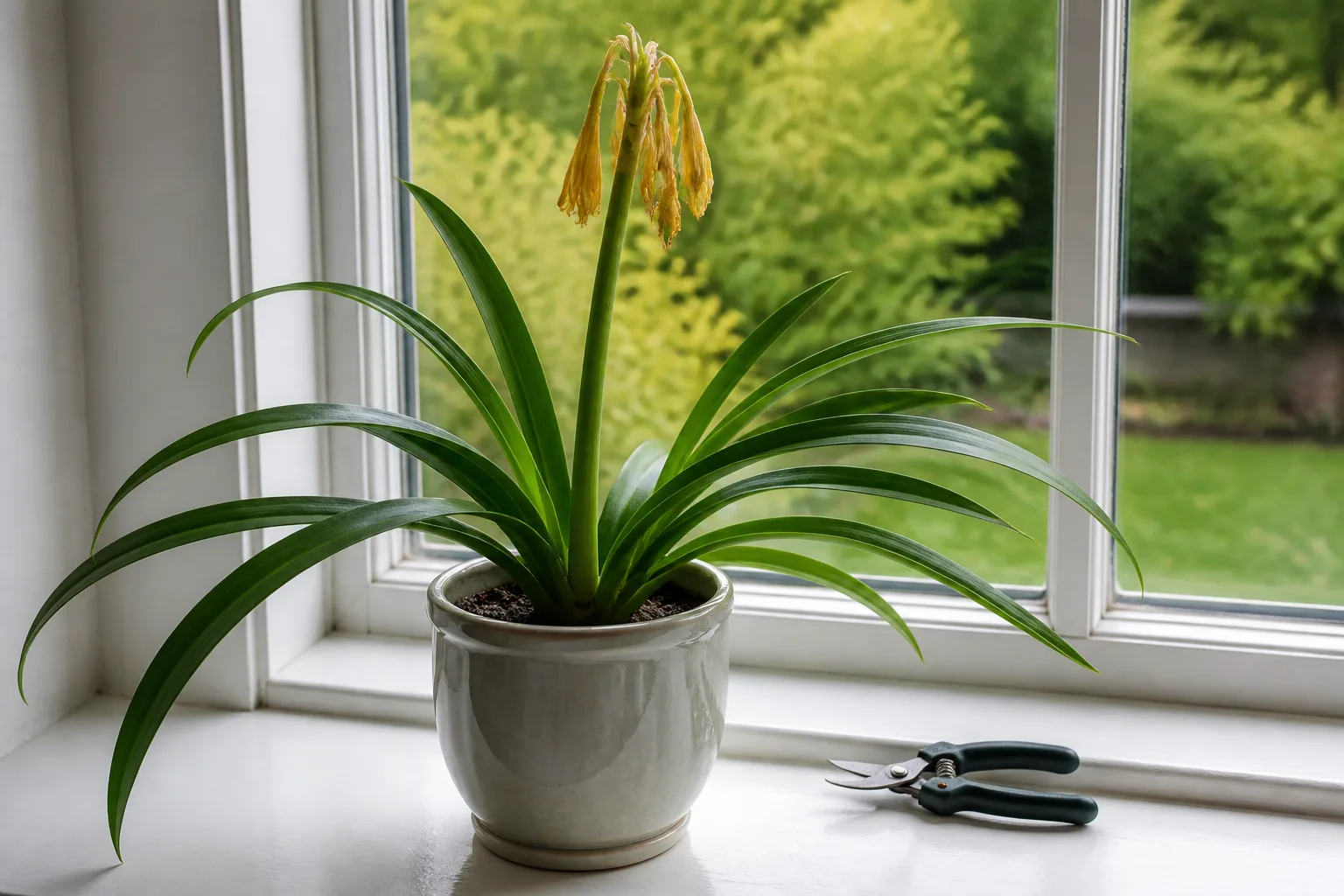
Snip faded flowers at the base of each bloom as they wilt. Seed formation steals energy you want in the bulb—extension programs consistently recommend removing spent blooms promptly. Leave the flower stalk in place while it stays green; it still photosynthesizes. Cut the stalk only after it yellows, trimming one to two inches above the bulb with clean pruners.
Do not strip green leaves. Strap foliage is the solar array that rebuilds starch reserves. UMaine Cooperative Extension emphasizes letting robust stalks and leaves continue working after bloom, then treating the plant like a regular houseplant through the year. If your bulb produced a second scape during the same winter, deadhead that round the same way—multiple flushes are a bonus, not a reason to rush dormancy.
Place the pot in the brightest window you have—south or west exposure is ideal indoors. Water when the top inch of soil feels dry, keeping the mix moist but never soggy. Bulbs rot quickly in standing water.
If the bulb was grown in water only (a vase with pebbles), transplant it into a pot with drainage after bloom. Longfield Gardens recommends a deep enough container to accommodate several inches of roots beneath the bulb, with the top half still exposed above the soil line. Water-grown bulbs often lack the root mass needed for summer recharge until they establish in mix for a few weeks.
Step 2: Spring and Summer Leaf Growth
From late winter through summer, the bulb’s only mission is leaf power. This is where rebloom is won or lost. Dim corners produce lush-looking plants that cannot afford flowers.
Light, Water, and Fertilizer That Store Bloom Energy
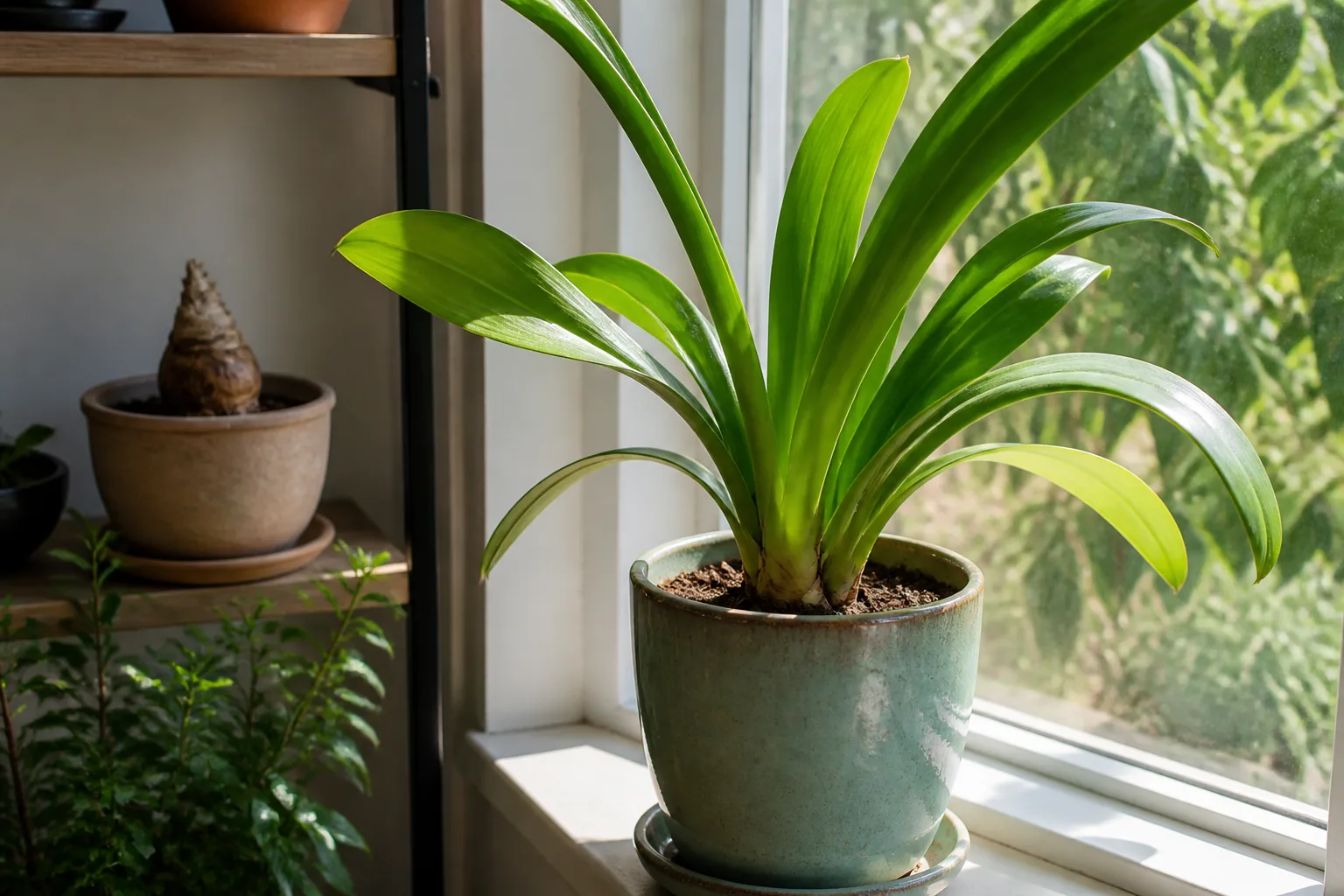
Aim for at least six hours of strong light daily, including direct sun when possible. A grow light six to twelve inches above the foliage fills gaps if windows are weak. Longfield Gardens recommends keeping soil barely moist—the bulb itself should stay relatively dry while roots access water— and feeding once or twice monthly with balanced liquid fertilizer so leaves stay deep green.
Phosphorus supports flowering chemistry; an all-nitrogen diet pushes leaf size without building bloom reserves. Half-strength monthly feeding matches what University of Minnesota Extension Master Gardeners advise for windowsill recharge before dormancy. Flush salts occasionally if leaves tip-burn.
Moving Pots Outdoors (and Bringing Them Back In)
After the last frost, harden off the pot: shade for a few days, then partial sun, then full sun over about a week so leaves do not scorch. Summer outdoors is the fastest recharge station—bright natural light and warm nights accelerate photosynthesis. UF/IFAS suggests moving bloomed plants outside to fertilize and store energy; in Florida and similar climates, bulbs can even be planted in garden beds in partial sun.
Outdoors, pots dry faster—check water every day or two in heat. Shield from pounding rain if your mix stays wet too long; bulb rot ends the rebloom project permanently. Before nights drop below 50°F (10°C) in fall, bring pots inside. In frost-free zones 8–10, in-ground bulbs can stay put with mulch; most rebloom guides focus on potted indoor cycles.
Summer outdoors often triggers a bonus bloom in July or August on bulbs kept in active growth year-round—unusual but normal when light is strong. Enjoy it, then still run fall dormancy if you want predictable winter flowers; otherwise the bulb may drift off calendar.
Step 3: Late Summer—Stop Feeding and Plan Dormancy
Around August, stop fertilizing. You are signaling autumn to the bulb. If you want holiday blooms, start planning dormancy now—backward math matters.
To target late December flowers, count back four to six weeks for post-rest growth plus eight to twelve weeks of rest. Cornell’s Fruition program recommends waking dormant bulbs ten to twelve weeks before desired bloom, which lands dormancy start in late August or September for Christmas timing. There is no penalty for starting a week early; cutting rest short is the common mistake.
Gradually reduce watering in September. Leaves will yellow and flop—that is the bulb entering rest, not dying. As foliage browns, trim it off and leave the naked bulb in its dry pot.
Step 4: Cool, Dry Rest for 8 to 12 Weeks
Dormancy is a cool, dry pause—not a fridge, not a dark closet at room temperature. Tropical bulbs need mild chill and no regular water to reset flowering hormones.
Temperature, Darkness, and the No-Water Rule
Store the dry pot at 45–55°F (7–13°C) in a basement, garage, or cool spare room. The University of Wisconsin Extension forcing-bulbs guide stresses that amaryllis rebloom depends on a dry dormant period after the growing season, distinct from pre-chilled tulips. University of Minnesota Extension Master Gardeners echo eight to twelve weeks at 45–55°F with watering stopped entirely.
Darkness is helpful but not mandatory—cool temperature and drought matter more. Birds & Blooms horticulture expert Melinda Myers notes some growers skip dark storage as long as the bulb stays cool. Do not let pots freeze; Hippeastrum are not frost-hardy.
During rest, do not water. An occasional sprinkle if the bulb shrivels severely is mercy, not routine care. The bulb should remain firm like a good onion. Soft, foul-smelling tissue means rot—discard and sanitize the pot.
Bulbs sometimes push a green tip during late dormancy—that is normal. If growth appears before your planned wake date, you can bring the pot out early; flowers may simply open ahead of your holiday target. Cooler storage slows premature sprouting if you need to hold timing.
Step 5: Wake the Bulb and Count Down to Flowers
After at least eight weeks of rest (ten to twelve is safer for weak bulbs), bring the pot to a bright, 65–75°F room. Water once thoroughly, then sparingly until you see a green tip or new roots. Resume regular watering as growth accelerates. A balanced or bloom-boosting fertilizer at half strength every two to three weeks supports the emerging scape.
Flowers typically open four to six weeks after wake-up—faster in warmth, slower in cool rooms. Turn the pot occasionally so the stalk grows straight. Stake top-heavy scapes early to avoid snapping.
Once the new round blooms, the cycle restarts: deadhead, grow leaves, summer sun, fall rest. A well-fed bulb often produces two scapes in a single flowering season after a strong recharge year.
Backward Calendar: Timing Blooms for the Holidays
Use this worksheet for intentional holiday timing:
| Target bloom week | Start cool rest (8–10 wks) | Wake bulb (4–6 wks before bloom) |
|---|---|---|
| Thanksgiving (late Nov) | Early September | Mid-October |
| Christmas (late Dec) | Late August–early Sept | Early–mid November |
| Valentine’s (mid Feb) | Late October | Early January |
Stagger wake-up dates if you own multiple bulbs—one pot every week spreads color across winter instead of one glorious week and silence.
First-year gift bulbs are often pre-conditioned at the grower for holiday bloom. Your first self-managed cycle may flower in February instead of December while the bulb relearns your home’s rhythm. That is normal—not a sign the bulb failed. Year two typically locks onto your dormancy calendar.
Waxed Amaryllis Bulbs After the Show
Waxed gift bulbs are engineered for a single no-soil display. Rebloom is harder but not impossible. When flowers finish, carefully remove the wax coating and any wire or stand at the base. Inspect the bulb: firm tissue is worth saving; mushy or deeply bruised scales are not.
Pot in well-draining mix with the top third of the bulb exposed, water lightly to encourage roots, then shift to standard post-bloom care in bright light. Birds & Blooms reports success reblooming dewaxed bulbs, though success rates run lower than bare bulbs because waxed specimens arrive with less reserve and no established root system. Treat waxed rescues as experiments, not guarantees.
Work slowly when peeling wax—score lightly and pry in sections rather than gouging the scales. Any puncture wound invites rot during the first wet weeks in soil. A bamboo stake added early supports weak first-year leaves until roots anchor.
Skipping Forced Dormancy: The Natural-Cycle Option
Not every keeper forces a calendar dormancy. Some growers maintain amaryllis in a bright window year-round, keeping soil slightly drier and moving pots to a cooler room in fall without a full dry-down. Myers describes amaryllis that bloom yearly on this regimen—sometimes with off-season summer flowers when light is strong. The trade-off is less predictable holiday timing and occasionally leaves-only years if winter light is too dim.
If you dislike basement storage, try the natural path first. When blooms slip, switch to the forced rest method for one cycle and compare results.
Staggering Several Bulbs for a Longer Display
Collecting amaryllis is how windowsills disappear under strap leaves—as every gardener with nine basement specimens eventually learns. Turn abundance into strategy: label pots, start dormancy the same week, but wake one or two bulbs weekly across a month. You get a rolling winter show without buying new bulbs. Commercial growers use the same staggered timing; home growers can replicate it with a Sharpie and a shelf in the garage.
Group bulbs by size when staggering. Larger bulbs wake faster and bloom heavier; smaller offsets need longer recharge summers before they can carry a solo winter show. Pair a jumbo ‘Apple Blossom’ with a daughter offset only if you accept the offset may send leaves first and flowers a year later.
Repotting, Offsets, and Bulb Health Checks
Repot only when the bulb outgrows the pot or offsets crowd the surface—every three to four years is typical. Choose a pot one to two inches wider, use fresh well-draining mix, and keep the top third of the bulb above soil. Offsets (daughter bulbs) can be separated when substantial and given their own small pots; they may take two to three years to bloom.
Quarterly, squeeze the bulb through the pot rim or after tipping the plant out. Firm and heavy is healthy. Shrinking, papery, or soft bulbs need brighter summer recovery or may be spent. UF/IFAS reminds growers that amaryllis contain toxic alkaloids—keep bulbs away from curious pets and children, and wash hands after handling.
Watch for red blotch (a fungal disease that causes red lesions on leaves and stalks) on stored bulbs. Infected tissue is not fatal but weakens bloom strength—remove affected scales, sterilize tools, and avoid overhead watering on leaves. Spider mites and mealybugs on winter windowsills respond to horticultural oil or insecticidal soap applied to leaf undersides.
When Rebloom Fails—and When Composting Is Fine
If you ran bright summer sun, a full cool rest, and proper wake-up yet got leaves without a stalk, read our rebloom troubleshooting guide for energy vs. dormancy diagnostics. Sometimes a bulb needs two full cycles to recover from a weak gift-plant year.
Composting is a valid choice when space is tight, the bulb is soft, or the effort-to-reward ratio no longer makes you happy. Extension Master Gardeners explicitly grant permission to treat amaryllis as annuals—many people do. Keeping the bulb is an option, not a moral obligation.
Conclusion
An amaryllis bulb after bloom is not trash waiting to happen—it is a battery that needs recharging. Deadhead spent flowers, grow the leaves hard through summer, rest the bulb cool and dry for eight to twelve weeks, then wake it on the calendar you choose. Waxed bulbs and natural-cycle growers fit the same framework with small tweaks. Nail the rhythm once and you will wonder why anyone throws away a plant built to light up winter for decades.



