How to Fix a Leggy Houseplant: Light, Pruning, and Prevention
Leggy houseplants are stretching for light, not dying. Learn the expert fix order—upgrade light, prune, propagate—and stop etiolation before it returns.
Quick Answer: Fix Light First, Then Shape
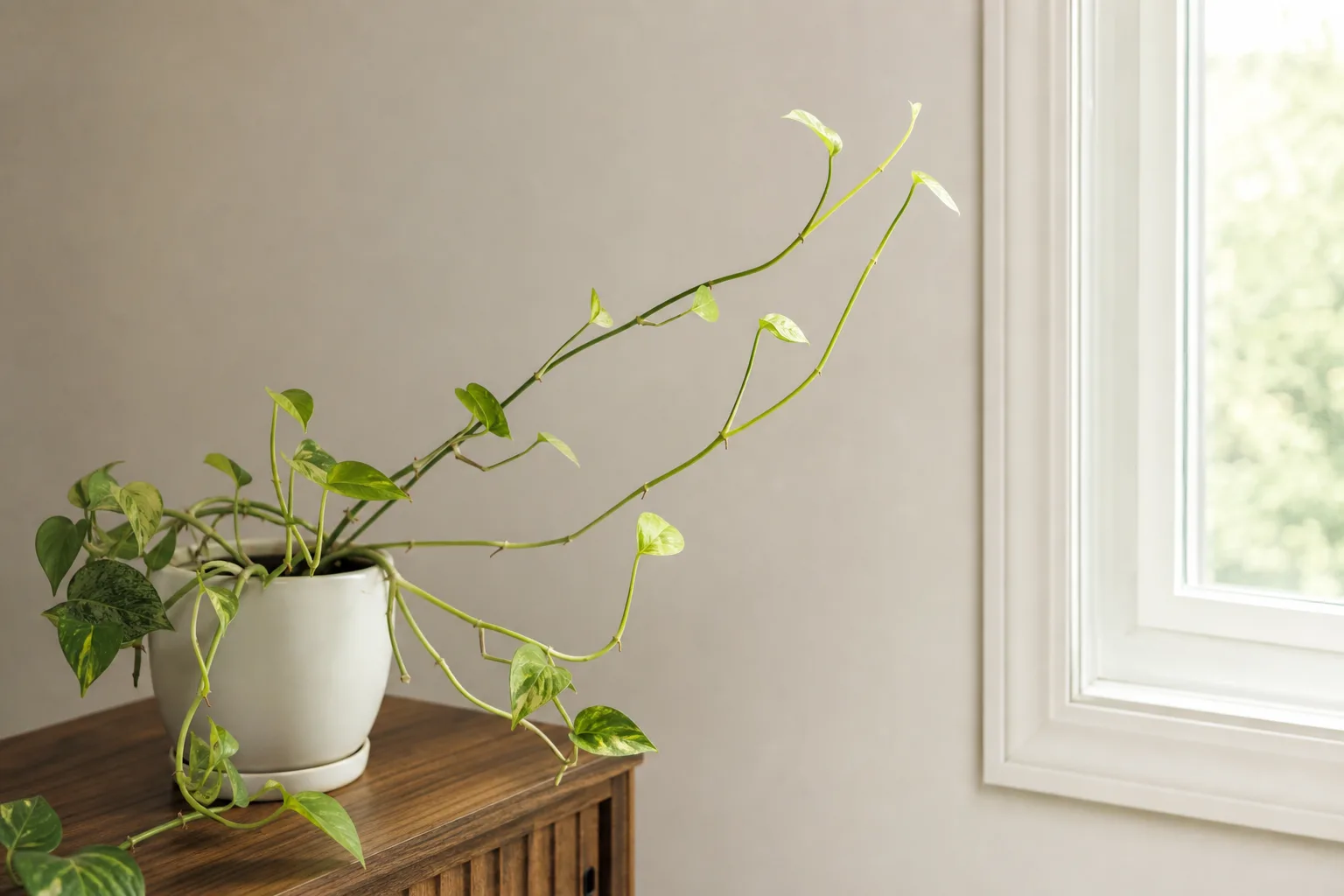
A leggy houseplant is not dying — it is etiolating, stretching toward whatever light it can find. University of Maine Cooperative Extension defines etiolation as elongated, spindly stems with pale leaves caused by low-light conditions (University of Maine Cooperative Extension). The plant is reallocating energy toward stem length instead of leaf mass because photosynthesis is underpowered indoors.
Experts fix leggy houseplants in this order:
- Confirm the stretch is etiolation, not a naturally vining habit.
- Measure light at leaf height and move the plant into a brighter band — or add a grow light.
- Acclimate gradually so new intensity does not scorch leaves.
- Rotate a quarter turn each watering so growth stays even.
- Prune stretched stems only after light is fixed, cutting above healthy nodes.
- Propagate top cuttings or behead rosette succulents when the old frame cannot be salvaged.
Existing stretched internodes never shorten. Recovery shows up in the next leaves. For a full diagnostic deep dive, see our leggy plants guide. For low-light symptom clusters beyond stretch alone, see signs your houseplants need more light.
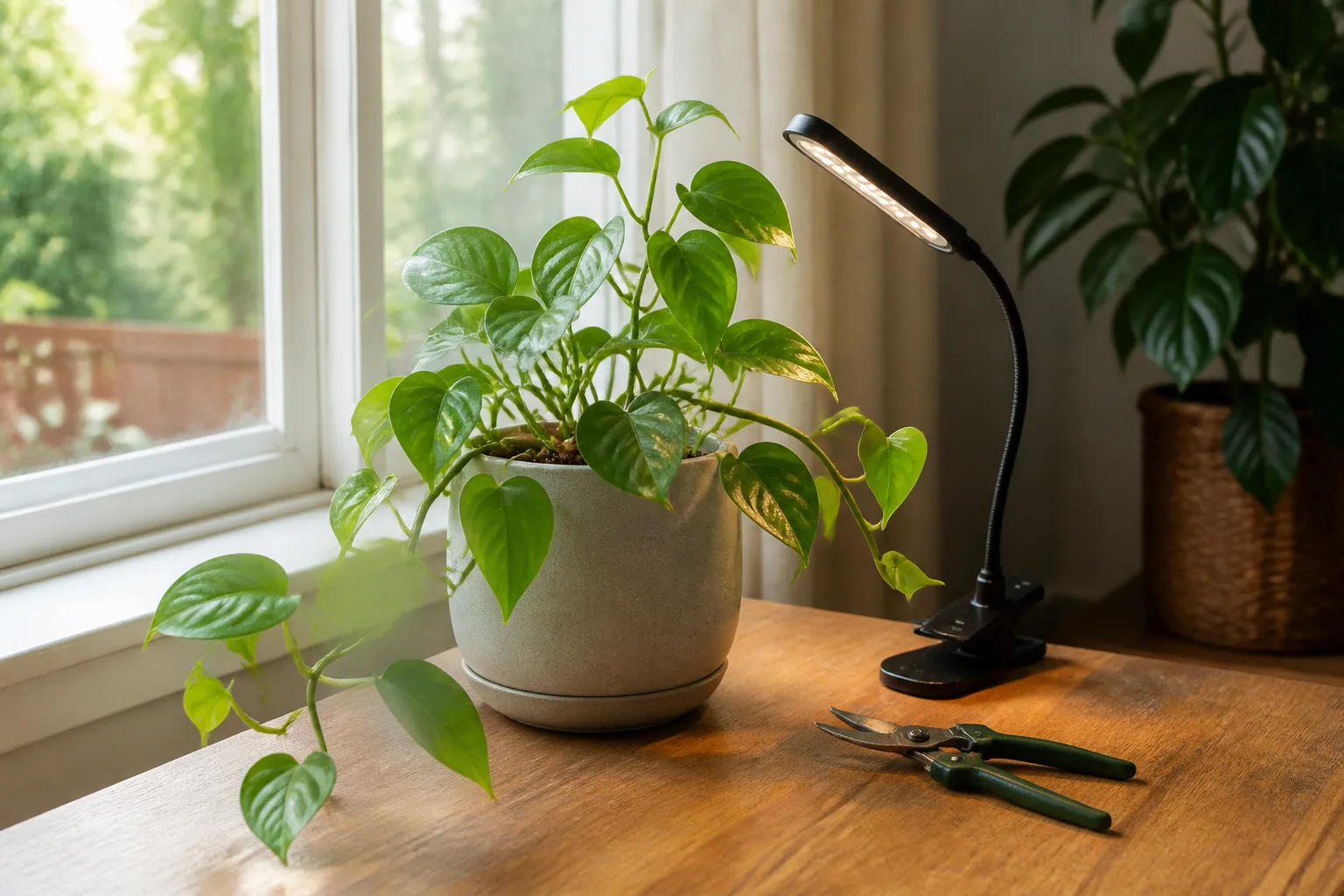
What Leggy Growth Actually Looks Like
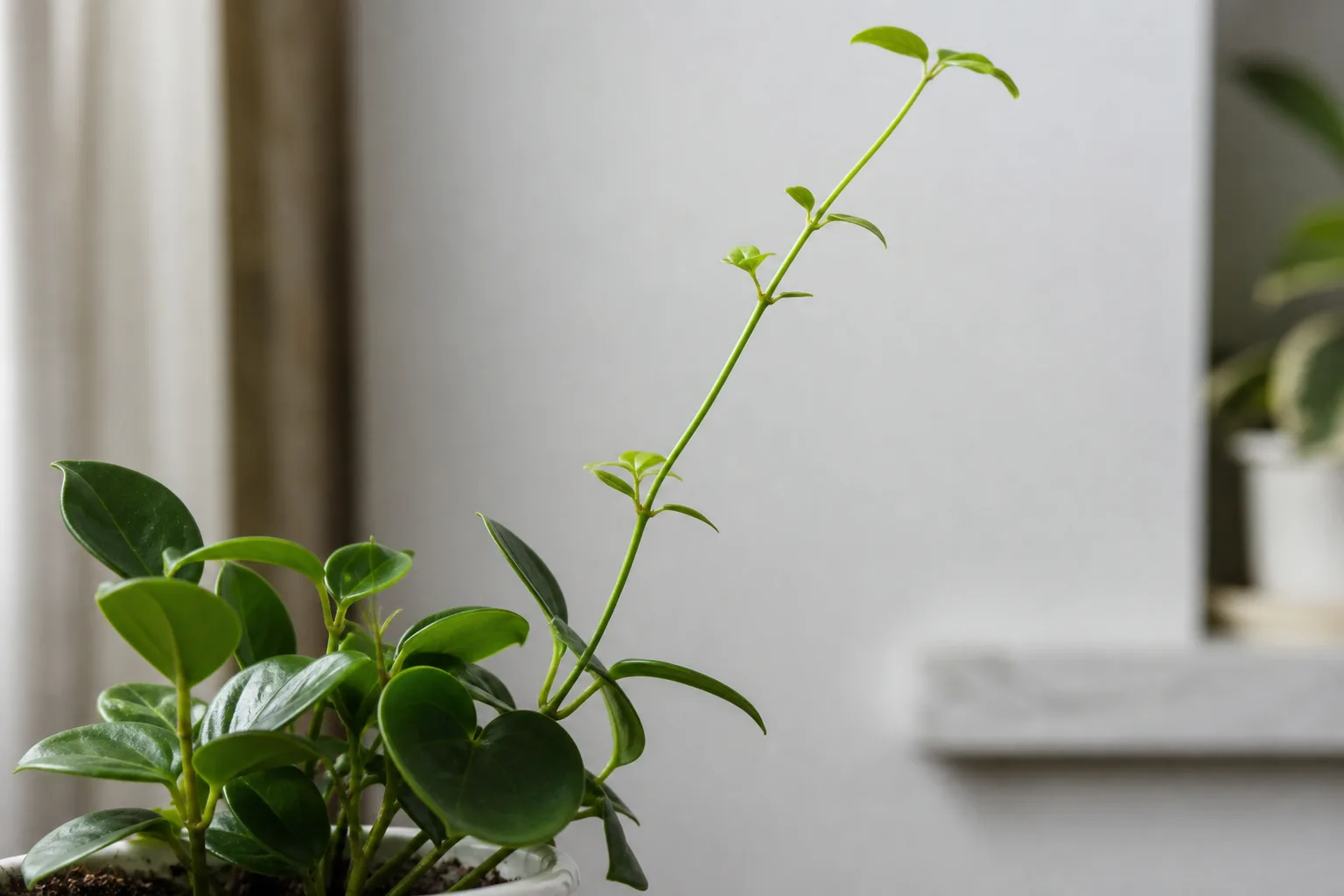
Legginess is a pattern on new growth, not one awkward stem. Look for internodes — the bare stem between leaves — that are noticeably longer on recent growth than on older sections of the same vine or cane. New leaves often arrive smaller and paler than the ones below them. The canopy may lean hard toward a window or lamp. On variegated cultivars, fresh leaves may revert to solid green as the plant tries to maximize chlorophyll under weak light.
Missouri Botanical Garden lists insufficient light among the most common indoor environmental problems, noting weak, spindly growth that leans toward the brightest source (Missouri Botanical Garden). That lean is phototropism — the same biology seedlings use in a windowsill tray — running on a mature houseplant that cannot reach brighter conditions outdoors.
Legginess vs Normal Vining Habits
Not every long stem is a crisis. A pothos with evenly spaced, plump leaves on a trailing vine is doing what pothos do. A monstera that used to hold leaves every few inches and now sends out thin runners with coin-sized foliage is etiolating. Compare three recent internodes against three mature internodes on the same stem. If the new run is consistently longer and the associated leaves are smaller, treat it as stretch.
Spider plants on stolons, mature rubber plants with bare lower trunks, and slow growers like ZZ plants can look open without being light-starved. Context matters: concern rises when a previously compact plant changes its growth pattern across several consecutive nodes. Our houseplant symptom checker helps separate stretch from other stress signals when multiple symptoms overlap.
Why Your Houseplant Stretched (Etiolation Explained)
Etiolation is a hormonal response to inadequate usable light. Stem-tip photoreceptors detect low intensity, and the plant shifts growth toward elongation — growing taller and thinner in an attempt to intercept more photons. Outdoors, that strategy can reach a sun gap. Indoors, there is often no brighter destination, so the plant keeps reaching.
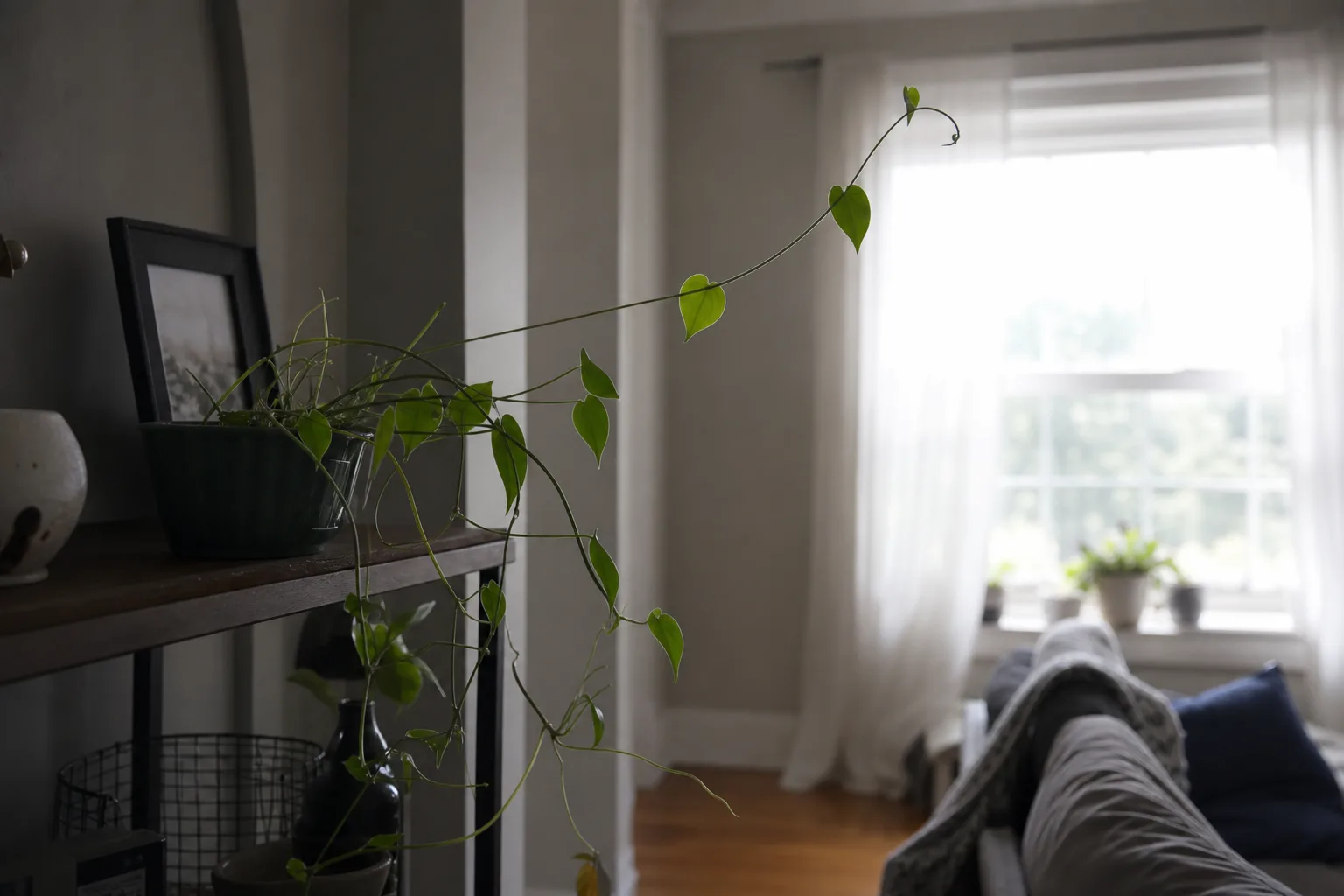
University of Maine Cooperative Extension notes that genetics and overwatering do not appear to drive etiolation; low light is the trigger (University of Maine Cooperative Extension). That clarity matters because many owners prune first, fertilize second, and only then wonder why the plant stretched again.
Light Is the Main Driver
Human eyes adapt so aggressively that a desk ten feet from a south window can feel “a little dim” while delivering a fraction of sill-level intensity. UF/IFAS Gardening Solutions explains that our eyes are poor judges of indoor light and publishes midday foot-candle bands to replace vague labels (UF/IFAS Gardening Solutions):
| Midday foot-candles | Label | Typical indoor spot |
|---|---|---|
| 25–100 ftc | Low | Far from windows, overhead room lights only |
| 100–500 ftc | Medium | Near glass without direct sun; many north windows |
| 500–1,000 ftc | High / bright indirect | Close east or west glass, filtered south |
| Over 1,000 ftc | Direct sun | Clear south or southwest exposure |
Most foliage houseplants that look full in nurseries were grown under high bands or supplemental light. Bringing them home to a medium corner produces stretch within weeks even though the room feels bright. Hold a meter or phone app at leaf height, not eye level — our light meter guide walks through the five-minute room map.
Secondary Factors That Make Stretch Worse
Light causes etiolation; other stresses can make a leggy plant look worse or grow weaker while you fix intensity.
One-directional light makes stretch uneven — dense foliage on the window side, bare stems on the back. Rotation fixes distribution but not deficiency; you still need enough total intensity.
Overwatering does not cause etiolation, but slow transpiration in dim light keeps soil wet longer, which can yellow lower leaves and weaken the root system. A plant fighting soggy roots has less energy to recover even after you move it.
Excess nitrogen can push soft, rapid top growth on an already weak frame. University of Georgia Extension warns that overfertilization produces lush foliage at the expense of roots when other factors are limiting (UGA Extension B1318). If you have been feeding heavily while the plant stretched, pause fertilizer until light is corrected and new growth looks normal.
Step 1 — Measure and Upgrade Light
Fixing light is not “put it in the sunniest room and hope.” It is matching species needs to measured intensity at the leaves, then increasing exposure in steps the plant can tolerate.
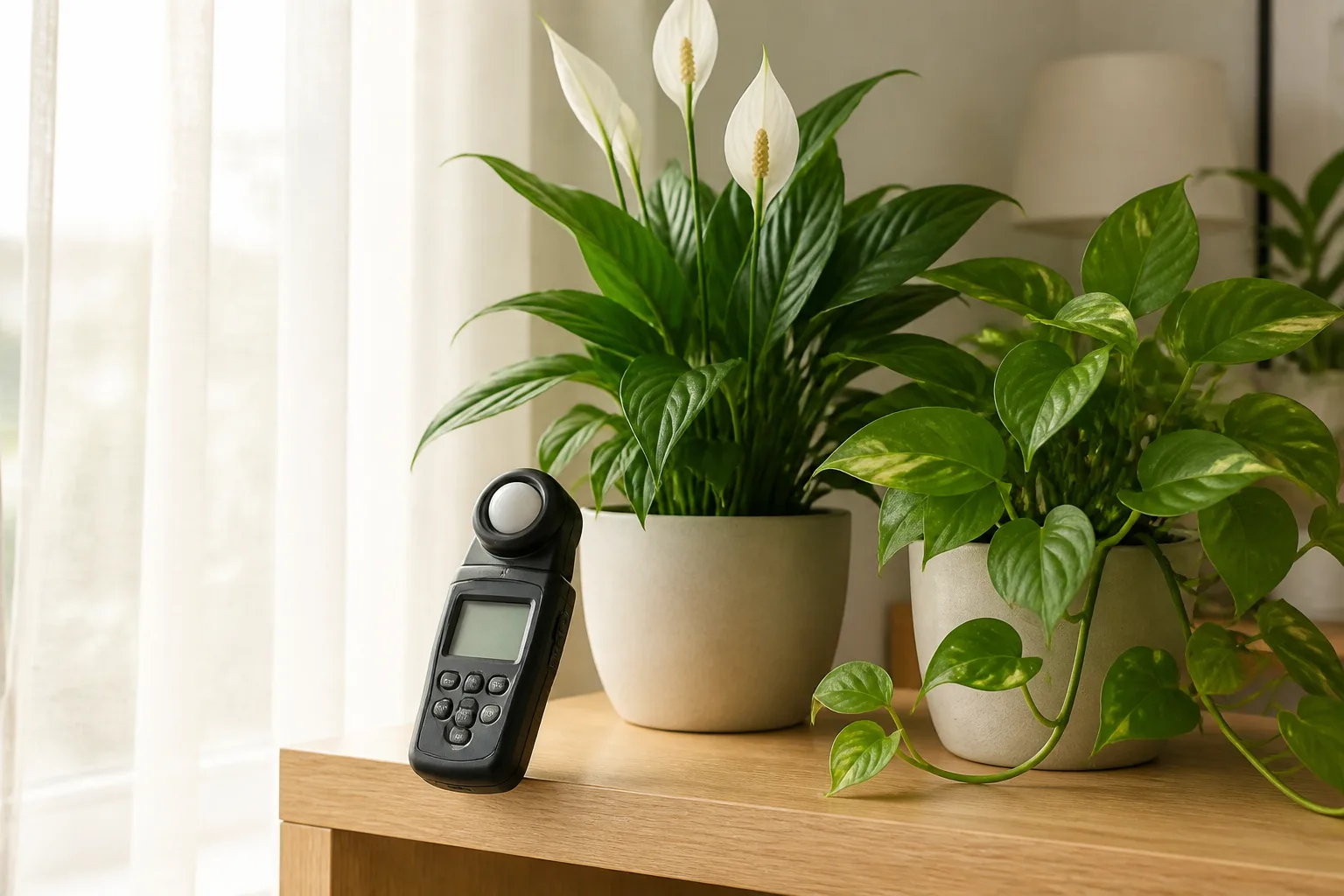
Start by identifying the plant’s preferred band. Low-light tolerant species like snake plant may survive in 100 ftc but will not look nursery-compact there. Monstera, fiddle leaf fig, and most flowering indoor plants want high bands or direct sun for part of the day. Move the pot closer to the glass or to a brighter exposure — east or west for gentler morning or afternoon sun, south with sheer curtain for strong indirect, north only for true low-light species.
Watch the next two to three leaves after the move. Shorter internodes and larger leaf size mean you hit the target. Continued stretch means intensity is still low — move again or add artificial light.
Species cheat sheet for common rescues: pothos and philodendron often need medium-to-high bands; monstera and fiddle leaf fig want high bands or brief direct sun; peace lilies tolerate medium light but stretch in low corners; succulents and cacti need direct sun or strong supplemental light — anything less produces permanent stretch on rosettes. When in doubt, meter first, then compare against our light meter guide.
Window Placement and Gradual Acclimation
Sudden jumps from a dim corner to harsh south glass cause sun scorch — bleached or crispy patches on leaves that were adapted to shade. University of Maine Cooperative Extension recommends acclimating etiolated plants gradually: increase exposure over several days, adding an hour or two of brighter indirect light per day until the plant sits in its final spot (University of Maine Cooperative Extension).
Practical acclimation looks like this: day one, place the plant a few feet inside a bright window; day three, slide to the sill behind a sheer curtain; day five, pull the curtain aside for morning sun if the species tolerates it. Reverse the steps if leaves show wash-out or crisp edges.
When to Add a Grow Light
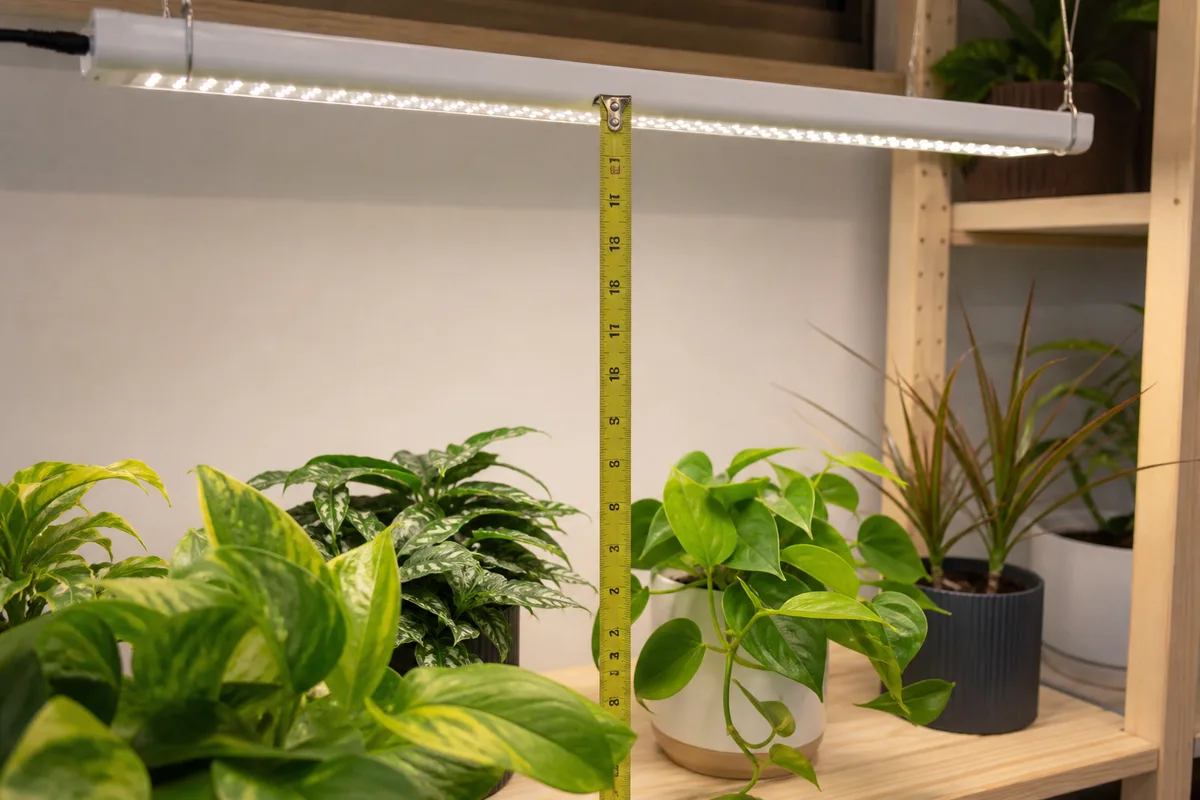
When the best window still reads below your plant’s target band — common in north bedrooms, basement offices, and winter months — a grow light is the expert move, not a hobbyist luxury. UF/IFAS confirms plants can grow entirely under appropriate artificial light when intensity and duration are correct (UF/IFAS Gardening Solutions). Clemson HGIC notes fluorescent and LED fixtures are preferred over heat-heavy incandescent bulbs for long run times (Clemson HGIC).
Position a full-spectrum LED bar 6–12 inches above the canopy for many foliage plants, run it 12–14 hours on a timer, and leave a dark period overnight. Raise the fixture if new leaves bleach; lower it if stretch continues. Our grow lights complete guide covers distance, spectrum, and timer setup in detail.
Step 2 — Rotate for Even Growth
Even adequate light from one direction produces a lopsided plant as new growth reaches toward the pane. Outdoors, the sun arc hits multiple angles; indoors, the window is a single beacon.
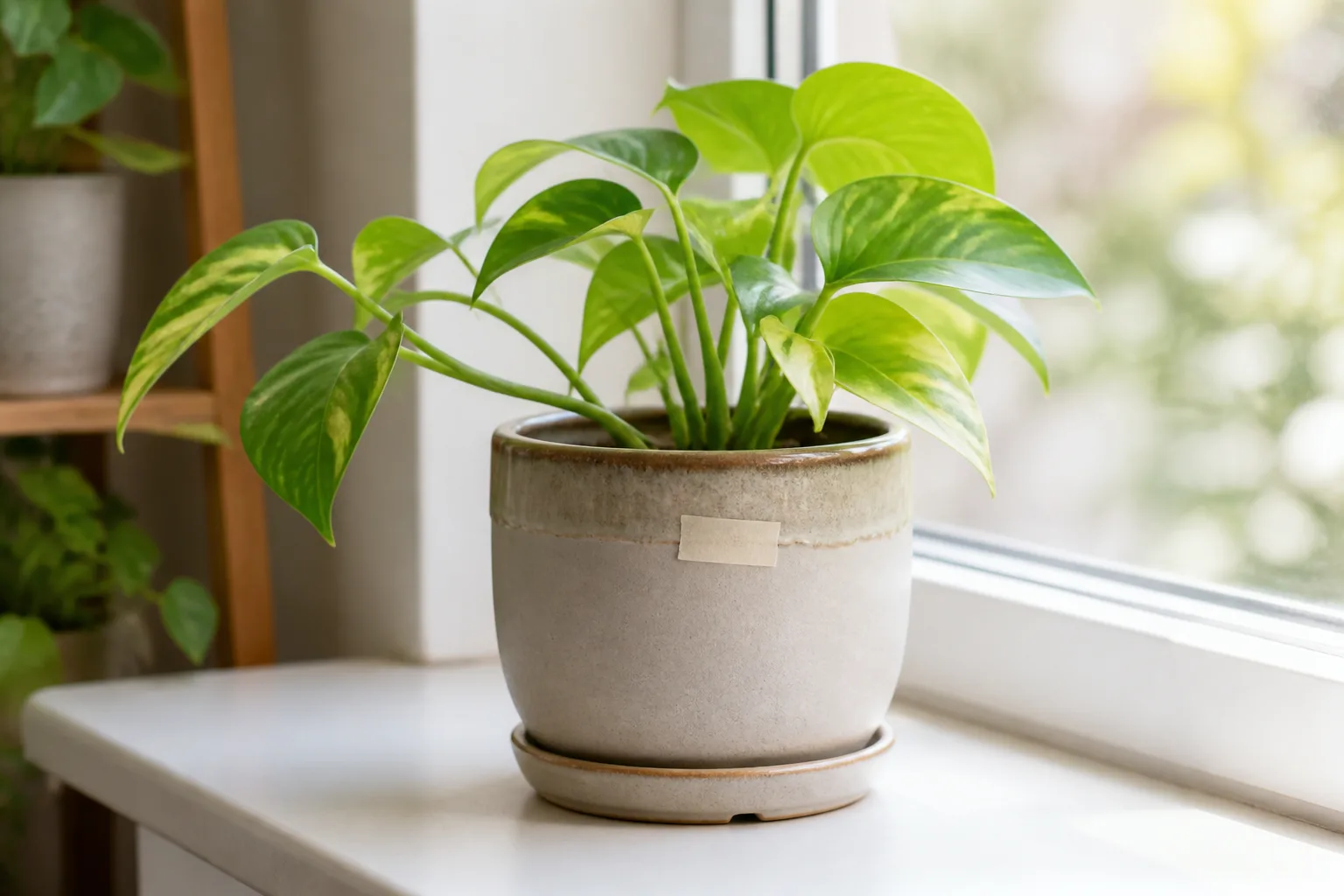
Rotate the pot one quarter turn each time you water — roughly every one to two weeks for most soil mixes. That cadence is easy to remember and keeps all sides in the brighter hemisphere over a month. For fast growers on windowsills, a half turn weekly prevents one bare back face.
Mark the pot with a small piece of tape on the side that faced the window before each turn if you tend to forget orientation. Consistency matters more than precision — a plant rotated once a month still spends half the year with its back to the dim side. Pair rotation with wiping dust from leaves on the shaded face so every surface can photosynthesize once it faces the glass.
Rotation balances shape; it does not replace brighter light. If internodes keep lengthening on all sides after a month of turns, return to Step 1 and measure again.
Step 3 — Stop Overwatering and Heavy Nitrogen Feeds
While you upgrade light, tighten watering. Dim plants use less water; soil that stays wet breeds root stress that competes with recovery. Water when the top inch or two of mix is dry for most tropical foliage, and always empty saucers after drainage.
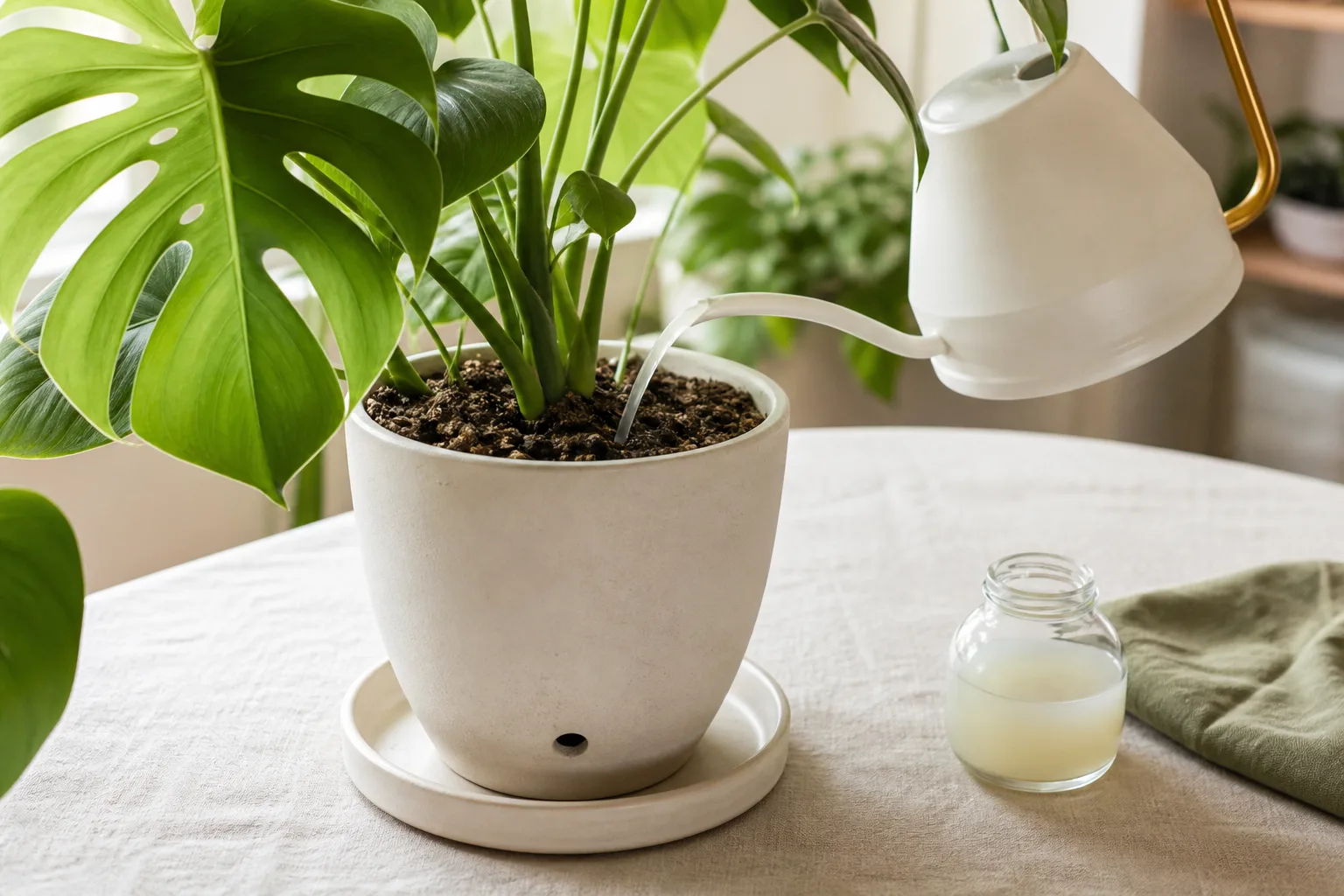
Hold off on fertilizer until you see healthy new growth under better light. If you do feed during active growth, use a balanced formula diluted to half label strength during spring and summer only. Heavy nitrogen pushes soft stem elongation on a plant that still lacks the light budget to support dense foliage — a stretched, top-heavy profile that extension guidance ties to overfertilization risks when other factors are limiting (UGA Extension B1318).
Step 4 — Prune to Reset Shape
Pruning is how experts reshape after light is fixed — not how they fix the underlying problem. Cut before you brighten, and new shoots often etiolate again in the same dim spot.
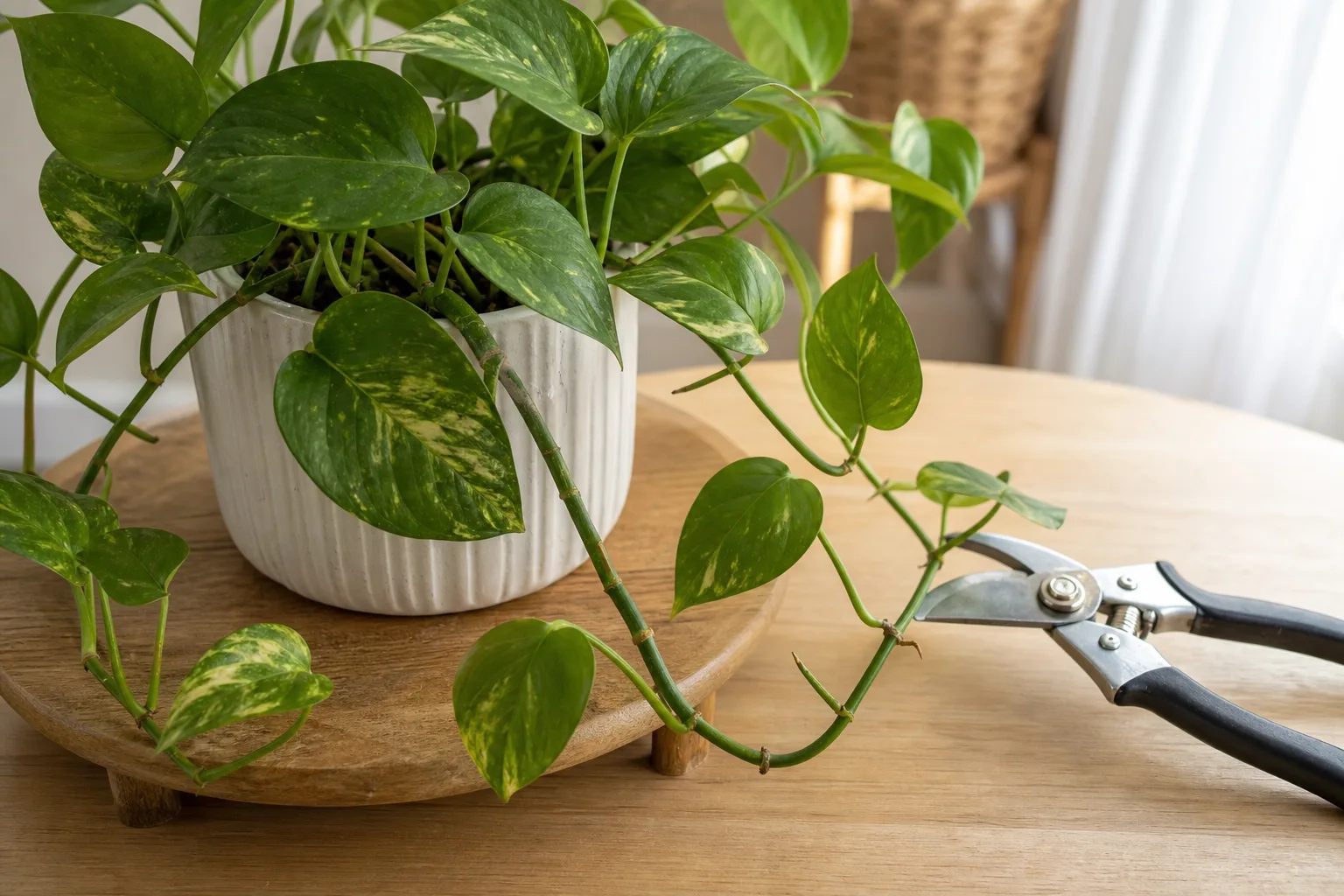
Once the plant sits in adequate light and you see at least one compact new leaf or shorter internode, prune stretched sections. Use clean, sharp scissors or bypass pruners. Cut above a node — the slight bump where leaves and roots emerge — leaving at least one healthy leaf on the remaining stem when possible. Vining plants like pothos and philodendron often sprout two shoots from the node below a cut, which builds bushiness over time.
Where to Cut and When to Wait
Trailing vines: remove the longest bare runners first, working back to nodes with viable leaves. Upright cane plants like dracaena: shorten the leggy cane to the height you want, knowing new growth will sprout near the cut. Bushy herbs and peperomia: pinch stem tips after light improves to force lateral branching.
Save heavy renovation — removing more than one-third of foliage at once — for spring when photoperiod and temperatures favor regrowth. Light maintenance trims can happen year-round on vigorous vines. Full tool lists and species notes live in our pruning indoor plants guide.
Step 5 — Propagate When the Old Structure Cannot Be Saved
Some leggy plants are more salvageable as cuttings than as the original pot. If lower stems are bare wood with only a tuft of leaves at the tip, air-layering or simple top cuttings may be cleaner than years of gradual pruning.
For most vining aroids and tradescantia, snip a 4–6 inch section with two to three nodes, root in water or moist moss, and pot once roots are an inch long. Our pothos propagation guide covers the node logic that applies to dozens of similar vines. Keep propagations under the same improved light you gave the parent — cuttings etiolate faster than established plants because they have no stored reserves.
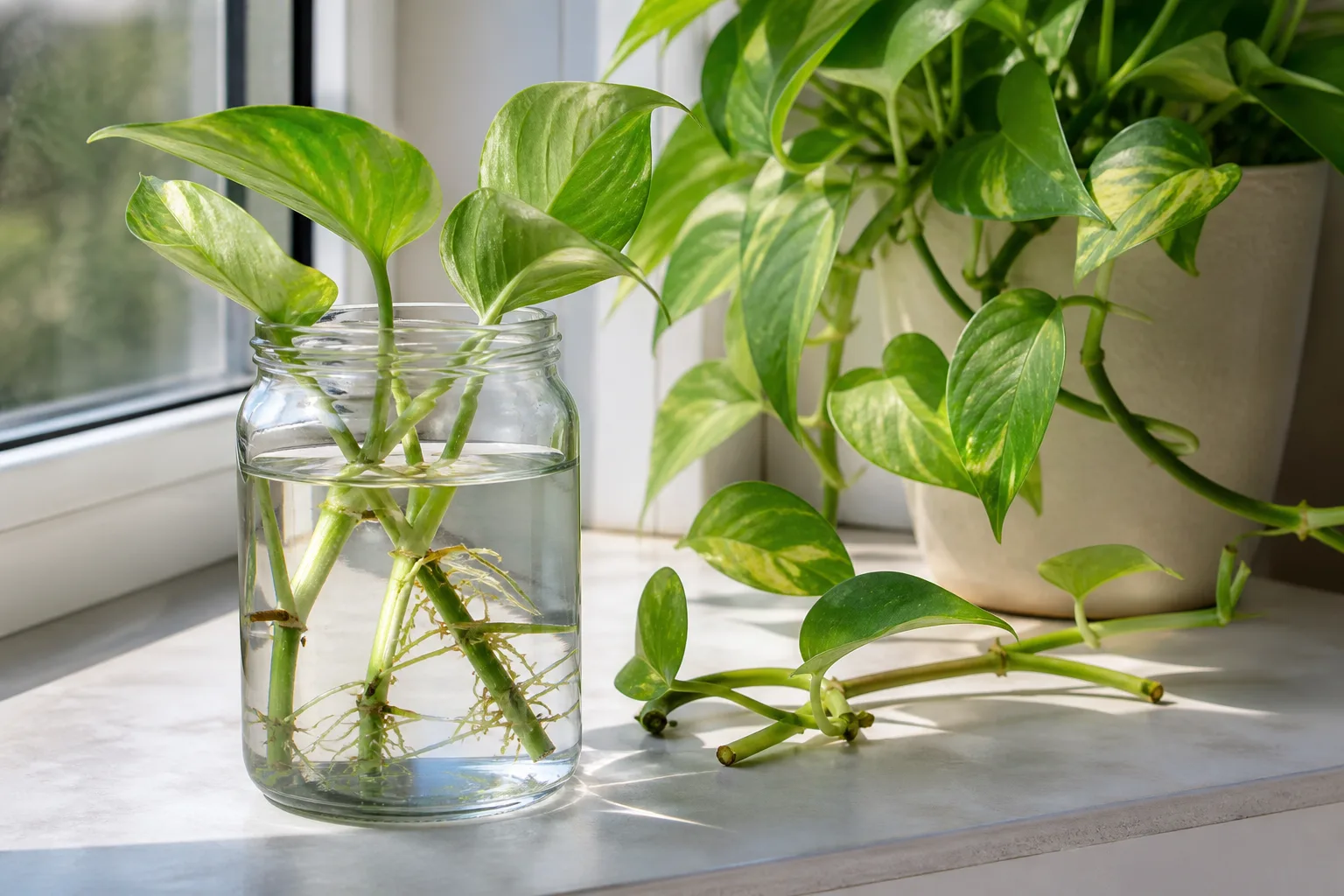
Editorial rescue timelines from experienced indoor growers suggest compact new growth on pruned or rooted material often appears within one to two weeks once light and humidity are stable — use that as a scoreboard, not a guarantee for every species in winter.
Rosette Succulents and Other Irreversible Cases
Here is the rule many quick-fix lists gloss over: you cannot uncurl a stretched rosette. An etiolated echeveria or aeonium will not return to a tight rose shape on the old stem. The expert fix is beheading — cut the rosette off, let the stump callus, replant the top in fresh gritty mix, and grow a compact plant from the crown. The bare stem may sprout pups from old leaves if you keep it in bright light.
Cacti and other columnar succulents that have grown thin and pale need the same honesty: new growth at the tip may compact after light improves, but the old narrow column remains. Decide whether you can live with the history or prefer a fresh start from a cutting.
Prevention: Keeping Plants Compact From the Start
Prevention is cheaper than rescue. Match the plant to measured light before you buy — if your brightest spot is 150 ftc at noon, do not bring home a high-light succulent unless you plan to add a grow light on day one.
Repot into appropriately sized containers; oversized pots stay wet and encourage weak growth in dim corners. Dust leaves monthly so scarce photons are not blocked. In winter, expect stretch even in summer-adequate windows as outdoor sun angle drops — re-measure in November and February.
Group plants with similar light needs on the same shelf so you are not compromising one species for another. Avoid stacking tall plants in front of shorter ones unless the back row has its own grow light. When you buy a new plant, quarantine it in its nursery light level for a week, meter your intended spot, then move — jumping straight from greenhouse brightness to a dim living room is how etiolation starts on day one.
Rotate from the first week home. Pinch or prune vining species lightly during active growth to encourage branching while light is still adequate. When stretch appears early, treat it as a placement alarm, not a cosmetic issue to trim away.
Conclusion
Your houseplant is not sending a death notice — it is sending a light invoice. Leggy growth is etiolation: the plant stretching because indoor intensity fell below what it needs to build compact tissue. Experts fix it by upgrading and measuring light first, acclimating to prevent scorch, rotating for even form, holding fertilizer until recovery, then pruning or propagating to reset shape.
Remember what will not change: old elongated internodes stay elongated. Judge success on the next leaves, not nostalgia for the old silhouette. Fix the environment, then reshape the plant — and you will stop paying that invoice every growing season.