How and When to Harvest Cucumbers
Pick cucumbers at their crispest with variety-specific size cues, a vine-safe cutting method, storage guidance, and tips for longer production.
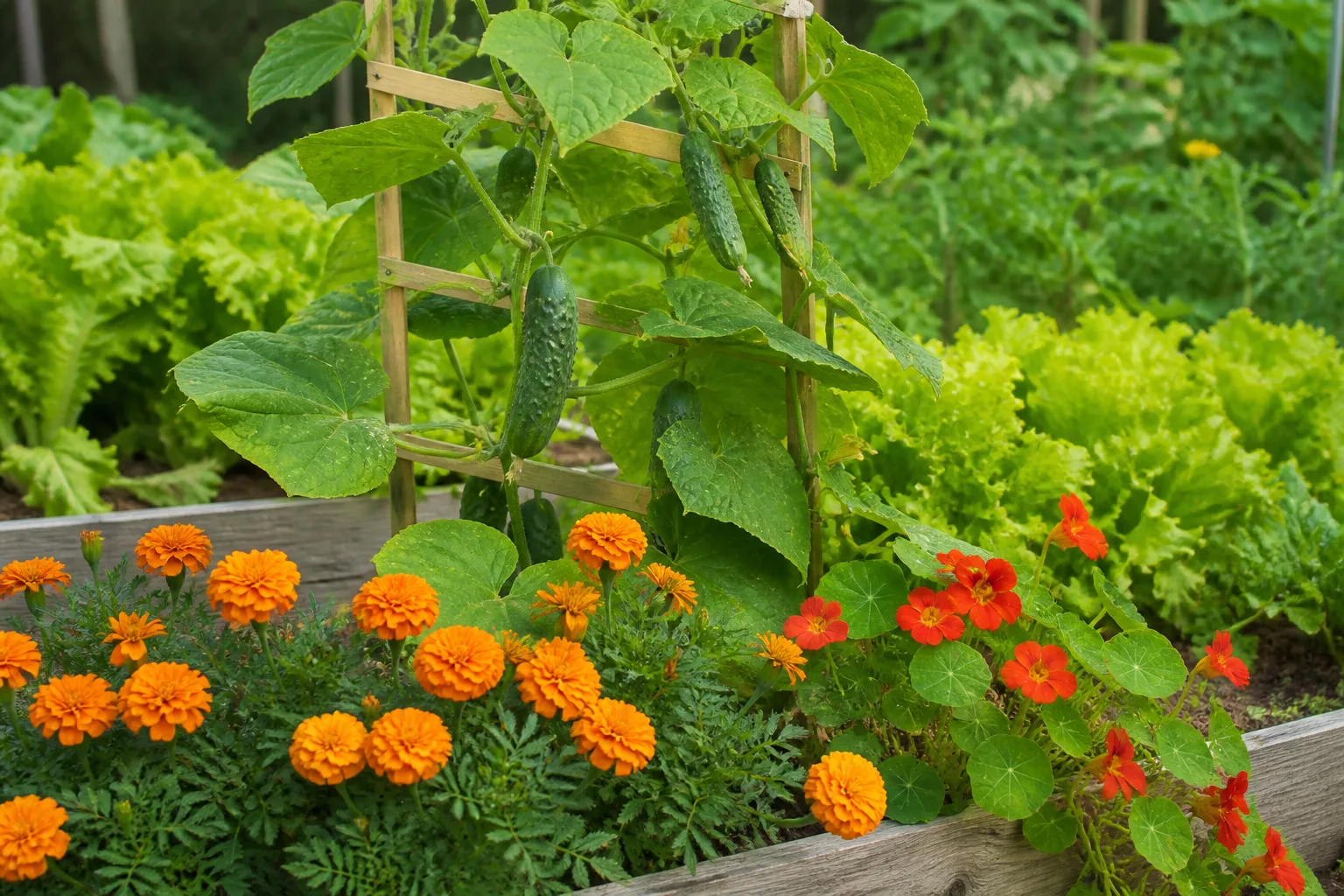
Pick cucumbers when they have reached the size and color expected for their variety, feel firm, and still look smooth or evenly textured. The right harvest date depends on what you planted and how you plan to use it: a tiny gherkin may be ready at 2 inches, while a full-size slicer may be best around 8–10 inches.
The calendar on a seed packet is only a starting signal. Once the first female flowers open and small fruits appear, inspect the vines every day or two; cucumbers can move from crisp and tender to swollen, seedy, or yellow surprisingly fast. A careful cut, prompt cooling, and regular follow-up picking protect both the fruit in your basket and the flowers that will become the next harvest.
Quick answer: pick for your intended use
Decide the harvest goal before you judge a cucumber. Pickling cucumbers are usually collected young, when they are short, firm, and still have small seeds. Slicing cucumbers can stay on the vine longer, but they should still be harvested before the fruit becomes bulbous, soft, yellowing, or packed with mature seeds.
The best universal rule is not a single length. It is: pick when the fruit is at the variety’s expected size, has its normal color, feels firm, and has not started to swell at either end. The Royal Horticultural Society’s cucumber guidance likewise treats variety-specific size as the key, giving approximate ranges from 3-inch mini fruit to 8–10-inch full-sized fruit. Use that range as a cue to inspect, not as a reason to leave every cucumber on the vine until it reaches a ruler mark.
Know what a harvest-ready cucumber looks like
Harvest decisions become easier when you use several signs together. A fruit that is the right length but pale, soft, or unusually swollen is not at its best; a short fruit with firm flesh and the correct color may be exactly what the seed packet intended.
Check firmness, color, and shape
Start with the skin. Most green cucumbers should be a rich, even green for their cultivar, while white, yellow, striped, and mottled varieties should be judged against the description on the packet or plant tag. A sudden yellow cast on a normally green slicer often means the fruit has stayed too long, although some specialty varieties are supposed to mature pale.
Next, look at the shape. A harvest-ready cucumber is generally straight or naturally curved in the way its variety describes, with a firm body and a gently rounded blossom end. A fruit that is swollen at the blossom end, sharply tapered, soft, or misshapen may have been left too long or may have developed under stress or incomplete pollination. Remove it from the vine so it does not continue taking resources from newer fruit, but do not use its shape alone to judge every cucumber on the plant.
Finally, press the fruit lightly with a fingertip. It should feel dense and crisp rather than rubbery or hollow. Do not squeeze hard, especially on thin-skinned or burpless types, because bruises can become soft spots after harvest. If you are learning a new variety, pick one representative fruit, cut it open, and use its seed size and texture to calibrate the rest of the crop.
Use days and flowers as a timing check
Days to maturity helps you know when to begin looking, but it is not a promise that every fruit will ripen on the same day. Planting date, soil warmth, light, water, cultivar, and whether the crop is in a greenhouse or outdoors can all shift the first harvest.
The first female flowers provide a more useful field reminder. They have a tiny cucumber-shaped ovary behind the yellow flower, unlike male flowers, which sit on a plain stem. Utah State University Extension says cucumbers are often ready about 5–7 days after flowering, while Oklahoma State University Extension’s cucumber production guide describes the first picking around 45–60 days after planting and recommends harvesting every 2–3 days, or daily when growth is especially fast. Those ranges are compatible: the flower date helps you watch an individual fruit, and the planting date helps you plan the season.
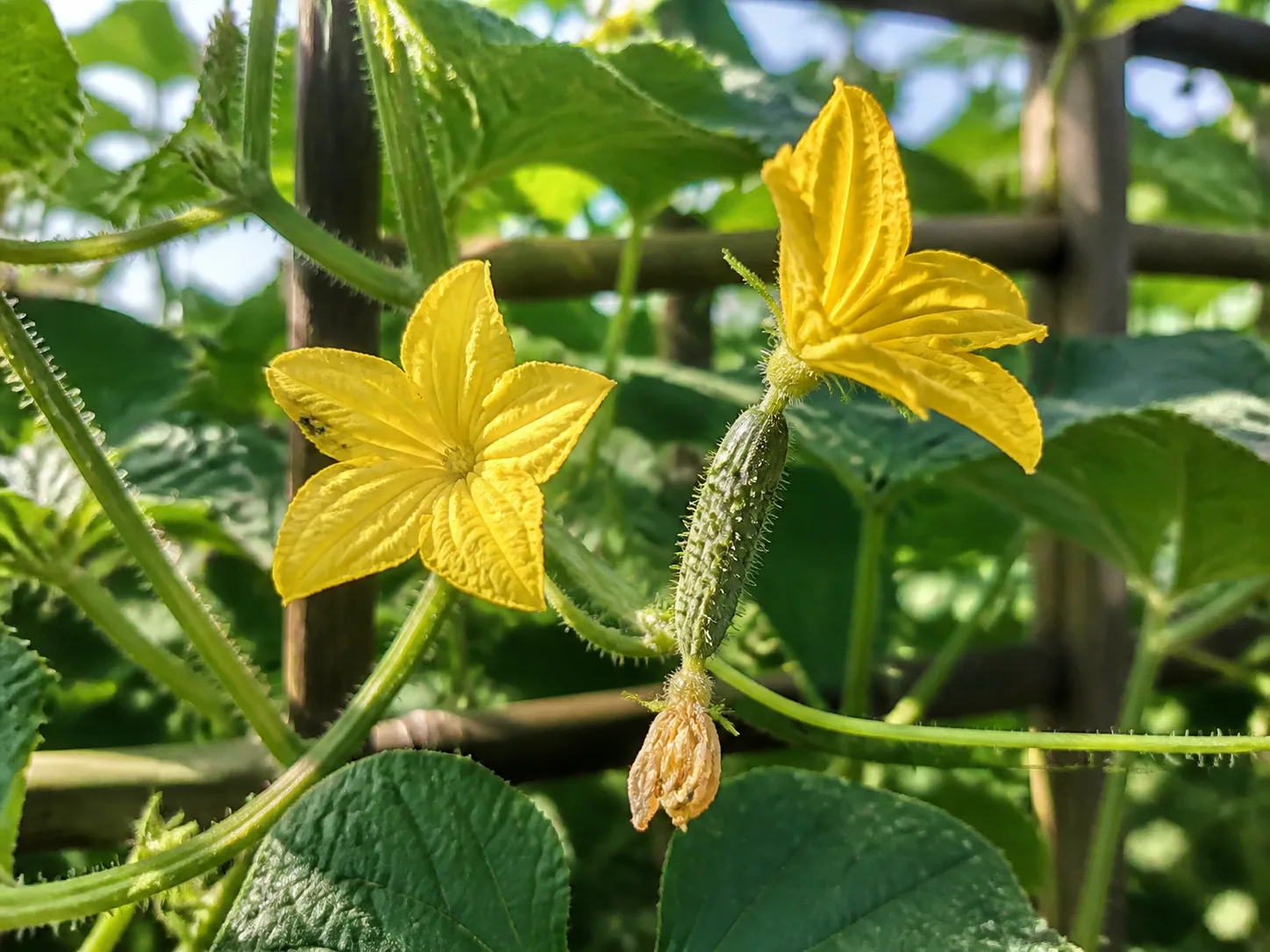
Write the date of the first female flowers on a plant label or in your garden notes. Begin checking the fruit after several days, then shorten the interval during hot weather. A cucumber in full sun can size faster than one shaded by leaves, so treat the flower date as a reminder to inspect each fruit rather than an automatic harvest appointment.
Match harvest size to cucumber type
The same plant family includes compact picklers, long slicers, greenhouse types, and unusual colors. Their harvest windows overlap, but their ideal size does not. If you do not know the cultivar, harvest one fruit early, one at the apparent target size, and compare the seeds and texture before deciding how long to leave the rest.
Pickling cucumbers and gherkins
Gherkins are picked at the smallest stage, often around 2 inches, when the fruit is firm and the seeds are barely developed. Pickling cucumbers for dill pickles are commonly harvested around 3–4 inches, though the best size depends on the recipe, jar, and cultivar. Smaller fruits usually fit whole into jars and tend to have a more delicate texture.
Pickling types often have bumps or spines, so do not mistake a naturally warty skin for overripeness. Judge the fruit by its cultivar color, firmness, and diameter. Seed Savers Exchange’s cucumber guide notes that fruit can be picked early for pickling or allowed to grow longer for larger slicing uses, which is a helpful reminder that the harvest goal changes the decision.
Pick every day or two once a pickling crop begins. A hidden fruit that grows far beyond the preferred size can become seedy and divert the plant’s energy, while the small fruits beside it may still be perfect. Remove damaged fruit as you go, but avoid scraping or snapping nearby flowers.
Slicing and burpless cucumbers
Most slicing cucumbers are ready somewhere around 6–9 inches, with many full-sized types best at 8–10 inches. That is a useful home-garden range, not a universal rule. Long English or greenhouse varieties may be harvested at a different length, and a compact patio type may be tender when much shorter.
Look for the variety’s normal dark green or other stated color, a firm body, and a rounded end. If the fruit is enormous but still green, cut it open before deciding what happened. Large, mature seeds and a watery or fibrous interior are signs that it has passed the best fresh-eating window, even if the skin has not yet turned yellow.
Burpless cucumbers are often bred for a mild flavor and tender skin, but they still need regular picking. Do not assume “burpless” means the fruit can stay on the vine indefinitely. Heat, drought, and overmaturity can still reduce texture, and a thick or bruised skin will not become tender after picking.
Specialty colors and shapes
White, yellow, pale green, striped, round, and lemon-shaped cucumbers must be judged by their own maturity description. A pale fruit may be perfectly ready in one cultivar and badly overripe in another. Before planting, save the packet or photograph the tag so you have a reference when the fruit begins to change color.
Shape matters as much as color for specialty types. Round cucumbers may be ready while they are still firm and evenly colored, whereas a long type that develops a swollen middle may be overripe. The RHS recommends harvesting when fruit is uniformly green and firm for common types, but the broader principle is to learn the normal appearance of your specific cultivar.
Set up a harvest routine before the first fruit
Good picking is mostly a visibility problem. Once the vines produce, the leaves can hide fruit against the soil, behind a trellis, or inside a dense canopy. A short, repeatable route prevents the largest cucumber from becoming the one you discover after it has turned yellow.
Search the places cucumbers hide
For trellised plants, inspect both sides of the support and look upward before you move on. Check fruit at leaf nodes, behind large leaves, and near the top where a cucumber can blend into the foliage. If the vine trails on the ground, gently lift leaves from the edge rather than dragging the stem across the soil.
For container plants, check the side facing the pot wall and the underside of leaves that rest on the rim. For greenhouse plants, inspect the back of the stem and fruit hanging behind the main canopy. Seed Savers Exchange recommends checking daily once plants begin producing because cucumbers enlarge quickly; that daily walk is especially valuable when you are growing several varieties with different target sizes.
Use a small basket that lets you keep picked fruit out of direct sun. A phone note or simple tally can help you spot a pattern: if fruit on one section is consistently small, pointed, or bitter, inspect water, heat, pollination, and root health instead of changing the harvest length alone.
Choose a cool, dry picking window
Morning is a practical time to harvest because overnight temperatures are lower and the plant has not yet endured the day’s heat. Gardenary also recommends morning picking for sweetness and crispness. That is a quality habit rather than a strict requirement; if your schedule makes evening the only option, pick when the fruit is ready and cool it promptly.
Avoid working through wet foliage when you can wait for it to dry. Wet leaves and fruit are harder to handle cleanly, and rough movement through a damp canopy can spread soil and moisture across the harvest. Do not compensate for a missed morning by watering immediately before picking; consistent moisture during fruit development matters more than a last-minute drink.
Pick cucumbers without damaging the vine
Cucumber stems and fruiting nodes are easy to tear when you pull. The goal is to remove the cucumber while leaving the main vine, nearby flowers, tendrils, and developing fruit undisturbed.
Cut the short stem cleanly
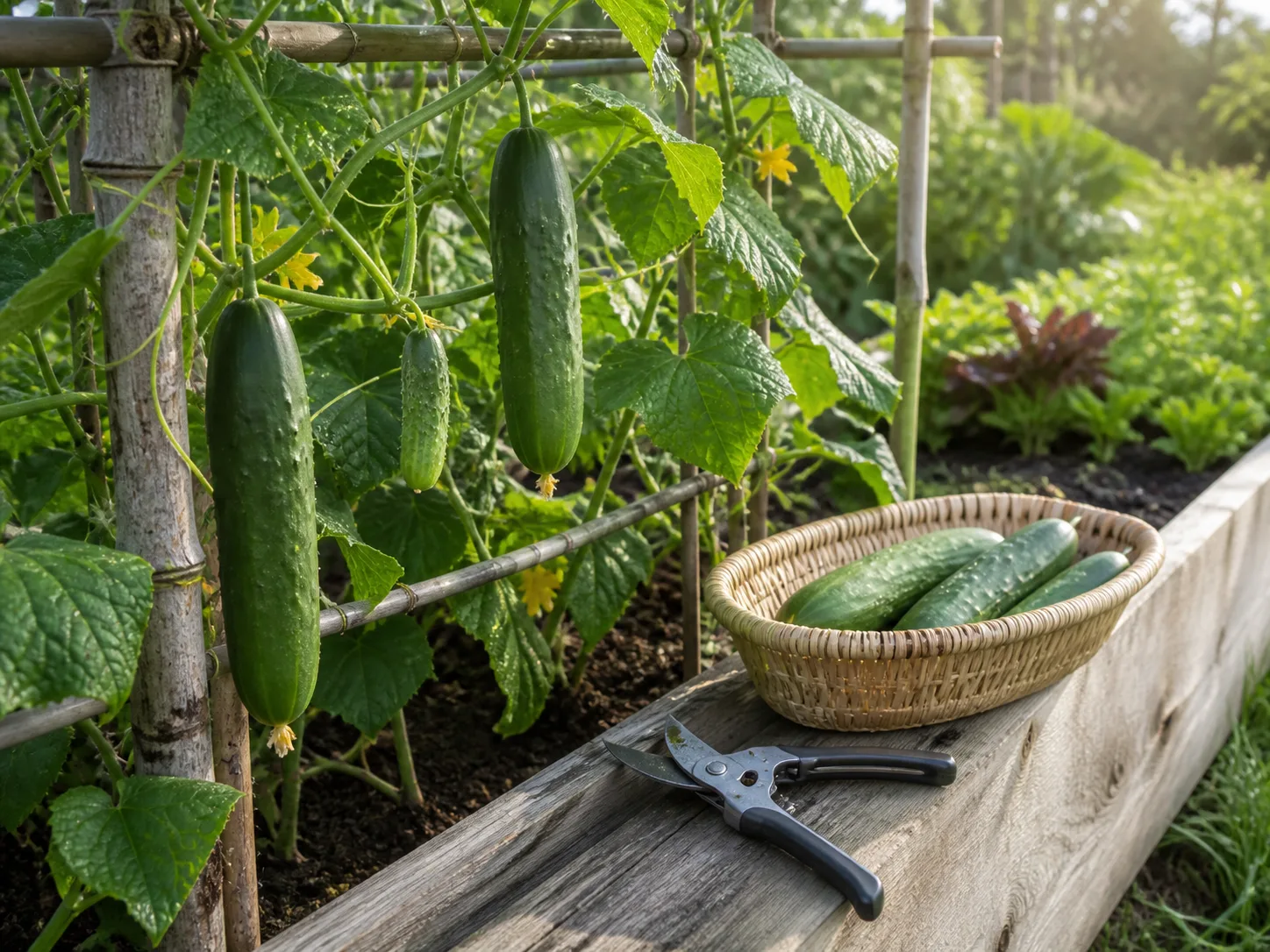
Carry clean, sharp pruners, secateurs, or a small knife. Support the vine or fruit with one hand, then cut through the short stem connecting the cucumber to the plant. Leave a small piece of stem attached to the harvested fruit when practical; Seed Savers Exchange recommends cutting about an inch from the fruit, and that stem piece can help reduce damage at the stem end during handling.
Do not twist the cucumber until it breaks, yank it downward, or pull against the trellis. Oklahoma State University specifically warns that pulling can tear the fruit and damage the vine. If a fruit is difficult to reach, move the leaves or use a stable step rather than bending the entire support.
After each cut, check the node you just exposed. A tiny cucumber may be tucked behind the harvested fruit, and a flower may be attached to the same section. Set the cut fruit in the basket gently instead of dropping it into a deep pile.
Handle prickly and easily bruised fruit
Wear thin garden gloves if the cultivar has sharp spines or rough prickles. You can rub a cloth or soft vegetable brush along the skin later if you are preparing the cucumbers for fresh eating, but do not scrub hard while the fruit is warm or newly cut.
Thin-skinned and burpless types bruise easily. Keep them in a shallow layer, out of direct sun, and separate visibly damaged fruit from sound fruit. Do not wash the whole harvest before storage; surface water and trapped condensation can shorten its usable life.
If you use a knife, wipe the blade between visibly diseased plants and clean tools after the harvest. This is a simple sanitation step, not a cure for a virus or wilt. Remove severely diseased vines according to local extension guidance, and do not let rotten fruit remain under a dense canopy where it can attract pests.
What to do with overgrown, yellow, or bitter cucumbers
An oversized cucumber is not automatically worthless. Cut one open and assess the interior. If the seeds are small and the flesh is still firm, you may be able to peel, slice, or cook it; if the seeds are hard and the flesh is watery or fibrous, it has moved past the best fresh-eating stage. Remove it from the vine either way so it does not continue occupying the plant’s resources.
Yellowing has two possible meanings. Some cultivars are naturally pale or turn lighter as they mature, while a normally green cucumber that becomes yellow and bulbous is usually overripe. Compare the fruit with the plant tag and with younger fruit on the same vine before deciding.
Bitter flavor can come from genetics and from growing stress. Cucurbitacins are natural compounds found in some cucumber types, and heat, drought, and uneven moisture can make bitterness more noticeable. Seed Savers Exchange recommends steady moisture for better-tasting fruit, while Gardenary identifies drought stress as a common reason for bitter cucumbers. Check the soil several inches down, improve the consistency of watering, and harvest the next flush earlier.
Peeling or pickling may make a mildly bitter cucumber more usable, but neither method guarantees that a strongly bitter fruit will taste good. If a cucumber is intensely bitter, spit it out and do not force yourself to eat it. A single bitter fruit is a clue to inspect the cultivar and growing conditions; it is not proof that every fruit on the plant will be affected.
Store cucumbers for the best quality
Freshly picked cucumbers are best soon after harvest, but careful storage can buy you several days. Sort the crop first and store only firm, unbruised fruit. Leave the cucumbers unwashed, because washing adds moisture that can collect in a bag or container before you are ready to use them.
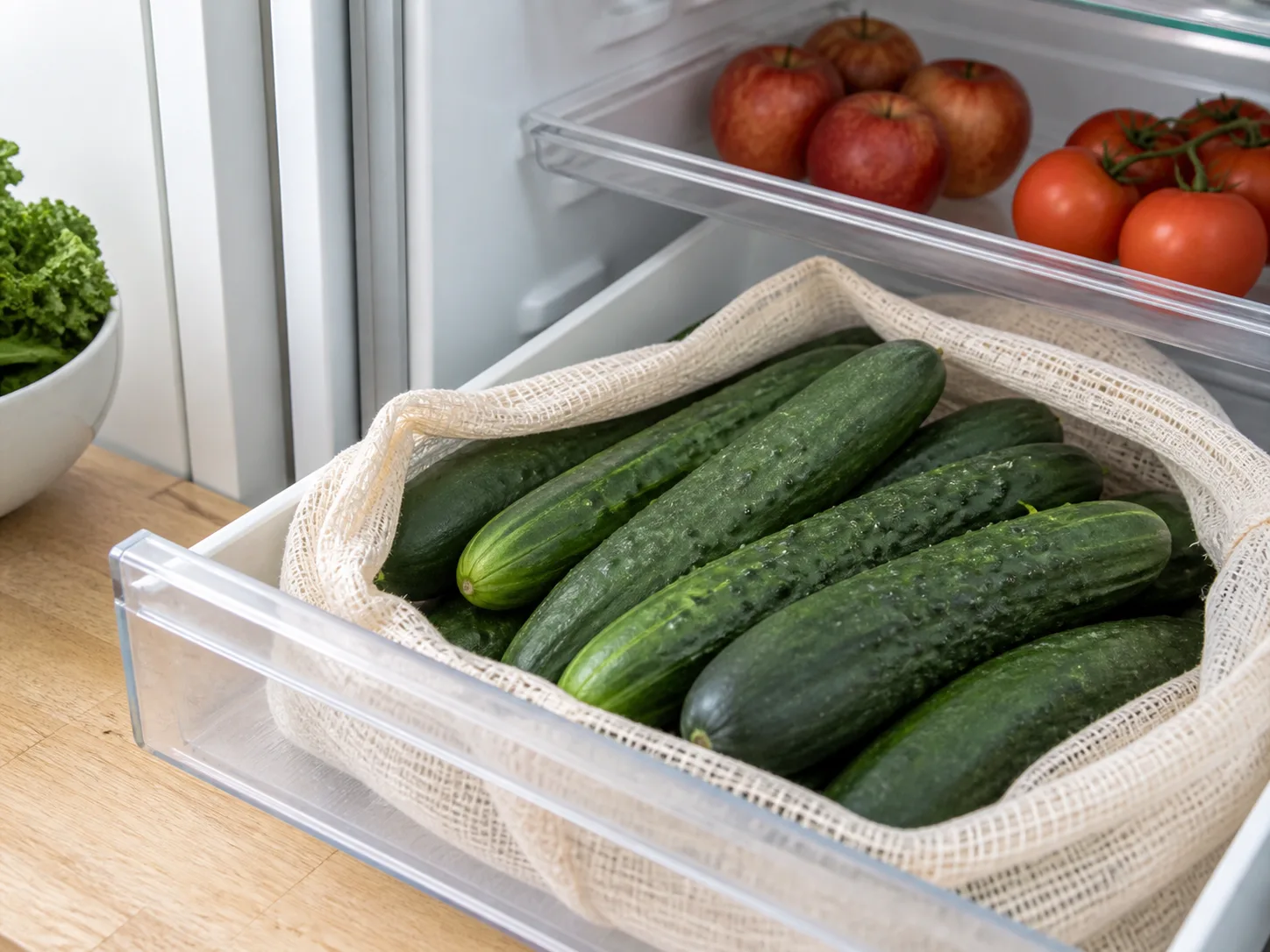
For a home refrigerator, place cucumbers in the humid crisper drawer in a breathable or loosely closed bag. Use the firmest fruit within about 5–7 days for the best texture, checking for soft ends as you go. Seed Savers Exchange gives a broader 10–14-day range at 45–55°F and high relative humidity, while Oklahoma State University Extension describes 10–14 days at about 50°F and 90–95% relative humidity under controlled storage.
Those numbers explain why home storage can be inconsistent. A refrigerator that runs below 50°F may cause chilling injury, leading to watery texture, pitting, or faster breakdown; a warm, dry shelf causes shriveling. Keep cucumbers away from ripe apples, tomatoes, and cantaloupes, which release ethylene and can speed yellowing. If you expect to eat the fruit within a day or two, a cool shaded spot may preserve flavor better than very cold storage, but do not leave cut cucumbers at room temperature.
Keep the plant producing through the season
Regular harvesting is part of crop care, not just a way to fill a basket. Removing mature fruit keeps the plant from investing heavily in seed development and makes it easier to see the new flowers and tiny cucumbers forming behind the leaves. GrowVeg recommends picking at least every other day, and Oklahoma State University notes that daily harvesting may be needed in ideal conditions.
Keep moisture steady while fruit is sizing. Utah State University Extension warns that water stress can make cucumbers bitter, pointed, and misshapen; the practical response is deep watering at the root zone and mulch that slows evaporation, not repeated shallow splashes on the leaves. Avoid keeping the soil saturated, because stressed roots cannot support a strong harvest either.
If fruit set is poor, inspect the flowers before blaming harvest timing. Outdoor cucumbers commonly need insect pollination, while some greenhouse and parthenocarpic varieties are selected to set fruit without it. Do not remove male flowers from outdoor types unless a reliable variety-specific instruction tells you to; the female flowers need pollen for normal fruit development.
As frost approaches, pick all usable fruit before freezing weather and remove badly damaged fruit from the vine. A row cover or protected structure may extend the season for a short time, but it cannot turn a frost-sensitive cucumber into a cold-season crop. If you want a more continuous supply next year, choose varieties with different days to maturity or make staggered plantings while your local warm season allows.
Conclusion
Harvest cucumbers by combining the variety’s expected size with firmness, normal color, and a sound shape. Start checking a few days after female flowers open, then inspect daily or every other day once fruit begins to swell. Pickling cucumbers are usually harvested much smaller than slicing types, and specialty colors must be judged by their own descriptions.
Support the vine, cut the short stem with clean pruners, and handle each cucumber gently. Store the fruit unwashed with enough humidity to prevent shriveling, but remember that very cold storage can cause chilling injury. Consistent watering, regular picking, and removing missed fruit will give you a better chance of crisp cucumbers today and new fruit later in the season.