How to Get Rid of Earwigs in the House
Learn how to get rid of earwigs in the house with a safe seven-day plan for traps, moisture control, entry-point repairs, and prevention.
One earwig in the bathroom is usually a stray, not proof that your home is full of them. The quickest response is to remove the insect, inspect the nearby damp or sheltered spots, and then work outward to find the opening or outdoor condition that made entry easy.
For repeated sightings, use this order: remove visible insects, reduce moisture, trap activity along the wall or threshold, seal entry points, and monitor for a week. That sequence solves more than a spray because it addresses both the earwig you can see and the reason another one may appear tomorrow.
Start With the Fastest Safe Response Tonight
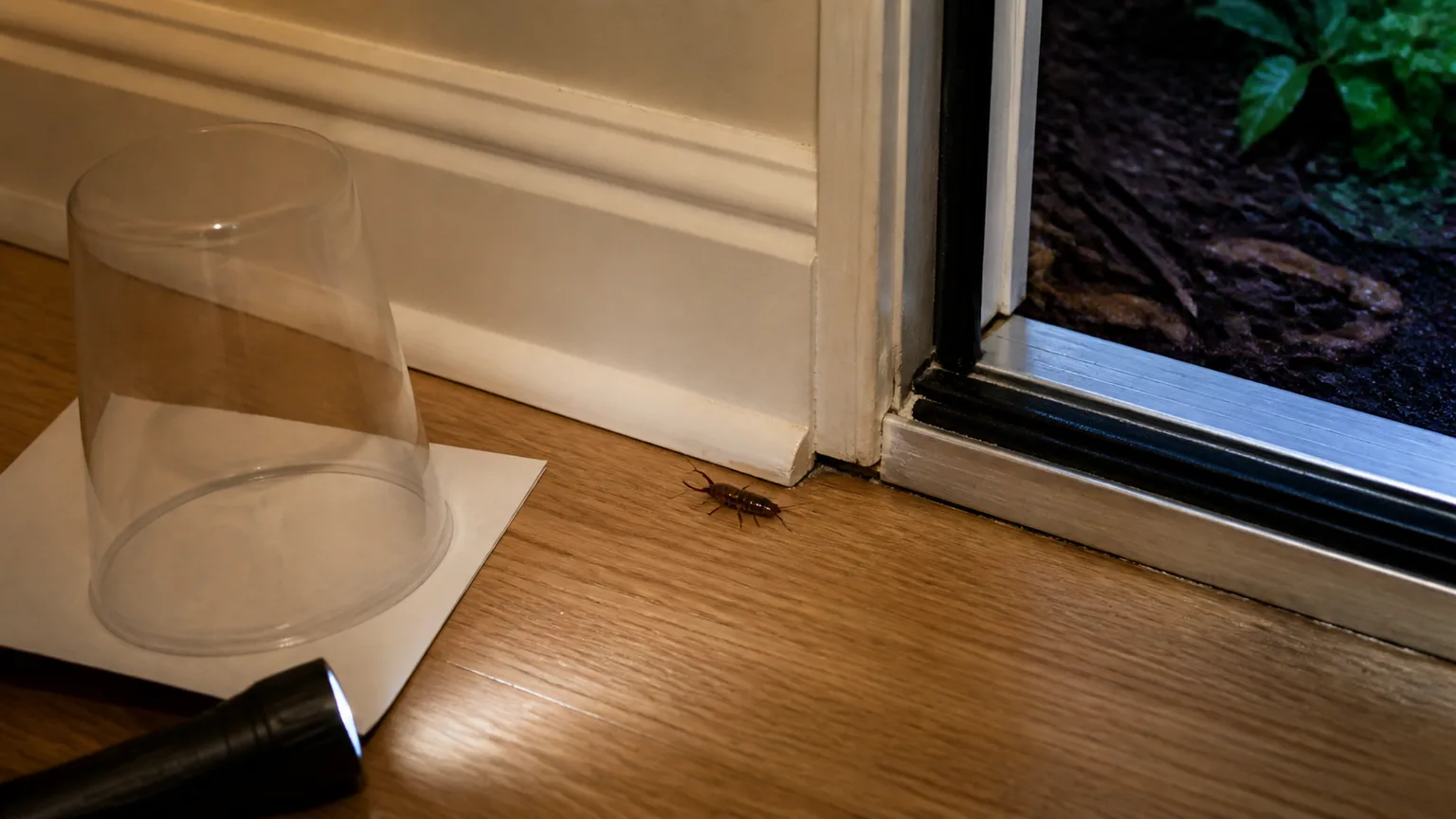
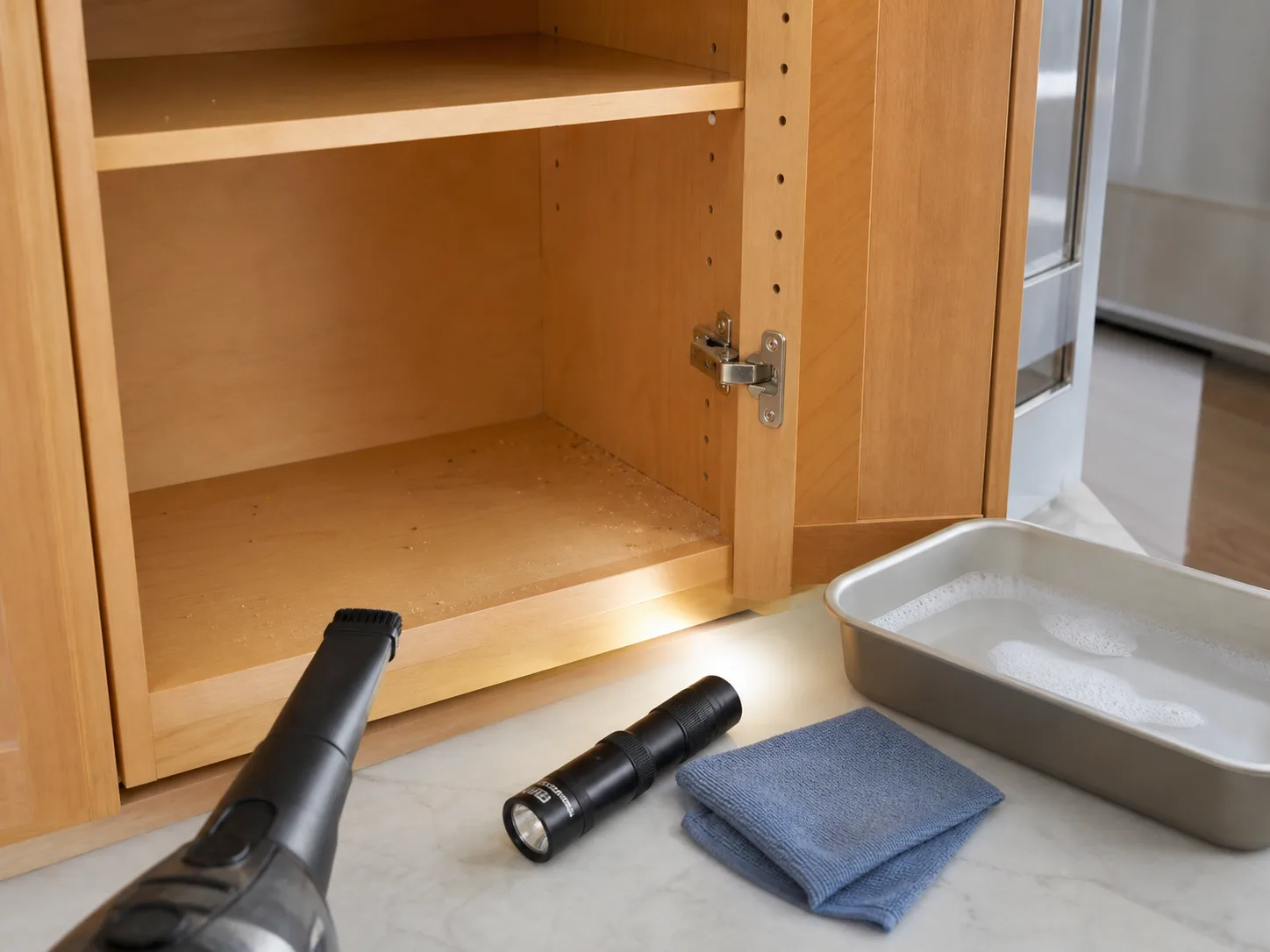
If you have found a single earwig, you do not need to fog a room or empty a cabinet. Keep children and pets away from the insect, then place a glass or container over it and slide stiff paper underneath. Carry it outside, or drop it into soapy water if you are disposing of it. If you prefer not to get close, use a vacuum with a hose attachment; empty a bagless canister outdoors into a sealed bag rather than leaving the insect in the vacuum.
After removal, wipe the exact spot and look one arm’s length in each direction. Check the baseboard, the underside of a nearby mat, the gap under a door, the window track, and any plant saucer or damp item. This small inspection is useful because an earwig found beside a shower calls for a different first check than one found in a dry upstairs bedroom.
If you see several, do not chase them randomly. Note the room, wall, time, weather, and whether they are near a light, plant, sink, door, or window. Earwigs are most active at night, so a flashlight inspection after dark can reveal the route that a daytime cleanup hides.
Confirm You’re Dealing With an Earwig
An earwig is a small, flattened insect with six legs, a long abdomen, antennae, and a pair of forceps-like appendages at the rear. Those appendages are called cerci. Color and size vary among species, but brown, reddish-brown, dark brown, and nearly black individuals are common. Some species have wings and some do not.
The cerci are the feature to trust. They are used for defense and other behaviors, but they are not a stinger, and earwigs are not venomous. A defensive pinch is possible if you trap one against skin, so use a cup, paper, or vacuum instead of picking it up. The University of Minnesota Extension and North Carolina State Extension’s earwig factsheet both treat earwigs as insects whose biology and residential management are best understood through behavior and habitat, not fear-based myths.
Earwig vs. Silverfish, Rove Beetle, and Cockroach Nymphs
Lookalikes matter because a wrong identification sends you toward the wrong remedy. Silverfish have a tapered, carrot-shaped body and three tail-like filaments rather than two forceps. Rove beetles often have very short wing covers and may raise or curl the end of the abdomen when disturbed. A cockroach nymph is generally oval and flattened, but it does not have a distinct pincer pair at the rear.
If the insect has no clear cerci, take a close photograph beside a ruler or place it in a clear container for your local cooperative extension office or a licensed pest professional to identify. Identification is especially important when insects are appearing in large numbers, because moisture-loving indoor pests can overlap in the same rooms while needing different control methods.
Why Earwigs Enter Homes
Earwigs generally live outdoors in protected places and move at night in search of food and shelter. The University of Minnesota Extension earwig resource and UC Integrated Pest Management’s earwig guidance are useful starting points because they frame earwig control around habitat and behavior rather than a single universal treatment.
Moisture, Shelter, and Outdoor Food Sources
Moisture is often the strongest clue. Earwigs dry out more quickly in exposed conditions, so they favor dark, tight, humid hiding places during the day. Inside, that can mean the cabinet beneath a leaking sink, a damp basement edge, a crawlspace vent, a wet bathroom mat, a condensation-prone window, or a utility opening where humid air is entering.
Outside the wall, inspect the foundation edge. Thick mulch, wet leaf litter, compost, rotting boards, firewood, stones, dense ground cover, and soggy soil around a downspout all provide the combination of shelter and organic food that earwigs use. Irrigation overspray and a leaky hose bib can create a narrow wet strip beside an otherwise dry house.
Food is part of the picture, but it does not mean an earwig is looking for pantry goods. Earwigs are scavengers and omnivores: they may feed on decaying plant material, fungi, small insects, and living plant tissue. Almanac’s garden ecology discussion is a helpful reminder that an earwig can be a nuisance indoors and still play a useful predatory or decomposer role outdoors. The goal is targeted exclusion, not automatically poisoning every earwig in the yard.
Find the Entry Route, Not Just the Insect
Begin indoors at the place where sightings cluster, then follow the nearest path toward the exterior. Use a flashlight at night and inspect low, protected edges first:
- Door sweeps, thresholds, garage seals, and the bottom corners of sliding doors.
- Window screens, sill corners, tracks, and gaps behind removable trim.
- Cracks around pipes, cables, vents, air-conditioning lines, and utility penetrations.
- Baseboards behind furniture, under appliances, and the wall shared with a bathroom or porch.
- Crawlspace and basement vents, floor drains, and damp storage areas.
- Plant saucers, the underside of pots, wet rugs, cardboard, and bags left on the floor.
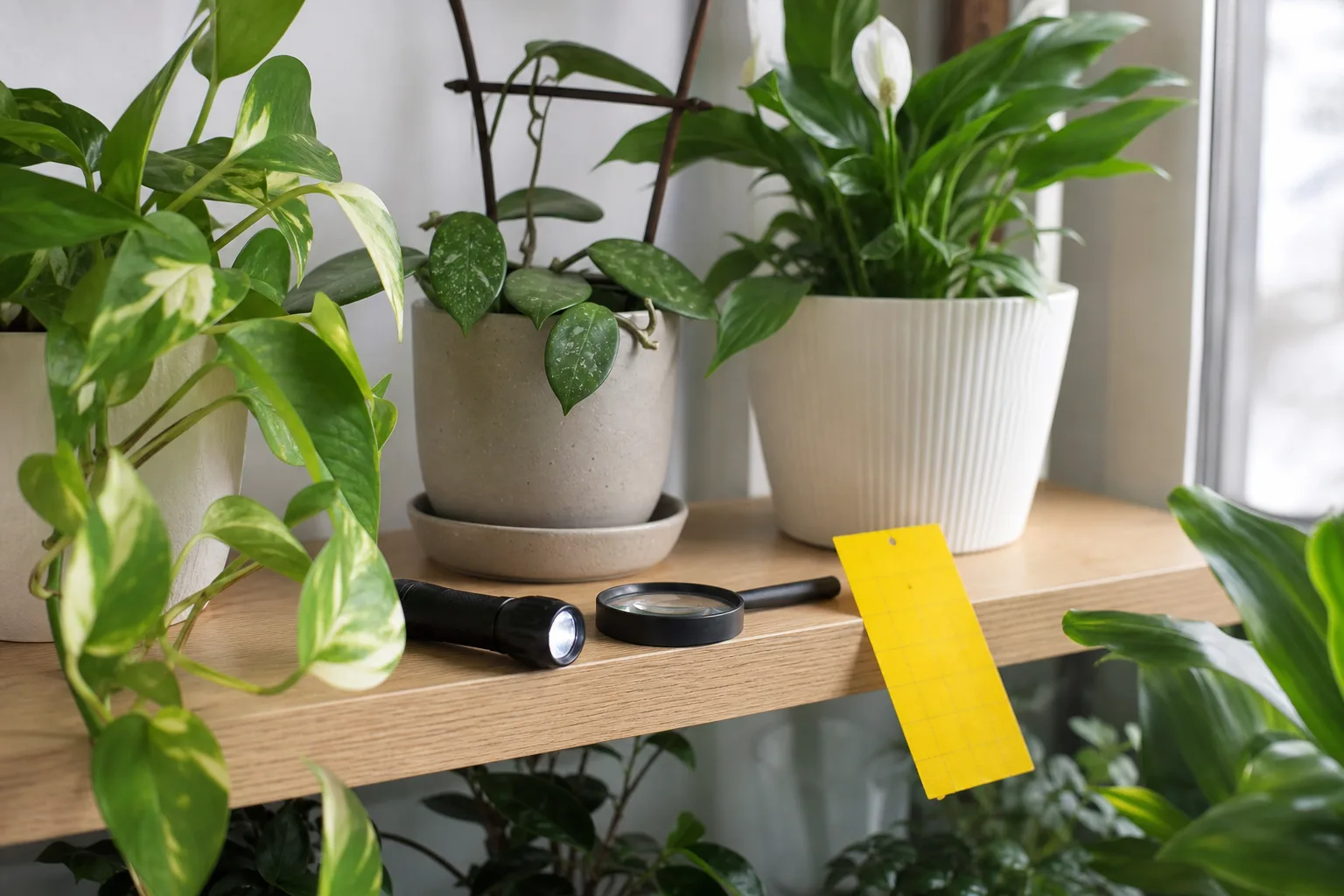
Do not assume the insect came up through a drain just because it appeared in a bathroom. A gap at the threshold, a window track, or a damp cabinet can be more plausible. Keep a small sticky monitor along the wall for a few nights if you need to learn the direction of travel, but place it where children and pets cannot reach it and treat it as a monitoring tool, not a complete control plan.
Outside, look for the first wet or cluttered zone that lines up with the indoor wall. Move firewood away from the foundation, thin leaf piles, clear dead plant material, and correct gutter or irrigation water that lands against the structure. If you seal the interior gap but leave a damp harborage directly outside it, you may simply redirect the insects to another opening.
The pattern of sightings can help you rank likely causes. A few earwigs after rain near a back door suggest an exterior harborage and an easy threshold gap. A steady trickle in a basement or bathroom suggests moisture deserves priority. One insect in a newly purchased bouquet or plant suggests a hitchhiker. These are working hypotheses, not diagnoses, but they keep you from treating a dry bedroom when the real problem is a wet foundation edge.
A 7-Day Earwig Removal Plan
A schedule prevents two common mistakes: stopping after the first insect disappears and escalating to a broad pesticide treatment before you know where the activity starts. Adjust the pace if you uncover a leak, standing water, or a different insect.
Night 1: Inspect and Remove
After dark, inspect the room where you saw activity and the closest exterior-facing wall. Remove visible earwigs with a vacuum or cup-and-paper method. Photograph one if identification is uncertain. Clean crumbs and dead plant material, dry wet surfaces, empty standing water from saucers, and move damp laundry or rugs out of the area.
Set one or two traps only where you saw movement: along a baseboard, behind a cabinet toe-kick, beside a threshold, or near a suspected gap. Do not scatter food bait throughout the house. The goal tonight is to learn where the traffic is, not to make every dark corner attractive.
Nights 2–4: Trap the Traffic
Check traps in the morning, remove any catch, and record whether the number is falling, holding steady, or increasing. Keep traps in the same locations long enough to show a pattern. If a trap catches nothing but you continue to see insects, move one trap closer to the edge where the insects appear rather than adding five more across the room.
At the same time, correct the easiest moisture source. Tighten or repair a leaking trap beneath a sink, dry a wet cabinet, clean a clogged condensate drain if it is safe to do so, or run a dehumidifier in a persistently damp basement. Do not stop watering a houseplant so aggressively that it wilts; instead, inspect the saucer, drainage, potting mix, and nearby floor for the actual wet spot.
Days 5–7: Seal and Correct Conditions
Once the activity point is clearer, install a properly fitting door sweep or weatherstripping and caulk small stationary gaps where the material is appropriate. Repair screens and cover or screen vents that open into crawlspaces. Outside, redirect downspouts, stop irrigation overspray, and move damp organic debris away from the wall.
On the seventh day, repeat the same night inspection. Success is not merely seeing no insect on one evening; it is a falling catch count plus no new sightings after the moisture and entry corrections. If the count is unchanged, the insects are appearing in multiple rooms, or the damp area is inaccessible, escalate to a professional inspection instead of adding stronger home remedies.
Traps That Work Indoors
Traps are useful when earwigs are present but the source is not yet fixed. They reduce the number you encounter and provide evidence about where the insects travel. They do not dry a basement, repair a threshold, or remove an exterior mulch bed.
Choose Cardboard or Oil Based on the Problem
| Trap | Best use | How to manage it | Main limitation |
|---|---|---|---|
| Rolled cardboard or paper | A few earwigs moving along a dry wall or threshold | Place it flat against the wall at night; check in the morning and seal or empty the catch outside | It can become a damp hiding place if left in place for days |
| Shallow oil trap | Repeated activity in a contained, inaccessible spot | Use a small amount of vegetable oil in a shallow lid; optional food scent should be tiny, and the lid must be checked daily | Food odor can attract other pests; oil is unsafe around pets and young children |
| Sticky monitor | Confirming a travel route | Put it behind an appliance or along a baseboard where people and pets cannot touch it | It monitors and catches; it does not solve the entry route |
For a cardboard trap, use a short roll or folded piece rather than a large pile of paper. Place it near, not on, a damp wall so it does not become a permanent harborage. In the morning, take it outdoors before shaking it out or seal it in a bag. If you use an oil lid, keep it level, label it mentally as a temporary trap, and remove it as soon as the pattern is clear.
What to Do About Houseplants, Bouquets, and Produce
Houseplants and cut flowers can carry an earwig indoors even when the building itself has no moisture problem. Before bringing a plant, bouquet, firewood bundle, or garden harvest inside, inspect the pot rim, saucer, lower stems, flower centers, and packaging. Tight flower heads, damp potting mix, and the dark space beneath a pot are easy places to miss a hitchhiker.
If you see an earwig on a houseplant, move the plant to a washable, well-lit area away from the rest of the collection while you inspect it. Empty the saucer, check the mix for excessive wetness, look beneath leaves and around the pot’s outer rim, and remove visible insects by hand with gloves, a cup, or a vacuum. Do not pour household insecticide into the soil unless the product label specifically permits that use on that plant and indoors; an earwig on one pot is not a reason to treat every plant.
Rinse garden produce and remove damaged leaves or fruit before storing it. Earwigs are not pantry moths, and finding one in a vegetable or bouquet does not mean your dry food cabinets need fumigation. If insects continue to emerge from incoming plants or flowers, quarantine new plants for inspection before placing them beside established plants.
Should You Use Sprays, Diatomaceous Earth, or Repellents?
For one or two earwigs, mechanical removal is usually the cleanest option. For repeat activity, product choice should come after identification and source reduction. A label that says a product is natural, botanical, or food-grade does not automatically make it appropriate for an occupied room, a particular plant, or a specific pest.
Direct Sprays and Household Remedies
A soap-and-water spray can kill a small insect when the liquid hits it directly, but it has little or no lasting effect after the surface dries. Household dish detergents vary in concentration and additives; overspray can damage painted finishes, flooring, fabrics, and plant foliage. Vacuuming or a cup-and-paper removal avoids those side effects.
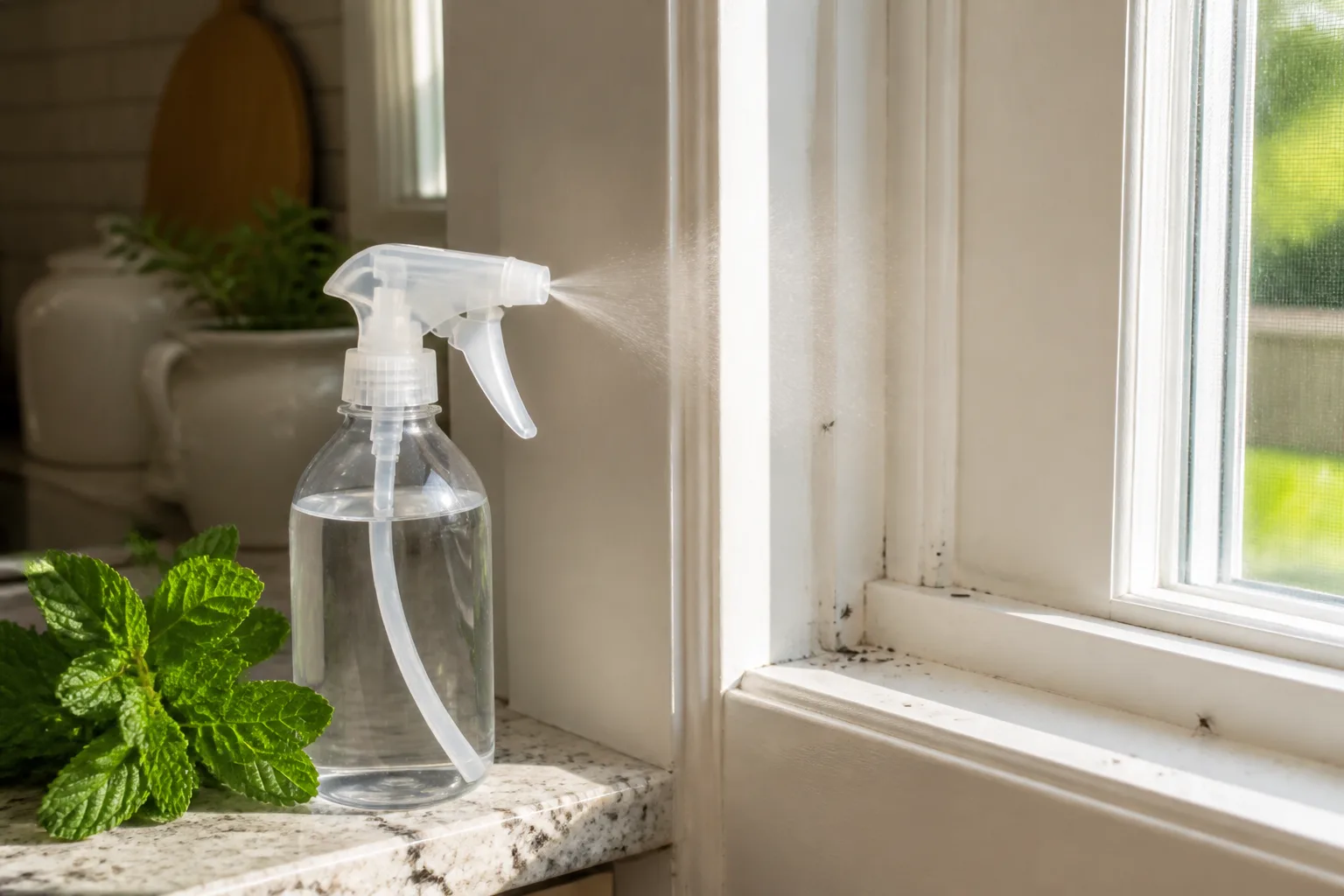
Do not use rubbing alcohol near flames, pilot lights, heaters, or electrical equipment, and do not spray it broadly into a room. Vinegar, peppermint, eucalyptus, cinnamon, garlic, and other strong scents may make an area smell different for a while, but scent is not a substitute for a sealed gap and dry habitat. Concentrated oils can irritate people and pets and may stain or damage surfaces. If you try any cleaner on a finished surface, test an inconspicuous spot and follow the surface manufacturer’s guidance.
Diatomaceous Earth and Pesticides
Diatomaceous earth works physically: dry particles abrade and absorb oils from an insect’s outer body. The National Pesticide Information Center’s diatomaceous earth fact sheet explains that it remains effective only while dry and undisturbed, and that dust can irritate the nose, lungs, skin, and eyes. Fine Gardening’s practical discussion also notes that the material is not selective; it can affect beneficial crawling insects as well as pests.
That makes broad indoor dusting a poor first move. If a registered product’s label permits indoor use against earwigs, use only the labeled placement and amount, keep people and pets away as directed, avoid breathing dust, and never use pool-grade or industrial material as a substitute. “Food-grade” describes a product category, not permission to scatter powder around a living area. Never put dust on food, into air vents, or across an open floor where it can be tracked or inhaled.
The same label rule applies to sprays, baits, concentrates, and perimeter treatments. Outdoor lawn or foundation products are not automatically legal or safe to use inside a home. The National Pesticide Information Center’s houseplant IPM guidance explains why indoor pesticide use has different exposure concerns: homes have less ventilation, treated surfaces are close to people, and pets may chew treated foliage. For persistent indoor activity, ask a licensed professional to identify the insect, locate the harborage, and explain the product and nonchemical steps being used.
Prevent Earwigs From Coming Back
Prevention works best as a short exterior audit rather than a list of scented plants. Start with water. Fix plumbing leaks, dry wet cabinets, keep gutters and downspouts moving water away from the foundation, and adjust sprinklers so they do not spray doors, siding, or window wells. Improve basement or crawlspace ventilation and humidity control when those spaces stay damp.
Next, make the foundation edge less inviting. Pull wet leaf litter and decaying plant material away from walls, keep firewood elevated and away from the structure, remove rotting boards and unused cardboard, and avoid allowing thick mulch to sit against siding or thresholds. You do not have to strip every garden bed bare; reduce the harborage closest to the house while preserving useful outdoor habitat farther away.
Then close the easy routes. Replace worn door sweeps, repair screens, seal stationary cracks, and check utility penetrations and crawlspace vents. Pay special attention after heavy rain, a long dry spell, a sudden change in temperature, or outdoor cleanup because those events can shift earwig movement. A small flashlight check at the same threshold once or twice a week is more useful than spraying the entire perimeter on a calendar.
Keep the prevention changes proportional to the problem. If the only evidence is one stray insect, a door sweep and a dry threshold may be all you need. If the same wall produces catches after every storm, combine the sweep with downspout correction, foundation-edge cleanup, and a check of the basement or crawlspace. Removing every bit of mulch from a healthy garden is unnecessary when the actual attraction is a leaking hose bib two feet from the door.
When a Professional Is the Right Next Step
Call a pest professional when you are still finding live earwigs daily after a week of source correction and trapping, when activity is occurring in several rooms, or when the insects are emerging from a crawlspace, wall void, or inaccessible foundation area. Also call when you cannot confidently identify the insect or when a leak, wet crawlspace, damaged foundation, or recurring drainage problem needs a trade professional.
Ask for an inspection that covers both sides of the structure. A useful service should identify likely entry points and moisture or harborage conditions, explain the least-disruptive control options, and tell you what you need to repair. If the proposed solution is only a routine indoor spray with no identification, exclusion, or moisture assessment, ask what problem that treatment is intended to solve and what will prevent repeat entry.
Conclusion
To get rid of earwigs in the house, remove the insects you can see, then follow the moisture and shelter trail back to the exterior. Use a temporary trap to reveal movement, inspect plants and flowers that came indoors, repair door and window gaps, and move wet organic debris away from the foundation. Reserve indoor pesticides and dusts for a clearly identified need and a product label that permits the exact use. A dry, sealed, monitored home is the long-term fix; a spray alone rarely is.