How to Get Rid of Silverfish and Keep Them Out
Silverfish in the bathroom or basement? Learn how to identify them, dry humid zones, seal entry points, use traps and baits, and keep them from coming back.
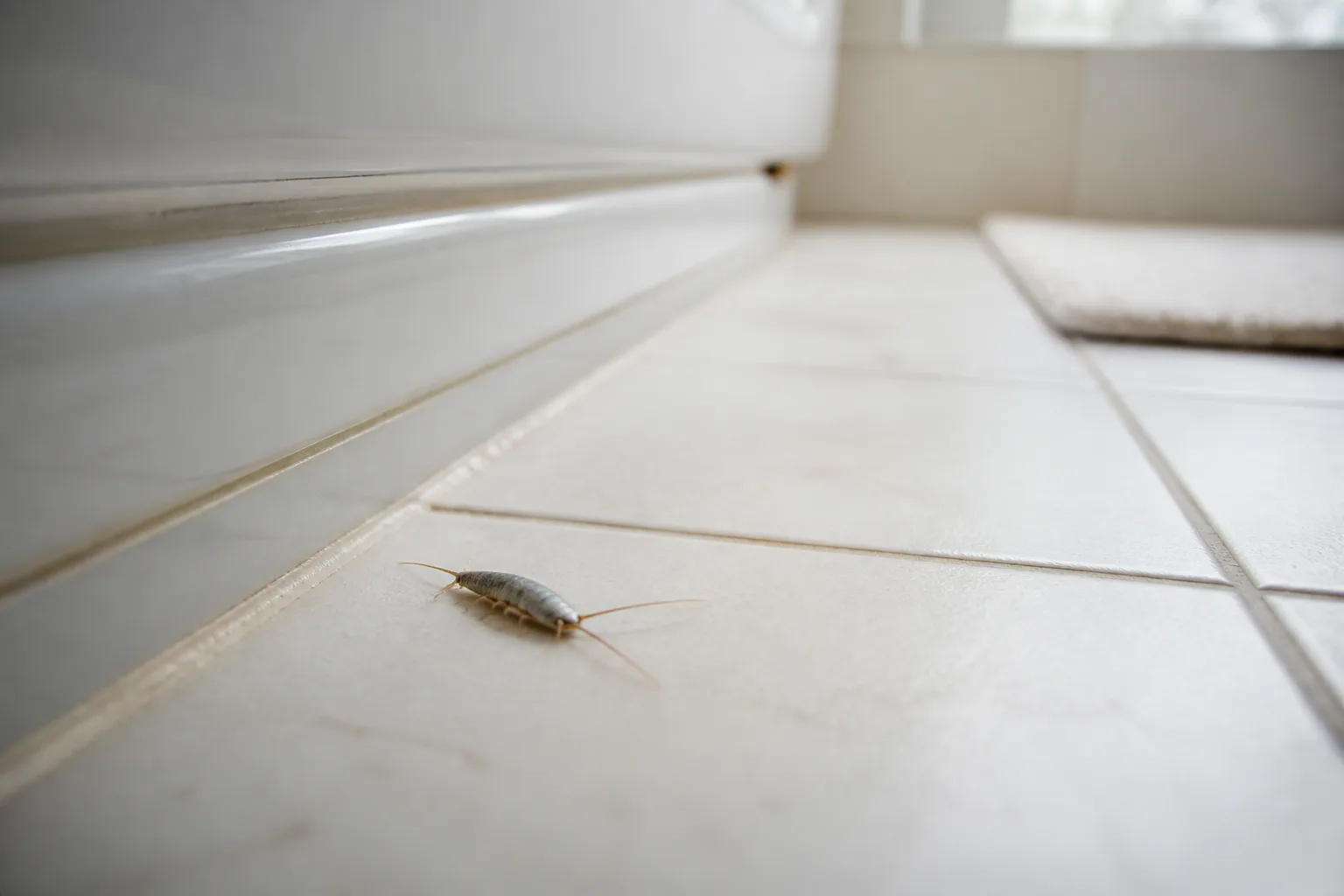
You flip on the bathroom light and a silvery streak darts behind the baseboard—fast, flat, and gone before you can grab a tissue. Silverfish (Lepisma saccharina) will not bite you, but they will chew through book bindings, wallpaper paste, stored photos, and starched fabric if humidity and hiding spots stay on their side. The durable fix is not a panic fogger. It is integrated pest management (IPM): dry the rooms they prefer, seal how they enter, monitor with traps, then use low-toxicity baits or dusts only where evidence points.
The Quick Answer: Dry the Room, Seal the Gaps, Trap the Hot Spots
Get rid of silverfish by lowering humidity in problem zones, sealing cracks and door gaps, and placing sticky traps where you see damage or droppings. Target 45–50% relative humidity (RH) in basements, bathrooms, and damp closets with exhaust fans and dehumidifiers. Caulk baseboards, utility penetrations, and torn screens. Store paper and fabric in airtight bins—not open cardboard on concrete. Sticky insect monitors confirm hot spots; boric acid baits or residual dusts in wall voids and undisturbed storage areas handle persistent populations. Expect two to six weeks of consistent drying and monitoring before activity drops sharply—not overnight magic from a surface spray.
What Silverfish Really Are (and How to Tell Them From Firebrats)
Silverfish are primitive, wingless insects with flattened, carrot-shaped bodies covered in silvery or gray scales, two long antennae, and three bristle-like tail appendages at the rear. Adults run about ½ to ¾ inch long and move in quick, fish-like bursts when exposed to light. They are nocturnal and spend daylight hours in cracks so thin you would never notice them without looking (NC State Extension).
Unlike many insects, silverfish keep molting throughout life and can live two to eight years. Females may lay more than 100 eggs over a lifetime, hatching in roughly three to six weeks under favorable moisture. That long lifespan is why a one-time spray often fails: you are fighting adults, nymphs, and fresh eggs in separate hiding zones at the same time.
Key Field Marks You Can See Without a Magnifier
On a white sheet of paper, a silverfish looks teardrop-flat, metallic gray, and legless at a glance (they have six small legs tucked tight against the body). You will not see wings. Nymphs are smaller and paler before scales darken. If the insect jumps, it is not a silverfish. If it has eight legs, you are looking at a mite or tick—not this article’s pest.
Silverfish do not bite or sting and do not spread disease, though their scales may trigger allergies in sensitive people (Maine DACF Got Pests). The real harm is material damage and the unsettling feeling of insects in stored keepsakes.
Silverfish vs. Firebrats: Different Pests, Different Rooms
Firebrats (Thermobia domestica) are close relatives with a mottled brown, tufted-scale look and the same three tail bristles. The habitat split matters for your fix:
| Feature | Silverfish | Firebrats |
|---|---|---|
| Preferred temperature | Cool, damp | Warm, humid (often 90°F+ microclimates) |
| Typical locations | Bathrooms, basements, bookshelves | Near furnaces, water heaters, fireplaces, hot attics |
| Appearance | Silvery-gray scales | Brown mottled scales |
| Control emphasis | Dehumidify cool zones | Fix heat/moisture at appliance walls |
Treating a firebrat zone with only a basement dehumidifier misses the point. Identify which bristletail you have—or assume both in older homes with mixed microclimates—and target the temperature and moisture profile of that room (NC State Extension).
Why Silverfish Keep Showing Up in Your Home
Silverfish are not a sanitation scorecard. They are moisture-and-starch opportunists that exploit gaps in building envelopes and clutter humans keep for non-food reasons.
Humidity, Leaks, and the Microclimates They Love
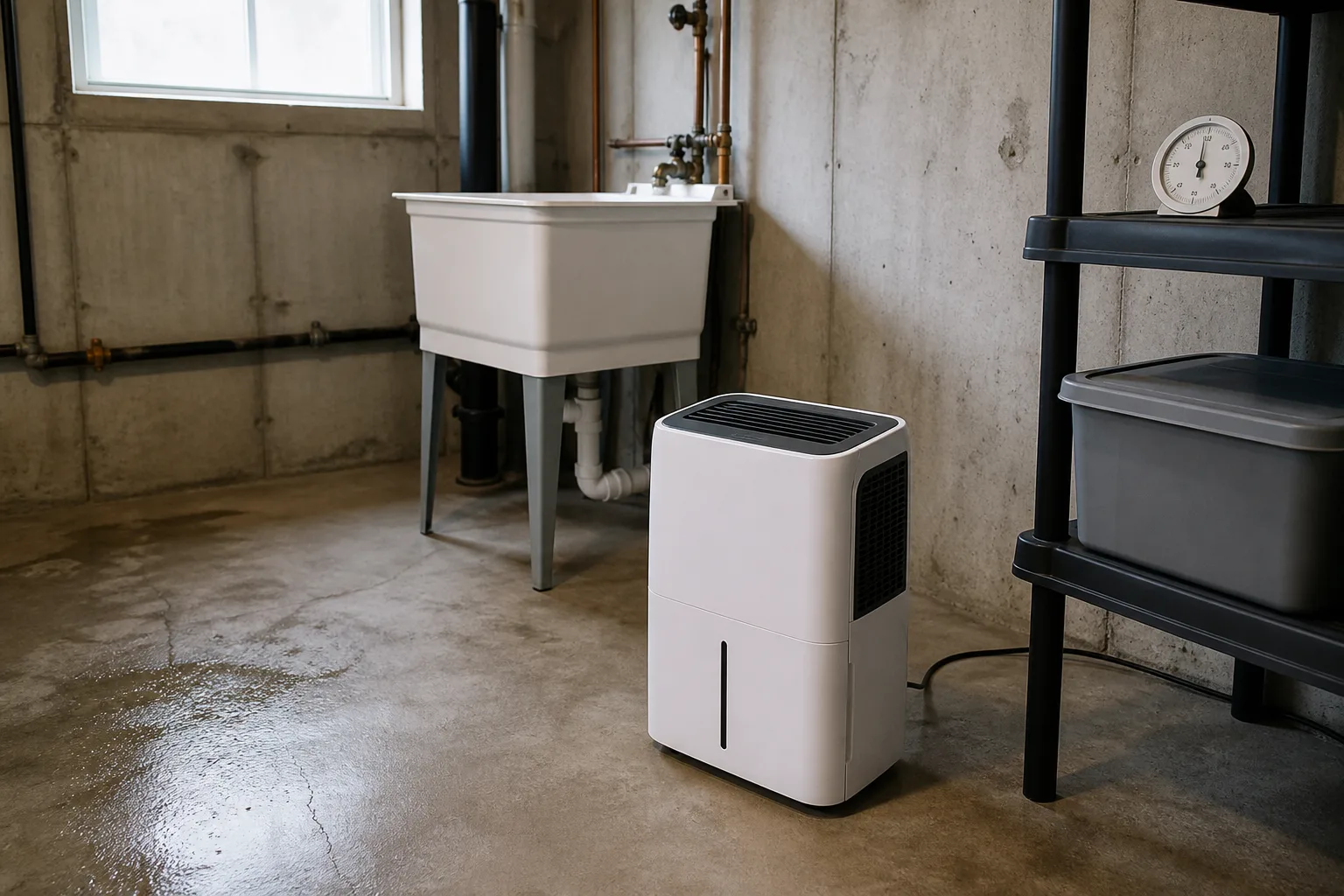
Silverfish lose water easily through their cuticle and pull moisture from humid air to survive. They thrive where RH stays elevated—behind toilets, under sinks with slow leaks, in unvented showers, on concrete basement slabs that wick ground moisture, and in poorly aired closets packed against exterior walls. When RH in a problem zone drops toward 50% or below, activity typically falls: nymph development slows, adults seek damper refuges, and eggs desiccate faster (NC State Extension).
That does not mean every room in the house must feel like a desert. It means the specific microhabitats where you see insects or damage need drying first—usually one bathroom, one basement corner, or one attic section—not a whole-home obsession unless you are in a persistently wet climate.
How They Sneak In—and What You Might Carry Inside
Silverfish slip through foundation cracks, torn screens, gaps under doors, and spaces around utility lines—their bodies are built to disappear into 1/16-inch cracks. In newer construction they sometimes get closed into wall voids during finishing and appear months later. You can also import them on infested cardboard, stored books, or fabric moved from a damp garage (NC State Extension).
Leaving damp cardboard on a basement floor is a double invitation: starch food plus humidity. Dirty dishes are less important than chronic moisture and paper clutter, though food crumbs in humid kitchens can supplement their diet.
Signs You Have a Silverfish Problem (Not Just One Nighttime Scare)
One silverfish on a bathtub rim after a steamy shower might be a lone wanderer. Treat it as a pattern when you see any combination of these:
- Repeat sightings in the same room over several weeks, especially in dark, humid zones (closets, basement corners, bathroom at night)
- Notched or holed paper—page edges chewed, irregular scraping on envelopes or wallpaper
- Ragged book bindings and glue damage on older volumes
- Yellowish stains on fabric or paper from shed scales
- Pepper-like black fecal specks in corners, inside drawers, or along baseboards
- Cast skins and fine scale dust in storage boxes
Damage often shows up before you ever catch the insect in the open, because silverfish feed at night and retreat to voids by morning (NC State Extension). Photograph damage and note the room; that becomes your monitoring map.
Step 1: Map the Infestation Before You Buy a Single Spray
Professional IPM starts with evidence, not product labels. Walk the home with a flashlight and sticky monitors:
- Place plain sticky insect traps (no pheromone required) flat against walls in bathrooms, basement perimeters, closet floors, and attic access points. Label each trap with date and location.
- Check traps weekly for two to three weeks. Counts tell you hot spots, not total population—silverfish are scattered by nature.
- Inspect damage zones: behind books, inside photo albums, under wallpaper seams, in boxes on concrete.
- Log moisture: note musty smells, condensation on windows, or damp drywall near plumbing.
This map decides whether you need one dehumidifier or void dusting, and prevents wasting money on whole-attic foggers that never reach insects under insulation or inside sealed boxes (NC State Extension). EPA IPM guidance applies the same principle indoors: identify the pest, monitor, then choose the least-toxic effective tool for that location (EPA).
Step 2: Cut Humidity Where Silverfish Actually Live
Moisture control is the highest-leverage silverfish fix because it hits adults, nymphs, and eggs simultaneously without spreading pesticide through living spaces.
Bathrooms, Basements, Attics, and Closets
Bathrooms: Run the exhaust fan during and 20–30 minutes after showers until mirror fog clears. Fix ** leaking tub surrounds, loose toilet wax rings, and dripping supply lines**—slow leaks maintain RH silverfish feel like home. Pull heavy linen stacks off floor contact if the tile stays damp.
Basements and crawl spaces: Move cardboard off the slab onto shelves or plastic pallets. Open or install crawl-space vents where appropriate for your climate, or encapsulate and dehumidify if ground moisture is chronic. A mid-size dehumidifier rated for the square footage—not a tiny bedroom unit—belongs here if RH readings stay above 60%.
Attics and upper closets: Check for roof leaks, blocked soffit vents, and uninsulated HVAC ducts that sweat. Firebrats especially favor hot attic pockets in summer; silverfish may share stored paper in the same space if RH is high.
Closets on exterior walls: Avoid packing boxes tight against cold walls where condensation forms. Leave an air gap or use desiccant tubs in sealed storage bins during humid seasons.
Fans, Dehumidifiers, and Leak Repairs That Stick
Use a hygrometer ($10–20) to track RH in one problem room. Aim to hold 45–50% RH there for several continuous weeks. A dehumidifier with a built-in humidistat and continuous drain hose beats emptying buckets daily—interrupted drying resets progress.
Repair grading, downspouts, and gutter overflow that dump water against foundations; indoor drying fights a losing battle if the slab perimeter stays wet. Vent clothes dryers fully to the exterior, not into crawl spaces.
Humidity work is slow but durable. Many households see sharp drops in trap counts within two to three weeks once RH stays low and leaks stop—but eggs already laid may hatch across a four-to-six-week window, so keep traps in place through at least one full cycle.
Step 3: Seal Cracks, Gaps, and Entry Routes
Exclusion stops new immigration while you dry and trap residents:
- Silicone or latex caulk along baseboards, tub edges, cabinet toe kicks, and window casings in infested rooms
- Door sweeps and weatherstripping on basement and garage doors
- Repair or replace torn window screens and damaged vent mesh
- Seal utility penetrations (pipe, cable, HVAC lines) with caulk or copper mesh where codes allow
- Store firewood and mulch away from foundation walls—outdoor populations sit against the structure
Silverfish cannot chew through intact sealant; they exploit existing gaps. Focus sealing on rooms where traps and damage concentrate, not every inch of the house in week one. Pair exclusion with drying—sealed damp voids can still harbor insects.
Step 4: Remove or Protect Their Food Sources
Silverfish feed on starches, cellulose, glues, and proteins—book bindings, wallpaper paste, cardboard, dried pet food, flour, and even dead insects (NC State Extension). You do not need to trash sentimental journals to win, but you do need to deny easy meals.
Books, Paper, Wallpaper, and Stored Fabrics

- Move rare books and photo albums off basement floors into ** airtight plastic bins** with desiccant if the room is still damp
- Replace ** damp cardboard moving boxes** with sealed totes; discard outer infested boxes outdoors
- Rotate displayed books on shelves and dust behind them—static rows against exterior walls become feeding stations
- Vacuum baseboards and closet floors to remove scale dust and egg sites in carpet edges
- For long-term storage, mothballs or similar products may protect sealed boxes if label directions allow and you open containers only in well-ventilated areas—never mix with plastics that labels warn against (NC State Extension)
Important nuance: silverfish survive weeks without food and can live a long time on minimal starch. Disposing of beloved paper alone will not clear an infestation if humidity and harborages remain. Protection plus drying beats guilt-driven purges.
Step 5: Traps, Baits, and Dusts That Work on Silverfish
After cultural fixes, physical and chemical tools target survivors in voids traps cannot reach.
Sticky Monitors and Placement Rules
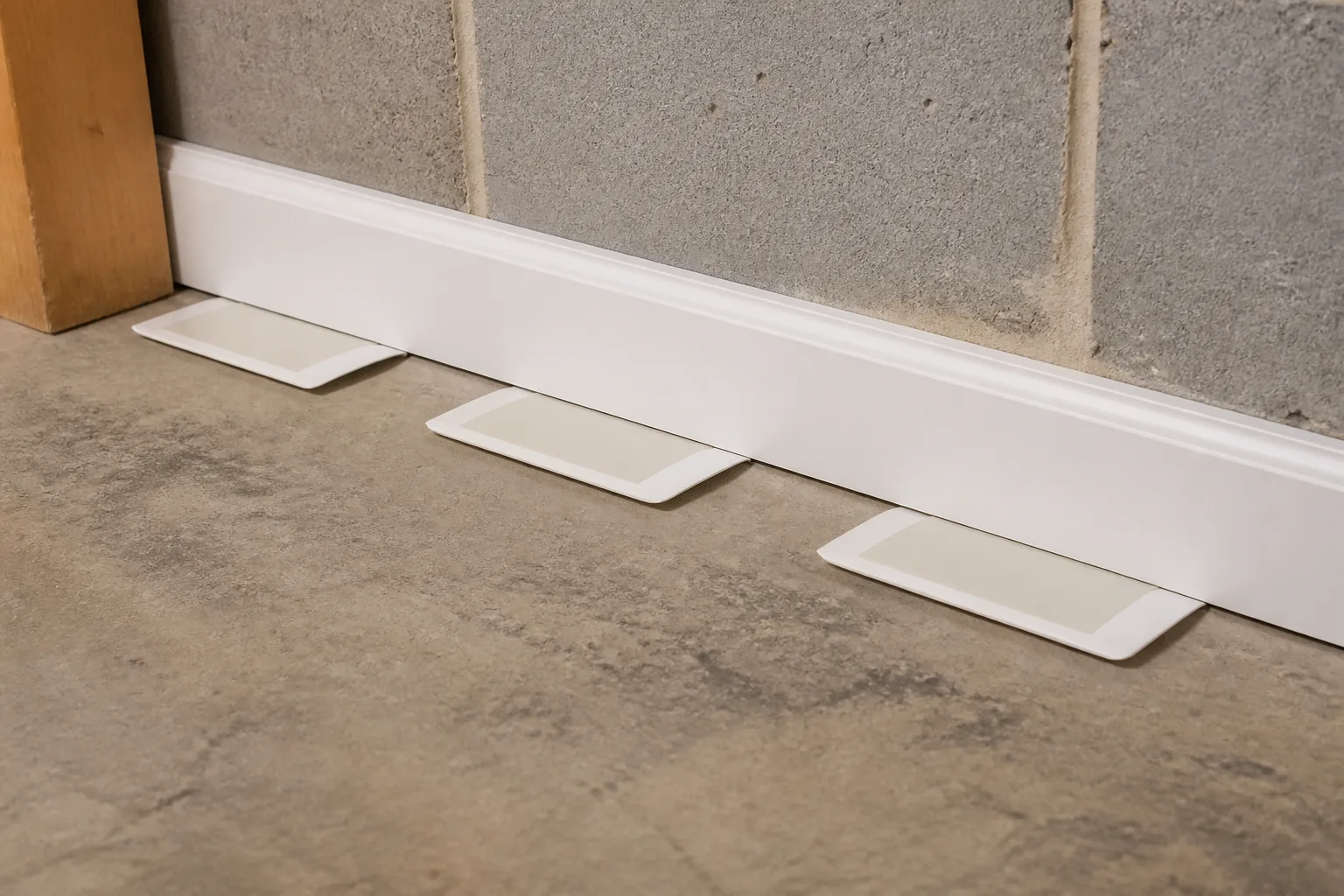
Plain sticky traps along walls in infested rooms serve two jobs: they catch some insects in small populations and reveal traffic lanes in larger ones. Lay traps flat where walls meet floors in bathrooms, basements, and closet corners— not in the center of the room. Check weekly, replace when dusty, and move traps toward catch-heavy zones.
Store-bought cinnamon sachets may repel silverfish from a drawer temporarily; they do not kill eggs or clear voids. Treat cinnamon as a short-term drawer liner, not a plan.
Boric Acid Baits, Residual Dusts, and What to Skip
For persistent hotspots after three to four weeks of drying and trapping:
- Boric acid baits labeled for silverfish, placed in ** inaccessible cracks** and under low furniture in infested rooms, work well when kept dry—similar to museum preservation practice noted by extension specialists (NC State Extension)
- Residual dust insecticides (including boric acid or silica gel dusts) excel in undisturbed voids: wall gaps, outlet boxes (power off, follow label), attic edges not trafficked by people or pets, and behind built-in shelving
- Liquid spot treatments into cracks and crevices where silverfish hide beat broad carpet sprays that contact family feet
- Attic fogging rarely works because chemical does not penetrate under insulation and stored goods where silverfish live (NC State Extension)
Food-grade diatomaceous earth can desiccate silverfish in dry voids if applied as a thin film in travel lanes—not fluffy piles that insects walk around (see UC IPM guidance on desiccant dust placement for indoor pests). Reapply if washed away by moisture.
Always read and follow pesticide labels. Never broadcast dust on countertops, pet beds, or children’s play areas.
Step 6: When to Call a Pest Professional
DIY IPM clears most scattered silverfish when humidity drops and traps trend down for four consecutive weeks. Call a licensed pro when:
- Damage accelerates on books, wallpaper, or clothing despite sustained drying and trapping
- Trap counts stay high in multiple rooms after six to eight weeks of documented RH control
- You suspect firebrats near heat sources and cannot safely access voids around furnaces or chimneys
- Wall void dusting or drill-and-dust is needed but you are not comfortable treating electrical zones
- Renters need landlord-level moisture repairs (roof, slab, plumbing) you cannot authorize
A good technician will inspect first, recommend moisture repairs, place monitors, and use targeted baits or dusts—not a blanket “spray the whole house” quote without evidence.
Long-Term Prevention: Keep Silverfish From Coming Back
Think in seasons, not one heroic weekend:
- Monthly: quick trap check in former hot spots during humid months; hygrometer glance in basement
- Quarterly: vacuum closet floors and behind stored books; inspect shower caulk and downspouts
- Annually: refresh door seals; audit cardboard creep back onto basement slabs; service dehumidifier filters and drain lines
- When buying used books or furniture: inspect seams and quarantine in dry garage or sealed bin before merging with collections
- After plumbing leaks or roof repairs: re-run traps for three weeks—silverfish rebound fastest when moisture returns
Prevention is maintaining RH and exclusion, not keeping poison on standby. If you control moisture and starch access, silverfish remain occasional outdoor insects—not housemates.
Conclusion
Silverfish are long-lived, moisture-loving paper pests that punish humid, cluttered homes with slow, scattered damage. You beat them the way extension IPM describes for bristletails: map where they live, dry those rooms to roughly 45–50% RH, seal entry gaps, protect stored paper, and use sticky traps plus targeted baits or dusts only where evidence persists. One bathroom sighting is not a crisis; repeat damage, fecal specks, and rising trap counts are your call to action. Stay consistent for four to six weeks, fix leaks before sprays, and save heavy chemical void work for when monitoring proves you need it—then keep the dehumidifier drain hose connected so they do not move back in next rainy season.