How to Keep Wasps Away From Your Home
Wasps at every barbecue? Learn 11 habitat fixes—seal entry points, rinse recyclables, manage leaf litter, and block nest sites before colonies peak in late summer.
A wasp circling your soda can is annoying. A colony under the deck rail or inside a soffit gap is a season-long problem that can send someone to the ER. Keeping wasps away works best when you treat it like home maintenance—not a single peppermint spritz in July. Remove what draws them, block where they nest, inspect before colonies explode, and know when a licensed pro should take over.
These eleven methods mirror what extension services recommend for prevention, not emergency knockdown. If you already have workers streaming in and out of a ground hole, jump to how to kill wasps instantly and wasp spray safety rules first—then use this page so the same spot does not host a queen next May.
Why Wasps Keep Showing Up (and What Actually Works)
Social wasps—yellowjackets, paper wasps, hornets, and a few close relatives—start each year with a single overwintered queen. She scouts sheltered ledges, rodent burrows, wall voids, and hollow fence posts in late winter through spring. Once workers hatch, colonies grow through summer. By August and September, yellowjackets in particular turn into aggressive scavengers around garbage, grill drippings, soda cans, and ripe fruit (UC IPM Pest Notes).
That seasonal shift explains why your patio felt fine in June and unbearable by Labor Day. Early-season wasps hunt protein (other insects) to feed larvae. Late-season workers hunt sugar wherever they can find it. Prevention that works year-round combines sanitation (remove food cues), exclusion (seal cavities), habitat management (yard debris, ground holes), and scent barriers (peppermint and related oils) as a supporting layer—not a replacement for sealed trash.
Yellowjackets, Paper Wasps, and Mud Daubers—Quick ID
Matching the method to the wasp saves wasted effort. Yellowjackets are compact, bright yellow-and-black, with a barely visible “waist.” They nest in ground holes, wall voids, and enclosed gray paper nests with one entrance—and they scavenge human food aggressively (UC IPM Pest Notes). Paper wasps have obvious slender waists, build open umbrella combs under eaves, and rarely sting unless you disturb the nest. Mud daubers are thread-waisted, build small mud tubes, hunt spiders, and seldom sting people.
If the insect at your picnic has jagged stripes and dives into your burger, assume yellowjacket and prioritize food cleanup and trash sealing. If you see an open comb under the porch, paper wasp protocols apply. Mud dauber control means spider reduction near doors, not sugar-bait traps.
Method 1 — Remove Food and Drinks the Moment the Meal Ends
Wasps need high-energy food to fuel fast flight. Open soda, fruit juice, watermelon rinds, ice cream bowls, and meat scraps on a patio table are billboards for foragers. UC IPM’s first prevention line is blunt: keep food, including pet food, covered or indoors (UC IPM Pest Notes).
Build a five-minute cleanup habit at the end of every outdoor meal. Clear plates, cap bottles, wipe sticky tables, and move garbage to a sealed can before guests linger with dessert. Bring outdoor pet bowls inside after feeding—protein and kibble aromas draw scouts even when the bowl looks empty. For hummingbird feeders competing with wasps, see our bees in hummingbird feeder guide for placement fixes that keep sugar sources away from seating areas.
Method 2 — Rinse Recyclables and Move Bins Away From Doors
Recycling bins are wasp buffets. A single unrinsed soda can or beer bottle holds enough fermenting sugar to pull foragers from yards away. Rinse bottles, cans, and food containers before they go in the bin, and keep lids closed tight (UMaine Extension).
Placement matters as much as rinsing. Store recycling and garbage at least 20–30 feet from doors, patios, and pet feeding stations when your lot allows it—not tucked against the kitchen wall because that is convenient on trash day. Empty bins on schedule so residue does not accumulate. If wasps still cluster on the bin, wash the interior with soapy water monthly during peak season.
Method 3 — Fill and Cover Ground Holes Before Queens Scout in Spring
Western and German yellowjackets frequently nest in abandoned rodent burrows, expanding the opening with moist soil if space is tight (UC IPM Pest Notes). A gopher hole you ignored all winter becomes a colony of thousands by August.
Walk the yard in late winter or very early spring—before queens emerge—and fill inactive burrows with soil, gravel, or sand packed firm. Level low spots that collect moisture. Repair skunk or mole damage promptly; those excavations are pre-built nest sites. Keep ground cover trimmed so you can spot new digging early.
When You Must Not Fill a Hole
If you see wasps flying in and out of a hole consistently, do not fill it. Sealing an active nest traps defenders, pushes them toward house exits, or causes them to chew a new opening somewhere worse (UNH Extension). Mark the spot, keep people and pets away, and treat the colony at dusk or call a professional. Fill the hole after the colony is dead and traffic stops for 48 hours.
Method 4 — Inspect Eaves, Decks, and Wall Voids Every Two Weeks
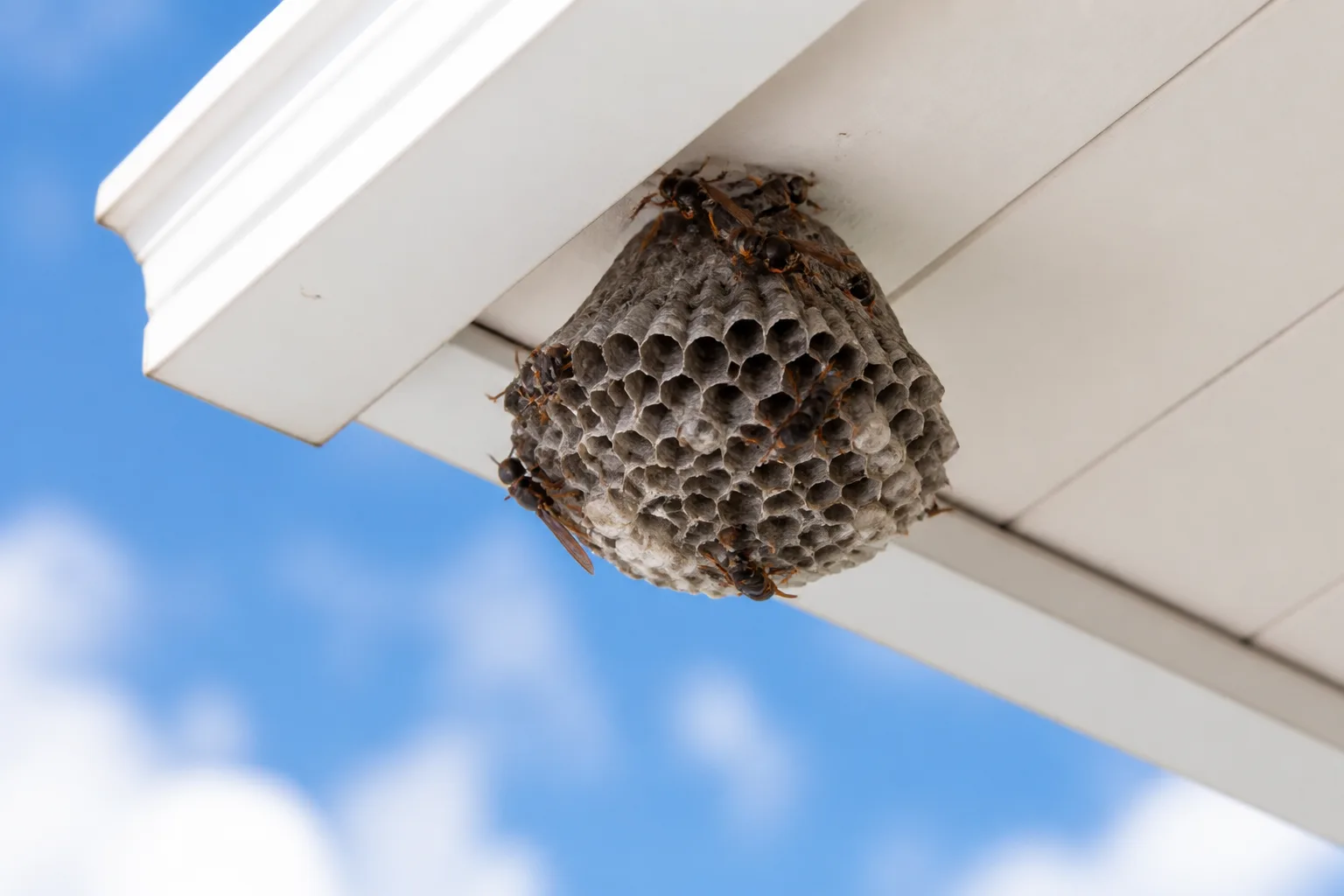
Small nests are easy to miss and cheap to address; football-sized colonies are neither. From April through September, walk your home’s exterior every two weeks looking for:
- Open paper combs under eaves, porch ceilings, and deck joists
- Enclosed gray paper nests on tree branches or under roof overhangs
- Steady wasp traffic at a soffit gap, vent, or foundation crack
- Faint buzzing inside a wall or ceiling (possible void nest)
- Mud tubes on brick, stucco, or siding (mud daubers)
Paper wasp nests near high-traffic doors deserve treatment or removal; distant eave nests that nobody brushes against can often stay until winter (UC IPM Pest Notes). Never knock down a large enclosed nest or ground colony yourself—defensive stinging escalates fast. Photograph what you find, note the location, and compare photos week to week so growth is obvious.
Method 5 — Manage Leaf Litter and Overgrown Shelter Spots
Wasps nest where wind and rain cannot reach them. Deep leaf piles, unmowed edges, stacked firewood against the house, and dense shrubs touching siding all create sheltered microsites where small nests go unnoticed until they are shoulder height (UNH Extension).
Rake or mulch leaves away from foundations and patio edges. Stack firewood 20 feet from the house if possible, on a rack that lifts it off soil. Trim branches back from rooflines and gutters so you can see eaves clearly. You do not need a bare yard—just clear sight lines around structures where a queen can start a comb in peace.
Method 6 — Deploy Peppermint Oil Where Wasps Congregate

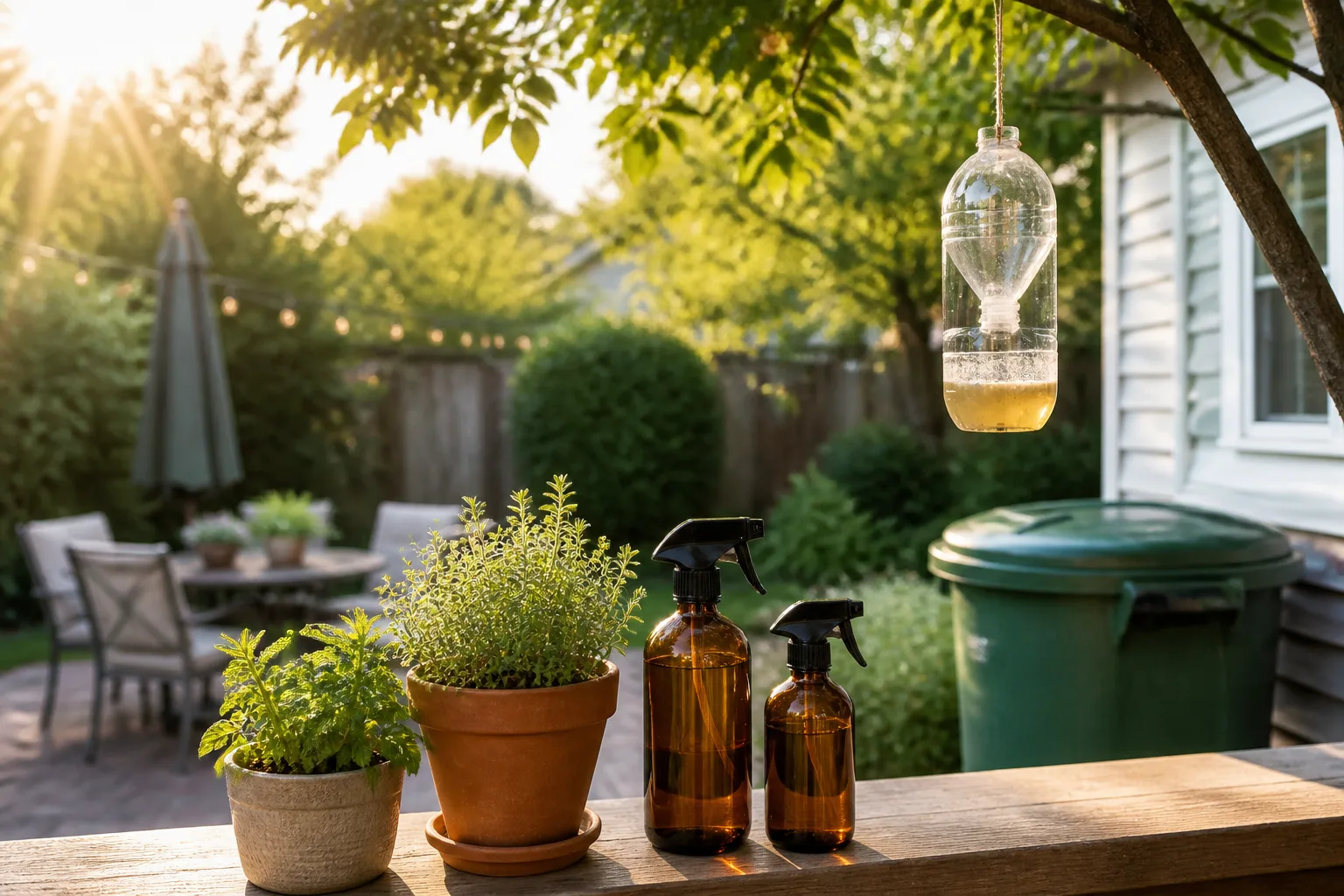
Wasps navigate heavily by smell. Peppermint oil—high in menthol—overloads their olfactory receptors and makes an area feel “wrong” for scouting and loitering. Soak a cotton ball and tuck it near a problem corner (out of reach of pets and children), or spray a water mix on surfaces where wasps gather:
- 10–15 drops peppermint oil per cup of water
- Add a few drops of dish soap so the spray adheres to wood and siding
- Reapply every 3–5 days and after rain
Planting mint, basil, or marigolds in pots near seating adds a low-level scent layer, but roots in garden beds can spread aggressively—containers are safer. Peppermint is a temporary barrier, not structural prevention. Pair it with Methods 1, 7, and 8 for real relief. For research-backed essential-oil blends, decoy nests, and trap placement, see our full wasp repellent guide.
Method 7 — Seal Trash, Compost, and Pet Food Stations
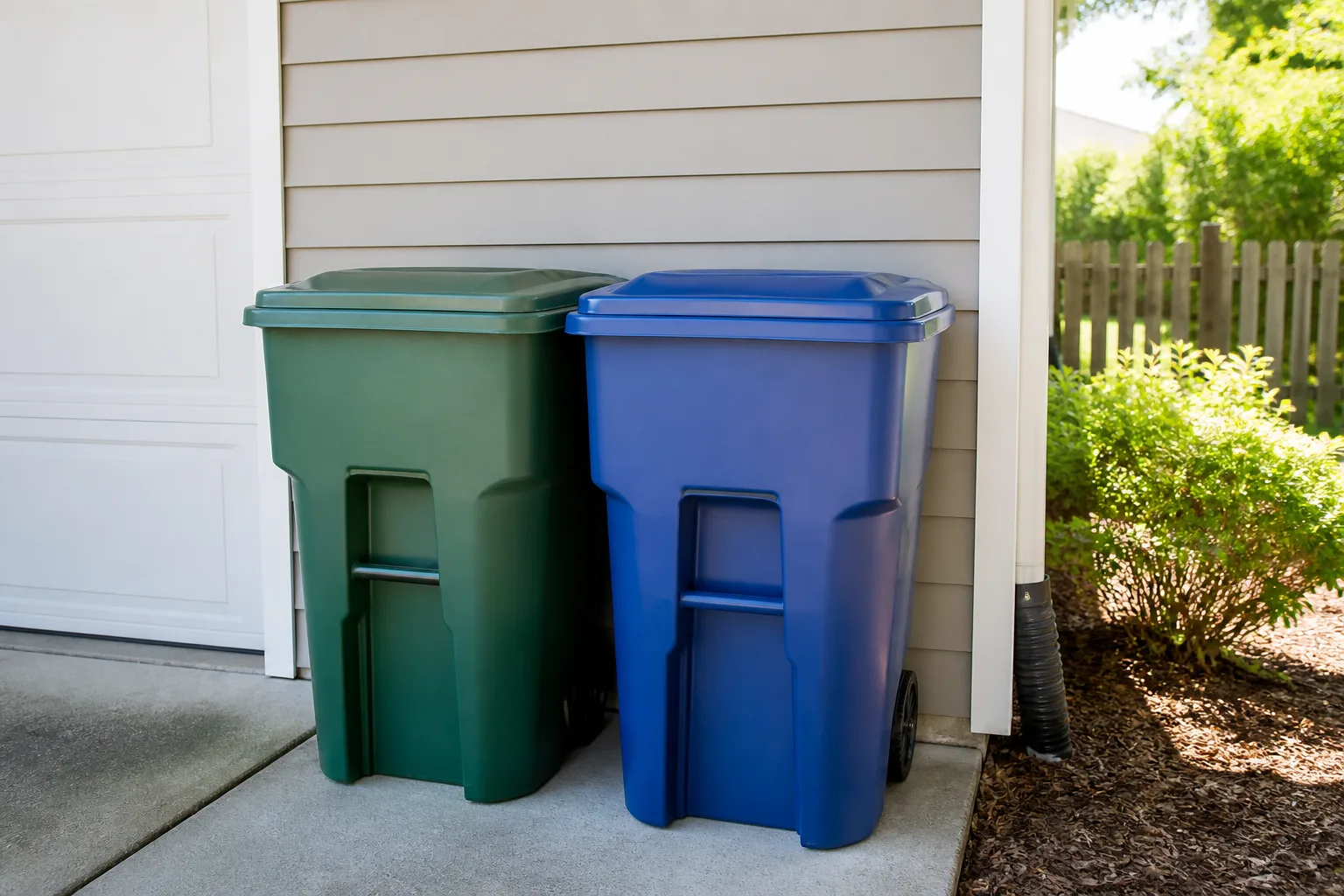
Sanitation is the backbone of wasp prevention. Extension services rank sealed garbage among the highest-impact steps because late-season yellowjackets are primarily scavengers (UC IPM Pest Notes). Use cans with tight-fitting lids, latch clips if raccoons lift them, and replace cracked bins that leave gaps.
Compost needs the same discipline. Bury fresh kitchen scraps in the center of the pile, avoid open top heaps near the patio, and keep fallen fruit picked up daily under apple and fig trees—overripe fruit is wasp candy. Store dry pet food in sealed bins indoors; if you must keep kibble in a garage, use a gasket-sealed container and sweep the floor weekly.
Method 8 — Close Every Exterior Gap Wasps Can Slip Through
Yellowjackets and some hornets exploit wall voids, soffit gaps, torn screens, and openings around utility penetrations (UC IPM Pest Notes). A queen that enters in May can build a nest you will not see until workers emerge through a ceiling stain in August.
Walk the perimeter once in late winter with caulk, steel wool, and mesh screen patches. Repair torn window screens, seal gaps around outdoor faucets and AC lines, and close weep holes only where code allows—some masonry weeps must stay open for moisture; consult local building guidance before filling them.
Screens, Vents, and Soffits to Check First
Priority zones: attic vents (install fine mesh behind louvers), dryer and bathroom exhaust outlets, gaps where siding meets foundation, and fascia boards softened by rot. Wasps can enlarge soft wood with chewed fiber—replace rotted trim instead of caulking over sponge-like material. If you hear buzzing inside a wall but see no exterior nest, do not seal the opening until the colony is treated.
Method 9 — Cut Spider Prey Near Entryways (For Mud Daubers)
Mud dauber wasps provision nests with paralyzed spiders. Porch lights that attract moths also support spider populations on railings, corners, and ceiling beams. You do not need a spider-free home—most indoor species are harmless—but reduce dense webs on porch ceilings and door frames where mud daubers hunt (UMaine Extension).
Brush webs weekly from entry areas, swap white bulbs for yellow “bug lights” near doors if flying insects pile up, and fix door sweeps so porch spiders do not migrate indoors. Avoid broad pesticide sprays that kill beneficial predators; targeted web removal is enough for most mud dauber pressure.
Method 10 — Add Physical Barriers With Screens or a Lanai
When you want to sit outside without winged visitors, physical exclusion beats scent every time. A screened porch, lanai, or mesh gazebo creates a fly-free dining zone if screens are 16-mesh or finer and doors close automatically (UNH Extension).
Lower-cost options work too: magnetic screen doors on patio sliders, mesh food domes over serving trays during parties, and table umbrellas with hanging mesh panels for short events. Inspect screens each spring for tears a wasp can squeeze through— their bodies are slender and persistent.
Method 11 — Caulk Cracks in Siding, Fascia, and Outbuildings
Ground nests get the attention, but void nests inside walls cause the scariest emergencies. German yellowjackets especially nest in house cavities in urban areas (UC IPM Pest Notes). Seal cracks in stucco, siding laps, window trim, and shed walls with exterior-grade caulk or expandable foam labeled for pest exclusion (use foam carefully—overfilling can warp trim).
Include detached garages, playhouses, and garden sheds in the same pass. A nest in an unused shed becomes a source of foragers at your back door. After sealing, paint or stain exposed wood so new queens cannot scrape fibers easily for nest paper.
Your Season-by-Season Wasp Prevention Calendar
Prevention fails when every task lands on the same weekend in July. Spread the work:
| Season | Priority tasks |
|---|---|
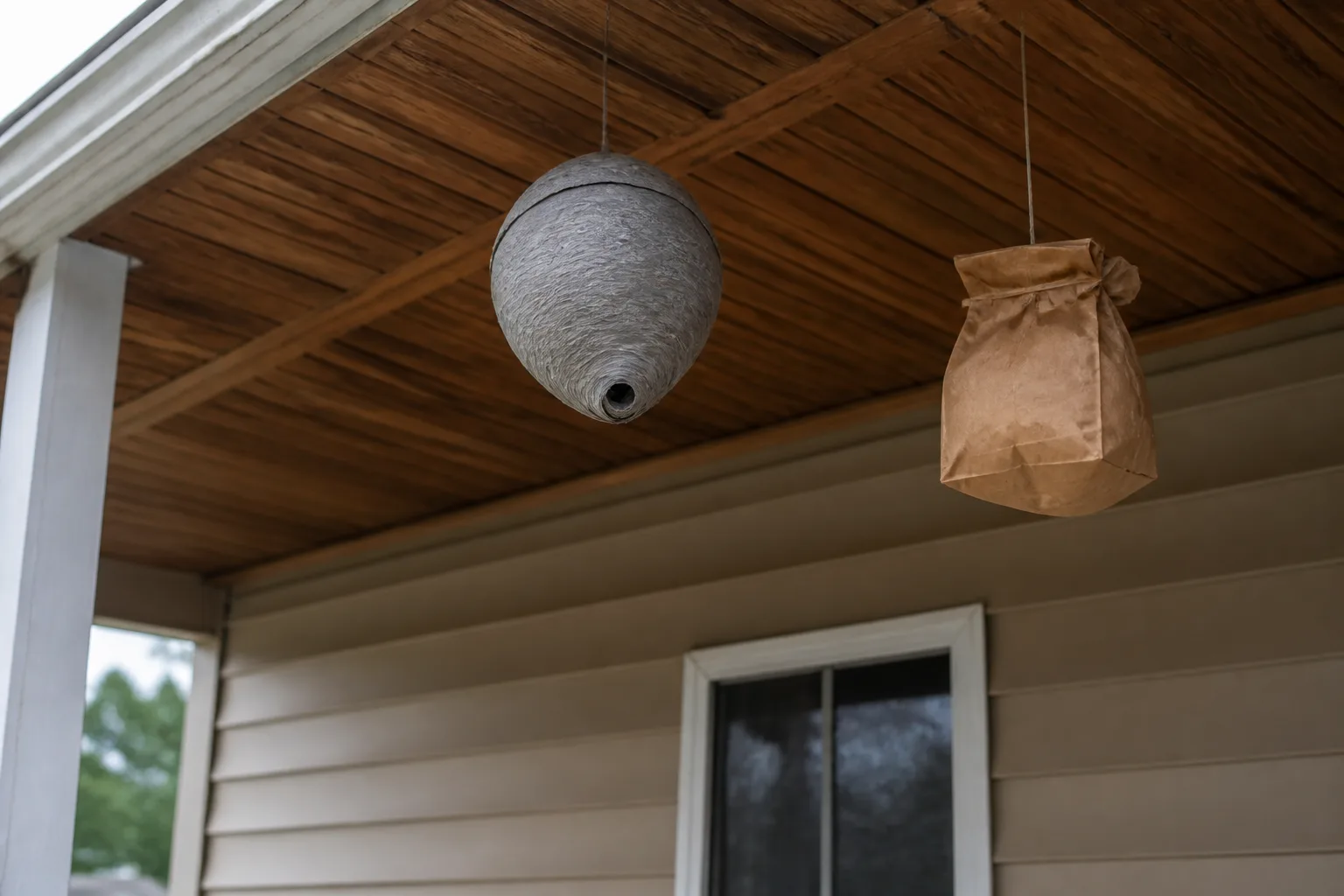
| Late winter–early spring | Fill inactive burrows; patch screens and soffits; hang decoy nests under eaves; first exterior walk |
| Spring–early summer | Biweekly nest checks; keep protein foods covered during grilling season; rinse recyclables |
| Mid–late summer | Intensify trash sealing and fallen-fruit pickup; peppermint barriers on old nest sites; traps at property edge per wasp repellent guide |
| Fall | Remove dead nests after frost; scrub pheromone traces with soapy water; store patio gear so gaps stay visible |
Queens overwinter in sheltered spots—not in the old nest—so removing last year’s comb does not guarantee an empty eave next year. Scent masking and sealing matter more than comb removal alone.
When Prevention Is Not Enough—and What to Do Next
Eleven prevention habits shrink the problem dramatically, but they do not reliably eliminate an established colony defending a nest. Call a licensed pest control operator when:
- Wasps enter and exit a wall, ceiling, or soffit repeatedly
- A ground nest sits where children, pets, or mail carriers walk
- Anyone on the property has a history of severe sting allergy
- DIY treatment failed and traffic continues after 48 hours
If you choose to treat a small exposed nest yourself, treat at dusk, wear full coverage, and follow our wasp spray safety checklist. Never seal an active entry point. Never flood a ground nest with water—it provokes defenders without killing the colony.
For next-year prevention after a successful knockdown, scrub the old site, apply peppermint weekly through fall, and run this eleven-point checklist starting in February—not the week the first burger hits the grill.
Conclusion
Keeping wasps away from your home is mostly habitat management: starve them of food cues, dry up nesting opportunities in yard holes and wall voids, inspect before colonies peak, and add scent or screens where people actually sit. Peppermint helps, but sealed trash and filled burrows do the heavy lifting. Match your effort to the wasp type, follow the seasonal calendar, and treat active nests as a separate job with the right tools or a professional. Do that consistently and your patio stops feeling like shared territory with a colony that stings twice.