How to Kill a Tree: 7 Safe, Practical Methods
How to kill a tree safely depends on its size, location, and roots. Compare seven methods, from digging and grinding to girdling and label-directed treatment.
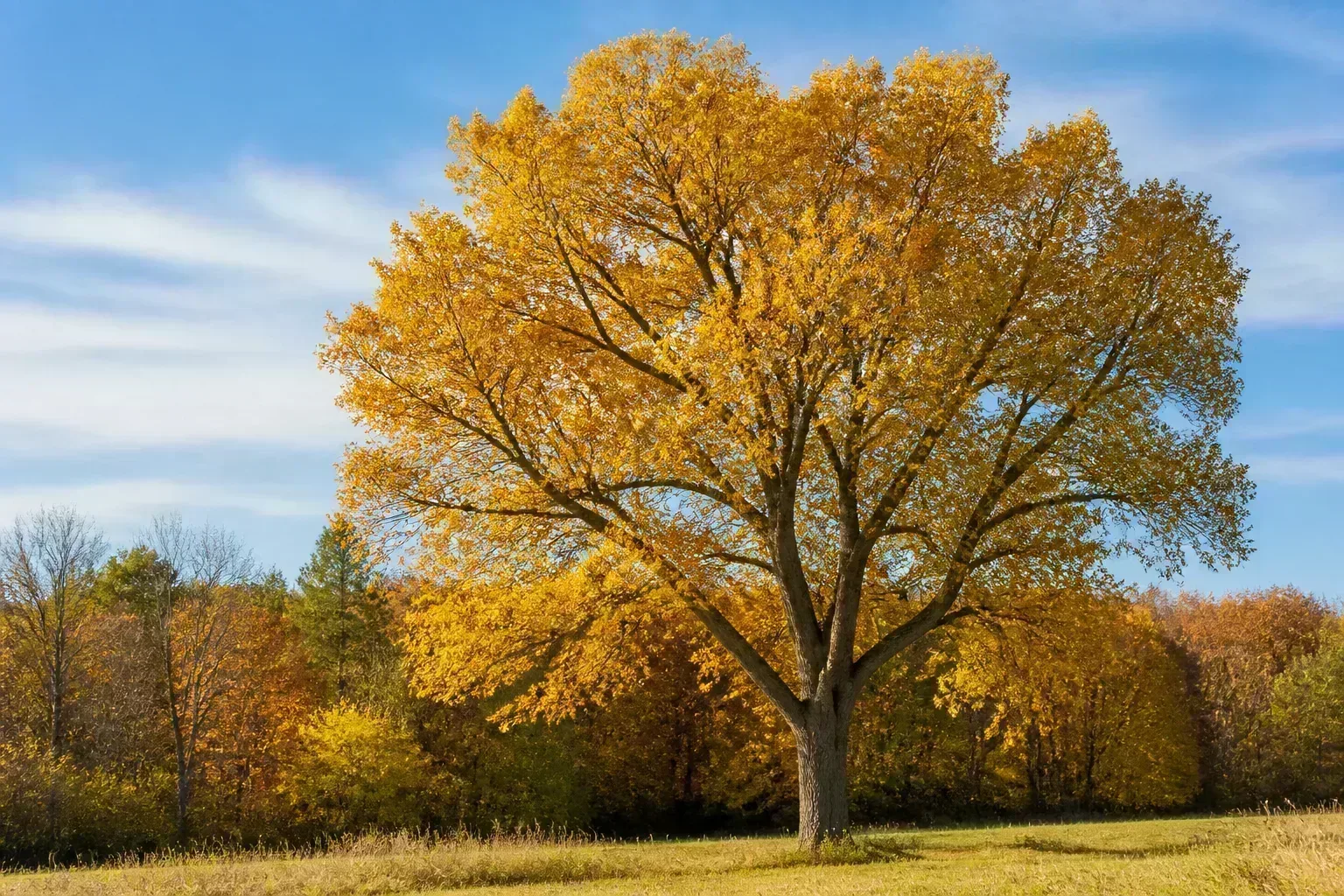
The right way to kill an unwanted tree depends on what you actually need: a seedling gone today, a stump that keeps sending up shoots, an invasive tree controlled without spreading it, or a mature tree removed without putting people and property in the fall zone. Those are different jobs, and the safest method for one can be a poor choice for another.
Only work on a tree you own or have clear permission to manage. If the tree is mature, leaning, diseased, close to a building, over a road, beside a property boundary, or anywhere near utility lines, treat it as a tree-removal job—not a do-it-yourself experiment in making it die slowly. A dead tree left standing can become more dangerous than the living tree you started with.
Start by deciding whether to kill, remove, or leave the tree
“Kill” and “remove” are not interchangeable. Killing a standing tree may leave a brittle trunk and branches in place for months or years, while removal takes the hazard away but may leave a stump and roots that resprout. Before choosing a method, decide which of these four situations matches yours:
- Small seedling or sapling: Digging out the root crown is usually the cleanest answer, especially when the soil is moist and nearby plants need protection.
- Small unwanted tree in an open area: Physical removal followed by root-crown or stump removal avoids putting herbicide into soil.
- Mature or hazardous tree: Arrange an assessment and removal by a qualified arborist. Girdling or spraying a large tree can create a dangerous standing dead tree, not a finished project.
- Stump or root suckers after cutting: Focus on stopping regrowth and deciding whether to dig, grind, cover, or use a label-approved targeted treatment.
Some dead trees can safely remain as standing deadwood when they are away from people, buildings, paths, and utility lines. The Royal Horticultural Society’s guidance on tree and stump removal notes that dead wood supports fungi, invertebrates, birds, and other wildlife, but it should be assessed for stability first. If the tree is unstable or carries a disease that can spread, the balance changes and removal becomes more important.
Make the safety and legal check before touching it
Start by looking up your local rules. Some places protect trees by size, species, location, permit system, conservation designation, or a preservation order; rules can also differ between a private garden and a street verge. The BBC Gardeners’ World guide to managing garden trees is a useful reminder that permission, ownership, boundary access, and wildlife considerations are part of tree work, not paperwork to handle afterward.
Then look up. If any part of the tree could fall into a power line, stop. The ISA TreesAreGood tree-risk checklist warns that trees contacting utility lines can injure people, start fires, and cause outages; it specifically says not to attempt removal of branches or tree parts near power lines. Call the utility provider and a qualified tree professional instead.
Do the same if you see a split trunk, a large dead limb, hanging branches, cavities, mushrooms at the base, fresh soil cracks near the root plate, a strong lean, or bark sloughing from a damaged trunk. These signs do not tell you exactly how likely a failure is, but they are enough to make a casual chainsaw job unreasonable. Oregon State University’s chain-saw safety guidance treats felling as a skill that requires planning, protective equipment, escape paths, and experience with problem trees.
For any method involving a saw, grinder, winch, excavator, or herbicide, keep children, pets, and bystanders out of the work zone. Do not burn a stump unless local fire rules, weather, clearance, and supervision make it legal and genuinely safe. Fire can travel through roots, mulch, dry grass, or buried debris, and it is a poor substitute for stump grinding in a built-up yard.
Match the method to the tree’s size, roots, and location
The table below is a practical starting point, not a guarantee. Tree species, soil, season, vigor, and the presence of underground root connections can change the result.
| Target and goal | Best-fit method | Typical trade-off | DIY boundary |
|---|---|---|---|
| Tiny seedling before roots spread | Pull or dig it out | Low disturbance, but the root crown must come out | Reasonable when you can work without damaging nearby roots |
| Small tree in an open, low-risk spot | Cut and remove the root crown | Fast, physical work, with a hole to repair | Stop if the trunk cannot be safely controlled |
| Young resprouting stems in a low-risk area | Repeated cutting or light exclusion | Can take a season or longer and fails on some suckering species | Monitor closely and do not spread seed or invasive fragments |
| Unwanted standing tree far from targets | Girdling or frilling | Slow and leaves dead wood standing | Best limited to appropriate land-management situations |
| Fresh stump that must disappear | Digging or stump grinding | Digging disturbs more soil; grinding leaves roots | Use professionals for large stumps or heavy equipment |
| Stump or woody plant that will not stop resprouting | Label-directed cut-stump treatment | Non-target and soil risks if misapplied | Use only a product labeled for the site and method |
| Thin-barked or invasive standing woody plant | Specialist basal bark or hack-and-squirt treatment | Species-specific, chemical, and easy to misapply | Ask an extension professional or qualified applicator |
Method 1: Pull or dig out a seedling
For a young tree that is still small enough to move by hand, complete removal is usually better than trying to poison or slowly starve it. Water the area the day before if the soil is dry, then loosen a circle around the stem with a hand trowel, digging down and inward until you can follow the main root or root crown. Pull from low on the stem so you do not snap the top away from the roots.
The University of Minnesota Extension guide to controlling unwanted trees and shrubs explains that pulling works when the root crown is removed, but success depends on the species. That distinction matters: a seedling with one accessible root is a simple job, while a plant connected to lateral roots can leave behind pieces that send up new shoots.
If the root breaks, do not assume the tree is finished. Feel through the loosened soil for the remaining crown, remove what you can, and check the spot for new leaves during the next growing season. Backfill the hole, settle the soil, and replace mulch without piling it against a desirable tree’s trunk. This method is best for seedlings and small saplings, not a mature tree with a thick trunk or a root plate that could shift as you dig.
Method 2: Cut a small tree and remove the root crown
When a small tree is in an open area with no fall targets, cutting the stem and removing the root crown can solve both the above-ground and below-ground parts of the problem. The key is to treat cutting and root removal as one project: a low cut by itself may leave a living stump that resprouts.
For very small stems, hand tools may be enough. Once the trunk requires a chainsaw, controlled felling is no longer a casual garden task. Do not improvise a rope system, stand under a limb, cut a tree that is hung up, or attempt a tree leaning toward a house, road, fence, or line. A professional can lower the tree in sections and then decide whether the stump should be dug, ground, or treated.
If a small stump is safe to dig, leave enough trunk to act as leverage rather than cutting it flush before you start. The RHS stump-removal guide describes digging around the stump, exposing main roots, cutting those roots with suitable tools, and rocking the remaining trunk to loosen the root plate. The Iowa State University Extension stump guide gives the same practical boundary: digging is realistic for smaller stumps, while larger stumps are better candidates for grinding or professional removal.
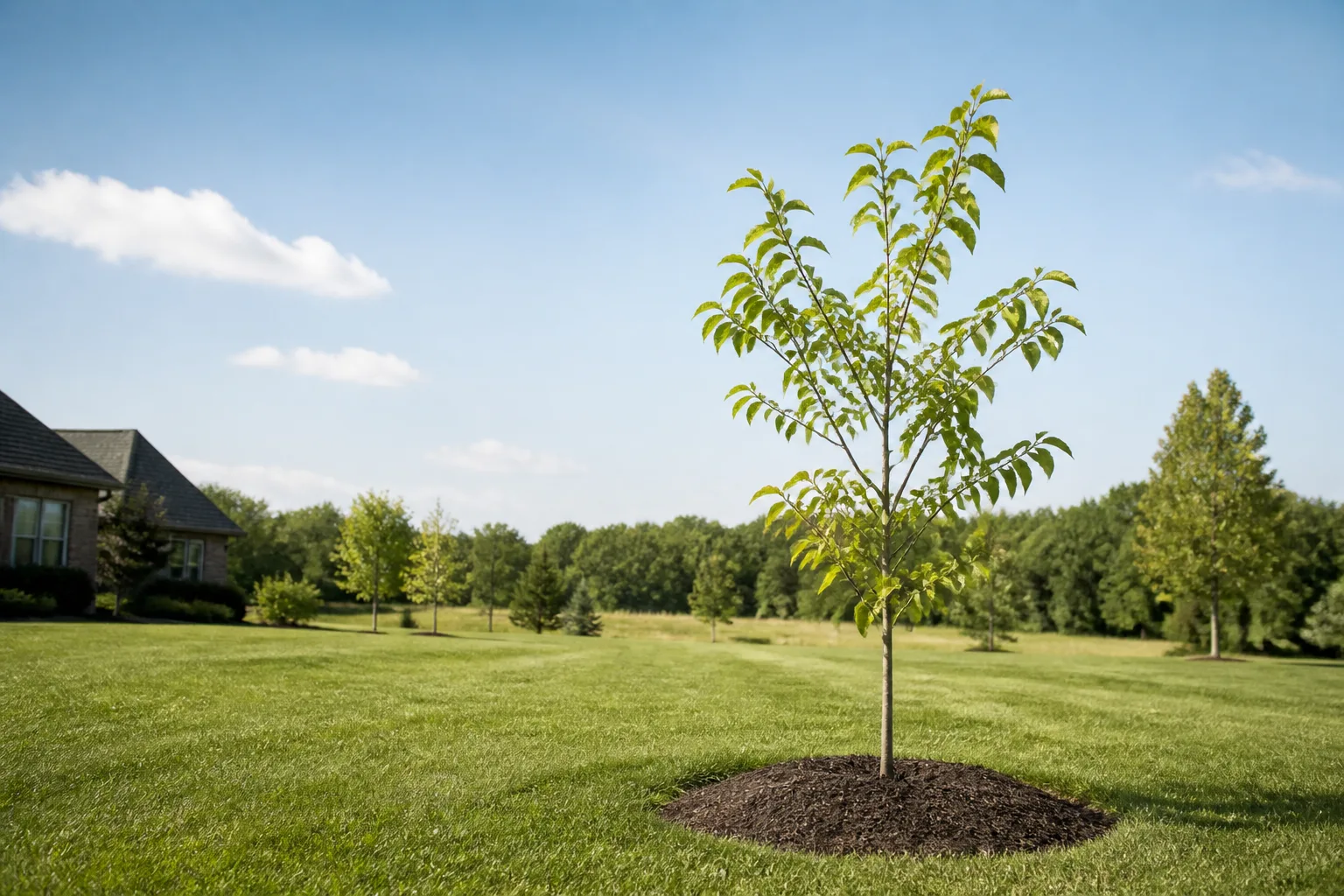
Do not pull a stump with a vehicle. A chain, rope, or strap can slip or break with enough force to injure someone or damage property. If a stump needs pulling, use a properly rated winch, protect the surrounding ground, and get advice from someone trained to operate it.
Method 3: Repeatedly cut resprouts for nonchemical suppression
Repeated cutting is a useful low-chemical option when the tree is young, the site is safe to inspect, and the species does not spread aggressively from lateral roots. Each new shoot spends stored energy making leaves; removing the shoot before it rebuilds a full canopy can gradually weaken the root system. This is a management program, not a one-day kill.
Cut new shoots close to their origin whenever you can do so without injuring a desirable plant. Keep the area visible, revisit it through the growing season, and remove regrowth before it flowers or sets seed. If the stump is a confirmed stump-sprouting species, an opaque cover held securely against the ground can reduce light and shoots; the University of Minnesota cautions that this approach does not solve trees that sucker from lateral roots.
Species such as aspen and some invasive woody plants can send shoots up away from the original trunk. Cutting the visible stem may then make the site look tidy while the root network continues expanding. Identify the tree before choosing repeated cutting, especially if it could be tree-of-heaven, an aggressive maple, black locust, or another regulated or invasive species. For those plants, ask a local extension service for a control plan and disposal guidance rather than moving cut material around the property.
Method 4: Girdle a standing tree
Girdling, also called ring-barking, removes a continuous band of bark and living cambium around the trunk. It interrupts the movement of sugars from the crown toward the roots, and a complete girdle can eventually kill the tree. Ohio State University Extension’s woodland-control guidance describes girdling as one of several woodland-control methods, but its guidance also makes clear that the treatment must be complete and that results vary with tree size, species, health, and timing.
This is not a good default for a garden tree. A girdled tree may remain alive for a long time, then become a dead standing hazard with branches that fail unpredictably. It can also be an ineffective choice for a tree that is already leaning toward a target, a tree with root suckers, or a tree whose dead trunk cannot be safely left in place while it deteriorates.
Use girdling only where the tree is yours, the area is appropriate for standing deadwood, local rules allow the work, and you have a plan for later removal. If you need the tree gone because it threatens a structure or path, arrange removal rather than creating a delayed hazard. Never girdle a tree on someone else’s property or as a covert way to damage a neighbor’s tree.
Method 5: Frill or notch the trunk
Frilling uses a series of overlapping or closely spaced cuts through the bark and cambium, usually angled so the cut pieces remain attached. Like girdling, it is a way to interrupt the tree’s vascular connection; unlike a clean ring, it is a series of wounds that may heal over. Without herbicide, it is slower and less predictable, particularly on vigorous trees.
Frilling belongs more to trained vegetation management than to routine backyard maintenance. It is sometimes paired with a label-approved herbicide in woodland or invasive-plant control, but the correct product, timing, target species, and application method are not interchangeable. A technique that works on one thin-barked invasive shrub can fail on a mature ornamental tree and can injure nearby trees if the product drifts or moves through connected roots.
If you are considering frilling because cutting a tree down is inconvenient, pause and ask whether the real problem is access, cost, or safety. Those are usually reasons to get a written quote from an arborist, not reasons to leave a standing tree to die over a target area.
Method 6: Dig out or grind the stump
Once the tree is down, physical stump removal is often the most direct way to stop the visible problem and prepare the ground for a path, lawn, or new planting. It does not rely on a chemical moving through the tree, and it lets you see and remove the main root crown rather than guessing whether the stump is still alive.
Digging suits a small stump with clear access. Expose the root flare, trench around the stump, cut lateral roots, and use leverage to loosen the root plate. Expect a large hole and substantial soil disturbance. Remove major wood, backfill with suitable soil, and allow the area to settle before laying turf or building over it.
Stump grinding is usually the practical choice for a larger stump or a stump near hardscape, but the machine is not a casual rental. Iowa State University Extension describes professional grinding as the quickest, easiest, and safest option for many stumps; the grinder removes the stump and larger lateral roots below grade, but it does not remove every root or guarantee that an aggressive species will never sucker.
Natural decay is appropriate only when the stump is not a hazard and the location can wait. Iowa State notes that natural decay can take more than ten years depending on moisture, fungi, species, and site conditions. Drilling holes or adding fertilizer may speed decomposition in some situations, but it will not instantly kill living roots, and it should not be confused with complete removal.
If the tree died from a suspected soil-borne disease, do not automatically grind the material into the surrounding bed. Confirm the disease risk with local extension guidance; some disease situations call for removing the stump and large roots, while a healthy dead stump in a low-risk area may be valuable habitat.
Method 7: Use a labeled herbicide as a targeted treatment
Herbicide can be useful when a woody plant resprouts aggressively, when digging is impractical, or when a land-management plan requires a low-volume treatment. It should be the targeted option of last resort, not a shortcut for avoiding species identification or safe removal.
Read the entire product label before buying or applying anything. The EPA Pesticide Product Label System explains that labels identify approved uses and are the legally controlling instructions. The label must cover the plant, site, application method, protective equipment, weather limits, re-entry, storage, and disposal. A product labeled for lawn weeds is not automatically labeled for a tree stump, and a ready-to-use product is not interchangeable with a concentrate.
The University of Minnesota Extension guide to woody-plant control lists glyphosate and triclopyr among common active ingredients in brush-control products, while also warning that glyphosate can injure any green plant and that triclopyr formulations differ. Those names help you understand what a label may contain; they are not permission to mix, substitute, or increase a rate. Keep all spray away from desirable trees, exposed roots, ponds, drains, edible crops, and windy air.
Cut-stump treatment
Cut-stump treatment is intended to stop a freshly cut stump from resprouting. A labeled systemic product is applied to the living tissue at the outside of the cut surface, where the cambium and sapwood are located, rather than poured into the dead heartwood. Penn State Extension’s cut-stump treatment guidance emphasizes that the method, formulation, timing, and treatment area depend on the stump size and label directions.
Timing matters because the plant’s movement of carbohydrates changes through the year, and wet weather can turn a targeted application into runoff. Treat only the target surface, do not puddle or drench the surrounding soil, and monitor for new shoots. A treatment can reduce the root system without eliminating every living bud, so retreatment—if the label permits it—may be part of the plan.
Cut-stump treatment is not equally effective on every species. Penn State’s guidance uses tree of heaven as an important example: cutting and treating the stump may leave the connected root system able to produce prolific sprouts. If you do not know the species, get an identification before applying anything.
Basal bark and hack-and-squirt treatments
Basal bark applies a product labeled for that method to the lower bark of an appropriate thin-barked woody plant. Hack-and-squirt, sometimes called frill-and-fill, places small amounts of a label-approved product into cuts in the living trunk tissue. Both are designed to use less spray than a broad foliar application, but both can fail or cause damage when used on the wrong species, bark, season, product, or site.
These methods are especially easy to misapply around desirable trees because roots may overlap below ground and oil-based products can move beyond the intended target. They also leave the treated tree standing until it is safely removed. For a homeowner with one landscape tree, a qualified arborist or local extension educator is usually the right person to decide whether this specialized treatment makes sense.
Choose among the seven methods with three questions
Use this sequence instead of choosing the most dramatic-looking treatment:
- Could the tree or a branch hit a person, building, road, fence, or utility line? If yes, stop experimenting and arrange a professional assessment or removal. Do not use girdling or herbicide as a way to postpone a hazard.
- Can you remove the whole plant without a saw, heavy machine, or chemical? If it is a seedling, pull or dig it out. If it is a small stump in an open area, dig it out. These options have the fewest off-target effects.
- Will the species resprout or sucker? If yes, plan the follow-up before you cut. That may mean repeated removal, grinding, a label-directed cut-stump treatment, or an invasive-species plan. A single cut is often only the beginning.
For a tree near a prized shrub, vegetable bed, pond, or young replacement tree, choose physical removal first because any herbicide can injure non-target plants. For a large stump where the goal is a usable planting site, grinding is usually more predictable than waiting for decay. For a dead tree in a remote part of the property, leaving safe standing deadwood may be better for wildlife than killing and removing it simply for appearance.
Why salt, bleach, vinegar, and copper nails are poor choices
Household remedies are attractive because they sound cheap and private, but “natural” does not mean selective, legal, or soil-safe.
- Table salt or Epsom salt: Salt can dehydrate plant tissue, but it also moves with water and can injure nearby trees, turf, flowers, soil organisms, and future plantings. Penn State Extension’s guidance on homemade weed killers warns that sodium chloride can persist in soil and that there is little evidence Epsom salt selectively kills weeds or stumps.
- Bleach: Household bleach is not a tree-control product. It can damage soil biology, injure nearby plants, and react dangerously with other chemicals. Do not pour it into a stump or soil.
- Vinegar: Household vinegar is a contact treatment that may burn very young foliage. It is not a dependable way to kill a mature tree or a perennial root system, and spray drift can damage plants you want to keep.
- Copper nails: A nail makes a wound but does not reliably deliver enough copper through the tree to kill a mature specimen. An Ask Extension answer on copper and trees describes the claim as folklore that may apply only to a very small tree and multiple nails. The practical result is an injured trunk, a possible entry point for decay, and a dangerous nail hidden in wood if the tree is later cut.
If a product is not labeled for the job, do not turn it into a tree killer by increasing the amount, adding detergent, drilling holes, or sealing it under plastic. Targeted, label-compliant treatment is safer than an improvised mixture precisely because the risks and use conditions have been evaluated.
Aftercare: stop regrowth and restore the site
Do not declare success when the leaves turn brown. Inspect the stump, root crown, and surrounding soil during the growing season. Remove shoots while they are small, record where they appear, and look beyond the original trunk if the species is known to sucker from lateral roots. Keep any follow-up herbicide within the original label and local guidance; never create a stronger home recipe because the first treatment was slow.
Handle debris according to the tree’s health and species. Healthy logs can be stacked as deadwood habitat or used after they season. Diseased wood, seed-bearing branches, or fragments from an invasive plant may need to be bagged, chipped, hauled, or handled through a local green-waste program rather than added to a home compost pile. Do not move reproductive material to another part of the yard.
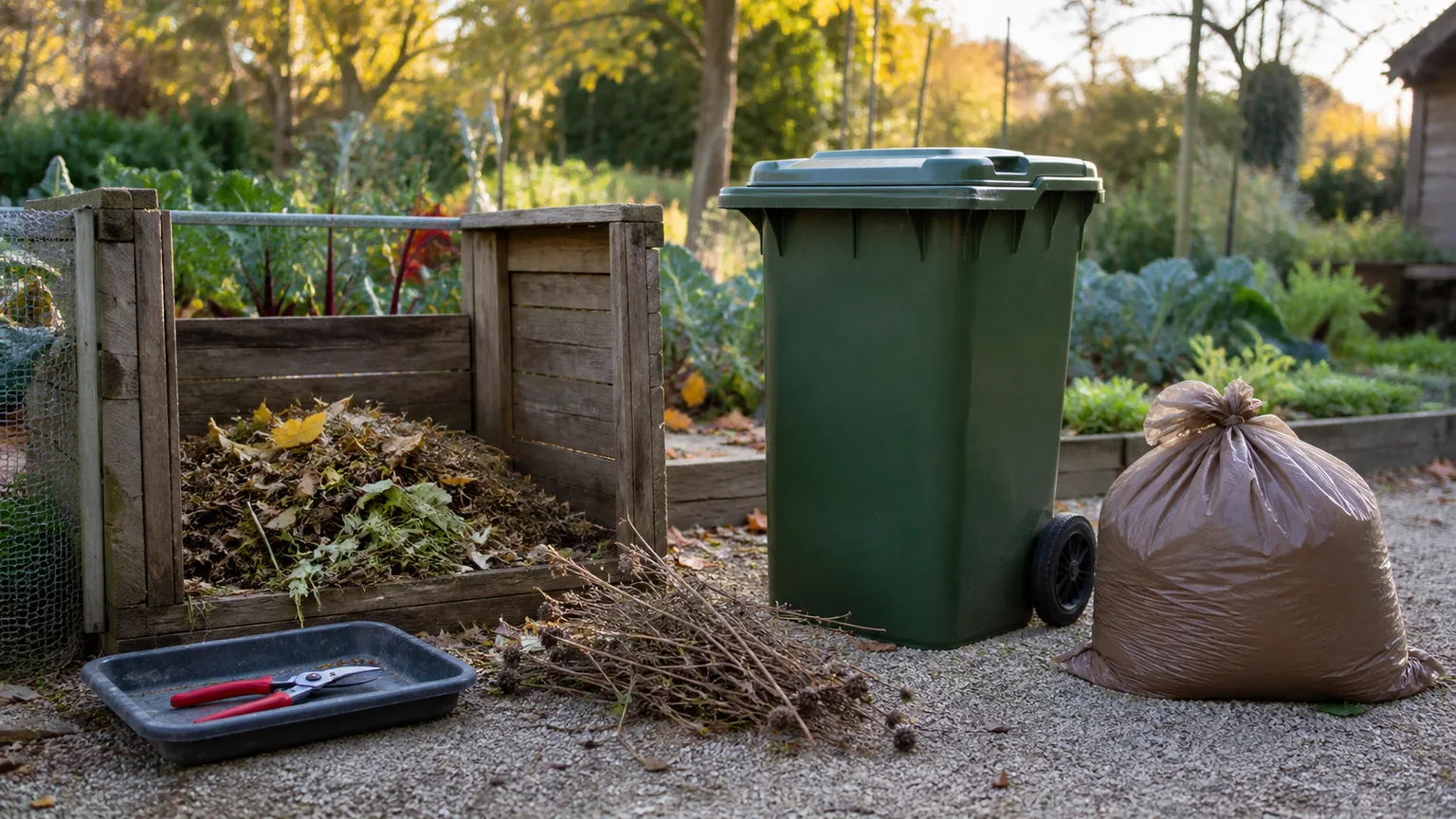
After digging or grinding, remove large wood pieces, refill the hole with clean soil, and let the ground settle before planting. If a chemical was used, follow the label’s planting, disposal, and re-entry instructions. If you plan to plant another tree in the same place, account for remaining roots, settling soil, drainage, and any residual product; grinding the stump may make the site usable, but it does not instantly turn the old root zone into fresh planting soil.
If the stump is sound, out of the way, and not diseased, leaving it can be the more ecological choice. The Iowa State stump-removal guidance notes that dead stumps provide food and shelter for insects, birds, and other wildlife. You can let it weather, surround it with plants that do not hide a trip hazard, or use it as a deliberate habitat feature while monitoring for sprouts.
When to call a certified arborist
Call an arborist before starting if any of these conditions apply:
- the tree is taller than you can safely control or has a trunk too large for hand tools;
- the fall zone includes a house, garage, greenhouse, road, fence, vehicle, or neighbor’s property;
- power, communications, or service lines are in or near the canopy;
- the tree is leaning, split, hollow, storm-damaged, diseased, or carrying dead branches;
- you would need a chainsaw above shoulder height, a rope system, a winch, a grinder, or an excavator;
- the tree is protected, on a boundary, or possibly subject to local removal rules;
- the plant is invasive, a prolific root-sucker, or difficult to identify;
- you are considering basal bark, hack-and-squirt, injection, or any herbicide near valuable plants or water.
Ask for proof of insurance, a written description of the work, the stump depth or removal method, debris handling, and whether permits or utility coordination are included. A good quote should distinguish tree removal, stump grinding, root excavation, and herbicide treatment because those are separate services. If you need an independent diagnosis before removal, an ISA Certified Arborist or local extension service can help decide whether the tree is hazardous, salvageable, invasive, or simply inconvenient.
Conclusion
The most reliable way to kill an unwanted tree is usually to choose the smallest method that solves the entire problem: pull a seedling, remove a small root crown, grind or dig a stump, and use repeated cutting or a label-directed treatment only when the species and site justify it. Girdling and frilling can kill a standing tree, but they are slow and leave a dead-tree hazard, so they are poor substitutes for safe removal around people and property.
Skip salt, bleach, copper nails, and improvised herbicide mixtures. Check ownership and local rules, stay away from utility lines, identify the tree if it is spreading by suckers, and call an arborist when the fall zone or equipment is beyond your training. A finished job is not a brown canopy; it is a safe site with no unplanned regrowth and a responsible plan for the stump, roots, and wood.



