How to Kill Nutgrass and Keep It From Coming Back
Nutgrass spreads by underground tubers, not like turfgrass. Learn to identify yellow and purple nutsedge, kill it in lawns and beds, and stop it from returning.
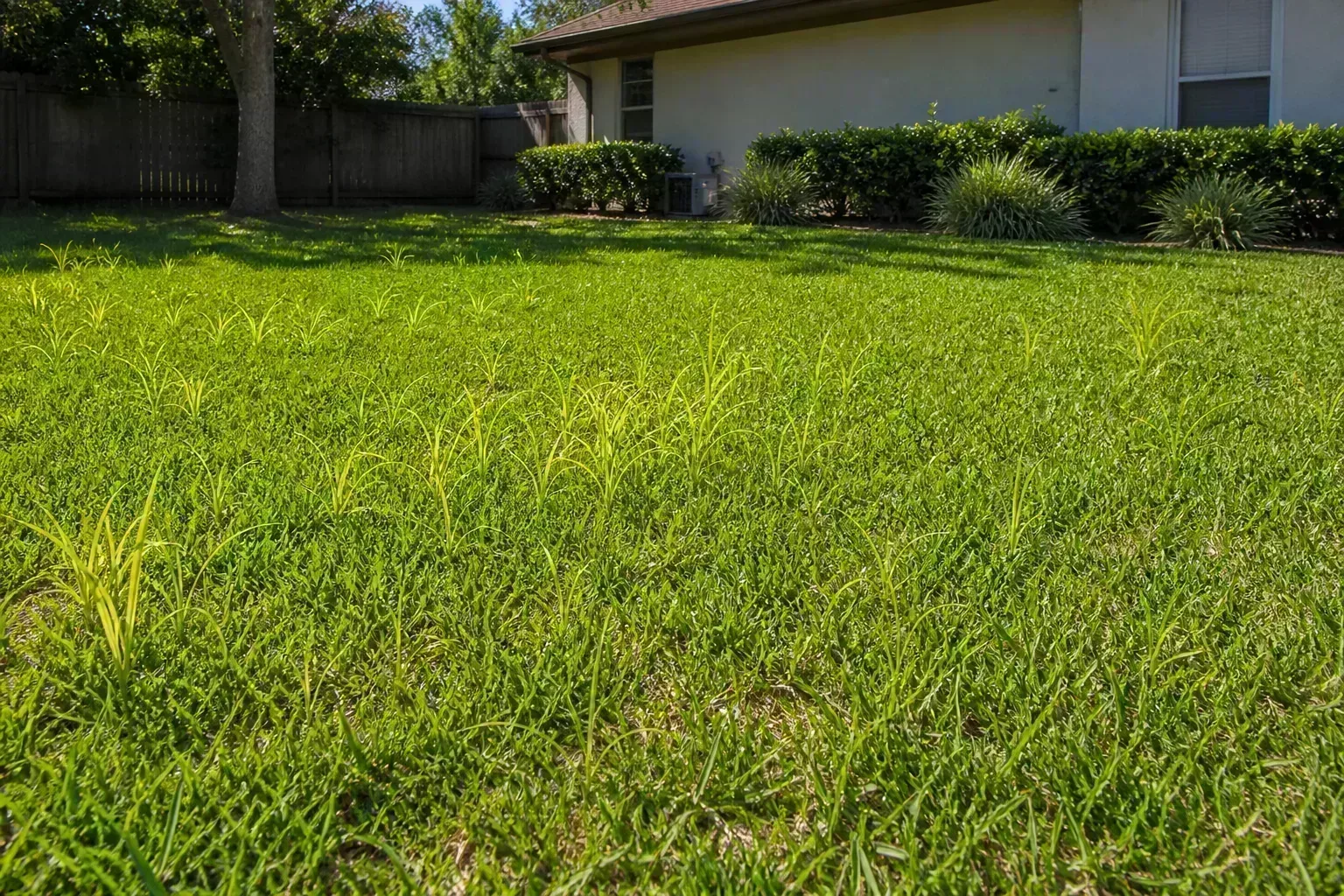
Nutgrass—more accurately called nutsedge—is a sedge, not a grass. That single fact explains why so many lawn weed killers fail: products built for crabgrass and other true grasses do not touch it. The patches you see are only the visible part of a tuber network that can survive for years underground. Stop nutgrass by identifying it correctly, attacking tubers before they multiply, and fixing the wet, compacted conditions that sedges love.
Start Here: Confirm You Are Fighting Nutsedge, Not Lawn Grass
Before you buy another “lawn weed killer,” make sure the invader is actually nutsedge. In mowed turf, nutgrass often looks like a lighter green, faster-growing tuft that sticks up above the surrounding grass a day or two after mowing. In garden beds it may be the only plant still thriving in a soggy corner. Misidentification wastes money and time—and can damage desirable plants if you use the wrong product.
Yellow Nutsedge vs Purple Nutsedge
The two weeds most homeowners battle are yellow nutsedge (Cyperus esculentus) and purple nutsedge (Cyperus rotundus). Yellow nutsedge is more common in cooler, wet lawns and landscape beds across much of the country. Purple nutsedge favors warmer regions and is often the tougher of the two, with tubers that grow in chains along rhizomes rather than singly at rhizome tips.
Yellow nutsedge produces golden-brown seedheads and round, smooth brown tubers with a mild almond flavor—yes, the same species is cultivated as chufa in some regions. Purple nutsedge has reddish-tinged flowers, dark seeds, and bitter tubers covered in red-brown scales. Control tactics overlap, but purple nutsedge responds better to mid-summer drying cycles, while yellow nutsedge is the species most post-emergent lawn products label for.
The 30-Second Field Test (Triangular Stems and Faster Growth)
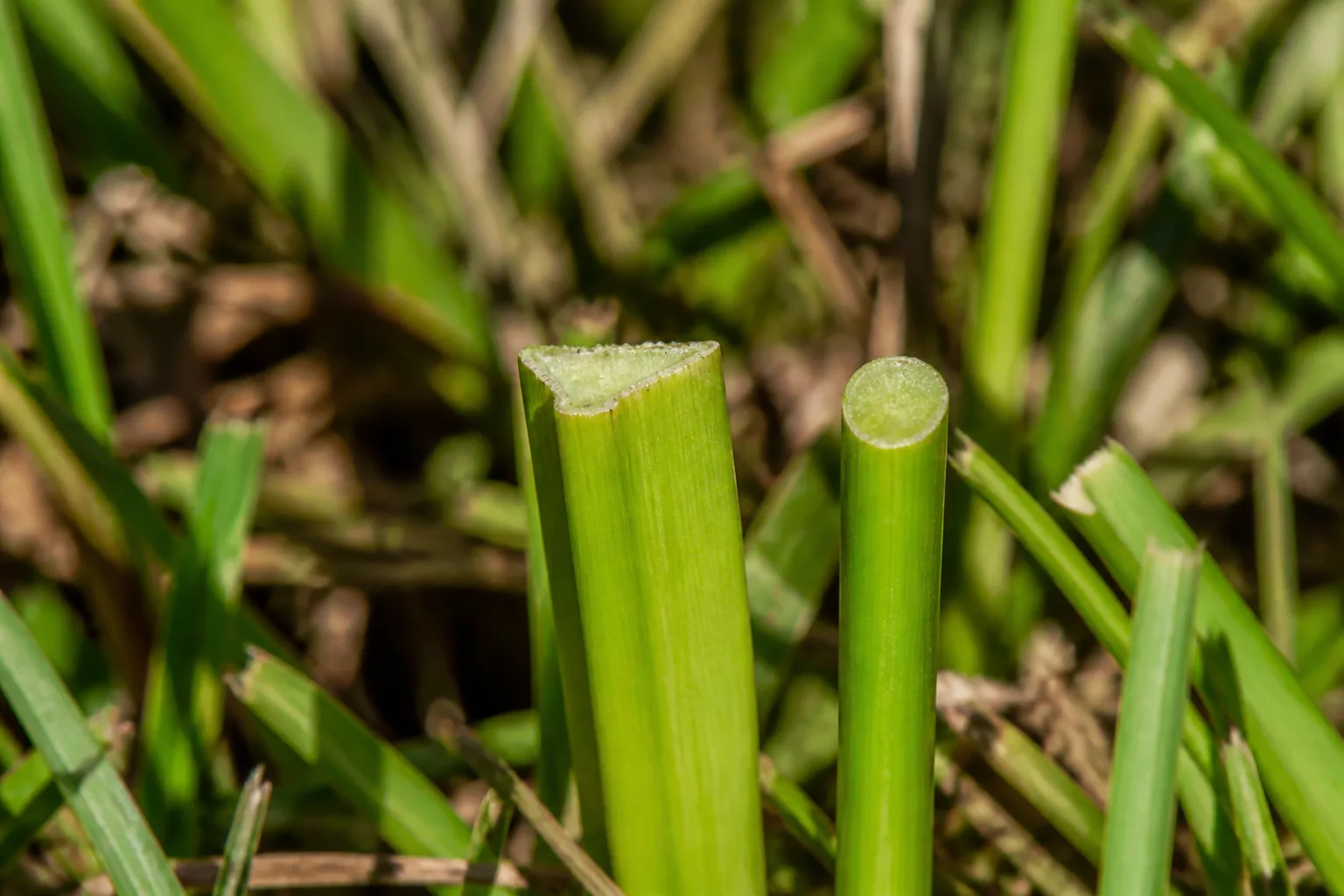
Roll a suspect stem between your fingers. True grass stems are round and hollow; nutsedge stems are solid and distinctly triangular in cross section. That “edges” feel is the classic sedge field mark extension guides repeat because it works in mowed turf when seedheads are absent.
Check leaf arrangement at the base. Nutsedge leaves emerge in sets of three; most lawn grasses show opposite pairs. Leaves also feel thicker and shinier than typical turf blades. If you dig carefully, you may find rhizomes and tubers—often called nutlets—8 to 14 inches below the surface. UC IPM notes that most tubers sit in the top 6 inches of soil and can remain viable one to three years (UC IPM Pest Notes: Nutsedge).
Why Nutgrass Keeps Coming Back (Even After You Pull It)
Pulling the top off a mature nutsedge plant feels satisfying and changes nothing underground. The plant stores energy in tubers connected by rhizomes. New shoots draw from those reserves, and each missed tuber can sprout again—mature tubers can resprout more than three times according to UC IPM research summaries.
Tubers, Rhizomes, and the Five-Leaf Deadline
Think in terms of a five-leaf deadline. Before a young nutsedge plant develops roughly five to six leaves, it is still sending energy from foliage down to form new tubers. Remove the plant entirely during that window—every two to three weeks in summer—and you force the tuber to spend reserves sprouting again instead of multiplying.
After that stage, translocation slows. Post-emergent herbicides and even careful pulling may kill only the aboveground portion while leaving tubers intact. UC IPM estimates the first resprout consumes about 60% of stored tuber energy and the second about 20%, which is why relentless early removal can deplete a population—but only if you stay ahead of new tuber formation (UC IPM Pest Notes).
Pick the Right Plan: Lawn, Garden Bed, or Open Soil
Your first decision is location, not product brand. In lawn turf, you need selective sedge herbicides that match your grass species on the label. In beds, paths, and vegetable areas where you can isolate the weed, non-selective spot treatments or deep digging may be safer for surrounding plants than broadcasting lawn chemistry.
When Selective Herbicides Make Sense
Choose selective controls when nutsedge is scattered through healthy turf and manual removal is impractical. This is the scenario most homeowners face once patches exceed a few feet: hand-digging leaves holes in the lawn and rarely captures every tuber on the first pass.
When Digging and Drying Beat Spraying
In small beds, new infestations, or organic-only areas, physical removal plus moisture management is the foundation. Dig 8 to 14 inches deep to capture rhizomes and tubers, bag the material, and do not compost it. For purple nutsedge in unplanted areas, repeated mid-summer cultivation that brings tubers to the surface—followed by withholding irrigation so the sun dries them—can reduce next year’s population, though it requires several dry cycles and is ineffective for yellow nutsedge (UC IPM Pest Notes).
Kill Nutgrass in the Lawn Without Killing Turf
The fastest reliable lawn approach is a selective post-emergent herbicide labeled for nutsedge on your specific turf type. Grass-selective products like those aimed at crabgrass will not control sedges because the plant family is different. Read the active ingredient, not the marketing name on the front of the bottle.
Selective Sedge Herbicides That Actually Work
Common turf-safe actives include halosulfuron-methyl (products such as Sedgehammer), sulfentrazone (including homeowner formulations like Ortho Nutsedge Killer for Lawns), and mesotrione (Tenacity), which UC IPM lists as effective on yellow nutsedge in turf contexts. Professional-only options may include trifloxysulfuron or sulfosulfuron on certain warm-season grasses.
None of these are “spray once and forget” solutions. They work best when the chemical moves from leaves into developing tubers—a process that slows after the fifth-leaf stage. The EPA explains that pesticide labels are legally enforceable documents; applying a product off-label on your turf type, rate, or site is unsafe and often illegal.
Match three label checks before you mix: target weed (yellow and/or purple nutsedge), turf species, and application timing. A product safe on tall fescue may injure bermudagrass or fine fescue. If the label does not list your grass, stop and choose a different product or switch to mechanical control.
Spray Timing, Mowing, and Moisture Rules
Apply when nutsedge is actively growing, not drought-stressed. Water the lawn the day before spraying so foliage and soil moisture improve uptake—this mirrors extension guidance that sedges take up herbicide more readily when not wilting. Avoid mowing several days before and after application so you maximize leaf surface and absorption time.
Target young plants under the five-leaf threshold when possible. Spraying mature patches still helps, but expect repeat applications the same season and possibly the next. Iowa State Extension notes that yellow nutsedge’s lighter color and faster growth rate make it visible even in recently mowed lawns, which is your cue to treat early rather than wait for seedheads (Iowa State Extension FAQ).
What Pre-Emergents Can and Cannot Do Against Tubers
Pre-emergent herbicides do not kill established tubers already in your soil. Some products reduce yellow nutsedge from seed or new rhizome activity—examples in UC IPM tables include dichlobenil and S-metolachlor in professional settings—but no pre-emergent controls purple nutsedge tubers. If you already have patches, post-emergent sedge killers or repeated tuber removal are the relevant tools; pre-emergents are supplementary, not a reset button.
Non-Chemical Control That Shrinks the Population Over Time
Organic control is possible but slower. UC IPM is blunt: nutsedge is difficult once established, and removing tubers is the key. Cultural tactics reduce new infestations; they rarely erase a mature patch in one season.
Hand-Pull and Dig Before New Tubers Form
Hand-pulling alone slows nutgrass but rarely eliminates it unless you remove attached tubers. For small plants, grasp at the base and pull slowly to keep the rhizome intact. In beds, use a narrow trowel or fork and dig deep enough to lift the basal bulb and rhizome chain. Dispose of plants in the trash, not the compost pile.
Repeat on a two- to three-week schedule through the growing season. This aligns with the five-leaf window: consistency matters more than heroics on a single weekend. Pair removal with fixing drainage in low spots where sedges outcompete turf—Gardening Know How emphasizes that correcting over-irrigation and compaction prevents much of the reinvasion that follows a good dig (Gardening Know How).
In landscape beds, polypropylene landscape fabric covered with bark or gravel can suppress nutsedge better than thin polyethylene plastic, which sedges can puncture with sharp leaf tips. Fabric is not foolproof—you still need to pull escapes—but it reduces new establishment when combined with mulch practices discussed in our mulch weed-control guide.
Solarization and Drying Cycles for Purple Nutsedge
For purple nutsedge in bare or fallow areas, repeated summer tillage that exposes tubers to hot, dry surface conditions can deplete reserves when you can withhold water from the entire zone. Yellow nutsedge tubers tolerate drying poorly as a control tactic relative to purple, so do not assume solarization results will transfer between species. This method is impractical in irrigated lawn turf but useful between crop rows or during a bed renovation.
Control Nutgrass in Beds, Paths, and Vegetable Gardens
Where turf selectivity is not required, spot-applied glyphosate or careful digging are the main options. Paint or shield-spray individual nutsedge clumps in empty bed areas, avoiding contact with desirable foliage. Glyphosate on young, uncut plants moves better toward rhizomes than applications on mature, recently mowed sedges (UC IPM Pest Notes).
If grass is invading planted beds rather than sedges, see our guide on getting grass out of flower beds for runner-specific tactics that differ from tuber management.
Spot Treatments With Non-Selective Herbicides
Use non-selective products only when you can isolate the weed. A single drift droplet on a hosta leaf can cause weeks of injury. For tight quarters, dig out the clump and replace with mulch after removing tubers rather than spraying between perennials.
Why Vinegar and DIY Sprays Fail on Established Patches
Household vinegar and most DIY mixes are contact burners, not tuber killers. They may scorch leaves while rhizomes resprout within days. University of Maryland Extension comparisons show vinegar lacks the systemic action needed for perennial weeds with underground storage organs—a limitation that applies equally to nutsedge and to the grassy weeds discussed in our DIY weed-killer guide. Horticultural vinegar is caustic and still unreliable on tubers; it is not a lawn-safe selective option.
Prevention: Fix Wet Soil and Stop Moving Tubers Around
Prevention is cheaper than fighting a 10-foot patch. Nutsedge thrives where turf is thin and soil stays wet. Reduce over-irrigation, improve drainage in low spots, and mow at the recommended height for your grass species so turf shades soil and competes better. Dense, healthy grass is not nutgrass-proof, but it slows spread.
Tubers hitchhike. Screen imported topsoil and compost when possible, and clean shovels, tillers, and mower decks after working infested areas. A single tuber on equipment can start a new colony across the yard. Iowa State’s weed encyclopedia notes yellow nutsedge’s preference for poorly drained soils in crop fields and landscapes—a pattern that holds in home lawns after heavy rain or sprinkler overlap (Iowa State Extension).
Avoid bringing nutgrass home from shared fill or borrowed tools. If a neighbor’s ditch line is infested, treat your border early before rhizomes cross under edging. Patio and path weeds often signal the same drainage issues; our natural patio weed solutions complement nutsedge prevention where hardscape meets soil.
Common Mistakes That Spread Nutgrass Faster
Tilling or plowing a mature patch without follow-up fragments tubers and distributes them—UC IPM warns that rototilling small areas before plants reach six leaves can help, but tilling established infestations usually expands the problem. Pulling once and mulching over live tubers produces the same result: a neat bed with a sedge reserve below.
Spraying at the wrong growth stage wastes product. Late-season applications on mature sedges burn tops while tubers overwinter. Using grass weed killers (phenoxy types aimed at broadleaf weeds in turf, or crabgrass-specific pre-emergents) leaves nutsedge untouched and can give a false sense of progress.
Overwatering after you finally clear a zone invites reinvasion from surviving tubers and new seed. Fix irrigation clocks and fix low spots before declaring victory.
What to Expect: A Realistic Multi-Season Timeline
Honest expectation: one season of good control, two to three seasons of vigilance is typical for yard-scale infestations. A small new clump caught under five leaves may die out in a year with repeated pulling and drier soil. A lawn that has been infested for several seasons may need selective herbicide passes in year one, spot treatments in year two, and ongoing monitoring anytime soil stays soggy.
Mark your calendar for early summer scouting when soil temperatures exceed about 43°F for yellow nutsedge and 59°F for purple nutsedge sprouting thresholds noted by UC IPM. Treat small plants immediately; deferring until fall seedhead formation means tubers already formed for next spring.
Conclusion
Nutgrass wins when you treat it like turfgrass. Identify the triangular stems, respect the tubers below, and match control to the site—selective sedge herbicides in lawn, digging and drainage in beds, spot non-selective sprays only where labels and plant spacing allow. Hit young plants before the five-leaf stage, keep soil from staying waterlogged, and stop moving tubers on tools or soil. It is a multi-year project, but a yard that already shows faster, lighter-green patches is telling you to act now—not after the tuber bank doubles again.



