DIY 3-Ingredient Weed Killer Recipe & Guide
This 3-ingredient DIY weed killer works on contact—not roots. Get the ratio, when to spray, where salt is risky, and what to do when weeds return.
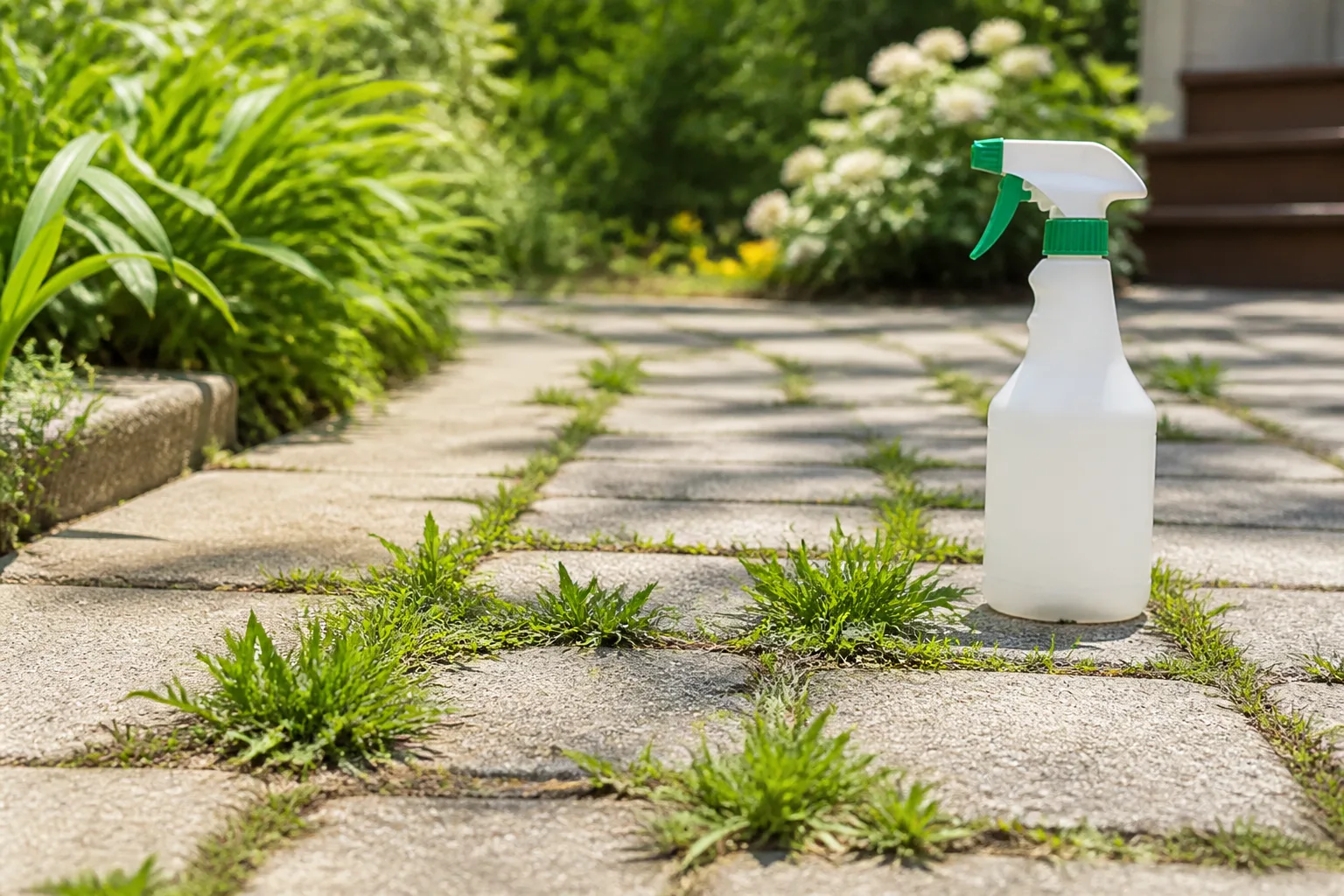
A DIY weed killer made from vinegar, salt, and dish soap is one of the most shared recipes in home gardening — and one of the most misunderstood. The mix can brown weeds quickly on driveways, patio cracks, and gravel paths. It will not replace a full lawn program, and it will not kill deep-rooted perennial weeds in one pass. Used as a contact, spot-treatment spray on the right weeds, in the right places, at the right time, it is cheap, fast, and easy to mix from pantry staples.
This guide gives you the standard ratio, explains what each ingredient actually does, and maps out where the formula shines — and where hand-pulling, mulch, or a registered herbicide is the smarter call.
What vinegar, salt, and dish soap each do in the mix
The three ingredients work together as a non-selective contact desiccant. Nothing in the bottle travels to roots or lingers as a systemic herbicide. Each piece of the recipe handles a different job: acid burns exposed leaf tissue, salt pulls moisture from cells, and soap helps the liquid coat waxy leaves instead of beading off.
How vinegar kills weed foliage on contact
Vinegar is dilute acetic acid. Household distilled white vinegar is typically 4–6% acetic acid (NPIC). When it touches green tissue, the acid disrupts cell walls and the plant dries out — a process called desiccation. Acetic acid is a contact herbicide: it only damages what it directly touches and does not move through the plant to the roots (Montana State University Extension).
USDA Agricultural Research Service greenhouse trials found that 5% vinegar killed several common annual weeds during their first two weeks of life, while older plants needed stronger solutions — and at higher concentrations, vinegar achieved roughly 85–100% top-growth kill depending on species and stage (USDA ARS). That matches what gardeners see in the yard: seedling weeds collapse fast; established clumps may brown on top and resprout from roots within days or weeks.
Important distinction: “Natural” does not mean harmless. Even household vinegar irritates skin and eyes. Concentrated horticultural vinegar (20% acetic acid or higher) is corrosive enough that registered herbicide products carry a DANGER signal word because of eye and skin burn risk (NPIC).
Why soap helps the spray stick
Dish soap acts as a surfactant — it breaks surface tension so the vinegar-salt solution spreads across leaves instead of rolling off. Many weed leaves have a waxy cuticle that repels water. A small amount of liquid dish soap helps the mix wet that surface, which improves contact time and coverage.
Soap is not a secret soil sterilizer. Its main job in this recipe is spray adhesion, not long-term microbiome disruption. Use plain liquid dish soap without bleach or unnecessary additives. A tablespoon per gallon is enough; more soap does not meaningfully improve kill and can make the mix sudsy and hard to pour.
Salt’s desiccating power and soil risk
Table salt (sodium chloride) also pulls water from plant tissue and can enhance browning when combined with vinegar. That extra desiccation is why the viral recipe includes salt — and why you should treat salt as the most location-sensitive ingredient in the bottle.
Unlike acetic acid, which breaks down quickly and leaves little residue (NPIC), salt persists in soil. Repeated applications in beds, lawn edges, or near desirable plants can raise salinity, reduce water availability to roots, and make an area hostile to future planting. Salt belongs in bare hardscape zones where you do not intend to grow anything soon — not in vegetable gardens, lawn strips, or perennial borders.
What this homemade spray can and cannot control
Setting realistic expectations prevents the most common disappointment: spraying a mature dandelion once, watching it wilt, and assuming the taproot is dead.
Annual seedlings vs tough perennial weeds
Best targets: tiny annual weeds at the seedling stage — often two to four true leaves — when the entire photosynthetic surface can be coated and the plant has little stored energy to recover (MSU Extension). Broadleaf seedlings like lambsquarters, pigweed, and young chickweed tend to show faster browning than grasses, partly because grass blades shed liquid more easily and many turf weeds are perennial.
Poor targets: perennial weeds with deep roots or rhizomes — dandelion, bindweed, nutsedge, bermudagrass stolons, quackgrass. Contact sprays may burn the top growth, but the plant can resprout from roots, crowns, or underground stems. Canada thistle is notoriously stubborn; even research trials note that top kill does not equal long-term control unless repeated or combined with other tactics (USDA ARS).
Rule of thumb: If you can pull the weed with moist soil and remove most of the root in one tug, hand-weeding may beat spraying. If the weed lives in a mortar crack you cannot reach, the three-ingredient spray is exactly the tool you want.
Household vinegar vs horticultural strength
Most pantry white vinegar at 5% acetic acid is strong enough for small, young weeds in sunny weather. That is the concentration researchers used when they saw good control on two-week-old lamb’s-quarters, foxtail, pigweed, and velvetleaf (USDA ARS).
Horticultural vinegar at 20–30% acetic acid kills foliage faster and can brown tougher top growth in hours rather than days. MSU Extension notes that 20% or 30% products control young leaves and growing points more completely than household strength — but they are strong acids, not cooking vinegar. Applicators need gloves, eye protection, long sleeves, and calm air (MSU Extension; NPIC).
If you buy concentrated acetic acid for weed control, look for products registered as herbicides with an EPA registration number and a signal word on the label. Using industrial or cleaning vinegar off-label as a pesticide may lack proper safety directions — and in some cases violates pesticide use rules (NPIC). For most homeowners spot-treating patio cracks, 5% household vinegar plus salt and soap is the practical starting point before escalating strength.
The standard recipe and how to scale it
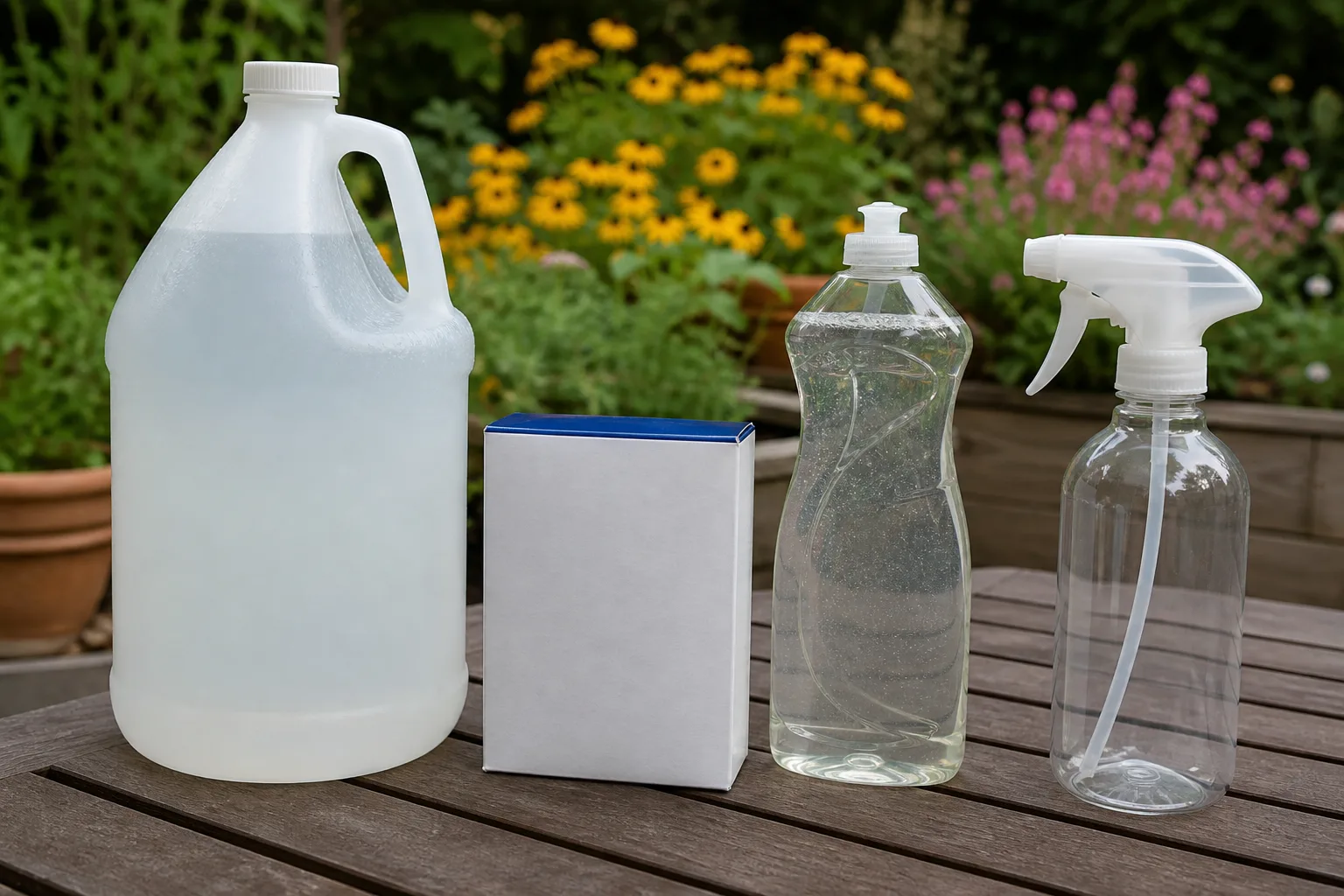
The widely used three-ingredient DIY weed killer ratio is:
- 1 gallon distilled white vinegar (5% acetic acid)
- 1 cup table salt
- 1 tablespoon liquid dish soap
Stir until the salt dissolves as much as it will — some grain may remain at the bottom; that is normal. Pour into a labeled spray bottle or pump sprayer dedicated to garden use, never one previously used for bleach or unknown chemicals.
Half batch (quart sprayer): 1 quart vinegar, ¼ cup salt, ¾ teaspoon soap.
Small crack touch-ups: Mix 2 cups vinegar, 2 tablespoons salt, and a few drops of soap in a handheld bottle. Make fresh small batches if salt crystallizes in the nozzle.
Do not double the salt hoping for a stronger kill. Extra salt increases soil damage without reliably killing roots. If household vinegar fails on older weeds, step up to horticultural strength or switch tactics (cut back top growth, then spot spray regrowth, or hand-dig) rather than dumping more table salt into the mix.
Best timing, weather, and growth stage
Vinegar-based sprays perform best when plants are actively photosynthesizing in heat and sun. MSU Extension and field observations both point to hot, sunny days as ideal — the acid desiccates faster when plants are already losing water (MSU Extension).
Spray checklist:
- Dry foliage — rain or heavy dew dilutes the mix on contact.
- Calm air — drift onto lawn, flowers, or neighbor plantings is the fastest way to regret a DIY spray.
- Mid-morning to early afternoon — enough light for same-day browning; avoid evening sprays that sit wet overnight on desirable edges.
- Young weeds first — hit seedlings in spring and early summer before taproots deepen.
- Repeat as needed — new weeds germinate continuously; one application is a snapshot, not a season-long seal.
For large, established weeds, cut or string-trim the top growth first, let fresh young leaves emerge or expose tender regrowth, then spray. You are improving leaf-to-solution contact, not magically reaching roots.
Where to use it — and where to keep the bottle away
Because the mix is non-selective, anything green you hit will brown. That makes placement strategy more important than recipe tweaks.
Good zones:
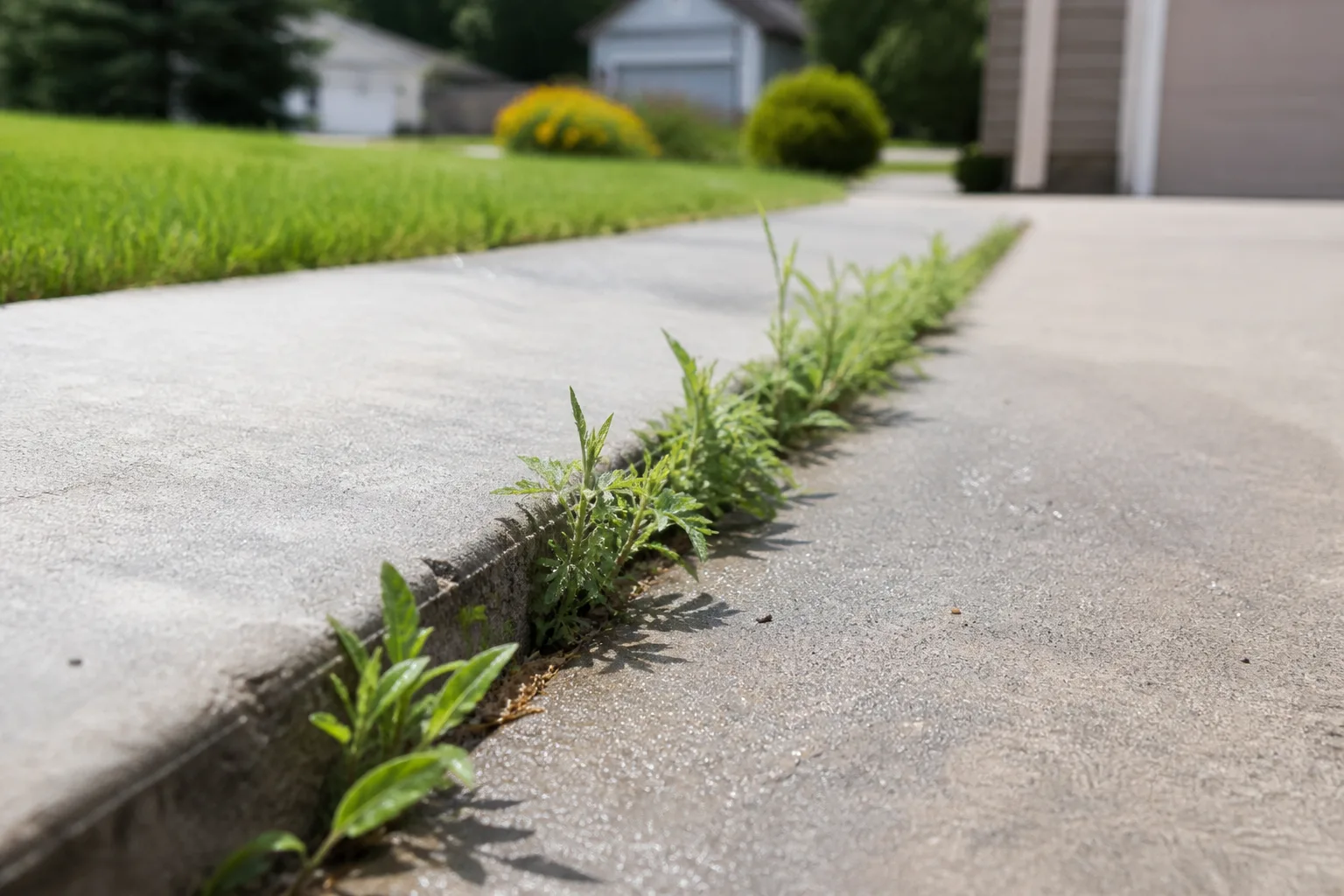
- Sidewalk and driveway cracks
- Gravel paths and paver joints
- Bare soil strips along foundations where you do not plan to plant
- Between patio stones where pulling breaks roots off in the gap
Avoid or use extreme caution:
- Lawns and turf — you will leave dead patches.
- Vegetable and herb beds — drift and salt contaminate food soil.
- Perennial and shrub borders — overspray burns ornamentals; salt lingers.
- Areas you will replant within a season — salt may inhibit new seeds and transplants.
- Wooden or stone surfaces sensitive to acid — strong vinegar can etch or discolor some materials; test a hidden spot first.
If weeds mingle with plants you want to keep, shield desirable foliage with cardboard, use a stream setting instead of mist, or skip spray entirely and pull by hand after rain.
How to mix, store, and apply step by step
Treat this like any garden chemical: labeled bottle, dedicated sprayer, dry storage, and kids/pets kept away until foliage dries.
Mixing the batch
Choose a plastic bucket or bowl — not a food container you will reuse in the kitchen. Add vinegar first, stir in salt until mostly dissolved, then add dish soap last to limit foaming. Funnel into your sprayer and label clearly: “Vinegar weed spray — do not drink.”
Store leftover mix in a cool, dark place for several months. Salt may settle; shake before use. If crystals clog the sprayer, flush with warm water and make a fresh batch.
Spraying for full leaf coverage
Wear gloves and eye protection — vinegar in the eye is painful even at 5%, and splashed salt solution stings cuts. Long sleeves and closed-toe shoes are cheap insurance.
Hold the nozzle 12–18 inches from foliage and coat leaves until they glisten, not until the mix runs off into soil you care about. Target every green surface of the weed; missed patches stay alive. For weeds in tight cracks, a narrow stream or careful pour from a small bottle can reach where fan sprays waste product.
Expect visible browning within hours to two days for household vinegar on small weeds. Do not mow or walk through the area until sprays dry. Keep pets off treated hardscape until it is dry to the touch.
Safety precautions you should not skip
Homemade mixes skip the formal pesticide label, which means you supply the safety steps a label would.
- Eyes and skin: Acetic acid irritates and can burn at higher concentrations (NPIC). Rinse skin with water if splashed; seek medical help if vinegar contacts eyes.
- Lungs: Strong vinegar fumes irritate airways. Work outdoors; never spray in enclosed spaces.
- Children and pets: Store mixed and raw ingredients locked away. “Smells like salad” is not safe for curious toddlers or dogs.
- Wind and drift: A breezy day turns spot treatment into broadcast damage.
- Combining chemicals: Do not mix this spray with bleach, ammonia, or other cleaners — dangerous gases can form.
- Stronger vinegar: At 20%+ acetic acid, treat the product like an industrial acid: full PPE, no shortcuts (NPIC).
“Natural” weed control still carries real risks. Respect the acid, respect the salt, and respect how easily a non-selective spray crosses a property line on a windy afternoon.
When weeds resprout: your next moves
Seeing fresh green after a spray does not always mean the recipe failed. It often means you hit a perennial, missed leaf coverage, or sprayed before ideal weather.
If tops brown but plants return:
- Re-spray young regrowth within a week while new leaves are small and vulnerable.
- Dig out the root when soil is moist — spray weakened the top, but pulling finishes perennial jobs.
- Escalate concentration carefully to registered horticultural vinegar if household strength is insufficient — with full PPE.
- Stop adding salt near areas where you saw poor kill but worry about soil — extra salt rarely fixes roots and often creates bare salty patches.
If nothing browns:
- Weeds may have a waxy coat or be too mature — trim and retry on tender regrowth.
- Foliage was wet or rain arrived within hours — reapply on a dry, sunny day.
- You used too little soap — increase slightly to 1½ tablespoons per gallon on the next batch.
Repeated spot sprays on hardscape only are a reasonable maintenance rhythm. Repeated salt-heavy sprays in garden soil are not.
Building long-term weed control habits
A spray bottle handles today’s weeds. Integrated weed management handles next month’s.
Cultural tactics that reduce spray dependence:
- Pull small weeds after rain when roots release easily — persistence beats one heroic spray day.
- Mulch beds 2–3 inches deep with shredded bark, wood chips, or straw to block light to weed seeds.
- Fill cracks in pavers and mortar where grit accumulates — many patio weeds are simply dust and seed in a hospitable crevice.
- Avoid bare soil in beds; cover crops, groundcovers, and dense plantings shade out competitors.
- Clean tools and shoes after working in weedy areas so you do not import seeds to clean beds.
Boiling water, flame weeders, and manual tools all have niches on hardscape — especially where salt is undesirable. The three-ingredient vinegar mix sits in the same toolbox: fast contact kill for accessible foliage in zones where nothing desirable grows.
Used that way, it is not a miracle cure. It is a cheap, understandable spot tool — best on young weeds, in sun, on pavement and gravel, with eyes open about roots, salt, and resprouts.
Conclusion
The three-ingredient DIY weed killer — one gallon of white vinegar, one cup of salt, and one tablespoon of dish soap — works because acetic acid burns leaf tissue on contact, salt adds desiccation, and soap helps the mix stick. It excels on young annual weeds in sunny weather on driveways, cracks, and gravel. It does not reliably kill perennial roots, and salt can harm soil where you hope to grow again.
Mix in a labeled sprayer, spray on calm dry days, protect eyes and skin, and keep the bottle away from lawns, beds, and food gardens. When weeds return, combine repeat spot sprays with hand-pulling and mulch rather than chasing roots with more salt. That is how this pantry mix earns a place in a smart weed routine — not as a replacement for every weed everywhere, but as a sharp, low-cost tool when you know exactly what you are targeting.