17 Plants That Attract Dragonflies to Your Garden
Attract dragonflies with the right pond plants, shoreline flowers, and tall perches. Get a 17-plant list plus habitat setup and pesticide rules.
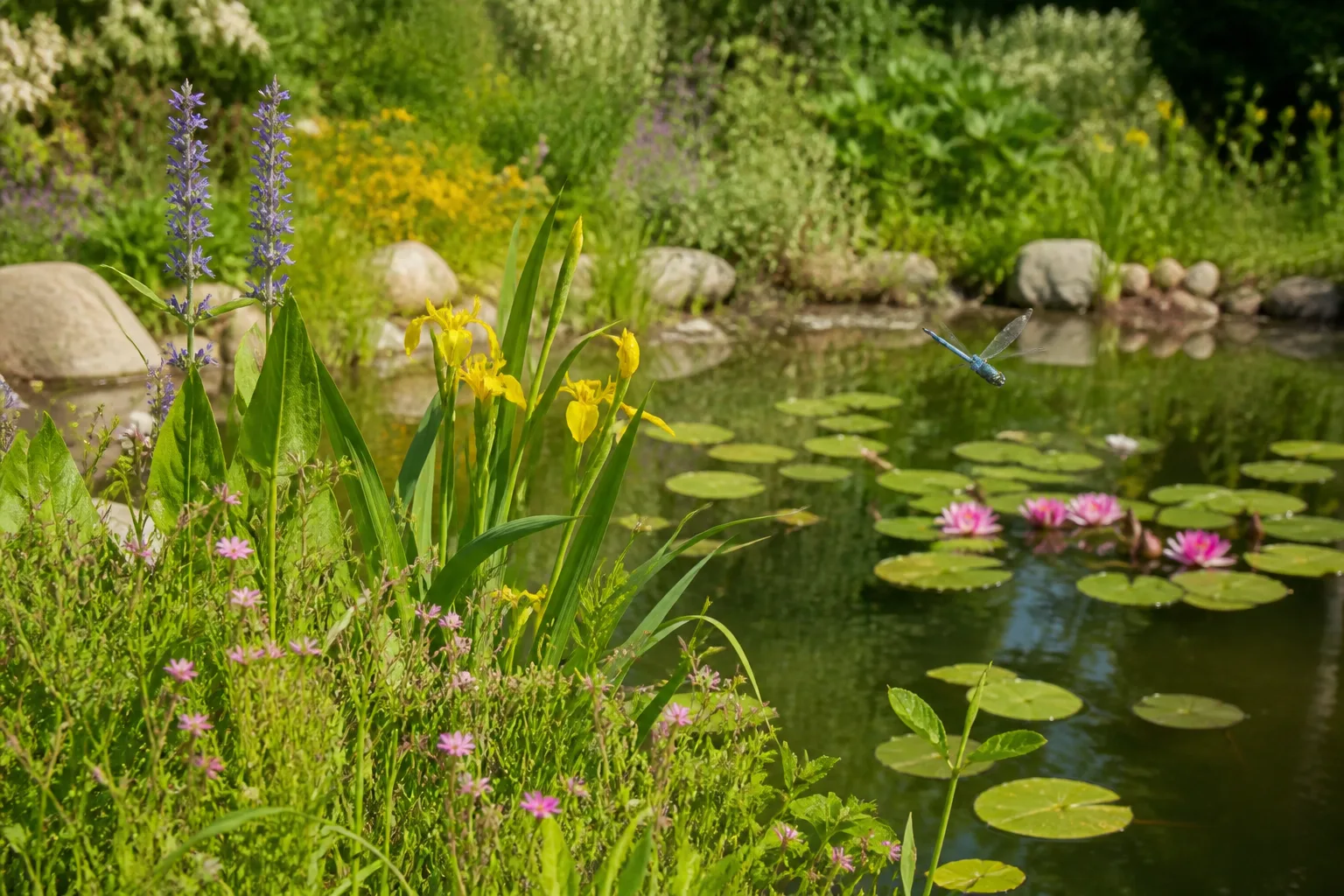
A dragonfly does not cruise your flower bed looking for nectar. It is an aerial predator hunting mosquitoes, midges, flies, and other small insects, and its young live underwater for months or years before climbing a stem to become an adult. Plants that attract dragonflies work because they provide breeding water, emergence perches, shoreline cover, and the insect buffet adults hunt—not because dragonflies have a favorite petal color.
That distinction changes how you shop. A flat of pretty annuals may bring butterflies while your pond edge stays bare and lifeless for nymphs. The 17 plants below are worth growing when they fit your site, but they earn their place by habitat role first and looks second.
Dragonflies visit for water, prey, and perches—not nectar
Dragonflies and damselflies belong to the order Odonata. Adults are fierce fliers with huge compound eyes; nymphs are equally predatory underwater. The National Park Service notes that dragonflies spend most of their lives in water, hatching from eggs laid on aquatic plants or at the pond edge, molting repeatedly as nymphs, then climbing emergent stems to split their exoskeleton and inflate new wings (NPS: Species Spotlight – Dragonflies).
Water is the reason dragonflies stay. Females deposit eggs in or near still or slow-moving freshwater. Without that, you may see hunters passing through, but you are unlikely to build a resident population. Prey density matters next. Adults hunt flying insects above and beside water; nymphs eat mosquito larvae, midge larvae, tadpoles, and other small aquatic life. Flowering plants help indirectly when they support gnats, flies, bees, butterflies, and other insects dragonflies eat.
Perches complete the picture. Tall, stiff stems, grass blades, and flat rocks in sun give adults places to rest, warm up, and watch for prey. Emergent plants are especially important because nymphs need vertical stems to crawl out for their final molt.
Do dragonflies reduce mosquitoes? A 2023 meta-analysis in Journal of Animal Ecology found that dragonflies and damselflies can provide effective biological control of mosquitoes, though results vary by species and habitat (Priyadarshana & Slade, 2023). They are helpful allies, not a replacement for source control, screens, or personal protection in heavy mosquito country.
And no—dragonflies are not reliably drawn to fragrance. Research on Odonata suggests limited olfactory processing compared with visual hunting (Piersanti et al., 2014). Sweet-scented flowers may still be worth planting because they support prey insects, not because dragonflies smell them from across the yard.
Set up habitat before choosing plants
Think in layers: open water, submerged plants, emergent shoreline, sunny perches, and pesticide-free insect diversity. Plants slot into those layers. Hardware—pond liner, edging, or a rain-garden swale—comes first.
Pond basics: sun, depth, and open water
A wildlife pond for dragonflies does not need a fountain or koi. It needs clean, sun-warmed water with varied depth. Aim for roughly one-third open surface so adults can patrol without fighting dense floating leaves. Shallow shelves around 6–18 inches deep give nymphs warm water and emergent planting zones; a deeper center—often 18–24 inches in small backyard pools—helps temperature stability.
Place the pond in full sun when possible. Dragonflies are sun-loving insects, and algae and microhabitats nymphs use develop better with light. Leave a few flat rocks at the edge for basking. Avoid steep, slippery sides nymphs cannot climb; gentle slopes or planted shelves work better.
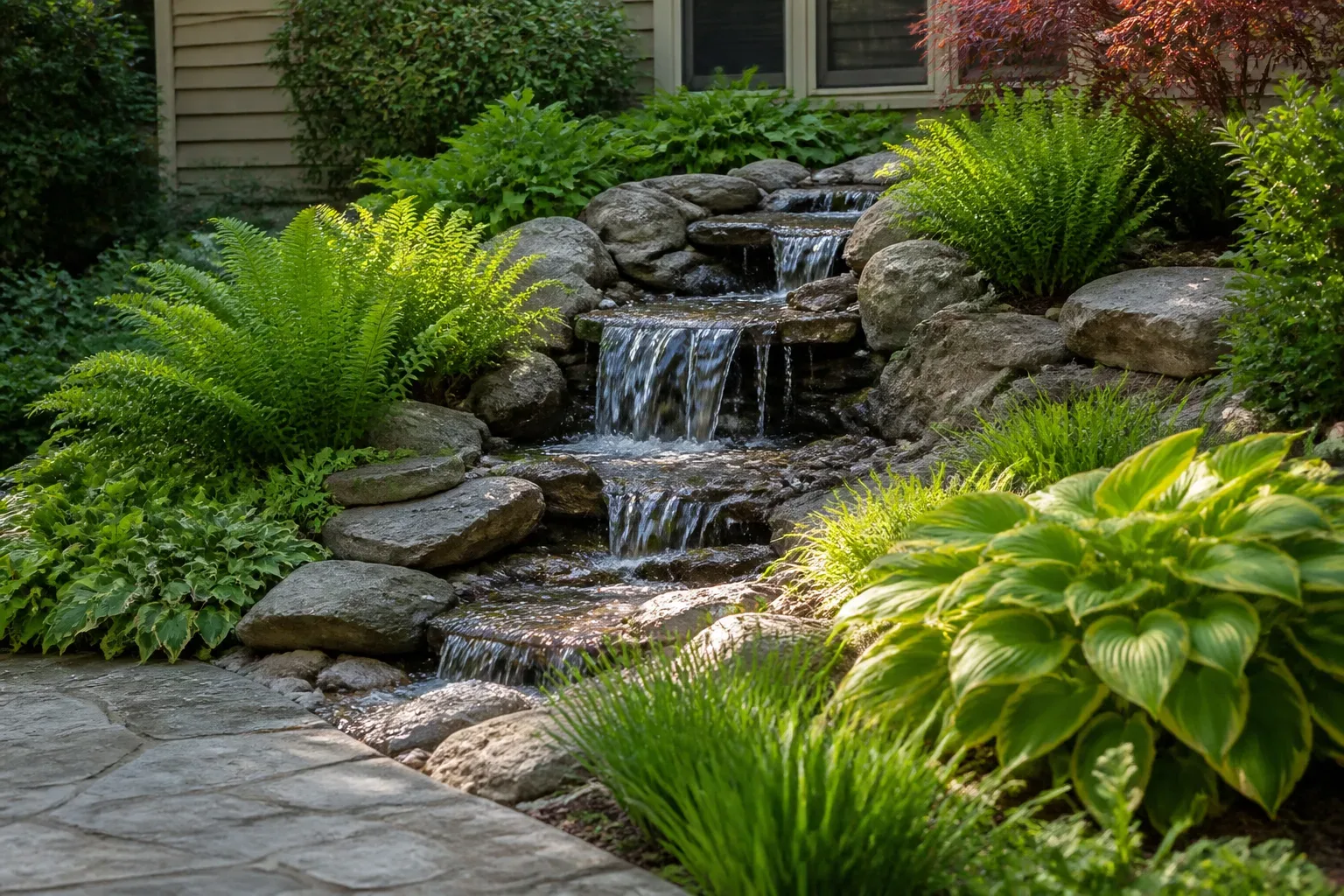
If a full pond is impossible, a stock-tank pool, lined container, or rain garden that holds water for weeks after storms can still help. Even a neighbor’s wetland may supply adults that hunt over your meadow plantings—you just will not get local breeding without standing water on your property.
Keep the insect food web pesticide-free
Dragonflies are beneficial insects in the broadest sense, but they are not immune to sprays aimed at mosquitoes or aphids. Penn State Extension warns that many beneficials are more sensitive to insecticides than the pests you target, and that broad-spectrum products can wipe out predators present at spraying time and discourage new ones from moving in (Penn State Extension: Attracting Beneficial Insects).
Skip routine perimeter sprays, systemic insecticides on flowering margins, and mosquito foggers if dragonflies are the goal. When you must treat, choose short-residual options such as insecticidal soap or horticultural oil on targeted plants, and keep treatments away from open water. Penn State also recommends plant diversity with blooms from early spring through late fall so predator populations have pollen, nectar, and alternate prey through the season—exactly the role many meadow flowers below play.
Aquatic plants for ponds and container pools
These two species anchor the underwater and floating layers. Match cultivars to your climate and never release non-native aquatics into natural waterways.
Water lily (Nymphaea)
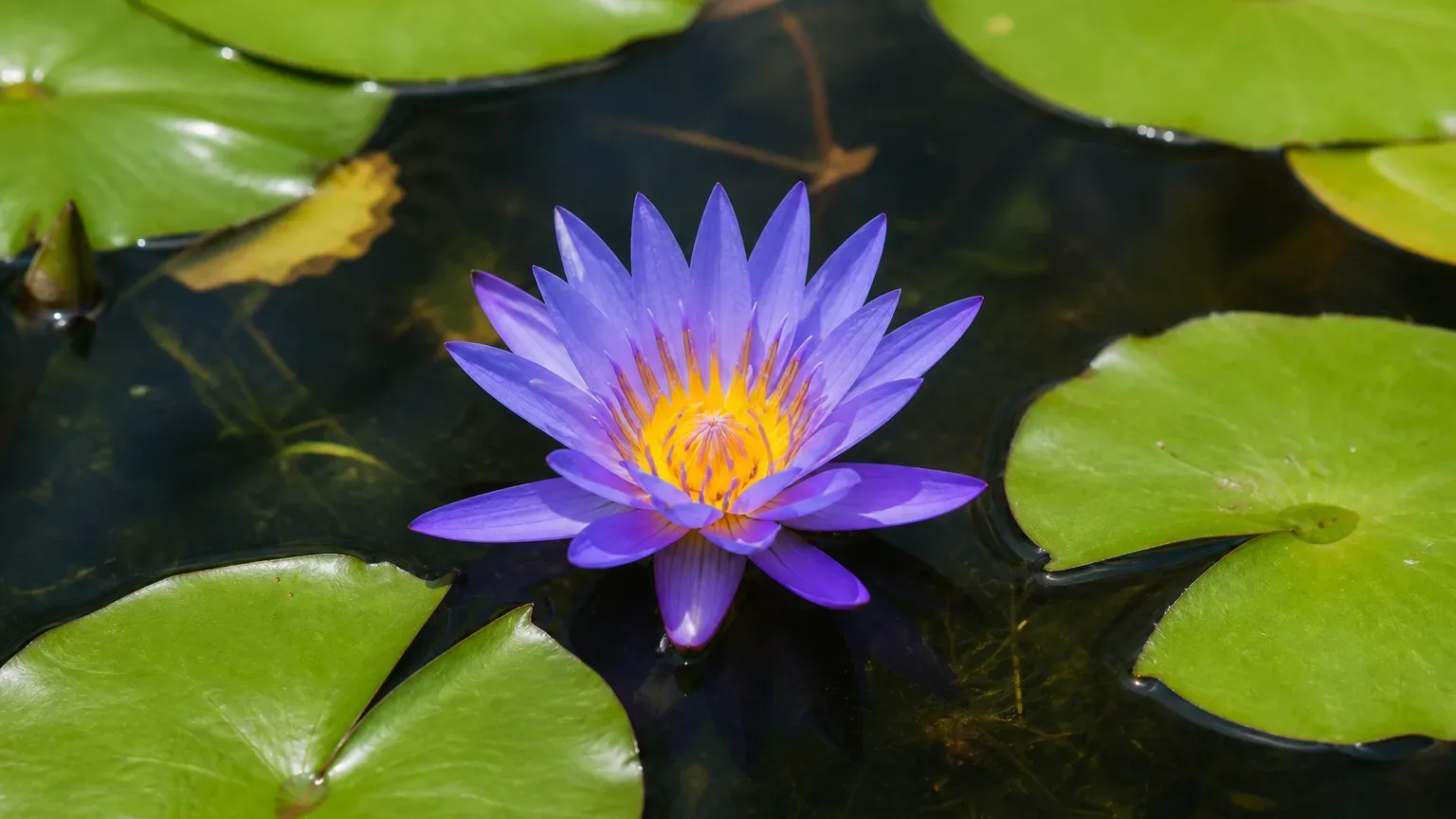
Water lilies provide floating leaves, shade, and egg-laying surfaces at the pond surface. Adult dragonflies often hunt low over lily pads, and nymphs use submerged stems and the quieter water beneath leaves. Hardy water lilies suit zones 4–11 depending on variety; tropical types need winter protection in cold climates.
Plant lilies in pots submerged on the pond shelf so they do not overrun small pools. Leave part of the surface open—if pads cover more than about two-thirds of the water, reduce division frequency or choose a smaller cultivar. Light: full sun. Soil: heavy loam in containers topped with gravel so soil does not cloud the pond.
Wild celery (Vallisneria americana)
Wild celery, or American eelgrass, is a submerged native with ribbon-like leaves that oxygenate water and give nymphs cover. Females may lay eggs on submerged vegetation, and the swaying leaves trap fine debris where micro-prey live. It suits zones 4–10 in ponds with 1–3 feet of water and a muddy or sandy bottom.
Wild celery spreads by runners. In a small container pond, plant in a wide pot to contain growth. Confirm the plant is true Vallisneria americana from a reputable aquatic nursery—not grocery-store celery. The Old Farmer’s Almanac notes its value as underwater habitat for fish and invertebrates in natural lakes (Almanac: Wild Celery).
Emergent shoreline plants
Emergent plants root underwater but send stems and leaves above the surface. They are the ladder nymphs climb to become adults.
Pickerelweed (Pontederia cordata)
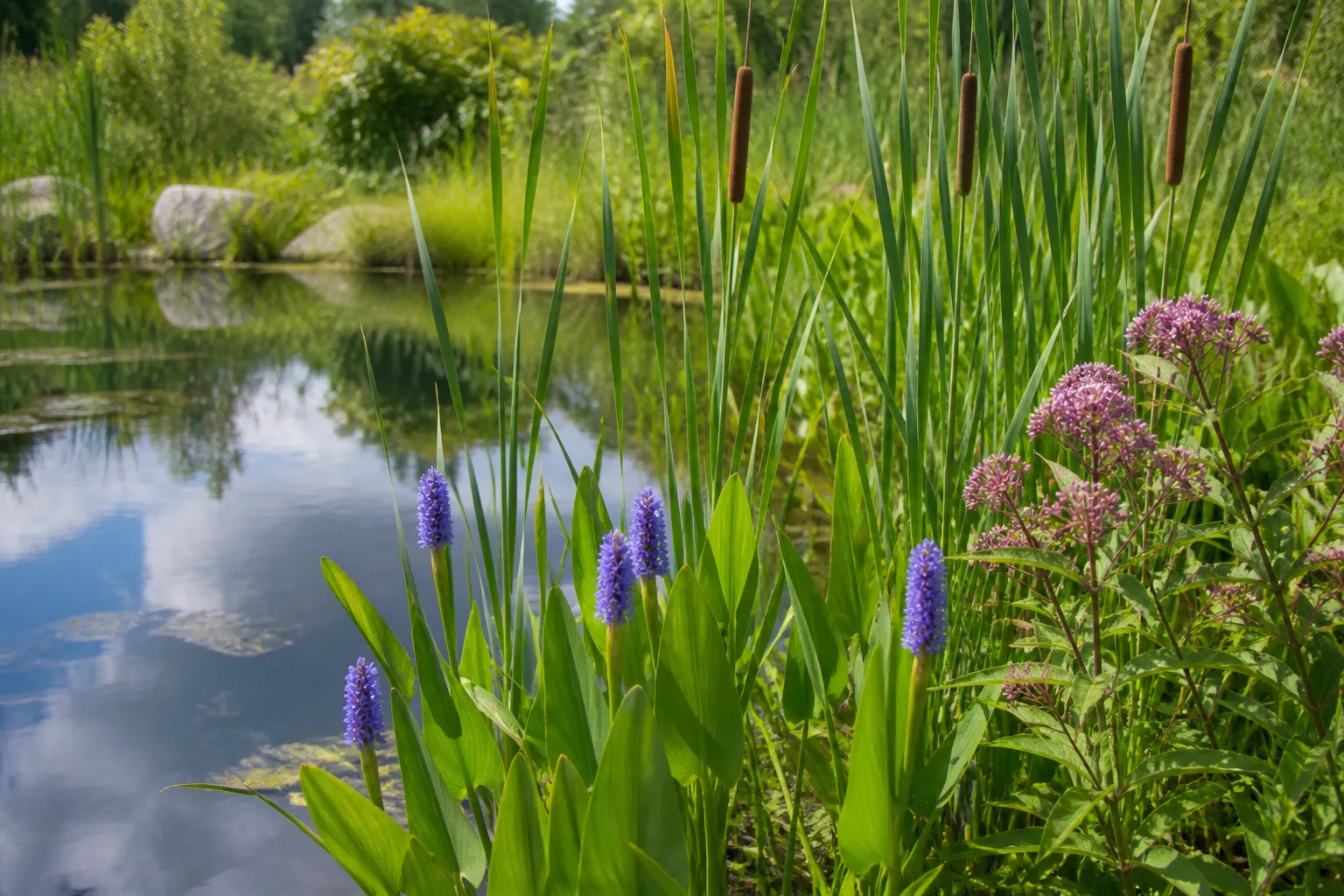
Pickerelweed is a native emergent with spikes of blue-purple flowers in summer. It grows 2–4 feet tall in shallow water or saturated mud, making it ideal for pond margins and rain-garden basins. Zones 3–10; full sun; tolerates clay and silt.
Dragonflies use stiff flower stalks and leaves as emergence sites and perches. The flowers also attract small pollinators and flies that adults hunt. Plant on a shelf so crowns sit just below the water line, then let it fill in over a season.
Common cattail (Typha latifolia)
Cattails are classic wetland plants with tall stems and brown seed heads. They offer excellent cover for nymphs and adults, and dragonflies commonly lay eggs on stems near water. Hardy in zones 3–10 in sun to partial shade with wet feet.
The trade-off is aggression. Broadleaf cattail spreads by rhizomes and can dominate small ponds, choking open water and outcompeting diverse natives. Use only in larger wildlife ponds, contained tubs, or sites where you can annually cut back rhizomes. In tight spaces, pickerelweed or iris give emergence stems with less takeover risk.
Swamp milkweed (Asclepias incarnata)
Swamp milkweed bridges shoreline and upland. This native milkweed likes moist soil or pond edges in zones 3–9, with pink to mauve summer blooms on 3–5 foot stems. It supports butterflies and bees—and the flies, beetles, and moths dragonflies eat.
Plant on the bank just above the waterline, not fully submerged. Swamp milkweed tolerates brief flooding but rots if crowns stay underwater all year. Pair it with a gentle slope so nymphs emerging on nearby stems can move into upland hunting grounds as adults.
Tall stems for emergence and adult perches
Height and stiffness matter here. These perennials give nymphs vertical escape routes and adults lookout posts.
Bearded iris, Asiatic lily, Joe Pye weed, and New York ironweed
Bearded iris (Iris germanica, zones 3–10) brings sword-like foliage and stiff flower stems 2–3 feet tall. Plant rhizomes at the pond’s upper margin where soil drains between storms. Iris is a classic emergent in larger water gardens; in dry beds it still works as a perch plant.
Asiatic lilies (zones 4–8) add 2–5 foot stems with broad landing platforms. They prefer moist, well-drained soil and full sun to light shade. Site them behind the pond so falling petals do not foul water daily.
Joe Pye weed (Eutrochium purpureum, zones 4–9) is a native wetland edge giant with vanilla-scented pink-purple domes on 5–7 foot stems. It thrives in moist soil and draws butterflies—and the insect traffic dragonflies follow. Use it as a backdrop where its height will not shade the pond.
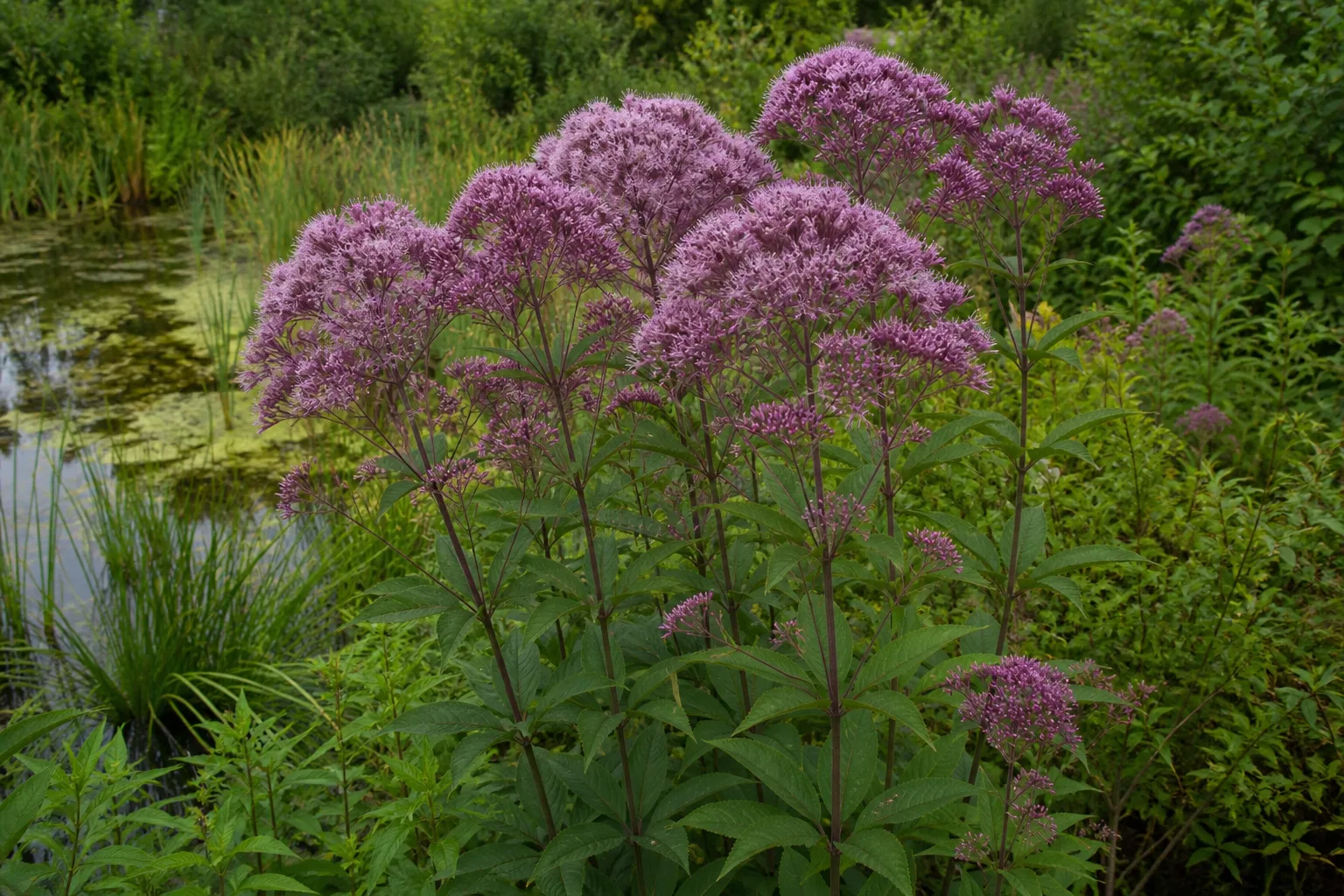
New York ironweed (Vernonia noveboracensis, zones 5–9) offers intense purple flowers on sturdy stems in late summer. It tolerates moist soil and brief wet periods, fitting rain gardens and pond banks in the Northeast and Mid-Atlantic. Ironweed’s late bloom extends prey activity into fall when many dragonflies are still hunting.
Meadow flowers that support dragonfly prey
None of these feed dragonflies directly. They build the insect food web adults patrol. Penn State Extension lists composites such as coneflower, coreopsis, and yarrow among flowers that attract larger predators and beneficial insects (Penn State Extension: Attracting Beneficial Insects).
Black-eyed Susan, coneflower, aster, meadow sage, borage, tickseed, and yarrow
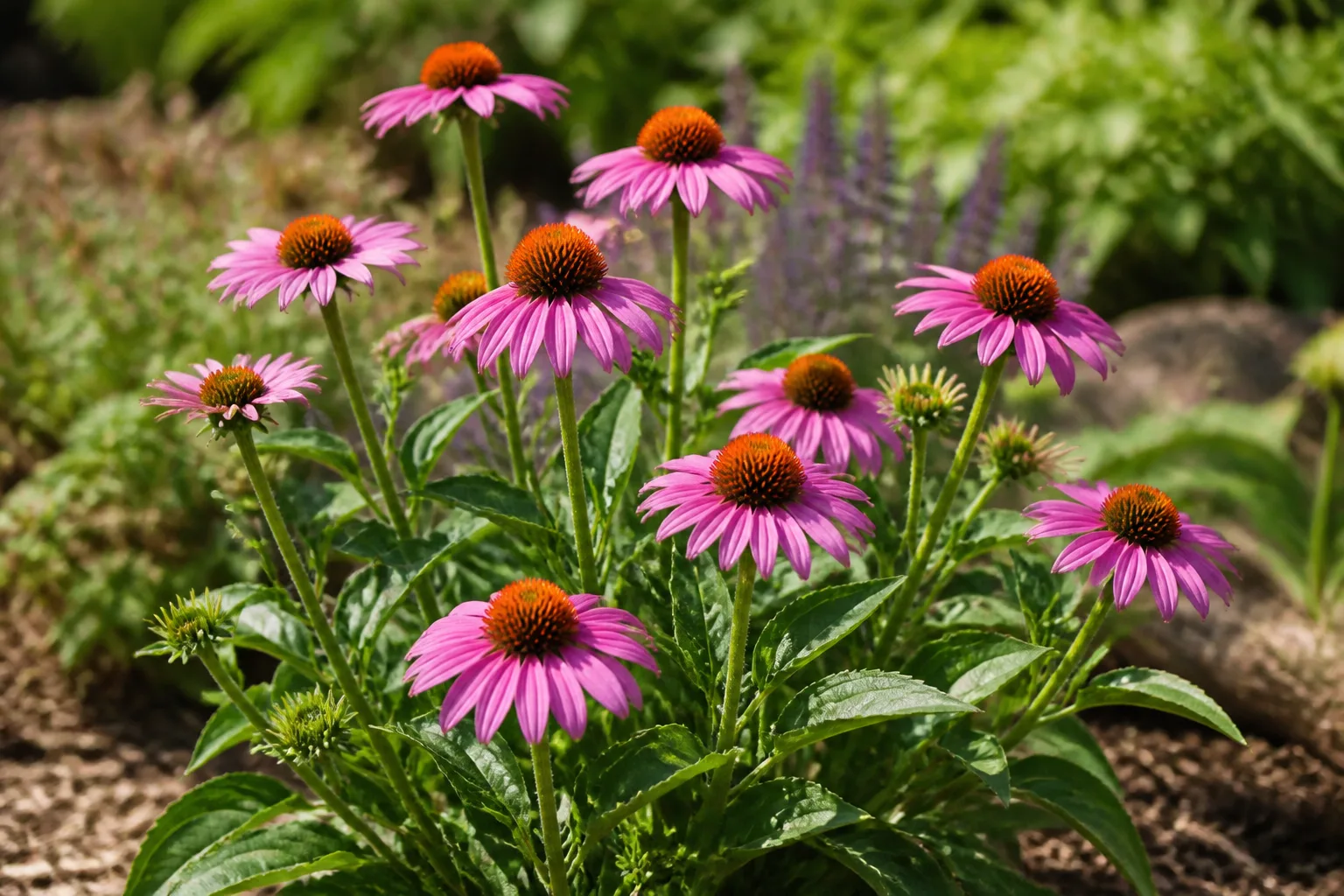
Black-eyed Susan (Rudbeckia hirta, zones 3–8) and coneflower (Echinacea, zones 3–8) are sunny-border workhorses with flat landing platforms for small insects. Plant drifts within 20–30 feet of water so hunting adults can move between pond and meadow.
Asters (Symphyotrichum spp., zones 3–8) extend blooms into fall beside wet ditches and rain gardens. Native asters support late-season flies and moths—important when golden dragonflies still cruise on warm afternoons.
Meadow sage (Salvia pratensis, zones 4–8) packs purple-blue flowers that hummingbirds and insects share. Well-drained soil and full sun suit it; keep it upland from constant splash.
Borage (Borago officinalis, annual in most zones) self-sows freely with star-shaped blue flowers that attract tiny pollinators. Treat it as a prey-support annual near vegetables or pond paths, and pull extras if it crowds slower perennials.
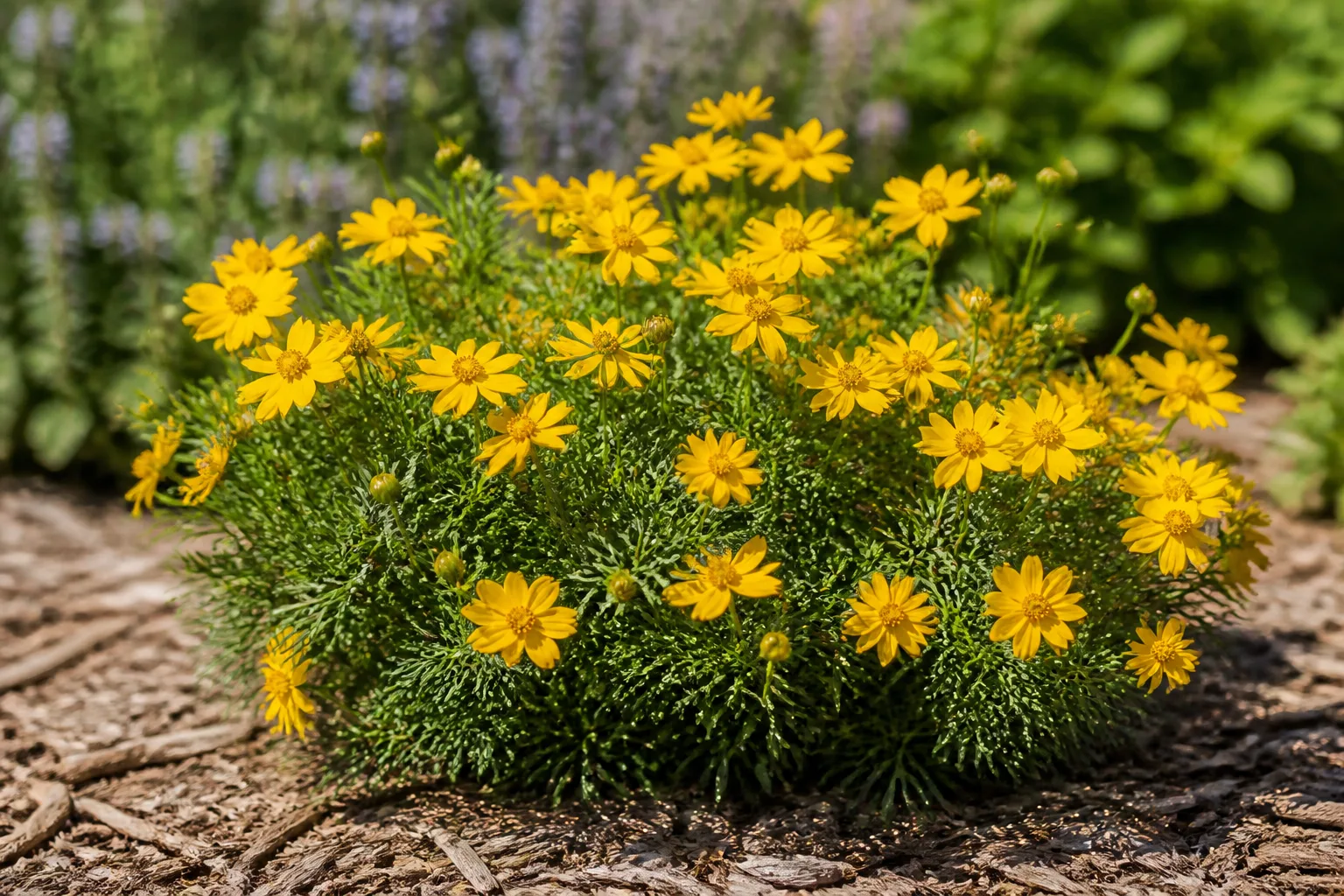
Tickseed (Coreopsis spp., zones 3–9) blooms heavily in summer with low maintenance in sandy, well-drained soil. Yarrow (Achillea millefolium, zones 3–9) adds flat umbels butterflies and flies love. Both handle drier spots farther from the pond while still feeding the aerial hunt.
For all meadow plants, favor straight-species natives local to your ecoregion when possible. Cultivars with doubled flowers sometimes offer less insect value than species forms.
Ornamental grasses for perching cover
Pink muhly grass (Muhlenbergia capillaris)
Pink muhly grass (zones 5–9) sends up airy pink plumes in autumn on 2–3 foot clumps. Dragonflies use grass blades and seed heads as perches and egg-deposition sites in moist meadows. It tolerates drought once established but benefits from occasional moisture—making it a good transition plant between pond edge and dry lawn.
Plant in full sun with sharp drainage. Muhly’s see-through habit preserves sight lines over the pond, unlike a solid shrub wall that blocks patrol routes.
A realistic plan for yards without a pond
No standing water means you are building a hunting ground, not a nursery. That can still be worthwhile: adult dragonflies range widely, and meadow plantings plus tall perches may draw visitors that eat mosquitoes over your patio.
Start with the prey-support flowers and grasses above, add flat basking rocks in sun, and eliminate broadcast pesticides. If space allows, install a container pond—even 20–40 gallons with one emergent iris, a potted lily, and an open center can support a few nymphs.
A rain garden planted with pickerelweed, swamp milkweed, and ironweed captures runoff and holds moisture after storms, mimicking the wet-dry rhythm of natural shorelines. Check local regulations before altering drainage.
Finally, accept timing. Dragonflies are most visible on warm, calm days from late spring through fall. A new pond may take two seasons to accumulate the micro-life nymphs need. Habitat is a long game, not a weekend project.
Conclusion
Plants that attract dragonflies earn their place when they supply water habitat, emergence stems, sunny perches, and prey insects—not when they merely look pretty in a catalog photo. Lead with a sunlit pond or rain garden, layer submerged, floating, and emergent species, then ring the water with tall iris, Joe Pye weed, milkweed, and muhly grass while meadow flowers feed the insects adults hunt.
Protect the food web by skipping broad insecticides, leaving some stems standing through winter, and choosing natives that fit your zone without escaping into wild waterways. Do that consistently, and dragonflies have a reason to return—skimming your pond, perching on a cattail, and picking mosquitoes out of the air on warm evenings.



