Water Lily Care Guide for Nymphaea nouchali
Nymphaea nouchali
Plant Nymphaea nouchali in heavy aquatic loam with its crown at soil level, submerge it gradually in calm water, and provide at least 5–6 hours of direct sun. Keep tropical plants warm and frost-free.
Water Lily Care Guide for Nymphaea nouchali
Start with wateringThe most common care mistake for Water LilyWatering guide →Water Lily care essentials
Light
Full sun with at least 5–6 hours of direct light for strong flowering
Water
Keep the planted tuber and roots continuously submerged in calm, warm water; never allow the aquatic basket or growing crown to dry out.
Soil
Plant in a wide aquatic basket filled with heavy clay loam or peat-free aquatic compost. Keep the crown at soil level, cap with washed gravel, and submerge gradually so new leaves can reach the surface.
Humidity
Aquatic; foliage grows at the water surface
Temperature
Warm water above 21°C (70°F) during active growth
Fertilizer
Feed at planting and every 4–6 weeks during vigorous warm-season growth, following the aquatic fertilizer label. Slow-release aquatic plant tablets pushed into the basket soil
About Water Lily
Water Lily is native to Tropical and subtropical Asia from Afghanistan and India through Southeast Asia to northern Australia, typically reaches Floating leaf spread commonly 60–180 cm (2–6 ft), depending on water depth and growing conditions indoors, with moderate to fast in warm, sunny water growth. Water Lily has a aquatic growth habit and part of the Nymphaeaceae family. It is also known as Blue Water Lily, Blue Lotus of India, Star Lotus, Neel Kamal, and Nymphaea stellata.
| Detail | Information |
|---|---|
| Also known as | Blue Water Lily, Blue Lotus of India, Star Lotus, Neel Kamal, Nymphaea stellata |
| Native region | Tropical and subtropical Asia from Afghanistan and India through Southeast Asia to northern Australia |
| Mature size | Floating leaf spread commonly 60–180 cm (2–6 ft), depending on water depth and growing conditions |
| Growth rate | Moderate to fast in warm, sunny water |
| Growth habit | Aquatic |
| Scientific name | Nymphaea nouchali |
| Family | Nymphaeaceae |
Water Lily Care Guide for Nymphaea nouchali
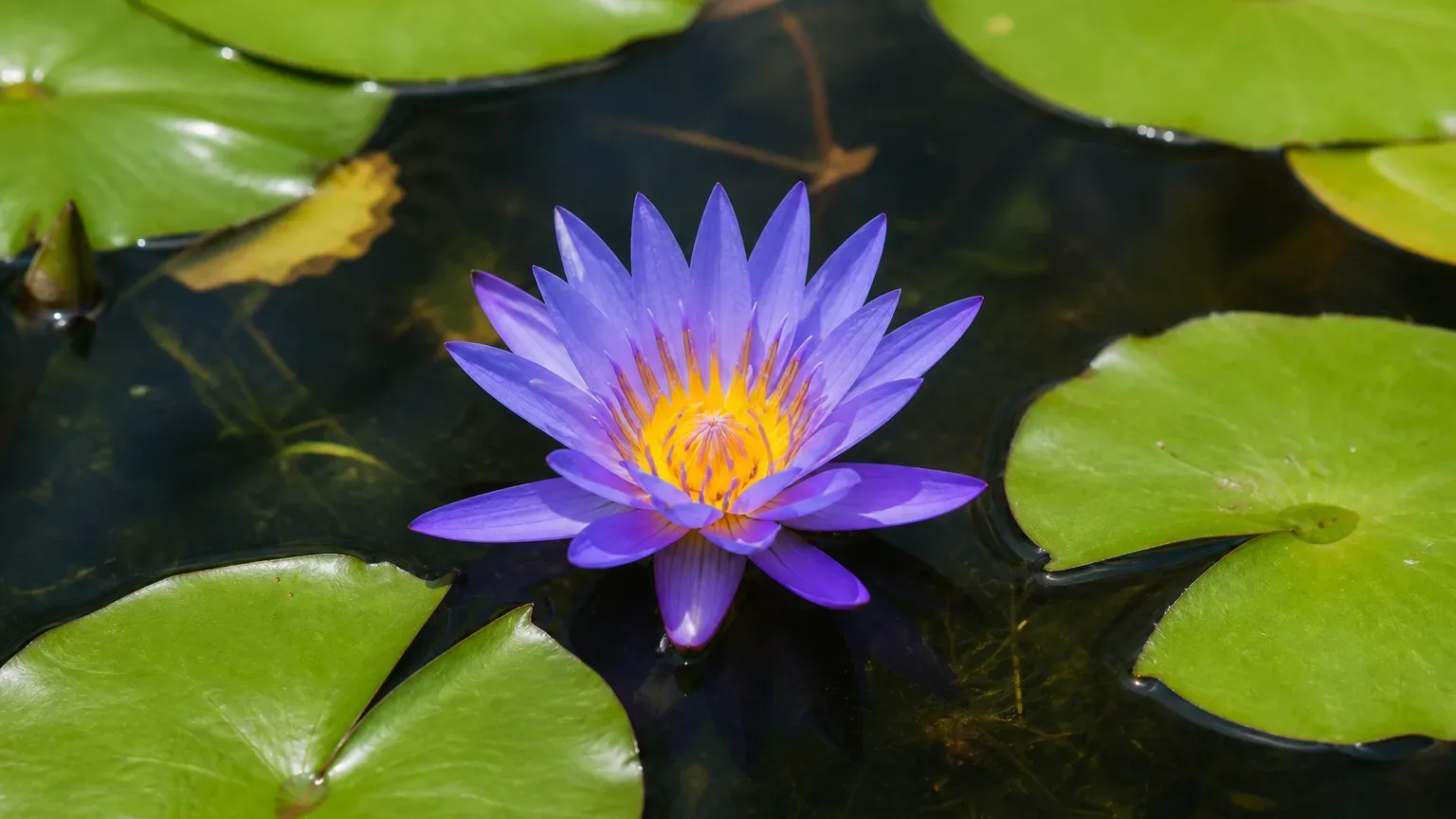
Nymphaea nouchali is a rooted aquatic plant, so successful water lily care starts underwater. Its tuber belongs in dense loam inside an aquatic basket; its leaf stalks rise through the water; and its pads and blue-violet flowers occupy the surface. A pot of ordinary houseplant mix on a windowsill cannot provide that system.
For reliable growth, place the basket in a sunny outdoor pond or broad watertight tub with warm, calm water. Keep the crown submerged without burying it, let every developing pad reach the surface, and make changes gradually. If your plant is newly installed, start with the Water Lily watering guide as well as this overview because water depth and water stability are inseparable from establishment.
Water Lily care at a glance
Give Nymphaea nouchali at least five to six hours of direct sun, warm water during active growth, and a position away from fountain spray or a forceful pump outlet. Plant the tuber in heavy clay loam or peat-free aquatic compost, keep the crown at soil level, cap the surface with washed gravel, and lower the basket only as far as its leaves can comfortably reach.
This is a tropical water lily. NC State Extension describes tropical day-blooming water lilies as warm-water plants that need at least five hours of sun, fertile loam, and container culture within a pond. In a suitable setup, your recurring jobs are simple: maintain water level, remove decaying leaves, bury aquatic feed in the basket when needed, and divide the plant when crowding reduces flowering.
What plant is Nymphaea nouchali?
Nymphaea nouchali is an accepted species in the water-lily family, Nymphaeaceae. Kew describes it as a tuberous hydrogeophyte native across tropical and subtropical parts of the Old World to northern Australia, growing primarily in wet tropical habitat. The Asian typical variety is likewise recorded as a tuberous plant of tropical and subtropical Asia to northern Australia.
The older name Nymphaea stellata still appears in nurseries and local plant markets; the RHS lists it as a synonym. “Blue Water Lily,” “Neel Kamal,” “Star Lotus,” and “Blue Lotus of India” may also appear on labels. Check the botanical name because common names alone do not tell you whether the seller has a water lily, a lotus, or another aquatic.
Water lily, not lotus
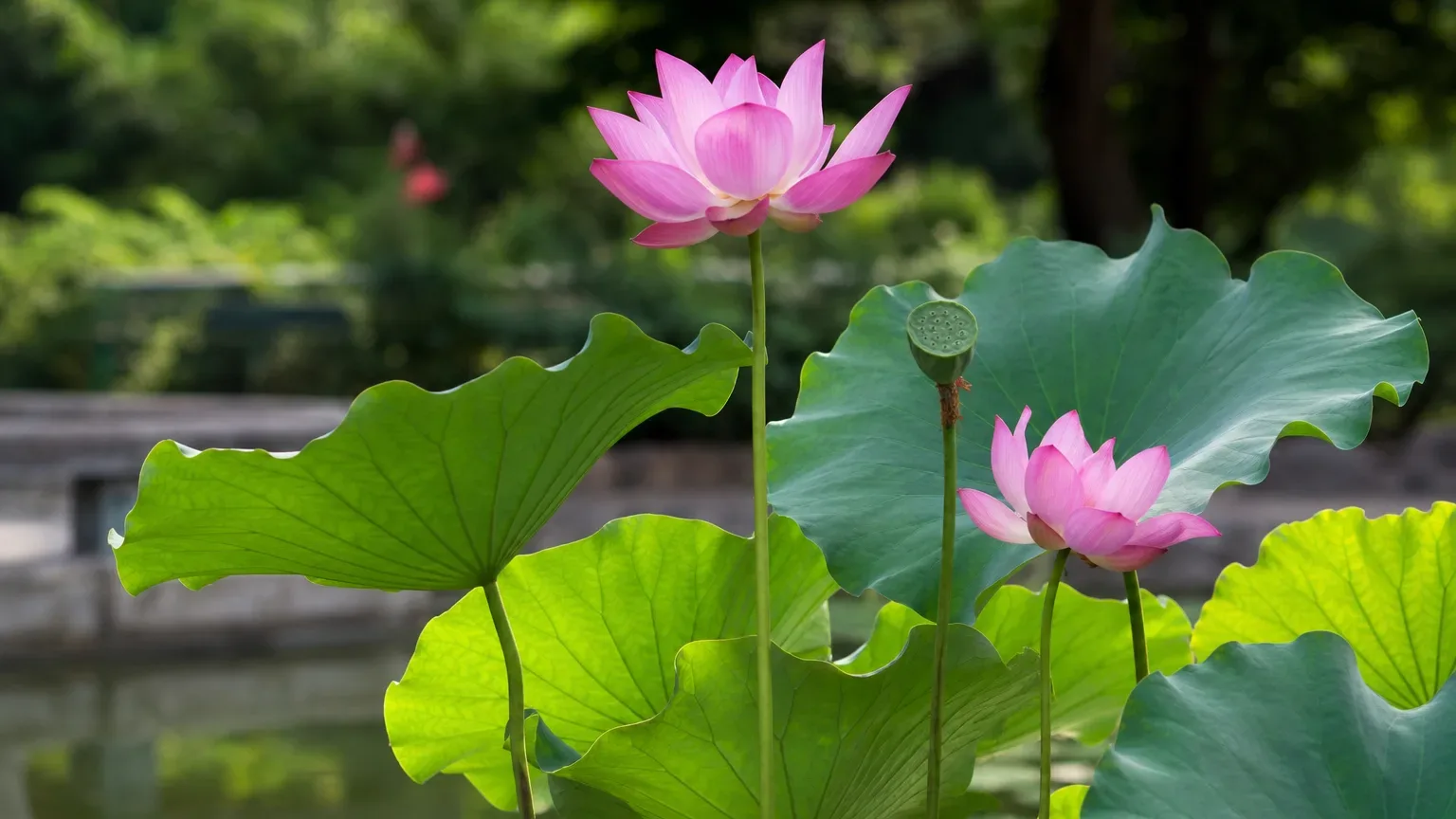
Despite “lotus” in several common names, Nymphaea nouchali is not a true lotus. True lotuses belong to the genus Nelumbo. A water lily usually carries round pads at the water surface, while mature lotus leaves are commonly held well above it on stiff stalks; their underground structures and planting habits also differ.
That distinction changes care. Do not copy a lotus guide’s large-container depth, emergent-leaf expectations, or rhizome placement for this plant. If the label says Nymphaea nouchali or Nymphaea stellata, use an aquatic basket and judge planting depth by whether new lily pads can float flat.
How Water Lily grows
The plant anchors below the water and continually sends long petioles to the surface. RHS describes Nymphaea as submerged aquatic perennials with floating rounded leaves and conspicuous flowers held on or above the water. A healthy specimen therefore occupies two zones at once: a stable, oxygenated crown in soil and open, sunlit foliage at the air-water boundary.
Expected spread depends on the particular form, basket volume, depth, fertility, and climate. Allow roughly 60–180 cm of surface spread as a practical planning range, but trust the seller’s mature dimensions when you have a named selection. Pads crowding into vertical layers are not proof of extra vigor; they often mean the basket is congested or the available surface is too small.
Choose the right growing setup
The best site is a sunny pond, terrace tub, or courtyard water container outdoors. It should be broad enough for pads to spread, deep enough to keep the basket submerged, and watertight. Choose the site before filling a heavy container, since moving a planted tub later disturbs depth and can damage new stalks.
Avoid a small bowl indoors. Even beside a bright window, indoor light is usually too weak for sustained flowering, while limited water volume heats and cools quickly. For detailed placement decisions, use the Water Lily light guide; for the basket medium, use the Water Lily soil guide.
Pond or watertight container?
A pond buffers temperature and water-level changes and gives the plant room to spread. A broad container is easier to inspect, feed, and protect during severe weather, making it practical for balconies and terraces that can safely carry the filled weight. UF/IFAS notes that water lilies can be grown as potted plants placed at an appropriate pond depth, with pebbles helping hold soil in place.
In either setup, protect the plant from vigorous splashing. Moving water is not automatically “fresher” for a water lily; constant fountain spray and turbulence interfere with pads resting flat and can damage flowers. Gentle circulation elsewhere in a pond is different from directing a pump outlet at the crown.
Give Water Lily enough direct sun
Aim for five to six hours or more of unobstructed direct sun. The RHS recommends full sun to promote water-lily flowering, while NC State sets five hours as a useful minimum for tropical day bloomers. Bright open shade may maintain leaves, but flower production usually falls as shade increases.
In extremely hot Indian summers, a little late-afternoon protection can reduce stress in a small container, but do not turn that exception into an all-day shaded placement. Keep enough open water that pads are not shaded by taller aquatics. A water lily growing leaves but no buds should be assessed for sun, crowding, temperature, and nutrition together rather than fed immediately.
Keep the water warm, calm, and stable
Tropical water lilies perform best once water is warm; the RHS gives at least 21°C during summer growth. Avoid putting a newly purchased warm-grown plant into cold water after a sharp weather change. Stable conditions matter more than chasing an exact daily temperature.
Keep the basket permanently submerged during active growth and top up evaporated water before the crown is exposed. “Overwatering” is not the useful diagnosis here; poor water quality, cold conditions, a buried crown, or decaying basket soil can still cause soft black tissue and a foul smell. The Water Lily watering guide explains top-ups, depth checks, and what to do when the plant looks weak despite being surrounded by water.
Anchor the tuber in an aquatic basket
Use a wide aquatic basket filled with heavy clay-based loam or peat-free aquatic compost, not fluffy terrestrial potting mix. Light mix escapes, clouds the water, and does not anchor the tuber. Utah State University Extension recommends silt-loam or clay-type soil and warns against light potting mixes that float out.
Set the growing crown at the soil surface rather than burying it. Firm the loam around the tuber, add washed pea gravel as a cap, and keep gravel away from the live growing point. The Water Lily repotting guide covers basket choice and handling when an established plant becomes congested.
Set the crown at a workable depth
For a newly planted or weak specimen, begin with roughly 15–25 cm of water above the crown, or whatever shallower depth allows every developing pad to float. The RHS planting method uses that range initially and recommends lowering the basket in stages as growth lengthens. Permanent depth ultimately depends on the plant’s vigor and mature size.
Pads that cannot reach the surface suggest excessive starting depth. Pads stacking upright can indicate water that is too shallow, crowding, or a basket that needs division. Change depth in stages; a sudden large adjustment forces every new stalk to adapt at once.
Feed the soil, not the open water
Use slow-release aquatic plant tablets pushed well into the basket soil. This places nutrients near roots and reduces direct release into the water. Do not pour soluble lawn or houseplant fertilizer into the pond, especially where fish or other animals live.
Feed at planting only if the product label permits, then during vigorous warm-season growth according to that specific aquatic fertilizer. Pause when growth slows or the plant is stressed. The Water Lily fertilizer guide helps separate nutrient shortage from shade, cool water, and crowding so feeding does not become the default response to every missing flower.
Adjust care through Indian seasons
During hot pre-monsoon weather, check water level frequently because evaporation can expose a shallow basket quickly. Top up gently and avoid repeatedly replacing all the water, which creates abrupt temperature and chemistry changes. If a small dark container overheats, shade the container wall while keeping the foliage in sun.
Monsoon care is mostly about stability. Overflow should have a safe path, heavy rain should not wash soil from the basket, and storm runoff contaminated by garden chemicals should not enter the tub. In cooler northern winters, protect this tropical species from frost and keep its resting tuber from chilling; the RHS advises tropical water lilies need at least 10°C in winter.
Read the pads, crown, and flowers
Healthy establishment shows as firm new stalks, pads that arrive and float flat, and progressively larger leaves. Flowers follow once warmth, sun, root establishment, and nutrition align. One melting nursery leaf is less informative than the condition of new growth emerging from the crown.
Trouble signals are more useful in combinations. Tiny leaves that repeatedly fail to reach the surface point toward excessive depth; upright crowded pads suggest shallow water or congestion; many leaves with no buds suggest insufficient sun, cool water, crowding, or low fertility. A soft crown, blackened stalk bases, or sour-smelling soil needs immediate inspection rather than another fertilizer tablet.
Common Water Lily care mistakes
The most damaging errors are treating this plant like a terrestrial houseplant, burying the crown, using floating potting mix, and putting it in a shaded indoor bowl. Other frequent mistakes include changing water depth too quickly, aiming a fountain at the pads, letting evaporation expose the basket, and buying by a vague “blue lotus” label without checking the species.
Crowding is another slow failure. Remove yellow leaves and spent flowers before they decay, and inspect the basket yearly even if division is not yet required. If congested roots and shoots fill the container or flowering falls despite warmth and sun, follow the Water Lily propagation guide for division rather than forcing growth with extra feed.
Pet and pond-safety limits
Do not confuse this water lily with true Lilium lilies, but do not treat that distinction as proof that Nymphaea nouchali is safe to eat. The checked ASPCA toxic and non-toxic plant database does not provide species-specific clearance for N. nouchali. Prevent chewing and seek veterinary advice after a significant ingestion or symptoms.
Keep fertilizer tablets buried, follow every pond-treatment label, and prevent pets from drinking water recently treated with algaecides or pesticides. If fish or amphibians share the water, confirm that every product is explicitly suitable for that system before use.
When to use this page vs other Water Lily guides
- Use this overview to identify the plant, choose a setup, and understand the complete care system.
- Use Water Lily light care when pads grow but flowering is weak or placement is uncertain.
- Use Water Lily watering care for depth, evaporation, water stability, and seasonal top-ups.
- Use Water Lily soil care before filling or rebuilding an aquatic basket.
- Use Water Lily repotting care when pads crowd upward or the basket is full.
Related Water Lily guides
- Water Lily light guide — direct sun, shade limits, and flowering.
- Water Lily watering guide — stable depth and warm-water care.
- Water Lily soil guide — heavy loam, aquatic compost, and gravel caps.
- Water Lily fertilizer guide — safe tablet placement and feeding decisions.
- Water Lily propagation guide — tuber division and new-plant aftercare.
- Water Lily repotting guide — basket sizing and congestion.
Conclusion
Successful Water Lily care is a matter of building the right aquatic system: Nymphaea nouchali anchored in heavy loam, crown uncovered, basket submerged, pads in direct sun, and water warm and calm. It is a water lily rather than a lotus, and that identity should guide every decision from depth to container choice.
Start by checking the three conditions that control most outcomes: can new pads reach the surface, does the plant receive at least five to six hours of sun, and is the crown firm in stable warm water? Once those are right, measured feeding, seasonal top-ups, removal of decaying growth, and timely division keep the display healthy without constant intervention.
How to care for Water Lily?
How much light does Water Lily need?
Full sun with at least 5–6 hours of direct light for strong flowering. Bright open shade with fewer flowers. Light afternoon shade in extreme summer heat. direct sun
- Full sun with at least 5–6 hours of direct light for strong flowering - Full sun with at least 5–6 hours of direct light for strong flowering.
- Bright open shade with fewer flowers - Bright open shade with fewer flowers.
- Light afternoon shade in extreme summer heat - Light afternoon shade in extreme summer heat.
- direct sun - direct sun.
When should you water Water Lily?
Keep the planted tuber and roots continuously submerged in calm, warm water; never allow the aquatic basket or growing crown to dry out.
- Check that pads float flat at the surface - Keep the planted tuber and roots continuously submerged in calm, warm water; never allow the aquatic basket or growing crown to dry out.
- the basket remains submerged - Keep the planted tuber and roots continuously submerged in calm, warm water; never allow the aquatic basket or growing crown to dry out.
- and the water is clear and still rather than following a calendar - Keep the planted tuber and roots continuously submerged in calm, warm water; never allow the aquatic basket or growing crown to dry out.
- Drain excess water - Keep the planted tuber and roots continuously submerged in calm, warm water; never allow the aquatic basket or growing crown to dry out.
What soil works best for Water Lily?
Plant in a wide aquatic basket filled with heavy clay loam or peat-free aquatic compost. Keep the crown at soil level, cap with washed gravel, and submerge gradually so new leaves can reach the surface.
- Heavy clay-based loam - Plant in a wide aquatic basket filled with heavy clay loam or peat-free aquatic compost.
- Peat-free aquatic compost - Plant in a wide aquatic basket filled with heavy clay loam or peat-free aquatic compost.
- Washed pea gravel as a top dressing - Keep the crown at soil level, cap with washed gravel, and submerge gradually so new leaves can reach the surface.
How to propagate Water Lily?
Divide a healthy, actively growing tuber or rhizome with at least one viable bud, then pot the section separately in heavy aquatic loam. Seed is slower and may not reproduce a selected form exactly.
- Tuber division - Divide a healthy, actively growing tuber or rhizome with at least one viable bud, then pot the section separately in heavy aquatic loam.
- Rhizome division - Divide a healthy, actively growing tuber or rhizome with at least one viable bud, then pot the section separately in heavy aquatic loam.
- Seed - Seed is slower and may not reproduce a selected form exactly.
Grower notes for Water Lily
What matters most with Water Lily
Nymphaea nouchali is a rooted tropical water lily, not a floating aquarium plant and not a lotus. Its tuber belongs in heavy loam inside an aquatic basket, while leaves and blue-violet flowers rise to the surface. Warm, still water and at least 5–6 hours of direct sun are the main flowering requirements. Moving water, deep shade, or a crown planted too deeply usually causes more trouble than a lack of fertilizer.
Best placement in a real home
Use a sunny pond, terrace tub, or broad watertight container outdoors. Start with about 15–25 cm of water above the crown so young leaves can reach the surface, then lower the basket gradually to its final depth as stems lengthen. Keep it away from fountains, cascades, and strong pump outlets. A small indoor bowl is usually too dim, cool, and shallow for sustained flowering.
Before you buy this plant
Confirm the label says Nymphaea nouchali or its older synonym Nymphaea stellata. Sellers may use blue lotus, star lotus, and Neel Kamal loosely, even though true lotus belongs to Nelumbo. Choose a firm tuber with a sound crown and clean emerging leaves, not a soft, sour-smelling piece. Also check the expected spread so the mature pads fit your pond or container.
First month after planting
Pot the tuber in heavy aquatic compost, leave the crown at the surface, and cap the soil with washed gravel. Lower the basket only far enough for every new pad to float; increase depth in stages as stems extend. Keep the water level stable and avoid changing depth, fertilizer, and placement together. Remove melting nursery leaves, but wait for healthy new growth before judging establishment.
Pet-aware note for Water Lily
The common name lily causes avoidable confusion. Nymphaea nouchali is in Nymphaeaceae, not the Lilium genus responsible for severe feline lily poisoning, but that distinction is not proof that this species is safe to eat. Species-specific companion-animal evidence is limited. Prevent chewing, keep fertilizer tablets buried, and do not let pets drink pond water treated with pesticides or algaecides.
How to tell Water Lily is settling in
Healthy establishment shows as firm new stalks and flat pads arriving at the surface, followed by repeated day-opening flowers in warm sun. Pads pushed above one another indicate crowding; tiny leaves that cannot reach the surface suggest excessive depth. Divide congested baskets when flowering declines, and remove yellow foliage before it sinks and raises nutrient levels in the water.
Is Water Lily safe for pets?
Nymphaea nouchali is not the same plant as a true Lilium lily, but it lacks reliable species-specific pet-safety clearance. Keep pets from chewing it and from drinking chemically treated pond water.
Nymphaea nouchali belongs to Nymphaeaceae and should not be confused with highly cat-toxic Lilium species. No dedicated ASPCA entry was found for Nymphaea nouchali, so LeafyPixels uses a conservative caution status rather than claiming it is safe or toxic. Contact a veterinarian after significant ingestion or any symptoms.
Watering Water Lily
For Water Lily, check that pads float flat at the surface, the basket remains submerged, and the water is clear and still rather than following a calendar. and water permanently submerged during active growth; top up containers whenever evaporation lowers the water level. Maintain a stable water level through hot weather and monsoon fluctuations. Nymphaea nouchali is tropical; protect the tuber from cold and keep winter water above about 10°C (50°F), with warmer water during active growth.
| Detail | Information |
|---|---|
| How often | Permanently submerged during active growth; top up containers whenever evaporation lowers the water level |
| How to check | Check that pads float flat at the surface, the basket remains submerged, and the water is clear and still rather than following a calendar. |
| Seasonal changes | Maintain a stable water level through hot weather and monsoon fluctuations. Nymphaea nouchali is tropical; protect the tuber from cold and keep winter water above about 10°C (50°F), with warmer water during active growth. |
Signs of overwatering
- Not applicable in the terrestrial sense
- crown rot in stagnant, cold, or polluted water
- soft blackened leaf stalks
- foul-smelling basket soil
Signs of underwatering
- exposed basket or crown
- pads curling above the waterline
- scorched or collapsing leaves
- stalled new growth
Soil & potting for Water Lily
Use a mix of Heavy clay-based loam, Peat-free aquatic compost, Washed pea gravel as a top dressing for Water Lily. Drainage is not relevant underwater; use dense soil that stays in the basket without clouding the pond. Target soil pH around Approximately 6.5–7.5. Repot inspect yearly and divide or repot when congested, commonly every 2–4 years, ideally in late spring to early summer, once water is warm.
| Detail | Information |
|---|---|
| Recommended mix | Heavy clay-based loam, Peat-free aquatic compost, Washed pea gravel as a top dressing |
| Drainage | Drainage is not relevant underwater; use dense soil that stays in the basket without clouding the pond. |
| Soil pH | Approximately 6.5–7.5 |
| Repotting frequency | Inspect yearly and divide or repot when congested, commonly every 2–4 years |
| Best season to repot | Late spring to early summer, once water is warm |
Signs it needs repotting
- pads standing above rather than floating on the surface
- crowded shoots at the basket edge
- fewer flowers despite full sun and feeding
- roots or rhizomes deforming the basket
Humidity & temperature for Water Lily
Water Lily prefers aquatic; foliage grows at the water surface. Keep temperatures around warm water above 21°C (70°F) during active growth. Avoid letting Water Lily sit below Keep above 10°C (50°F) in winter and protect from frost. This tropical water lily grows and flowers best in reliably warm water. Delay outdoor planting until the pond has warmed, and overwinter the tuber frost-free in cool climates.
| Detail | Information |
|---|---|
| Humidity | Aquatic; foliage grows at the water surface |
| Ideal temperature | Warm water above 21°C (70°F) during active growth |
| Minimum temperature | Keep above 10°C (50°F) in winter and protect from frost |
| Temperature notes | This tropical water lily grows and flowers best in reliably warm water. Delay outdoor planting until the pond has warmed, and overwinter the tuber frost-free in cool climates. |
Humidity tips
- Grow outdoors in a pond or large sunlit water container
- Keep the crown submerged while allowing pads to reach open air
Fertilizer & pruning for Water Lily
Feed Water Lily feed at planting and every 4–6 weeks during vigorous warm-season growth, following the aquatic fertilizer label using slow-release aquatic plant tablets pushed into the basket soil. The best feeding window is late spring through warm active growth. Ordinary soluble lawn or houseplant fertilizer added to open water, which can feed algae and harm pond life.
| Detail | Information |
|---|---|
| Fertilizer schedule | Feed at planting and every 4–6 weeks during vigorous warm-season growth, following the aquatic fertilizer label |
| Best season | Late spring through warm active growth |
| Fertilizer type | Slow-release aquatic plant tablets pushed into the basket soil |
| What to avoid | Ordinary soluble lawn or houseplant fertilizer added to open water, which can feed algae and harm pond life |
Pruning
Cut yellow leaves and spent flowers near their base before they decay in the pond. Keep no more than about half the water surface covered so light and gas exchange remain available to pond life.
Common problems on Water Lily
Yellow Leaves
MediumLikely cause: Common on this plant type; confirm with recent watering, light, and root checks.
Quick fix: Inspect the plant and correct the most likely care stressor before stacking treatments.
Full fix guide →Brown Tips
MediumLikely cause: Common on this plant type; confirm with recent watering, light, and root checks.
Quick fix: Inspect the plant and correct the most likely care stressor before stacking treatments.
Full fix guide →Root Rot
MediumLikely cause: Common on this plant type; confirm with recent watering, light, and root checks.
Quick fix: Inspect the plant and correct the most likely care stressor before stacking treatments.
Full fix guide →Overwatering
MediumLikely cause: Common on this plant type; confirm with recent watering, light, and root checks.
Quick fix: Inspect the plant and correct the most likely care stressor before stacking treatments.
Full fix guide →Underwatering
MediumLikely cause: Common on this plant type; confirm with recent watering, light, and root checks.
Quick fix: Inspect the plant and correct the most likely care stressor before stacking treatments.
Full fix guide →Spider Mites
MediumLikely cause: Common on this plant type; confirm with recent watering, light, and root checks.
Quick fix: Inspect the plant and correct the most likely care stressor before stacking treatments.
Full fix guide →Mealybugs
MediumLikely cause: Common on this plant type; confirm with recent watering, light, and root checks.
Quick fix: Inspect the plant and correct the most likely care stressor before stacking treatments.
Full fix guide →Aphids
MediumLikely cause: Common on this plant type; confirm with recent watering, light, and root checks.
Quick fix: Inspect the plant and correct the most likely care stressor before stacking treatments.
Full fix guide →Leggy Growth
MediumLikely cause: Common on this plant type; confirm with recent watering, light, and root checks.
Quick fix: Inspect the plant and correct the most likely care stressor before stacking treatments.
Full fix guide →Slow Growth
MediumLikely cause: Common on this plant type; confirm with recent watering, light, and root checks.
Quick fix: Inspect the plant and correct the most likely care stressor before stacking treatments.
Full fix guide →Wilting
MediumLikely cause: Common on this plant type; confirm with recent watering, light, and root checks.
Quick fix: Inspect the plant and correct the most likely care stressor before stacking treatments.
Full fix guide →Drooping Leaves
MediumLikely cause: Common on this plant type; confirm with recent watering, light, and root checks.
Quick fix: Inspect the plant and correct the most likely care stressor before stacking treatments.
Full fix guide →Low Humidity
MediumLikely cause: Common on this plant type; confirm with recent watering, light, and root checks.
Quick fix: Inspect the plant and correct the most likely care stressor before stacking treatments.
Full fix guide →Not Enough Light
MediumLikely cause: Common on this plant type; confirm with recent watering, light, and root checks.
Quick fix: Inspect the plant and correct the most likely care stressor before stacking treatments.
Full fix guide →Fungus Gnats
MediumLikely cause: Common on this plant type; confirm with recent watering, light, and root checks.
Quick fix: Inspect the plant and correct the most likely care stressor before stacking treatments.
Full fix guide →Mold on Soil
MediumLikely cause: Common on this plant type; confirm with recent watering, light, and root checks.
Quick fix: Inspect the plant and correct the most likely care stressor before stacking treatments.
Full fix guide →