17 Aquatic Flowers for Ponds and Water Gardens
Choose pond flowers that fit your water depth and climate. This guide compares 17 species and explains which belong underwater, on a shelf, or in wet soil.
The first decision is not flower color; it is where the plant’s crown and roots will sit. Some pond flowers root in submerged baskets and send leaves to the surface, some float freely, and many familiar “water plants” actually want only shallow water or permanently damp soil at the edge. Put a bog plant in deep water and it may rot; set a water lily too high and it may never establish.
That distinction also makes a small water garden easier to plan. Start with the depth and footprint you have, then choose a plant whose mature size and winter needs fit. The 17 options below include true aquatics, marginal plants, and wet-soil flowers, with notes on what each needs—and which ones deserve extra caution.
Start by matching the plant to the waterline
“Aquatic” describes several different growing positions, not one planting method. Before shopping, measure the distance from the water surface to the pond floor or shelf, and note whether the shelf will hold a basket. The relevant depth for a potted plant is the water above the plant’s crown or soil line, not the total depth of the pond.
The four pond-plant zones
Floating plants sit on the surface, with roots trailing freely in the water. They need no submerged pot, but they can multiply fast and move with wind or current. Rooted deep-water plants grow from a container or bed under the water; their leaves and flowers rise to or above the surface. Water lilies, lotus, and water hawthorn fit here, though their preferred depths differ.
Marginal plants sit on a shallow shelf with their roots in wet soil or a few inches of water. Their stems and flowers usually rise above the surface. Bog-edge plants prefer saturated soil beside the pond, not water permanently covering the crown. A plant described as pondside may belong in this last group, even if it can tolerate an occasional flood.
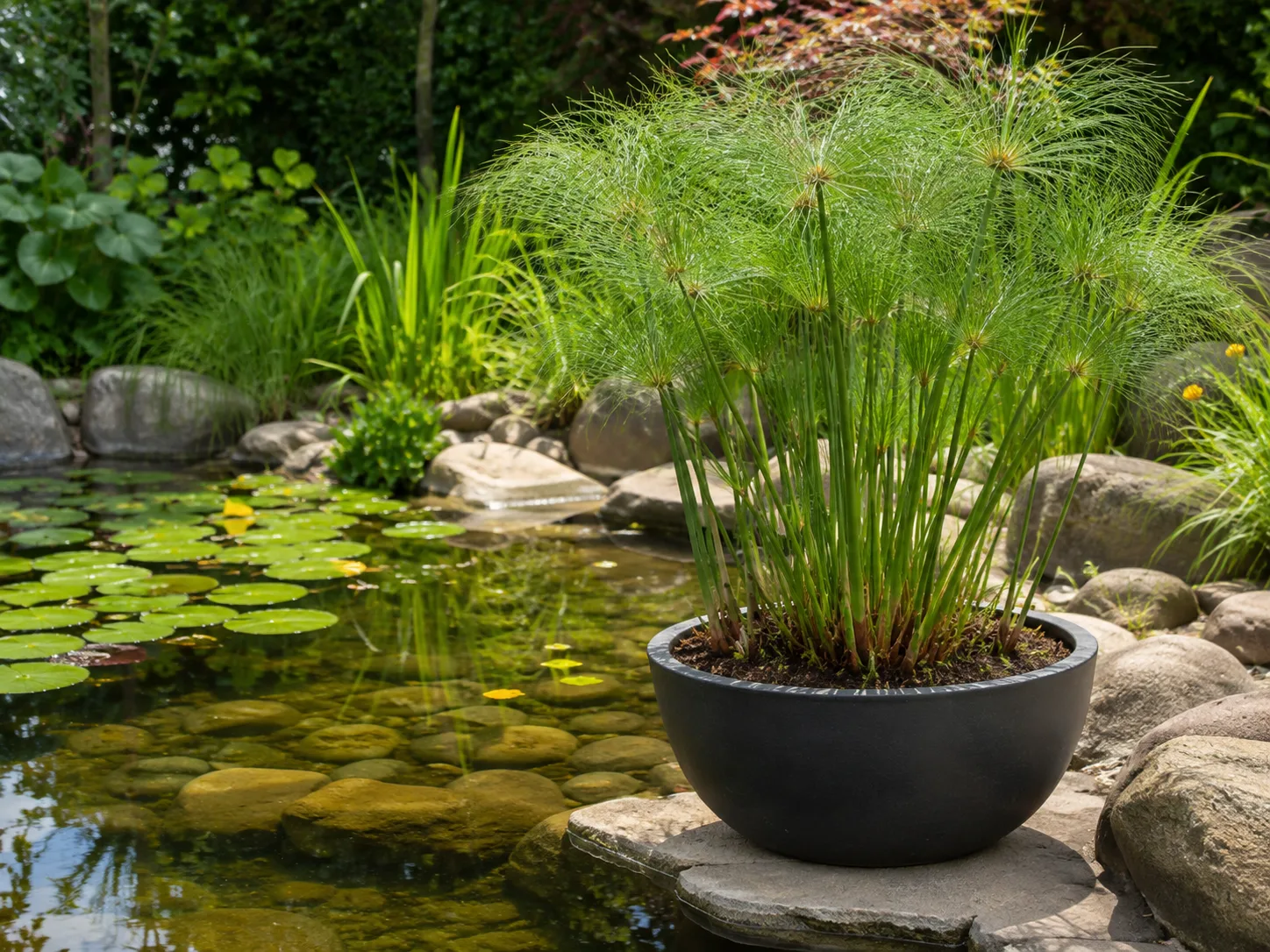
The line between marginal and bog-edge is easy to miss when reading a short plant label. A water garden can include both: a submerged shelf for a basket, a shallow ledge for emergent stems, and moist soil outside the liner for plants that dislike standing water. Better Homes & Gardens makes the same useful distinction between species planted in water and those that thrive in wet soil beside it; the specialist growers at Merebrook Pond Plants explain how shelves and a lined wetland can create those separate conditions.
17 aquatic flowers and water-loving plants
These plants do not all belong in the same depth. Treat the names as a menu of different pond positions, not as a shopping list to plant together. Mature spread, climate, and local restrictions matter as much as the flower itself.
Rooted open-water flowers
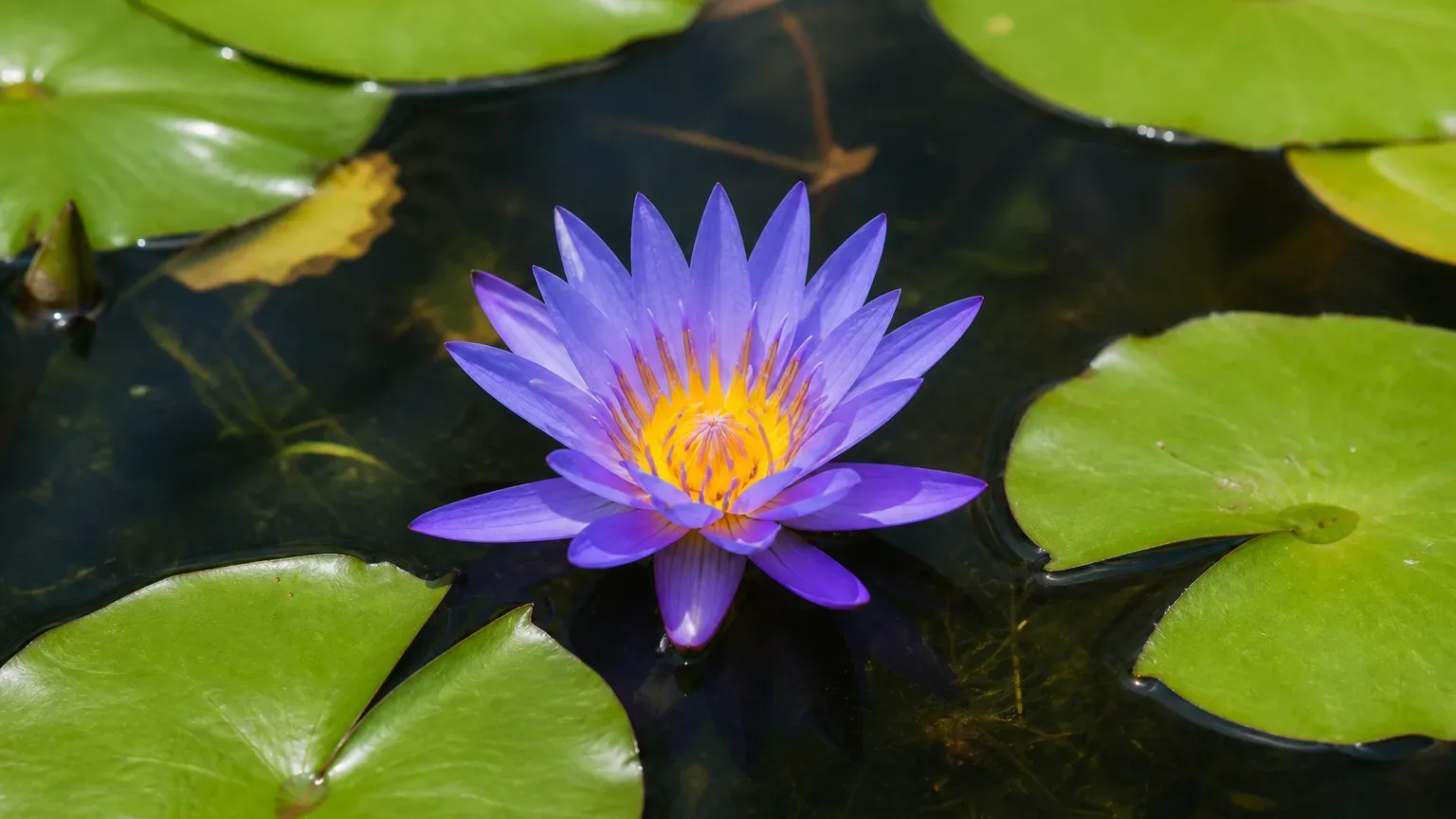
1. Water lily (Nymphaea spp.) — The classic choice for floating pads and blooms that rest at the water surface. Hardy and tropical water lilies are not interchangeable: their winter tolerance, bloom timing, and preferred starting depth differ, and cultivars also vary in spread. Pick a variety sized for the pond rather than buying the largest bloom at the nursery. Plant the rhizome in a heavy-soil basket with its growing point exposed, then set the container at the cultivar’s recommended depth. Utah State University Extension describes starting lilies in a pot and adjusting their height in the pond; it gives different depth guidance for hardy and tropical types, so a single “water lily depth” is not reliable.
2. Lotus (Nelumbo spp.) — Lotus flowers and leaves rise above the water, unlike the surface-level leaves and blooms of a water lily. The large leaves and vigorous rhizomes can quickly dominate a small pond, so a broad, sturdy container is often the simplest way to enjoy lotus without letting it spread through a liner. Give it warmth, sun, and room for the chosen cultivar; do not assume every lotus will flower in a cool, short summer. Better Homes & Gardens’ water-garden guide notes that potted lotus need sustained summer warmth, an important constraint for gardeners in cooler regions.
3. Water hawthorn (Aponogeton distachyos) — This rooted aquatic is useful when you want a different bloom season from the usual summer show. Its narrow, floating leaves and small white, fragrant flowers suit a calm pond, and it is often grown for cool-season flowering. Heat can interrupt growth or bloom, so it is not the best choice for someone expecting an uninterrupted display through a hot summer. Set it in a container at the depth recommended by the supplier and leave open surface area for its leaves.
Floating flowers
4. Water poppy (Hydrocleys nymphoides) — Rounded floating leaves and small yellow flowers give this warm-climate plant a softer look than a large water lily. It is a rooted aquatic rather than a soil-free floater: place it in a shallow basket or on a shelf so leaves can reach the surface. The plant is tender to cold, so in a frost-prone region treat it as seasonal or plan a protected winter location. Its runners can fill a small basin; use a container if you want a neat, defined patch.
5. Water hyacinth (Pontederia crassipes, often sold under the synonym Eichhornia crassipes) — This free-floating plant has glossy leaves, spongy stalks, dangling roots, and lavender flowers. It needs no pot, which can make it seem ideal for a beginner, but that convenience is outweighed by its escape risk. It reproduces from offsets and fragments and can form dense mats in suitable climates. In some jurisdictions it is restricted or prohibited. The Tennessee Invasive Plant Council documents its rapid vegetative spread and warns that fragments can restart growth. For most backyard ponds, choose a less risky plant; never release, dump, or compost viable pieces near a drain or natural waterway. Check current local rules before acquiring it.
6. Mosaic flower (Ludwigia sedioides) — Its tightly arranged, diamond-shaped floating leaves form a geometric rosette, sometimes coloring red around the edges, with small yellow flowers in warm weather. This is a tropical showpiece for a sunny, still container or pond, not a dependable perennial where water freezes. It needs adequate warmth and stable conditions; if the foliage loses its patterned look, check light, temperature, and water chemistry before adding products. Keep it in a basket or contained basin if you do not want the mat to spread across the surface.
Shallow-water and pond-edge flowers
The next plants should sit on the shallow shelf or in wet soil at the margin—not automatically at the bottom of a deep pond. Some tolerate a little standing water; others look their best with only their roots kept damp.
7. Water iris (Iris laevigata) — This iris is adapted to wet ground and shallow water, where upright leaves and blue, purple, or white blooms add height without covering the surface. Grow it in a basket on a shelf rather than burying the crown in deep water. It is distinct from blue flag iris below, despite their similar pond uses. Check the label for the named species and local hardiness; “water iris” is a broad common name and can be used for more than one Iris.
8. Water forget-me-not (Myosotis scorpioides) — Small blue flowers with yellow centers make this a gentle edging plant for a shallow shelf or saturated soil. Its low, spreading habit can soften a hard pond rim, but it is not a floating plant and should not be dropped into deep water. It may spread beyond the patch you first plant, so use a pot or trim it back if you need a tidy edge. Confirm its status in your region before putting it near a natural wetland.
9. Broadleaf arrowhead (Sagittaria latifolia) — The arrow-shaped leaves are easy to recognize, while the white, three-petaled flowers rise on airy stems above shallow water. This North American wetland plant can add a vertical accent and habitat value, but its rhizomes and tubers can expand. A basket makes removal and division easier in a small pond. Choose a locally appropriate species and do not treat a wildlife food source as permission to forage or eat pond-grown tubers.
10. Pickerelweed (Pontederia cordata) — Heart-shaped leaves and upright spikes of blue or purple flowers make pickerelweed a strong choice for a sunny shelf or pond margin. It is a rooted emergent plant: keep the crown shallow and the flower spike above water. It can spread by rhizomes, so contain it if you have a small lined pond. Where it is native, it can be a more ecologically thoughtful border choice than an exotic ornamental; still verify the local range and use a nursery-grown plant rather than taking it from the wild.
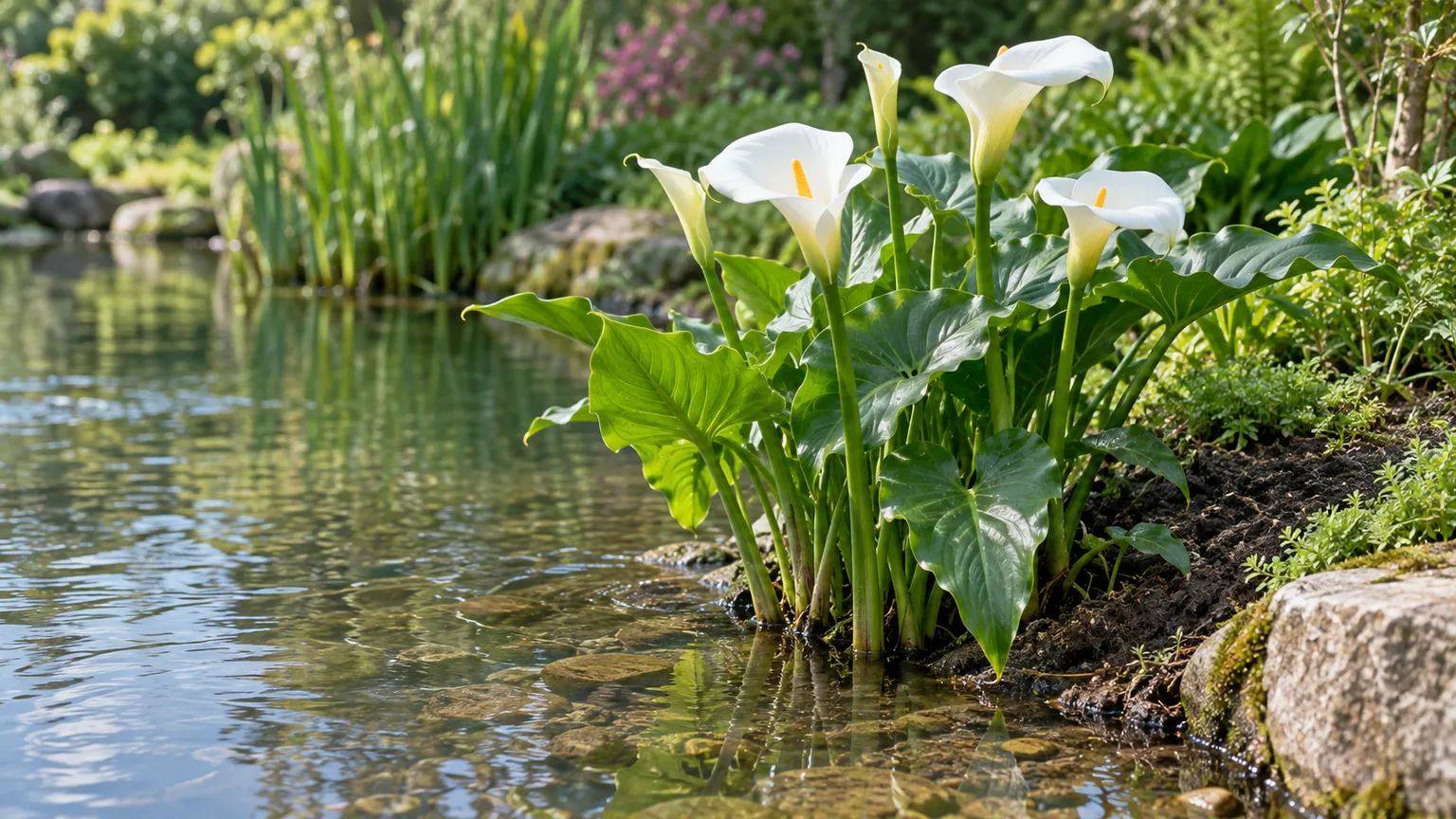
11. Calla lily (Zantedeschia aethiopica) — The white, sculptural spathes look at home beside water, but calla lily is better treated as a moisture-loving marginal plant than as a deep-water aquatic. Plant it in saturated soil or on the pond edge with the crown above the waterline. Cold tolerance varies with climate and how the plant is grown, so plan to lift or protect it where winter freezes are severe. If dogs or cats can reach the pond, note that the ASPCA lists calla lily as toxic to both because of insoluble calcium oxalates; keep it out of reach and contact a veterinarian if ingestion is suspected. A calla can look water-adapted without wanting its crown continuously submerged; use a shallow shelf only if the plant tag supports that placement.
12. Swamp lily (Crinum spp.) — “Swamp lily” can refer to different Crinum species, and their size and cold tolerance are not identical. The large strap-like leaves and fragrant white or pink flowers suit a warm pondside bed or very shallow margin. Read the botanical name on the label—Crinum pedunculatum and Crinum americanum, for example, should not be treated as one plant with one hardiness range. Give the root zone consistent moisture, but do not assume the bulb should sit under deep water.
13. Blue flag iris (Iris versicolor) — Unlike the water iris above, blue flag is a North American wetland iris with blue-violet flowers and upright foliage. Use it at the edge of a pond or in shallow water where the crown remains near the surface. Its rhizomes make a sturdy clump and may gradually widen, so leave space or grow it in a basket. When choosing a flag iris, identify the species: some other flag irises can be invasive in parts of North America, and common names alone are not enough to judge local suitability.
14. Cardinal flower (Lobelia cardinalis) — Bright red flower spikes draw attention above a damp pond edge and can attract hummingbirds. The plant likes consistently moist soil and can tolerate brief flooding, but that does not make permanent deep submersion a good planting position. Part shade can help in hot climates, while enough light supports stronger flowering. Better Homes & Gardens describes cardinal flower as a pondside late-summer bloomer; use it to extend color after some early-season marginals fade.
15. Marsh marigold (Caltha palustris) — Glossy leaves and cheerful yellow flowers make marsh marigold one of the more useful choices for an early-season display in a cool, wet garden. Plant it at the shallow margin or in boggy soil rather than a deep-water pot. In warm weather, the plant may slow down or go dormant after flowering, so a summer lull is not necessarily a failure. It is a woodland and wetland perennial; provide steady moisture while it is actively growing and avoid letting its crown bake dry.
16. Cattail (Typha spp.) — Cattails bring height, strong vertical lines, and familiar brown flower spikes, but those spikes are not the showy petals most people imagine when they hear “aquatic flower.” More importantly, vigorous rhizomes can take over a small pond. Better Homes & Gardens cautions gardeners to choose a locally appropriate, non-invasive cattail rather than assuming every species is safe; a large, removable basket can help contain a suitable selection. For a compact ornamental pond, a smaller native emergent plant is usually easier to manage.
17. Swamp milkweed (Asclepias incarnata) — Clusters of pink to reddish flowers attract pollinators, and the plant is a host for monarch caterpillars where it is native. It belongs in consistently moist to wet soil beside the pond, not in deep water with its crown submerged. Give it sun and room to form a clump; a wet rain-garden bed can be a better fit than a narrow pond shelf. Match it to your local native range and remember that water-loving does not mean waterlogged year-round.
Choose plants for the size and style of your pond
For a bowl or small patio basin, focus on one compact rooted plant and one small marginal accent. A dwarf water lily or a water poppy may work if the container’s surface area, depth, and winter location suit the specific variety. Avoid free-floating species that can cover the surface quickly, and skip plants whose mature clump would hide the entire basin. “Small pond plant” is not a reliable size category by itself; check the adult spread and planting depth on the cultivar label.
For a larger pond, combine leaf shapes and bloom heights rather than planting a specimen of every species. A water lily can occupy the open surface; one or two emergent plants such as pickerelweed or blue flag iris can frame a sunny edge; a bog plant such as cardinal flower or swamp milkweed can continue the transition into the garden. Leave open water for maintenance and wildlife access. Dense coverage can become a headache even when every individual plant is healthy.
Combine bloom seasons instead of planting everything at once
You can stretch the display by choosing plants with different bloom windows, but local climate changes the calendar. Marsh marigold often starts the show in spring; water lilies and lotus carry much of the warm season; cardinal flower can add a later red accent; and water hawthorn is valued for flowering during cooler stretches. Treat these as tendencies, not a guarantee for a particular month, and confirm the variety’s bloom season with a regional nursery. Better Homes & Gardens’ water-garden guide describes cardinal flower as a late-summer bloomer and several other flowering pondside plants, which can help you plan a sequence rather than one short burst of color.
If you want a naturalistic or wildlife-focused pond, start with the native plants for your county or watershed, not a national list. Native range, local invasiveness, and hardiness are not the same thing, and a species that behaves well in one state may be restricted in another. The Texas Invasives water-hyacinth profile describes how floating mats can alter light and oxygen conditions and lists native alternatives for Texas; use your own state’s invasive-plant database for the local decision. For a practical overview of pond-plant categories and spread-management tradeoffs, LawnStarter’s water-garden guide also distinguishes floating, marginal, and deep-water plants; local law and native-range decisions still need regional sources.
Plant aquatic flowers in baskets without muddying the water
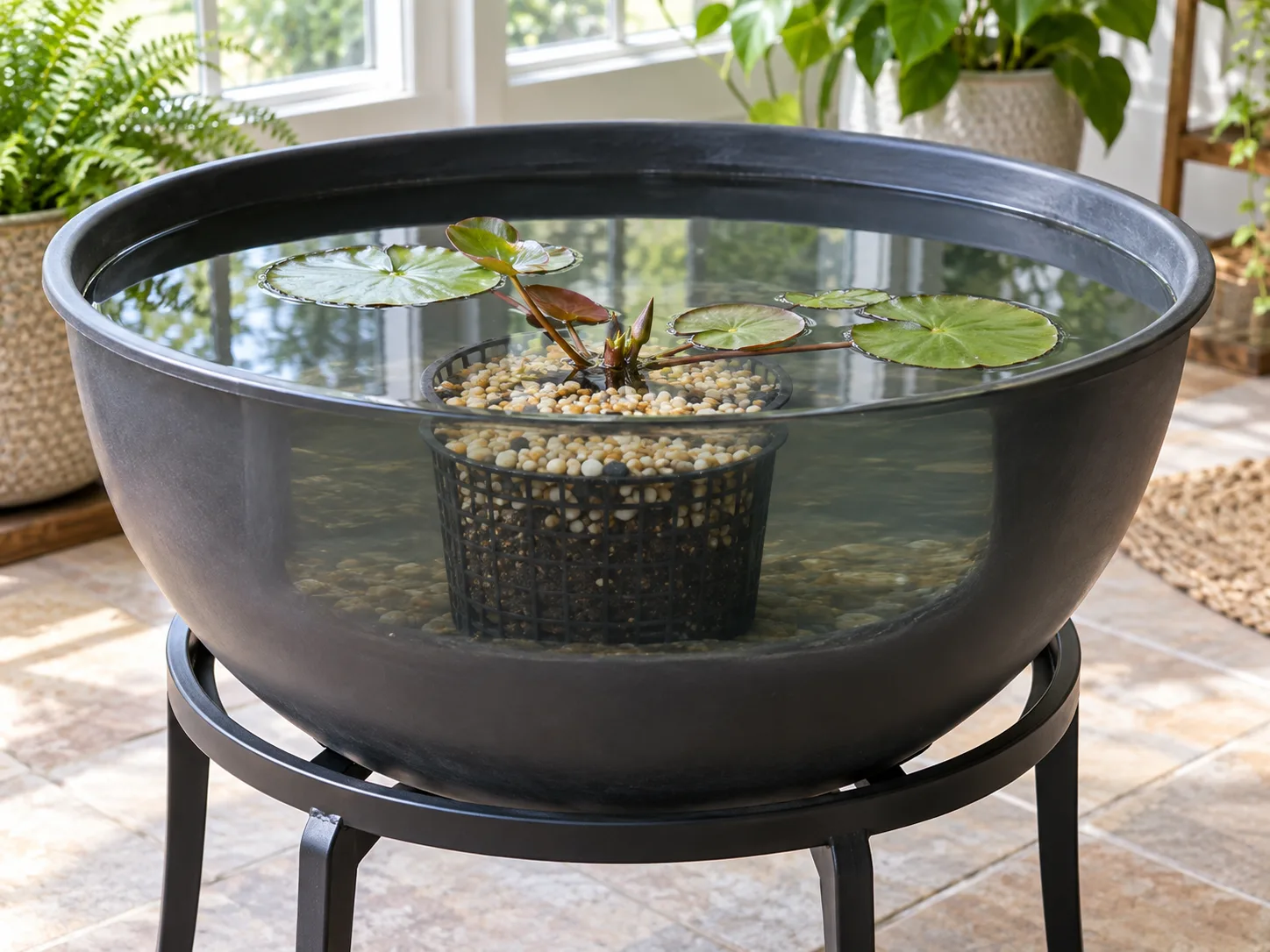
Most home ponds are easier to manage when plants grow in separate aquatic baskets rather than directly in the liner. Containers let you move a plant to the right depth, divide it without digging up the whole pond, and remove a vigorous species before it spreads. Choose the basket style for the plant: water-lily rhizomes need a stable, perforated aquatic pot; lotus is often grown in a broad container that limits its rhizomes; small marginals can sit in baskets on a shelf.
Use heavy aquatic soil or suitable loam for plants that need a substrate. Ordinary potting mix contains light organic ingredients that can rise out of the basket, cloud the water, or add nutrients where you do not want them. Utah State University Extension recommends a heavier soil for water lilies, placing the rhizome at an angle with the growing point exposed, and using gravel or stones to hold the soil in place. Follow the plant and fertilizer labels rather than adding general-purpose fertilizer to pond water.
Set the basket at the right height
Set a basket on a stable shelf, brick, or pond-safe support so the plant sits at its recommended depth. It is easier to lower a basket in stages as leaves grow than to start a young plant too deep. If the pond has no shelves, stack stable supports under the pot; do not balance a heavy container where it can tip into the liner or obstruct a pump. The water surface should stay clear enough for leaves and flowers to emerge without being pushed under by a waterfall or strong return jet.
Top the soil with washed pea gravel or a few clean stones if needed to prevent it escaping. Do not cover the growing point of a water-lily rhizome or bury a marginal plant’s crown deeper than its tag recommends. If the water goes cloudy after planting, stop disturbing the basket, remove loose soil from the surface, and check that the mix is heavy enough before fertilizing or replacing water.
Keep vigorous and invasive plants contained
Aquatic plants have an easy path to spread: water carries fragments, seeds, and offsets farther than a garden bed does. Water hyacinth deserves the strongest warning in this list. It is a free-floating plant that can reproduce rapidly; plant councils document both its vegetative spread and restrictions in some jurisdictions. Check your state and local rules before purchase, and do not add it to an open pond just because a retailer offers it. Never release an aquarium or pond plant into a creek, storm drain, lake, or wetland.
Other plants can be vigorous without being legally invasive. Cattails, arrowhead, pickerelweed, forget-me-not, and lotus may expand enough to crowd a small feature. Keep them in removable baskets, inspect for runners and daughter plants during the growing season, and divide before a pot becomes root-bound. When thinning, collect every fragment and seed head; bag and dispose of plant material according to local guidance. Do not empty pond water or plant pieces into natural waterways or stormwater systems.
When a plant is recommended as “native,” verify its native range locally. Botanical names matter: one cattail or iris species may be a good regional fit while another common-name lookalike is a problem. Local extension offices, native-plant societies, and invasive-species councils can help identify a safer alternative if a plant’s legal status or regional behavior is unclear.
Plan for sunlight, seasons, and winter
Most flowering pond plants bloom best with generous sun, but the right amount depends on species and climate. If a pond is shaded for most of the day, choose a plant that tolerates part shade and accept fewer flowers rather than trying to compensate with excess fertilizer. Water lilies prefer calm open water; position them away from fountains and waterfalls that continually splash their leaves. Marginal plants have more variation: cardinal flower and some wet-edge species cope with more shade than a lotus or water poppy.
Cold tolerance depends on both the plant and the pond. A hardy water lily may overwinter in a sufficiently deep pond, while a tropical lily, water poppy, or mosaic flower may need to be treated as an annual or moved to a protected, warm place. A plant’s USDA zone rating cannot tell you whether a shallow patio tub will freeze solid. Before the first frost, decide whether each tender plant will be lifted, brought indoors, or replaced next spring; for hardy types, follow the cultivar’s recommended winter depth.
During active growth, remove dead leaves and spent stems before they decay in the pond, but avoid stripping healthy foliage simply to make the water look tidy. Check baskets, water level, and surface coverage regularly. Add fertilizer only when the plant’s label calls for it, using an aquatic product and the specified amount; excess nutrients can encourage algae and create avoidable water-quality problems.
Common mistakes to avoid
The first mistake is treating “aquatic” as a synonym for “submerged.” Calla lily, cardinal flower, and swamp milkweed can be excellent pondside plants while still needing their crowns above standing water. Read the depth instructions as a placement measurement, and use separate baskets or soil beds to make each plant’s conditions possible.
The second is buying by flower photo rather than mature spread. A lotus or cattail can be stunning in a large pond and overwhelming in a half-barrel. Check the adult width, whether the plant floats or sends rhizomes, and how easy it will be to remove. For a small pond, containment is a design feature, not an afterthought.
The third is relying on a zone number or common name as a guarantee. “Water iris,” “swamp lily,” and “cattail” can refer to different species, and climate zones do not account for local restrictions, pond depth, or a shallow container that freezes. Match the botanical name, local rules, and growing position before planting.
The last is using ordinary potting mix or loose garden soil in a pond basket. A lightweight mix can float away, while uncontained fine soil clouds the water. Start with the heavy substrate recommended for that plant, keep the crown correctly oriented, and stabilize the container before setting it in the pond.
Conclusion
The best aquatic flowers are the ones that fit your pond’s actual waterline. Choose among rooted open-water plants, floaters, shallow marginals, and bog-edge flowers; then narrow the list by mature spread, sun, winter, and local invasive-plant guidance. Start with a few contained specimens rather than filling every inch of water, and your flowers will be easier to care for—and much less likely to outgrow the pond.