Lotus Care Guide: Pond, Sun, Soil & Seasonal Care
Nelumbo nucifera
Grow lotus outdoors in full sun, confine its rhizome in a wide container of heavy loam, and keep the soil submerged. Start shallow, increase water depth as leaves rise, and protect dormant rhizomes from freezing in cold climates.
Lotus Care Guide: Growing Sacred Lotus in Ponds and Tubs
Start with wateringThe most common care mistake for LotusLotus watering guide →Lotus care essentials
Light
Full outdoor sun, ideally at least 6 hours of direct sunlight daily
Water
Keep the planted rhizome continuously submerged in still or slow-moving fresh water. Start with only a few centimetres of water over the soil until leaves rise, then increase depth for the cultivar.
Soil
Use heavy, fertile loam that stays in the container underwater. Avoid light peat-based potting mixes, bark, and perlite, which float and cloud the pond.
Humidity
Aquatic roots with outdoor ambient humidity
Temperature
Warm water and air around 24–32°C (75–90°F) during active growth
Fertilizer
Feed established plants every 3–4 weeks during active growth, following the aquatic fertilizer label. Slow-release aquatic plant tablets pushed deeply into the soil, away from the rhizome
About Lotus
Lotus is native to Asia and northern Australia, in shallow ponds, lakes, wetlands, and slow-moving freshwater, typically reaches 1–2.4 m (3–8 ft) tall and 1.2–2.4 m (4–8 ft) wide for the species; dwarf cultivars remain much smaller indoors, with fast in warm weather; spreading rhizomes can fill a container in one growing season growth. Lotus has a aquatic perennial growth habit and part of the Nelumbonaceae family. It is also known as Sacred Lotus, Indian Lotus, Kamal, Padma, Asian Lotus, and Chinese Waterlily.
| Detail | Information |
|---|---|
| Also known as | Sacred Lotus, Indian Lotus, Kamal, Padma, Asian Lotus, Chinese Waterlily |
| Native region | Asia and northern Australia, in shallow ponds, lakes, wetlands, and slow-moving freshwater |
| Mature size | 1–2.4 m (3–8 ft) tall and 1.2–2.4 m (4–8 ft) wide for the species; dwarf cultivars remain much smaller |
| Growth rate | Fast in warm weather; spreading rhizomes can fill a container in one growing season |
| Growth habit | Aquatic Perennial |
| Scientific name | Nelumbo nucifera |
| Family | Nelumbonaceae |
Lotus Care Guide: Growing Sacred Lotus in Ponds and Tubs
Lotus Care Guide: Growing Sacred Lotus in Ponds and Tubs
Lotus care starts with one correction: true lotus is not a terrestrial houseplant and not a water lily. Nelumbo nucifera is a rhizomatous aquatic perennial whose roots belong in dense soil beneath fresh water while its mature leaves and flowers rise into full outdoor sun. If you treat it like a potted foliage plant, let its soil dry, or keep it beside a bright window, it is unlikely to thrive.
For growers in India and other warm climates, the main challenge is rarely humidity. It is providing enough unobstructed sun, a wide container, stable water depth, and room for the running rhizome without letting the plant escape into a natural waterway. This overview gives you the whole growing system; use the linked topic guides when you need exact instructions for one job.
Lotus care: the quick answer
Grow sacred lotus outdoors in at least six hours of direct sun. Plant the rhizome horizontally near the surface of heavy loam in a wide, solid container, leave the pointed growing tip exposed, and keep the soil submerged beneath a shallow layer of water while new leaves develop. Lower the pot or deepen the water gradually only after the leaf stems can reach the surface.
Choose the container for the cultivar, not for the size of the rhizome at purchase. Full-size lotus can become a large, fast-spreading plant; UF/IFAS records mature plants at roughly 5–8 feet tall and 4–8 feet wide, while compact cultivars remain much smaller. During active growth, maintain the waterline, feed established plants with an aquatic fertilizer, and remove failing foliage without cutting healthy stems below water.
How to identify true lotus
The accepted name Nelumbo nucifera belongs to Nelumbonaceae, and Kew describes it as a rhizomatous hydrogeophyte with a broad native range across parts of Asia and northern Australia. Common names include sacred lotus, Indian lotus, kamal, padma, and Asian lotus. Some sellers also use “Chinese waterlily,” an especially confusing name because the plant is not a true water lily.
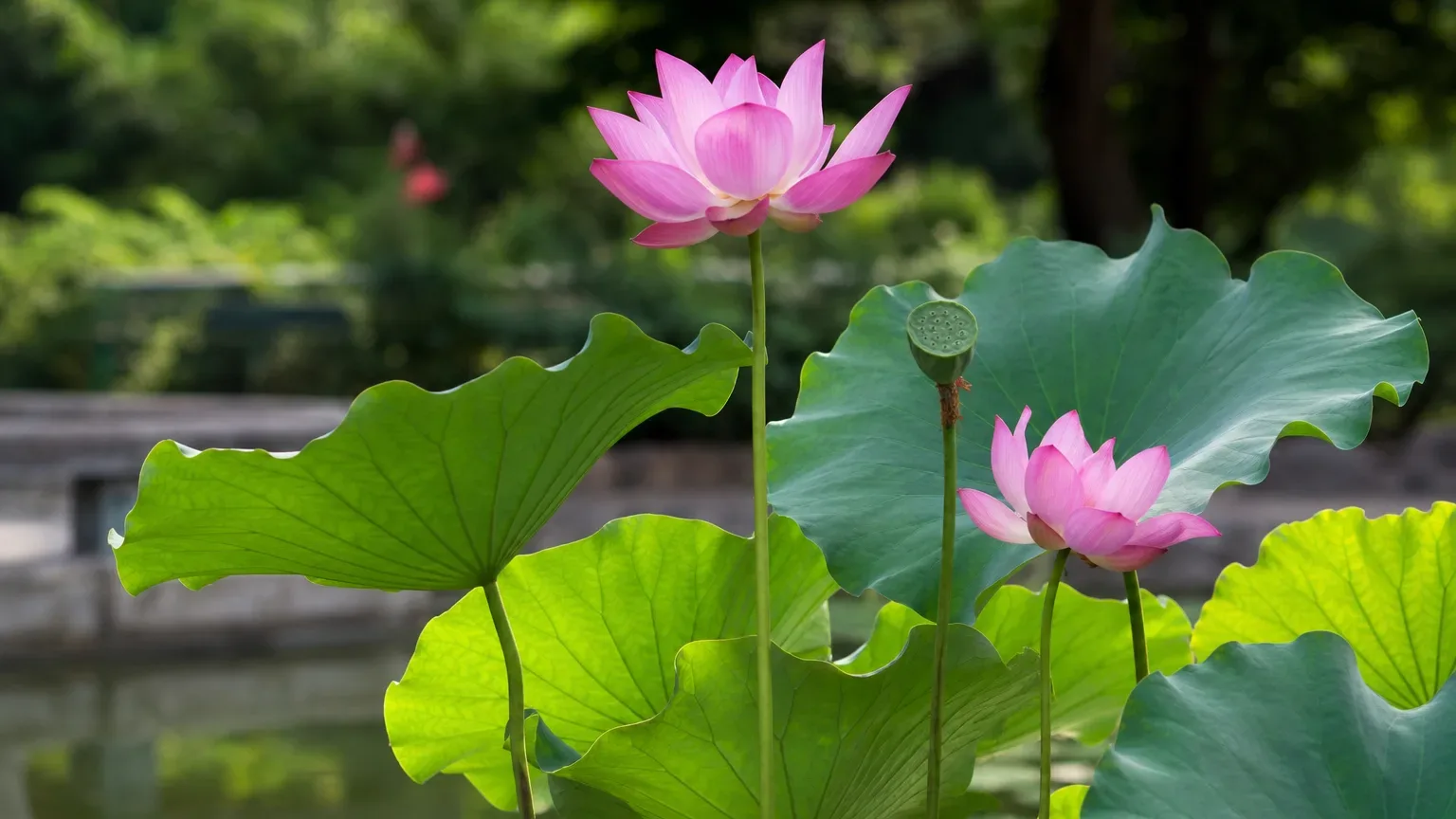
Look for round, peltate leaves: the leaf stalk joins near the centre of the blade rather than at a deep notch. The Missouri Botanical Garden Plant Finder profile describes established lotus with leaves and flowers rising above shallow water, followed by distinctive seed heads.
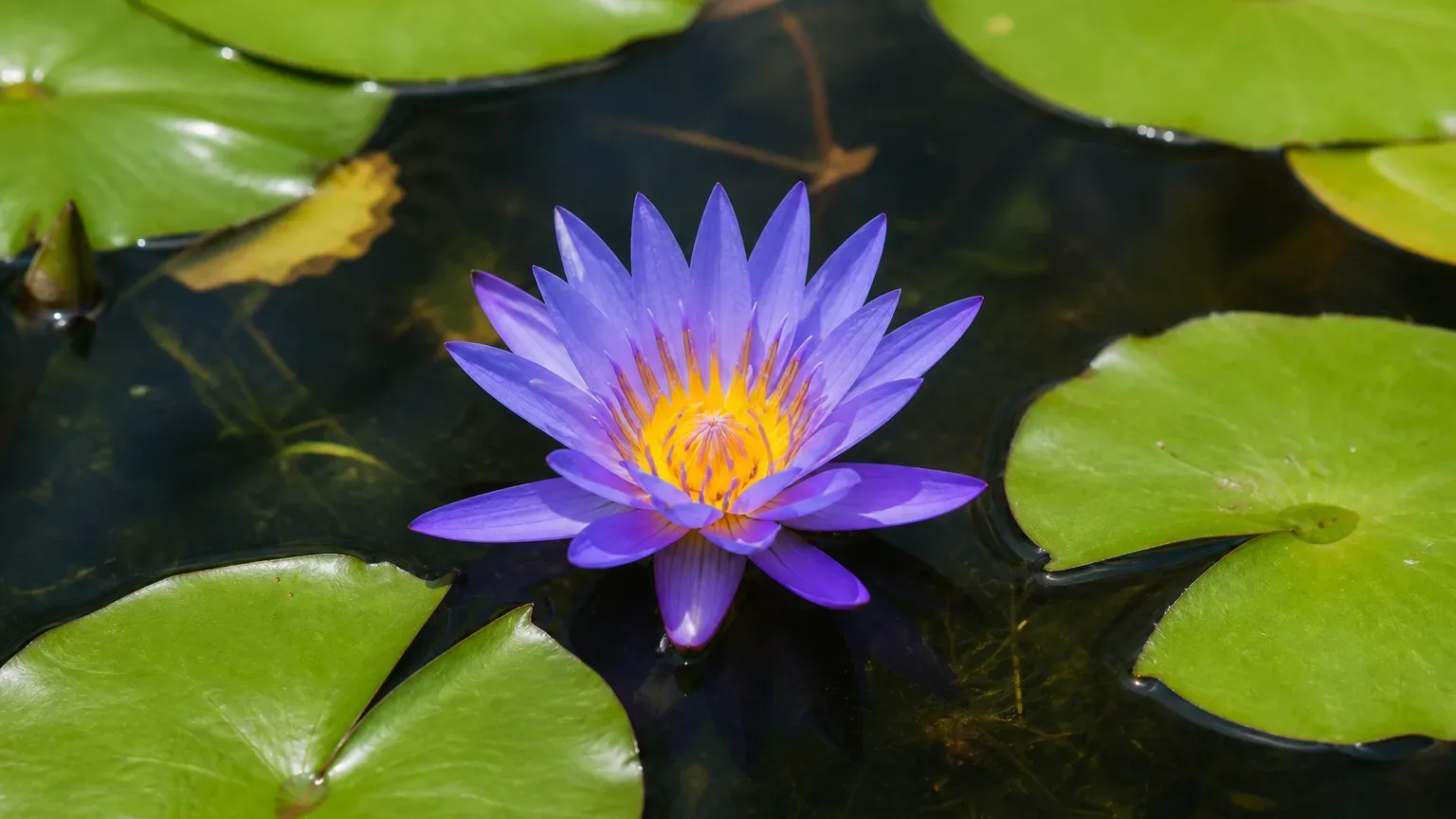
Lotus vs water lily
Water lilies belong to the family Nymphaeaceae and usually have notched leaves that float on the surface. True lotus develops large, unnotched leaves that may stand well above it; the NC State plant profile describes its peltate, upward-cupped blades and flowers held above the foliage. These are botanical and practical differences, not alternative names for the same plant.
Do not apply generic aquarium or water-lily advice to lotus. A lotus rhizome runs horizontally through heavy soil, its brittle growing tips must remain intact, and its container needs more width than a small decorative water bowl can offer. If a seller cannot provide the botanical name or mature cultivar size, confirm those details before buying.
Growth habit and mature size
Lotus grows from thick rhizomes anchored in submerged mud or soil. Floating juvenile leaves are normal early in the season; stronger plants then produce aerial leaves and flowers. The species is deciduous where cool weather induces dormancy, while growth can continue longer in frost-free tropical climates if warmth and light remain adequate.
Size varies sharply by cultivar. The RHS species profile gives about 1–1.5 metres for height and spread, whereas other references and cultivars reach farther, so a label stating “lotus” is not enough for container planning. Bowl and dwarf lotus suit terraces and smaller tubs; standard sacred lotus needs a large pond basket, half-barrel, or substantial watertight vessel.
The rhizome is vigorous enough to become difficult to remove after rooting into pond mud. Keep ornamental lotus contained, inspect for runners at repotting time, and never discard live rhizomes into lakes, canals, wetlands, or drains.
The best lotus setup at home
A successful setup combines a sunny outdoor position, a wide watertight container, heavy soil, and still or gently moving fresh water. Place the empty container first because it becomes extremely heavy after soil and water are added. Ensure the terrace, balcony, or roof can safely carry that load, and use child-safe barriers around any open water.
Ordinary indoor conditions are a poor match. Window glass reduces useful light, indoor air does not solve the plant’s need for sustained warmth at the rhizome, and a large tub of standing water creates structural and safety concerns. A greenhouse or conservatory can work only when it supplies strong sun, warmth, space, and an appropriate aquatic container.
Choosing a container and pond position
Use a round or oval container without drainage holes. A wide, shallow shape follows the horizontal growth of lotus better than a tall, narrow pot, and a curved wall reduces the chance of a growing tip jamming into a corner. For a pond, keep the lotus in its own solid container instead of planting directly into the bottom.
Start a newly planted rhizome in shallow water so the first leaves reach air and light easily. Once stems extend and floating leaves are functioning, increase depth in stages. The RHS advises gradually lowering established containers and distinguishes shallower placement for small cultivars from deeper placement for larger ones; the cultivar’s label should override a one-depth-fits-all rule.
Full-size, dwarf, and bowl lotus
The words “dwarf” and “bowl” describe a growth class, not a guarantee that any tiny bowl will work. Compact plants still need enough horizontal soil area for a healthy rhizome and enough water volume to resist rapid heating and evaporation. Match the final container to the breeder or nursery’s mature-width recommendation.
Full-size plants produce a more dramatic pond display but demand more soil, water, fertilizer, and annual access. Before choosing one, check whether you can lift, divide, or overwinter its container. If the answer is no, a documented compact cultivar is the more sustainable choice.
Lotus care at a glance
| Care factor | What true lotus needs |
|---|---|
| Light | Full outdoor sun, ideally 6 or more direct hours |
| Water | Soil continuously submerged; depth increased as leaves extend |
| Soil | Heavy loam or clay-rich garden soil that stays put underwater |
| Container | Wide, watertight, and sized for the cultivar |
| Feeding | Aquatic fertilizer after several standing leaves develop |
| Temperature | Sustained warmth during active growth; cultivar-specific winter protection |
| Propagation | Spring rhizome division is most dependable; seed is slower and variable |
Treat this table as a decision check, not a fixed calendar. Your cultivar, water depth, heat, monsoon cloud, and length of growing season change the pace. The non-negotiable points are submerged soil, an unburied growing tip, strong sun, and enough horizontal room.
Light and warmth for reliable flowering
Lotus needs full sun to build the large leaf area and rhizome reserves required for flowering. NC State defines the appropriate exposure as six or more hours of direct sunlight, but eight hours in an open site can be more dependable where buildings or monsoon cloud interrupt the day. Move a portable tub before the rhizome fills it if you discover that the position is shaded.
Warmth matters alongside light. Spring growth may wait while the water remains cool, even in a bright position, and a recently divided rhizome may spend its first season establishing. If leaves are healthy but flowers are absent, assess daily direct sun, cultivar maturity, crowding, and feeding before adding more fertilizer.
For exact placement checks and low-light warning signs, use the lotus light guide. It explains why a sunny-looking indoor window is not a substitute for open-sky exposure.
Water and planting depth
Never use soil dryness as the watering signal for lotus. During active growth, the soil stays underwater; you monitor the waterline, leaf response, and condition of the rhizome instead. Top up for evaporation before the soil surface is exposed, especially during hot, windy pre-monsoon weather.
Depth must match growth stage. UF/IFAS recommends beginning around 6 inches deep before placing an established container lower, while cultivar guidance may call for a different final depth. A new rhizome placed too deeply can exhaust itself trying to send leaves to the surface. Read the lotus watering guide before changing depth or troubleshooting submerged new leaves.
Use clean fresh water and add it gently so the soil cap is not disturbed. A little initial cloudiness can settle, but persistent floating media means the soil mix is too light or the surface was not secured.
Soil, feeding, and the rhizome
Dense loam is an anchor, nutrient reservoir, and root zone. The RHS recommends heavy loam enriched with well-rotted manure or compost; avoid ordinary lightweight container mix dominated by peat, coco coir, bark, or perlite. Cap the soil with washed sand or fine gravel, keeping sharp material and heavy stones away from the growing tip.
Do not bury the pointed tip or press fertilizer against a new rhizome. Wait until several standing leaves show that the plant is established, then push labelled aquatic-plant tablets deeply into the soil away from the rhizome. More fertilizer cannot compensate for shade and may worsen algae or damage tender tissue.
Use the lotus soil guide for mix choices and the lotus fertilizer guide for timing and dose. If the rhizome circles the wall, flowering declines despite good sun, or growing tips meet the container edge, plan spring division with the lotus repotting guide.
Seasonal lotus care in India
Across much of India, warmth supports vigorous spring and summer growth, but local seasons differ. Begin or divide lotus when conditions are warming and strong growth can follow; do not force a dormant or cool rhizome with repeated feeding. In very hot dry spells, top up the container often enough to keep the soil submerged, preferably without shocking hot water with a large volume of very cold water.
Flowers, leaves, rhizomes, and seeds have a long culinary and cultural history, documented in a 2024 multidisciplinary review of sacred lotus. Ornamental care, however, should remain separate from food production unless you know the cultivar, water quality, fertilizer, pesticide, and harvest practices are food-safe.
Monsoon management
Heavy rain can overflow tubs, dilute nutrients, wash soil into the water, and topple aerial leaves in exposed positions. Provide a safe overflow path that cannot release rhizome fragments into a drain or natural waterway. Check that the container remains level and that runoff from roofs or treated surfaces is not entering it.
Cloudy monsoon weeks can reduce flowering even while leaves remain vigorous. Avoid responding with extra fertilizer; restore maximum available sun, remove only failing foliage, and let weather improve.
Winter and dormancy
In warm frost-free areas, lotus may retain growth longer, though flowering and leaf production can slow with shorter days. In colder inland or high-altitude climates, foliage can die back and the rhizome enters dormancy. The goal is to keep the dormant rhizome from drying out while protecting it from a container freezing solid.
Winter hardiness differs by cultivar and by whether the rhizome is insulated in a pond or exposed in a small tub. Follow cultivar-specific guidance instead of relying on the species name alone. Do not cut healthy leaves prematurely; when removing spent stems, cut above water level so open hollow stalks do not act as direct channels toward the crown.
Common lotus care mistakes
The most damaging mistake is treating lotus like a conventional potted plant. Letting the soil dry, using a pot with drainage holes, or planting in airy houseplant mix conflicts with its aquatic growth. The next most common error is burying or breaking the brittle growing tip during planting.
Shade creates a subtler failure: the plant may produce leaves but few flowers. Excessively deep water can stop young leaves reaching the surface, while a cramped angular pot can trap advancing tips. Loose fertilizer near a new rhizome adds risk without solving any of those underlying problems.
Finally, do not confuse rapid spread with permission to naturalize the plant. UF/IFAS describes lotus as potentially invasive and difficult to remove once established. Keep it confined and dispose of divisions by drying or secure green-waste methods permitted locally.
Pet and household safety
Lotus parts are eaten by people, but culinary use does not establish that an ornamental plant, pond treatment, or fertilizer is safe for every companion animal. Nelumbo nucifera does not have a clear species-specific listing in the ASPCA toxic and non-toxic plant database, so LeafyPixels uses a caution classification rather than claiming that lotus is pet-safe or toxic.
Prevent unsupervised chewing and keep pets from drinking recently treated pond water. After substantial ingestion or concerning symptoms, contact a veterinarian with the botanical name and details of every product used in the container. Also protect children from open water; even a shallow tub requires a physical access plan.
When to use this page vs other Lotus guides
Use this overview when you are choosing a lotus, planning the complete setup, or checking whether your plant is true Nelumbo nucifera. For one care decision, go directly to the relevant guide: watering and depth, full-sun placement, submerged soil, or feeding established plants.
When the rhizome has filled its pot, use the repotting guide. For making a new plant, use the propagation guide rather than cutting a growing rhizome at random; each viable division needs an intact growing tip and careful handling.
Related Lotus guides
- Lotus watering guide — maintain the waterline and choose depth by growth stage.
- Lotus light guide — assess direct sun and diagnose poor flowering.
- Lotus soil guide — build a stable submerged root zone.
- Lotus fertilizer guide — feed without burning the rhizome or fuelling algae.
- Lotus repotting guide — divide crowded rhizomes and reset the container.
- Lotus propagation guide — compare division with seed growing.
Conclusion
Healthy lotus care is a coordinated aquatic system: full outdoor sun above the water, heavy soil below it, a stable waterline, a wide container, and a protected rhizome tip. Start shallow, deepen gradually as leaves rise, and choose every dimension for the cultivar’s mature size rather than the small plant you bring home.
If you act on only one thing today, verify the label and growing position. Confirm that the plant is Nelumbo nucifera, not a water lily, and count the hours of unobstructed direct sun over its future container. Those two checks prevent more failures than any fertilizer schedule.
How to care for Lotus?
How much light does Lotus need?
Full outdoor sun, ideally at least 6 hours of direct sunlight daily. Bright, unobstructed sun in a conservatory or greenhouse. Brief light afternoon shade in extremely hot climates. direct sun
- Full outdoor sun, ideally at least 6 hours of direct sunlight daily - Full outdoor sun, ideally at least 6 hours of direct sunlight daily.
- Bright, unobstructed sun in a conservatory or greenhouse - Bright, unobstructed sun in a conservatory or greenhouse.
- Brief light afternoon shade in extremely hot climates - Brief light afternoon shade in extremely hot climates.
- direct sun - direct sun.
When should you water Lotus?
Keep the planted rhizome continuously submerged in still or slow-moving fresh water. Start with only a few centimetres of water over the soil until leaves rise, then increase depth for the cultivar.
- Check the waterline and growing tip - Keep the planted rhizome continuously submerged in still or slow-moving fresh water.
- not soil dryness - Start with only a few centimetres of water over the soil until leaves rise, then increase depth for the cultivar.
- the heavy loam should remain submerged while the crown stays free of burial - Keep the planted rhizome continuously submerged in still or slow-moving fresh water.
- Drain excess water - Keep the planted rhizome continuously submerged in still or slow-moving fresh water.
What soil works best for Lotus?
Use heavy, fertile loam that stays in the container underwater. Avoid light peat-based potting mixes, bark, and perlite, which float and cloud the pond.
- 4 parts heavy loam or clay-rich garden soil - Use heavy, fertile loam that stays in the container underwater.
- 1 part well-rotted manure or mature compost
- 2–5 cm cap of washed sand or fine gravel - Adds weight and drainage; use coarse horticultural sand rather than fine beach sand.
How to propagate Lotus?
Divide dormant rhizomes in spring, keeping at least one intact growing tip on each section. Handle the brittle tips gently and plant the rhizome horizontally just below the soil surface.
- Rhizome division - Divide dormant rhizomes in spring, keeping at least one intact growing tip on each section.
- Scarified seed - Sow fresh seed in a warm, bright setup; seedlings often take longer but can produce the most natural plant form.
Grower notes for Lotus
What matters most with Lotus
Lotus is a large, sun-hungry pond perennial, not a low-light aquarium plant. Give Nelumbo nucifera at least 6 hours of direct sun, sustained summer warmth, heavy loam, and continuously submerged roots. Plant the brittle rhizome horizontally with its growing tip exposed, then lower the container gradually as leaves extend. The species spreads aggressively, so a wide, solid pot is safer than planting directly into pond mud.
Best placement in a real home
Use a sunny outdoor pond, half-barrel, or watertight tub with enough room around the leaves. A shallow, wide container suits horizontal rhizomes better than a tall narrow pot. Begin with about 5–15 cm (2–6 in) of water above the soil; once leaves rise, larger lotus can sit deeper, while dwarf cultivars need shallower water. Indoors, ordinary windows rarely provide enough light or warmth for reliable flowering.
Before you buy this plant
Confirm the cultivar's mature spread and recommended water depth before buying. Full-size sacred lotus can reach 1–2.4 m (3–8 ft) tall and spread 1.2–2.4 m (4–8 ft), while bowl and dwarf cultivars are much smaller. Choose firm rhizomes with an unbroken pointed growing tip and no sour smell, black soft patches, or dried tissue. Never release spare rhizomes into natural waterways.
First month after planting
Anchor the rhizome near the container edge so it can run across the surface, but do not bury or weigh down the growing tip. Cap the heavy soil with washed sand or fine gravel, add water gently, and keep the pot shallow until floating and aerial leaves develop. Do not fertilize a fresh rhizome immediately; wait for several standing leaves, then use aquatic tablets pushed well away from the rhizome.
Pet-aware note for Lotus
Roots, seeds, and other lotus parts are eaten by people in many cuisines, but human food use is not a veterinary safety classification. Nelumbo nucifera does not have a clear species entry in the ASPCA plant database, and evidence for cats, dogs, birds, rabbits, and reptiles is incomplete. Keep pets from drinking treated pond water or chewing ornamental plants, and contact a veterinarian after substantial ingestion.
How to tell Lotus is settling in
A healthy rhizome first sends up floating leaves, followed by larger aerial leaves held above the water; flowers appear only after the plant has enough sun, heat, space, and stored energy. Slow emergence after spring planting can be normal in cool water. Soft black rhizomes, a missing growing tip, or repeated leaves failing below the surface point to damage, excessive depth, or poor water conditions.
Is Lotus safe for pets?
Lotus is edible to people but is not verified as universally safe for household pets. Prevent unsupervised access to plants, fertilizers, and pond water.
No clear Nelumbo nucifera species listing was found in the ASPCA toxic and non-toxic plant database. Because culinary use does not prove pet safety and species-specific veterinary evidence is limited, LeafyPixels classifies lotus as caution rather than safe or toxic for companion animals.
Watering Lotus
For Lotus, check the waterline and growing tip, not soil dryness; the heavy loam should remain submerged while the crown stays free of burial and water maintain water above the soil at all times during active growth and top up whenever evaporation lowers the level. Keep water stable through warm active growth. In cold climates, protect dormant rhizomes from freezing and keep them just moist if the container is lifted for frost-free storage.
| Detail | Information |
|---|---|
| How often | Maintain water above the soil at all times during active growth and top up whenever evaporation lowers the level |
| How to check | Check the waterline and growing tip, not soil dryness; the heavy loam should remain submerged while the crown stays free of burial |
| Seasonal changes | Keep water stable through warm active growth. In cold climates, protect dormant rhizomes from freezing and keep them just moist if the container is lifted for frost-free storage. |
Signs of overwatering
- weak growth after the pot is lowered too deeply too soon
- submerged young leaves that cannot reach the surface
- black or soft rhizome tissue in stagnant, fouled media
Signs of underwatering
- exposed or drying soil
- wilted aerial leaves
- crisp leaf margins
- stalled emerging leaves
Soil & potting for Lotus
Use a mix of 4 parts heavy loam or clay-rich garden soil, 1 part well-rotted manure or mature compost, 2–5 cm cap of washed sand or fine gravel for Lotus. Drainage is not the goal; use dense soil that remains stable and submerged without turning loose or floating. Target soil pH around Neutral is ideal; slightly acidic to neutral pond conditions are generally suitable. Repot divide or repot every 1–2 years, or when rhizomes circle and crowd the container, ideally in early spring, before vigorous new growth begins.
| Detail | Information |
|---|---|
| Recommended mix | 4 parts heavy loam or clay-rich garden soil, 1 part well-rotted manure or mature compost, 2–5 cm cap of washed sand or fine gravel |
| Drainage | Drainage is not the goal; use dense soil that remains stable and submerged without turning loose or floating |
| Soil pH | Neutral is ideal; slightly acidic to neutral pond conditions are generally suitable |
| Repotting frequency | Divide or repot every 1–2 years, or when rhizomes circle and crowd the container |
| Best season to repot | Early spring, before vigorous new growth begins |
Signs it needs repotting
- rhizomes tightly circling the pot
- fewer or smaller flowers despite full sun
- leaves packed across the entire water surface
- growing tips pushing against the container wall
Humidity & temperature for Lotus
Lotus prefers aquatic roots with outdoor ambient humidity. Keep temperatures around warm water and air around 24–32°C (75–90°F) during active growth. Avoid letting Lotus sit below Protect newly planted growth from frost; established dormant rhizomes vary in hardiness by cultivar and planting depth. Lotus needs sustained summer warmth to flower. Where winters freeze containers solid, overwinter dormant rhizomes frost-free and just moist.
| Detail | Information |
|---|---|
| Humidity | Aquatic roots with outdoor ambient humidity |
| Ideal temperature | Warm water and air around 24–32°C (75–90°F) during active growth |
| Minimum temperature | Protect newly planted growth from frost; established dormant rhizomes vary in hardiness by cultivar and planting depth |
| Temperature notes | Lotus needs sustained summer warmth to flower. Where winters freeze containers solid, overwinter dormant rhizomes frost-free and just moist. |
Humidity tips
- Grow outdoors in a pond, tub, or large water container
- Keep the waterline stable during hot, windy weather
Fertilizer & pruning for Lotus
Feed Lotus feed established plants every 3–4 weeks during active growth, following the aquatic fertilizer label using slow-release aquatic plant tablets pushed deeply into the soil, away from the rhizome. The best feeding window is begin only after several aerial leaves have formed; stop by late summer so the rhizome can mature for dormancy. Loose granular lawn fertilizer, surface applications that feed algae, and fertilizer touching a new or damaged rhizome.
| Detail | Information |
|---|---|
| Fertilizer schedule | Feed established plants every 3–4 weeks during active growth, following the aquatic fertilizer label |
| Best season | Begin only after several aerial leaves have formed; stop by late summer so the rhizome can mature for dormancy |
| Fertilizer type | Slow-release aquatic plant tablets pushed deeply into the soil, away from the rhizome |
| What to avoid | Loose granular lawn fertilizer, surface applications that feed algae, and fertilizer touching a new or damaged rhizome |
Pruning
Remove yellow or fading foliage by cutting stems above the waterline so hollow stalks do not funnel water toward the rhizome. Leave healthy leaves until dormancy.
Common problems on Lotus
Yellow Leaves
MediumLikely cause: Common on this plant type; confirm with recent watering, light, and root checks.
Quick fix: Inspect the plant and correct the most likely care stressor before stacking treatments.
Full fix guide →Brown Tips
MediumLikely cause: Common on this plant type; confirm with recent watering, light, and root checks.
Quick fix: Inspect the plant and correct the most likely care stressor before stacking treatments.
Full fix guide →Root Rot
MediumLikely cause: Common on this plant type; confirm with recent watering, light, and root checks.
Quick fix: Inspect the plant and correct the most likely care stressor before stacking treatments.
Full fix guide →Overwatering
MediumLikely cause: Common on this plant type; confirm with recent watering, light, and root checks.
Quick fix: Inspect the plant and correct the most likely care stressor before stacking treatments.
Full fix guide →Underwatering
MediumLikely cause: Common on this plant type; confirm with recent watering, light, and root checks.
Quick fix: Inspect the plant and correct the most likely care stressor before stacking treatments.
Full fix guide →Spider Mites
MediumLikely cause: Common on this plant type; confirm with recent watering, light, and root checks.
Quick fix: Inspect the plant and correct the most likely care stressor before stacking treatments.
Full fix guide →Mealybugs
MediumLikely cause: Common on this plant type; confirm with recent watering, light, and root checks.
Quick fix: Inspect the plant and correct the most likely care stressor before stacking treatments.
Full fix guide →Aphids
MediumLikely cause: Common on this plant type; confirm with recent watering, light, and root checks.
Quick fix: Inspect the plant and correct the most likely care stressor before stacking treatments.
Full fix guide →Leggy Growth
MediumLikely cause: Common on this plant type; confirm with recent watering, light, and root checks.
Quick fix: Inspect the plant and correct the most likely care stressor before stacking treatments.
Full fix guide →Slow Growth
MediumLikely cause: Common on this plant type; confirm with recent watering, light, and root checks.
Quick fix: Inspect the plant and correct the most likely care stressor before stacking treatments.
Full fix guide →Wilting
MediumLikely cause: Common on this plant type; confirm with recent watering, light, and root checks.
Quick fix: Inspect the plant and correct the most likely care stressor before stacking treatments.
Full fix guide →Drooping Leaves
MediumLikely cause: Common on this plant type; confirm with recent watering, light, and root checks.
Quick fix: Inspect the plant and correct the most likely care stressor before stacking treatments.
Full fix guide →Low Humidity
MediumLikely cause: Common on this plant type; confirm with recent watering, light, and root checks.
Quick fix: Inspect the plant and correct the most likely care stressor before stacking treatments.
Full fix guide →Not Enough Light
MediumLikely cause: Common on this plant type; confirm with recent watering, light, and root checks.
Quick fix: Inspect the plant and correct the most likely care stressor before stacking treatments.
Full fix guide →Fungus Gnats
MediumLikely cause: Common on this plant type; confirm with recent watering, light, and root checks.
Quick fix: Inspect the plant and correct the most likely care stressor before stacking treatments.
Full fix guide →Mold on Soil
MediumLikely cause: Common on this plant type; confirm with recent watering, light, and root checks.
Quick fix: Inspect the plant and correct the most likely care stressor before stacking treatments.
Full fix guide →