Overwatering on Lotus: Causes, Checks & Fixes
Quick answer
Lotus soil should stay submerged, so overwatering means the container was set too deep too soon, stagnant foul water is smothering the rhizome, or sediment buried the brittle growing tip. First step: raise the pot until only 5–10 cm (2–4 in) of water covers the soil and inspect the rhizome tip.
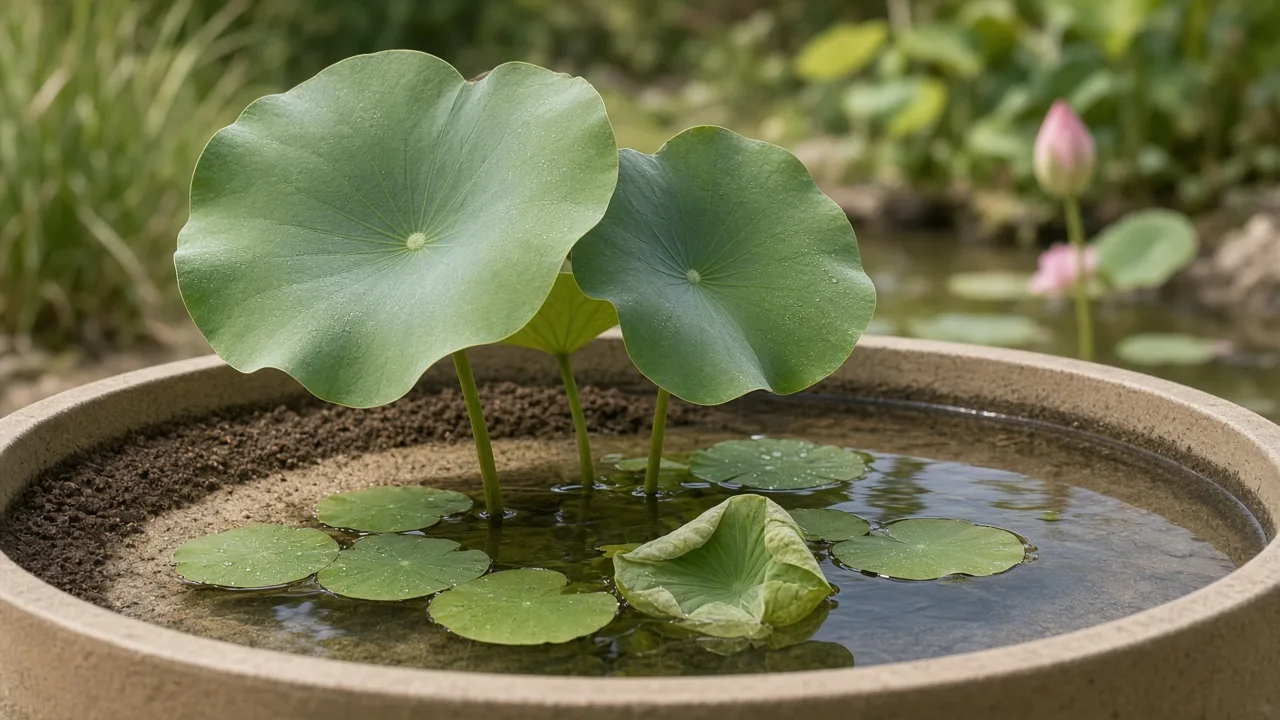
Overwatering on Lotus: Causes, Checks & Fixes
This guide covers overwatering on Lotus. See also the general Overwatering guide, watering, and light pages for this plant.
Overwatering on Lotus: Causes, Checks & Fixes
Quick answer
Lotus always grows with its soil underwater—so overwatering is not about giving too many drinks. On sacred lotus (Nelumbo nucifera), the failure mode is excess depth before the plant can reach the surface, stagnant or fouled water in a small tub, or sediment burying the brittle growing tip. UF/IFAS lowers newly planted lotus into 6 inches of water and only deepens the container after growth begins—not on day one at maximum pond depth.
For how chronic wet conditions damage roots on houseplants in general, see our overwatering hub. On lotus, judge water level and rhizome health—not soil dryness.
First step: raise the container until only about 5–10 cm (2–4 in) of water covers the soil, then inspect whether the growing tip is exposed and firm.
Why lotus suffers from the wrong kind of wet
Lotus is an emergent aquatic perennial whose thick rhizomes root in submerged loam while leaves and flowers rise above the surface. The soil should never dry out, but drowning stress still happens when water is deeper than the current growth can manage, or when decaying organics and poor circulation create anaerobic conditions around the rhizome—similar in effect to soggy houseplant mix, but in standing water.
Lotus-specific triggers:
- Container lowered too deep too soon — The most common beginner mistake after planting. Short first leaf stalks cannot reach light, exhaust stored energy, and rot below the surface.
- Cool spring water over a fresh rhizome — IWGS notes lotus benefit from shallow warm water in spring because deeper cover costs more energy before leaves establish.
- Dwarf cultivar in standard-lotus depth — Bowl lotus should stay between roughly 5–30 cm (2–12 in) of cover; standard cultivars tolerate more only after strong growth.
- Stagnant, nutrient-loaded tub water — Repeated top-ups without overflow concentrate minerals and organics in above-ground pots; foul smell and black soft rhizome tissue follow.
- Buried or damaged growing tip — Storm runoff, koi disturbance, or repotting can smother the fragile tip; RHS warns that broken growing points stop sprouting.
- Cutting stems below the waterline — IWGS advises never cutting flower or leaf stems below water because rhizomes use even dead stems to help provide oxygen.
Heavy feeding on a weak rhizome in cool water compounds the problem, but depth and water quality usually come first.
What overwatering looks like on lotus
On lotus, overwatering shows up as growth failure in water—not wilt from dry soil. Watch for new leaves that stall, fold, or decay before reaching the surface; pale, stretched petioles trying to bridge excessive depth; yellowing of the newest foliage while older leaves still look normal; sour or stagnant-smelling water in a small tub; and soft black tissue at the rhizome tip where sediment piled up.
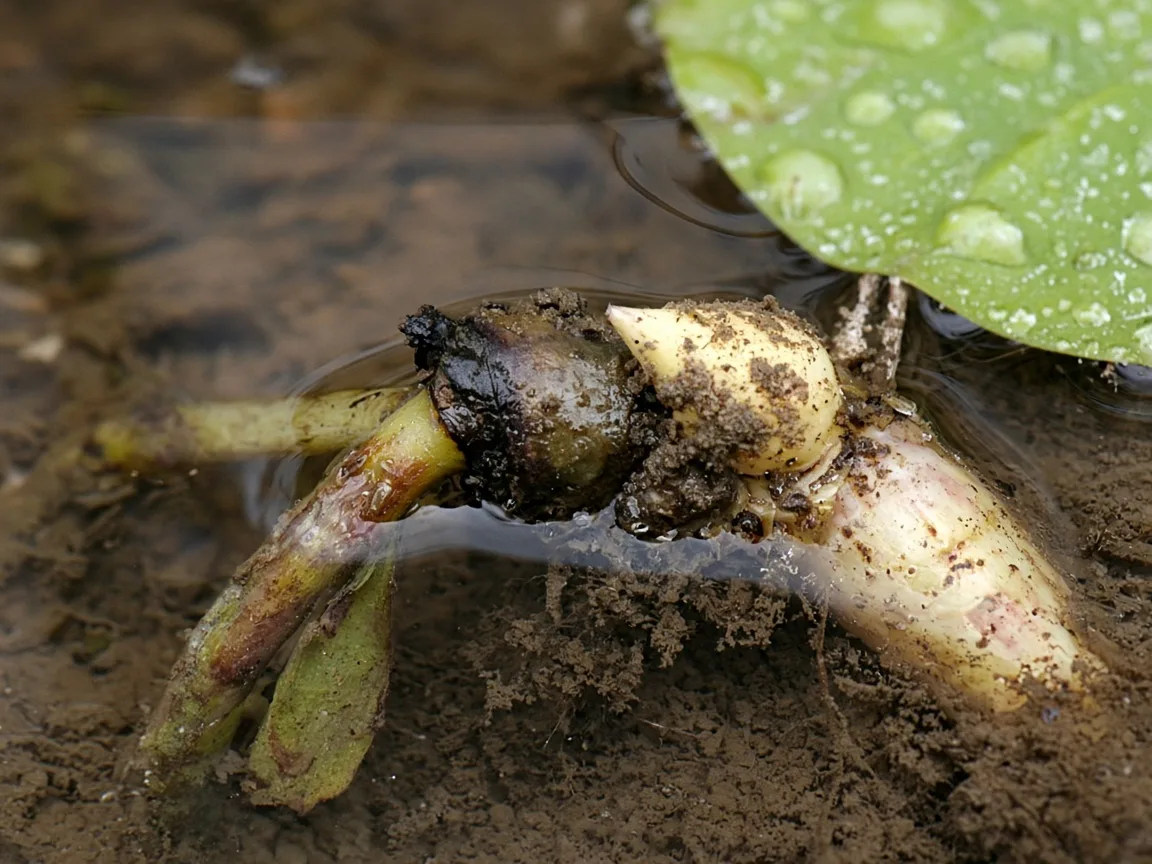
Overwatering on lotus—compare a stalled submerged leaf with a firm exposed growing tip on the rhizome.
Typical signs:
- Repeated floating leaves that never fully open at the surface
- Aerial leaf buds that stay submerged and brown off
- Weak, spindly stalks on a newly planted rhizome in deep water
- White mineral crust at the waterline plus scorched leaf margins in a small tub
- Black, mushy rhizome tissue with a sour smell—often overlapping with root rot on lotus
Not lotus overwatering:
- Exposed soil cap and crisp leaf edges — see underwatering on lotus
- One lower yellow leaf on an otherwise vigorous plant — often normal senescence; see yellow leaves on lotus
- Slow spring emergence in cold water — may need shallow warming, not less water
- Leggy weak growth in shade — see not enough light on lotus and the Lotus light guide
Water depth vs soil wetness: what lotus overwatering actually means
Terrestrial overwatering means wet mix and rotting roots. Lotus requires submerged soil. The diagnostic question is whether the water column above the soil matches what this rhizome can currently span.
UF/IFAS starts containers in about 6 inches of water until growth begins, then allows the bottom to sit up to 18 inches below the surface. IWGS recommends at least 2–4 inches over the soil at all times but warns that standard lotus in 18 inches or deeper need more stored energy—especially in cool weather. The RHS uses 5 cm (2 in) for seedling containers and deepens gradually.
If you measure from the pond bottom instead of the pot’s soil surface, it is easy to think the plant is “fine” while young leaves drown six inches below the light they need. That is lotus overwatering.
Growing tip burial and sediment smothering
The horizontal rhizome sends up leaves from a single brittle growing tip that must stay exposed and unburied. Unlike houseplant crowns, this tip sits at the soil surface under shallow water—not deep in the mix.
Burial happens when:
- Heavy rain washes loam over the crown
- Koi or goldfish disturb the sand cap (IWGS notes larger koi can uproot soil)
- A hose blast during top-up erodes then redeposits sediment
- Repotting places the tip too low “for stability”
A buried tip stops producing leaves even when the tub is full. Gently brush away loose soil and sand until the pointed tip is visible. Do not pull on trapped leaves—the hollow stalk will not repair, and damaged tips may not resprout if all growing points break.
Stagnant tub water and rhizome anaerobics
In a large pond, lotus roots exchange gases across a broad surface. In a small above-ground tub, evaporation concentrates minerals while decaying petals, algae, and fish waste consume oxygen. IWGS warns that hard alkaline water above about 1000 ppm can harm lotus in pots when minerals accumulate because each top-up leaves residues behind.
Foul water mimics overwatering: the rhizome sits in an oxygen-poor zone even though the soil is wet. Signs include surface scum, sour smell, and soft black rhizome tissue at the crown. Occasional overflow flushing—replacing evaporation with fresh water until excess runs out—prevents buildup better than letting the tub stagnate all season.
How to confirm the cause
- Measure depth from the soil surface inside the pot to the water surface—not from the pond floor.
- Watch the newest leaf — does it reach the surface and expand, or stall underwater?
- Expose the growing tip — is it visible, firm, and pale green, or buried and blackening?
- Smell the water near the pot — sour or rotten-egg odour suggests anaerobic decay.
- Review recent changes — was the container lowered after planting, or did a storm raise the level?
- Compare cultivar — dwarf lotus in standard-lotus depth is a classic mismatch.
- Cross-check soil — floating peat or bark from the wrong mix clouds water and shifts the rhizome; see the Lotus soil guide.
Confirmed overwatering on lotus requires depth or quality stress matching stalled submerged growth, not merely “a lot of water.” A healthy lotus in a full tub with leaves opening at the surface is normal.
First fix for lotus
Raise the container until only about 5–10 cm (2–4 in) of water covers the soil.
That single correction shortens the path to light and warms the crown faster in spring. Set the pot on bricks or a shelf in the pond, or bail water from a freestanding tub until the mark matches shallow-start depth from the Lotus watering guide.
Then:
- Gently clear sediment from the growing tip without snapping it.
- Remove loose decaying leaves and flower debris from the water surface.
- Stop fertilizer until several standing leaves form normally.
- Wait two to three weeks for the next leaf to test whether depth is now workable.
Do not respond by sinking the pot deeper “because it is an aquatic plant.” Do not drain the tub dry—that is underwatering. Do not repot and lower depth on the same day unless the rhizome is already black and mushy.
Step-by-step recovery
- Stabilize depth at the shallow mark and mark the waterline for daily checks.
- Flush stagnant tubs with a slow overflow to dilute minerals and organics if water smells off.
- Trim only above-water — cut yellowing aerial stems above the surface; never submerge fresh cuts (IWGS stem guidance).
- Inspect the rhizome if softness spreads—trim black tissue back to firm white flesh with a clean knife, keeping at least one intact growing tip per section.
- Deepen gradually only after three or more leaves open reliably at the surface; lower one brick-height at a time.
- Rule out root rot if the rhizome continues softening despite shallow water and clean conditions.
Recovery timeline
Shallow correction with a firm rhizome: new floating leaves in two to four weeks once water warms above roughly 24°C (75°F). IWGS lists 75°F for at least three summer months as ideal for strong growth. Rhizome surgery after black rot: four to eight weeks before steady aerial leaves if the growing tip survived. Decayed submerged leaves do not reopen—judge success by clean new growth reaching the surface.
Lookalike symptoms on lotus
| What you see | More likely cause | Where to read |
|---|---|---|
| Exposed mud, crisp margins | Too little water | Underwatering on lotus |
| Soft black rhizome, sour smell | Anaerobic rot / foul water | Root rot on lotus |
| One old yellow leaf, firm tip | Normal leaf aging | Yellow leaves on lotus |
| Weak pale leaves, long petioles in shade | Low light | Not enough light on lotus |
| Stalled leaves after correct shallow depth | Damaged or missing growing tip | Lotus propagation guide |
What not to do
Do not use a moisture meter meant for terrestrial pots. Do not empty a healthy tub because water looks tinted—partial flushing beats a full drain that exposes the rhizome. Do not fertilize a stalled rhizome to “push growth” in deep cool water. Do not cut stems below the waterline during cleanup. Do not plant lotus loose in pond mud if you need to adjust depth later—UF/IFAS recommends containerizing for control.
How to prevent overwatering next time
Treat lotus as a depth-managed emergent, not a submerged aquarium plant. Start shallow every spring after division, match depth to cultivar, and deepen in stages. In small tubs, overflow-flush during hot weather to prevent mineral soup. Anchor the rhizome at the container edge with the tip exposed, cap soil with sand, and review the Lotus overview before buying a cultivar whose mature depth exceeds your pond shelf.
During repotting, keep the same soil level in the new pot and resist lowering the container until growth proves it can handle more water. Full sun and warm water help leaves keep pace with depth—see the Lotus light guide for placement.
When to worry
Urgent when the rhizome smells sour, black softness spreads past the tip, or every new leaf fails below the surface for more than two weeks despite shallow correction. Salvage only firm rhizome sections with intact growing points and repot horizontally just below the soil surface. If all tips are broken or tissue is mushy throughout, discard the rhizome and start fresh—lotus recovers faster from a healthy division than from advanced crown rot.
When to use this page vs other Lotus guides
- Lotus watering guide — Routine depth, top-ups, and water quality before assuming overwatering.
- Underwatering on lotus — Exposed soil and crisp leaves when the waterline drops.
- Root rot on lotus — Advanced black rhizome decay and salvage cuts.
- Yellow leaves on lotus — Older foliage aging vs new-growth failure underwater.
- Lotus problems hub — Browse all lotus symptom guides.
Related Lotus guides
- Lotus overview
- Lotus watering
- Lotus soil
- Lotus light
- Lotus repotting
- Root rot on lotus
- Underwatering on lotus
- Yellow leaves on lotus
Related tool
Use the Root Rot Risk Checker to narrow causes for overwatering on this plant before changing multiple variables at once.