Mealybugs on Lotus: Causes, Checks & Fixes
Quick answer
Mealybugs on lotus hide on hollow stalks, floating pad undersides, and flower buds above the water. First step: move the container away from other aquatics and dab or blast every visible cottony cluster before using any oil or soap spray on hairy lotus leaves.
Mealybugs on Lotus: Causes, Checks & Fixes
This guide covers mealybugs on Lotus. See also the general Mealybugs guide, watering, and light pages for this plant.
Mealybugs on Lotus: Causes, Checks & Fixes
Quick answer
Mealybugs on sacred lotus (Nelumbo nucifera) are sap-sucking insects that look like tiny white cotton balls tucked into stem joints, on the undersides of floating pads, and along aerial leaf stalks above the water. For general mealybug identification, see our mealybugs symptom hub. On lotus, the critical difference from houseplant guides is where pests hide and what you must not spray: hollow stalks at the waterline, hairy leaf surfaces, and an open pond full of fish or frogs.
First step: move the lotus container away from other aquatics, then dab or blast every visible cottony cluster on stems and leaf undersides above the water. Use a cotton swab with 70% isopropyl alcohol or a firm stream of clean water on sturdy aerial parts. Do not reach for neem oil, horticultural oil, or insecticidal soap across lotus foliage—lotus leaves have fine hairs, and aquatic growers warn that oils and detergents can harm or kill the plant.
When to use this page vs other lotus guides
This page is the pest-first entry for white cottony clusters on lotus. Use it to confirm mealybugs and choose a pond-safe first treatment.
- Aphids on lotus — go here for soft green clusters without heavy wax, often on tender new growth
- Spider mites on lotus — go here for stippling and fine webbing on floating pad undersides
- Yellow leaves on lotus — go here when pads pale from depth, minerals, or aging without cottony wax
- Root rot on lotus — go here when rhizomes are soft, black, or sour-smelling underwater
- Lotus pruning guide — go here for cutting spent stems above the waterline after removing infested foliage
- Lotus problems hub — browse all common issues on this species
What mealybugs look like on lotus
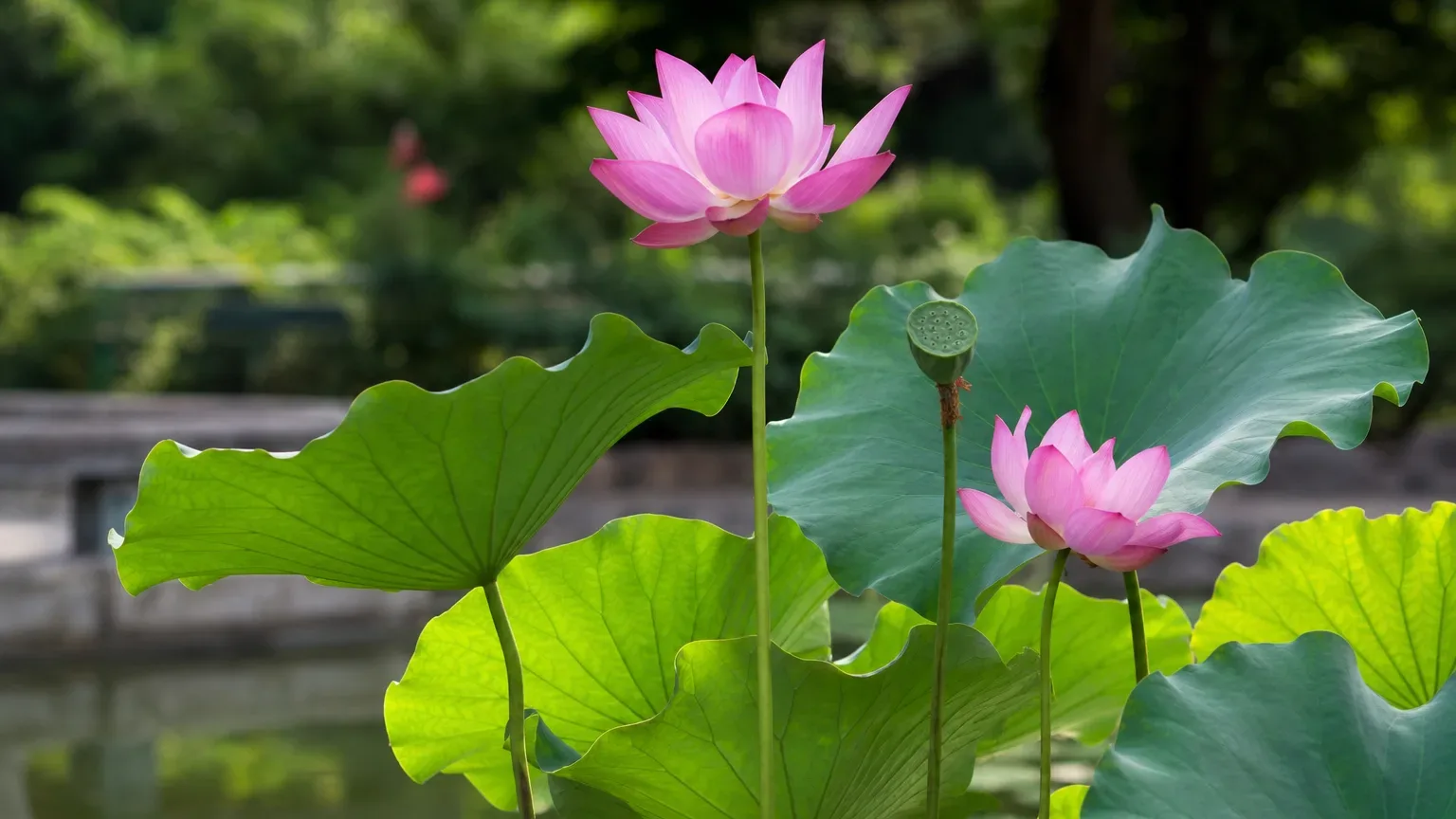
Healthy lotus sends up floating pads on short stalks, then larger peltate aerial leaves held stiffly above the water on hollow tubes. Mealybugs exploit those sheltered joints—not the broad waxy upper leaf face owners see from across the pond.
Typical patterns on Nelumbo nucifera:
- White cottony clusters where aerial stalks meet the leaf blade, especially on the underside near the central attachment point
- Wax-covered insects along hollow stems at or just above the waterline, where the stalk emerges from submerged loam
- Flat white ovals tucked under the rim of floating pads—the first place crawlers settle because the pad shields them from rain and sun
- Sticky honeydew on upper leaf surfaces that catches pond dust and can grow black sooty mold
- Distorted or stunted new aerial leaves when colonies colonize the growing crown before stalks fully extend
- Ant trails along tub rims or pond edges feeding on honeydew produced while mealybugs feed
Unlike spider mites on lotus, mealybugs do not produce fine silk webbing. Unlike aphids, they carry a thick white wax coat and do not usually form loose green clusters on the newest shoot tip alone. Missouri Botanical Garden lists aphids and spider mites as occasional lotus pests—mealybugs fit the same sap-feeding group but show distinct cottony wax. Lotus leaves naturally have a waxy, water-repellent surface; mealybugs stay in clusters at joints and undersides, smear pink when crushed, and return in the same spot within days if alive.
Where mealybugs hide on hollow lotus stalks
Lotus anatomy drives where you inspect. Each leaf and flower rises on a hollow stem that transports air toward the submerged rhizome. Mealybugs settle in the protected angles where those tubes meet pads, buds, and the water surface—exactly where a quick glance at the pond misses them.
Check in this order:
- Undersides of the newest floating pad — lift the edge gently without snapping the stalk
- The waterline band — 5–15 cm (2–6 in) above the soil where several stalks emerge together
- Aerial leaf petiole joints on standing leaves held above the water
- Flower buds and spent seed heads during bloom season
- Container rim and neighboring aquatics — crawlers travel between pots in shared tubs
This stalk-and-waterline focus is lotus-specific. A fiddle leaf fig guide tells you to search crown axils; on lotus, the equivalent hot zone is where hollow tubes break the water surface.
Why lotus gets mealybugs
Mealybugs are common sap feeders that hitchhike on new plants, tools, or crawlers blown between containers. They are not caused by submerged soil the way root rot is—but stressed, shaded lotus in a warm greenhouse can host larger colonies once crawlers arrive.
Why this aquatic perennial is vulnerable:
- Sheltered stem joints above water. The wax coating protects mealybugs from rain and from casual rinsing. Colonies tucked under floating pads survive pond splashing that would wash pests off smooth houseplant leaves.
- Fine leaf hairs and waxy pads. The same surface that sheds water also gives crawlers grip. Owners who only scan the glossy upper face miss colonies on undersides and stalks.
- Shared pond tubs. Lotus is often grown beside water lilies, marginals, or overwintered houseplants. RHS guidance stresses that mealybugs are usually introduced on affected plants—one infested nursery rhizome can seed a whole water garden.
- Ant protection. Ants harvest honeydew and defend mealybugs, especially on container rims and nearby paving. Ant trails near the lotus tub are a clue to check stems, not just pads.
- Soft new growth in spring. Warm shallow water pushes tender floating leaves before standing foliage hardens. Crawlers that land on those first pads multiply quickly in warm weather when mealybugs thrive.
Lotus in full outdoor sun with stable depth and vigorous rhizomes tolerates minor pest pressure better than shaded, overcrowded tubs. Weak yellow growth from not enough light or depth stress can look like pest damage—confirm cottony wax before treating.
Mealybugs vs lookalikes on lotus
| What you see | Location | Crush test | Likely cause |
|---|---|---|---|
| White cottony clusters | Stem joints, pad undersides | Pink smear, sticky | Mealybugs |
| Tiny green soft bodies | New shoot tips, buds | No wax; may fly when disturbed | Aphids |
| Fine stippling + webbing | Pad undersides | No cotton; mites move | Spider mites |
| Even pale yellow pads, no wax | Whole plant in shade | Wipes dry | Not enough light |
| Edge-yellow older pads only | Outer floating ring | Dry tissue | Normal aging — see yellow leaves |
| White hard bumps | Stems, don’t move | Shell stays | Scale — dab individually like mealybugs |
| Chalky dried spots on upper leaf | Sun-facing pads | Powdery, no insects | Mineral splash or sun scorch |
Confirm mealybugs on two separate stalks before pond-wide treatment. One cottony patch on a single outer pad may be an isolated crawler landing; colonies on floating and aerial growth together mean active infestation.
How to confirm mealybugs
- Lift the newest floating pad and inspect the underside near the stalk attachment.
- Follow hollow stems from the water surface upward for white wax in the angles.
- Check for honeydew — shiny sticky patches on upper leaf surfaces or on the container rim.
- Crush one insect with a swab: mealybugs leave a pink streak; mineral dust does not.
- Watch for ants along the tub edge traveling toward stems.
- Rule out rhizome failure — firm rhizome with intact growing tip and sour-free water means pests, not root rot.
- Review recent introductions — new rhizomes, marginals, or houseplants moved beside the pond.
If pads yellow without wax, honeydew, or insects, start with water depth and sun before pesticide thinking.
First fix for lotus
Move the lotus container away from other aquatics, then remove every visible mealybug on stems and leaf undersides above the water with alcohol dabs or a firm water jet.
Mild case (a few cottony patches on one or two stalks, firm rhizome, clear water):
- Slide the pot to an isolated spot so crawlers do not bridge to neighbors
- Dab each cluster with a cotton swab soaked in 70% isopropyl alcohol — UC IPM recommends this contact method for houseplant mealybugs; test one leaf first and watch 24 hours for burn on tender new pads
- Alternatively, spray sturdy aerial stems with a strong stream of water, repeating every few days to knock off crawlers
- Wipe honeydew from upper leaf surfaces with a damp cloth so sooty mold does not follow
Moderate case (colonies on several floating and aerial stalks, ants present):
- Continue alcohol dabs and water blasting on reachable parts
- Dust lightly with diatomaceous earth on dry aerial stems and pad undersides — IWGS recommends diatomaceous earth for soft-bodied pests on lotus including aphids and spider mites; avoid dumping powder directly into fish water
- Once several standing leaves are present, remove heavily infested floating pads by cutting stems above the waterline — IWGS notes this also reduces aphid pressure and removes mealybug hiding spots on lower foliage
- Repeat treatment every three to seven days for at least three cycles; mealybugs hatch from protected egg masses the first pass misses
Severe case (cottony wax on most stalks, repeated failure after three weekly rounds, distorted new growth):
- Lift and inspect the rhizome only if stem bases are also coated — root-zone mealybugs are rare on outdoor lotus but possible on container crowns
- Consider discarding the most infested floating growth and isolating the tub for the rest of the season — heavy infestations may warrant discarding affected plants when control fails and collection protection matters more
- Do not release systemic pesticides into ponds with fish, amphibians, or drinking-water contact
Why oil and soap sprays are the wrong default on lotus
Most mealybug articles recommend insecticidal soap, neem oil, or horticultural oil. That advice does not transfer cleanly to sacred lotus.
The International Waterlily & Water Gardening Society states that because lotus leaves have fine hairs, insecticides—even organic products—with oils or detergents can harm or kill lotus. A soap film that sits safely on smooth Ficus leaves can damage hairy lotus pads, especially in hot sun. Pouring oil-based sprays into an open pond risks fish, frogs, and beneficial insects.
Safer lotus-specific options:
- Targeted alcohol dabs on accessible clusters only — not a whole-pond dunk
- Repeated water jets on sturdy aerial parts
- Diatomaceous earth on dry stems and undersides per IWGS soft-bodied pest guidance
- Physical removal of infested floating leaves once standing foliage is established
If you keep fish, treat as a water-quality decision, not a houseplant spray session. Never use products such as Marathon in shared aquatic systems — IWGS notes it is not labeled for aquatic use and must not be used with aquatic animals.
Step-by-step recovery without fouling the pond
After the first alcohol dab or water-blast pass:
- Mark infested stalks with a soft tie so you can recheck the same joints weekly.
- Stop fertilizing until new aerial leaves open clean — stressed lotus does not need extra nitrogen while sap feeders are active. Resume buried tablets per the fertilizer guide only after several clean standing leaves return.
- Maintain stable water depth — do not lower the container drastically or let the soil cap dry while fighting pests. Lotus still needs submerged roots; see the watering guide.
- Prune spent infested stems above the waterline — never cut lotus stems below the water because hollow tubes help move oxygen toward the rhizome.
- Flush the tub if honeydew and sooty mold built up — over-fill briefly to dilute surface scum without exposing the rhizome crown.
- Reinspect neighboring pots in the same pond; crawlers spread on tools, splashed water, and shared rims.
Outdoor ponds with dragonflies, lady beetles, and lacewings may see natural suppression over time. Small above-ground tubs without predators need your repeated manual passes.
Recovery timeline
- Days 1–7: Visible clusters shrink after dabs or water blasts; honeydew stops spreading to new pads
- Weeks 2–3: New floating and aerial leaves open without fresh cottony wax at the joints you marked
- Rest of season: Standing leaves enlarge normally; flowering depends on cultivar, sun, and how much early growth was removed
Worsening signs: wax reappears on new stalks within days of treatment, ants intensify, aerial leaves open twisted and sticky despite firm rhizomes, or yellowing spreads on newest pads with heavy honeydew — escalate to removing more infested floating growth and isolating the container for the season.
Damaged pads and distorted leaf tissue do not re-green. Recovery means clean new growth above the water, not perfect older blades.
What not to do
- Blanket-spray neem oil, horticultural oil, or insecticidal soap across lotus pads in full sun
- Dump untreated pesticide into a pond with fish, frogs, or turtles
- Cut infested stems below the waterline — this can funnel foul water toward the rhizome per IWGS stem guidance
- Fertilize heavily while sap feeders are active on tender spring growth
- Assume underwatering because leaves look weak — check stalk joints first
- Move the container daily between sun and shade while treating — stabilize full outdoor sun placement
- Ignore ants at the tub rim — they protect mealybugs and spread honeydew
- Repot the rhizome mid-season unless crown inspection shows rot, not just stem pests
How to prevent mealybugs next time
- Quarantine new rhizomes and companion aquatics for at least two to three weeks before placing them in a shared tub — RHS advises inspecting new plants carefully before adding them to a collection
- Inspect stem joints at every water top-up during warm active growth; lotus grows fast and new stalks appear weekly
- Keep lotus in full sun with correct depth so growth stays vigorous — see the overview and light guide
- Remove spent floating pads once several standing leaves are up — IWGS recommends this to reduce aphid habitat and it removes mealybug shelter on lower foliage too
- Rinse tools and tub rims between containers when dividing or trimming
- Reject nursery stock showing white wax at stem bases before planting into expensive loam — see soil prep
- Manage ants near the pond edge if they farm honeydew on lotus stems
Early detection at the waterline beats a season of pond-wide spraying you cannot safely use on hairy lotus leaves anyway.
When to worry
Treat as urgent when:
- Cottony masses cover most floating and aerial stalks
- Sooty mold coats many upper leaf surfaces
- New leaves consistently open distorted after three weekly treatment cycles
- Ant populations spike around the container
- Nearby aquatics show the same wax clusters
Consider isolating or replacing the lotus when control fails after a month of diligent dabs and water blasting, the rhizome was already weakened from root rot or depth stress, or protecting fish and neighboring tubs matters more than saving one crowded pot.
Pet and pond-life note during treatment
Lotus is classified as caution for companion animals because veterinary data on Nelumbo nucifera is incomplete. Prevent pets from drinking treated pond water or chewing ornamental foliage, and keep alcohol, diatomaceous earth, and any pesticide residues away from areas animals access. This is general safety context, not veterinary advice.