How to Prune Lotus: Leaves, Stems & Seed Heads
Lotus Pruning Guide: Leaves, Stems, Seed Heads, and Dormancy
Lotus Pruning Guide: Leaves, Stems, Seed Heads, and Dormancy
First, identify one leaf that is completely yellow, brown, collapsed, or badly damaged. Follow its stalk down to the water and cut it cleanly above the waterline, leaving a short dry stub. Do not pull the stalk, cut beneath the surface, or disturb the submerged rhizome while making this first cleanup cut.
Reviewed by LeafyPixels Review Board · Author: sai-ananth
Quick answer
Lotus (Nelumbo nucifera) needs cleanup, not hedge-style shaping. Remove fading foliage and damaged stalks individually, deadhead flowers only if you do not want decorative seed heads or seed, and clear naturally dead top growth as the plant enters dormancy. The RHS specifically advises removing fading foliage, but healthy green leaves should stay because they continue supporting the rhizome.
Make every leaf, flower, or seed-head cut on its own stalk above the water surface. A cut stalk will not branch; new leaves and flowers emerge on separate stalks from the rhizome. Pruning can keep decaying debris out of a tub and make a dormant container tidier, but it cannot correct poor flowering caused by inadequate Lotus light, unsuitable water depth, crowding, or weak rhizomes.
Lotus is not a water lily
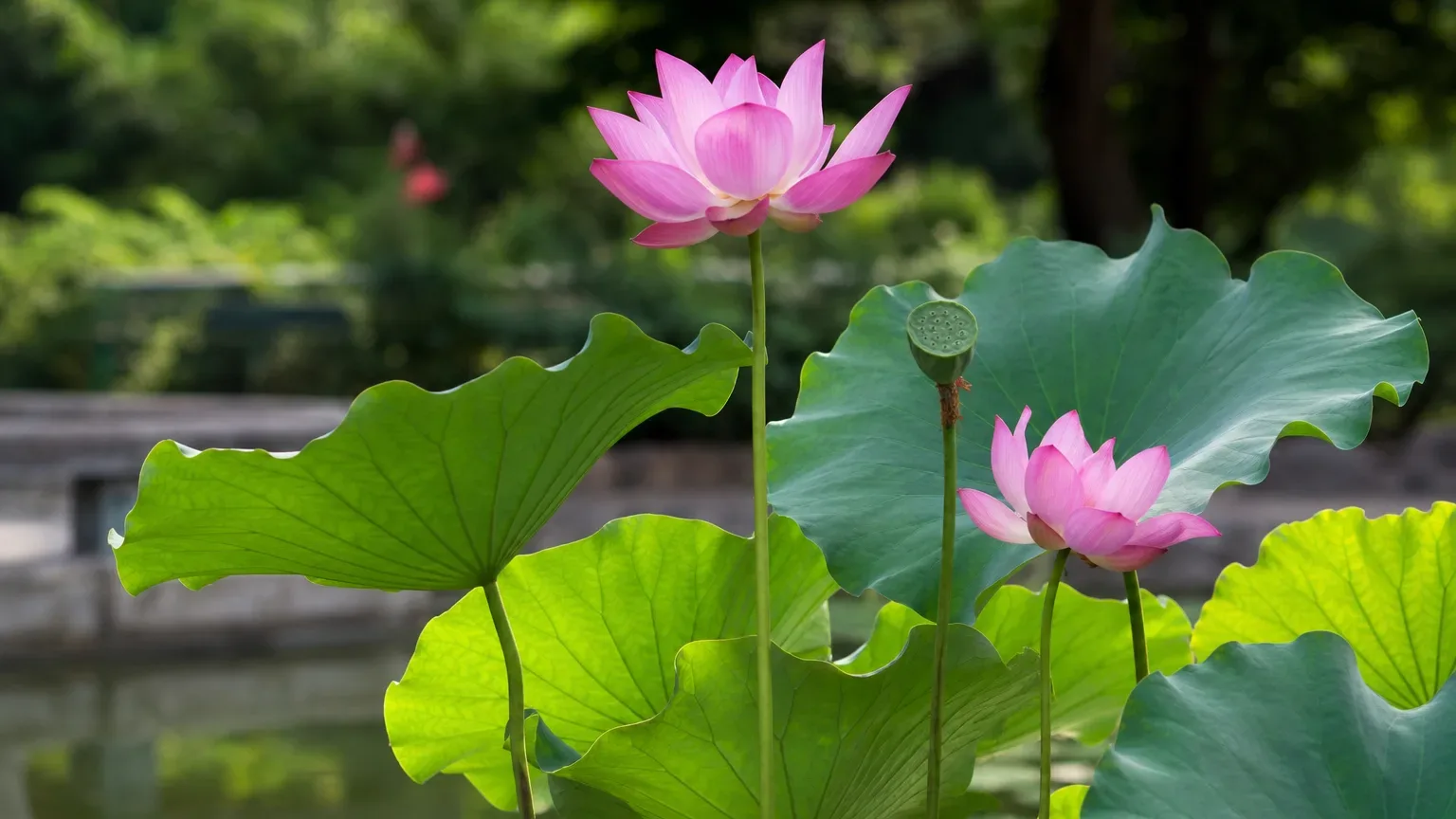
This guide is for sacred or Indian lotus, Nelumbo nucifera. It is not a pruning guide for Nymphaea water lilies. Lotus commonly holds large leaves, flowers, and its distinctive perforated seed heads well above the surface, while water-lily leaves usually float and lack that prominent lotus seed head. Missouri Botanical Garden highlights the central seed head as a visible distinction.
That difference changes the cutting job. With lotus, you often handle long upright aerial stalks and must avoid twisting them at their submerged origin. Confirm the plant’s identity in the Lotus overview before following any advice written for water lilies.
What to check before cutting
Stand where you can see the entire container without stepping on or reaching blindly through the rhizome zone. Separate each candidate into one of four groups:
- Healthy green leaf: leave it.
- Partly yellow leaf that is still firm: monitor it unless disease or physical damage is advancing.
- Fully yellow, brown, torn, collapsed, or rotting leaf: remove its stalk.
- Flower or seed head: decide whether you want seed before cutting.
Also check whether the whole canopy is fading together. One old leaf declining among vigorous new leaves is normal cleanup. Many leaves yellowing at once during warm growth points to a care problem, not a need for heavier pruning. Check water depth and water quality with the Lotus watering guide before removing useful green foliage.
Tools and safe access around the pond
Use long-handled aquatic scissors for a deep or wide container and sharp hand pruners for a tub you can reach safely from dry ground. Clean blades before starting; Iowa State Extension recommends sanitizing pruning shears with 70% isopropyl alcohol. A clean, sharp blade makes a single cut without crushing the fibrous stalk.
Do not lean over deep water from an unstable edge. Bring a container-grown lotus closer only if it can be moved without snapping stalks or disturbing the rhizome. Never use a stalk as a handle, and never pull against resistance from below the soil.
Where to cut Lotus leaves and stems
Trace the selected stalk to the water surface, support it with one hand, and cut several centimetres above the waterline. Leaving the cut end in air is the conservative choice for a hollow or channelled aquatic stalk; cutting it flush under water creates an unnecessary submerged opening. The remaining stub can be shortened later if the water level changes, but it should still finish above the surface.
Do not chase a stalk into the mud. Lotus grows from a horizontal rhizome, and its pointed growing tips are fragile. The RHS describes lotus as a rhizomatous aquatic perennial and cautions that its rhizomes resent disturbance. Pruning ends at the stalk; rhizome cutting belongs to planned spring division, covered in Lotus propagation.
Step-by-step cleanup
- Choose one fully failing leaf or damaged stalk.
- Follow that single stalk visually to the water.
- Hold it lightly so the cut section does not fall into the pond.
- Snip once above the waterline without pulling upward.
- Remove the cut material from the water.
- Reassess before cutting another stalk.
This one-at-a-time sequence matters in a dense stand. Lotus stalks cross, and grabbing a bundle can bend healthy leaves or transmit force to the rhizome.
Deadheading flowers and managing seed heads
A faded lotus flower naturally drops its petals and develops a broad seed receptacle. UF/IFAS notes that the fruit structure turns brown after the flower fades and can persist on the plant. You have three sensible choices:
- For a tidy display: cut the spent flower stalk above the water once the petals fall.
- For dried decoration: allow the seed head to firm and brown, then cut it with a useful length of dry stalk.
- For seed: leave the head until seeds mature, then harvest before they drop where unwanted seedlings would be a problem.
Seed-head removal is optional. It does not replace feeding, sun, warmth, or space, and removing one will not make an already stressed lotus flower heavily. If you are not deliberately collecting seed, deadheading keeps heavy old heads from bending into the water and reduces volunteer seedlings.
How much can you safely remove?
Do not apply a shrub-style “remove one-third” rule to lotus. Routine pruning should remove individual failing stalks, not a percentage of the canopy. Leave every firm green aerial leaf that is still functioning, especially on a newly established rhizome with only a few leaves.
If storm, pest, or mechanical damage affects many leaves, remove only tissue that is collapsed, rotting, or unable to remain upright, then pause. A lotus that has lost most of its canopy needs stable water, full sun, and time, not cosmetic thinning. Review Lotus fertilizer timing rather than feeding immediately after damage.
Dormancy and end-of-season pruning
Sacred lotus is deciduous: its leaves naturally yellow and wither as cold-season dormancy begins. Missouri Botanical Garden describes winter-withered brown leaves giving way to spring growth. Let green leaves finish declining instead of stripping the canopy at the first cool night.
Once stalks are fully brown, cut them above the current waterline and remove loose debris. In frost-free tropical conditions, the plant may retain growth longer or have only a short slowdown, so use actual leaf decline rather than a fixed month. In colder areas, cleanup is only part of winter preparation: the RHS advises lifting containers for frost-free storage where necessary and keeping dormant rhizomes just moist. Coordinate pruning with the Lotus repotting guide if the container must be lifted, but leave division until the correct spring window.
Do not cut into the rhizome during autumn cleanup. Brown aerial growth is disposable; a firm dormant rhizome and its growing tips are the plant’s stored future growth.
What not to cut
- Do not remove firm green leaves merely to expose flowers or open the water surface.
- Do not cut a stalk below water or down into the soil.
- Do not sever, trim, or nick a pointed rhizome growing tip.
- Do not pull dead stalks free if they resist.
- Do not remove every seed head if you intend to collect viable seed.
- Do not confuse natural autumn dieback with an urgent need to excavate the rhizome.
Also avoid pruning to solve shade-related weak growth. Stretched stalks, few aerial leaves, and poor flowering require better sun, not shorter stems. The Lotus light guide explains why a cut leaf cannot compensate for inadequate direct light.
Aftercare and recovery
Lift all cut debris out of the water, return the container to its established depth, and keep normal water levels stable. Do not lower the pond to expose fresh cuts, fertilize as a reflex, or repot on the same day. If several stalks were removed because they were soft or foul-smelling, inspect water quality and the condition of emerging leaves before making more cuts.
A cut lotus stalk does not heal by branching from the stub. During warm active growth, success looks like a dry cut end, stable remaining leaves, and new leaves emerging independently from the rhizome. During dormancy, success may look like no visible top growth at all; judge the plant when seasonal growth should resume, not by expecting a winter replacement leaf.
Common Lotus pruning mistakes
The most damaging mistake is pulling a stalk instead of cutting it. Other common errors are submerging a fresh cut, stripping partly green leaves during dormancy transition, cutting all seed heads without deciding whether seed is wanted, and treating the rhizome as if it were a woody root that can be shortened casually.
Another mistake is copying water-lily instructions without confirming the genus. Nelumbo has its own upright stalks, prominent seed heads, and fragile running rhizome. Keep the job species-specific: remove spent aerial growth while preserving submerged storage tissue.
Related Lotus guides
- Lotus overview — identify sacred lotus and review its whole growing cycle.
- Lotus light — correct weak, stretched growth before considering cosmetic cuts.
- Lotus watering — manage water depth and investigate simultaneous leaf decline.
- Lotus propagation — divide rhizomes deliberately without damaging growing tips.
- Lotus fertilizer — feed established plants during active growth rather than after every cut.
- Lotus repotting — handle crowded containers and dormant rhizomes in season.
Conclusion
Prune Lotus by removing one spent aerial stalk at a time above the waterline. Keep healthy leaves, decide whether seed heads are useful before deadheading, allow natural dormancy to finish, and protect the rhizome and every growing tip. The goal is a clean water garden with intact storage tissue, not a shaped canopy.