Lotus Watering Guide: Depth, Top-Ups & Water Quality
Lotus Watering Guide: Depth, Top-Ups & Water Quality
Lotus Watering Guide: Depth, Top-Ups & Water Quality
Lotus watering is water-level management, not a soak-and-dry routine. True lotus, Nelumbo nucifera, grows from a rhizome rooted in submerged loam. Its soil should not dry between drinks, and a moisture meter pushed into the pot answers the wrong question. What matters is how much water sits above the soil, whether new leaves can reach the surface, and whether repeated top-ups are concentrating minerals in a small tub.
This guide covers sacred lotus, Indian lotus, kamal, or padma—all names used for Nelumbo nucifera. It does not cover Nymphaea water lilies, aquarium “lotus” sold under other genera, or terrestrial plants with lotus in their common name. Begin by measuring the water above the soil and checking whether your plant is a dwarf, bowl, or standard lotus; those two facts are more useful than any weekly watering calendar.
The quick answer: keep the soil submerged, but start shallow
For a newly planted rhizome, begin with roughly 5–10 cm (2–4 in) of water above the soil. This keeps the heavy loam submerged while giving the first short leaf stalks an easy route to the surface; UF/IFAS starts newly planted sacred lotus at about 6 inches, while the International Waterlily & Water Gardening Society recommends at least 2–4 inches over the soil.
Increase depth only as the plant produces longer floating leaves and then upright aerial leaves. Established standard lotus can commonly grow with the container set so its base is up to about 45 cm (18 in) below the surface, although the exact soil-to-surface depth depends on pot height and cultivar. Dwarf lotus generally stays shallower; a label from a reputable grower should override a generic range.
True lotus is not a water lily or aquarium plant
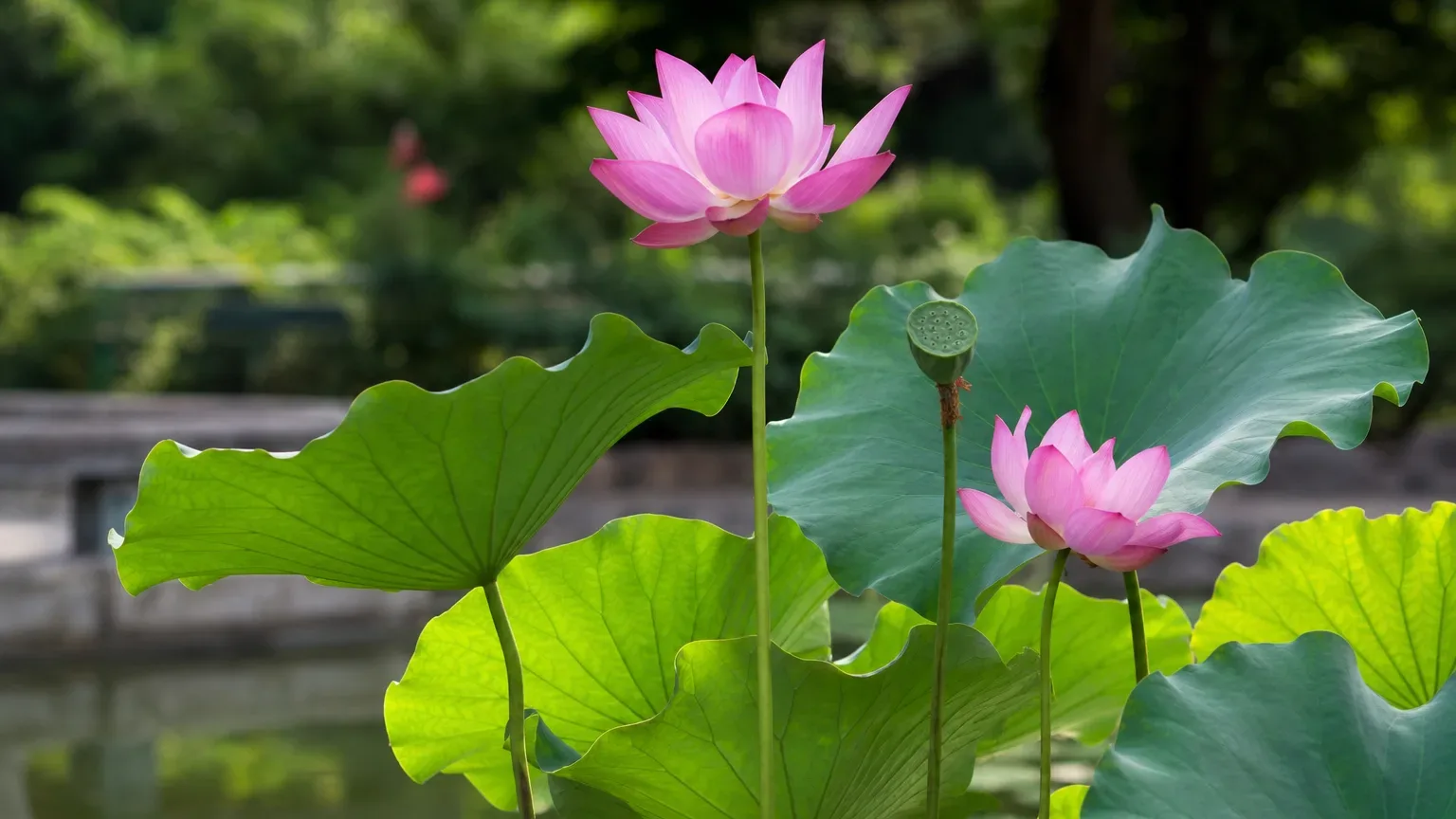
Sacred lotus is an emergent rhizomatous aquatic perennial. The Missouri Botanical Garden describes it as a shallow-water plant whose thick rhizomes root in mud while leaves and flowers rise above the surface. Young leaves may float, but a mature plant is built to hold much of its foliage in the air.
That growth pattern changes the watering goal. You are not trying to keep foliage submerged, create aquarium circulation, or plant the rhizome in loose gravel. Lotus belongs in heavy soil inside a wide, solid container, with calm fresh water over the soil and the brittle growing tip left unburied; see the Lotus soil guide for the potting layer itself.
Check the waterline, not whether the soil feels dry
Mark the normal waterline inside a tub with a waterproof pencil, a strip of tape on the outside, or a fixed reference on the pot. In hot or windy weather, check it daily. Top up whenever evaporation is close to exposing the soil cap; in a large pond, checks can be less frequent, but the planted crown must remain underwater.
Also inspect the newest leaf. A leaf that reaches the surface and expands normally suggests the depth is workable. A new leaf that repeatedly stalls below the surface, folds, or decays before opening suggests the container may have been lowered too quickly, the shoot is damaged, or sediment is covering the growing tip.
Start a new rhizome in shallow water
After planting, add water slowly down the container wall or onto a saucer so the soil and sand cap stay in place. Keep just enough water over the soil to submerge it, and do not blast the rhizome with a hose. The RHS uses 5 cm (2 in) of water for lotus seedling containers, then advises increasing both depth and container size as plants grow.
Shallow water warms sooner and shortens the first leaves’ path to light. This is especially useful in a cool spring or after dividing a dormant rhizome. “Shallow” does not mean exposed mud: if the soil surface appears, top up immediately and shield the tub from drying wind while the water level recovers.
Deepen the water only after leaves can keep pace
Once several leaves are opening at the surface and stalks are extending strongly, lower the pot one step at a time. Use bricks or a stable plant shelf in a pond, remove one support, then observe the next leaves before lowering again. UF/IFAS advises keeping the container bottom no more than 18 inches below the surface, while Missouri Botanical Garden notes that established crowns may tolerate up to 24 inches of cover in water gardens.
These figures describe established plants, not permission to sink a fresh rhizome to maximum depth. Large cultivars have more stored energy and longer stalks than bowl lotus. If you do not know the cultivar, stay toward the shallow end until growth proves it can handle more water.
Top up for evaporation without destabilizing the tub
In a freestanding tub, replace evaporation with fresh water before the soil cap is exposed. Add water gently and stop at the established mark. A fixed overflow hole or safely routed standpipe prevents accidental overfilling during heavy rain, but the opening should be screened so rhizomes, animals, and debris cannot block it.
Do not routinely empty and scrub a healthy lotus tub just because the water looks tea-coloured or has a little settled debris. A full change can disturb warm water, expose the rhizome, and resuspend soil. Partial dilution or a slow overflow is usually less disruptive when the problem is accumulated minerals rather than contamination.
For municipal water, avoid strong assumptions about every local supply. If water is visibly treated, smells strongly of disinfectant, or the tub also contains fish, follow local water-utility and fish-pond guidance for conditioning. For a lotus-only tub, add water slowly and watch the plant; rainwater can help dilute a hard supply if it is collected from a clean roof and stored safely.
Water quality: fresh, calm, and not overloaded with minerals
Lotus tolerates a range of water chemistry better than many aquarium plants, so chasing a narrow pH with acids or powders can create more risk than benefit. The priority is stable fresh water, submerged soil, low physical disturbance, and no repeated buildup of dissolved salts. The RHS lists neutral loam conditions for N. nucifera, but that does not establish a universal pond-water pH prescription.
Still water does not mean foul water. Remove rotting leaves, fallen flower parts, and excess organic debris before they decompose in a small container. Keep strong fountain jets and waterfall splash away from young lotus because turbulence can batter floating leaves and erode the soil cap; modest circulation elsewhere in a larger pond is different from aiming flow at the crown.
Manage hard water by diluting accumulated minerals
Every hot-season top-up replaces evaporated water, but the minerals left behind remain. In an above-ground tub supplied with hard alkaline water, that cycle can steadily concentrate salts. The IWGS lotus care sheet recommends occasional overfilling with fresh water to flush accumulated minerals, with less risk of concentration in a large pond than in a small tub.
Watch for a hard white crust at the waterline, mineral deposits on the container, or worsening leaf-edge scorch despite a stable depth. Those signs do not prove water chemistry is the only cause, but they justify testing the source water and diluting the tub gradually. Do not make an abrupt chemical correction; blend in lower-mineral rainwater or other suitable fresh water over several top-ups.
Treat algae and foul water as system warnings
A little algae is normal in sunny water. A sudden thick bloom, surface scum, sour smell, or black soft rhizome tissue is not a cue to pour in a random algaecide. NC State Extension explains that sunlight, water, and nutrients naturally support pond growth, and nutrient-enriched warm water can favour undesirable blooms.
First remove decaying debris, confirm fertilizer tablets are buried rather than dissolving at the surface, and stop nutrient-rich runoff from entering the tub. If animals share the pond or a dense bloom appears suddenly, use specialist pond guidance; Texas A&M AgriLife outlines prevention and multiple control approaches, because treatment choice depends on pond conditions and organisms present.
Container lotus versus pond-grown lotus
A patio tub loses water quickly because every side is exposed to sun and wind. It also concentrates minerals faster and can heat sharply in afternoon sun, so daily waterline checks are sensible during Indian summer heat. Use a wide container without drainage holes; IWGS recommends containing lotus in a hole-free pot because runners can otherwise spread through a pond.
A planted pot inside a larger pond changes more slowly, but depth becomes easier to misjudge. Measure from the pot’s soil surface—not the pond bottom—to the water surface, and raise the pot on stable blocks if necessary. Do not release N. nucifera into natural ponds or waterways; UF/IFAS calls it aggressive and recommends containerising it in water gardens.
The distinction also helps with rain. A pond usually has a designed overflow, while a small tub can spill soil and fertilizer over its rim. Leave safe freeboard, provide a clear overflow route, and never let overflow undermine the base supporting a heavy container.
Seasonal lotus watering in India and other warm climates
Lotus uses the most water during warm, bright active growth, but the water does not disappear only through the plant. High air temperature, reflected heat from paving, wind, and a dark container all increase evaporation. Shift the tub away from heat-reflective walls if you cannot keep the waterline stable, while preserving the strong sun covered in the Lotus light guide.
In frost-free tropical areas, growth may persist longer, yet weak seasonal light or cooler water can still slow new leaves. Keep the soil submerged but stop treating every slowdown as thirst. Water depth, temperature, light, crowding, and depleted soil all affect performance; the Lotus fertilizer guide covers feeding once standing leaves are established.
Hot summers and monsoon rain
During a dry heat wave, check small tubs morning and evening until you know their loss rate. Top up before water drops enough to expose the cap, and use a float valve only if it cannot stick open or create constant cold flow across the crown. A larger water volume buffers temperature and chemistry better than a tiny decorative bowl.
During monsoon rain, make sure the overflow remains clear and the container cannot become diluted mud. Rain itself does not “overwater” an aquatic lotus, but violent runoff can wash soil over the growing tip, carry lawn fertilizer into the tub, or suddenly raise a pond above the depth young leaves can manage. After a storm, restore the intended level, clear debris, and check that the rhizome has not shifted.
Dormancy and cold-winter storage
In regions where lotus goes dormant, the rhizome still must not dry out. In a pond, protect it below the local freezing depth; the Missouri Botanical Garden advises moving very shallow containers deeper or storing them frost-free where roots might otherwise freeze.
If a container is lifted for frost-free storage, keep the dormant rhizome cool and just moist rather than standing it in warm indoor water that encourages weak growth. Winter handling varies sharply by cultivar and climate. Use the seller’s hardiness information and the Lotus overview before deciding whether to sink, insulate, or lift the pot.
Signs the water setup is wrong
Water trouble in lotus is usually a level, quality, or disturbance problem, not classic terrestrial overwatering. Read the plant together with the setup: measure depth, smell the water, inspect the soil cap, and check whether the newest growth is submerged or damaged. One yellow old leaf is normal; repeated failure of new leaves requires investigation.
The first response should be conservative. Restore the known safe waterline, remove loose decay, stop fertilizer and chemicals, and avoid handling the fragile rhizome tip. If the container is overcrowded or the rhizome smells rotten, move from watering diagnosis to the Lotus repotting guide.
Too deep, too soon
Repeated young leaves failing below the surface, pale stretched stalks, or a fresh rhizome that does not advance after being sunk deeply all point toward excessive starting depth or cool water. Raise the pot until only a shallow layer covers the soil, then wait for new growth. Do not pull on trapped leaves; damaged stalks will not be repaired by lifting them.
Mature lotus can also struggle after an abrupt depth change. Deep water requires longer petioles and more stored energy before a leaf reaches light. The International Waterlily & Water Gardening Society notes that deeper water costs more energy, which is why spring and cool-climate plants benefit from shallower placement.
Too low, too dirty, or physically disturbed
Exposed soil, a dropping waterline, crisp leaf margins, and stalled shoots during hot weather indicate that top-ups are not keeping pace. Refill gently in stages if the tub became very low and hot. Do not pour forcefully onto dry cracked mud, because that can cloud the water and dislodge the rhizome.
Cloudiness immediately after filling usually means the soil cap was disturbed, while persistent foul odour and soft black tissue warrant a rhizome inspection. Koi can also uproot or erode lotus containers; IWGS notes that larger koi may disturb soil and floating leaves. Correct the physical setup before changing water chemistry.
When to use this page vs other Lotus guides
- Use the Lotus overview to confirm that your plant is true lotus and to see whole-plant seasonal care.
- Use the Lotus light guide when leaves are healthy but flowering is weak in shade.
- Use the Lotus soil guide when media floats, clouds the water, or will not hold the rhizome.
- Use the Lotus fertilizer guide when established aerial growth is pale or weak despite correct depth.
- Use the Lotus repotting guide for a crowded container, circling rhizomes, or a damaged pot.
Related Lotus guides
- Lotus propagation: planting divided rhizomes and raising scarified seed without burying growing tips.
- Lotus pruning: removing old stalks without cutting hollow stems below the waterline.
- Lotus care hub: cultivar size, warmth, placement, and the complete care cluster.
- Lotus soil: choosing dense submerged loam rather than floating houseplant mix.
- Lotus fertilizer: feeding established plants without enriching the open water.
Conclusion
Successful lotus watering starts with one measurement: the depth of water above the soil. Keep the loam continuously submerged, start a new Nelumbo nucifera rhizome in about 5–10 cm (2–4 in) of water, and deepen gradually only after leaves reach the surface reliably. Standard plants can eventually sit deeper than dwarf lotus, but cultivar guidance and observed growth matter more than a maximum number.
Maintain a marked waterline through summer evaporation, provide a safe monsoon overflow, and dilute mineral buildup rather than repeatedly draining a healthy tub. When lotus struggles, check depth, debris, soil disturbance, and the newest leaf before adding chemicals or fertilizer. Stable shallow water first, then gradual adjustment, is the safest route from a fragile rhizome to strong aerial leaves.