Spider Mites on Lotus: Causes, Checks & Fixes
Quick answer
Spider mites on lotus cause fine stippling and webbing on the undersides of round aerial leaves in hot, dry air. First step: move the container away from other pond plants and blast every leaf underside above the waterline with a strong jet of water before applying any spray.
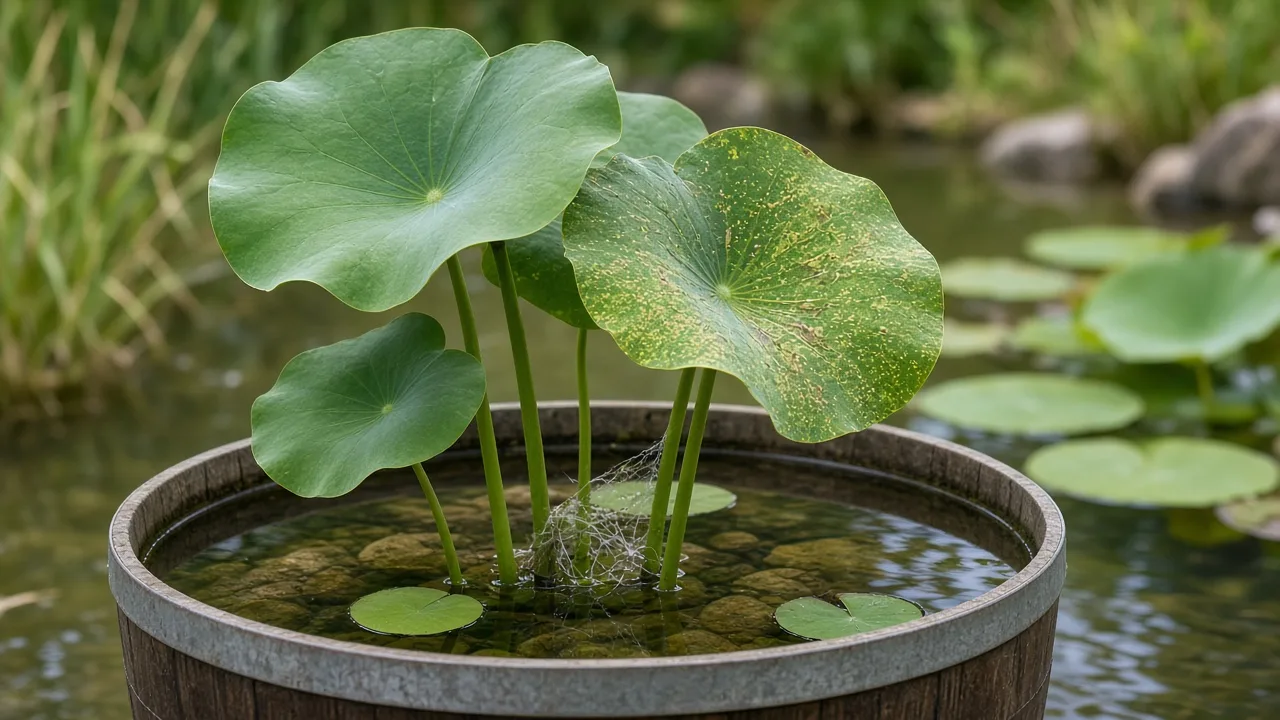
Spider Mites on Lotus: Causes, Checks & Fixes
This guide covers spider mites on Lotus. See also the general Spider Mites guide, watering, and light pages for this plant.
Spider Mites on Lotus: Causes, Checks & Fixes
Quick answer
Spider mites on sacred lotus (Nelumbo nucifera) show up as fine yellow or bronze stippling on the undersides of round floating and aerial pads, with delicate webbing at hollow petiole joints above the waterline. They thrive in hot, dry air—a common mismatch on lotus, where roots stay cool underwater while summer sun bakes the exposed upper foliage.
For general spider mite biology and life cycle, see our spider mites guide. On lotus, the damage concentrates on bowl-shaped leaf undersides and stiff stalks that houseplants do not have, and treatment must avoid dumping pesticides into open pond water.
First step: move the lotus container away from other aquatic plants and rinse every leaf underside above the waterline with a strong jet of water. Let foliage drain in open air before choosing sprays. Do not start with fertilizer, depth changes, or rhizome disturbance until you confirm live mites.
When to use this page vs other lotus guides
This page is the symptom-first entry for stippling and webbing on lotus foliage. Use it to separate true spider mites from depth stress, aging pads, and other pests.
- Yellow leaves — go here when whole pads yellow from depth mistakes, hard-water buildup, or normal outer-pad senescence without stippling or silk
- Aphids — go here when pads curl, feel sticky, or carry soft-bodied clusters on young stalks rather than moving specks and webbing
- Mealybugs — go here for white cottony masses at stalk bases, not fine stippling dust
- Wilting — go here when aerial leaves collapse from a dropped waterline or rhizome failure, not bronzed feeding dots
- Watering guide — go here for depth schedules after mite pressure is under control
- Light guide — go here if pads stay small and pale in shade without mite webbing
What spider mites look like on lotus
Early damage is easy to miss because mites feed on leaf undersides while the waxy upper surface of a lotus pad still looks fine. Lotus also produces floating pads and taller aerial leaves on stiff hollow stalks—two different leaf types that mites can colonize at different heights.
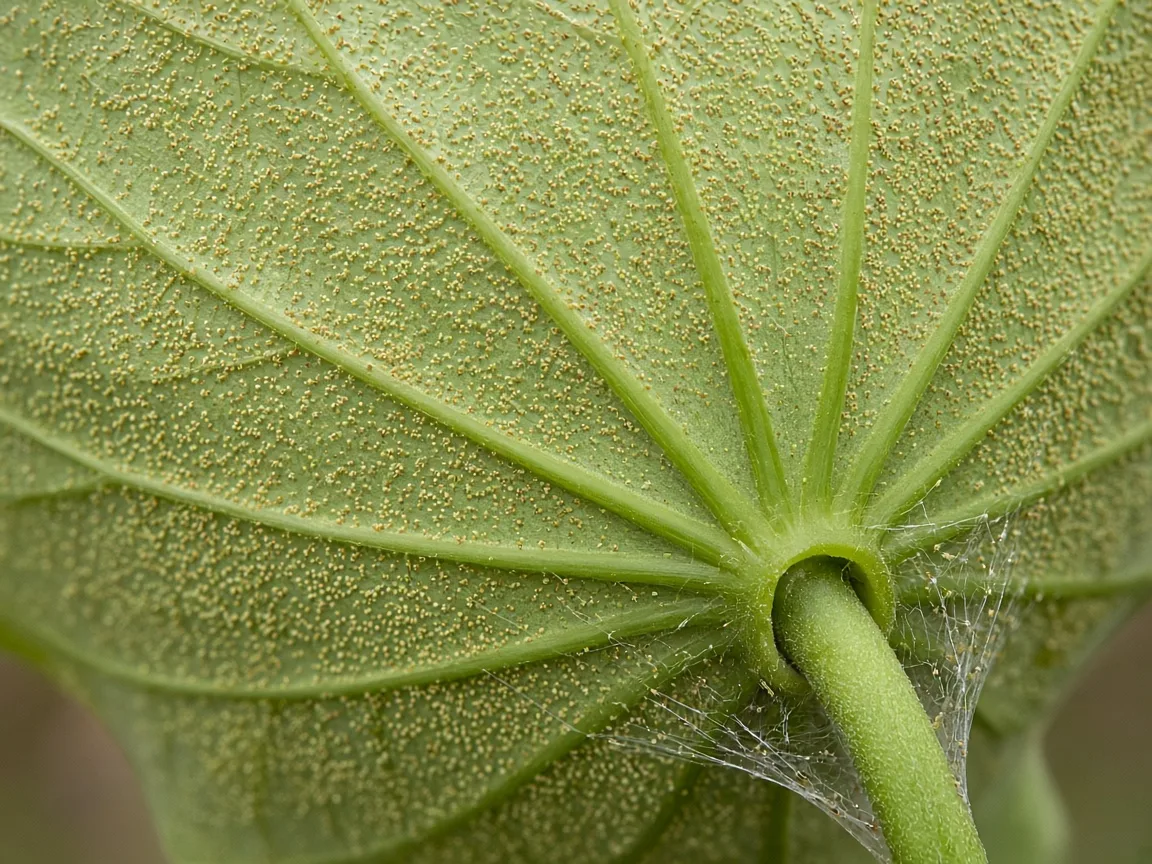
Spider mite symptoms on lotus — compare stippling and webbing with healthy tissue on the same pad.
Stippling on round pads:
- Pinhead yellow, tan, or bronze dots scattered across the pale underside of floating or aerial leaves
- Dull, dusty-looking patches where the normally waxy green tissue loses its even color
- Damage concentrated on the largest, most sun-exposed pads at the container edge
Underside and stalk signs:
- Tiny moving specks—barely visible without bright light or a hand lens
- Fine silk threads where the round blade meets the hollow petiole above the water
- Webbing along stalk joints and between overlapping pads that shield the underside from casual view
Plant-level clues:
- Newest aerial leaves show dots while older outer floating pads still look clean
- Several pads bronze and drop within weeks despite stable water depth
- Stippling on pads that also show sticky residue points to aphids instead—confirm with the paper-tap test before treating
Because lotus stores energy in thick submerged rhizomes, a few stippled outer pads do not always mean crisis. Webbing on multiple new aerial stalks during a heat wave does.
Where mites hide on lotus (and where they do not)
Lotus is an aquatic perennial, not a potted houseplant on a windowsill. That changes where you inspect:
Check these surfaces first:
- The bowl-shaped undersides of aerial leaves held above the water—the palmate venation creates pockets mites favor
- Floating pad edges where the leaf lies on the water surface and the underside stays dry enough for silk
- Hollow petiole joints just above the waterline, where webbing is easiest to spot without wading
- Newest stalks pushing up before the pad fully expands
Do not waste time hunting mites:
- Inside submerged rhizomes or under the soil cap—spider mites are foliage feeders
- On spent flower stems below the water after petals fall
- On healthy outer pads you plan to remove for dormancy anyway
This hide-pattern is lotus-specific. On a monstera you inspect fenestrated leaf undersides and moss-pole stems; on lotus you follow the waterline upward along stiff stalks.
Why lotus gets spider mites
Lotus wants full outdoor sun and warm summer water—conditions that also produce hot, dry air around exposed leaf surfaces. Dry weather greatly favors spider mites because low humidity speeds their reproduction while stressing natural enemies.
Missouri Botanical Garden lists aphids and spider mites as occasional pests on lotus even though long-term health is usually strong in good culture. Outbreaks still happen when leaf surfaces bake in dry heat.
Common triggers on pond and tub culture:
- Peak summer heat on container edges beside paving, walls, or greenhouse glazing
- Windy dry spells that lower humidity around pads while evaporation keeps the tub full
- Crowded foliage where overlapping aerial leaves trap heat and slow air movement
- Drought-stressed pads after a brief drop in water level that does not rot the rhizome but weakens new growth
- New aquatic plants placed beside lotus without quarantine
- Broad-spectrum insecticides near open water that kill predatory mites and can worsen spider mite outbreaks
Lotus roots submerged in cool water does not protect the upper foliage. Mites live on the dry side of the waterline.
Floating-pad stippling vs aerial-leaf stippling
Lotus growth follows a sequence most houseplants do not share. After spring emergence, the rhizome sends short floating leaves on the water, then standing aerial leaves on longer hollow stalks, and later flowers above the foliage.
Stippling on older floating pads alone at the container rim often means that pad has been exposed longest to sun and dry air—still treat, but inspect the newest aerial stalk for spread.
Stippling on the newest aerial leaves means active feeding now and higher urgency. If several new stalks bronze while the waterline is stable and rhizomes feel firm, mites beat yellow-leaves depth stress as the primary diagnosis.
How to confirm the diagnosis
Before spraying anything into pond water:
- Paper-tap test: Hold a stippled pad over white paper and tap the underside. Moving specks confirm live mites.
- Inspect with bright light along petiole joints above the waterline for silk.
- Check the newest aerial leaf before the largest oldest pad.
- Separate from aphids: aphids leave sticky honeydew and soft clusters; mites leave stippling and fine webbing without stickiness.
- Separate from yellow leaves without dots: uniform yellowing of outer pads only, firm rhizomes, and stable depth usually means aging or depth—not mites.
| What you see | Likely cause | First action |
|---|---|---|
| Underside stippling + fine webbing + moving specks | Spider mites | Isolate tub → rinse undersides above waterline |
| Sticky pads, curled new growth, soft-bodied clusters | Aphids | Rinse stalks; follow aphid guide |
| Yellow outer pads only, no dots, firm rhizome | Normal aging or depth stress | Check water depth and newest stalk reach |
| Crisp margins after waterline drop, no webbing | Underwatering | Top up and mark waterline |
| White cottony masses at stalk bases | Mealybugs | Spot-treat; avoid open-water runoff |
First fix: isolate the tub and rinse leaf undersides
For early infestations on a containerized lotus:
- Move the pot away from other lotus, water lilies, and marginal plants—mites spread on silk, tools, and clothing.
- Lift or tilt the container so you can reach undersides without standing in the pond.
- Blast every leaf underside above the waterline with a strong hose or pump sprayer directed upward under the pad. Periodic forceful water removes mites and disrupts webbing.
- Let foliage drain in open air before returning the tub to its sunny position.
- Repeat in two to three days before escalating to sprays.
Do not repot rhizomes, change fertilizer, or lower depth on day one. One clear physical knockdown lets you read whether stippling spreads on the next aerial leaf.
Treating lotus without fouling pond water
This is the step that does not transfer from houseplant guides. Lotus lives in open water shared with fish, frogs, and beneficial insects. Soaps, horticultural oils, and many miticides can harm aquatic life when rinse water drains straight into the pond.
Safer sequence for container lotus:
- Keep physical rinsing as the backbone for mild cases on a single tub you can lift
- Treat over a gravel pad or lawn, not over open pond water, so runoff does not enter the ecosystem
- Use products labeled for ornamental plants and spider mites, at the lowest effective rate, and follow repeat intervals of about five to seven days because most miticides do not kill eggs
- Cover or temporarily isolate small decorative ponds if neighbors share water flow
- Never pour untreated rinse water from miticide sprays back into a fish pond
For conservatory lotus in individual tubs without fish, insecticidal soap or horticultural oil applied thoroughly to undersides may be appropriate—still treat with runoff in mind. Webbing can block penetration, so rinse silk away before spraying.
Avoid carbaryl and other broad insecticides near aquatic plantings; they often destroy mite predators and worsen outbreaks.
Recovery timeline and what success looks like
Judge recovery on new lotus growth, not old pad cosmetics:
- 3–7 days: Less fresh stippling on the newest opening leaf after the first thorough rinse
- 2 weeks: Webbing no longer spreading along new petiole joints; paper-tap test shows fewer moving specks
- 3–6 weeks: Several clean floating or aerial pads open without bronze dots—timing depends on summer heat and cultivar vigor
Old stippled pads usually stay marked. Sacred lotus pads are large and long-lived; chlorophyll loss from mite feeding does not refill. Remove badly bronzed spent foliage by cutting stems above the waterline so hollow stalks do not funnel water toward the rhizome—same principle as routine lotus pruning.
Signs the problem is worsening:
- Webbing on multiple new aerial stalks within a week
- Newest leaves opening already stippled during peak heat
- Mites appearing on neighboring containers
- Pads dropping rapidly despite stable water and firm rhizomes
Mistakes to avoid
- Spraying pesticides into open pond water without considering fish, frogs, and algae balance
- Assuming submerged roots mean the plant cannot have dry-air pests on upper foliage
- Fertilizing a mite-stressed lotus before knockdown—feed only after several standing leaves form, and not during active infestation
- Lowering water depth or repotting rhizomes on day one when the issue is foliar stippling only
- Treating uniform yellow outer pads as mites without the paper-tap test or webbing check
- Single spray applications—eggs survive most miticides, so one pass rarely finishes the job
How to prevent spider mites on lotus
- Rinse or mist leaf undersides during extended hot dry spells, especially on container edges
- Leave air space between tubs instead of packing foliage against hot walls or pavement
- Quarantine new aquatic plants six weeks before placing them beside lotus
- Scout the newest aerial leaf at each water top-up in summer
- Protect natural enemies by avoiding unnecessary broad insecticides near pond plantings
- Keep the waterline stable so new stalks reach the surface without extra stress—see the watering guide and soil guide for long-term culture
Lotus in full sun will always be more exposed than shade houseplants. Prevention is scouting and physical knockdown, not trying to shade a sun-hungry aquatic out of mite range.
Related lotus guides
- Lotus overview
- Lotus problems hub
- Lotus watering
- Lotus light
- Lotus soil
- Yellow leaves on lotus
- Aphids on lotus
Related tool
Use the Pest Identifier Tool to narrow causes for spider mites on this plant before changing multiple variables at once.