Root Rot on Lotus: Causes, Checks & Fixes
Quick answer
Root rot on lotus usually means the submerged rhizome is sitting in stagnant, oxygen-poor mud—not that the plant was watered too often. First step: raise the container to shallow warm water and gently inspect the horizontal rhizome and exposed growing tip for soft black tissue and sour smell.
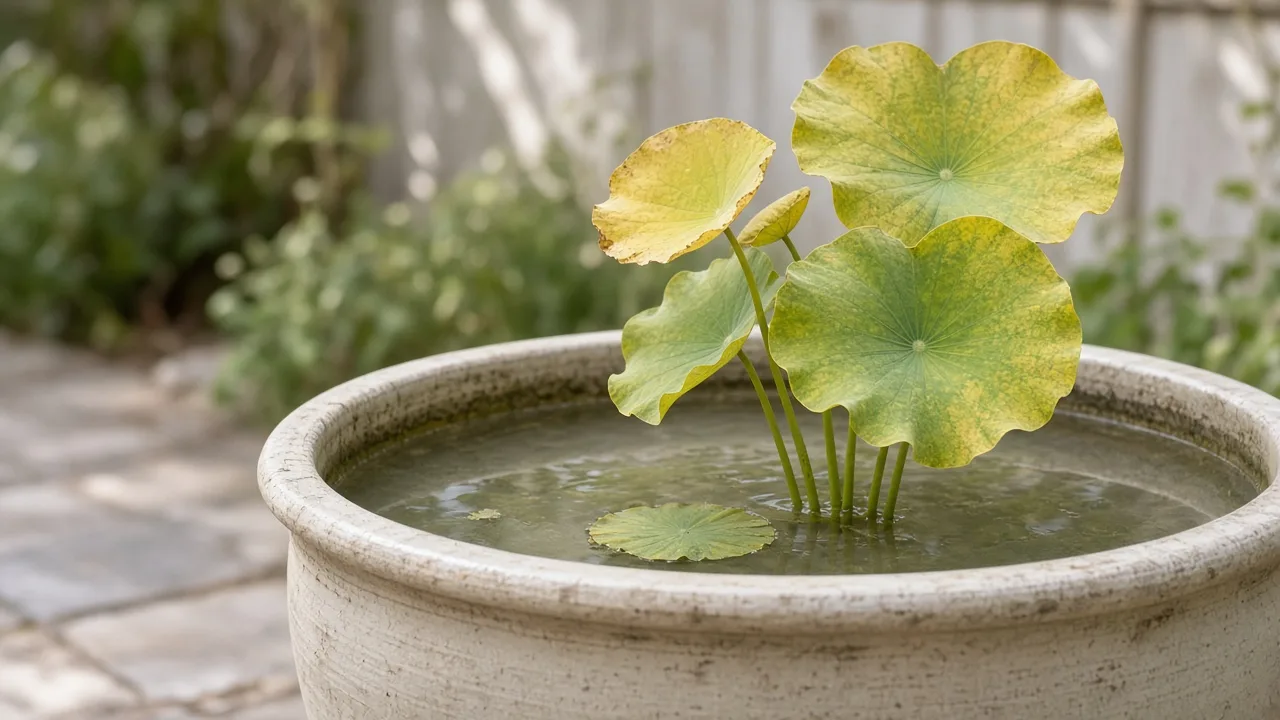
Root Rot on Lotus: Causes, Checks & Fixes
This guide covers root rot on Lotus. See also the general Root Rot guide, watering, and light pages for this plant.
Root Rot on Lotus: Causes, Checks & Fixes
Quick answer
Root rot on sacred lotus (Nelumbo nucifera) is almost always a submerged rhizome failure in stagnant, oxygen-poor mud—not the houseplant pattern of “too much water.” Lotus is built for continuously wet roots; rot appears when the horizontal rhizome, growing tip, or surrounding loam goes anaerobic, physically damaged, or buried. For how oxygen loss kills roots in general, see our root rot symptom hub. On lotus, the warning signs are a sour-smelling tub, soft black rhizome tissue, and new leaves that die before reaching the surface.
First step: raise the container to shallow warm water and inspect the rhizome without burying the growing tip. If tissue is firm and the tip is intact, shallow placement alone may be enough. If you find soft black sections or a fermenting smell, stop fertilizing and plan a careful lift per the Lotus repotting guide before the damage spreads through the whole runner.
Root rot vs. other lotus problems
| Pattern | Water over soil | Rhizome feel | Growing tip | New leaves | Likely cause |
|---|---|---|---|---|---|
| Root rot | Often stagnant or foul | Soft, black, hollow | Blackened or missing | Fail underwater repeatedly | Anaerobic or damaged rhizome |
| Too-deep container | Clear but very deep | Firm | Intact | Stalks exhaust before surface | Depth stress, not rot |
| Underwatering | Soil cap exposed | Firm but dry above | Intact | Wilted aerial leaves | Low waterline |
| Cool spring stall | Clear, cold | Firm | Intact | Slow to emerge | Temperature delay |
| Normal dormancy | Stable | Firm dormant tuber | Bud waiting | No summer leaves | Seasonal rest |
Lotus can look wilted above the water while the real problem sits in the mud. Do not assume drought because aerial leaves droop—check the submerged crown first.
What root rot looks like on lotus
Rot on lotus is a rhizome and crown problem, not mushy houseplant roots in a drain hole.
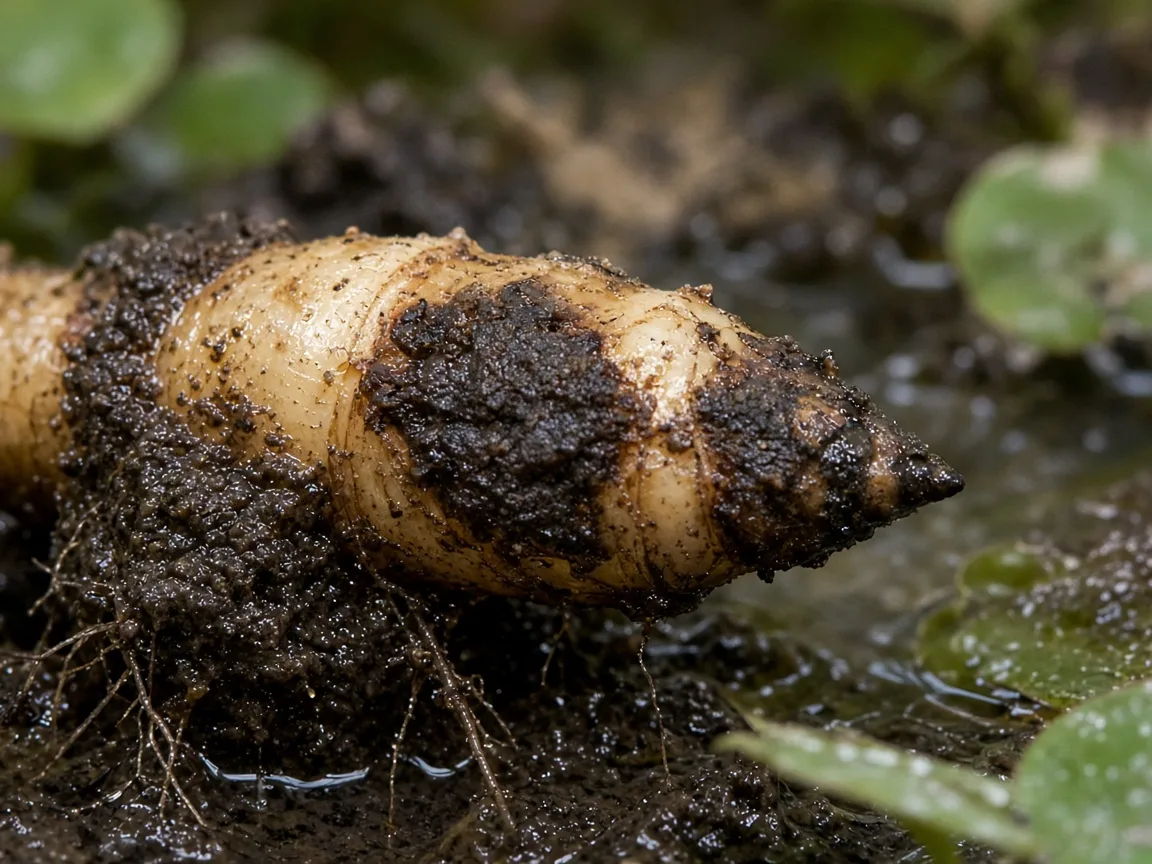
Soft black tissue at a lotus growing tip and along a runner—compare with firm pale rhizome sections on the same plant.
Early signs:
- New leaves stall or decay below the surface while older leaves still look acceptable
- Cloudy or foul-smelling tub water with oily scum or repeated algae crashes after feeding
- Soft dark patches where the rhizome bends near the container wall
- Bruised or buried growing tip after repotting, fish disturbance, or a stone pressing on the shoot bud
- Slow emergence in cool water that never warms, especially on a fresh spring division
Advanced signs:
- Growing tip turns black and collapses when touched
- Rhizome sections mash easily and smell sour or like rotten eggs
- No new leaf spikes for weeks in warm weather despite full sun
- Hollow runner tissue with only outer shell remaining
- Widespread yellowing aerial leaves on water that has turned stagnant
Compare with underwatering on lotus: exposed soil cap, crisp margins, and firm rhizome with an intact tip. Compare with overwatering on lotus: often means too much depth too soon, not literally too much water.
Why lotus gets root rot
Stagnant, oxygen-poor mud in a small tub. Lotus grows in muddy submerged soil and still water, but a crowded container with decomposing organic matter, no water exchange, and warm weather can turn the rhizome zone anaerobic. Fine feeder roots die first; the storage rhizome follows.
Excessive depth on a new or weak rhizome. UF/IFAS starts newly planted lotus in about 6 inches of water until growth begins, then allows deeper placement for established plants. Setting a fresh division at final pond depth forces short stalks to exhaust themselves. Cool deep water delays emergence and can rot a rhizome before leaves open.
Buried, snapped, or weighted growing tips. The pointed shoot bud is the only part that can send up new leaves. RHS guidance calls for horizontal planting with the tip exposed and warns that lotus rhizomes resent rough handling. Gravel, stones, or careless division can bruise the tip; rot often starts there.
Wrong soil that fouls the water. Light peat, bark, and perlite mixes float and break down underwater, unlike the heavy submerged loam lotus expects. Decomposing fluffy media steals oxygen and clouds small tubs—see the Lotus soil guide.
Fertilizer on a stressed rhizome. Aquatic tablets placed against a fresh cut, damaged tip, or newly planted division can burn tissue and accelerate decay. Wait until several standing leaves are present, as described in the Lotus fertilizer guide.
Koi, stones, or repotting trauma. Fish can excavate soil and expose runners. Active summer division shakes fragile rhizomes when stems snap easily and disturbed mud fouls quickly.
Check the horizontal rhizome and growing tip
Lotus does not form a tidy fibrous root ball. It sends a thick horizontal rhizome across the soil with a single fragile growing tip aimed into open space. That anatomy is why rot on lotus is diagnosed at the runner, not by squeezing a houseplant root mass.
To inspect without making things worse:
- Lift or tilt the container in shade so the rhizome stays damp.
- Brush mud away from the pointed tip first—never pull the plant by leaf stems.
- Press the runner with a finger: firm pale-to-tan tissue is healthy; soft black mush is rot.
- Smell the mud at the crown: sour fermentation confirms anaerobic breakdown.
- Trace the runner to where it meets the container wall—crowding often bruises the bend.
A thick storage section without a viable tip cannot replace a smaller keeper that still has an intact bud. That rule matters during salvage.
Water depth mistakes that invite rhizome failure
Depth is a lotus-specific rot trigger. The soil should stay submerged, but the distance from soil surface to open air must match the plant’s current stem length.
- New rhizome or spring division: keep roughly 5–15 cm (2–6 in) of water over the soil so first leaves reach the surface easily; IWGS recommends at least 2–4 inches at all times.
- Established standard cultivars: depth can increase as stalks lengthen; UF/IFAS allows up to 18 inches below the surface for mature container plants.
- Dwarf or bowl lotus: stay shallower—often 5–30 cm (2–12 in)—even when mature.
If leaves repeatedly open underwater and decay, raise the pot on bricks or a shelf before assuming the whole plant is lost. If growth is strong, deepen gradually—not in one step after repotting.
Never cut lotus stems below the waterline
Lotus leaf and flower stalks are hollow tubes. IWGS warns never to cut stems below the water level because roots and tubers use even dead stems to help move oxygen. Pruning underwater—or snapping stems during handling—can funnel foul water toward the rhizome and mimic rot symptoms on otherwise firm tissue.
When removing yellow foliage, cut above the waterline per the Lotus pruning guide. After lowering a container for winter, prune only once the new water level is set.
How to confirm root rot
- Water smell and clarity — Sour, rotten-egg, or thick stagnant odor in a small tub points to anaerobic mud.
- Rhizome firmness — Healthy tissue resists pressure; rot mashes and may slip off the runner.
- Growing tip condition — Intact pointed bud versus black collapsed tip.
- Leaf pattern — Repeated underwater leaf death with firm older leaves suggests crown stress, not ordinary yellow leaves.
- Depth and temperature — Clear cold water with firm rhizome may be delayed spring growth, not rot.
- Recent changes — Repotting, fish addition, fertilizer against the rhizome, or lowering to maximum depth.
First fix for lotus
Raise the container to shallow warm water and inspect the rhizome and growing tip without reburying the bud.
Mild case (firm rhizome, intact tip, foul smell only, a few stalled leaves):
- Shallow the pot so only 5–15 cm (2–6 in) of water covers the soil
- Move the tub to the warmest full-sun spot available
- Stop fertilizer until several new leaves stand above the water
- Flush the tub with fresh water to dilute minerals per watering guidance
- Remove only stems cut above the waterline
Moderate case (some soft patches, sour mud, tip bruised but partly firm):
- Lift the container and rinse mud from the rhizome in clean water
- Trim soft black tissue with a sterile blade, keeping generous firm tissue behind any salvageable tip
- Replant horizontally with the tip exposed in fresh heavy loam
- Restart at shallow depth and wait for new leaf spikes before feeding
Severe case (tip destroyed, most runner mushy):
- Discard rotted sections
- Keep only firm divisions with at least one undamaged growing tip
- Follow spring division technique in the Lotus propagation guide
- If no tip remains on any section, the plant cannot recover from that rhizome
Recovery timeline
- Weeks 1–2: Water smell improves; no new blackening; first short leaf spike reaches the surface in warm shallow water
- Weeks 3–6: Floating then standing leaves develop; rhizome feels firm when checked gently
- Rest of season: Aerial leaves enlarge; flowering depends on cultivar, sun, and how much tissue was lost
Worsening signs: tip blackens after shallowing, every new leaf dies underwater, or sour smell returns within days of a water change. Those patterns mean more tissue is failing than a depth fix alone can solve.
What not to do
- Let the soil cap dry out while diagnosing—lotus still needs submerged roots
- Bury or weight the growing tip “to hold the rhizome down”
- Fertilize a rotting or freshly trimmed rhizome
- Lower a weak division to maximum pond depth to “encourage strength”
- Cut yellow stems below the waterline
- Repot repeatedly in peak summer unless the container has failed
- Use fluffy houseplant mix to “improve drainage”—lotus needs dense submerged loam
How to prevent root rot next time
- Start new rhizomes shallow and warm; match depth to cultivar per the Lotus watering guide
- Plant horizontally with the tip exposed in heavy loam inside a wide solid container
- Divide crowded runners in early spring before they circle tightly against the wall
- Begin fertilizer only after standing leaves form; bury tablets away from the rhizome
- Flush small tubs periodically so evaporation does not concentrate minerals—IWGS notes harmful buildup in hard-water pots
- Confine lotus in containers without holes so rhizomes do not escape into stagnant pond muck
- Protect dormant rhizomes from freezing solid, but avoid waterlogged anaerobic storage in sealed bags
When to worry
Escalate when the growing tip is black, the rhizome collapses along most of its length, or warm shallow water produces no new spikes for several weeks. At that point, salvage is limited to any firm sections that still carry a viable bud—otherwise replace with a healthy rhizome from a reputable aquatic grower.
When to use this page vs other Lotus guides
- Lotus watering guide — Use for routine depth, top-ups, and evaporation before assuming rot is the main issue.
- Lotus problems hub — Browse all common issues on this species.
- Overwatering on lotus — Use when the main mistake is depth or stagnation rather than confirmed rhizome decay.
- Underwatering on lotus — Use when the soil cap is exposed and leaves are crisp, not sour.
- Wilting on lotus — Use when aerial leaves droop but the rhizome still feels firm.