Wilting on Lotus: Causes, Checks & Fixes
Quick answer
Wilting on lotus is rarely about dry soil; the rhizome should stay submerged. Most cases trace to a dropped waterline, heat and evaporation in a small tub, excess depth drowning young leaves, or rhizome damage blocking uptake. First step: measure water depth from the soil surface and top up to at least 5–10 cm (2–4 in) while inspecting the growing tip.
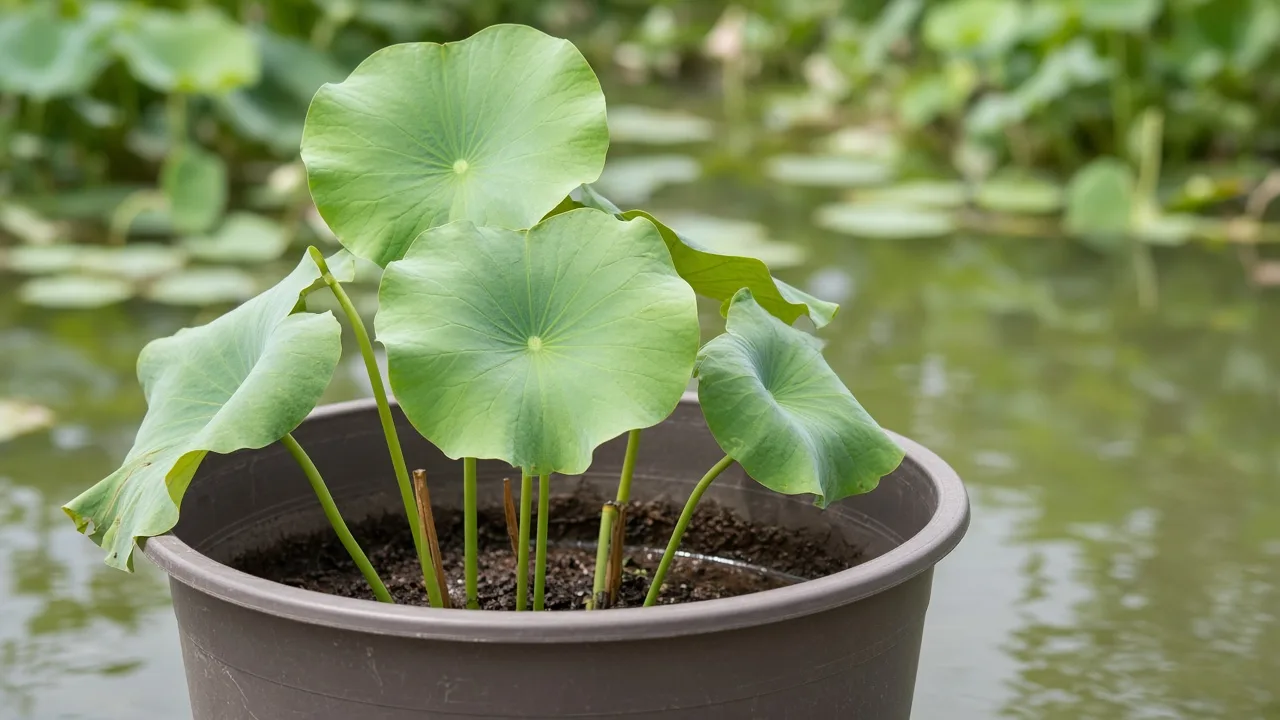
Wilting on Lotus: Causes, Checks & Fixes
This guide covers wilting on Lotus. See also the general Wilting guide, watering, and light pages for this plant.
Wilting on Lotus: Causes, Checks & Fixes
Quick answer
Sacred lotus (Nelumbo nucifera) wilts for different reasons than a peace lily in a windowsill pot. The heavy loam should stay submerged—so wilting is usually about water level, depth, heat, or rhizome health, not forgetting to water dry mix. For how wilting works when roots lose access to water or oxygen in general, see our wilting symptom hub. On lotus, read the waterline above the soil and the growing tip first.
First step: measure depth from the soil surface inside the pot and top up until at least 5–10 cm (2–4 in) of water covers the soil, then confirm the brittle growing tip is exposed and firm.
What wilting looks like on lotus
Lotus sends up floating pads first, then larger aerial leaves held well above the water on hollow stalks. Wilting shows up when those structures lose turgor faster than the rhizome can replace water.
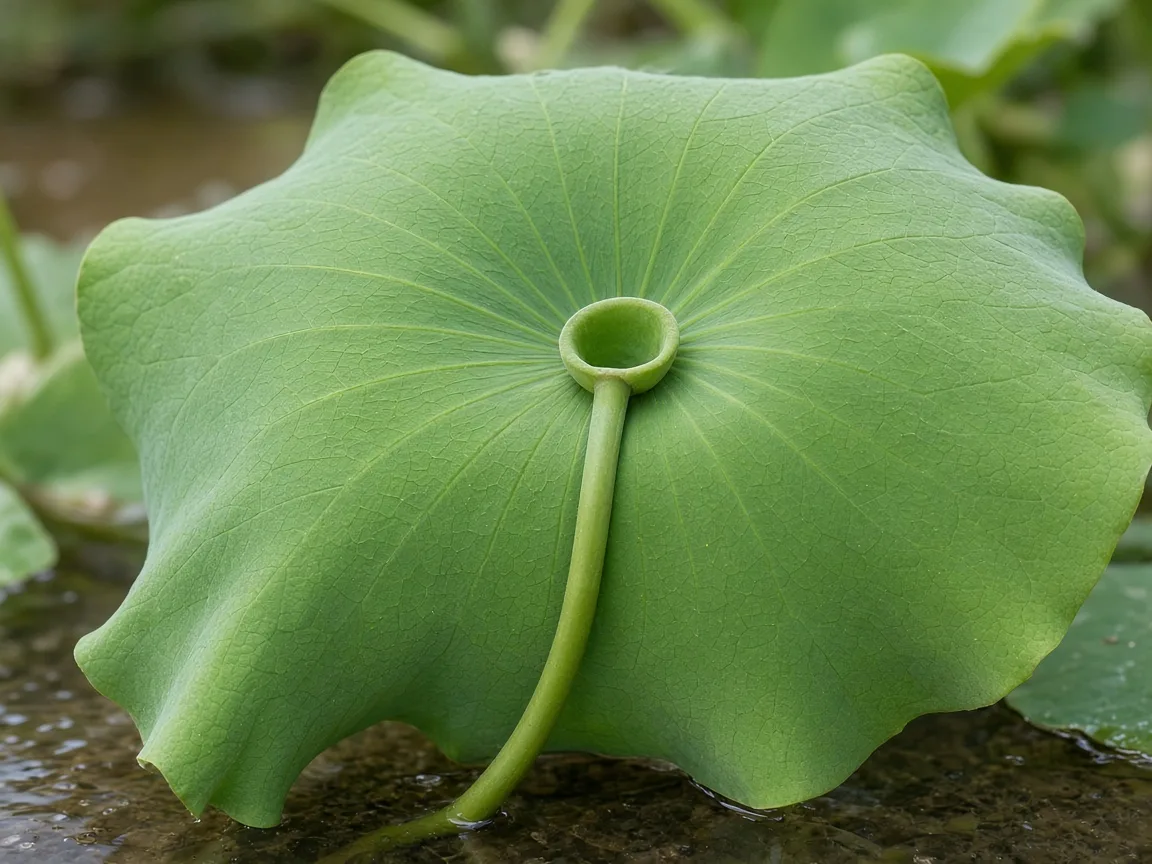
Wilting on lotus—limp aerial leaf margin and a bending petiole often track a dropped waterline or heat stress, not dry potting mix.
Typical signs:
- Round aerial leaves that hang downward instead of standing plate-flat above the water
- Floating pads that curl, fold, or sink partially instead of lying open at the surface
- Crisp brown margins on otherwise green leaves after a hot, windy spell in a shallow tub
- New leaf stalks that emerge but stall limp just below the surface
- Exposed wet soil or sand cap at the container edge when the tub was recently full
Not lotus wilting:
- One lower yellow leaf on a vigorous plant — often normal senescence; see yellow leaves on lotus
- Soft black rhizome tissue with sour water — advanced decay; see root rot on lotus
- Weak pale leaves with long petioles in shade — low light, not water failure; see not enough light on lotus
- Gentle leaf sag on a healthy plant after repotting — may overlap with drooping leaves on lotus without the urgent collapse seen here
Why lotus wilts: waterline, not soil dryness
Lotus roots live in submerged loam while foliage lives in air and sun. Missouri Botanical Garden describes sacred lotus as an emergent aquatic whose rhizomes sit in mud and whose leaves rise above the surface. A moisture meter pushed into the pot answers the wrong question—you need the depth of water above the soil and whether new growth can reach light.
Lotus-specific triggers:
- Evaporation in a small tub — Fine Gardening notes that container lotus need topping off as water evaporates through summer. A few centimetres lost per hot day can expose the crown before you notice limp leaves.
- Heat on aerial foliage without stable depth — IWGS lists at least 75°F (24°C) for three summer months as ideal, but extreme sun plus a thin water column heats the rhizome zone and stresses upright leaves.
- Excess depth before the plant can span it — Young stalks that cannot reach the surface look wilted underwater even though the tub is full. That overlaps with overwatering on lotus when depth—not volume—is wrong.
- Dropped waterline exposing the crown — True underwatering on lotus means the soil cap dries at the surface while the rhizome loses steady cover; see underwatering on lotus.
- Rhizome damage or rot — A firm rhizome supplies new leaves; soft black tissue cannot, and wilting spreads upward.
- Stems cut below the waterline — Lotus uses hollow petioles for gas exchange; pruning underwater removes that pathway (IWGS pruning guidance).
- Pest sap loss on young growth — Aphids and spider mites can wilt tender new leaves, but lotus leaf hairs make oil-based sprays risky (IWGS pest notes).
Waterline checks vs houseplant wilting
Terrestrial wilting often means dry mix or root rot in soggy soil. Lotus requires wet soil. The diagnostic split is:
| Check | Wilting from low waterline | Wilting from depth or rot |
|---|---|---|
| Soil surface | Exposed or only damp cap | Fully submerged |
| Newest leaf | May reach surface if topped up | Stalls underwater repeatedly |
| Rhizome tip | Often still firm if caught early | Buried, blackening, or sour-smelling |
| Recent weather | Hot, windy, missed top-ups | Container lowered after planting |
UF/IFAS starts new lotus in about 6 inches of water and deepens only after growth begins. IWGS requires at least 2–4 inches over the soil at all times. If your measurement is from the pond bottom instead of the pot soil, you can misread a drowning plant as “well watered.”
Hollow stalks and oxygen pathways
Lotus petioles are hollow tubes connecting aerial tissue to submerged rhizomes. IWGS warns never to cut flower or leaf stems below the water level because tubers use even dead stems to help provide oxygen.
After careless cleanup, storm breakage, or koi nudging pots, a snapped submerged stalk can leave the next leaf wilted even when depth looks fine. Trim only above the water surface. If several hollow stalks were cut low during pruning, expect a pause in upright growth until new standing leaves form—do not respond by fertilizing a stressed rhizome.
Heat, wind, and small-tub evaporation
Large ponds buffer temperature swings. A black livestock tub in full sun loses water fast. IWGS notes that when water evaporates in hard-water areas, minerals stay behind and each top-up adds more—scorched margins and limp leaves can follow even when the rhizome is technically submerged.
Mark the normal waterline with tape or chalk on the container wall. During heat waves, check daily—not weekly. Occasional overflow flushing dilutes minerals better than letting the tub stagnate all season. If spring water is still cool, IWGS recommends shallow warm water so the crown warms before you deepen the pot; cold water plus full sun on aerial leaves can produce temporary midday wilt that recovers overnight.
How to confirm the cause
- Measure from the soil surface inside the pot to the water surface.
- Inspect the growing tip — visible, firm, and pale green, or buried under washed-in soil?
- Classify the affected leaves — aerial above water, floating at surface, or stuck below?
- Review the last seven days — heat wave, missed top-ups, container lowered, or pruning below water?
- Smell the water near the crown — sour odour suggests anaerobic stress overlapping root rot.
- Check leaf undersides for aphids or spider mites on new growth.
- Cross-check cultivar depth — dwarf lotus in standard-lotus depth is a common mismatch; see the Lotus watering guide.
Confirmed wilting on lotus matches waterline or depth stress, heat evaporation, stem damage, or rhizome failure—not merely “needs water” in the houseplant sense.
First fix for lotus
Top up the container until at least 5–10 cm (2–4 in) of water covers the soil surface, using the same fresh source you normally add.
That single action restores cover to an exposed crown and stabilizes the rhizome zone during heat. Use the Lotus watering guide for cultivar-specific depth after the line is secure.
Then:
- Gently brush sediment away from the growing tip if runoff buried it.
- Move the pot to afternoon shade only if leaves scorch in extreme desert sun—lotus still needs strong light overall per the Lotus light guide.
- Remove floating debris and decaying petals that foul small tubs.
- Wait five to seven days for the next leaf to show whether depth is now workable.
Do not drain the tub dry—that creates underwatering. Do not lower the pot deeper to “help” limp submerged leaves. Do not fertilize until several standing leaves form normally.
Step-by-step recovery
- Stabilize the waterline at the shallow-safe mark and check it daily during hot weather.
- Raise the container on bricks if young leaves still cannot reach the surface—same shallow correction as overwatering on lotus.
- Flush stagnant tubs with a slow overflow if water smells off or mineral crust lines the wall.
- Trim only above water on yellowing aerial stems; never submerge fresh cuts.
- Inspect the rhizome if wilting continues despite stable depth—trim black tissue back to firm flesh, keeping at least one intact growing tip.
- Treat pests on new growth with diatomaceous earth or other lotus-safe methods per IWGS pest guidance before reaching for oil sprays.
- Deepen gradually only after three or more aerial leaves stand upright reliably; RHS deepens containers as growth proceeds.
Recovery timeline
Brief waterline drop with a firm rhizome: leaves often firm within two to five days once depth is restored and weather moderates. Heat-stressed margins on otherwise green tissue may stay tan but should not spread. New floating pads in one to three weeks once water holds above roughly 24°C (75°F). Rhizome surgery after black rot: four to eight weeks before steady aerial leaves if the growing tip survived. Leaves that browned underwater or at the crown do not reopen—judge success by clean new growth reaching the surface.
Lookalike symptoms on lotus
| What you see | More likely cause | Where to read |
|---|---|---|
| Exposed mud, crisp edges, light pot | Waterline too low | Underwatering on lotus |
| New leaves fail below surface in a full tub | Excess depth or buried tip | Overwatering on lotus |
| Soft black rhizome, sour smell | Crown rot / foul water | Root rot on lotus |
| Gentle sag, no urgent collapse | Transient stress or repotting | Drooping leaves on lotus |
| Weak pale leaves in shade | Insufficient sun | Not enough light on lotus |
What not to do
Do not use a houseplant wilting checklist that starts with “stick your finger in the soil.” Do not empty a healthy tub because leaves look limp—partial top-up beats a full drain. Do not cut stems below the waterline during cleanup. Do not apply horticultural oil or detergent sprays on lotus leaf hairs without reading pest precautions. Do not plant loose in pond mud if you will need to raise depth later—UF/IFAS recommends containerizing for control.
How to prevent wilting next time
Treat lotus as a waterline-managed emergent, not a submerged aquarium plant. Mark the tub, top up before the soil cap shows, and start every spring division shallow. Match depth to cultivar, flush small containers during mineral buildup, and keep the rhizome tip exposed under the sand cap. Review the Lotus overview before choosing a cultivar whose mature depth exceeds your pond shelf.
During repotting, preserve soil level and resist lowering the container until growth proves it can handle more water. Full sun and warm water help leaves keep pace with depth—see the Lotus soil guide for a stable submerged mix that does not float away.
When to worry
Urgent when soil stays exposed more than a day, the rhizome smells sour, black softness spreads past the tip, or every new leaf fails below the surface for more than two weeks despite shallow correction. Salvage only firm rhizome sections with intact growing points and repot horizontally just below the soil surface per the Lotus repotting guide. If all tips break or tissue is mushy throughout, discard the rhizome—lotus recovers faster from a healthy division than from advanced crown rot.
When to use this page vs other Lotus guides
- Lotus watering guide — Routine depth, top-ups, and water quality before assuming wilting is mysterious.
- Underwatering on lotus — Exposed soil and crisp leaves when the line drops too far.
- Overwatering on lotus — Stalled submerged growth when depth—not volume—is excessive.
- Drooping leaves on lotus — Softer sag without the urgent collapse or waterline failure described here.
- Lotus problems hub — Browse all lotus symptom guides.
Related Lotus guides
- Lotus overview
- Lotus watering
- Lotus soil
- Lotus light
- Lotus repotting
- Underwatering on lotus
- Overwatering on lotus
- Root rot on lotus
Related tool
Use the Plant Watering Calculator to narrow causes for wilting on this plant before changing multiple variables at once.