Drooping Leaves on Lotus: Causes, Checks & Fixes
Quick answer
Drooping leaves on lotus usually mean limp aerial pads or bending petioles from a dropped waterline, afternoon heat, or excess depth drowning new growth—not forgotten watering on dry mix. First step: measure water depth from the soil surface and top up to at least 5–10 cm (2–4 in) while checking the growing tip.
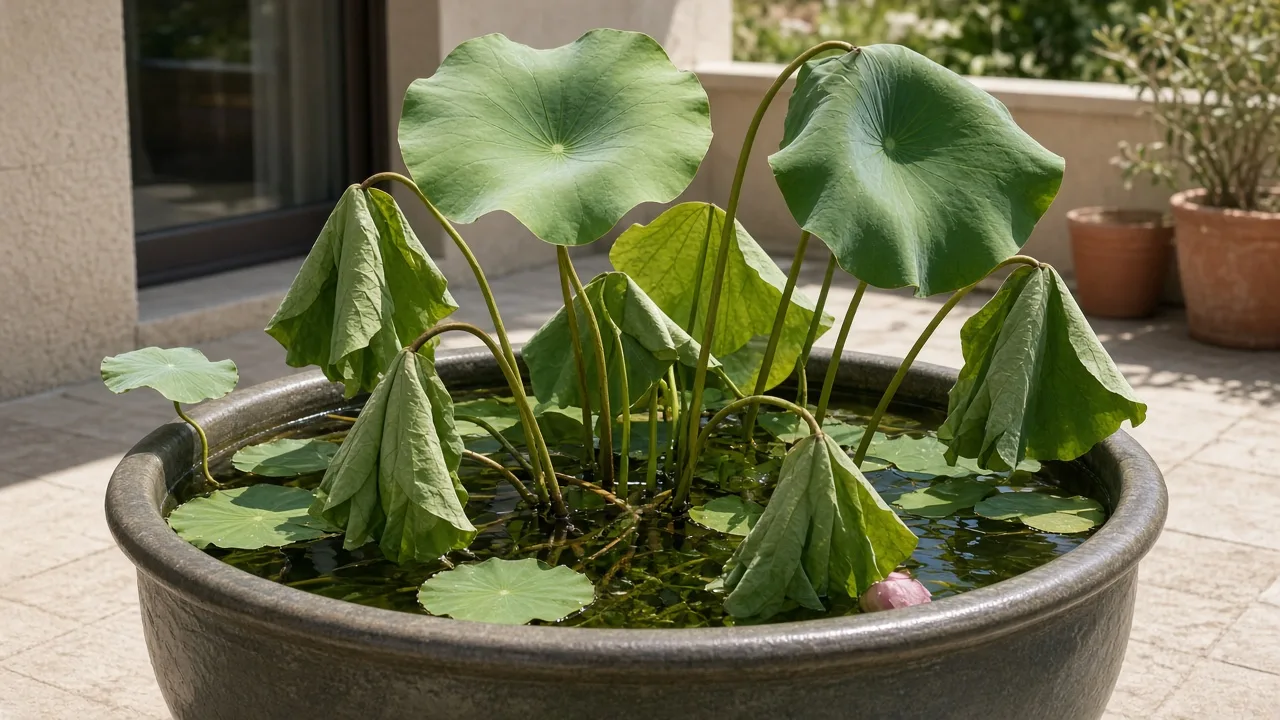
Drooping Leaves on Lotus: Causes, Checks & Fixes
This guide covers drooping leaves on Lotus. See also the general Drooping Leaves guide, watering, and light pages for this plant.
Drooping Leaves on Lotus: Causes, Checks & Fixes
Quick answer
Sacred lotus (Nelumbo nucifera) droops differently than a peace lily in dry peat. The heavy loam should stay submerged—so limp aerial pads and bending petioles usually trace to water level, heat, depth, or rhizome health, not a missed houseplant watering.
For how turgor loss shows up on terrestrial plants in general, see our drooping leaves hub. On lotus, measure depth from the soil surface and read the growing tip before assuming the roots dried out.
First step: top up the container until at least 5–10 cm (2–4 in) of water covers the soil, then confirm the brittle growing tip is exposed and firm.
When to use this page vs other lotus guides
- Wilting — overlapping symptom page; use either for limp foliage, but this guide emphasizes bending petioles and sagging aerial pads rather than full collapse
- Underwatering — use when the soil cap is visibly exposed above the water
- Overwatering — use when new leaves stall under the surface in a full tub
- Root rot — use when rhizomes are soft, black, or sour-smelling
- Watering guide — use for long-term depth schedules after drooping stabilizes
What drooping leaves look like on lotus
Lotus sends up floating pads first, then larger aerial leaves on stiff hollow stalks. Drooping appears when those structures lose turgor faster than the rhizome can replace water.
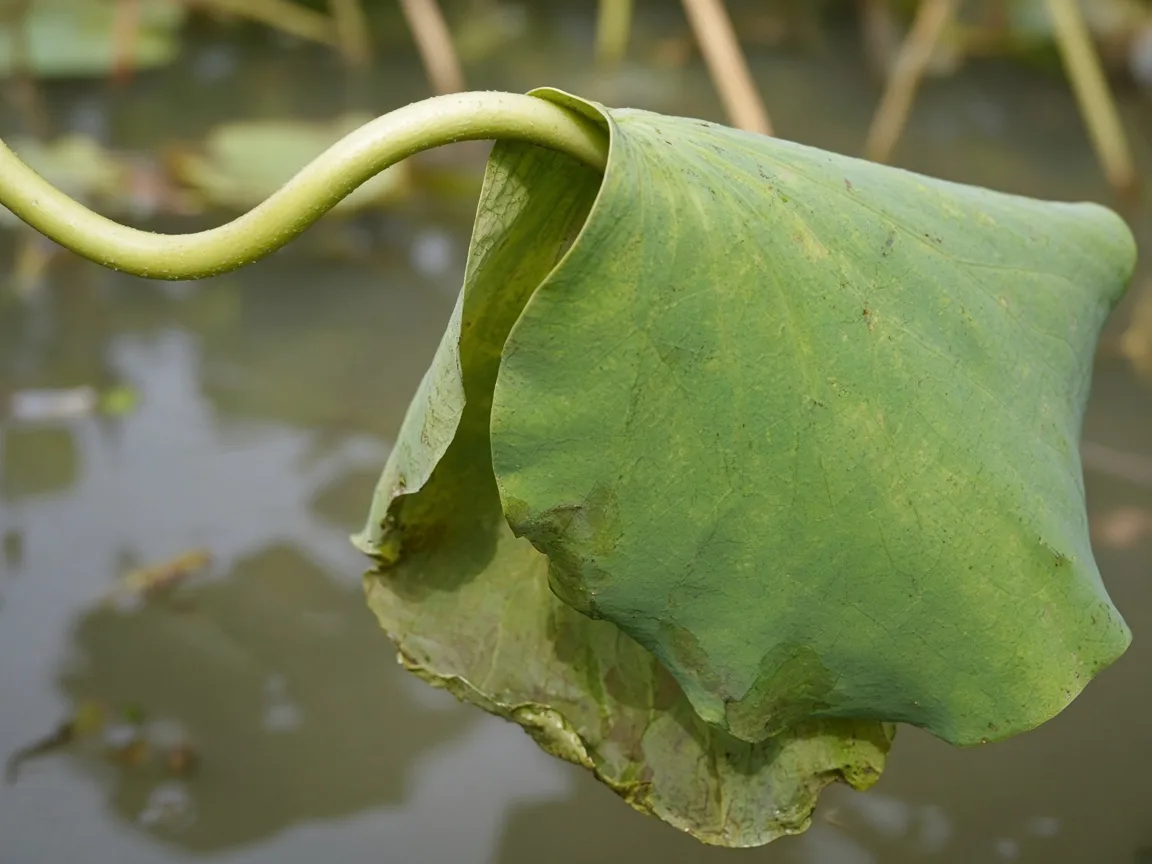
Drooping leaves on lotus—a bending petiole and limp leaf margin often track a dropped waterline or afternoon heat, not dry potting mix.
Typical signs:
- Aerial pads hanging lower than neighboring leaves, especially in late afternoon
- Floating pads cupping downward at the rim while the waterline looks low
- New leaf stalks bending horizontally before reaching the surface
- Petioles softening at the base where sediment piled against the crown
- Entire plant leaning after a windy week when evaporation outpaced top-ups
Not lotus drooping:
- Crisp brown margins only — brown tips or low humidity
- Long pale stalks in shade — not enough light
- Repeated underwater leaf death in a full tub — overwatering
Hollow petioles and the mud–water interface
Lotus petioles are hollow tubes that connect aerial leaves to submerged rhizomes. IWGS notes that lotus use even dead stems to help provide oxygen to the crown—so cutting drooping stalks underwater can worsen the problem.
When the waterline drops, the rhizome still sits wet, but uptake through damaged or heat-stressed petioles fails and aerial tissue droops first. This is why lotus drooping diagnosis starts at the marked waterline, not at a moisture meter pushed into loam.
Why lotus leaves droop
Dropped waterline from evaporation. IWGS recommends at least 2–4 inches of water over the soil at all times. Patio tubs in sun and wind can lose inches per week. Aerial leaves droop while the rhizome remains submerged—classic underwatering at the crown without dry potting mix.
Afternoon heat wilt on tall aerial leaves. Full-sun lotus needs six or more hours of direct light, but extreme heat can temporarily limp the tallest pads even when depth is correct. Recovery by evening supports heat wilt; limp tissue that stays down after cool nights points to waterline or crown trouble.
Excess depth drowning young leaves. UF/IFAS starts newly planted lotus in about 6 inches of water until growth begins. If the container sits too deep too soon, new stalks cannot reach the surface and sag underwater—overlap with overwatering.
Buried or damaged growing tip. Storm runoff, koi, or repotting can smother the fragile tip; RHS warns broken growing points stop sprouting. Without new upright stalks, older leaves may droop as the rhizome weakens.
Stagnant fouled water in small tubs. Anaerobic conditions around the crown reduce effective uptake even when the tub looks full. Sour smell plus limp new growth means check root rot and flush stagnant water.
Floating pad droop vs aerial pad droop
| Pattern | Likely cause | First check |
|---|---|---|
| Only tallest aerial leaves limp in afternoon | Heat wilt | Water depth; evening recovery |
| All aerial leaves down, waterline low | Evaporation underwatering | Top up to marked line |
| New stalk bends underwater in full tub | Excess depth | Raise container |
| Floating and aerial leaves limp, sour smell | Crown stress / rot | Rhizome tip firmness |
How to confirm the cause
- Mark and measure the waterline inside the pot at dawn and again in late afternoon.
- Watch the newest leaf — does it reach the surface and hold upright by morning?
- Expose the growing tip gently — visible, firm, and pale green is healthy; buried or blackening is urgent.
- Smell water near the crown — foul stagnant odor overlaps rot, not simple heat wilt.
- Note recent depth changes — was the container lowered after planting?
- Check overnight recovery — heat wilt firms up; waterline droop stays limp until topped up.
First fix for lotus
Restore water depth from the soil surface and protect the crown from drying wind.
- Top up gently along the container wall until at least 2–4 inches cover the soil cap
- If depth was excessive, raise the pot on bricks until young leaves can reach the surface—RHS deepens gradually only after growth strengthens
- Shade the tub from drying wind for 48 hours after a severe waterline drop— not permanent shade
Make that one correction before repotting, fertilizing, or cutting multiple stalks. Do not drain the tub to “help” drooping leaves.
Step-by-step recovery
If limp leaves persist after stable depth for one week:
- Flush stagnant small tubs — over-fill to dilute minerals and organics per the watering guide
- Brush sediment off a buried tip — expose the pointed growing point without snapping it
- Remove only fully brown underwater stalks above the waterline — never cut healthy green petioles underwater
- Hold fertilizer until several aerial leaves stand upright per the fertilizer guide
- Repot in spring if rhizome tissue is circling a crowded pot and cannot support new upright stalks
Recovery timeline
- Same day to 48 hours: Heat wilt and mild waterline droop often firm after top-up and cool evening
- Week 1: New stalks reach the surface upright if depth and tip are correct
- Weeks 2–4: Older limp leaves may remain bent; judge by new aerial growth
Escalate if drooping spreads while water depth stays stable and the tip turns soft or black.
What not to do
- Push a moisture meter into submerged loam—the wrong diagnostic for aquatic culture
- Cut drooping green stalks below the waterline
- Lower the container deeper to “give more water”
- Fertilize a limp rhizome before depth and tip checks
- Mist indoor lotus like a fern—outdoor full-sun culture rarely needs humidity trays
How to prevent drooping next season
- Daily waterline checks on patio tubs in July and August
- Shallow start for new rhizomes per UF/IFAS guidance
- Cap loam with sand so koi cannot expose the crown—see soil
- Prune spent foliage above the waterline per pruning
- Flush hard-water tubs before mineral buildup compounds heat stress